What Type of Unit Performs Best for Phuket Rental Income: Studio, 1-Bed or 2-Bed?
The “best” unit type depends on which constraint binds for you, and only two of the four things this paragraph used to rank are measurable. Resale liquidity is countable and the one-bedroom leads it comfortably: 7,103 priced units against 1,571 studios and 2,778 two-bedrooms. Unit size is countable too, and it decides which letting channels stay open: a 31 sqm median studio has one, a 41 sqm median one-bedroom has two. Occupancy and yield are not published for privately owned Phuket units at all, so the format rankings this page used to make on them are withdrawn. Pool villas sit in another category entirely: a 29,800,000 THB median against 6,048,000, with a cost stack and a management burden to match.
There is no common investor range to anchor to, and the four figures this paragraph used to give, 7-9% gross island-wide, Kamala at 8-10%, Patong at 8-12%, Surin trading yield for scarcity, are withdrawn. Thailand keeps no letting register and publishes no occupancy or achieved nightly rate for privately owned homes, so none of the four was ever measured; “is often quoted” and “can reach” were doing the work a source should do. What our records hold is the purchase side of the same question, unit by unit, and that turns out to answer more of it than the yield column did.
What each format costs, and how many of them exist
This section carried a four-row table of nightly rate bands, annual occupancy bands, gross revenue bands and a gross-yield note for each format. Every column in it was unsourceable: there is no Phuket ADR series, no occupancy series and therefore no revenue or yield series for privately owned units, and the table is withdrawn rather than rescored. What replaces it is the half we hold, from MORE Group’s own price list:
| Format | Priced units on our list | Median price | Median metre rate | Median size |
|---|---|---|---|---|
| Studio | 1,571 | 4,593,600 THB | 140,000 THB/sqm | 31 sqm |
| 1-bedroom | 7,103 | 6,048,000 | 150,000 | 41 sqm |
| 2-bedroom | 2,778 | 10,335,480 | 154,507 | 66 sqm |
| 3-bedroom | 558 | 23,195,200 | 165,867 | 123 sqm |
| Villa | 2,268 | 29,800,000 | 80,541 | 370 sqm |
Read the count column first, because it decides your exit. The one-bedroom is not the “sweet spot” because someone measured its yield; it is the format with 4.5 times the studio’s stock and 2.6 times the two-bedroom’s, which means that when you sell there are more comparable units to price against and more buyers looking for exactly what you own. That is a fact about liquidity and it is countable.
Read the size column second. The studio median is 31 square metres and the one-bedroom’s is 41. Phuket’s monthly tenants generally will not take a unit below roughly 35 square metres, so the median studio has one letting channel and the median one-bedroom has two. That single structural difference does more to determine a bad year’s income than any nightly rate.
Revenue is not profit, and none of the three formats’ revenue is published. Villas carry materially higher maintenance, staffing, pool and garden costs than condominiums, which is a difference in the cost stack you can quote before buying rather than a difference in yield anyone can show you.
Studios: high turnover, high occupancy, tighter resale audience
Why investors like studios: they can maximise nights booked and sometimes deliver attractive yield on smaller capital outlays, especially when purchase price is disciplined.
Why studios can disappoint: furniture wear is concentrated in one room; noise complaints can spike; and resale demand can be thinner than for one-bedrooms because fewer owner-occupiers want studios long-term.
If you buy a studio, invest in sound mitigation, excellent bedding, and elite Wi‑Fi, those three drive reviews more than a gimmicky mural.
One-bedroom: the yield “sweet spot” for many Phuket investors
Why one-bedrooms win often: they match the widest guest pool, couples, solo premium travellers, remote workers, and their resale pool is the largest of any format on our list at 7,103 priced units, against 1,571 studios. The gross-yield target this paragraph used to build a thesis around is withdrawn; what survives is that the areas it named are genuinely different purchases on the metre. Kata one-bedrooms run 154,792 THB per square metre at a 5,587,000 median, Kamala 156,140 at 7,074,432, Rawai 144,000 at 6,652,800, and Karon 194,894 at 8,930,000, the second dearest metre on the island.
Bang Tao can work beautifully for one-bedrooms when the resort story matches the guest, and it holds 2,914 of them, more than the rest of the west coast combined. Check the denominator you are actually buying at: the area’s one-bedroom median is 5,930,000 THB, its metre rate is 155,400, and its dearest schemes run past 350,000 per square metre, so “Bang Tao pricing” spans a factor of three.
Two-bedroom: family demand, more capital, a different guest
The revenue band this paragraph used to give is withdrawn along with the table it came from. The purchase premium is not withdrawn and is the point: the two-bedroom median is 10,335,480 THB against the one-bedroom’s 6,048,000, so you are committing 71% more capital for 61% more floor area. Whether the rent follows in proportion is the thing nobody publishes, and the honest position is that it has to be shown to you on statements before it is assumed.
| Investor goal | Why 2-bed can fit | Why 2-bed can fail |
|---|---|---|
| Maximise gross income | A larger unit and a family or group guest | 71% more capital committed, and higher opex per changeover |
| Maximise return per baht committed | Works if the price is right | The capital base is larger by roughly seven tenths, so the rent has to rise at least as much |
| Family niche | Strong in Kata/Karon/Bang Tao | Weak positioning in party-first Patong pins |
Pool villas: headline ADR vs economic reality
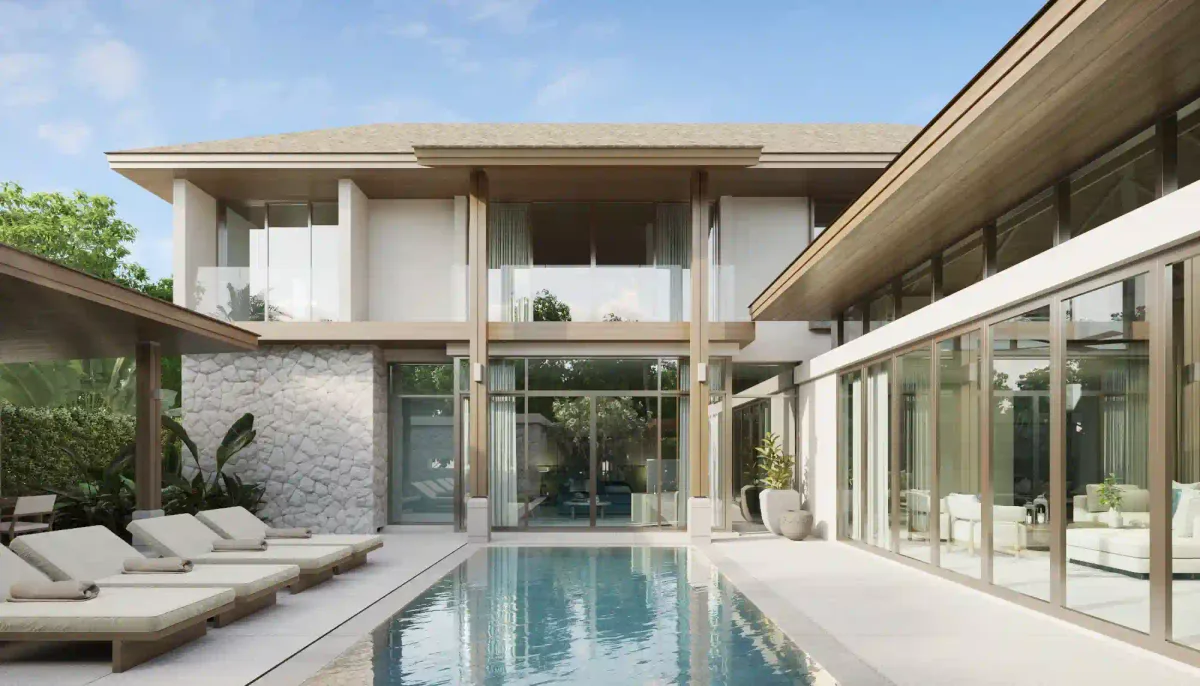
Villas are not better than condominiums; they are a different business, and the confusion between the two is where most disappointment comes from. A nightly rate of $300 to $600 looks decisive against a condominium’s $100 to $180 until you set out what a house costs to run.
Start with the fixed load. Grounds maintenance runs all year in this climate rather than seasonally. Pool service is weekly, and pool plant, like the roof and the air conditioning, replaces on a known cycle rather than arriving as a surprise. Cleaning is priced by the size of the house, so a changeover in a four-bedroom villa costs several times what a one-bedroom costs, and it happens on every stay regardless of the booking value. Where there is a staffed component, that is a payroll rather than a fee.
Then the occupancy shape. Villas fill on group and multi-generational bookings, which are planned months ahead and are less price-sensitive, but they are also less frequent, fewer, longer stays rather than a continuous calendar. The two occupancy bands this paragraph used to compare are withdrawn, neither being published for Phuket. The structural point stands without them: a large house carries its cost through the monsoon half of the year whether it is let or not, and that is where the difference between the two businesses shows up.
Management is the third difference and the one people underestimate. A condominium operator can run dozens of near-identical units from one system. A villa needs someone on site for arrivals, someone who knows which contractor to call at nine on a Sunday evening, and someone taking responsibility for a swimming pool and a garden. That is why villa management commonly takes 25-35% of gross rather than the lower end of the condominium range.
The result is a much larger capital commitment, a 29,800,000 THB median against 6,048,000 for a one-bedroom, so roughly five units’ worth, carrying a heavier cost stack against a thinner calendar. The gross band this sentence used to name is withdrawn; the capital ratio and the fee difference are both on the record. A villa can still be the right purchase, particularly for an owner who intends to use the house, but it is not the passive income a headline nightly rate suggests. Underwrite it as a business with staff and a maintenance programme, and note that only 14 of the island’s 172 villa schemes are finished, so in most cases you are underwriting a house that does not exist yet.
Area interaction: the same studio behaves differently by postcode
The unit type is only half the question. The same studio, finished identically, produces quite different numbers depending on which corridor it sits in, because the guest who books it is a different person in each place.
Patong runs on volume and short stays, which suits a studio and punishes anything that needs a quiet neighbour. Kamala draws a more selective guest at a higher rate but a thinner one, so guest quality and review scores matter more there than raw availability. Bang Tao’s resort ecosystem does work the unit itself cannot do, lifting both the rate and the resale story, and it charges for that in the entry price. Rawai mixes value tourism with a genuine long-stay resident market, which is why a unit there has a fallback that a purely touristic address does not.
The practical implication is that a format decision made island-wide is a guess. Benchmark against comparable units in the specific corridor, and preferably in the specific building, rather than against a Phuket average that describes nowhere.
| Area | Studio note | 1-bed note | 2-bed note |
|---|---|---|---|
| Patong | 44 priced studios at 255,000 THB/sqm, the dearest metre for the format | 149 priced 1BR at 231,864 | 9 priced 2BR in the whole area |
| Kamala | Selective guest, 34 priced studios only | 385 priced 1BR at 156,140 THB/sqm, a 7,074,432 median | 188 priced 2BR at 160,596 |
| Bang Tao | 198 priced studios, 21-41 sqm, none at 45 sqm or above | 2,914 priced 1BR, the deepest pool on the island | 1,213 priced 2BR at 172,817 THB/sqm |
| Rawai | 294 priced studios at 143,550 THB/sqm | 627 priced 1BR at 144,000, a 46 sqm median that keeps monthly letting open | 353 priced 2BR at 147,000 |
Occupancy vs ADR: the real optimisation problem
A useful rule: studios optimise nights, 1-beds optimise balance, 2-beds optimise gross revenue when family demand exists, if purchase price does not erase the advantage.
Management intensity by unit type
Operating cost does not scale with bedroom count in a straight line, and the differences are large enough to change which format wins.
A studio is the cheapest unit to service per changeover and the most exposed to changeover frequency, because the same cleaning and linen cost lands on a two-night booking as on a ten-night one. High occupancy is therefore a mixed blessing: the calendar looks excellent and the turnover cost is close to fixed, so a studio’s net is more sensitive to average length of stay than to occupancy percentage.
A one-bedroom sits in the easiest operating position. Stays are longer, changeovers are fewer per occupied night, and the fittings that matter, a decent bed, working air conditioning, reliable internet, a kitchen that functions, are the same ones that keep review scores high.
A two-bedroom carries family wear and a longer clean, but it also attracts longer bookings, which partly offsets both. Where it goes wrong is a two-bedroom bought for family demand in a corridor that does not produce families.
A villa is a different business altogether, as above. Fee levels of 25-35% of gross reflect real work rather than opportunism, and an owner tempted to self-manage from abroad should price the alternative honestly: the saving disappears the first time a bad review, a long vacancy or an emergency repair lands because nobody was there.
Resale liquidity: what future buyers want
The exit is decided by how many people are looking for exactly what you own, and that number varies more by format than by address.
One-bedrooms have the broadest pool in most corridors, because they work for an investor and for an owner-occupier, and because they clear the floor area at which the monthly letting market becomes available as a fallback. That optionality is worth real money to the next buyer.
Studios are narrower. They sell to investors rather than to residents, and below roughly 35 square metres most monthly tenants will not sign, which means the income case rests entirely on nightly letting and therefore on the building’s licence position. A buyer who understands that discounts for it.
Two-bedrooms depend on whether the corridor actually houses families. Where it does, in Kata, Karon and the Bang Tao and Cherng Talay corridor, they sell well and to a different audience than the investor pool. Where it does not, a two-bedroom competes with villas at a similar money and loses.
Premium Surin assets can be the exception to all of it: scarcity and brand dominate buyer behaviour there far more than bedroom count, and the buyer is a specific person rather than a market, which is why those sales are negotiated over months rather than weeks. The area holds 108 priced apartments in total, against Bang Tao’s 4,589, so “the Surin market” is a few dozen buyers and sellers who mostly know each other.
Furnishing standards: the hidden cost that changes yield
Furnishing is treated as a one-off setup line and behaves as a recurring one. Budget $8,000 to $18,000 for a one-bedroom to a proper letting standard, more where anything is made to order, and expect soft furnishings to need replacing every three to five years in this climate rather than lasting a decade.
Where the money goes matters more than how much of it there is. The four lines below carry disproportionate weight in review scores, and review scores are what set achievable occupancy in the shoulder season, which is where a year is won or lost.
| Spend category | What investors underestimate | Typical impact |
|---|---|---|
| Mattress + bedding | Guest sleep quality | Review score sensitivity |
| AC service | Humidity wear | Maintenance spikes |
| Kitchen kit | Family reviews | Refund risk |
| Router + backup | Remote workers | Longer stays in shoulder season |
Net yield worksheet (by unit type)
This worksheet used to state a purchase price, a gross rent, a gross yield, a net figure and a net yield for each format. Two things were wrong with it. The rent lines were invented, which made every yield line arithmetic on an invention. And the purchase prices were far below our own records: 2.5M, 3.8M and 5.5M THB against medians of 4,593,600, 6,048,000 and 10,335,480, so the yields were divided by the wrong denominators as well.
Rebuilt with the price side from the records and the revenue left blank, which is the only honest shape for it:
| Line item | Studio | 1-bed | 2-bed |
|---|---|---|---|
| Median purchase on our list (THB) | 4,593,600 | 6,048,000 | 10,335,480 |
| Median size | 31 sqm | 41 sqm | 66 sqm |
| CAM at 70 THB/sqm/month | −26,040 | −34,440 | −55,440 |
| Gross annual rent | from statements | from statements | from statements |
| Management, 25% of gross | 25% of that | 25% of that | 25% of that |
| Monthly tenant available? | No, below 35 sqm | Yes | Yes |
| Priced units at resale | 1,571 | 7,103 | 2,778 |
Fill the rent row from twelve months of actuals on a comparable unit in the building you are buying in, and the rest completes itself. Your operator’s fee schedule and the CAM rate move the outcome more than bedroom count does, and both are documents. Ask the management company, not the sales gallery.
Operator and furnishing: hidden unit-type costs
Two costs move with unit type and are routinely left out of a comparison.
The first is the operator’s fee schedule, which is rarely a single percentage. Ask what the headline fee covers and what is billed on top: cleaning per changeover, linen, consumables, platform commission, maintenance call-outs, and any mark-up on contractor work. On a studio those add-ons are proportionally the largest, because they are close to fixed per stay and the stays are short.
The second is the replacement cycle. A studio’s single room absorbs all the wear, a family two-bedroom takes harder use across more surfaces, and a villa has plant, a pool and a garden with their own schedules. Set aside an annual sum against each rather than treating replacement as an event.
For the wider purchase sequence, see the buying property in Phuket guide; to match a format to a corridor, the best areas guide compares them on tenant demand.
Buyer scenarios: matching format to intent
An investor buying purely for income, with no personal use, should start from the one-bedroom and only move away from it for a specific reason. It carries the best combination of occupancy, operating cost and resale audience, and it keeps the monthly market open as a fallback if the nightly one thins.
An investor working to a tight capital limit is the case for a studio, provided the entry price is genuinely disciplined. The format’s weakness is resale rather than income, so the holding period should be long enough for the income to matter and the building’s letting permissions should be confirmed in writing before purchase.
A buyer who will use the property several weeks a year is usually better served by a one- or two-bedroom than by a studio, because a unit you can live in comfortably is also a unit a longer-staying guest will pay for. Model the yield after your own weeks are removed from the calendar, not before.
A buyer set on a villa should treat it as a business with staff and a maintenance programme rather than as a larger apartment. It can be an excellent purchase for someone who wants the house; it is rarely the right answer for someone who wants passive income.
Final selection checklist
Six questions, in this order, settle the format decision on a specific building.
What is the floor area in writing, and is the figure saleable area alone or does it include the balcony and a share of the common parts? That difference runs to 15 or 20% and it decides which side of the monthly-letting threshold a unit lands on.
Does the building hold a hotel licence, and what do the house rules say about short lets? The Thai Hotel Act treats stays under 30 days as hotel business, and the house rules can prohibit them independently.
What have comparable units in this building actually achieved, month by month, in occupancy and rate? Not an annual average, and not an island-wide figure.
What does the operator’s fee cover and what is billed on top?
What is the CAM rate per square metre and the sinking fund contribution, applied to this unit’s area?
And who buys this format from you in five years, in this corridor?
Insider tip: ask the operator which unit type they would buy again in the same building, their answer often differs from the developer brochure. If they hesitate, that is data. Walk the building at night before you decide. Noise changes everything.
New supply beside you changes the calendar for every format at once, so count the competing units in the planning register before you model demand. Benchmark against comparable units in your own building and corridor rather than against island-wide averages, which describe nowhere.
Frequently Asked Questions
Often studios show strong occupancy, but yield depends on purchase price and fees. A cheap studio can yield well; an overpriced studio cannot, even with busy calendars.
They often earn higher gross revenue when family demand is strong, but not always higher yield % if the 2-bed costs far more to buy and furnish.
In many corridors, 1-bedroom condos have the broadest buyer pool. Exceptions exist in premium family areas where 2-beds are the standard product.
The nightly rate is the half of the question nobody can evidence, and the gross-yield band this answer used to give is withdrawn. What is on the record: a villa median of 29,800,000 THB against 6,048,000 for a one-bedroom condominium, a management fee commonly 25-35% of gross rather than 15-25%, a full cost stack for pool, garden, staff and structure that a condominium shares out through CAM, and 14 finished schemes out of 172. Underwrite the cost side, which is quotable, and require statements for the income side.
Family beach corridors like Kata/Karon and resort-scale zones like Bang Tao often fit, always verify comps inside your specific project.
Related Guides:
- 2-bedroom condo demand in Phuket, Family rental dynamics and yield trade-offs.
- Phuket rental yield guide, Gross vs net yields and fees.
- Best areas in Phuket to buy property, Match unit type to location.
Which format performs best depends on the building and the corridor rather than on a general rule, and the evidence for it is achieved occupancy and rate on comparable units, month by month. We assemble that for the specific projects on your shortlist rather than quoting island-wide averages.
Read Also:
Questions about this guide? Ask us on WhatsApp. The guide's title is already in the message, so you only need to write your question.
Ask on WhatsApp
Maksim Shchegolev
Founder, MORE Group
Founder of MORE Group. Four years in investment banking before moving to Phuket, where he has worked in the local property market since 2018. Oversees developer relationships and every engagement above $300K.
About MORE Group →Get a Focused Phuket Property Shortlist
Share budget, area and goal. We will reply with suitable live projects, not a generic catalogue.
