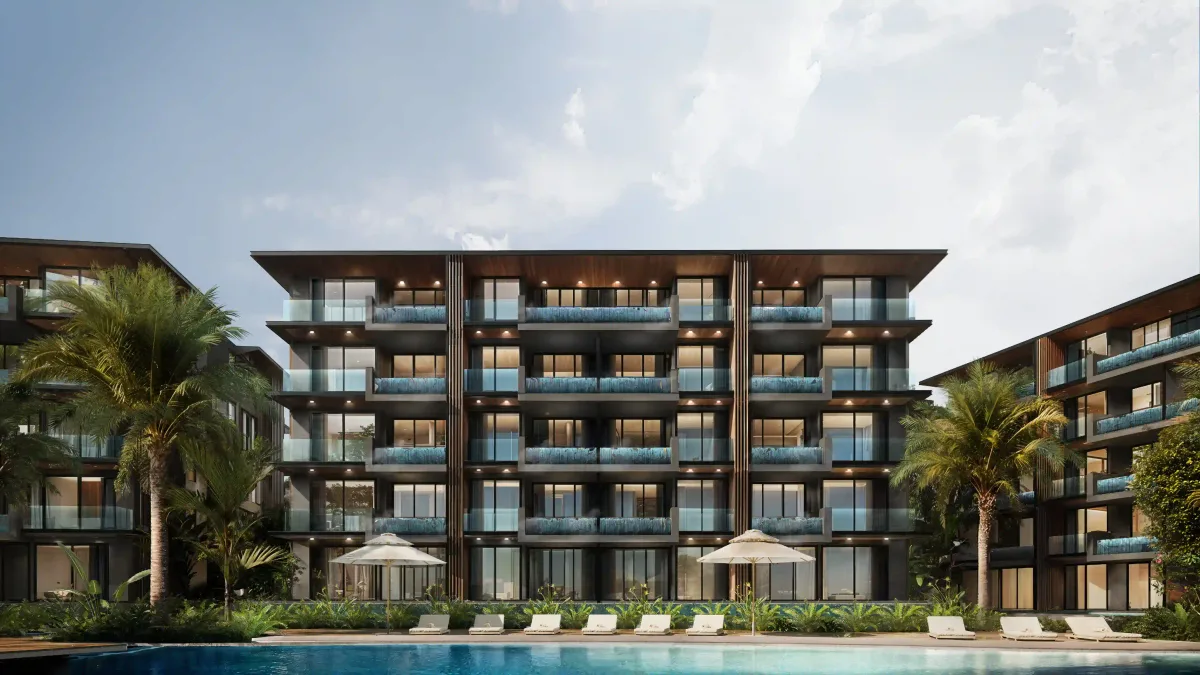
Layan looks finished. Vegetation, space between the roofs, a quiet cove, no towers. It is easy to walk a plot here and conclude that the character of the place is settled, because everything you can see supports that conclusion.
Nothing you can see is the reason. Layan is low-density because of what has not been built, and what has not been built is a fact about the present rather than a promise about the future. The green slope across the road is somebody’s land. So the premium you pay here, over Bang Tao, over Cherng Talay, over most of the west coast, is a bet on a restriction, and the entire due-diligence exercise is finding out whether that restriction is real, who it binds, and how long it lasts.
The four things that actually protect a Layan view
Buyers routinely rely on the wrong one. Only two of the four are durable, and the one everybody trusts most is worth the least.
| What people rely on | What it actually is | How durable |
|---|---|---|
| Vegetation and current emptiness | Evidence that nobody has developed yet, and nothing more | None. It is the default state, not a protection |
| The developer’s assurance | A statement about land the developer does not own or control | None once the project sells out and the company moves on |
| Elevation-based building control | Phuket restricts what may be built as land rises, tightening with height and prohibiting construction above the top threshold | Strong where the land is genuinely high, and it is a public rule rather than a favour |
| The comprehensive town-plan zone | The provincial land-use designation governing each plot, which sets density and permitted use | Strong, and checkable in advance at the planning office |
| A registered servitude | A right registered against the neighbouring title restricting what its owner may do, under the Civil and Commercial Code | The only one you control, and the only one that survives every change of ownership |
Elevation is Layan’s quiet ally. Phuket applies building controls that tighten as land rises above sea level, with construction prohibited above the highest threshold. Where the slope between your villa and the water is genuinely high, that rule is doing more to preserve your outlook than any covenant. Where the intervening land is low and flat, it is doing nothing at all. So the useful question is not “is the hillside protected” in general: it is what elevation each intervening plot actually sits at, measured, and what the regulation in force permits at that elevation.
The town-plan zone is the document nobody reads. Every plot on Phuket sits in a designated land-use zone that sets what may be built on it. Two plots that look identical under the same trees can carry different designations and therefore different futures. This is checkable before you offer, by anyone, and it is the single highest-value hour of diligence available on a Layan purchase.
A servitude is the only protection you own. Thai law allows a right to be registered against a neighbouring plot’s title requiring its owner to refrain from exercising rights of ownership, including building above a stated height. Registered, it binds every subsequent owner of that land, not just the person who agreed to it. It is unusual, it requires the neighbour’s agreement and usually money, and on a purchase where the view is a substantial share of the price it is the difference between owning a view and hoping for one. Almost nobody asks. On an ultra-prime plot, it is the question that separates a considered purchase from an expensive assumption.
Insider tip: at the Land Office, ask for the title documents of the plots between your villa and the sea, not your own. You want to know who owns them, what title type they hold, and whether anything is registered against them. A neighbouring plot on full Chanote title, held by a company rather than a family, is a plot that can be developed quickly when someone decides to. That is a twenty-minute enquiry, and it prices the view you are about to pay for.
What Layan costs
| Unit type | Typical size | Indicative price range | Notes |
|---|---|---|---|
| 1-bedroom condo | 38-55 sqm | $190,000-$320,000 | Thin inventory; the area is not built around condominium stock |
| 2-bedroom condo | 65-95 sqm | $350,000-$650,000 | Foreign-quota units move when priced honestly rather than aspirationally |
| 3-bedroom pool villa | 250-380 sqm built | $650,000-$1.2M | Typically 400-700 sqm plots; the plot boundary matters more than the build |
| 4-bedroom pool villa | 380-550 sqm built | $1.1M-$2.0M | Family use with selective rental weeks; 800-1,200 sqm plots |
| Luxury seaview villa | 550-900+ sqm built | $2.0M-$5.0M | Hillside panorama, 1,500-3,000 sqm plots; the view is most of the price |
| Ultra-prime estate | 900+ sqm, full frontage | $5M-$15M+ | Thin liquidity and long underwriting cycles in both directions |
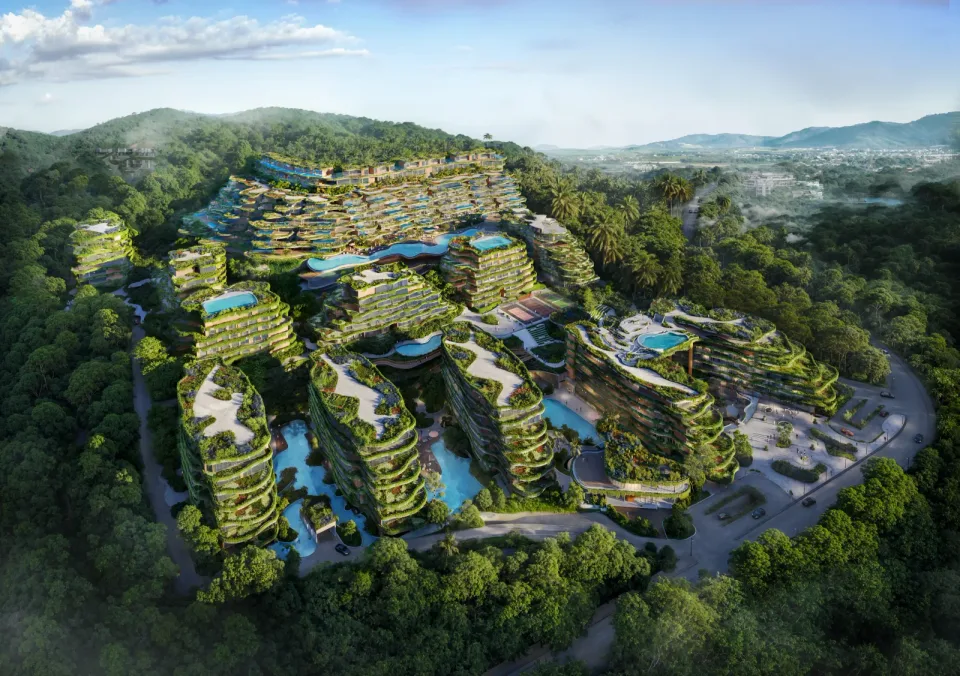
On our price lists, Botanica Lakeside 2 offers three and four-bedroom villas on private lake plots from 24.9M THB, and Botanica Forestique brings three and four-bedroom forest villas from 36.4M THB, both a short drive from Layan Beach.
Read the last two rows against the section above. Once a view is most of what you are paying for, the security of that view is most of what you are underwriting, and it is the only component of the price that can be destroyed by a stranger with planning permission.
Ownership, and why the structure question is heavier here
A foreigner cannot hold freehold title to land anywhere in Thailand, which makes almost every Layan purchase a structuring exercise rather than a simple transfer. The routes are a registered lease, limited to a thirty-year term and requiring registration to bind beyond three years, or a Thai company holding the land, which is a genuine corporate obligation rather than a formality and needs independent counsel who is not the developer’s.
Condominium units remain the one clean path, held freehold inside each building’s 49% foreign allowance measured by floor area, but Layan has comparatively little of that stock, and buying a condominium here to avoid the villa structuring question usually means buying a different area’s product in Layan’s postcode.
What makes this heavier in Layan than elsewhere is the interaction with everything above. Your protection against future development next door depends on rights that attach to land, and your relationship to land here is indirect. A lessee has weaker standing to enforce than an owner does; a company structure has to actually function to exercise a right years later. Whatever you register against the neighbour’s title needs to be enforceable by the entity that will still exist when it matters, which is a question for counsel at the structuring stage rather than a problem to discover in year eight.
The villa operating reality
The economics here are not a scaled-up condominium, and the gap catches most first-time buyers.
- Operating cost intensity is materially higher. Pool service, garden service, security, air conditioning across many units, periodic replacement of soft goods, and a manager who answers at night. Net erodes away from gross far faster than it does in a managed building.
- Revenue is concentrated into a short window. Premium villa income arrives disproportionately in the high season and selected event weeks. A weak December is not a slow quarter, it is most of the year.
- Owner-use is the largest line in the model and never appears in it. Most owners here block substantial time for themselves. Model the weeks you will genuinely offer, not a twelve-month calendar you have no intention of honouring.
- Presentation drives rate more than location does. Cheap photography of a multi-million-dollar villa destroys its rate. Owners who do well here use proper architectural photography and a small number of vetted operators rather than listing everywhere.
If rental income is a real part of your thesis rather than an offset against running costs, read the Phuket rental yield guide next, which sets out how net collapses when management is wrong.
Walk three Layan villas in one tour day
Entry, mid-prime and ultra-prime back to back, with the intervening plots checked before you see them. Developer-direct pricing, 0% buyer commission, full legal support.
What Layan does well, and what it costs you
It cannot be densified quickly. Whatever happens to the corridor south, the constraints on this pocket are structural rather than fashionable. That is the advantage, and it is why the buyer pool is patient.
It holds an address through a soft market. When luxury travel compresses, the properties that suffer least are the ones whose appeal was never about footfall. Layan’s appeal has never been about footfall.
It is genuinely quiet. Lower density, more vegetation, less traffic, and a beach that stays calm when Bang Tao does not. For a family with young children or someone working from the property, that is a daily difference rather than an atmospheric one.
It costs you walkability, completely. Nothing here is a short walk from anything. A car is not optional. Buyers discount this during a viewing and feel it every day afterwards, and guests who want to walk to dinner book elsewhere.
It costs you comparability. There is no anchor estate setting the benchmark the way Laguna does in Bang Tao, so two villas a few hundred metres apart can differ enormously in plot, aspect, access and build quality with nothing to price them against. Expect to compare three or four projects directly rather than reading one brochure.
It costs you speed at exit. Villa sales here are measured in months and often longer, because the buyer who wants this is a specific person who must be found rather than a market standing by. The prime band is more liquid than the ultra-prime band; plan on the slower of the two.
It costs you developer risk. You are more likely to be dealing with a smaller company on a single project than an established estate developer on its tenth phase. That raises the weight of the snag list, the warranty, and who is left to honour either.
Buyer scenarios
| Profile | What fits | The question that decides it |
|---|---|---|
| Long-hold family buyer, $650K-$1.2M | 3-bed pool villa on a defensible plot | What is the town-plan zone of every plot between you and the water? |
| Second-home owner with selective letting, $1.1M-$2.0M | 4-bed villa, professional management | How many weeks will you genuinely release, and does the model use that number? |
| View-led buyer, $2.0M-$5.0M | Hillside seaview villa | Is the outlook protected by elevation, by zoning, or by nothing? |
| Ultra-prime, $5M+ | Full-frontage estate | Have you priced a registered servitude over the land below you? |
| Yield-first buyer | A managed condominium south of here | Do you want a villa, or do you want a return? Layan answers only the first |
Across all of these, the right answer in Layan is rarely the cheapest villa available. It is the one whose plot, structure and surroundings age best across a decade, because a decade is the holding period this area is built for.
Buyers from India will find the remittance staging, FEMA and treaty questions handled separately in the Phuket property guide for Indian buyers; the ownership analysis on this page applies unchanged.
Before you commit in Layan
- The intervening plots. Owner, title type, town-plan zone and measured elevation for every plot between your villa and the view you are buying. Do this before you offer, not during the contract.
- Title and structure. Chanote title confirmed, lease registration or company structure reviewed by counsel who is not the developer’s, and clarity on which entity can enforce a neighbouring restriction years from now.
- Estate governance. Monthly fees, sinking-fund balance, recent capital works, and the track record of the juristic person, including road resurfacing and salt-air corrosion, which are real costs here.
- Slope and drainage, in monsoon season. Stormwater behaviour and access-road condition in the rain tell you what dry-season photography cannot.
- Access roads. Much of Layan’s stock sits on private or shared roads. Establish who owns them, who maintains them, and whether your right of way is registered.
- Build quality and warranty. An independent snag list at handover for new build; for resale, a professional inspection plus a refurbishment reserve covering air conditioning, soft goods, kitchen wear and repaint cycles.
- Letting rules. Whether short-term letting is permitted in the project, whether the written rules match practice on the ground, and what licence position applies.
- The management agreement. Fee basis, whether it is struck on gross or net of platform commission, owner-use blocking rules, reporting cadence, and termination terms.
Frequently Asked Questions
Low density - which means you are paying for land that has not been developed rather than for anything on your own plot. That makes the premium a bet on a restriction holding. Establish what protects the space around you before you accept the price: the town-plan zone of the neighbouring plots, their elevation, and whether anything is registered against their titles. Vegetation is not a protection, it is just the current state.
No. Freehold land ownership is not available to foreigners anywhere in Thailand. Layan villas transact through a registered lease, limited to a thirty-year term and requiring registration to bind beyond three years, or through a Thai company structure that has to be a genuine operating entity rather than a device. The structure decides your effective rights, your exit options and your tax position, so it needs independent counsel rather than a copy of the developer's arrangement.
Sometimes, and only in advance. Three mechanisms do real work: Phuket's elevation-based building controls, which tighten as land rises and prohibit construction above the top threshold; the comprehensive town-plan zone governing each plot; and a servitude registered against the neighbouring title, which binds every future owner of that land. The third is the only one you control, it requires the neighbour's agreement, and on a view-led purchase it is worth pricing seriously.
Bang Tao is a branded, high-density resort corridor anchored by a master development that keeps running the infrastructure after you buy. Layan has no anchor estate, no towers and no single developer, which is why it is quiet and also why it is harder to compare properties within it. Bang Tao generally wins on letting yield for condominiums and on convenience; Layan wins on plot, privacy and long-hold defensibility.
Lower net than the headline gross suggests, and lower than a managed condominium south of here. Villa operating costs are heavy, revenue concentrates into a short high season, and owner-use removes weeks that models tend to keep in. Ask for audited comparable statements rather than brochure figures, and model only the weeks you will genuinely release for letting.
Paying a privacy premium that is not legally secured, then watching the neighbouring plot develop. After that: ownership-structure complexity, hillside drainage on some plots, developer risk on small single-project companies, villa operating costs, and slow resale in the ultra-prime band. All of them are diligence problems rather than surprises, and all of them are cheaper to solve before the offer than after.
Information in this guide reflects general market observations and is not a substitute for independent legal, tax or financial advice. Prices and bands are indicative and should be validated against live pricing and the Thai regulations in force before any commitment.
Related Guides:
- Bang Tao & Laguna Property Guide, the master-planned corridor immediately north
- Surin Beach Property Guide, scarcity priced a different way
- Cherng Talay Property Guide, the retail and school spine Layan depends on
- Phuket Rental Yield Guide, where villa net departs from villa gross
- Phuket Property for Indian Buyers (2026), remittance staging and treaty questions
- India Hub: Buy Property in Phuket, the corridor pages for Mumbai, Delhi NCR, Bangalore and Hyderabad
Market signals to watch
- Watch what is being approved rather than what is being marketed. Layan’s value rests on low density, and the thing that would erode it appears in planning records long before it appears in a brochure.
- Watch the Bang Tao and Cherng Talay pipeline as well as Layan’s own. A large wave of completions two kilometres south competes for the same guests without being in the same area.
- Watch resale times rather than asking prices. Villa asking prices are sticky and say very little; how long well-priced stock actually takes to sell is the real signal, and it is a question for agents rather than portals.
- Watch the access roads. Much of the stock here sits on private or shared roads, and their condition and maintenance arrangements move values more than buyers expect.
Questions about this guide? Ask us on WhatsApp. The guide's title is already in the message, so you only need to write your question.
Ask on WhatsApp
Maksim Shchegolev
Founder, MORE Group
Founder of MORE Group. Four years in investment banking before moving to Phuket, where he has worked in the local property market since 2018. Oversees developer relationships and every engagement above $300K.
About MORE Group →Compare Phuket Projects for Your Area and Budget
Send your preferred area, budget and timeline. We will shortlist live developer projects.
