Resort Market vs City Market in Thailand: Which Property Strategy Wins?
Resort markets (Phuket, Koh Samui) offer 7-14% yields with seasonal volatility. City markets (Bangkok) offer 4-6% with consistent occupancy. Which strategy wins?
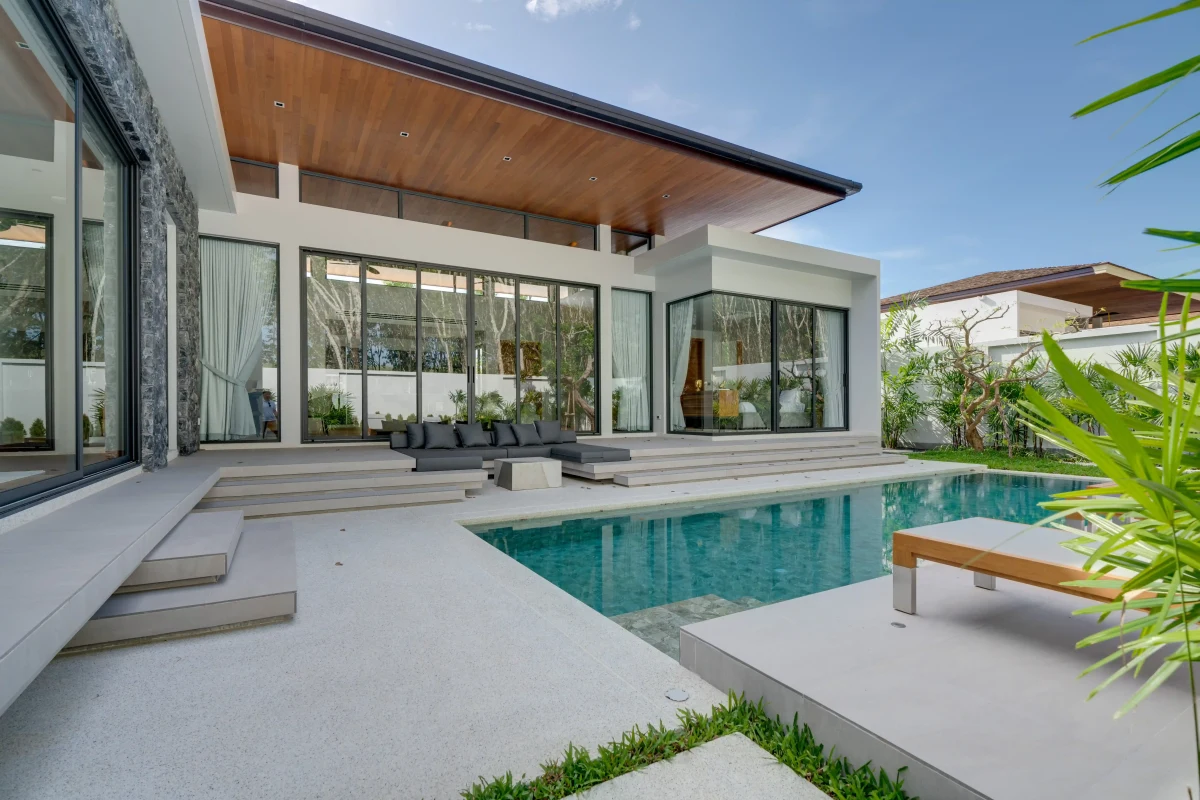
Resort Market vs City Market in Thailand: Which Property Strategy Wins?
Resort markets (Phuket, Koh Samui, Hua Hin) offer higher gross yields (7-14%) and lifestyle benefits but with seasonal volatility. City markets (Bangkok) offer lower yields (4-6%) but more consistent occupancy, stronger domestic demand, and deeper overall liquidity. The optimal choice depends on your income goals, lifestyle priorities, and risk tolerance — and the data shows that Phuket occupies a unique middle position that outperforms a simple resort/city binary.
Get Expert Guidance on Thailand Property
MORE Group specialises in Phuket property for foreign buyers. Free consultation, 0% buyer commission.



The Core Comparison
| Factor | Resort Markets (Phuket, Samui, Hua Hin) | City Market (Bangkok) |
|---|---|---|
| Gross yield | 7-14% | 4-6% |
| Net yield (after costs) | 5-9% | 3-5% |
| Occupancy pattern | Seasonal peaks (Oct-Apr for Phuket) | Year-round consistent |
| Primary tenant | International tourists / expats | Thai professionals / expats |
| Capital appreciation | 4-8%/yr (prime Phuket) | 3-5%/yr (prime Bangkok) |
| Price volatility | Moderate (tourism-linked) | Low (domestic demand) |
| Resale liquidity (foreign) | High (Phuket), Low (Samui/Hua Hin) | Medium |
| Management intensity | Higher | Lower |
| Lifestyle factor | High | Lower (urban) |
| Entry price | from $72k (Phuket) | from $80k (outer Bangkok) |
Which strategy matches your goals?
Our experts map your budget and objectives to the strongest Thailand market for your specific situation.
Yield Analysis: Gross vs Net vs Risk-Adjusted
The headline yield gap between resort and city markets (7-14% vs 4-6%) is real but requires risk adjustment to be actionable.
The Risk Adjustment Factors for Resort Markets
Seasonal vacancy: Phuket’s low season (May-September) typically delivers 40-60% occupancy, compared to 70-85% in high season. The annual blended occupancy for a well-managed property in a prime zone runs approximately 65-75%. Properties in poorly managed buildings or secondary zones can drop to 45-55% blended occupancy — materially reducing yields.
Management costs: Professional resort management (hotel-affiliated programmes or specialist managers) typically charges 15-25% of gross revenue — significantly higher than Bangkok’s 8-12% management fee standard. This reflects the higher operational intensity of short-stay resort management versus long-term residential management.
Maintenance intensity: Short-stay rental properties require more frequent maintenance — pool servicing, air conditioning maintenance, furniture replacement, cleaning between guests. Maintenance costs in a Phuket resort condo run 3-5% of property value annually versus 1-2% for a long-stay Bangkok condo.
The yield calculation after these adjustments:
| Scenario | Gross Yield | Management (20%) | Maintenance (4%) | Net Yield |
|---|---|---|---|---|
| Phuket prime (well managed) | 10% | -2% | -0.4% | 7.6% |
| Phuket prime (average managed) | 8% | -1.6% | -0.4% | 6% |
| Bangkok Sukhumvit prime | 5% | -0.5% | -0.15% | 4.35% |
| Bangkok Sukhumvit (long-stay) | 6% | -0.72% | -0.15% | 5.1% |
Net yields in the 5-8% range for Phuket versus 4-5% for Bangkok prime — a gap that is real but smaller than the headline gross yield differential suggests.
Risk-Adjusted Returns: Adding Capital Appreciation
Total return is the more complete metric:
| Market | Net Yield | Capital Appreciation | Total Annual Return |
|---|---|---|---|
| Phuket prime (Bang Tao) | 6-8% | 5-8% | 11-16% |
| Phuket mid (Rawai) | 5-7% | 3-5% | 8-12% |
| Bangkok prime (Phrom Phong) | 4-5% | 4-5% | 8-10% |
| Bangkok outer (On Nut) | 5-6% | 4-6% | 9-12% |
| Koh Samui prime | 5-8% | 2-4% | 7-12% |
| Hua Hin | 3-5% | 2-3% | 5-8% |
Phuket prime zones lead on total return. Bangkok outer zones are competitive with Koh Samui and comfortably outperform Hua Hin. The resort/city binary is less useful than the zone/management quality combination within each market.
Occupancy Pattern Comparison
The seasonal pattern is one of the most important operational considerations for resort market investors.
Phuket Seasonality
Phuket’s peak season (October-April) aligns with the European winter escape market — this drives the highest occupancy (75-90%) and the highest nightly rates (often 30-50% above shoulder season). The monsoon low season (May-September) brings reduced international tourism, with Asian visitors (who travel year-round) providing a demand floor.
Well-managed prime zone properties maintain:
- High season (Nov-Mar): 80-90% occupancy
- Shoulder (Oct, Apr): 65-75% occupancy
- Low season (May-Sep): 45-60% occupancy
- Annual blended: 65-75%
Properties in secondary zones or without active management can drop to:
- High season: 60-70%
- Low season: 25-40%
- Annual blended: 45-55%
The management quality gap between the best and worst Phuket operators is the biggest source of yield variation in the market.
Bangkok Year-Round Consistency
Bangkok’s rental market runs at 70-85% occupancy year-round for quality condos in prime zones. There is no equivalent of Phuket’s low season — corporate expat demand, domestic professional demand, and business travel are consistent throughout the year.
For risk-averse investors who cannot tolerate the cash flow volatility of seasonal markets, Bangkok’s consistent monthly income is a genuine advantage. The trade: lower absolute amounts, but reliable.
Liquidity Comparison
| Market | Foreign Buyer Resale Time | Thai Domestic Market | Price Premium/Discount |
|---|---|---|---|
| Phuket (prime) | 6-12 months | Limited (foreigners buy) | Premium available in peak periods |
| Phuket (mid-market) | 10-18 months | Some Thai buyers | At or below market |
| Bangkok (prime) | 6-10 months | Dominant | Thai buyers may pay below foreign purchase |
| Koh Samui | 18-36 months | Very limited | Often at discount |
| Hua Hin | 12-24 months | Some Thai buyers | At or below market |
For foreign owners who might need to exit, Phuket and Bangkok offer the strongest liquidity — but for different buyer pool reasons. Phuket’s liquidity is international (works for foreign sellers selling to foreign buyers). Bangkok’s liquidity is primarily domestic Thai — which can mean a price discount when a foreign seller needs to exit to a Thai buyer market.
The Lifestyle Factor: Why It Changes the Calculation
For buyers who will use the property personally, the lifestyle factor changes the total return calculation fundamentally.
A resort property in Phuket provides:
- Personal holiday use (2-4 weeks/year savings of $3,000-$10,000 in hotel costs)
- Lifestyle enjoyment that has a personal valuation above and beyond financial return
- Potential for retirement or lifestyle migration use in future
These are real economic benefits — personal use substitutes for hotel expenditure — but they’re difficult to include in a standardised financial comparison.
| Lifestyle Value | Resort Market | City Market |
|---|---|---|
| Holiday / leisure use | High (beach, resort amenities) | Low (urban, no resort experience) |
| Retirement potential | High (resort lifestyle) | Low (Bangkok urban is a different lifestyle) |
| Pride of ownership | High | Moderate |
| Guest accommodation | Excellent | Limited |
| Personal enjoyment | High | Moderate |
If personal use value is factored at even $5,000-$10,000 annually (conservative estimate of saved hotel cost for 2-3 weeks of personal use), the resort market total return advantage over Bangkok increases substantially.
Investment Recommendation Matrix
| Investor Type | Recommended Strategy | Specific Market |
|---|---|---|
| Pure investment, passive, medium risk | Resort + managed hotel programme | Phuket Bang Tao / Cherng Talay |
| Pure investment, active, higher risk | Resort yield maximiser | Pattaya Wongamat or Phuket Patong |
| Capital preservation, passive | City blue-chip | Bangkok Phrom Phong / Thong Lo |
| Lifestyle-investment hybrid | Resort, lifestyle zones | Phuket Kamala / Rawai / Laguna |
| Portfolio builder (2+ properties) | Resort primary + city secondary | Phuket + Bangkok On Nut |
| Retirement base | Resort or retirement town | Phuket (active) or Hua Hin (quiet) |
The clearest conclusion from the data: Phuket’s prime zones offer the best risk-adjusted total return for investment-focused buyers. Bangkok wins only on absolute capital stability (lowest volatility). The yield-focused buyer who can manage seasonal cash flow is better served by Phuket’s prime zones than Bangkok’s consistent but lower-return profile.
Frequently Asked Questions
Yes — resort markets deliver higher gross yields. Phuket prime zones achieve 7-12% gross versus Bangkok's 4-6%. Net yields after management and maintenance are also higher in Phuket (5-9% vs 3-5% in Bangkok). The key difference is occupancy consistency: Bangkok delivers year-round stable occupancy, Phuket delivers higher annual income but with seasonal variation requiring management expertise to optimise.
Both can work as passive investments, but Phuket's passive income potential is higher (higher yield) if managed by a professional operator. The critical factor: a Bangkok condo on a long-term lease to a corporate expat requires minimal management. A Phuket resort condo on short-stay rotation requires professional management — but the right professional management delivers passive income to the owner. The best Phuket hotel-affiliated programmes require essentially zero owner involvement while generating 7-10% net annual income.
Low season (May-September) is a genuine factor in Phuket rental performance. Occupancy in well-managed prime properties drops to 45-60% in low season compared to 80-90% in high season. Well-managed properties compensate through: platform diversification (Airbnb, Booking.com, direct channels), targeting Asian source markets that travel year-round (Chinese, Singaporean, Indian), and attracting longer-stay bookings from nomads and remote workers during this period. Properties without active management suffer significantly more in low season.
With equal total budget, a comparison: one Phuket condo at $200,000 might deliver 10-14% total annual return (7-9% yield + 5-6% appreciation) — $20,000-$28,000 annually. Two Bangkok condos at $100,000 each might deliver 7-9% total return each — $14,000-$18,000 annually combined. On financial return, the single Phuket property typically outperforms. Two Bangkok condos offer diversification benefits and more stable cash flows. The portfolio question depends on risk preference and whether Phuket management quality is secured.
Phuket's vacancy risk is seasonal — predictable and manageable with proper planning. Annual blended vacancy of 25-35% in well-managed prime zones is the realistic range. Bangkok's vacancy risk is lower in absolute terms (10-20% for prime Sukhumvit) and less seasonal. However, Bangkok's vacancy risk is more correlated with domestic economic conditions (Thai business cycle), while Phuket's is diversified across multiple source countries. Both risks are manageable with quality properties and management, but they're different in character.
If you use the property personally (2-4 weeks per year), the value of saved hotel accommodation (conservatively $3,000-$10,000 annually at Phuket resort hotel rates) adds to effective returns without appearing in financial statements. Combined with the financial return, this makes the resort property case even stronger for buyers who plan to use the property. For purely passive investors who will never use it personally, the lifestyle factor doesn't appear in the return calculation — and the financial comparison with Bangkok alone is still favourable to Phuket's prime zones.
Read Also
- Best City in Thailand for Foreign Property Buyers 2026
- Bangkok Property for Capital Preservation Buyers
- Phuket Property Hotspots 2026: The Zones Seeing the Most Action
- Which Thai Property Market Has the Best Liquidity?
- Thailand Property Hotspots 2026: Where Smart Money Is Moving
Get Your Phuket Property Shortlist
Tell us your budget and goals — our expert sends a shortlist within 2 hours.

MORE Group Editorial
Phuket Real Estate Experts
The MORE Group team has helped 500+ European and American buyers purchase property in Thailand. We provide legal support, 0% commission, and on-the-ground expertise with 8 years in the Phuket market.
Get Your Phuket Property Shortlist
Tell us your budget and goals — our expert sends a shortlist within 2 hours.