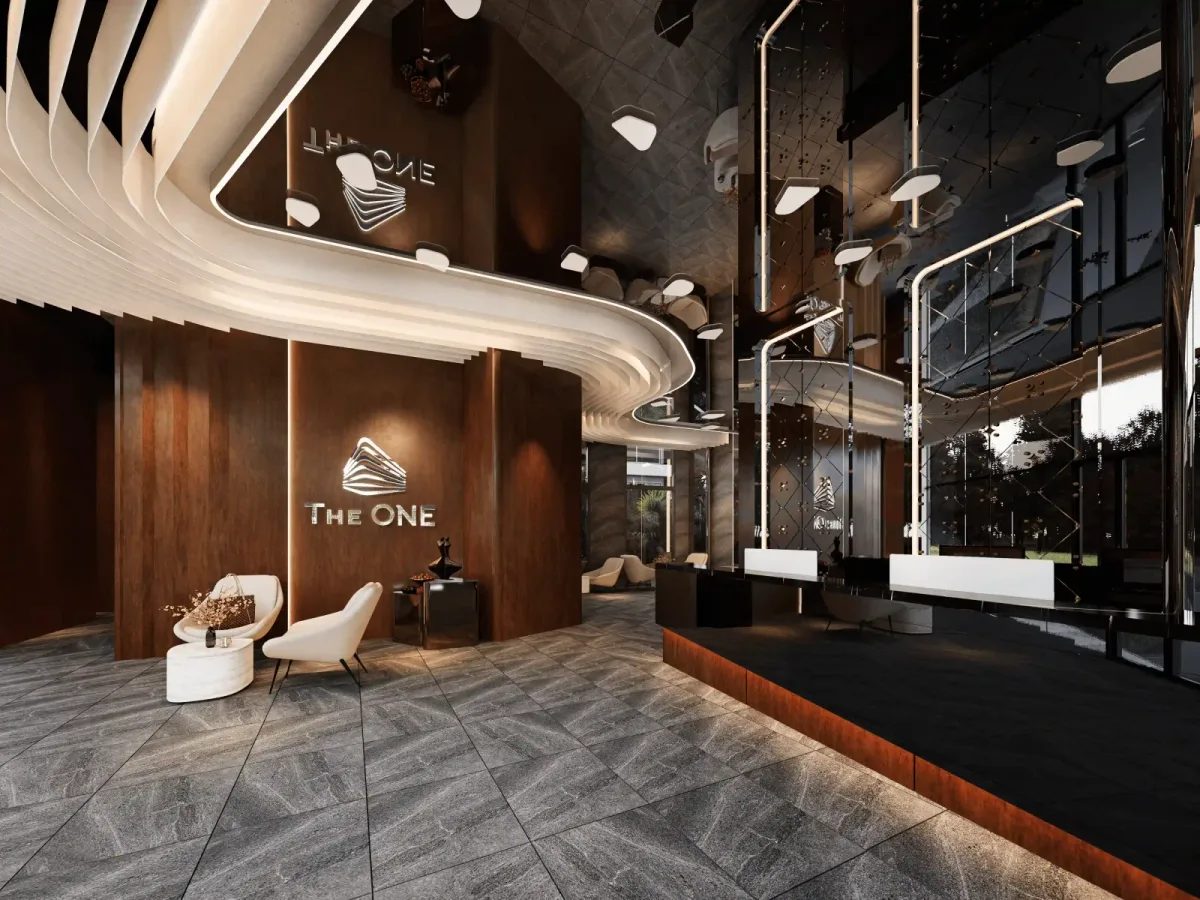
Case for Sansiri: what the brand genuinely delivers
1. A listed counterparty rather than a single-project shell
Sansiri trades on the Stock Exchange of Thailand, which imposes disclosure obligations that a privately held developer does not carry. For foreign buyers, this means:
- You can review Sansiri’s financial health, debt ratios, and project progress through SET filings before signing anything
- Construction delays, financial distress, or ownership disputes must be disclosed as material events
- The company’s assets and governance are structured under Thai corporate law with shareholder accountability
Compare this to the typical Phuket alternative: many Phuket developments are sold through project-specific Special Purpose Vehicles (SPVs), shell companies created for a single development. These have no history, no published accounts, and no accountability beyond the single project. If the developer runs into trouble, your recourse is against an entity that may have no assets.
The SET-listed difference is not theoretical. Phuket has a documented history of developer non-delivery in smaller projects. Sansiri’s governance structure eliminates most of this risk category.
2. Forty years of completion history
Sansiri has delivered over 400 projects since 1984. Not 400 projects in planning, 400 completed, handed over, residents-living-in-them projects. This is a track record that covers multiple Thai economic cycles including the 1997 Asian financial crisis, the 2008 global financial crisis, and the 2020 pandemic.
What on-time delivery actually means for your return:
Off-plan buyers in Phuket often underestimate the cost of delayed delivery. If you purchase expecting income from Q1 2027 and the developer hands over in Q4 2028, you have lost eighteen months of whatever the unit would have earned, plus eighteen months of carrying cost on capital already paid in. The worked example this paragraph used to give is withdrawn, it applied a gross yield to a purchase price, and no Thai yield has been measured to apply. The carrying cost, though, is arithmetic you can do exactly: take the tranches you will have paid by the original handover date, apply whatever your money earns elsewhere, and multiply by the delay. That number is real, it is usually larger than buyers expect, and it does not depend on a single assumption about rent.
Sansiri’s completion track record reduces this risk, not to zero, but to a materially lower probability than the field average.
3. Pet-friendly policy: a real market differentiator
Sansiri’s formal pet-welcome policy across The Base Cherngtalay and Rhea by Sansiri is not a minor feature. In a Phuket condo market where the vast majority of buildings prohibit pets, Sansiri has created a product category that captures a large and underserved tenant segment.
Long-stay European and Australian residents make up a substantial share of Phuket’s foreign rental demand, and a meaningful number of them arrive with a dog. Those tenants have very few alternatives in the premium condo segment, which tends to mean longer tenancies and less turnover rather than simply a higher rent. Ask the building’s manager what the average tenancy length has actually been, since reduced turnover is where the money is, not the headline rate.
This is a genuine competitive moat that creates durable rental demand differentiation.
4. The 33 billion THB pipeline signal
Sansiri’s commitment to 29 projects in Phuket through 2029 worth 33 billion THB is the strongest single signal of institutional confidence in Phuket’s real estate market currently available. This is not a developer chasing a quick sale, this is a 40-year-old listed company making a multi-year, multi-billion-baht bet on the island’s trajectory.
For individual buyers, this pipeline matters because:
- Sansiri’s brand presence in Phuket will deepen over 5 years, increasing international buyer recognition and resale demand
- The company is clearly planning to be in Phuket for decades, no exit in sight
- Management and after-sales service infrastructure will scale with the portfolio
What the premium buys, item by item
The honest way to judge a brand premium is to name what it is actually paying for and then decide whether each item is worth its share.
| What you are paying for | Real or marketing | How to test it before you buy |
|---|---|---|
| Low probability of non-delivery | Real | Read the SET filings and visit two completed Phuket projects |
| A completed building you can inspect | Real, on CANVAS and The Base Cherngtalay | Walk the actual unit, not the show unit |
| Shorter marketing period at resale | Real but modest | Ask agents how long comparable Sansiri units took to sell |
| Higher rent than the building next door | Mostly marketing | Compare achieved rates per square metre, not asking rates |
| Better building management | Depends on the juristic person, not the developer | Read the CAM rate history and the sinking fund position |
| Pet policy | Real, and rare here | Confirm it is in the building rules, not just the brochure |
Buyer scenarios: when Sansiri Phuket makes sense
Scenario A, Pet-owning expat landlord: European and Australian long-stay tenants with dogs pay premiums for Sansiri’s pet-welcome policy, model 12-month leases at 5-10% above non-pet buildings in Cherngtalay.
Scenario B, Yield hunter under $100K: The Base Rise at around $78K in Wichit shows the strongest gross figures in Sansiri’s Phuket range, because the entry price is low rather than because the rent is high. Resale liquidity is thinner than the beach-zone products, and the gross number should be modelled net before it means anything. Compare Origin Property alternatives before committing.
Scenario C, Off-plan with timeline buffer: Rhea by Sansiri and The Base Rise require 12-24 months before income, only suitable if you can carry capital without rental cash flow and accept THB currency exposure.
Scenario D, Portfolio builder: Buyers adding a second Phuket unit often choose Sansiri for brand consistency at resale, international buyers recognize SIRI filings more than local SPV developers.
Red flags to check on any Sansiri purchase
- Quota certificate missing at deposit: Demand written foreign freehold quota confirmation, verbal assurances fail at Land Department.
- Management agreement lock-in: Some rental programs restrict owner weeks to 30-60 days/year, read before assuming full personal use.
- Remaining inventory = weaker units: At 90% sold on The Base Cherngtalay, unsold units may face road noise or lower floors, inspect, do not buy blind from floor plans.
- Gross yield marketing: a brochure yield is not a measurement (Thailand keeps no letting register) so treat any percentage in a sales deck as a target. What is quotable is the cost stack it would be deducted from: see how the deduction side is built.
- Off-plan without delay buffer: Budget 3-6 months beyond marketed completion for any Phuket project, Sansiri beats averages but is not immune.
Insider tip: Review Sansiri’s latest SET quarterly filing before SPA signing, material construction delays must be disclosed, giving you leverage to renegotiate payment schedules if timelines slip.
Case against: where Sansiri falls short
The premium, measured on price rather than on yield. The worked comparison that stood here ran an assumed identical rental income through two purchase prices to produce two yields, and both the income and the two prices were wrong: the income was invented, and The Base Cherngtalay starts at 7,686,000 THB ($235,046) on our file rather than $215K.
The premium is real and it can be measured without inventing anything. Across our price list Sansiri’s median square metre is 123,333 THB against 134,500 for Origin and 153,000 for The Title, so on the metre Sansiri is the cheaper of the three large developers we hold, not the dearer one. Against the island’s own areas the comparison is sharper: Sansiri’s two Bang Tao schemes sell into a corridor whose median metre is 161,000 THB, and its two Wichit schemes into one at 111,786.
What that means in practice is that “the Sansiri premium” is a claim about a specific unit against a specific alternative, not a property of the brand. Get both price lists, divide each by floor area, and the premium either exists on that pair or it does not. The counter-argument (resale liquidity, brand recognition, management quality) is reasonable and untestable here, because no resale series is published for Phuket. Pay it as a judgement, not as a calculation.
2. Limited remaining inventory in the most desirable projects
The projects with the strongest investment case, CANVAS Cherngtalay and The Base Cherngtalay, are the most sold-out. CANVAS is 70% sold (approximately 52 remaining units), and The Base Cherngtalay is 90% sold (approximately 34 units). This means:
- Limited choice of floor, orientation, and configuration
- The best-positioned units (corner units, high floors, sea-view positions) are likely already gone
- Decision pressure is real, the buyer who hesitates may find the zone of availability closing
This is not a knock on Sansiri, high sell-through rates indicate strong demand. But buyers who want CANVAS or The Base Cherngtalay need to move decisively. The window on these projects is closing.
3. The Base Rise is strong on yield but weak on resale liquidity
The Base Rise Phuket at $78K in Wichit offers compelling yield numbers, but its location (central Phuket, not beach zone) creates a smaller international resale market. When you want to exit, you are primarily selling to:
- Thai professional buyers (who have local alternatives)
- Budget-focused foreign investors (a smaller audience than the mainstream tourism-driven buyer)
- Long-stay expats (who may prefer renting to buying)
CANVAS or The Base Cherngtalay, by contrast, can be sold to the broad international tourism-investor market that drives Phuket’s premium resale activity. The liquidity difference matters over a 7-10 year hold.
4. Off-plan delivery risk (Rhea, The Base Rise)
Two of the four active projects are off-plan. Even with Sansiri’s track record, off-plan purchasing means:
- Capital deployed without return for 12-24 months
- Exchange rate risk (THB-denominated pricing vs your home currency)
- The possibility, however small, of construction delays
- No ability to inspect the finished unit before committing
For risk-averse buyers, the off-plan option requires explicitly accepting these trade-offs. The completed options (CANVAS, The Base Cherngtalay) eliminate delivery risk at the cost of higher price and limited inventory.
Completed versus off-plan, side by side
Two of the four active projects are finished and two are not, and that single fact changes the risk profile more than anything else on this page.
| CANVAS, The Base Cherngtalay | Rhea, The Base Rise | |
|---|---|---|
| Delivery risk | None, the buildings exist | Present, however low the probability |
| Can you inspect the unit | Yes, the actual unit | No, floor plans and a show unit |
| Time to first rental income | Immediate after transfer | 12-24 months |
| Currency exposure | One transfer, one rate | Staged payments across two years of rates |
| Choice of unit | Narrow, the best positions are gone | Wide, first pick of the stack |
| Price | Higher, and firm | Launch pricing, with more room on terms |
What to verify before buying any Sansiri unit
- Confirm foreign freehold quota availability: ask for documentary proof before signing, not just a verbal assurance
- Review the management agreement terms: understand owner-usage restrictions, revenue sharing, and exit clauses
- Verify the specific unit’s floor, orientation, and view: remaining inventory in high-sold-out projects may include less desirable positions
- Model net yield, not gross: management fees, tax, maintenance, and furnishing costs reduce gross figures by 35-50%
- Engage independent legal counsel: Sansiri’s processes are professional, but a Thai property lawyer reviewing your contract is basic due diligence for any foreign buyer
MORE Group provides introductions to experienced Thai property lawyers and can assist with management agreement review as part of our buyer support.
Modelling the premium honestly
Take the practical example above and finish the arithmetic, because the yield gap is only half of it. A cheaper unit from a smaller developer produces a higher gross yield on the same rent, and that advantage compounds every year you hold. Against it sits a set of risks that are hard to price but are not zero: a developer with no published accounts, no completion history you can check, and a corporate structure that may not survive the project.
The way to make that comparison is to ask what the cheaper option would need to go wrong to erase the yield advantage, and how likely that is. On a two-percentage-point gap, a delivery delay of a year, or a resale that takes six months longer, closes most of it. A stalled site closes all of it and more.
That is the calculation, and it does not always favour the brand. A buyer holding for fifteen years and letting through their own manager captures the yield gap for a long time and cares little about resale recognition. A buyer who may need to sell inside five years is buying liquidity as much as a condominium, and liquidity is exactly what the premium purchases.
| Holding period | What matters most | Which side the premium usually favours |
|---|---|---|
| Under 5 years | Resale liquidity and recognition | The branded unit |
| 5-10 years | Balance of yield gap and exit certainty | Genuinely close, decide on the specific units |
| Over 10 years | Compounding yield advantage | The cheaper unit, if the developer delivers |
The verdict: is Sansiri Phuket worth it?
Worth careful thought for buyers who:
- Are maximising yield at entry prices below $140K (The Base Rise’s yield is strong, but consider the resale market)
- Are comfortable doing independent due diligence on smaller developers who price more aggressively
- Are purchasing off-plan and cannot hold through a potential delay (Rhea, The Base Rise)
Not ideal for buyers who:
- Expect Sansiri’s brand alone to guarantee maximum returns, the premium costs something
- Want the flexibility of maximum unit selection (most desirable projects are near sold out)
- Are looking for under-$78K Phuket property, Sansiri has a floor price
Pros and cons: Sansiri Phuket investment
Pros
- A listed counterparty with published accounts, rather than a project-specific shell company with no history and no assets beyond the site
- Over 400 completed projects since 1984, across the 1997 crisis, 2008 and the pandemic, which is the only kind of delivery evidence that means anything
- Two of the four Phuket projects are finished, so delivery risk can be removed entirely by choosing one of them
- A pet policy that addresses a genuine gap in Phuket’s condo stock and tends to lengthen tenancies
- Brand recognition that shortens the marketing period at resale, which matters more in a thin market than in a deep one
What to consider:
- The brand premium over comparable non-Sansiri product is real and it reduces gross yield, so model the return at the price you will actually pay
- CANVAS (70% sold) and The Base Cherngtalay (90% sold) have very limited remaining inventory
- Off-plan projects (Rhea, The Base Rise) carry pre-delivery risk despite strong track record
- The Base Rise Phuket’s Wichit location reduces resale liquidity vs beach-zone alternatives
- Net yield after all costs is substantially below the gross figures cited in marketing
Frequently Asked Questions
Frequently Asked Questions
Corporate transparency and delivery record, both of which are verifiable. A listed Thai developer publishes accounts and has completed projects you can visit, which removes the largest single unknown in off-plan buying. It does not remove project-level risk, and it does not by itself make the yield work.
Yes, modestly. Recognised developers resell into a market that knows the name, which shortens the marketing period. What moves resale further is title, unit size and building management, so treat the developer as one factor rather than the decision.
In condominium products, within each building's 49% foreign-quota floor area, confirmed in writing before deposit. In villa and house products, no: foreign freehold of land is not available anywhere in Thailand, so those are registered leases or Thai company structures.
The specific building's letting position, since a nightly-rate model requires a hotel licence and permissive house rules; the juristic person's sinking fund against the building's age; and what is under construction nearby, because a strong developer building a second phase near you is competition at your resale.
It buys delivery certainty and a shorter resale marketing period rather than a higher yield. Whether that is worth it depends on your holding period: a shorter hold benefits more from the exit recognition, a long hold benefits more from whatever you saved by buying elsewhere.
Understand the Phuket market before you decide
MORE Group provides honest, data-backed market analysis. We will tell you what works and what doesn't for your situation.
Read Also:
Questions about this guide? Ask us on WhatsApp. The guide's title is already in the message, so you only need to write your question.
Ask on WhatsApp
Maksim Shchegolev
Founder, MORE Group
Founder of MORE Group. Four years in investment banking before moving to Phuket, where he has worked in the local property market since 2018. Oversees developer relationships and every engagement above $300K.
About MORE Group →Get a Focused Phuket Property Shortlist
Share budget, area and goal. We will reply with suitable live projects, not a generic catalogue.
