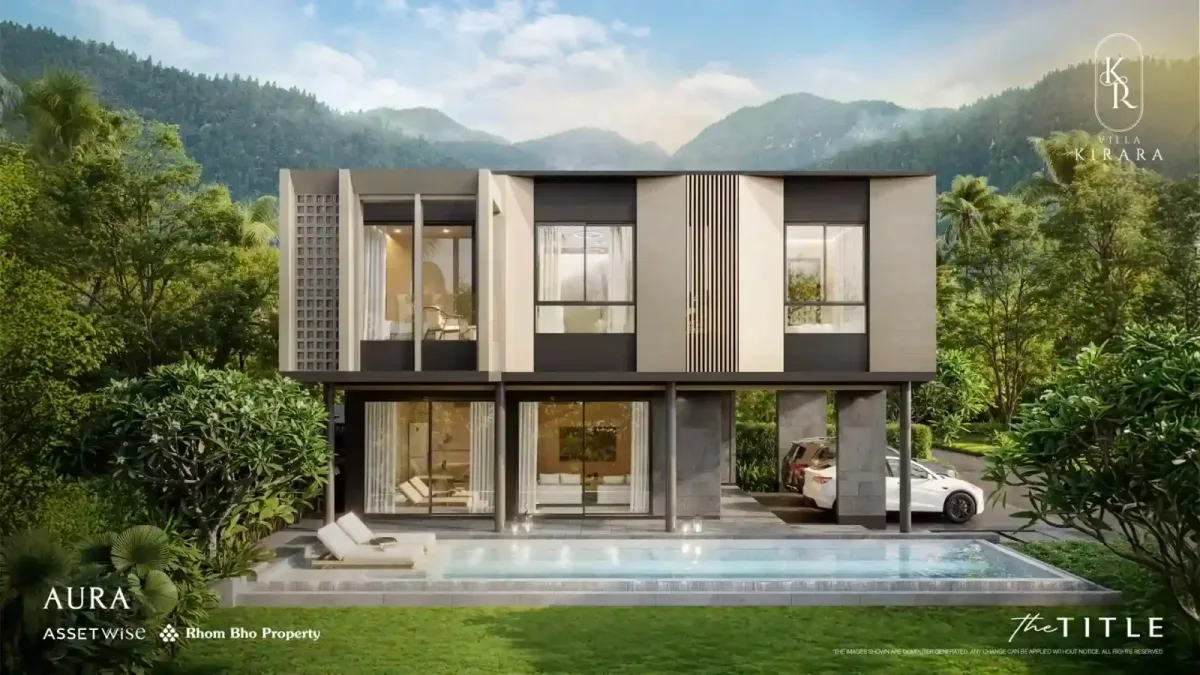
Thailand Property Hotspots 2026: Where Smart Money Is Moving
Quick answer: Thailand’s 2026 property hotspots are Phuket’s Bang Tao-Cherng Talay corridor (deepest development pipeline), Pattaya’s Wongamat beach zone (beachfront short-stay demand), Chiang Mai’s Nimman neighbourhood (digital nomad demand), and Bangkok’s Sukhumvit On Nut zone (value-priced with MRT access). Each hotspot offers a different entry point and risk profile. This guide breaks down what makes each zone a genuine hotspot, and what could undermine that status.
What Drives a Property Hotspot?
A genuine property hotspot has at least three of these five characteristics:
1. Infrastructure catalyst. A new road, airport expansion, railway station, or hospital creates access or employment that wasn’t there before. Cherng Talay benefits from Phuket’s airport expansion; On Nut benefits from BTS and MRT expansion.
2. Undersupply relative to demand. A zone where demand is outrunning available supply creates price pressure. Phuket’s Bang Tao has seen demand from international buyers exceed freehold quota availability in multiple projects, driving both price growth and early sellout velocity.
3. Quality tenant or buyer demand. A hotspot needs a real human need driving it, not speculation. Digital nomads in Nimman, European lifestyle buyers in Cherng Talay, and domestic office workers in On Nut are genuine underlying demand sources.
4. Developer quality and activity. Reputable developers launching projects signals informed capital’s view. When Banyan Tree Group and Laguna Resorts both expand in Bang Tao, that’s a quality signal.
5. Neighbourhood transformation. A zone shifting from mid-market to premium, or from vacant land to developed infrastructure, signals early-stage appreciation. Cherng Talay was farmland 10 years ago; today it has boutique hotels, international restaurants, and branded developers.
Phuket Hotspot: Bang Tao - Cherng Talay Corridor
Why it’s a hotspot:
- Laguna Phuket’s ongoing masterplan development (4,000 acres, 30+ year development history) provides infrastructure and brand quality that anchors the entire corridor
- Cherng Talay’s new development zone is seeing Banyan Group, Origin Property, and international luxury brands launch projects simultaneously
- Bang Tao Beach and Layan Beach are two of Phuket’s finest, driving premium nightly rates for short-stay rentals
- The zone is within 15 minutes of Phuket International Airport, making it accessible from arrival
Price trajectory: not measurable. There is no market data for this (Thailand publishes no transaction index for Phuket) and the 6-9% a year this line used to attribute to it is withdrawn. What our list holds is today’s level: 4,589 priced apartments at 161,000 THB per square metre, of which 4,282 in Choeng Thale at 163,800 and 307 in the Si Sunthon pocket at 91,881. Off-plan launches in 2024-2025 are typically delivered at prices 20-35% above comparable 2022 launches.
Entry price: Condominiums from $130,000 (studio in Cherng Talay); 1-bedroom units from $180,000-$280,000; pool villas from $400,000.
Pattaya Hotspot: Wongamat Beach
Why it’s a hotspot:
- Multiple branded condo projects delivered 2022-2025 have reset price benchmarks upward
- Russian tourist recovery (2023-2025) has driven specific demand for Wongamat-zone short-stay rentals
- New luxury hotels opening in the zone (InterContinental Pattaya, Centara Grand Mirage) validate the premium positioning
- Beachfront supply is genuinely constrained, there is limited remaining developable beachfront land
Price trajectory: not published for Pattaya any more than for Phuket, and the 4-6% a year this line used to give for Wongamat is withdrawn. The structural point survives without it: Wongamat is the supply-constrained end of a market whose central corridors can add stock without limit.
Entry price: 1-bedroom from $80,000-$120,000; beachfront premium projects from $150,000-$250,000.
Chiang Mai Hotspot: Nimman
Why it’s a hotspot:
- The digital nomad population is a structural demand driver, not a trend, the work-from-anywhere lifestyle is a permanent shift
- New condo supply in Nimman has been absorbed rapidly, keeping vacancy rates relatively low
- The neighbourhood’s walkability (unusual in Thailand) and food quality create organic demand
- One Nimman mixed-use complex and Maya Mall anchor retail and social infrastructure
Price trajectory: the 3-5% a year this line used to give for Nimman is withdrawn; no Thai city publishes a resort-level or district-level index. What is structural is the tenant: residential and academic demand that does not follow a tourist season.
Entry price: Studio from $65,000-$85,000; 1-bedroom from $85,000-$130,000.
Bangkok Hotspot: Sukhumvit On Nut (BTS E4)
Why it’s a hotspot:
- BTS and MRT connectivity to Bangkok’s CBD makes it viable for professionals who can’t afford Asok or Phrom Phong prices
- Multiple new co-living and serviced apartment projects have launched, indicating developer confidence
- Domestic Thai buyer demand is strong, this is primarily a Thai-buyer market with a smaller foreign buyer component
- On Nut’s dining and lifestyle scene has improved significantly in the past 5 years
Price trajectory: the 4-6% a year this line used to give is withdrawn. Bangkok’s near-BTS stock does have the deepest domestic resale market in the country, which is the countable part of the case. This is driven by domestic Thai middle-class demand, a stable and less volatile base than tourist-driven markets.
Entry price: Studio from $70,000-$90,000; 1-bedroom from $90,000-$150,000.
Phuket Second Hotspot: Rawai - Chalong
Why it’s a hotspot:
- Infrastructure investment in Chalong has improved road connectivity and the new Chalong Pier expansion has activated the dive and day-trip charter market
- Property prices remain 30-50% below Bang Tao for equivalent quality, creating a clear value entry
- Long-stay rental demand from the large Rawai expat community provides stable baseline occupancy
- New boutique developments have improved supply quality while prices remain accessible
Entry price: Studios from $80,000; 1-bedroom condos from $100,000-$160,000; pool villas from $280,000.
What the Phuket zones cost on the list, and what the other zones do not
Only the Phuket zones on this page are on our price list; Pattaya, Chiang Mai and Bangkok are described from market sources this page cannot verify, and their figures should be read that way.
| Phuket zone | Priced apartments | Schemes (finished) | One-bedroom median | Notes |
|---|---|---|---|---|
| Bang Tao and Cherng Talay | 4,589 | 48 (9) | 5,930,000 THB | The deepest market on the island by a factor of three |
| Rawai | 1,291 | 15 (2) | 6,652,800 THB | Rawai and Nai Harn also hold 125 priced villas in 13 schemes, median 24,600,000 THB |
| Chalong | 396 | 2 (0) | 2,759,400 THB | The cheapest metre on the list, 98,550 THB per sqm, in two unfinished schemes |
The Rawai-Chalong hotspot below is two different markets on the record: Rawai is a mid-priced condo market with a villa tier behind it, and Chalong is two large unfinished buildings at the lowest metre on the island. A buyer choosing the “hotspot” is choosing one of those, and the exit pool is very different in each: 1,291 priced units and two finished buildings on one side, 396 units and no finished building on the other. The one-bedroom medians are two and a half times apart, 6,652,800 THB against 2,759,400, which is the clearest statement on the list that these are not one zone with two names.
The zones that are not on this list, and why
A hotspot guide is more useful for what it excludes than for what it includes, so it is worth saying plainly which zones get discussed constantly and did not make the list.
Central Pattaya is the clearest omission. It has volume, it has tourism, and it has a genuine short-stay market. What it does not have is a supply position that favours an owner: mass-market stock from the last decade is still being absorbed, and a new buyer joins a queue of sellers rather than a shortage of units. The premium beach zones are a different market and are on the list; the central zone is not, and the distinction is the single most important thing to understand about Pattaya.
Koh Samui comes up in almost every conversation about Thai island property and belongs in a different category rather than this one. The lifestyle case is strong and the villa product is genuinely attractive, but the buyer pool is smaller than Phuket’s, the advisory infrastructure is thinner, and liquidity outside the prime beaches is slow enough to matter. It is a place to buy something you want, not a zone to position in.
Hua Hin is stable rather than hot, which is exactly why retirees like it and exactly why it is not a hotspot. Low density, good golf, straightforward access from Bangkok, modest rental demand. Nothing about it is going to change quickly, and for a certain buyer that is the entire attraction.
Krabi and the Andaman coast beyond Phuket attract buyers who want the scenery without the crowds. Product is less standardised, tourism is more seasonal, and the professional management layer that makes remote ownership workable is largely absent. That combination suits an owner who will be present and works poorly for one who will not.
The pattern across all four is the same. None of them is a bad place to own property. They are places where the reason to buy is what you want from the property rather than what the zone is about to do, and confusing those two motives is how buyers end up disappointed by perfectly good assets.
How to Position for Hotspot Investment
| Investor Type | Best Thailand Hotspot |
|---|---|
| Yield maximiser, active management | Wongamat, Pattaya |
| Capital growth focus, medium budget | Cherng Talay, Phuket |
| Passive income, blue-chip stability | Bang Tao/Laguna, Phuket |
| Budget entry, digital nomad targeting | Nimman, Chiang Mai |
| Capital preservation, domestic demand | On Nut, Bangkok |
| Value play, longer hold | Rawai-Chalong, Phuket |
The strongest risk-adjusted play in 2026 remains Phuket’s Bang Tao-Cherng Talay corridor, it has the deepest international buyer demand and the most operators able to show a building-level record; what it does not have, any more than the other zones, is a published appreciation series.
Due diligence before buying any Thailand hotspot
Hotspot investing is not about chasing the loudest marketing label. It is about matching infrastructure catalysts, an operator’s audited statements and registrable ownership to your hold period. A zone where an operator can show you a building’s twelve months beats a hyped zone where nobody can.
Red flags: how to tell a hotspot from a marketing label
Every zone on this page is being marketed to you by someone. These are the checks that separate the ones with something underneath from the ones without.
| Red flag | What it usually means | What to check instead |
|---|---|---|
| The catalyst is announced rather than built | Infrastructure timelines in Thailand slip by years, and some projects never start | Whether construction has actually begun, and what stage it has reached |
| Appreciation quoted without a source or a period | The figure is a sales aid, not a measurement | Recent transactions in specific buildings, not asking prices on portals |
| Undersupply claimed while cranes are visible | The supply that will compete with you is already being built | Count what is under construction within a realistic radius of your unit |
| The demand story is a single nationality | One source market is a concentration risk, not a demand base | Whether the zone fills when that market is absent |
| A guaranteed yield attached to the zone | Guarantees are funded from developer cash, most freely where demand is weakest | What happens when the guarantee period ends, and whether one has ever been paid out |
| Comparisons drawn to a different zone’s numbers | Zone-level averages blend products that do not compete with each other | The comparable set for your specific unit type and size |
| Foreign quota discussed at zone level | Quota is a per-building fact, measured by floor area and consumed at registration | A dated letter from the building’s juristic office stating the remaining foreign allowance in square metres for your unit type |
Insider tip: ask what the zone looked like five years ago and what it looks like now, then ask the same person what specifically will change in the next five. A genuine hotspot has an answer with dates and named projects attached. A marketing label produces adjectives. The difference takes about ninety seconds to establish and it is the most useful ninety seconds in the whole process.
Matching the zone to your hold period
The zones on this page suit different holding periods, and buying the right zone on the wrong timeline is the most common way this goes wrong.
A short hold, under five years, needs liquidity above everything else. That points to the established zones with deep buyer pools rather than the emerging ones with the better appreciation story, because an emerging zone is emerging precisely because its buyer pool is still forming. You may be right about the trajectory and still be unable to sell when you need to.
A medium hold, five to ten years, is where the emerging zones earn their premium. Enough time for an infrastructure catalyst to complete and for a neighbourhood transformation to be visible in prices, and enough time to absorb one weak year without it deciding the outcome.
A long hold, ten years or more, changes the question again. Over that horizon the yield you collect matters more than the entry price you paid, and the zones with the steadiest year-round demand tend to beat the zones with the sharpest appreciation story. Consistency compounds; a good year does not.
Whatever the horizon, the ownership route has to be registrable before anything else matters. A condominium unit within a building’s foreign quota is straightforward. Land is not, at any price, for a foreign buyer, and a villa in a hotspot is a lease or a company structure with its own timeline attached. A thirty-year lease bought in a zone you intend to hold for twenty-five years is a different proposition from the same lease bought for a ten-year hold, and that arithmetic should be done before the zone is chosen, not after.
Frequently Asked Questions
Phuket's Bang Tao-Cherng Talay corridor is the strongest hotspot for a foreign buyer in 2026 on what can be checked: freehold within the 49% quota, 4,589 priced apartments on our list (the deepest resale market on the island) and an international airport. The appreciation rate and gross-yield band this answer used to add are withdrawn: neither is published for Phuket, so neither was ever measured.
A genuine hotspot has at least three of: infrastructure catalyst (airport, BTS, road), undersupply relative to demand, quality tenant or buyer demand backed by real demographics, reputable developer activity, and neighbourhood transformation trajectory. Hype zones are driven by speculative developer marketing without underlying demand fundamentals. Always verify the demand source before buying into a 'hotspot' claim.
Bang Tao (Laguna) is the established, lower-risk option with strong rental management infrastructure; its appreciation, like Cherng Talay's, is unmeasured because Thailand publishes no transaction index. Cherng Talay is the newer, more off-plan zone with the larger unfinished pipeline. For first-time Phuket buyers, Bang Tao's established infrastructure reduces execution risk. For experienced investors comfortable with off-plan, Cherng Talay offers the better entry timing.
No published series can answer that: Thailand keeps no letting register for Bangkok any more than for Phuket, so an On Nut yield figure is always one operator's book. What you can check yourself is the asking rent for the layout you are considering on the Thai listing portals against its asking price, and treat the ratio as an asking-rent ratio, not a yield. What is structural about On Nut: demand is domestic Thai professionals and long-stay tenants on the BTS line, not tourists, so the market is a long-lease market with lower turnover and no seasonal peak to sell.
Budget $70,000-$130,000 for a 1-bedroom condo in the Nimman area. Studios start from $65,000 in established buildings. New-build premium projects start from $100,000-$150,000 for a 1-bedroom. This is the best value entry for the digital nomad rental market in Thailand, with consistent year-round demand from the global nomad community that has made Chiang Mai its Southeast Asian hub.
Pattaya's premium zones (Wongamat, Pratumnak) are performing well in 2026, driven by Russian tourist recovery, Thai domestic demand, and improved branded hotel infrastructure. The mass-market central zone remains oversupplied. The bifurcation between Pattaya's premium beach zones (strong performance) and its mass-market inland condos (weak) is the defining characteristic of the 2026 market.
Where the hotspot framing breaks down
One caution about the whole idea. Zone-level analysis is useful for narrowing a search and close to useless for deciding a purchase, because the variation between two buildings in the same zone is routinely larger than the variation between two zones.
A well-run building with an active manager, a healthy sinking fund and a strong review history in an ordinary zone will out-earn a badly run building in the best zone on this page, and it will sell faster too. The zone tells you what the demand looks like. The building tells you whether you will capture it. Buyers spend weeks choosing between corridors and an afternoon choosing between buildings, which is the wrong way round.
Use this page to shorten the list, then do the real work one building at a time.
How MORE Group compares investment hotspots
Get a Thailand hotspot shortlist
Tell us budget, yield target, and hold period, we map the strongest 2026 zones with registrable ownership paths.
Read Also:
Questions about this guide? Ask us on WhatsApp. The guide's title is already in the message, so you only need to write your question.
Ask on WhatsApp
Maksim Shchegolev
Founder, MORE Group
Founder of MORE Group. Four years in investment banking before moving to Phuket, where he has worked in the local property market since 2018. Oversees developer relationships and every engagement above $300K.
About MORE Group →Get a Focused Phuket Property Shortlist
Share budget, area and goal. We will reply with suitable live projects, not a generic catalogue.
