Prices and availability
Today's price list for this off-plan project
We send the current unit list, the payment schedule and the ownership terms, so you can choose a unit with today's numbers.
Current availability
Free units and developer prices, from 2.9M THB.
Foreign quota
We confirm that your unit sits within the 49% foreign freehold quota.
Payment schedule
Deposit, instalments and transfer timing for your unit.
Updated
Page updated October 2026. The price list we send is today's.
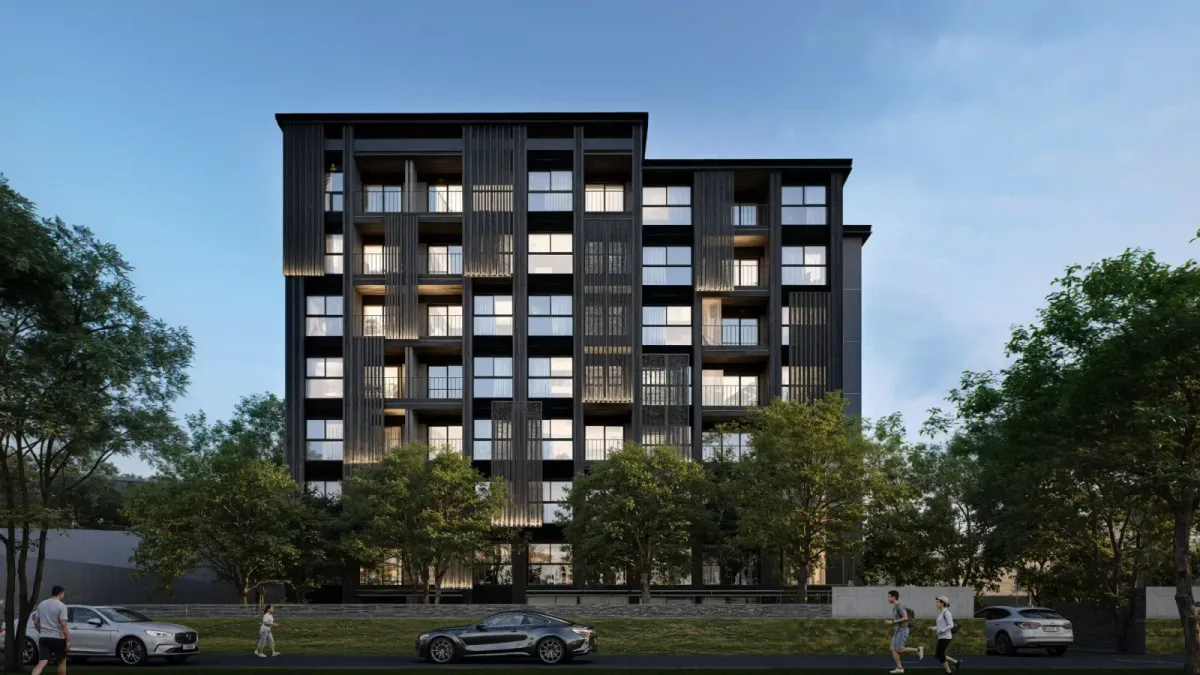
Aceller Hotel & Residence: Entry Condo from 2.86M THB in Phuket
Aceller Hotel & Residence is one of the most accessible investment entry points currently available in Phuket, hotel-branded studio and 1-bedroom units starting under 3 million THB, with a professional hotel operation driving rental income from day one. The concept combines private ownership with institutional-grade hospitality management, giving investors the upside of Phuket’s booming tourism market without the complexity of self-managing a rental property. Buying at this early stage lets buyers lock in pre-launch pricing, with the construction period ahead for the asset to grow in value.
Looking for the right property in Phuket?
Our experts send a shortlist within 2 hours. 0% buyer commission.
Location & Area
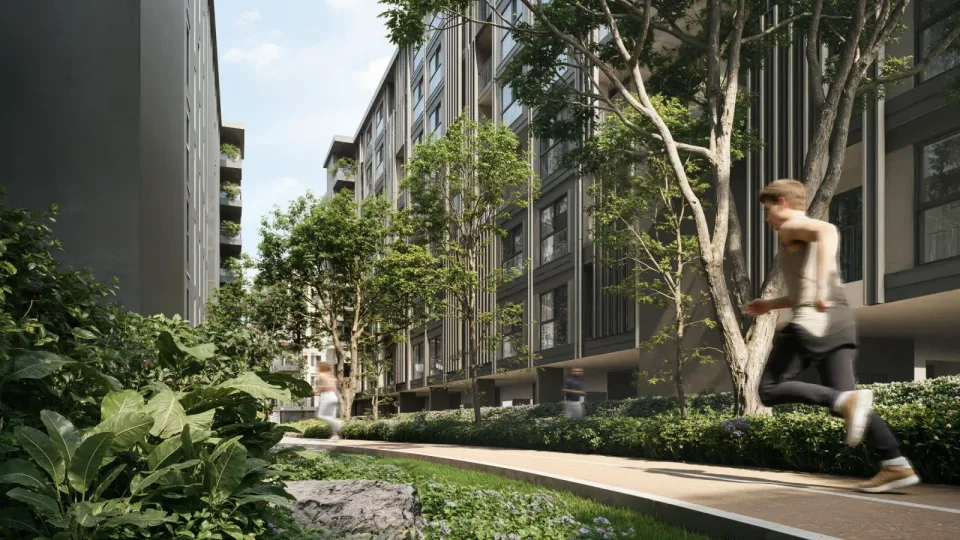
The airport proximity is a genuine operational advantage for a hotel-model product. A meaningful share of Phuket’s visitor base, corporate guests, multi-island travellers, and those on short Phuket segments, actively prefers accommodation near the airport for practical reasons. This creates a demand profile that is less seasonal than beachfront properties, providing more consistent occupancy throughout the year. For investors, that translates to smoother annual income rather than a feast-and-famine pattern tied purely to tourist peak season.
Land values across the Thalang corridor have increased steadily as demand from both domestic Thai buyers and foreign investors has pushed into the north. With the island’s south and west coasts largely saturated at higher price points, the Thalang-airport zone is where Phuket’s next wave of development is concentrated, making early positioning attractive.
Looking for the right property in Phuket?
Our experts send a shortlist within 2 hours. 0% buyer commission.
Design & Units
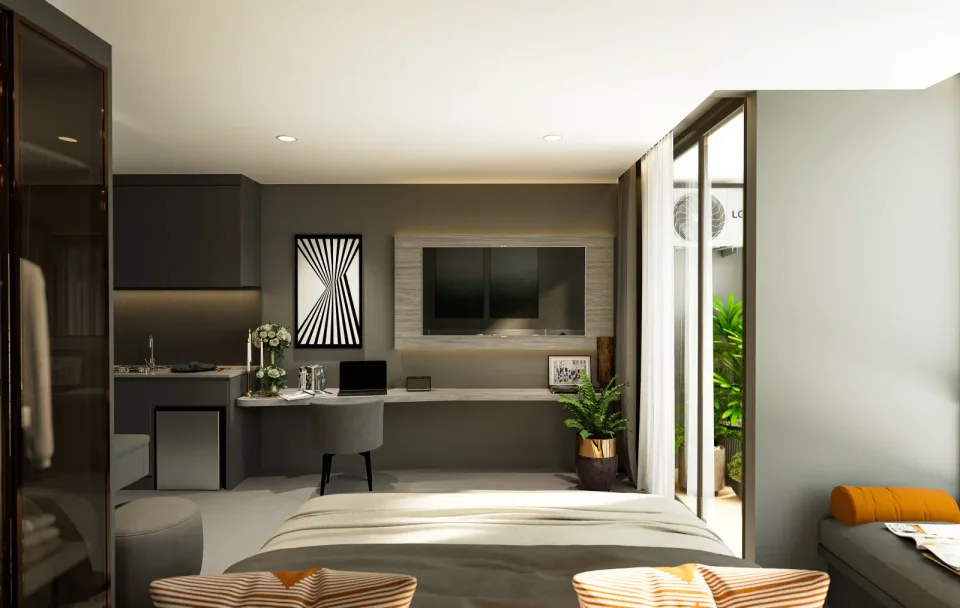
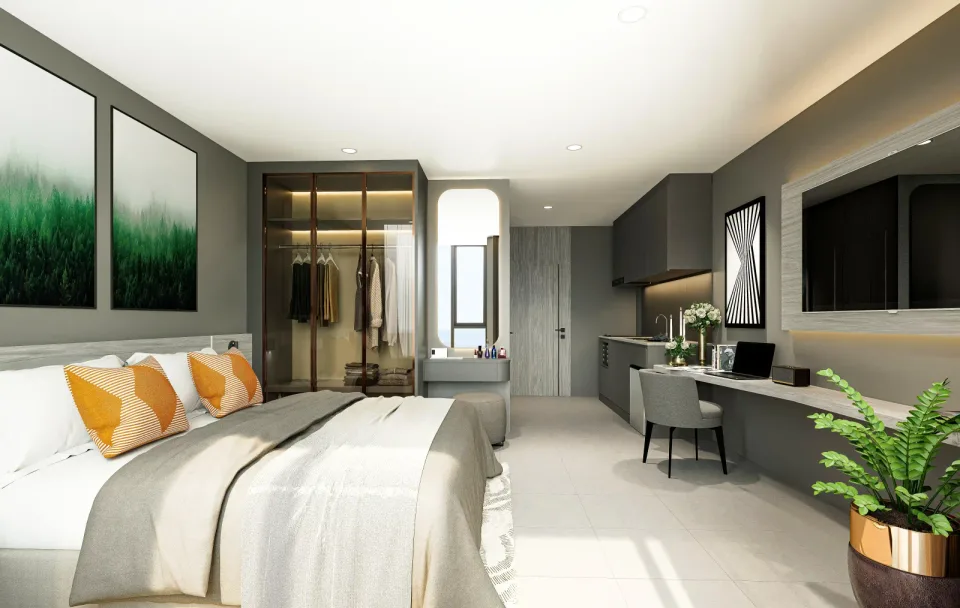
The 1-bedroom units are compact and efficiently planned, with layouts that maximise usable floor space, storage, and natural light. Each unit comes fully furnished and equipped, a turnkey product that owners can hand directly to the hotel management team without additional investment. The hotel’s common areas, reception, and amenity spaces are designed to the brand standard, meaning guests booking through hotel channels arrive with expectations that the property can consistently meet.
The building’s shared facilities include a swimming pool, fitness centre, and lobby with 24-hour reception, the baseline amenities that guests expect from a hotel stay and that are included in the management fee structure. Unit owners benefit from these facilities without the operational burden of staffing or maintaining them individually.
Investment Case
The payment structure, 15% / 20% / 20% / 20% / 15% / 10%, is spread across the construction period to delivery in Q4 2029 according to the developer, so buyers deploy capital in tranches rather than in a single lump sum and keep liquidity for other positions while the asset grows in value. Hotel-model projects in Phuket have historically delivered gross rental yields in the 6-10% range under competent operators, with the actual figure set by the management agreement, occupancy and the revenue split, which we send with the price list. Comparable managed units have historically reached 75 to 85% peak occupancy, with net yields of 5 to 7% after 20 to 25% operator fees.
MORE Group benchmark based on the rental history of properties owned by our clients in Phuket. Past results do not guarantee future returns: changes in Thai law, tourism flows, global events and the market can change income.
The early stage is the defining opportunity: early buyers access the lowest pricing, backed by Phuket’s tourism fundamentals of record arrivals, new route openings and the airport expansion.
Payment Plan on the Entry Unit
| Stage | Share | On the 2,862,000 THB entry unit |
|---|---|---|
| Booking | 15% | 429,300 THB |
| Construction stage 1 | 20% | 572,400 THB |
| Construction stage 2 | 20% | 572,400 THB |
| Construction stage 3 | 20% | 572,400 THB |
| Construction stage 4 | 15% | 429,300 THB |
| Handover | 10% | 286,200 THB |
According to the developer, checked 16 September 2026.
The first payment is only 15%, one of the lightest openings on our Phuket list, and every later stage is paid from abroad with its FET record for the transfer.
Why Buyers Choose Aceller Hotel & Residence
- Under 3 million THB is one of the lowest entry tickets into a professionally operated Phuket rental asset
- Hotel operation means income from handover without the owner sourcing guests or staff
- Airport-corridor demand is less seasonal than beachfront, which flattens the annual income curve
- Delivered furnished and equipped, so there is no separate fit-out budget before the first booking
- Six payment tranches across the build rather than a front-loaded schedule
One further point on the entry ticket. At 2.86M THB this is one of the smallest ways into the airport corridor, and the buyer pool at that price is correspondingly deep, which is what will matter on the day you sell. Keep the operator statements from year one: on a hotel-model unit they are the evidence a future buyer pays for.
The Agreement Behind the Income
The hotel management agreement sets how the income reaches you, and we send its terms with the price list:
| Clause | What it sets | What we send |
|---|---|---|
| Operator and contract term | Who runs the hotel, and for how long | The named operator and the term |
| Gross or net distribution basis | What your share is calculated on | The written definition, with deductions listed |
| Payment frequency | When distributions reach you | Monthly, quarterly or annual, per the contract |
| Owner-use nights | When you stay in your own unit | The owner-use schedule |
| Exit terms | How the programme works over time | The terms for leaving the programme or self-managing |
| The hotel licence | What makes nightly letting lawful | The licence details at premises level |
Frequently Asked Questions
It operates as a hotel, units are managed by a professional hotel operator and marketed to guests through hotel booking channels. Owners receive a share of rental revenue without managing bookings, cleaning, or check-ins themselves.
Yes. Foreign buyers hold units freehold within the building's 49% foreign quota, counted by floor area, or on a registered lease, and we confirm the route for your unit.
Hotel-model projects in Phuket have delivered gross yields in the 6-10% range historically. Actual returns depend on the management agreement terms, occupancy performance, and how revenue is split between the operator and owners. MORE Group benchmark based on the rental history of properties owned by our clients in Phuket. Past results do not guarantee future returns: changes in Thai law, tourism flows, global events and the market can change income.
Aceller is at an early off-plan stage, with delivery scheduled for Q4 2029, which is why pre-launch pricing is still available. We send the latest construction update together with the price list. According to the developer, checked 16 September 2026.
It is primarily structured as an investment product. Owners may be able to block personal use periods depending on the management agreement, but it is best evaluated as a passive income asset rather than a lifestyle second home.
Read Also:
- Complete Guide to Buying Property in Phuket
- Phuket Rental Yield Guide
- Atrium Andaman City
- Best Areas in Phuket to Buy Property 2026
- Nai Yang Property Guide: Airport-Side Value
How the Hotel Management Agreement Works
On a hotel-model condo the management agreement shapes the return, and we go through it with you point by point.
The revenue split. A split of gross revenue and a split of net operating profit are different numbers. Where the split is on net, the agreement defines which costs come out first, what counts as an operating expense, and how refurbishment reserves are treated.
Who sets the nightly rate. In a hotel programme the operator controls pricing and distribution, which is usually the right answer, since they have the channels and the yield management.
Owner-use weeks. The agreement sets how many nights a year you use your own unit, in which seasons, and how far ahead you book. Programmes with more high-season owner use generally pay a little less, and we help you pick the balance that fits your plans.
Term and exit. How long the agreement runs, what happens at the end, and how an owner leaves the programme.
A change of operator. Whether the agreement binds the unit or the current operator, and how owners take part in appointing a successor.
The refurbishment cycle. Hotel-standard rooms are refreshed on a schedule funded by owners, and we send the cycle and its approximate cost per unit.
Hotel Licensing and Ownership
Renting accommodation for stays under 30 days in Thailand falls under the Hotel Act, and doing it lawfully at scale means the building operates with the appropriate licence. A hotel-branded development is designed for exactly this, one of its genuine advantages over an ordinary condo. We send the licence the building will hold or has applied for, and who holds it, together with the price list.
On the ownership side, the 49% foreign quota is measured against the building’s total floor area, and we confirm it for your specific unit. A freehold transfer needs proof of inward foreign currency remittance; see proof of funds and FET.
Buying Aceller Hotel & Residence with MORE Group
The purchase of a unit at Aceller Hotel & Residence runs in five steps from the first price list to the keys, and we handle each of them with you.
-
Current price list and free units
We ask the developer for today's price list for Aceller Hotel & Residence and send you the units that match your budget, with floor plans.
-
Foreign quota on your unit
Foreign buyers hold condo freehold within the 49% foreign quota of the building, counted by floor area. We confirm with the developer that the unit you choose sits inside that quota. How the foreign quota works
-
Reservation and payment schedule
A reservation deposit holds the unit, and the balance follows the developer's payment schedule, which we send with the price list.
-
Transfer and registration
The purchase money arrives from abroad in foreign currency with an FET form, and the unit is registered in your name at the Land Department. The FET form explained
-
After the keys
We stay in touch after handover and help with rental options and a future resale when you want them.
0% buyer commission. Ask for the current price list
Live developer data · Phuket specialist reply
Check Availability, Quota and Floor Plans
Send your contact and budget. We will reply with current stock, payment plan and foreign buyer notes.

MORE Group Editorial
Phuket Real Estate Experts
The MORE Group team has helped 500+ European and American buyers purchase property in Thailand. We provide legal support, 0% commission, and on-the-ground expertise with 8 years in the Phuket market.
About MORE Group →Check Availability, Quota and Floor Plans
Send your contact and budget. We will reply with current stock, payment plan and foreign buyer notes.
