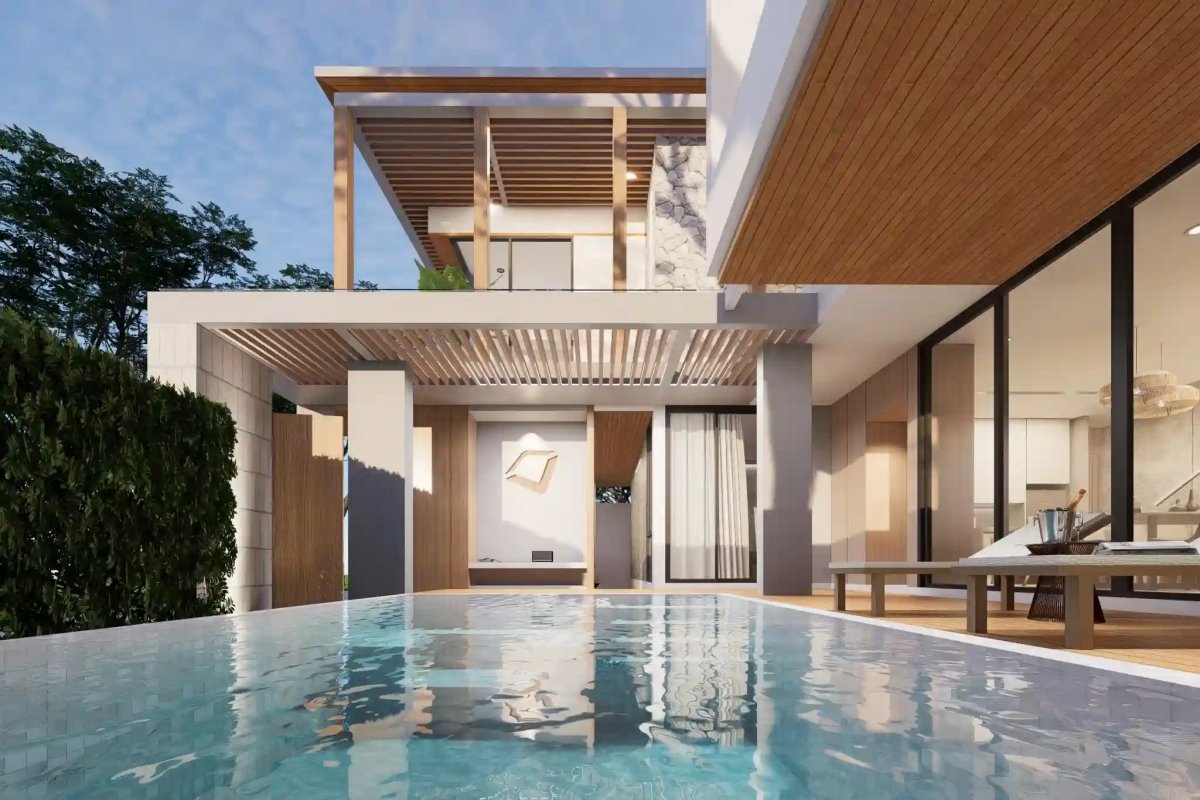
Quick answer: these are two different asset classes rather than two options at one price point, and our records make the gap explicit. Botanica carries 19 schemes and 722 priced units at a 30,105,000 THB median (about $920,642), from 10,800,000, almost all of it villas, 553 of the 722. Origin carries 6 schemes and 1,044 priced units at a 4,960,000 THB median ($151,682), from 2,460,000, all apartments. The Botanica median ticket is six times Origin’s.
The yield comparison this answer used to make between them is withdrawn on both sides: Thailand keeps no letting register, so neither developer’s stock has a measured rental performance. Origin’s SET listing does mean audited accounts behind the build, which is a real difference and not a yield claim. Compare them only after you fix budget, hold period, and whether you will use the property personally.
Botanica and Origin Property are two of the most active developers in Phuket’s prime west-coast zone. Both operate in the Bang Tao / Cherng Talay corridor, but they serve different buyers with different products. See corridor context in Laguna vs Cherng Talay and off-plan mechanics in the off-plan Phuket guide.
Price Per Square Metre and Yield
Origin condos run $2,000-$3,500 per square metre depending on floor, view, and project generation. Shared facilities rather than private pools.
| Metric | Botanica | Origin |
|---|---|---|
| Schemes on our file | 19 | 6 |
| Priced units | 722 (553 villas, 169 apartments) | 1,044, all apartments |
| Median price | 30,105,000 THB ($920,642) | 4,960,000 THB ($151,682) |
| Entry | 10,800,000 THB ($330,275) | 2,460,000 THB ($75,229) |
| Median THB per sqm | 100,806 overall; villas 87,350, apartments 202,500 | 134,500 |
| Cheapest scheme entry | Botanica Wisdom, 15,500,000 | The Origin Kathu-Patong, 2,460,000 |
| Gross rental yield | Not published; Thailand keeps no letting register | Not published |
| Occupancy and nightly rate | Not published | Not published |
| Management fee | Contractual, customarily 20-35% of gross | Contractual, same range |
The yield, nightly rate and occupancy rows this table used to carry are withdrawn on both sides. The management fee row survives because it is a contract term.
What the price rows show is a genuine and large difference that needed no yield to make: Botanica’s entry is four and a half times Origin’s, and its median ticket six times. The metre runs the other way, Botanica’s villas at 87,350 THB per sqm against Origin’s apartments at 134,500, which is the usual land-versus-building arithmetic and the reason a villa buyer gets far more floor area for the money and a condominium buyer gets a far lower ticket.
Absolute income per asset is certainly higher on a villa, since it is a bigger property; what either earns as a percentage is the part nobody measures.
Track Record and Construction Quality
Both are established names and the useful comparison is not reputation but evidence, which is available to you before committing and which most buyers do not gather.
Walk something they finished several years ago. Not the show unit and not last month’s handover. A building three years old shows you what the climate does to their specification: the pool plant, the air conditioning, the external finishes, the terrace drainage and the joinery. This single visit tells you more than any brochure comparison.
Compare announced dates against actual key issuance. Take the last three completed projects from each, find the handover date originally advertised, and find when owners actually took possession. A pattern of delay is the most predictive signal available and it is public information.
Ask residents rather than sales staff. One question at a completed project settles a great deal: was anything still being fixed six months after handover. Long-term residents and security staff answer honestly and have no incentive not to.
Check the corporate record of the entity signing. Group structures place projects under subsidiaries and joint ventures, so the reputation you are relying on may belong to a different company from the one on your contract. Paid-up capital, directors, current status.
Run the same four on both, and the comparison stops being about brand preference and becomes about evidence.
Both sit above Phuket average. Botanica leads on villa finishes; Origin leads on standardised condo reliability at volume.
Ownership: the difference that precedes everything
Because the two developers work in different product categories, the ownership question is settled before any comparison of quality or price, and it is the difference most buyers underweight.
A condominium unit can be held freehold by a foreign buyer within each building’s 49% allowance, which is measured against total sellable floor area rather than by counting units and is consumed at registration rather than at reservation. That gives indefinite title in your own name, no term to decay, no annual compliance, and the widest resale pool available to a foreign owner, since your buyer can be foreign or Thai.
A villa cannot. No foreigner holds freehold land in Thailand at any price, so the routes are a registered lease, capped at thirty years per registration with renewal terms that need reading clause by clause, or a Thai company holding the land with the compliance obligations that carries. Both are lawful and both are used constantly, and both need independent counsel rather than a sales-office explanation, particularly on what happens at the end of the first term and on death.
The practical consequence is that these two purchases behave differently over time even if they perform identically at the start. One holds its character indefinitely; the other has a clock in it that becomes visible somewhere past the halfway point of the term, when your buyer is acquiring materially less than you did.
Buyer Scenarios: Matching Developer to Strategy
Scenario C, Dual hold: An investor owns Origin studio for cash flow and Botanica villa for appreciation plus personal holidays. Common portfolio split, different purposes, same west-coast macro thesis.
Scenario D, First Phuket purchase under $200K: Origin is the realistic entry. Botanica is not in budget. Investor compares Origin phase against studio vs 1-bedroom unit economics before reservation.
Which Should You Choose?
The two are rarely competing for the same buyer, which is why a head-to-head reads oddly until the products are separated.
Choose the villa developer if what you want is space, privacy and a plot, and if you accept that a foreign buyer cannot hold freehold land in Thailand, so the ownership route is a registered lease or a company structure with a term and a renewal question attached. This suits a long hold with real personal use, and it suits an owner who will accept a narrower exit in return for a product a condominium cannot replicate.
Choose the condominium developer if what you want is indefinite title in your own name within the building’s foreign quota, a lower entry ticket, running costs shared through a common area charge rather than carried alone, and the widest resale pool available to a foreign owner. This suits an income focus, a shorter horizon, or a first purchase where simplicity has value.
The question that settles it is not which developer is better but which of those two assets you are actually buying. A villa and an apartment at the same price are different propositions with different exits, and buyers who compare them on yield alone are comparing the least informative dimension.
Then, having chosen the product, compare the two developers on delivery evidence: completed projects you can walk, dates achieved against dates announced, and the corporate record of the entity that will sign your contract.
They solve different problems. Run the due diligence process and model net yield via the Phuket rental yield guide before committing.
Payment Milestones and Construction Risk
Off-plan exposure is a function of the schedule rather than of the developer’s reputation, and the schedule is the most negotiable protection available on either side of this comparison.
How much falls due before the structure is topped out. This is the money most exposed if a programme slips or stalls, because it has gone into a building that does not yet exist. A schedule taking 30% at contract and spreading the rest across construction leaves materially less at risk than one collecting half in the first six months.
Whether releases follow inspected progress or calendar dates. A date-based schedule transfers the delay risk to you: you keep paying while the site stands still. A milestone-based one, with the milestone verified by someone other than the developer, keeps it where it belongs.
What the delay clause permits. The stated completion date, the extension the developer may take as of right, and the remedy beyond it. Many contracts allow six to twelve months before anything engages, and buyers commonly discover this at month twenty-five rather than at signing.
What remains payable at transfer. A meaningful balance outstanding keeps the developer motivated to finish properly and resolve your defect list. A schedule that has collected almost everything by handover has spent that leverage.
Ask both developers for their standard schedule early, and compare them on these four points rather than on the headline price.
Red flag: any developer (either brand) asking for over 50% cash before visible structural progress deserves heightened scrutiny, listed status reduces but does not eliminate this risk.
Final Decision Framework
Bring a snagging checklist to villa handover: pool leak test, drainage after simulated rain, AC load at midday, and mobile signal in each bedroom. Condo handover snagging should include elevator wait times at peak guest hours and parking allocation enforcement, both affect reviews within 90 days of launch on OTAs.
Cross-check payment milestones against construction photos monthly during off-plan holds. Listed status on Origin reduces delivery anxiety but does not remove delay risk entirely. Botanica boutique timelines need the same photo discipline even when the product is premium.
If you are comparing developers only to maximise yield per dollar, Origin is the rational default under $400,000. If you are buying a home you will love using, Botanica competes on product emotion as much as spreadsheet logic, price both honestly. Complete lawyer review on quota or lease structure before any reservation fee is paid, especially on villa land titles. Request a MORE Group side-by-side shortlist when both brands remain on your list.
Frequently Asked Questions
Yes. Botanica has a strong 15+ year track record of delivering high-quality villa projects in Bang Tao and Cherng Talay. They are one of the most trusted boutique villa developers on the island with consistent delivery history and premium build quality.
Origin Property is listed on the Stock Exchange of Thailand (SET: ORI), which provides strong buyer protections including audited financials, regulated escrow requirements, and legal obligations around project delivery. This makes them one of the lower-risk developers for off-plan purchases.
No figure can be sourced, and the gross yield, net yield and annual income this answer used to give are withdrawn: Thailand keeps no letting register, so no Botanica villa has a measured rental performance. What is on the record is the price, 553 priced villas across the Botanica schemes at an 87,350 THB median metre and a 34,710,000 median ticket, from 15,500,000 at Botanica Wisdom. What is contractual is the deduction: a villa programme customarily takes 20 to 30% of gross, and on a house that size the staff, pool and garden budget usually outweighs it.
Origin typically offers phased payment plans for off-plan projects: 20-30% on booking, followed by 2-4 milestone payments during construction, and the remaining balance on handover. Some projects include bank financing options for foreign buyers.
Yes, and this is a portfolio approach some investors take, an Origin condo for reliable yield income, and a Botanica villa for lifestyle use plus appreciation. The two assets serve different purposes and complement each other well.
Comparing a villa developer with a condominium developer
The most useful thing to say about this pairing is that they largely build different products, which means the comparison is really a choice between formats rather than between companies.
Villa stock and condominium stock differ in ownership, running costs, rental model and resale depth, and those differences dwarf anything attributable to a developer’s name.
| Villa | Condominium | |
|---|---|---|
| What a foreigner holds | A registered lease over the plot, or land via a Thai company; the building can be owned outright | Freehold within the building’s 49% foreign-quota floor area |
| Duration | Lease term runs down; company structures carry compliance obligations | Indefinite |
| Pool and garden | Funded by you alone | Shared through CAM |
| Management fee if let | 25 to 30% of gross, full service | 15 to 20% on a private letting, 20 to 35% inside a pool |
| Capital items | Roof, pool plant and air conditioning are yours to fund and replace | Carried by the building through its reserve, subject to the fund actually being funded |
| Resale pool | Narrower; a marketing exercise measured in months | Deepest at 35-55 sqm; weeks to months |
| Suits | Space, privacy, long holds, personal use | Income, liquidity, shorter holds |
What actually varies between developers
Three things, and none of them is the brand.
Delivery record, which is verifiable. Ask which completed projects you can walk through and visit one several years old rather than one just handed over, since what ages in a monsoon climate tells you more than any specification sheet.
Contract terms, which vary by project and by how well a particular phase is selling rather than by company. A scheme with strong pre-sales has less need for your money early and less room on terms; one with slower absorption has more.
And the specific building or estate: its letting position, its shared cost base, its quota availability and what is being built within a kilometre. Those decide performance, and they differ more between two projects from the same developer than between the two developers.
How to run the comparison
Put the two candidate projects side by side rather than the two companies. For each: floor area or plot size in the units that matter, the quota position in writing, the hotel licence and house rules, the annual cost of ownership itemised, the payment schedule’s milestone wording, and the nearby pipeline.
If one is a villa and the other a condominium, the table above is your decision. If both are the same format, the building wins over the badge every time.

Maksim Shchegolev
Founder, MORE Group
Founder of MORE Group. Four years in investment banking before moving to Phuket, where he has worked in the local property market since 2018. Oversees developer relationships and every engagement above $300K.
About MORE Group →Get a Focused Phuket Property Shortlist
Share budget, area and goal. We will reply with suitable live projects, not a generic catalogue.
