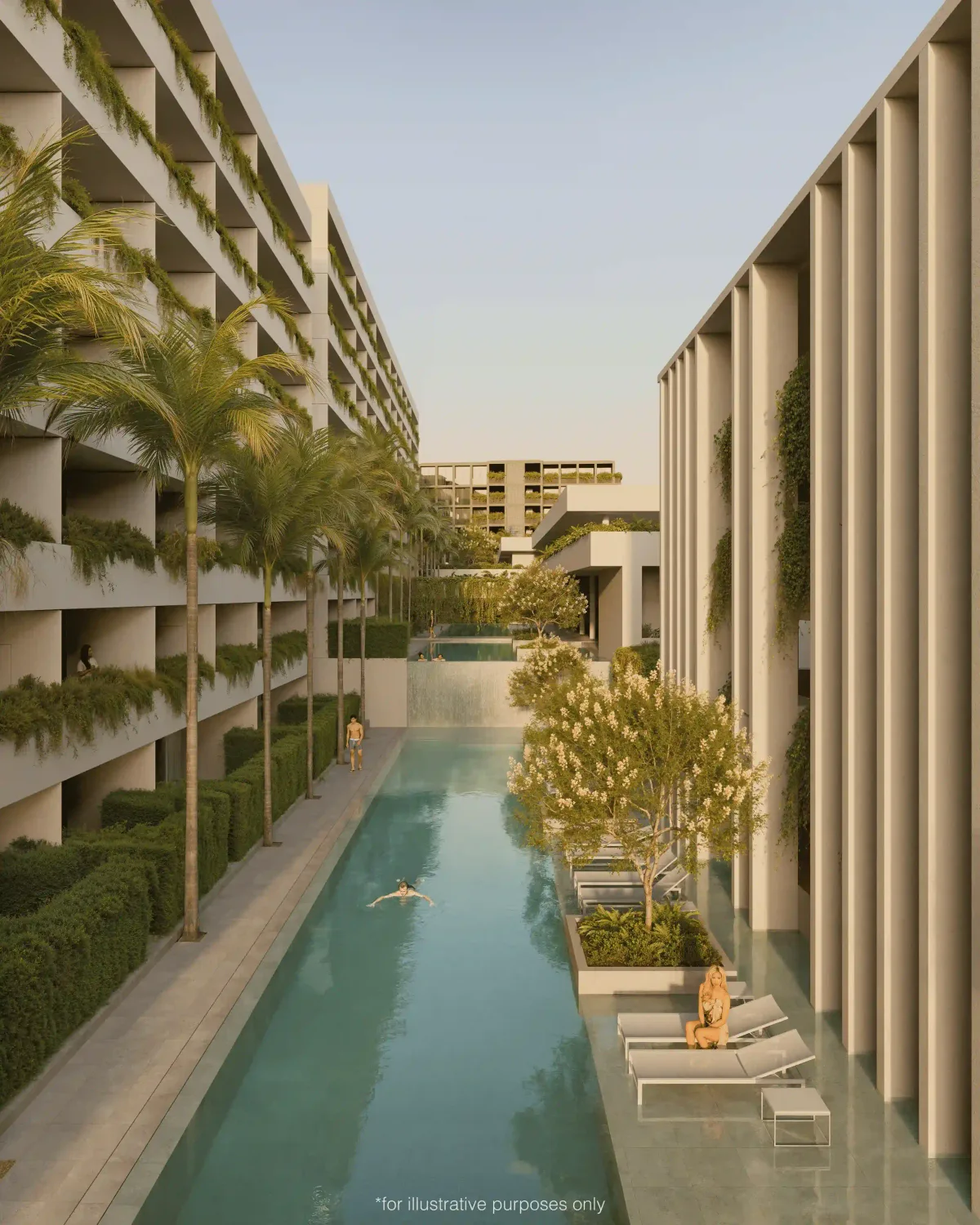
Quick answer: for most foreign investors, a Phuket condo is the safer first purchase because it can be freehold, easier to rent and easier to resell. A villa can make sense for lifestyle, privacy and larger budgets, but land structure, upkeep, staffing and resale depth need more due diligence. The decision is not condo vs villa; it is freehold simplicity vs private-space complexity. This guide covers ownership, net rental yield, five-year ROI, capital growth and resale in one place, so you can compare condo and villa returns without jumping between pages.
Phuket condos and villas sit under different legal boxes. Foreigners can hold chanote freehold on a qualifying condominium unit within the 49% foreign quota. Sellable floor area is counted under Condominium Act rules: typically the enclosed unit area, excluding balcony and common share, defines what you own and what CAM applies to. Villas bundle land (usually leasehold for foreigners) and structure. Get the ownership path right first; yield follows from what you can legally sell later.
Condo Ownership Deep Dive
- It is calculated per condominium project, a building can hit its foreign quota even if another building nearby still has space
- Freehold ownership is tied to condominium unit ownership registered under the Condominium Act, subject to eligibility and proper registration at the land office
- Sellable floor area (often 24-55 sqm on studios and one-beds) is what quota, CAM, and transfer fees reference; verify the schedule of area on the chanote and ignore the marketing “built-up” figure
- What investors get wrong: assuming “quota is always available” because the sales office said so. Verify quota availability for your specific unit on the path to registration, well after the brochure stage
Sinking Fund and CAM: Real Numbers You Can Underwrite
Condo carrying costs define net yield over a decade. Common bands:
- CAM (Common Area Management): often around THB 40-90 per sqm per month, depending on facilities, staffing, beach proximity, and amenity tier
- Sinking fund: contributions fund long-life repairs (roof systems, elevators, common-area refurbishments), treat as non-optional; it protects resale value
Example: CAM at THB 55/sqm on a 45 sqm 1-bedroom = THB 2,475/month (~$70-75/month) before utilities, insurance, and guest consumables.
Condo Rental Programs: Hotel-Managed vs Self-Managed
Hotel-managed / operator programs can deliver turnkey distribution. The tradeoff: management fees and revenue splits often run 15-35% of gross in some setups, while occupancy may be stronger in branded corridors.
Self-managed (direct operator hire or owner-selected manager) can raise net yield if you optimize pricing, reduce OTA dependence, and maintain review scores, but requires systems and local accountability.
Typical Condo Sizes
- Studio: ~24-35 sqm
- 1-bedroom: ~35-55 sqm
- 2-bedroom: ~55-90 sqm
Phuket’s rental market rewards view, micro-location, and building quality as much as raw square meters.
Villa Ownership Deep Dive
What legal review should clarify:
- Lease term and registration mechanics (and what happens on transfer/sale)
- Renewal language and practical enforceability
- Costs at renewal/transfer milestones (registration fees, stamp duty)
- Operational rights (pool, modifications, subletting rights, must align with rental strategy)
Land Cost vs Structure Cost
A villa price bundles:
- Land value (location, elevation, view, proximity to beach/golf/marina)
- Build quality (spec, waterproofing, MEP systems, pool engineering)
- Fit-out (kitchen, lighting, smart home, furniture packages)
- Infrastructure (access roads, estate security, common landscaping)
This is why ”$/sqm” is less standardized than condos: two villas can look similar on a brochure while carrying very different replacement costs and rental power.
Pool Villas: Maintenance Reality (Budget Like an Operator)
| Operating cost | Typical monthly band |
|---|---|
| Pool cleaning/maintenance | THB 3,000-6,000/month depending on pool size |
| Gardening/estate | THB 5,000-8,000/month depending on plot |
| Repairs reserve (annualized) | Pool pumps, salt systems, exterior wear, budget monthly, not “if ever” |
| Utilities | AC cooling + pool pumps can be significant, verify before buying |
Villa Rental: Peak-Week ADR Can Be the Whole Story
For quality pool villas in strong micro-locations, peak-week ADR can range from roughly $500-$3,000+ depending on bedroom count, view, and finish. However, calendar strength is uneven, annualize conservatively.
Five-Year Ownership Cost: $200k Condo vs $500k Villa
This is a conservative underwriting model for carrying cost, net yield and title path, and it makes no yield promise. Use it to compare the realistic five-year ROI of a condo against a villa at the same budget.
Shared assumptions (conservative investor underwriting):
- Gross rental yield: 8.5%/year on both assets
- Secondary-market price growth: 5.5%/year compounded
- Condo carrying costs: 22% of gross rent (CAM/sinking fund + utilities + maintenance)
- Villa carrying costs: 35% of gross rent (pool + garden + utilities + repairs)
$200,000 Condo (Illustrative)
Entry tickets in our condos from $100K to $200K catalog often sit in this comparison band.
| Item | Calculation | Result |
|---|---|---|
| Gross rent (Year 1) | $200k × 8.5% | $17,000 |
| Net rent after operating load | $17k × (1 − 0.22) | ~$13,260 |
| Year 5 resale value | $200k × (1.055^5) | ~$261,700 |
| Cumulative 5-year net rent | ~$66k-$70k (with modest growth) | n/a |
| Paper capital gain | ~$61k+ vs purchase (before selling costs) | n/a |
$500,000 Villa (Illustrative)
For live inventory near this ticket, compare pool villas from $300K to $500K.
| Item | Calculation | Result |
|---|---|---|
| Gross rent (Year 1) | $500k × 8.5% | $42,500 |
| Net rent after operating load | $42.5k × (1 − 0.35) | ~$27,625 |
| Year 5 resale value | $500k × (1.055^5) | ~$654,200 |
| Cumulative 5-year net rent | ~$130k-$145k (with modest growth) | n/a |
| Paper capital gain | ~$154k+ vs purchase (before selling costs) | n/a |
How to interpret fairly: villas can win on gross cash, condos can win on simplicity and fee predictability. Pick the option where your net, risk, and time match your goals.
Management Reality Check
Management companies typically charge a management fee plus pass-throughs; some price as a percent of gross rent, others as fixed monthly plus performance tiers. For underwriting, compare net after fees and ignore the headline nightly rate.
Villa Operational Costs (The Real Bill)
Owners should model:
- Utilities (electricity, especially for pool pumps + AC cooling loads)
- Staffing (part-time vs full-time; villa complexity drives this)
- Pool + garden (non-negotiable recurring)
- Insurance (structure, contents, liability, especially for short-term rental)
Resale: Condo vs Villa Exit Strategy
Villas: exit depends on product rarity and documentation quality; premium scarcity can reward pricing power, but buyer diligence is heavier, expect longer due diligence timelines unless priced aggressively.
Real MORE Group Client Outcomes (Illustrative Wealth Creation on Exit)
- Jonathan (UK): sea-view apartment $280k → $350k (+$70k)
- Mary (US): 3-bed villa $349k → $410k (+$60k)
- David (Germany): villa $519k → $620k (+$100k)
- Sarah (Australia): penthouse $649k → $770k (+$120k)
Past performance shows what happens when **buying quality, **timing construction upside, and selling with clean documentation; it does not guarantee future results.
Who Should Buy a Phuket Condo Instead of a Villa?
- Investors optimising for rental yield per dollar and liquidity
- Buyers who want freehold without corporate layers
- Owners who prefer predictable fees and fewer moving parts
- First-time Thailand buyers who want a clean title path
Our Verdict
Scenario A, Lifestyle family buyer: a villa can make sense when privacy, bedrooms, pets, garden space and owner use matter more than simple yield. The trade-off is operational: pool, garden, staff, repairs and estate rules all affect net return.
Yield-first buyer: compact condos in proven rental corridors usually produce cleaner percentage yield (see the five-year ROI model above). Villas can earn strong nightly rates, but upkeep and marketing can turn attractive gross income into average net income.
Long-hold capital buyer: compare the exit audience as well as the purchase price. Condos have a wider foreign buyer pool, while villas need stronger location, land structure and maintenance quality to resell cleanly.
Risk checklist before choosing
| Risk | What to verify |
|---|---|
| Ownership structure | Foreign freehold condo quota vs leasehold land or company structure |
| Operating cost | CAM, sinking fund, pool, garden, staff, repairs and insurance |
| Rental rules | Juristic-person rules, hotel licence exposure and management contract |
| Resale depth | How many similar units sold recently and who bought them |
| Exit timing | Whether the asset can be sold in 6-12 months without deep discount |
Use the Phuket rental yield guide, Phuket property prices 2026 and the freehold vs leasehold guide before comparing condo and villa quotes. Product type only matters after the legal structure, location and resale path are clear.
Long-stay buyers comparing visa paths should note Thailand’s Destination Thailand Visa (DTV) allows up to 180 days per entry on qualifying remote-work or lifestyle profiles, separate from property ownership, but relevant if you plan extended owner use on a villa leasehold.
Buying Timeline: How Condo and Villa Purchases Differ in Practice
Condo purchase timeline (indicative):
- Reservation deposit: typically 1-3% of purchase price, paid within 24-48 hours of reservation
- Sales and Purchase Agreement (SPA): signed within 14-30 days, with 10-15% balance payment
- Progress payments (off-plan): 10-25% at construction milestones, documented in SPA schedule
- Final payment and transfer: 60-90 days after completion notice, at Land Office in Phuket
Foreign buyers need a Foreign Exchange Transaction (FET) form for each inward wire. Request it from your Thai bank branch within 7 days of each transfer. Without FET documentation, the Land Department cannot register a foreign quota unit in your name.
Villa purchase timeline (indicative):
- Reservation and lease heads of terms: typically 2-4 weeks for lawyer review
- Lease registration at Land Office: requires presence or power of attorney; 30-year lease registered within 2-6 weeks of signing
- Off-plan villa build period: 12-24 months for new construction; verify payment schedule against construction milestones
- Key handover: snagging inspection, meter transfer, juristic or estate registration
Condo ownership is registered on the chanote title, while villa leasehold is registered as an encumbrance on the landowner’s chanote. This distinction matters for title searches, refinancing (rare for foreigners), and estate planning. Budget $2,000-$5,000 for a Thai property lawyer regardless of asset type.
| Step | Condo | Villa |
|---|---|---|
| Title type | Chanote (foreign-quota unit) | Registered leasehold encumbrance |
| FET requirement | Yes (mandatory) | Yes (for funds transfer) |
| Lawyer cost | $1,000-$2,500 | $2,000-$5,000 |
| Transfer tax and fees | 2-3.5% of assessed value | Lease registration fee (~0.1% of total lease value) |
| Power of attorney option | Yes | Yes (with authenticated PoA) |
Area-by-Area Returns: Where Each Asset Type Outperforms
Indicative figures for the west coast, to be checked against achieved numbers on the specific building:
| Corridor | Best asset | Why |
|---|---|---|
| Bang Tao / Layan | Both (condos: yield, villas: appreciation) | Laguna ecosystem supports both segments; villa land scarcity drives appreciation |
| Kamala | Pool villas | Family resort demand, hill-view premiums, lower new condo supply |
| Surin | Condos (branded) | Near beach, strong branded inventory, premium resale market |
| Rawai / Nai Harn | Condos under $180K | Long-stay expat demand, digital nomad segment, affordable entry |
| Patong | Condos (hotel programs) | Highest ADR concentration in short-stay, but higher wear and noise risk |
| East coast (Ao Po, Yacht Haven) | Villas (marina-adjacent) | Limited rental demand, appreciation thesis based on marina expansion; not yield play |
Buyers targeting yield above 7% net should prioritise condos in Bang Tao, Surin, or Kamala with established hotel management programs. Buyers targeting 5-year capital appreciation should consider Bang Tao villas where buildable land with direct beach access is structurally constrained.
Start by requesting a list of completed comparable sales in the same building or corridor from the developer’s sales team, and cross-check it against Phuket Land Office transfer data (publicly available via licensed Thai lawyers). If a developer or agent cannot provide actual transaction references from the same zone within the past 18 months, their figures are projections unsupported by evidence.
Looking for the right property in Phuket?
Our experts send a shortlist within 2 hours. 0% buyer commission.
Frequently Asked Questions
Either can hit investor-grade outcomes. Condos often win on operational simplicity and predictable common-area fees; villas can win on premium nightly pricing for quality pool product. For net yield math, see the dedicated ROI comparison. Always underwrite net yield after CAM/sinking fund (condo) or pool/garden/utilities (villa).
It is a per-condominium limit on foreign ownership of condominium freehold interests. Availability must be verified for your specific unit and project, not assumed from marketing materials.
Many investor-grade condos fall around THB 40-90 per sqm per month for common-area management, plus sinking fund contributions for long-life repairs, always request the developer's schedule and historical increases.
It is a commonly discussed lease renewal framing, but enforceability, registration, renewal fees, and transfer mechanics are contract-specific. Legal review is mandatory before treating it as equivalent to freehold land ownership.
Usually yes: pool cleaning commonly runs roughly THB 3,000-6,000/month and gardening roughly THB 5,000-8,000/month depending on plot and standards, before utilities, repairs, and insurance.
Gross figures vary with product, seasonality and management; always solve for net after fees and maintenance rather than starting from a headline percentage.
MORE Group works directly with developers and charges 0% buyer commission on typical developer-direct acquisitions, with access to 800+ property options.
Condos often have broader comparable liquidity in mainstream tourism segments; villas can sell fast when rare view/scarcity aligns, but buyer diligence can take longer. Exit speed is a function of pricing, documentation quality, and demand segment.
Related Guides:
Questions about this guide? Ask us on WhatsApp. The guide's title is already in the message, so you only need to write your question.
Ask on WhatsApp
Maksim Shchegolev
Founder, MORE Group
Founder of MORE Group. Four years in investment banking before moving to Phuket, where he has worked in the local property market since 2018. Oversees developer relationships and every engagement above $300K.
About MORE Group →Get a Focused Phuket Property Shortlist
Share budget, area and goal. We will reply with suitable live projects, not a generic catalogue.
