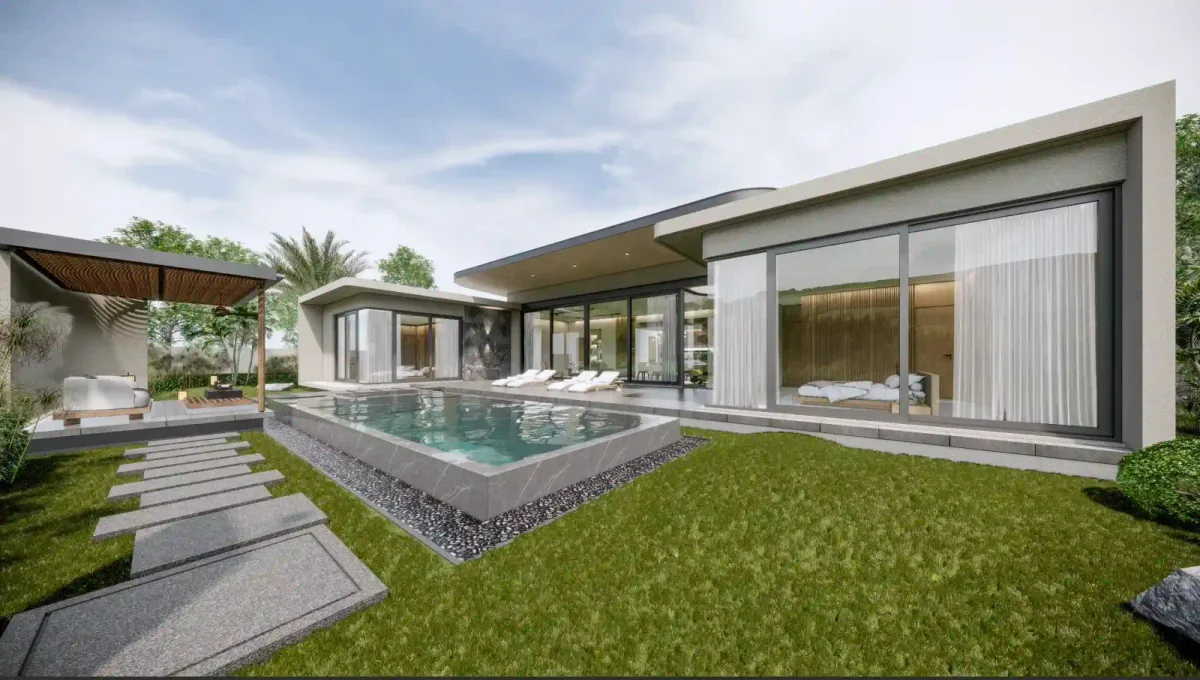
Quick answer: the budget areas in Phuket are Chalong, Kathu and Wichit inland, and Rawai and Nai Yang among the beaches. Median studio-sized units run 2,759,400 THB in Chalong, 3,051,000 in Kathu, 3,380,000 in Wichit, 4,834,500 in Rawai and 5,468,600 in Nai Yang. Patong is not one of them: nothing priced there is below 5,990,000 THB, and its studio median is 6,890,000, the dearest on the island. No area is ranked by yield anywhere on this page, because Thailand publishes none. What separates the five is the metre price, the depth of stock and which tenant the address can reach: Chalong and Kathu are inland and reach a monthly tenant, Rawai has the deepest budget list at 1,291 priced apartments across 15 schemes, and Nai Yang is the airport side with 530 across 7.
Read alongside Phuket Areas Master Guide 2026. | Budget band | Best-fit areas | Typical product | | --- | --- | --- | | under 3,500,000 THB | Chalong, Kathu, Wichit, all inland | Studio-sized freehold | | 3,500,000-5,000,000 THB | Layan, Bang Tao, Kata, Rawai | Studio-sized on a beach corridor | | 5,000,000-7,000,000 THB | Rawai, Nai Yang, Karon | 1-bedroom, or a studio in Patong |
What counts as a budget purchase in Phuket 2026?
Budget does not mean compromising on title, Chanote freehold in the foreign quota remains the standard. It does mean accepting less brand prestige and a narrower ultra-luxury resale pool than Bang Tao. See also our under $100k investment guide for studio-level detail.
Which budget area has the strongest overall credentials?
| Factor | Rawai, from our price records |
|---|---|
| Priced apartments | 1,291 across 15 schemes |
| Units under 35 sqm | 235, median 4,834,500 THB, from 3,032,320 |
| One-bedrooms | 627, median 6,652,800 THB, from 3,625,000 |
| Rate | 145,000 THB per sqm, against 142,817 island-wide |
| Rental mix | Tourist Nov-Apr plus expat monthly year-round |
No yield row. Occupancy and achieved nightly rates for privately owned condominium units are not collected by any public body in Thailand, so the 6-8% gross and 4.5-6.5% net this table used to carry had nothing behind them. What the records do say is that Rawai is not cheap by island standards: at 145,000 THB per square metre it prices slightly above the island median, and its advantage in this bracket is the depth of stock rather than the rate.
Lifestyle: Rawai is liveable, expat community, pier seafood market, international schools reachable via Chalong, Promthep Cape proximity. Personal-use buyers prefer it over Patong for extended stays.
Growth: Quality new projects have repriced Rawai upward over five years. The zone is professionalizing, older Thai-market stock still exists, but credible developers now anchor pricing.
Full area detail: Rawai property guide.
Is Chalong underrated for budget investors?
| Factor | Chalong snapshot |
|---|---|
| Studio entry | 2.9-3.8M THB ($89k-$116k) |
| 1-bedroom entry | 4.2-6.0M THB ($128k-$183k) |
| Rental driver | Long-term expat / professional |
| Monthly rent | 15,000-22,000 THB furnished 1BR |
| Gross yield | Not published for Phuket |
Chalong has Tesco Lotus, international cafes, Ao Chalong sailing hub, and Bangkok Hospital Phuket access. Capital growth is steadier than explosive, proposed LRT routing is a watch item, not a guarantee.
Verdict: Best for set-and-forget monthly income with lower seasonal volatility than Patong.
Does Patong still work at budget price points?
No, and the version of this section that said otherwise was measuring the wrong place.
| Factor | Patong, from our price records |
|---|---|
| Priced apartments | 202 across 2 schemes, both off-plan |
| Cheapest priced unit | 5,990,000 THB |
| Units under 35 sqm | 84, median 6,890,000 THB |
| Rate | 234,561 THB per sqm, the island’s dearest |
| Completed stock | none on the list |
A studio entry price appeared here, along with a peak nightly rate and a high-season occupancy band. The price came from the inland Kathu and Wichit schemes that our records file under the Patong beach label, five to twelve kilometres from the sand; the nightly rate and the occupancy came from nowhere, since nobody in Thailand publishes either for privately owned units.
Patong on its own numbers is the opposite of a budget area. It is a party-market product for short-stay investors who accept hospitality intensity, and it is now priced accordingly. If the 2.8-4.5M ticket is what you came for, the honest answer is the inland belt, where the tenant is a resident on a monthly contract rather than a visitor.
Red flag: older buildings anywhere in this bracket with weak sinking funds. A maintenance liability arriving as a special levy is the fastest way to lose the entry discount that brought you here, and the juristic person’s accounts show it before you buy.
Why is Nai Yang the growth wildcard?
| Factor | Nai Yang snapshot |
|---|---|
| Studio entry | 3.5-5.0M THB ($107k-$153k) |
| 1-bedroom entry | 5.5-7.5M THB ($168k-$229k) |
| Yield | Not published. What is smoother than Patong here is the demand mix, not a measured number |
| Demand mix | Airport transit + long-stay + residents |
| Growth thesis | Airport expansion + LRT (verify status) |
Nai Yang beach is long and less commercialised; Sirinath National Park constrains overdevelopment immediately north. Buyers accept fewer immediate conveniences for environment quality.
Compare north-vs-south positioning in Bang Tao vs Rawai.
Budget vs premium: does the yield premium survive net math?
| Zone type | THB per square metre | Priced apartments | Yield and growth |
|---|---|---|---|
| Budget (Rawai, Nai Yang) | 145,000 and 142,107 | 1,291 and 530 | Neither published for Phuket |
| Premium (Bang Tao, Kamala) | 161,000 and 156,200 | 4,589 and 699 | Neither published |
The yield and growth bands this table used to compare have been withdrawn on both rows. Note what the surviving columns show: the budget and premium metres are 10 to 13% apart, not the gulf the labels imply, and the real difference is depth, Bang Tao alone holds more priced apartments than Rawai, Nai Yang, Kamala, Chalong and Kathu combined.
Where budget wins is on absolute capital committed. Between roughly 2,600,000 and 5,000,000 THB, about $80,000 to $153,000, you own a studio or a one-bedroom outright in Chalong, Kathu or Wichit, where a premium buyer at the same figure is still part-way through a payment plan.
Where premium wins is on the resale side, and the records show it directly: Bang Tao carries 4,589 priced apartments across 48 schemes, so a seller there prices into a deep market and a seller in Chalong prices into a 396-unit one across two schemes. That is a liquidity difference, and it is the one comparison between budget and premium that can be made from data rather than asserted.
Build your own net model from the cost lines in the table below and the letting statements of a specific building. Our rental yield guide sets out the method; it does not supply a percentage, because none exists to supply.
Buyer scenarios: who should pick which budget zone?
Scenario A: maximum guest footfall, accepts seasonality. Patong is where the arrivals are, and it is not a budget purchase: 202 priced apartments across two schemes, neither finished, nothing below 5,990,000 THB, and the dearest metre on the island at 234,561. A buyer who wants Patong should know they are paying a premium price for a premium footfall, and should model the quiet half of the year before committing rather than after.
Scenario B: 5-year growth tilt, $160,000. Nai Yang 1-bedroom; accept thinner F&B scene for infrastructure optionality.
Scenario C: monthly tenancy, low touch. A Chalong one-bedroom let to a resident professional. The median unit there is 35 square metres, right at the line where the long-stay market opens, so check the specific unit rather than the area median. One tenant a year instead of forty guests is the whole point; what it pays is a matter for the lease, not for this page.
Scenario D, Budget now, upgrade later. Buy Rawai cashflow unit; redeploy equity toward Bang Tao on exit, common two-step path.
What the lower price is actually buying you
Every budget purchase involves a trade, and being explicit about which trade you are making prevents the disappointment that comes from discovering it later.
Distance from the beach. The most common and the most consequential. A unit fifteen minutes inland lets at a materially lower rate than one five minutes from the sand, and the gap widens in low season when guests have choices. If the discount you are getting is a distance discount, model the rent accordingly rather than using the area’s average.
Building age. Older stock is cheaper for good reasons and some bad ones. The good reason is that a fifteen-year-old building in a good position can let very respectably. The bad one is that its capital works are ahead of it rather than behind it, and the sinking fund is what stands between you and a levy.
Corridor rather than micro-location. Some budget zones are genuinely well positioned and simply less fashionable. Others are cheap because the specific street has a problem: noise, access, flooding, or a plot next door that is about to be developed. The first is an opportunity and the second is a discount you will pass on to your own buyer.
Management depth. Fewer credible operators work the budget corridors, which means less choice and less leverage over the one you appoint. This is the trade buyers notice least at purchase and most in year two.
Red flags for budget buyers in Phuket
Red flag 1, an income figure with no document behind it. At the budget end the projection is the main selling tool, precisely because the ticket is small enough to buy on a whim. Ask for the source of any percentage put to you; if the answer is a spreadsheet rather than a building’s statements, it is a hypothesis.
Red flag 2, No established management track record. Self-managing a $85k studio from overseas rarely works.
Red flag 3, Three new launches on the same street. Pipeline oversupply compresses occupancy.
Red flag 4, Leasehold marketed as “almost freehold.” Below $85k often signals weak title, verify Chanote and foreign quota.
Red flag 5, Guaranteed 10% yield without funding detail. Understand guarantee source and expiry, usually 2-5 years.
How do budget areas compare on fees and running costs?
| Cost line | Typical budget range | What to verify |
|---|---|---|
| Common-area fee | 35-65 THB/sqm/month | Last 2 years juristic accounts |
| Sinking fund | 300-800 THB/sqm one-off | Adequacy for roof/pool |
| Management | 15-25% gross short-stay | Minimum monthly flat fees |
| Cleaning | $20-$30/turnover | Same studio vs 1BR |
Always request 24 months of operating statements from management before comparing areas on headline yield alone.
What hold period makes sense for budget zone entry?
The hold-period matrix this section used to carry rated each area at three, five and seven years on yield and growth. Both were withdrawn from every other section of this page and the matrix had survived them, so it has gone too: no horizon can be scored on returns nobody measures.
What a hold period does change, and what you can plan around:
- Under three years you are exposed to the transaction costs at both ends and to the delivery date. Seven of the areas in the table above have unbuilt schemes, and Chalong and Patong have nothing finished at all, so a short hold on off-plan stock may not even reach a lettable asset.
- Three to seven years is where a building’s own record starts to exist: two years of juristic accounts, a sinking-fund history, and owners with letting statements. That is the first point at which a buyer after you can verify anything, which is what makes the unit sellable.
- Beyond seven years the building’s age becomes the variable, and at the budget end it is the decisive one: cheap stock is cheap partly because it was built to a price, and the special assessment for a roof, a lift or a pool plant lands on whoever owns it that year.
Pair the area with a realistic exit. Studios compete on price and little else, so the resale case has to be made with documents: the accounts, the minutes, and a letting history if one exists.
Rawai vs Chalong vs Patong: decision matrix for budget buyers
The yield and capital-growth rows this matrix used to carry have been removed: neither is measured in Thailand, so both were opinions dressed as a grid. What is left is what the records and the map can settle.
| Criterion | Rawai | Chalong | Patong |
|---|---|---|---|
| Priced apartments on our list | 1,291 across 15 schemes | 396 across 2 schemes | 202 across 2 schemes |
| Median price | 6,818,000 THB | 3,430,000 THB | 11,070,000 THB |
| THB per square metre | 145,000 | 98,550 | 234,561 |
| Median unit size | 51 sqm | 35 sqm | 53 sqm |
| Finished schemes | 2 | 0 | 0 |
| Beach guest pull | Nai Harn and Rawai, walkable from parts | Inland; guests drive | Direct, the densest on the island |
| Monthly tenant available | Yes, at 51 sqm median | Yes, and it is the main market | At 53 sqm yes, but the stock is priced for guests |
Choose Rawai for the deepest budget list and a unit large enough to take either tenant. Choose Chalong for the cheapest metre on the island and a monthly tenancy, accepting that no scheme there is finished and both are inland. Choose Patong knowing it is not a budget area: it is the dearest metre on the island, both its schemes are unbuilt, and nothing priced there sits below 5,990,000 THB.
Nai Yang vs Rawai at similar ticket sizes
Nai Yang suits buyers with 5+ year horizon who accept thinner immediate F&B scene. Rawai suits buyers who want proven dual rental market today. Some investors hold one of each, different correlation to tourism shocks.
How does budget entry compare to stretching to $250k-$300k?
| Ticket | Typical upgrade | Tradeoff |
|---|---|---|
| $100k → $150k | Rawai 1BR vs studio | Better guest profile |
| $150k → $220k | Bang Tao fringe studio/1BR | Lower net %, better brand |
| $200k → $300k | West-coast 1BR | Capital growth tilt |
See $300k+ investment guide if budget may expand within 12 months, sometimes waiting beats buying the wrong micro-location.
Infrastructure projects budget buyers should track
| Project | Budget area impact | Buyer action |
|---|---|---|
| Airport expansion ~2028 | Nai Yang upside | Track official timelines |
| LRT routing proposals | Nai Yang, Chalong mentions | Treat as optionality |
| Road widening south | Rawai access | Reduces commute friction |
| New hospital capacity | Island-wide | Supports long-term demand |
Infrastructure is upside modifier, not primary yield driver, never buy solely on blueprint map.
Worked comparison: 3,900,000 THB deployed in Rawai or Chalong
The comparison that stood here ran two income models against each other, a blended nightly rate, an occupancy percentage, a gross and a net for each area. Every one of those four inputs was invented, so the conclusion it reached was arithmetic on nothing. It has been withdrawn, and replaced with the comparison the records can actually support: what the same money buys.
At roughly 3,900,000 THB, about $119,000 at 32.7 THB to the dollar:
- In Chalong, that is above the median priced apartment, which is 3,430,000 at 35 square metres, and comfortably above the sub-35 sqm median of 2,759,400. You are buying at the middle of a 396-unit list where the metre costs 98,550 THB. Neither of the two schemes there is finished.
- In Rawai, it is below the median of 6,818,000 and near the sub-35 sqm median of 4,834,500. You are buying at the small end of a 1,291-unit list where the metre costs 145,000 THB (47% more than Chalong) across 15 schemes, two of them finished.
The trade is legible without any income figure. Chalong buys you more square metres and a monthly tenant; Rawai buys you a beach address, a much deeper resale pool, and the option of two finished buildings whose owners can show you what letting there actually produced. Which is worth more depends on whether you need the income evidence before you buy, and only one of the two areas can supply it.
Bottom line for budget buyers
Buying at the bottom of this market is a legitimate strategy and it carries a specific risk that premium buyers do not face: you are buying into the shallowest and most price-sensitive part of the buyer pool, and you will eventually sell into it.
That has three consequences worth planning for.
Diligence matters more, not less. A cheap unit in a badly run building is a cheap unit that stays cheap, and the checks that reveal that, the juristic accounts, the sinking fund position, the arrears list, cost the same regardless of the purchase price. Skipping them because the ticket is small is the most expensive economy available here.
Condition and presentation carry more weight. In a segment where units are broadly interchangeable, the one with better photographs, better reviews and a manager who reprices actively will outperform its neighbours substantially. That is within your control and it is where the return actually comes from.
And the exit needs thinking about at purchase. Below a certain price the buyers are budget-focused investors and local purchasers rather than the international pool, which means a longer marketing period and more price sensitivity. Plan to hold long enough that you are choosing when to sell.
We shortlist budget inventory with the same diligence as premium deals, building age, juristic quality, management history, and net spreadsheets before reservation.
Currency and timing for foreign budget buyers
Wire timing around month-end and Thai banking holidays can delay FET 3-5 days, do not schedule Land Office transfer on assumptions. Keep $3,000-$5,000 buffer for FX and fee variance on sub-$150k purchases.
When budget zones beat premium in portfolio context?
Three situations where the cheaper zone is genuinely the better decision rather than the compromise.
When the same capital buys two units instead of one. Two smaller units in a solid budget zone diversify building risk, manager risk and vacancy risk in a way a single premium unit cannot. If one building’s juristic office deteriorates or one manager underperforms, half your exposure is elsewhere.
When you will do the work. The budget segment rewards active management disproportionately, because the units are interchangeable and presentation decides which one sells nights. An owner willing to supervise properly captures more of that upside than they would in a premium building where the operator does everything.
When the premium purchase would leave no reserve. Stretching to the better address with nothing left for furnishing, running costs or a bad season is the worst outcome on this page, and it is common. A well-funded budget purchase beats an underfunded premium one every time.
Budget zone income can service carrying costs while waiting on Bang Tao completion, portfolio sequencing beats single-ticket romanticism when liquidity is finite.
Summary table: pick your budget zone in one view
Every figure below is from MORE Group’s price list. There is no income column, and there will not be one until Thailand publishes something to fill it.
| Area | Priced apartments | Schemes | Cheapest unit | Median price | THB per sqm | Median size | Sub-35 sqm median | Finished schemes |
|---|---|---|---|---|---|---|---|---|
| Chalong | 396 | 2 | 2,671,200 | 3,430,000 | 98,550 | 35 sqm | 2,759,400 | 0 |
| Kathu | 244 | 4 | 1,450,000 | 3,310,000 | 108,214 | 29 sqm | 3,051,000 | 2 |
| Wichit | 374 | 4 | 2,490,000 | 3,420,000 | 111,786 | 31 sqm | 3,380,000 | 2 |
| Nai Harn | 277 | 3 | 2,600,000 | 6,480,000 | 125,000 | 54 sqm | 2,800,000 | 1 |
| Nai Yang | 530 | 7 | 1,849,000 | 5,933,500 | 142,107 | 39 sqm | 5,468,600 | 3 |
| Rawai | 1,291 | 15 | 3,032,320 | 6,818,000 | 145,000 | 51 sqm | 4,834,500 | 2 |
| Patong, for contrast | 202 | 2 | 5,990,000 | 11,070,000 | 234,561 | 53 sqm | 6,890,000 | 0 |
Read the median-size column alongside the price. Kathu at 29 square metres and Wichit at 31 are below the roughly 35 sqm line at which the long-stay market opens, so the cheap metre there comes with a single demand pool. Rawai at 51 and Nai Harn at 54 clear it comfortably, which is most of what the extra 40,000 THB a metre is buying.
Record your own criteria before visiting: budget, personal-use weeks, and how many quiet months you can carry. Comparing areas on a spreadsheet alone misses the noise and traffic that show up in guest reviews within six months.
Budget buyers who fly in for a 72-hour inspection trip should allocate one day to Rawai and Nai Harn beaches, one day to Patong night noise reality, and half a day to Chalong logistics, not three days of developer showrooms only. Area feel drives hold conviction when yields compress in a soft season.
Looking for the right property in Phuket?
Our experts send a shortlist within 2 hours. 0% buyer commission.
What the cheap metre is actually buying
The inland belt is cheap for a reason worth stating plainly, because it decides whether the purchase works. Chalong at 98,550 THB per square metre, Kathu at 108,214 and Wichit at 111,786 are not discounted beach stock; they are a different product with a different tenant. The median apartment in Kathu is 29 square metres and in Wichit 31, both under the roughly 35 sqm line below which a Phuket flat has no monthly tenant, and the guest who books a beach studio for a week does not come inland.
So the inland buy makes sense on one of two theses. Either you are buying a low-ticket asset to let to residents and workers, in which case the size and the building matter far more than the address and you should be reading leases rather than nightly rates. Or you are buying land-adjacent exposure ahead of infrastructure, in which case you are making a bet with no income to carry it while you wait, and the holding costs run for as long as the bet does.
What does not work is buying inland on beach-market economics. That is the mistake the old version of this page encouraged by ranking Patong as a budget area on a yield band, and it is worth being explicit about now: nothing priced in Patong is in a budget bracket at all, and its cheapest priced apartment on our list is 5,990,000 THB.
Frequently Asked Questions
The lowest entry prices are inland: median studio-sized units at 2,759,400 THB in Chalong, 3,051,000 in Kathu and 3,380,000 in Wichit on MORE Group's records. Rawai is the cheapest of the beach areas at 4,834,500 and Nai Yang at 5,468,600. Patong is not in this bracket at all, since nothing priced there is below 5,990,000 THB. Studios in the inland belt run from about 2.67 million THB ($81,000-$107,000). Nai Yang is slightly higher, starting around 3.5 million THB, but offers strong infrastructure growth potential due to airport proximity.
None can be ranked on yield, and the bands this answer used to give have been withdrawn: Thailand publishes no letting series. The budget end of the island is inland, Chalong at 98,550 THB per square metre, Kathu at 108,214 and Wichit at 111,786, while Patong is the dearest metre at 234,561 and not a budget area. Rawai and Nai Yang have lower seasonal variation than the tourist beaches because their tenants include residents. For net yield after management fees and vacancy, Rawai typically comes out ahead overall, combining reliable occupancy with a manageable cost structure.
Yes. Rawai is consistently rated as one of the strongest budget investment zones in Phuket by agents and investors who know the market. It combines quality residential infrastructure, a two-season rental market (tourist and long-term expat/nomad), good lifestyle quality, and freehold ownership availability. New quality condominium projects have been gradually repricing the zone upward.
Nai Yang has strong infrastructure-driven growth potential. Its proximity to Phuket International Airport (approximately 5km), the ongoing airport expansion targeting completion in 2028, and the proposed LRT route connecting the airport through north Phuket all position Nai Yang for above-average capital appreciation. Current prices are significantly below adjacent Bang Tao, creating a meaningful value gap that infrastructure may close.
The answer depends on your priorities. Bang Tao offers stronger brand recognition, deeper resale liquidity, and proven capital growth, but at prices that are often 40-60% higher than budget zone equivalents. If yield is your primary metric, budget zones in Rawai and Nai Yang match or beat Bang Tao on net yield percentage. If capital growth and maximum resale liquidity matter more, the premium to buy in Bang Tao may be worth stretching for.
Questions about this guide? Ask us on WhatsApp. The guide's title is already in the message, so you only need to write your question.
Ask on WhatsApp
Maksim Shchegolev
Founder, MORE Group
Founder of MORE Group. Four years in investment banking before moving to Phuket, where he has worked in the local property market since 2018. Oversees developer relationships and every engagement above $300K.
About MORE Group →Compare Phuket Projects for Your Area and Budget
Send your preferred area, budget and timeline. We will shortlist live developer projects.
