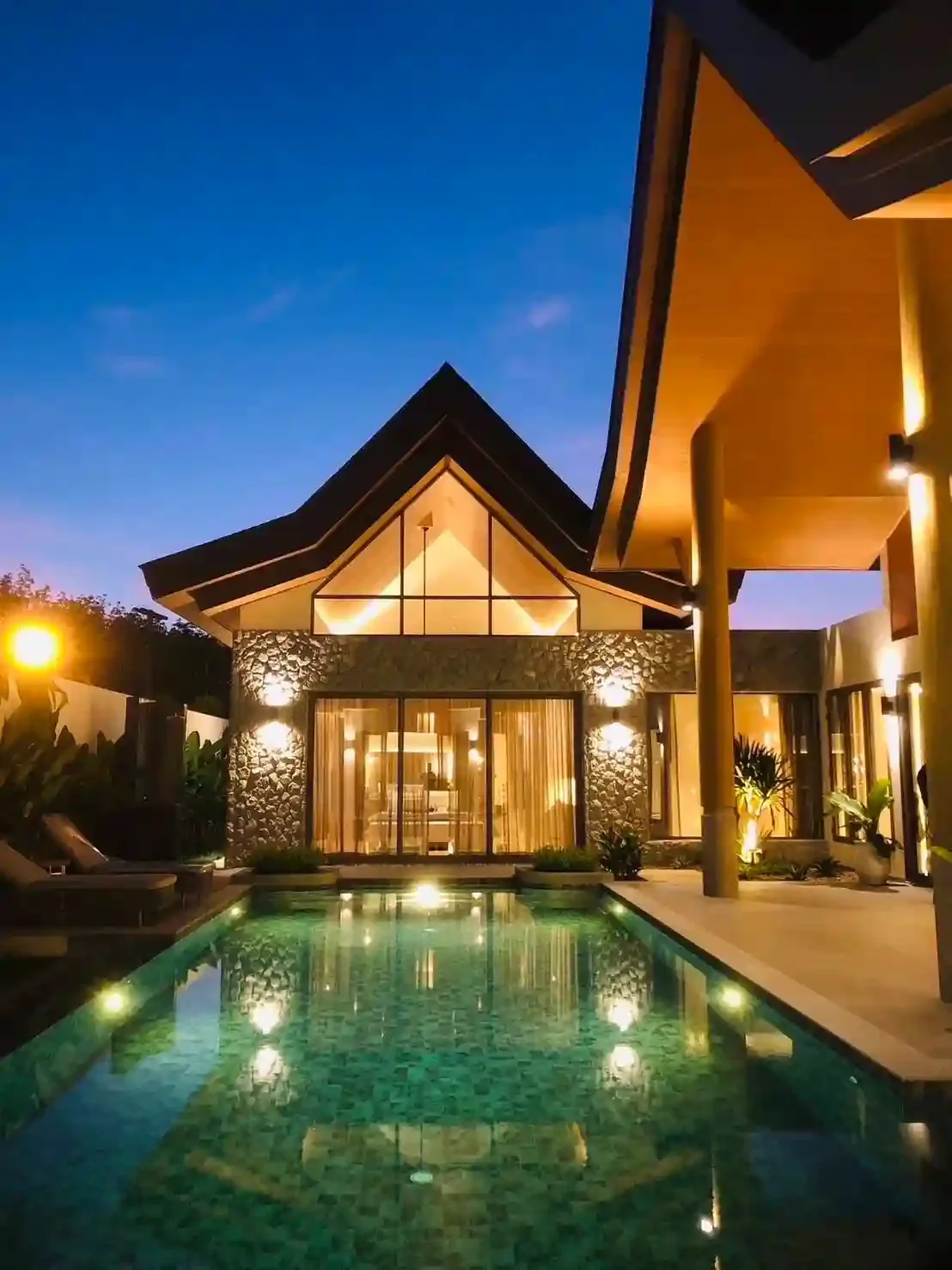
Buying Property in Phuket as a French Citizen: Complete Guide 2026
A French buyer arrives in Phuket with the best-regulated purchase process in Europe behind them and finds none of it here. There is no notaire between you and the seller, no diagnostic file, no cooling-off period, and no bank valuation, because no bank lends. What there is instead is a clear and short Thai law, the same for every foreigner, and a set of French obligations that follow the buyer home and are missed far more often than the Thai ones. This page keeps the two apart: the Thai part stated as fact, the French part stated as questions and logged in the site’s claims register with a review date, because nobody on this project follows French tax law professionally. The French-language tax guide is the pair to this page and takes the sale and the treaty method; this one takes the purchase, the reporting and the IFI.
French Property Ownership Rights in Thailand
Freehold Condominium Ownership
The Condominium Act lets a foreigner take the title deed to a unit on one condition: foreigners as a group may not own more than 49% of the building, measured by floor area. That ceiling is filled as foreign-owned units are registered, not as they are reserved, so the paper that counts is a dated letter from the juristic person itself, naming your unit and giving the foreign area still available. It is pleine propriété in every sense that counts, and it is the structure the resale market is built on. What it is not is copropriété as a French buyer knows it: the juristic person that runs the building publishes what it chooses and answers to its owners’ meetings, not to a statutory syndic regime, so its accounts and minutes are yours to ask for. The foreign quota explainer covers the edge cases.
Registered Leasehold for Villas
A foreigner cannot own land in Thailand. A villa therefore rests on a plot lease, registered at the Land Department for a maximum term of 30 years, while the building on the plot is usually registered to the buyer in its own right. The French instinct to read a long lease as a bail emphytéotique is the instinct to resist: registration is what gives the lease force against third parties, and any second or third term written into the contract is an undertaking by the landowner, binding on the person who gave it and uncertain against whoever buys the land later. Value the villa on the registered term and read the freehold vs leasehold guide before comparing it with a condominium.
Thai Company Structure Alternative
A Thai company that holds land for a foreigner’s benefit, with Thai shareholders of convenience, is what section 96 of the Land Code is written against. Where the company has a genuine business and real partners, the structure is a question for Thai counsel; for a private buyer of a house to live in, it is not a route. An SCI adds French accounting and reporting to a Thai problem it does not solve, as the French-language guide explains.
France-Thailand Tax Treaty and Financial Planning
Thai Tax Obligations for French Buyers
Thailand’s claims are three and they are modest. If the owner is in Thailand for under 180 days in the year, whoever pays the rent withholds 15% of it and that usually closes the Thai file; once the owner passes 180 days they are resident for Thai tax and the rent is assessed on the progressive scale after a standard 30% deduction (the rental income tax guide works both cases). At the transfer the Land Department charges 2% of its appraised value, a fee buyer and seller usually split, and takes from the seller a withholding tax on that value plus either specific business tax (3.3%, when the unit was bought less than five years earlier) or stamp duty (0.5%) (the transfer fees guide has the schedule). A residential unit pays land and building tax at 0.02% of assessed value a year, which the annual costs guide puts beside the common area charge that is the real running cost.
French Tax Treatment of Thai Property
Three French obligations attach to a Phuket unit, and this page states them in the order buyers forget them.
- The foreign bank account. A French tax resident declares every bank account opened, held, used or closed abroad with the annual return, whatever the balance and whether or not it earns anything. Almost every buyer opens a Thai account, because it is the account that receives the purchase money and the FET record; that account is declared from the year it is opened, and the omission carries a fixed fine per account and per year even where no tax was due.
- The IFI. The wealth tax on real estate counts property held abroad, so the Phuket unit joins the French home in the assessment once the household’s real estate exceeds the threshold, valued at its market value on 1 January each year. The old version of this page called it the ISF, which was replaced in 2018; the threshold and the rates are held in the register as unverified.
- The rent. Declared in France, on form 2047 and carried to form 2042, whatever the treaty does with it afterwards. What the 1974 convention does is the question: French treaties apply, by date, either a credit equal to the Thai tax or a credit equal to the French tax, which amounts to exemption with the income counted for the rate, and the two give different bills. This page does not assert which; the earlier version asserted the first without a source. Social charges at 17.2% on income from property abroad are a separate line that the Thai withholding does not offset.
Each of those is a statement about French law that the site’s claims register carries as unverified, dated for review. Take them as the list of questions for your conseil, and take them before the reservation fee rather than at the first return.
Currency and Banking Considerations
The price list is in baht, or in dollars that become baht on each payment date, and the money is in euros; an off-plan schedule converts several times over two or three years. Split the transfers so no single day’s rate sets the cost, ask your bank what it would charge to fix the rate for each contractual payment date, even if you then decline, and keep the purchase well inside your means. This page names no French bank and quotes no spread; the table it used to carry had no source behind it.
Banking and Money Transfer Requirements
French Banking Compliance
A French bank releasing a large transfer to a Thai developer will ask for the purchase contract, the developer’s details and evidence of where the money came from, and will ask before the transfer rather than after. Assemble the file at reservation. SEPA does not reach Thailand; the payment into Thailand is an international wire in euros whatever route it takes, and it is that leg where the compliance questions and the FET documentation sit. Timing is the subject of the currency transfer guide for EU buyers; the documents each bank will ask for are listed in the proof of funds guide.
Thai FET Certificate Process
Before it registers a foreigner’s freehold, the Land Department wants to see the foreign exchange transaction (FET) record issued by the Thai bank that received the money: it certifies that foreign currency came in from abroad under the buyer’s name and was exchanged into baht by that bank. The full form is issued for a single inbound transfer of $50,000 or more; a smaller transfer is evidenced by a credit advice, to be kept just as carefully. Three things keep it clean: euros wired from an account that bears your name, the unit named in the reference field; charges borne at the French end so the sum that lands matches the contract; and each instalment’s record filed with the title deed, because the same set is what makes sending the proceeds home routine when you sell. Baht bought in France and wired as baht gives the Thai bank nothing to certify.
Visa Strategies for French Property Owners
Ownership confers no right to stay, and no purchase price unlocks a visa. The routes are the same for a French buyer as for any foreigner and are compared in the visa options guide:
Long-Term Resident (LTR) Visa
A ten-year visa for qualifying categories; for the wealthy global citizen category the visa guide gives three tests: assets of $1 million, a Thai investment of $500,000 in which property may be counted, and medical cover of $50,000 or more. Its treatment of foreign income brought into Thailand is the point to take advice on, because the interaction with a French tax position is specific to the person.
Thailand Privilege (Elite Visa)
A paid membership for multi-year entry with no asset test, priced in the visa guide at 900,000 THB for five years. Convenience, not status.
Retirement and Long-Stay Options
The retirement visa from age 50 on a bank-balance or income test renewed annually, and the ten-year O-X for the designated nationalities, France among them. Whatever the visa, Thai tax residence is a matter of counting: 180 days in a calendar year, a line that one long winter followed by a long spring will cross.
Preferred Areas for French Buyers
Bang Tao and Laguna Phuket
The managed resort corridor, with the deepest international rental and resale pool on the island, an integrated estate, international schools within reach and French-speaking operators and restaurants around Boat Avenue. It suits the French buyer who wants the unit to work while they are in France and accepts the operator’s calendar and fee for it.
Kamala and Surin Beach
Hillside and headland rather than resort strip, where the price rewards view and privacy instead of nightly rate, and where supply is thin enough that a sale is negotiated over months rather than weeks. It suits own use first and letting second, and it is where the villas on registered leases concentrate; the Kamala Beach guide and the Surin Beach guide cover the stock.
Rawai and Nai Harn (Southern Beaches)
The long-stay south: marina life at Chalong, year-round infrastructure that does not close in the low season, a resident international community, and prices under the west coast’s, so the same budget buys the extra room a season needs. The Rawai guide covers it street by street. This page quotes no euro price bands by area; the ones it used to carry had no source, and the Q3 2026 market report gives the catalogue median, 4,934,800 THB for a condominium entry across 123 priced projects.
Investment Performance Analysis
No yield table, and no appreciation figure. The table this page carried by unit type, the “4 to 6% a year” capital growth and the “15 to 20% baht strengthening” could not be traced to a source and have been withdrawn. A French buyer reading a gross Phuket figure against the net of a Paris flat is comparing two different quantities, and the honest method is the one in the rental yield guide: the operator’s audited statement for the specific building, minus what the operator keeps, the building’s charge, insurance and a repair reserve, minus the 15% Thailand withholds from the gross, converted at the rates of the payment dates, and only then set against the French alternative with the French tax and social charges on the French side of the line.
| Line in the model | Where the figure comes from | Common French error |
|---|---|---|
| Gross rent | Operator’s audited statement for this building | Peak-season rates read as annual |
| Running costs | The operator’s cut, the building’s charge, insurance, a repair reserve | Leaving out the reserve and what the monsoon does |
| Thai tax at source | 15% taken from the gross rent of an owner abroad | Deducting it from net instead of gross |
| French tax | Method under the 1974 convention, confirmed in writing | Assuming a credit that may not apply |
| Social charges | 17.2% on the French side, not offset by Thai tax | Omitted |
| Exchange rate | The EUR/THB rate on each payment date, going in and coming out | A single rate applied to the whole model |
Due Diligence Process for French Buyers
The legal checks fall into two files, and a lawyer you chose and pay assembles both; nobody connected to the sale does. The first is the title: the deed read at the Land Department on the original, the juristic person’s registration and its foreign-quota arithmetic, encumbrances and disputes, the building permits. The second is what you will sign: the sale and purchase agreement in English and Thai and which version governs, any management or rental pool agreement with the fee structure stated rather than described, the building’s regulations, the insurance position and the dispute clause. Alongside them sits the building’s own financial picture, which is frequently skipped and should not be: three years of juristic person accounts, the history of common area charge increases, the sinking fund against the schedule of major works, special assessments levied or planned, and rental performance benchmarked against comparable units rather than against a projection. The due diligence guide lists the documents.
Common Mistakes French Buyers Make
Taking the developer’s word on the foreign quota. Marketing describes the building; only the juristic person’s dated letter naming your unit counts at the Land Department.
Reading a Thai lease through the French bail. Thirty years registered; renewal contractual, not automatic; and that is exactly the point a French buyer’s instinct is least likely to question.
The nominee arrangement. Unlawful however often it is proposed, with the exposure on the beneficial owner rather than on whoever suggested it.
Forgetting the Thai bank account in the French return. The most frequent and the most avoidable French error on this page, and a penalty paid for an omission rather than for any tax.
Engaging French counsel after the purchase. The structure, the IFI position and the method under the convention are all settled more cheaply before the reservation than after the title is registered.
Step-by-Step Purchase Process
- Before choosing anything: a written note from a French adviser on the account declaration, the IFI position and the treaty method at your income; then your own Thai lawyer, appointed before the reservation.
- On the ground: walk the areas at the hours you would use them, in the wet season as well as February; get from each building its quota letter and from each operator its audited accounts; reserve only with a refund condition tied to diligence.
- The property file: title, quota, permits, accounts, and the contract read for construction-linked milestones, a delay penalty with a figure and a long-stop date.
- The money: euros from your own account, the FET record for each tranche, ten working days’ margin before every milestone.
- Registration: in person or by a power of attorney notarised in France and legalised for Thai use; France being a party to the Hague Apostille Convention, an apostille is the usual route, and the power of attorney guide says how many weeks to allow. Start it at reservation.
- Afterwards: insurance, the operator’s contract and owner-use terms, the Thai withholding in place before the first booking, the Thai account declared in the next French return, and the complete file kept for as long as you own the unit.
Looking for the right property in Phuket?
Tell us which French filings you have already looked at and whether the unit is for winters or for letting; MORE Group comes back with a shortlist and the first checks to commission, sans frais.
French Tax Optimization Strategies
The word optimisation does not belong here, and this page will not use it for the French side. What belongs is the set of questions to take to a French adviser before the reservation: how the 1974 convention treats Thai rent in your hands and what documentation the administration expects; whether social charges apply and on what base; what expenses are deductible on the French side and what evidence is required, because that determines how your Thai operator should be instructed to report; how a French resident is taxed on a gain arising abroad and how the acquisition cost is established, including improvements and transaction costs, in euros at the rates of the payment dates; and whether holding personally, through a company or within a family arrangement changes anything for succession as well as for tax. Two practical points that need no adviser: decide the conversion approach at reservation, and keep every FET record permanently.
French Community and Support Services
Phuket has a settled French presence, and its value to a buyer is practical: the professionals you need exist locally and can be found by reference rather than through the seller. What matters in a Thai law firm is independence rather than a French-speaking desk; confirm in writing that it has no relationship with the developer. The Alliance Française, the French chamber of commerce and school parent networks are the fastest route to the two things worth having, candid accounts of specific buildings and operators from owners who live with them, and tradespeople who have actually performed. Do not use the community for tax, where a neighbour’s arrangement reflects their situation and their adviser, not yours.
Long-Term Ownership Considerations
Succession. French forced heirship governs the estate; the Thai unit passes under Thai procedure through a Thai court, and an heir from abroad can register a condominium only if the building’s foreign share still has room. A Thai will that leaves the French one intact, with an administrator able to act in Thailand, shortens the process by months; whether any French structure helps is a question for a notaire before the purchase, not after.
Exit. Thailand taxes the sale at the Land Department; France taxes the gain in euros on its own rules, with the treaty question above deciding how much. Keep the property’s condition and management records, document improvements as you go, and keep the FET records, because they are what lets the proceeds leave Thailand and what establishes the acquisition cost when a French adviser asks.
Red flags French buyers should not ignore
| Check | French parallel | Thai action |
|---|---|---|
| Title and contract review | Notaire | Thai counsel you appoint and pay |
| Condition of the unit | Diagnostics (DPE and the rest) | An inspector you commission; nobody produces a report by default |
| Foreign quota | No equivalent | The juristic person’s dated letter naming the unit |
| The Thai bank account | No equivalent | Declared in the French return from the year it is opened |
| Wealth tax | IFI | The unit counted from the first 1 January you own it |
| Yield | Rendement net | The operator’s audited statement, after fees and 15% withholding |
Scenario A, the Paris-region investor. Compares the Phuket net with a French flat’s; the lines that decide it are the treaty method, the social charges and the IFI, in that order, and the audited statement is the only yield accepted.
Scenario B, the Côte d’Azur second-home buyer. Own use first, letting second; treats Phuket as illiquid and plans a long hold; declares the Thai account from year one even in a year with no income.
Scenario C, the family relocating. School commute and healthcare decide the area; Thai tax residence arrives at 180 days and French residence has to be ended properly for the French obligations to stop.
Frequently Asked Questions
A French resident declares the rent in France on form 2047, carried to form 2042, whatever the treaty does with it afterwards. How the 1974 France-Thailand convention eliminates the double taxation, by a credit equal to the Thai tax or by a credit equal to the French tax that amounts to exemption with progression, is stated on this site as an open question for your adviser; social charges at 17.2% apply on the French side and are not offset by the 15% withheld in Thailand. Each of those statements is held in the site's claims register as unverified.
No, and neither can any other foreigner. A French buyer owns a condominium unit outright within the 49% of a building's floor area that foreigners may hold between them, or holds a villa on a plot lease the Land Department registers for up to 30 years with the house in their name. A Thai company with Thai shareholders of convenience is what the Land Code's nominee prohibition is written against.
There is no notaire, no diagnostic file, no cooling-off period and no bank valuation; the checks a notaire would run exist only if you commission them through a Thai lawyer you appoint. Registration at the Land Department is quick once the file is complete; the file is the work, and it is yours.
Euros from an account in your own name, arriving at a Thai bank as foreign currency and converted there, with the unit as the reference, so that the bank issues the foreign exchange transaction record the Land Department requires; a single inbound transfer of $50,000 or more produces the full form. Baht bought in France does not qualify. This page names no provider and quotes no spread.
Bang Tao and Laguna for a managed unit with the deepest rental and resale pool and French-speaking operators nearby; Kamala and Surin for privacy and view with letting secondary; Rawai and Nai Harn for a season's residence among a resident community, on monthly rather than nightly tenancies. Which is best depends on what the unit is for.
Yes, every foreign account opened, held, used or closed during the year, with the annual income tax return, whatever its balance and whether or not it earned anything. The Thai account that received the purchase money and the FET record is exactly such an account, and the omission carries a fixed fine per account and per year. It is the most frequent French error on this page and the easiest to avoid.
Related guides:
Questions about this guide? Ask us on WhatsApp. The guide's title is already in the message, so you only need to write your question.
Ask on WhatsApp
Maksim Shchegolev
Founder, MORE Group
Founder of MORE Group. Four years in investment banking before moving to Phuket, where he has worked in the local property market since 2018. Oversees developer relationships and every engagement above $300K.
About MORE Group →Get a Focused Phuket Property Shortlist
Share budget, area and goal. We will reply with suitable live projects, not a generic catalogue.
