Why Hua Hin for Retirement?
The key factors that make Hua Hin uniquely suited to retirement:
The royal-town status brings a kind of stability. The presence of the Thai royal family’s Klai Kangwon Palace creates a conservative, well-policed environment. Crime rates are among Thailand’s lowest. Infrastructure is maintained to a higher standard than most regional cities.
The expatriate community is long established. An estimated 5,000-8,000 long-term foreign residents live in Hua Hin, primarily European (particularly Scandinavian, British, and German), Australian, and American retirees. Active expat clubs, social organisations, and community events provide a ready-made social network.
Beach and golf access are the everyday draw. The city has a 5-kilometre urban beach and two internationally rated golf courses (Black Mountain Golf Club and Royal Hua Hin Golf Course) within the city limits. This is the lifestyle combination, beach mornings, golf afternoons, that defines Hua Hin for its expat community.
And Bangkok is close. For medical emergencies, international flights, or family visits, Bangkok is 3 hours by road or train. This proximity gives retirees access to Thailand’s world-class private hospitals in Bangkok while living in a resort environment.
Property Options and Prices
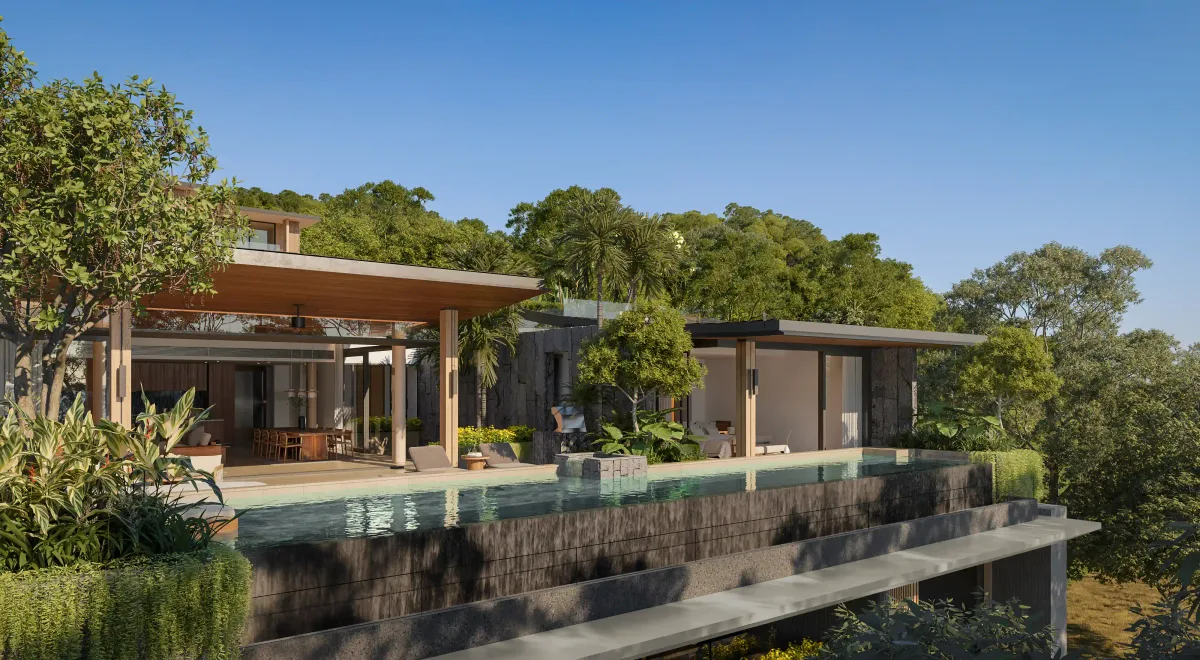
The golf villa segment (Soi 88 and Black Mountain areas) is popular among golf-oriented retirees who want private gardens and golf cart access to the fairways. These properties range from $250,000-$600,000 on leasehold structures.
Planning a retirement property in Thailand?
Our advisors have helped hundreds of retirees find the right fit, Hua Hin, Phuket, and beyond.
Retirement Visa Guide
Non-Immigrant O-A Visa (Retirement Visa)
The most straightforward route for retirees aged 50 and over:
| Requirement | Details |
|---|---|
| Minimum age | 50 years |
| Financial requirement | 800,000 THB ( |
| Health insurance | Minimum 40,000 THB inpatient / 4,000 THB outpatient coverage (Thai-approved insurer) |
| Duration | 1 year, renewable annually |
| Criminal record check | Required (from home country) |
| Medical certificate | Required |
| Where to apply | Thai embassy or consulate in home country, or in-country at immigration office |
Annual renewal: The O-A must be renewed each year at the Hua Hin Immigration Office. The process requires showing updated bank balance (minimum 800,000 THB maintained for 3 months prior) or income evidence.
90-day reporting: Holders must report to immigration every 90 days (now available online) to confirm continued residence in Thailand.
Thailand Long-Term Resident (LTR) Visa
Introduced in 2022, the LTR Visa is an alternative for wealthy retirees offering 10-year renewable stay:
- Wealthy Pensioner category: For retirees aged 50+ with passive income of at least $80,000/year (pension, investment income)
- Benefits: 10-year visa, no 90-day reporting, work permit available for 4 household members, tax privileges
- Property ownership note: LTR holders can own land (up to 1 rai / 0.16 hectares) for residential use, a significant advantage
For retirees with pension income above $80,000/year, the LTR Visa offers substantially simpler administration than annual O-A renewal.
Cost of Living Breakdown
| Category | Budget Lifestyle | Comfortable Lifestyle | Comfortable + |
|---|---|---|---|
| Condo fees / rent | $400 | $800 | $1,200 |
| Utilities (electricity, water, internet) | $100 | $180 | $250 |
| Food (mix local and Western) | $400 | $700 | $1,100 |
| Transport (local, occasional Bangkok trips) | $100 | $200 | $350 |
| Healthcare / insurance | $150 | $250 | $400 |
| Entertainment, dining out | $200 | $500 | $900 |
| Monthly total | $1,350 | $2,630 | $4,200 |
The “comfortable lifestyle” column, $2,630/month, represents what most European or Australian retirees describe as a genuine comfort standard in Hua Hin: a quality 1-bedroom condo, dining out 4-5 times per week at a mix of Thai and Western restaurants, golf 2-3 times per week, and private health insurance coverage.
This compares to an equivalent lifestyle in Phuket at $3,500-$4,500/month, or in coastal Spain at $3,500-$5,000/month.
Healthcare in Hua Hin
Bangkok Hospital Hua Hin. The primary private hospital, operated by the Bangkok Hospital Group (Thailand’s largest private hospital network). Provides international-standard care for general medicine, surgery, cardiology, and emergency. English-speaking staff. Accepted by most international insurance policies.
San Paulo Hospital Hua Hin. A smaller private facility, lower cost, used for routine consultations and minor procedures.
For serious conditions: Bangkok’s leading hospitals (Bumrungrad, Bangkok Hospital main campus, Samitivej) are 3 hours away. Most long-term Hua Hin expats use Hua Hin hospitals for routine care and Bangkok for specialist treatment.
Dental care. Excellent and significantly cheaper than Western equivalents: routine procedures cost 20-40% of UK/US prices.
Medical tourism: For elective procedures and specialist consultations, Bangkok remains the best option in the region, world-class, affordable, and accessible for Hua Hin residents as a day trip or short stay.
Expat Community
Hua Hin Expats Club. One of Thailand’s most active expatriate organisations, with weekly social events, excursions, volunteer activities, and a well-maintained member directory. Membership is open to all nationalities.
Golf clubs. Black Mountain Golf Club has a large international member community. Golf society events run several times per week. This is the primary social hub for many male retirees.
National community groups. The British Association, the Scandinavian Association and several others are active in social events, welfare support, and community organisation.
Weekly markets and social spots. The Cicada Night Market and multiple walking street markets provide regular social congregation points. The town’s restaurant scene supports diverse international dining at price points below Phuket or Bangkok.
What are red flags for retirees buying in Hua Hin?
- Leasehold villa marketed as “ownership”: 30+30+30 leases are common and workable, but they are not freehold. Confirm registration at the Land Department and renewal mechanics in the lease annex.
- Condo foreign quota full: Hua Hin has fewer high-rise options than Phuket; a “foreign quota available” claim without a juristic letter has blocked closings. Verify before deposit.
- O-A bank balance timing: 800,000 THB must sit 2 months before application and 3 months before renewal in many offices. Planning a December move with a January transfer often fails the first renewal.
- Health insurance that immigration rejects: O-A requires Thai-approved policies meeting inpatient 40,000 THB / outpatient 4,000 THB floors. Overseas-only expat policies may not qualify.
- Flood-prone soi properties: Hua Hin has intense rain bursts; ground-floor villas in low sois can pool water. Visit in rainy season (September-October) if possible.
- Distance from hospital: Bangkok Hospital Hua Hin is central, but Black Mountain and Soi 88 villas can be 25-35 minutes in traffic. Factor ambulance access for mobility-limited buyers.
Retiree due-diligence checklist:
- Foreign quota letter (condos) or registered lease (villas)
- FET form path for condo purchase from abroad
- O-A financial proof timeline mapped to your move date
- Thai-compliant health insurance certificate
- CAM / common fee history for managed resorts
- Trial rent 4-8 weeks in target neighbourhood before buying
See also buying property Thailand retirement and Thailand retirement property guide.
Buyer scenarios: which Hua Hin profile fits you?
Scenario A, UK single retiree, social network priority: Established studio or 1-bed in central Hua Hin ($60,000-$95,000), walkable to night markets and Hua Hin Expats Club events. Long-term lease acceptable; minimise car dependency.
Scenario B, Australian couple, part-time 6 months/year: 2-bed with lock-and-leave management ($180,000-$250,000), rental pool when away, LTR considered if pension exceeds $80,000/year to avoid annual O-A admin.
Scenario C, US buyers comparing Phuket: Choose Hua Hin if Bangkok family access matters and you prefer lower tourist density; choose Phuket if you need direct international flights and higher short-term rental liquidity on exit.
Hua Hin against the alternatives
Most people considering Hua Hin have looked at one or two other places, and the comparison is worth making explicitly rather than by feel.
Against Phuket, Hua Hin is quieter, cheaper and considerably less international. It has no equivalent of Phuket’s airport, so long-haul arrivals route through Bangkok and then take a three-hour drive or transfer, which matters if family will visit often. What it gains is proximity to Bangkok itself, which puts specialist medical care and an international airport within reach on a single journey, and a resident community that does not empty out when the season changes.
Against Chiang Mai, the trade is climate and coast against mountains and a larger expatriate city. Hua Hin has the sea and no burning season; Chiang Mai has more services, more choice in housing and a cooler part of the year. For someone whose main concern is air quality, that comparison usually settles itself.
Against staying at home and visiting, the honest arithmetic is the cost of ownership against the cost of renting for the months you would actually be here. Ownership wins over a long horizon and only if you use the property enough to justify it. Six weeks a year rarely does.
The one comparison worth resisting is Hua Hin as an investment against Phuket as an investment. The international buyer pool that makes a Phuket resale liquid is much thinner here, and a Hua Hin purchase should be made for the life rather than for the exit.
Banking, pensions, and daily money flow
ATM foreign-card fees and exchange spreads matter more than they look on a $2,500-a-month lifestyle; budgeting 1 to 2% of friction on inbound transfers is realistic.
Open a Thai account early, because it is the piece that takes longest and the requirements vary by bank and by branch. Ask the branch directly what it needs from a non-resident rather than relying on a general answer, and expect to be asked for your visa, a residence certificate and proof of address.
Set the standing payments up before you first travel back. Common area maintenance, utilities and any management fee continue whether you are in the country or not, and a lapsed payment on a condominium unit becomes an arrears note attached to the unit rather than to you personally, which surfaces awkwardly when you eventually sell.
And keep the FET record and the transfer paperwork for as long as you own the property. It is what makes taking the proceeds out of Thailand straightforward, and it is the document a bank will want when you convert a large sum on a sale. Property CAM and utilities are paid locally in THB; plan for 45,000-65,000 THB/year on a typical 60 sqm condo all-in before food and leisure.
Property Options and Prices in Practice
Three things separate a workable Hua Hin purchase from an awkward one, and none of them is the headline price.
The first is whether the unit works when the season turns. Hua Hin’s rental and social calendar is driven by Bangkok weekenders and by the northern-hemisphere winter, and a property that feels lively in January can feel very quiet in July. For a retiree this matters more than for an investor: it is where you will live, not a line in a spreadsheet.
The second is distance from everyday services rather than from the beach. What actually shapes daily life here is the drive to the hospital, to a supermarket you like, and to the people you will see regularly. A condominium ten minutes inland with a lift, covered parking and a walkable market frequently serves a retired couple better than a beachfront unit twenty-five minutes from anything.
The third is the building itself. Away from the newest developments, stock varies considerably in how it has been run. Ask the juristic person for the common area maintenance rate now and three years ago, the sinking fund balance, whether there has been a special assessment, and to see the minutes of the last two owners’ meetings. In a building you intend to grow old in, the maintenance culture matters more than the finish level.
On ownership, the position is the same as everywhere in Thailand: a foreigner may hold a condominium unit freehold within the 49% of the building’s total floor area reserved for non-Thai ownership, measured by floor area rather than by unit count, and land cannot be held freehold at all, so a house means a registered lease or a Thai company. Registering freehold in a foreign name depends on funds arriving from abroad in foreign currency with a Foreign Exchange Transaction record from the receiving bank.
Insider tip: rent the season before you buy
Insider tip: Spend one full high season and one low season in Hua Hin before you commit capital. Confirm foreign quota in writing, tie SPA milestones to construction, and underwrite net yield after 20 to 25% operator fees. Stress-test occupancy at 70 to 80% peak using 2024 to 2025 sister-unit data, not brochure ADR alone.
Decision framework: Hua Hin vs stay renting
Frequently Asked Questions
The Thai retirement visa requires 800,000 THB (approximately $23,000) maintained in a Thai bank account, or monthly pension income of 65,000 THB (approximately $1,900). For lifestyle purposes, most retirees find $2,000-$3,000/month sufficient for a comfortable lifestyle in Hua Hin, including condo fees, food, transport, entertainment, and health insurance. A budget of $2,500/month provides a genuinely comfortable standard of living.
Yes, foreign nationals on retirement visas can purchase freehold condo units in Hua Hin under the Thai Condominium Act. The purchase requires transferring funds from abroad documented with a Foreign Exchange Transaction (FET) form. Villas and land are available on leasehold structures. There is no minimum purchase price or property ownership requirement attached to the retirement visa itself.
Bangkok Hospital Hua Hin provides international-standard private care for general medicine, surgery, cardiology, and emergency. English-speaking staff are available. For specialist treatment and complex conditions, Bangkok's leading hospitals (Bumrungrad, Bangkok Hospital main campus) are 3 hours away. Most expat retirees use Hua Hin hospitals for routine care and Bangkok for specialist needs, which is a workable arrangement given the road distance.
Hua Hin is considered one of Thailand's safest cities. Crime rates are low, the environment is conservative (partly due to the royal family presence), and the expat community is well-established with support networks in place. Traffic is the primary safety concern, as with all Thailand locations. Foreign retirees have been living comfortably in Hua Hin for decades, it is a well-tested retirement environment.
The primary route is by road, approximately 3 hours by private transfer or bus, depending on traffic. VIP bus services run multiple times daily from Hua Hin centre to Bangkok Suvarnabhumi and Don Mueang airports (cost: $8-$15). Private transfers are available for approximately $50-$80 one-way. Train service also runs between Hua Hin and Bangkok Hua Lamphong station (3-4 hours, infrequent schedule). There is no commercial airport in Hua Hin, which is the primary transport limitation.
Neither is objectively better, it depends on priorities. Hua Hin is better for: lower cost of living (approximately 25-30% below Phuket), golf access, quieter environment, and proximity to Bangkok. Phuket is better for: beach quality and variety, international airport access, larger expat community, more dining and entertainment options, and stronger property investment returns if that matters. Many retirees spend time in both, Hua Hin during the high-season heat of Phuket's low season, and vice versa.
Read Also:
Questions about this guide? Ask us on WhatsApp. The guide's title is already in the message, so you only need to write your question.
Ask on WhatsApp
Maksim Shchegolev
Founder, MORE Group
Founder of MORE Group. Four years in investment banking before moving to Phuket, where he has worked in the local property market since 2018. Oversees developer relationships and every engagement above $300K.
About MORE Group →Get a Focused Phuket Property Shortlist
Share budget, area and goal. We will reply with suitable live projects, not a generic catalogue.
