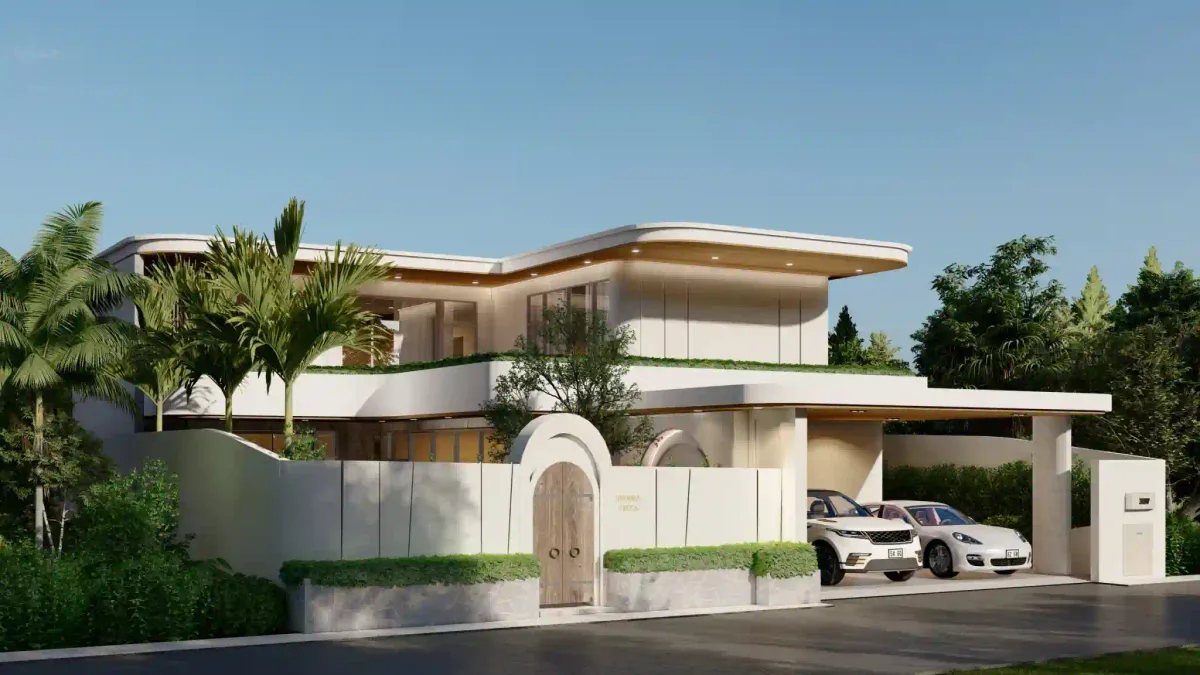
Buying Off-Plan in Laguna Phuket 2026: Is the Risk Worth It?
Laguna is an unusual place to buy off-plan, and the reason is that most of the ordinary off-plan risk has already been retired here.
The standard fear with an off-plan purchase is that the developer does not finish: a single-project company, buyer milestones funding the build, and nothing standing to inspect. Laguna is a masterplan that has been delivering for decades, with completed phases you can walk through, operating hotels, a golf course and an estate management structure that already exists. You are not taking a bet on whether the place gets built.
What you are taking instead are two different risks, and they are the ones this guide is about.
Supply inside the estate: the masterplan continues to release. Your resale competes not only with the wider market but with whatever phase the developer is selling at the time, and a developer with new inventory has pricing tools an individual seller does not.
The premium itself: you pay for the estate (the infrastructure, the management, the address) at purchase. Whether the next buyer pays it too is the question that decides your return, and it is a different question from whether the project completes.
So the honest answer to the title is: the completion risk is genuinely lower here than almost anywhere else in Phuket, and the pricing risk is genuinely higher. The sections below take both apart, along with entry prices, yields, quota mechanics and payment schedules.
Broader context: off-plan vs resale in Phuket.
Case FOR Off-Plan in Laguna Phuket
- 33+ years of public financial disclosure, audited annual accounts, quarterly reports, material event disclosures
- Regulatory oversight by the Securities and Exchange Commission of Thailand
- No bankruptcy or major development failure in 30+ years of Laguna Phuket development
- 19 projects, 2,147 units delivered without a single abandoned project
Banyan Group (SGX-listed, Singapore) adds a second layer of institutional credibility as a development co-partner. Two listed entities co-developing is exceptionally rare in Phuket’s off-plan market and provides insurance that neither entity alone could provide.
For comparison, the Phuket property market has seen developer failures and abandoned projects from smaller, private developers. The Laguna / Banyan Group institutional track record is categorically different.
2. Historical Off-Plan Appreciation: not measurable, Phuket publishes no transaction index, so the 35-50% this line used to give has never been recorded
The Laguna Phuket launch history is the usual argument for off-plan appreciation, with the caveat that no transaction index exists to measure it:
- Cassia Phuket (launched ~2016, completed 2019): appreciation from launch to completion estimated 25-35%
- Angsana Oceanview (launched ~2018, completed): the construction-phase appreciation this line used to estimate is withdrawn; no register recorded it. What is on our list today is three priced units from 45,820,000 THB at 219,234 THB/sqm
- Skypark (original, launched ~2019, completed 2021): comparable appreciation range
- Laguna Park 2 (launched ~2019, completed 2023): the sterling resale figures this line used to give, and the 39% derived from them, are withdrawn. Thailand publishes no transaction register, so no resale price for any Laguna Park 2 unit is verifiable, and a secondary-market asking price is not a sale
For 2026 off-plan projects:
| Project | Estimated Construction Window | Historical Appreciation Range |
|---|---|---|
| Skypark Elara | ~18-24 months (Oct 2026) | Not stateable; 62 priced units from 8,290,000 THB at 187,222 THB/sqm today |
| Garrya | ~24-30 months (Q2 2027) | Not stateable; 35 from 16,360,000 at 312,259 |
| Laguna Aster | ~24 months (Dec 2027) | Not stateable; 49 from 10,500,000 at 214,286 |
| Banyan Tree Oceanus | ~36+ months (Dec 2028) | Not stateable; 7 from 160,000,000 at 452,479 |
The appreciation column this table used to carry (a band per scheme) is withdrawn for every row. A forecast of a quantity that has never been measured is not a forecast. What replaces it is the level each scheme asks today, which is the number a buyer at handover will be selling against.
3. Interest-Free Payment Plans Reduce Capital Exposure
Skypark Elara and Garrya both offer 0% interest payment plans with 20% across 5 stages. This means the buyer’s capital exposure during construction is significantly reduced:
On a $430K Garrya 1BR:
- Day 1 outlay (reservation + contract): approximately $89,000 (20%)
- Remaining 80% ($344,000) paid across construction milestones
- 0% financing cost on deferred amounts
If the buyer can earn 5% on their remaining $344K during the 18-month construction period (via bonds, term deposits, or other investments), they effectively earn approximately $25,800, a meaningful return on deferred capital.
4. The $2 Billion Lakelands Infrastructure Multiplier
For Skypark Elara and Laguna Aster specifically, being inside the Laguna Lakelands masterplan is the appreciation argument, and it is an argument rather than a series:
As each subsequent Lakelands phase delivers (Aster after Elara, Bellaguna after Aster), the overall estate becomes more mature and liveable. Early buyers benefit from each infrastructure addition, retail, landscaping, amenity completions, without paying the higher prices that later phases will command.
This is exactly the masterplan investment thesis that has created wealth for early buyers in Dubai’s Palm Jumeirah, Singapore’s Marina Bay Sands precinct, and similar developments globally.
Honest Risks: What Can Actually Go Wrong
Laguna/Banyan Group track record: Strong. The institutional developer status means construction is professionally managed with established subcontractor relationships. Historical delays have been minor (weeks to a few months) rather than years.
Impact assessment: Even a 6-month delay on Skypark Elara (October 2026 to April 2027) means 6 months of delayed rental income, approximately $6,000-$8,000 foregone on a $265K 1BR. Annoying but not catastrophic.
Mitigation: Purchase contracts include penalty provisions for significant delays. Review your specific contract terms with a Thai property lawyer.
Risk level: LOW for Laguna/Banyan Group; moderate for smaller Phuket developers.
Risk 2: Yield Underperformance
What it means: the projected yield band this line used to give is withdrawn, and not because it was unguaranteed, because there is no Phuket rental series for any projection to be based on. A developer’s projected yield is a number chosen for a brochure.
Specific risk scenarios:
- Garrya wellness ADR premium not fully achieved (if operational execution is average)
- Lakelands supply (5,000 units over 10 years) moderating ADR growth area-wide
- Phuket tourism softening during an external shock event (pandemic-scale, geopolitical)
Historical context: Phuket recovered strongly from COVID-19, with 2022-2025 tourism significantly exceeding pre-2020 levels. Laguna specifically maintained rental demand better than lower-profile areas during the downturn.
Risk level: MEDIUM, projections are optimistic scenarios, not floors. Plan from the fee stack, which the management agreement states, and from twelve months of statements on a comparable unit; the conservative net-yield band this line used to give is withdrawn.
Risk 3: Market Downturn Suppressing Appreciation
What it means: If Phuket’s property market softens, off-plan appreciation during construction may be lower than historical 35-50%.
What has driven Phuket’s market: International tourism recovery, remote work migration to Phuket, infrastructure improvement (airport expansion, road upgrades), and developer marketing all support continued appreciation. The $2 billion Lakelands investment is a particularly strong tailwind.
What could cause a downturn: Major geopolitical disruption affecting Thai tourism, significant global economic recession, or unexpected Thai regulatory changes.
Risk level: MEDIUM, market conditions are never fully predictable. The mitigant is Laguna’s brand resilience during downturns versus non-branded alternatives.
Risk 4: Construction Quality Below Expectations
What it means: The delivered unit specification or build quality does not match the marketing materials.
Laguna/Banyan Group track record: 19 delivered projects with consistent quality. The groups’ hotel operations in the same estate (Banyan Tree Phuket, Angsana Phuket, Cassia Phuket) are tangible quality benchmarks, they would not damage their own hotel brands by delivering substandard residences adjacent to their flagship properties.
Risk level: LOW for Laguna/Banyan Group.
What to establish before reserving an estate off-plan unit
Six checks, and the first three are the ones buyers most often skip because the estate’s reputation feels like an answer.
Which entity is selling. Estate groups place phases under subsidiaries and joint ventures. Check the corporate record of the company that will sign your contract, and ask in writing whether the parent stands behind it. The reputation you are relying on may belong elsewhere.
Foreign quota for your specific unit. In square metres, dated, from the juristic office, with an answer to how much of the remaining allowance is already committed to other reservations. The allowance is consumed at registration, and on a purchase completing two years out the reservations ahead of you register first.
The payment schedule as a risk document. How much falls due before the structure is topped out, and whether releases follow inspected progress or calendar dates.
The delay clause matters next: the stated completion date, the extension permitted as of right, and the remedy beyond it. Buyers commonly discover a twelve-month grace period at month twenty-five.
Then both layers of recurring charge: the building’s common area maintenance and the estate charge on top, each expressed per square metre per month, each with several years of history so you can see the direction of travel rather than a snapshot.
Finally the rental programme terms, if one is offered. The fee basis and whether platform commissions sit inside it or come off the top before the split. The owner-usage cap and the blackout dates, which for a buyer expecting to visit is frequently worth more than a percentage point of return. The lock-in period and the notice required. And what happens at the end of the term, since a programme you cannot leave is a programme whose performance you cannot discipline.
What buying into a masterplan actually means
Off-plan inside an estate differs from off-plan generally, and the difference cuts both ways.
The infrastructure exists. You are not relying on a developer to build a resort around your unit, because the golf, the beach access, the services and the management are already operating. That removes the largest category of masterplan risk, which is the promised amenity that never arrives.
The estate keeps building. The same masterplan that gives you infrastructure gives you competition, phase after phase, for years. Each new release competes for the same guests and, at resale, for the same buyers, and it carries the same brand you paid for. A buyer in an early phase is not buying scarcity; they are buying a position in a pipeline.
Estate charges are additional and permanent. Building-level common area maintenance plus an estate-level charge for shared roads, landscaping, security and infrastructure, payable whether or not you visit, and revisable. Ask for each of the two rates per square metre, and for what they were three and five years ago.
Governance is not yours. Decisions about the estate are taken by the estate, and an individual owner’s influence is limited. That is the price of the standard being maintained, and it is worth understanding rather than discovering.
The judgement to make is whether the operating certainty is worth the premium and the ongoing charges, and that depends heavily on how long you intend to hold.
Who this suits
Suits a long hold. A brand and estate premium is recovered, if at all, at sale, and the yield gap works against you in the meantime. Ten years or more is where the arithmetic turns.
Suits an owner who will use the property. Estate infrastructure, service standards and the operating environment are consumable. An owner rarely here is paying for a guest’s experience.
Suits a buyer who wants delivery certainty above price. That is what an established estate developer sells, and for a first purchase in an unfamiliar market it has real value.
Does not suit a yield maximiser. Net returns on branded estate stock are commonly lower than on good independent stock in the same corridor, because the premium is paid at purchase and again in the estate charges while the rent does not rise proportionally. No amount of specification changes that arithmetic.
Does not suit a buyer who may exit within five years. Off-plan means no income at all during construction, followed by a resale into a market that includes the estate’s own later phases, carrying the same brand and competing for the same buyer. Five years is not enough time for the premium to be recovered or for the pipeline to have moved past you.
Pros and Cons
Pros
- A masterplan that has been delivering for decades, so completion risk is far lower than a single-project developer
- Completed phases, operating hotels and a golf course you can walk through before committing
- Estate management already in place rather than promised for handover
- Established rental programmes with reporting, so remote ownership works from day one
- Estate boundaries constrain future supply, which has underpinned pricing in the corridor
What to consider:
- No guaranteed appreciation, and no measured one either. The 35-50% this line used to call historical was never recorded anywhere, since Phuket publishes no transaction index
- Yield projections are estimates, actual rental performance depends on management and market
- Income delay (6 months to 3 years depending on project) requires financial planning
- Lakelands supply (5,000 units planned) means yield competition will increase over 2027-2030
- Foreign quota must be verified before contracting
Lakelands Supply: How Much Competition Matters in 2026
| Project | Supply sensitivity | Practical mitigant |
|---|---|---|
| Skypark Elara | Medium, larger inventory | Earlier delivery, lower ticket |
| Garrya | Lower, beach + wellness niche | ADR premium if ops execute |
| Aster | Medium, amenity-led | Furnished package helps turnover |
| Oceanus | Low, ultra-luxury slice | Tiny buyer pool, trophy hold |
Insider tip: Request the developer’s foreign-quota status letter and milestone escrow wording in the same email thread before you pay reservation, Laguna sales teams are used to institutional buyers asking both upfront.
2026 entry timing: Elara vs waiting for Bellaguna
| Decision | Choose Elara now | Wait / compare Bellaguna |
|---|---|---|
| Need income by 2027 | Yes | No |
| Want lowest ticket in Laguna | Often yes | Unknown |
| Trophy beachfront hold | Consider Garrya/Oceanus | Not comparable |
Cross-read best Laguna projects for foreigners and Laguna vs standalone condo economics before you anchor on brand alone.
Foreign quota batching in busy Laguna launches
Keep milestone payment proofs in one folder per wire: SWIFT confirmation, developer receipt, and bank FET where applicable. Future resale and repatriation audits are smoother when the paper trail is boring and complete.
Treat Lakelands as a decade-long neighbourhood upgrade, not a one-year trade. Off-plan entry makes sense when your personal liquidity plan survives a 12-month delay headline without forced resale. Compare each active Laguna launch against completed resale stock in the same week, relative pricing moves quickly when a new tower absorbs buyer attention.
If you are foreign-quota constrained, ask whether a resale freehold in an older Laguna building delivers income sooner while Lakelands supply digests, hybrid timing often beats all-in off-plan concentration for first-time Laguna buyers. Aster sits between Elara and Garrya on price and amenity, useful when you want furnished differentiation without Oceanus ticket size. Pick the tower that matches your hold period, not the brochure hero shot. Liquidity planning beats launch-day excitement on every Laguna off-plan ticket in 2026 today.
Get a free Phuket property consultation
MORE Group shortlist and due-diligence support.
Frequently Asked Questions
Laguna Property (Laguna Resorts and Hotels PLC) is the safest off-plan investment entity in Phuket. SET-listed since 1993, with 30+ years of continuous operation, 19 projects, 2,147 units delivered, and zero development failures. Its joint ventures with Banyan Group (SGX-listed) add a second institutional layer. Developer default risk for Laguna/Banyan Group is about as low as off-plan development risk can be, significantly lower than private or smaller Thai developers.
Off-plan to completion appreciation for well-positioned Laguna Phuket projects has historically ranged from 35-50%. Specific examples: Laguna Park 2 launched ~2019 at £480K+ now trading at £668K+ (39%+); Cassia launched ~2016 at THB 4M-7M now trading at THB 5.75M-13.5M (various appreciation rates). The 2026 off-plan projects (Elara, Garrya, Aster) have shorter windows than Cassia's 3-year construction period, and no appreciation figure can be given for them: the 20-40% this answer used to expect has no series behind it. What can be compared is what each asks today per square metre against what it will complete into: a corridor where nothing in Layan is finished.
Delays typically trigger contractual penalty provisions in favour of the buyer. The specific remedy depends on your purchase contract, which must be reviewed by a Thai property lawyer before signing. For Laguna/Banyan Group projects, the institutional seriousness of the developer means that significant delays are typically communicated in advance and compensated appropriately. Your deposit is held in a formal account structure under the developer's registered company, not a personal account.
Bellaguna (the new Banyan Group brand within Lakelands) is in early planning stages with no confirmed pricing or delivery timeline. Buying Skypark Elara now provides: (1) October 2026 delivery vs uncertain Bellaguna timeline, (2) known pricing and specifications, (3) interest-free payment plan already established, and (4) first-mover Lakelands position. Unless Bellaguna's location, specification, or price offers a compelling advantage over Elara when it launches, buying Elara now is generally preferable to waiting for an unpriced, untimed future product.
There is no universal rule, but for most investors, limiting off-plan Laguna Phuket exposure to 20-40% of a real estate portfolio is prudent. The remaining allocation should include income-generating assets (Cassia secondary for immediate yield), other geographies or asset classes for diversification, and liquid reserves for milestone payment obligations. Laguna/Banyan Group's low developer risk allows higher concentration than typical off-plan investments, but diversification remains sound investment practice.
Read Also:
Questions about this guide? Ask us on WhatsApp. The guide's title is already in the message, so you only need to write your question.
Ask on WhatsApp
Maksim Shchegolev
Founder, MORE Group
Founder of MORE Group. Four years in investment banking before moving to Phuket, where he has worked in the local property market since 2018. Oversees developer relationships and every engagement above $300K.
About MORE Group →Get a Focused Phuket Property Shortlist
Share budget, area and goal. We will reply with suitable live projects, not a generic catalogue.
