Living in Bangkok vs Phuket: Property, Lifestyle, and Investment Compare
Thailand markets hub: Bangkok vs Phuket · Investor comparison.
Quick answer: Choose Bangkok for career density, BTS lifestyle, and long-let stability; choose Phuket for beach living, international schools on the island, and stronger holiday-rental economics. Many families split time, but property due diligence still differs by city.
Bangkok offers urban convenience, a lower cost of living and far denser infrastructure; Phuket offers a beach-resort lifestyle and a market built on visitors rather than residents. The yield and appreciation figures this page used to attach to each have been withdrawn. Thailand publishes no letting series and no transaction index for either city, so both sides of that comparison were assembled rather than measured. For lifestyle buyers wanting sun, sea, and strong returns, Phuket wins. For urban professionals or corporate expats, Bangkok delivers more practical advantages. The right answer depends entirely on what you want from your Thailand experience.
Property Market Comparison
Bangkok property market:
Bangkok’s condominium market is mature and highly competitive. The primary buyer base is domestic Thai investors and professionals, with foreign buyers limited to the 49% foreign quota per building. Prime zones (Sukhumvit, Sathorn, Silom) offer strong market liquidity and established secondary markets.
- Average 1BR price in prime Sukhumvit: $180,000-$350,000
- Gross rental yield: not published. The mechanism behind the old figure is still true (Bangkok prices are high relative to its rents) but the range itself was not measured
- Capital appreciation: not published either; Thailand has no transaction index for Bangkok any more than for Phuket
- Rental demand: Consistent year-round, driven by business expats and Thai professionals
- Seasonality: Minimal, Bangkok demand is not seasonal
- Management: Simple (long-term leases to corporate tenants are standard)
Phuket property market:
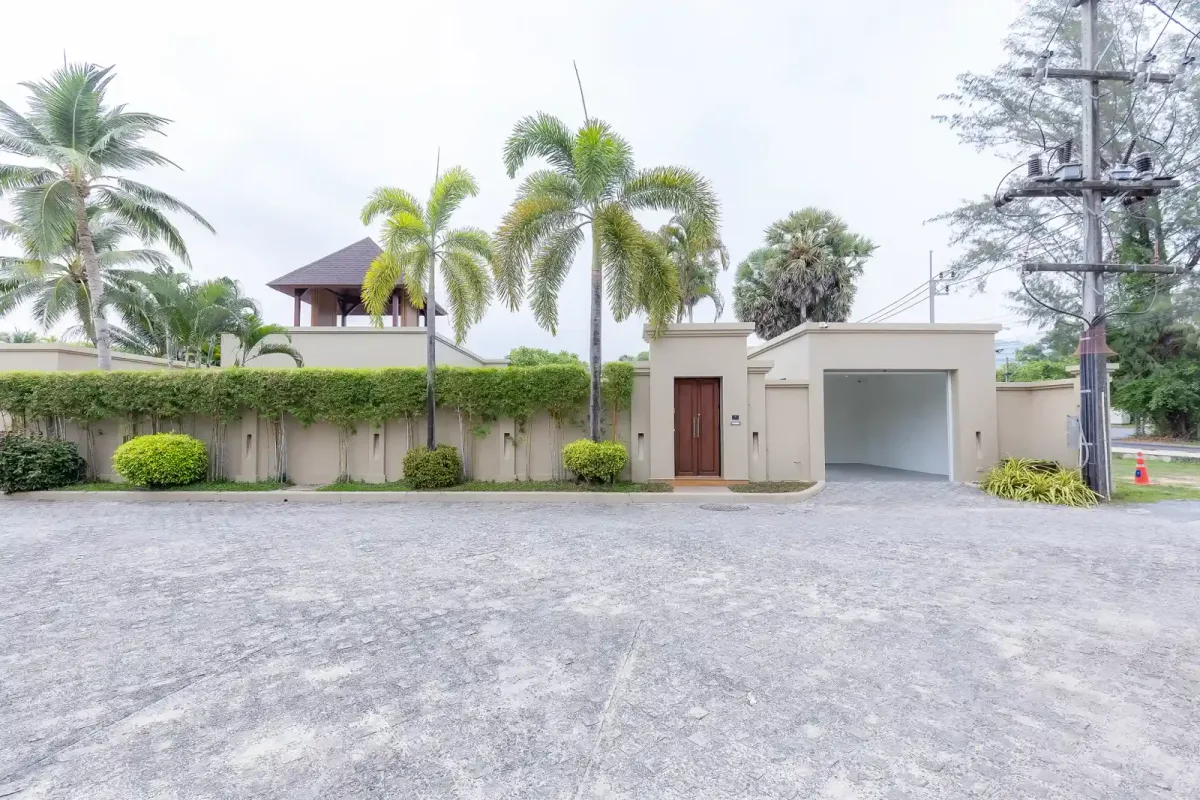
Phuket’s market is more fragmented, managed resort condos, leasehold villas, and some freehold land-and-house projects, and its demand comes from visitors rather than residents, which is what makes its year uneven and its letting a business rather than a lease.
- Average 1BR price in prime Bang Tao: $130,000-$200,000
- Gross rental yield: not published, for either letting model
- Capital appreciation: not published. What the records show instead is concentration, 4,589 priced apartments in Bang Tao against 108 in Surin, which tells you about competition and liquidity, not about growth
- Rental demand: strongly seasonal, November to April. The occupancy figure that used to close this line has been withdrawn; the monsoon months are the ones that decide the year
- Seasonality: Significant, requires managed pool or careful strategy for income consistency
- Management: More complex, requires professional short-term rental management
The verdict on property investment: there is no verdict to give on returns, and the percentage-point gap this line used to assert has been withdrawn along with the appreciation claim beside it. Neither city publishes a letting series or a transaction index. What is certain is the shape of each: Bangkok gives you a flat year, one tenant and a lease renewal; Phuket gives you a seasonal curve, an operating business and a much heavier cost line.
Lifestyle Comparison
Bangkok lifestyle:
- Two rail networks and a metro, so a car is optional and for many residents a liability
- The deepest restaurant scene in Southeast Asia, at every price point, and it keeps getting deeper
- Everything is open, all the time, and delivery reaches almost everywhere
- Air quality is the real cost: the burning season from roughly December to March produces sustained poor readings, and it is a genuine health consideration for children and anyone with a respiratory condition
- Climate: consistently hot and humid with little relief, and April is punishing
- Traffic is the other cost, and it shapes where people live far more than any other factor
- Green space is scarce, and the parks that exist are crowded
- Flights: direct connections to almost anywhere in Asia and much of Europe, which matters if you travel for work or have family abroad
Phuket lifestyle:
- Beach access within 10-30 minutes from all main residential areas
- Outdoor lifestyle emphasis: snorkelling, diving, kitesurfing, golf, sailing, running
- No public transport, car or motorbike essential (significant ongoing cost)
- Restaurant scene growing rapidly but not Bangkok-comparable in variety
- Air quality: Excellent (no industrial pollution), some seasonal smoke from agricultural burning (March-April can affect northern zones)
- Climate: Hot and humid, but sea breeze makes coastal zones more comfortable; lower season (June-September) sees rain but also fewer crowds
- Shopping: Limited luxury options (Phuket Town and Central Festival), Bangkok required for serious shopping
Investment Return Comparison
| On a $150,000 purchase | Bangkok 1BR | Phuket 1BR (Bang Tao) |
|---|---|---|
| Gross yield | Not published for Bangkok | Not published for Phuket |
| Management cost | ~20% of rent on a long lease | 18-25% of gross on a nightly programme, 30-35% inside a resort estate |
| Maintenance and utilities | Lower: no changeover cycle | Higher: cleaning per changeover, and the fixed costs run through the monsoon |
| Where the income figure comes from | A signed lease in the building | A manager’s statements on a comparable unit |
| Capital gain | Not published for either city | Not published for either city |
The eight-row version of this table gave a yield, a net yield and a five-year total return for each city, and closed on Phuket generating roughly 50-85% more than Bangkok. Every number in the income and growth rows was assumed, so the comparison compared two assumptions. The rows that survive are the ones you can check against a real contract this week, and they point at the real difference: a Bangkok lease is a document you read once a year, and a Phuket nightly let is an operation you run.
What the structure does show reliably is where the difference comes from. Phuket’s nightly rates are higher than a Bangkok monthly rent divided by thirty, which is visible on any booking platform and is not in dispute. Whether that survives to the net line is a different question, and it is the one nobody can answer from published data: Phuket carries higher maintenance, higher management fees, furnishing that wears out faster, and a seasonal curve Bangkok does not have. The gap is narrower than the gross gap, which is the point most comparisons skip.
Expat Community Comparison
Bangkok expat community:
- Much larger, and structured around work rather than lifestyle
- Corporate postings, embassies, regional headquarters, teaching, and a large long-established professional community
- Spread across Sukhumvit, Sathorn, Thonglor and Ari, each with a distinct character
- Deep professional networking, chambers of commerce, industry groups and a genuine jobs market
- The widest choice of international schools in the country, which is decisive for families
Phuket expat community:
- Smaller (estimated 10,000-15,000 long-term foreign residents)
- Lifestyle focus (retirees, remote workers, seasonal residents, marine industry)
- Concentrated in Bang Tao, Rawai/Nai Harn, Chalong, Phuket Town
- Strong social groups but less professional networking infrastructure
- International schools good but fewer options than Bangkok
Cost of living, honestly compared
The headline is that Bangkok is cheaper day to day, and that is true, but the composition matters more than the total.
Bangkok is cheaper for the things you buy constantly. Food, whether from a market, a food court or a mid-range restaurant, costs less and the choice is wider. Transport on the rail network is inexpensive and, crucially, you can live without a vehicle. Household services, from cleaning to repairs, are cheaper because the labour market is deeper.
Phuket is more expensive on several lines that catch newcomers. A car or motorbike is not optional, which adds purchase, fuel, insurance and maintenance to every household budget. Imported groceries cost more and the selection is narrower, so anyone eating a largely Western diet pays a premium that does not exist in Bangkok. Electricity bills run higher in a villa with a pool, and the pool itself is a standing monthly cost. Domestic flights to reach the rest of the country add up if you travel often.
Where Phuket wins is on housing space for the money, if space is what you want. The same budget that rents a two-bedroom condominium in a good Bangkok district rents a small villa with a garden here. Whether that is worth the higher running costs depends entirely on how you live: a couple who eat locally, ride a motorbike and rarely fly will find Phuket comfortably affordable, while a family running two cars, eating imported food and flying monthly will find it expensive.
Both cities support a comfortable life for a couple on a similar monthly budget. The difference is what that budget buys, not how far it stretches.
Visa and Residency
- Bangkok is where immigration offices are most efficient and where Elite Visa, LTR Visa applications are easiest to process
- Phuket has its own immigration office (Phuket City) with reasonable wait times
- For semi-permanent residents, both cities are equally accessible under the same visa frameworks
- Corporate expats going to Bangkok typically benefit from employer-sponsored work permits
Who Should Choose Each City
Choose Bangkok if:
- Your income depends on being in a business centre, or you are on a corporate posting
- You have school-age children and want the widest choice of international schools
- You or a family member need specialist medical care rather than good general hospitals
- You want rental income that arrives evenly through the year rather than concentrated in a season
- You value being able to fly anywhere in Asia directly, and to reach the rest of Thailand by road or rail
- Urban life is what you actually enjoy, rather than what you tolerate
Choose Phuket if:
- You are a lifestyle buyer who prioritises beach, outdoors, and tropical living
- You want a letting model built on visitors rather than residents, and are prepared to run it
- You are semi-retired, fully retired, or a remote worker with location flexibility
- You plan to use the property personally for 1-4 months per year
- You are comfortable with seasonal income variation in a managed rental pool
For investment only (no personal use): the ranking this line used to make has been withdrawn, on both measures, for both cities. Choose on the tenant: Bangkok for non-seasonal lease income and management that is a renewal once a year, Phuket for a visitor market you or a manager has to operate.
Week-in-the-life comparison
Phuket weekday: Drive to coworking in Cherng Talay, beach sunset, fewer 24/7 services than Sukhumvit but improving every year.
Phuket weekend (high season): Traffic to beaches; book restaurants early.
Bangkok weekend: Malls, concerts, medical appointments without flying.
Write your actual calendar for 90 days, the city that matches your calendar should anchor the purchase, with investment metrics as tie-breaker.
Pet ownership, condos and villa rules
This decides more relocations than people expect, and it works differently in the two cities. The great majority of Thai condominium buildings prohibit pets outright or impose rules restrictive enough to make ownership impractical, and that applies in both Bangkok and Phuket. What differs is the alternative.
In Bangkok, the workable route is usually a small number of pet-friendly buildings, mostly newer and mostly priced accordingly, or a house in an outer district with a commute attached. In Phuket, the practical answer is more often a villa, because villas are a normal part of the housing stock here in a way they are not in central Bangkok, and a leased villa with its own garden solves the problem completely. A handful of Phuket condominium projects have also made pet policy a deliberate part of their positioning, which is rare enough on this island to be worth seeking out.
Two cautions whichever city you choose. Get the pet policy from the building’s registered rules rather than from a sales agent, because verbal permission does not survive a change of committee. And if you are letting the property to tenants with pets, check that your own lease or the building’s rules permit it, since a policy that allows an owner’s dog does not automatically allow a tenant’s.
Risks and red flags before you commit to either city
The comparison above assumes you get the purchase right. These are the things that most often go wrong, and they differ by city.
| Red flag | Where it bites | What to check |
|---|---|---|
| Buying on a five-year capital growth projection | Both | Whether the purchase works on income alone; if it does not, you are speculating |
| Assuming short-stay letting is permitted | Phuket especially, but Bangkok too | Stays under 30 days are hotel business, licensed at premises level; get the building’s position in writing |
| Underestimating Phuket’s cost line | Phuket | Real management statements showing maintenance, furnishing replacement and low-season vacancy |
| Treating Bangkok yields as comparable to Phuket’s | Both | Bangkok is a long-let market; the figures are not measuring the same activity |
| Foreign quota assumed rather than confirmed | Both | Written confirmation from the juristic person naming your unit, since the 49% is by floor area and consumed at registration |
| Choosing the city on a two-week holiday | Both | Visit in the wrong season: Bangkok in April, Phuket in September |
| Assuming property brings residency | Both | It does not, anywhere in Thailand; settle the visa route separately |
Insider tip: write out your actual calendar for the next ninety days as you would genuinely live it, then ask which city serves that calendar. Most people choosing between these two are really choosing between a life they have and a life they imagine, and the calendar exposes which one they are budgeting for. The investment metrics should be the tie-breaker, not the decision.
Looking for the right property in Phuket?
Our experts send a shortlist within 2 hours. 0% buyer commission.
The four documents that settle it, in either city
Whichever city you choose, the same four documents decide whether the purchase works, and none of them is a market statistic.
The lease or the statements. In Bangkok, ask the letting agent for signed leases in the building rather than asking rents: what a landlord advertises and what a tenant signed are different numbers, and only the second one is money. In Phuket, ask the manager for twelve months on a comparable unit, with the dry season and the monsoon shown separately. A blended annual figure hides exactly the half of the year that decides whether the plan works.
The management agreement. Read the fee as a percentage and in baht, then read what is charged separately: cleaning, linen, listing fees, minor repairs below a threshold. Read the clause on bookings that arrive through the operator’s own website rather than a platform, because that is where the fee is often higher.
The juristic accounts. Both cities have buildings whose sinking fund is empty and whose owners are about to be levied for a facade or a lift replacement. Ask for the last two years of accounts and the minutes of the last general meeting. A building that will not show them is answering the question.
The quota certificate. Foreign freehold in a condominium is capped at 49% of total floor area, and it is checked per building rather than per project. Get it in writing from the juristic person, dated within a week of your Land Office appointment, in both cities alike.
Two of those four are about the building rather than the market, which is the part most comparisons skip. A well-chosen unit in the wrong building will underperform a mediocre unit in a well-run one, and no city-level figure will ever tell you which is which.
Frequently Asked Questions
Nobody can rank them, and the four yield and appreciation figures this answer used to give have been withdrawn along with the five-year comparison built on them: Thailand publishes no letting series and no transaction index for either city. What separates them is the tenant. Bangkok lets to residents and corporate expats on annual leases, so its year is flat, its management is a lease renewal, and its vacancy risk is one tenant leaving. Phuket lets to visitors, so its year has a four-month monsoon in it, its management is an operating business, and its income depends on nights sold. Choose on which of those two you actually want to own.
Bangkok is generally 10-20% cheaper for day-to-day expenses. Supermarket food, local restaurants, and transport (BTS) are cheaper in Bangkok. Phuket's cost advantage is lower property purchase prices in some categories, but higher daily costs if you own a car or eat at Western restaurants frequently. Both cities offer comfortable lifestyles on $2,500-$4,000/month for a couple.
Bangkok has superior healthcare options, with world-class hospitals like Bumrungrad International, Bangkok International Hospital, and Samitivej offering JCI-accredited care comparable to top Western facilities. Phuket's Bangkok Phuket and Bangkok Siriroj hospitals are very good for most expat needs but lack the specialist depth of Bangkok's major medical centres for complex conditions.
Yes. Many expats and investors build portfolios in both cities, Bangkok for consistent long-term income from a corporate expat tenant, Phuket for lifestyle use and a visitor-driven letting market. The risk-adjusted-return claim this answer used to make for a combined portfolio has been withdrawn: it needed a measured return for each city and neither exists. What diversifying across the two genuinely gives you is uncorrelated demand, a corporate tenant in one and a holidaymaker in the other.
Phuket is overwhelmingly the preferred second home choice for lifestyle buyers. The beach, outdoor activities, resort atmosphere, and growing quality of restaurants and services make it significantly more appealing as a holiday base than Bangkok's urban environment. Bangkok works as a base for those who specifically enjoy urban Southeast Asian city life.
Read Also:
Questions about this guide? Ask us on WhatsApp. The guide's title is already in the message, so you only need to write your question.
Ask on WhatsApp
Maksim Shchegolev
Founder, MORE Group
Founder of MORE Group. Four years in investment banking before moving to Phuket, where he has worked in the local property market since 2018. Oversees developer relationships and every engagement above $300K.
About MORE Group →Get a Focused Phuket Property Shortlist
Share budget, area and goal. We will reply with suitable live projects, not a generic catalogue.
