
Long-Term Rental Demand in Phuket: Who Rents, What They Pay, and Where They Live
Phuket’s long-term rental market is driven by a mix of expat professionals, hospitality staff, remote workers, retirees, and small-business owners who want stability, predictable bills, and fewer turnovers than short-stay guests. If you are buying primarily for twelve-month leases, your underwriting should look different from a short-stay thesis, not because the yield is lower, which nobody has measured, but because the income side is visible in advance and the operational load is a fraction of it. Below is a practical breakdown of who rents and what the long-stay portals ask by area. The short-stay yield comparison this sentence used to make is withdrawn: Thailand keeps no letting register, so neither strategy has a measured yield and the comparison could only ever have been between two guesses.
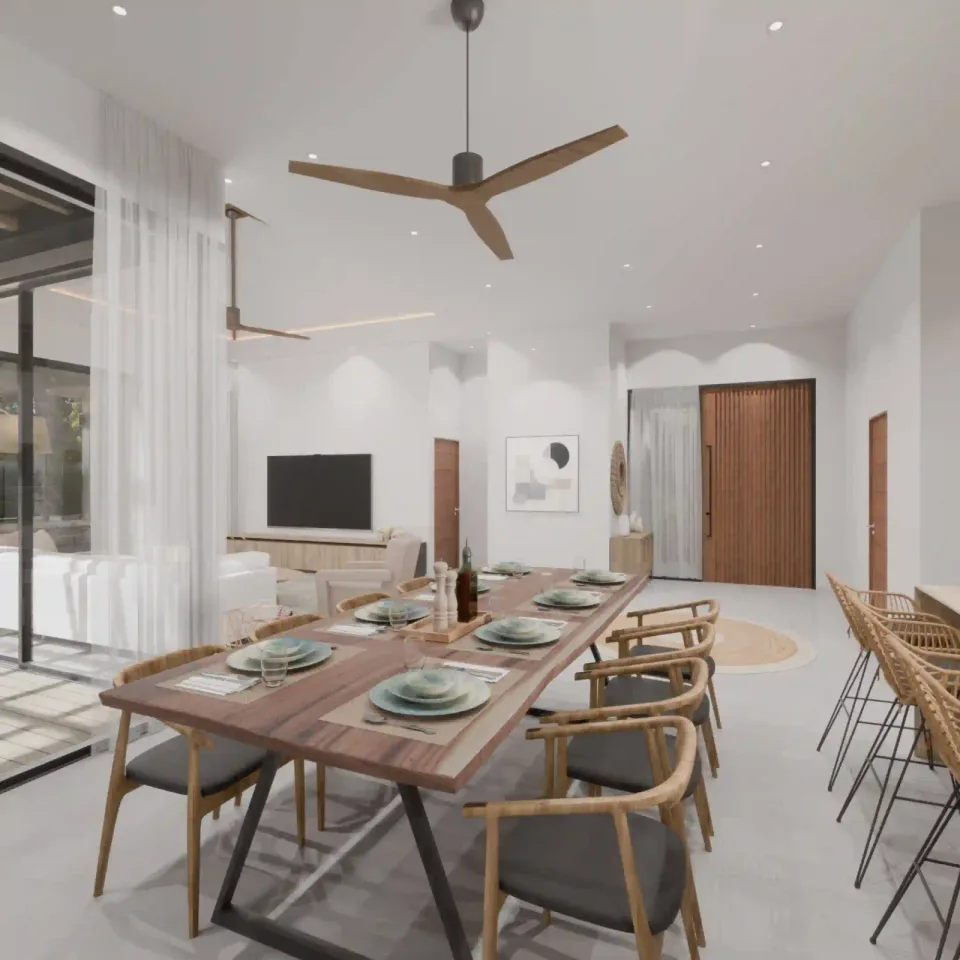
Who rents long-term in Phuket (and what they can afford)?
Long-term tenants are not a single group. Budgets cluster by profession, visa status, and lifestyle expectations.
International school teachers and education staff often target $600-900/month for a one-bedroom within a reasonable commute. They value quiet nights, reliable internet, and predictable landlords. Buildings near Cherng Talay-Phuket Town corridors, and some Rawai/Nai Harn pockets fit this profile when transport links work.
Hospitality and service-sector workers frequently rent in the $400-700/month range, often sharing or choosing studio layouts. Proximity to employment clusters (Patong, Karon, Kamala, Bang Tao resort zones) matters more than sea views.
Remote workers and digital nomads are a growth segment, especially in Cherng Talay and west-coast service hubs. Typical one-bedroom budgets land around $800-1,800/month depending on building quality, pool and gym standards, and walkability to cafes and coworking-style amenities.
Retirees frequently stretch higher for comfort: $1,000-2,500/month for larger one- and two-bedroom units, prioritizing healthcare access, elevator buildings, and lower noise. Rawai/Nai Harn and parts of Phuket Town remain popular for community and calmer pacing.
Small-business owners and managers can range $1,500-4,000/month, especially when housing doubles as a semi-professional base (meetings, storage, parking). These tenants are fewer in number but can anchor longer leases when the unit matches their operational needs.
| Tenant segment | Typical monthly budget (USD) | What they prioritise | Common areas |
|---|---|---|---|
| Teachers / education | 600-900 | Commute, quiet, stable landlord | Cherng Talay, Phuket Town, Rawai |
| Hospitality staff | 400-700 | Job proximity, affordability | Patong, Karon, Kamala, Bang Tao |
| Remote workers | 800-1,800 | Wi‑Fi, lifestyle services, pool/gym | Cherng Talay, Bang Tao, Karon |
| Retirees | 1,000-2,500 | Comfort, healthcare access, low noise | Rawai/Nai Harn, Phuket Town |
| Business owners | 1,500-4,000 | Space, parking, flexibility | Bang Tao, Cherng Talay, Chalong |
What are monthly long-term rent benchmarks by area?
Read the bands below as asking rents, not achieved ones. They describe what modern furnished one-bedroom units are advertised at on the long-stay portals for six-to-twelve month contracts. What tenants actually signed is not published (Thailand keeps no letting register) so nobody, us included, can tell you the achieved figure. The reason this still beats a nightly model is that an asking rent is checkable today: open the portals, filter for the area and the size, and see the live listings for yourself.
| Area | Advertised 1-bed long-term rent (USD/mo) | Notes |
|---|---|---|
| Bang Tao | 1,200-2,500 | Resort services and beach access lift asking rents; set against a 5,930,000 THB 1BR median on our price file |
| Rawai | 600-1,000 | Strong resident demand; 1BR median 6,652,800 THB |
| Cherng Talay | 900-1,600 | Digital nomad and family services; competes with short-stay demand in peak months |
| Phuket Town | 400-700 | Local and expat mix; lower headline rent, and less exposed to the tourist season |
| Kamala | 900-1,700 | Boutique demand; 1BR median 7,074,432 THB, the highest of the five |
Note what the last column does and does not let you do. You can divide an annual asking rent by a purchase price and get a number, and it will look like a yield. It is not one: the numerator is an asking figure that may not be achieved and the denominator is an asking price that may not be paid. Treat it as a rough screen for whether an area is worth investigating, never as a return.
Patong’s long-term rents vary widely depending on whether the tenant wants nightlife proximity or wants to escape it; the short-stay yield comparison this paragraph used to make for Patong is withdrawn on the same grounds as the rest.
Vacancy risk: long-term is steadier, not zero-risk
A twelve-month lease removes the nightly booking calendar from your life, but it does not remove vacancy. It concentrates it. Instead of a scattering of empty nights across the year, you get one gap between tenancies, and the length of that gap is decided almost entirely by when it falls and how you price it.
Timing matters more than most owners expect. A lease that ends in October or November lets out quickly, because that is when the island fills with arrivals looking for somewhere to spend the season. A lease that ends in June can sit for six to ten weeks in the same building at the same rent. If you have any choice over the start date of a first tenancy, buy yourself an autumn expiry and keep renewing on that cycle.
Pricing is the second lever and the one owners get wrong most often. A unit priced five per cent above the building’s realistic market rate does not let five per cent more slowly; it competes against nothing and sits until the owner blinks. The tenant pool at any given moment is small enough that being second-cheapest of three comparable units is decisive.
The mitigations that actually shorten a gap are unglamorous. Price to the market on day one rather than testing a number first. Photograph the unit properly and publish an honest inventory list, because long-term tenants read inventories and short-stay guests do not. Keep lease start dates flexible enough to align with the school and high-season calendars. And use a manager who can close a corporate or relocation tenant quickly, since those tenants sign fastest and stay longest.
Pros and cons of the long-term strategy
Neither strategy is better in the abstract. The honest comparison is between two different jobs of work with two different risk profiles.
| Long-term lease | Short-stay letting | |
|---|---|---|
| Advantages | Predictable monthly income; one changeover a year; no OTA commission; far lower cleaning and linen cost; less wear; no licensing exposure on 12-month tenancies | Higher gross in strong tourism stock; nightly repricing; owner can block dates for personal use |
| Disadvantages | Rent fixed for the term while costs move; a bad tenant is harder to remove than a bad guest; personal use effectively surrendered | Seasonal income; high operating intensity; hotel licence and house rules restrict it; net converges with long-term once fees are counted |
| Where it fits | Rawai, Nai Harn, Phuket Town, Chalong, the inland corridor, any unit at or above roughly 35 sqm | Beachfront and near-beach stock in Bang Tao, Kamala, Patong, Kata, Karon with a licensed operator |
The line most owners underestimate is the third one on the disadvantages row. Ending a Thai residential tenancy early is a civil process, not an administrative one, and it takes time. That is the practical argument for taking references and a proper deposit rather than filling the unit quickly.
Long-term yield vs short-stay yield: how to compare honestly
| Strategy | What the income side rests on | Operational load | Best when you want… |
|---|---|---|---|
| Short-stay (OTA-led) | Occupancy and nightly rate, neither of which is published for Phuket; only an operator’s own statements evidence it | Higher | Maximum gross income, and you have statements to work from |
| Long-term (12-month) | An asking rent you can read on the portals today, discounted for what a tenant will actually sign | Lower | Predictability and simpler operations |
| Hybrid (personal use + peak rental) | Both of the above, on the months you are not there | Medium | Lifestyle plus income (see our lifestyle model guide) |
The gross yield bands this table used to carry for each strategy are withdrawn. The honest comparison is not which pays more (nobody knows) but which of the two lets you see the income before you commit. Long letting does. That is the whole of its advantage, and it is a real one.
Surin and the premium west-coast pockets are thin books rather than deep ones, 108 priced apartments in Surin against 4,589 in Bang Tao, so they are bought for the address and the scarcity rather than for income, which is unmeasured there as everywhere. Underwrite each area on its own supply dynamics, not a single Phuket average.
Where long-term demand is strengthening in 2026?
Three parts of the island are absorbing long-term tenants faster than the rest, and none of them is a beachfront address.
Phuket Town is the least fashionable and the most resilient. It is not a beach lifestyle proposition, and that is the point: tenants there are working on the island rather than holidaying on it, drawn by employment, the schools and the healthcare cluster. Monthly rents are the lowest of any area covered here, but the calendar fills steadily and the low season barely registers, which is a very different risk profile from a unit whose income depends on arrivals.
The inland corridor through Si Sunthon, Thalang and Cherng Talay is the second. It has absorbed most of the new condominium supply within reach of the west coast, and the tenants it draws are the people who staff the corridor: school and hospital employees, hotel and hospitality management, marine professionals and relocating families. That pool signs six and twelve-month leases, and it is the reason inland stock can hold occupancy through months when nightly letting in Bang Tao thins out.
Rawai and Nai Harn are the third, on a different basis again. Demand there is residential by choice rather than by employment: retirees, long-stay visa holders and remote workers who deliberately picked the quiet end of the island. Those tenancies renew more often than any other segment, and the units that serve them well are the larger one-bedrooms and two-bedrooms rather than compact studios.
What all three have in common is a tenant who is on the island for a reason unrelated to the weather. That is what makes the income steady, and it is the single most useful filter when comparing two buildings on paper.
How to underwrite long-term rent without wishful thinking
Start with comparable rents rather than with a yield target. Find three units in the same building or the immediate street that are currently let, not currently advertised, and establish what they actually achieve, their size, their floor and whether the rent includes utilities. Advertised rents in Phuket run consistently above achieved rents, and the gap widens the longer a listing has been up. If you cannot get achieved figures, take the advertised numbers and underwrite ten to fifteen per cent below them.
Then decide what the rent includes, because the same headline figure can mean two quite different net positions. Electricity through the hot months on a one-bedroom with the air conditioning running is a real monthly sum, and a lease that bundles it transfers that risk to you. Most long-term Phuket leases exclude utilities and cap what the landlord covers; write the position into your model rather than discovering it in year one.
Next, model turnover. Even strong buildings rarely achieve instant back-to-back tenants every year. Assume one annual turnover event with minor refresh costs (deep clean, small repairs, AC service). If your net cash flow only works with a perfect tenant who never leaves, the deal is fragile.
Finally, separate gross rent from owner net. Long-term leases reduce OTA commissions, but you may still pay lease-up fees, agent commissions (common in some tenant searches), maintenance, insurance, and property management if you are not self-managing.
| Underwriting line item | Typical range / notes |
|---|---|
| Gross monthly rent | From market comps by area |
| Vacancy allowance | Your own assumption, in months rather than percent: how long you think a re-let takes, and in which season the gap falls. Nothing measures Phuket void periods |
| Management / leasing | 0-10% depending on self-managed vs agency |
| Maintenance reserve | 1-3% of property value / year (rule of thumb) |
| Insurance & common area | CAM varies; confirm with juristic |
Short-stay vs long-term: when the visible number wins
Bang Tao illustrates the trade-off: entry tickets are often discussed from around $265K in some condo segments, while long-term rents can be strong in absolute dollars, but the opportunity cost is giving up peak-season ADR if you lock in a 12-month tenant. Some owners solve this with hybrid structures (personal use in shoulder months, short-stay in peak), but that only works where building rules and management programmes allow it.
What lease terms and deposits do long-term landlords use?
| Lease term | Typical fit | Trade-off |
|---|---|---|
| 12-month | Retirees, teachers, stable expats | Lower gross than peak STR |
| 6-month | Nomads, mid-term relocations | More turnover, faster repricing |
| 3-month shoulder | May-October gap filler | Higher management touch |
Furnishing for long-term differs from short-stay staging: nomads pay premiums for washer-dryer, ergonomic desk, and fibre-backed Wi-Fi; retirees prioritise quiet AC and elevator access. Deposit norms and utility caps should appear in your net-yield spreadsheet before you close.
Related Guides:
Which buyer should underwrite on long-term rent
- A buyer who wants predictable income over a headline. The trade in this guide is explicit: a figure you can read on the portals today, arriving every month, against one that depends on a season.
- An owner who will not be on the island. A long lease is one tenant, one contract and one handover a year. Short-stay letting is an operation, and someone has to run it.
- A buyer in a residential zone rather than a resort one. Where there is no holiday demand, long-term is not a strategy choice: it is the only market, and the purchase should be priced on it.
- An owner of a larger unit. Two- and three-bedroom stock reaches the family and relocation tenant, who signs for a year; studios compete hardest in the short-stay market.
It does not suit a buyer whose return model needs peak-season rates to work, or one who bought a compact unit in a beach corridor: that combination is built for nightly letting and underperforms on a monthly lease.
- Best areas in Phuket to buy property, Compare locations before you commit to a long-term rental strategy.
- Phuket rental yield guide, Gross vs net yields, fees, and realistic benchmarks.
- Buying property in Phuket, Legal basics, quotas, and purchase workflow for foreign buyers.
- Mid-budget investment options, Where $200K-$400K fits long-term strategies.
- How to rent out legally, Building rules before you sign leases.
- Seasonal occupancy in Phuket, When lease timing matters most.
What are red flags for long-term landlords?
Four problems account for most of the disappointing outcomes, and all four are visible before purchase.
The first is a building whose rules bar the tenancy you are counting on. House rules can set a minimum lease term, and a building geared to nightly letting sometimes sets one that rules out the monthly market, or the other way round. Ask for the rules in writing before a deposit rather than assuming the format is available.
The second is a unit that misses the fittings long-stay tenants treat as non-negotiable. A washing machine is the clearest example: a one-bedroom without one is discounted by remote workers and families every time, and retrofitting is often awkward because the plumbing was never planned for it. Fibre internet, a workable kitchen and somewhere to sit and work are in the same category.
The third is access. A unit reachable only from a fast main road, with no walkable shops and no realistic option for a tenant without a vehicle, churns tenants regardless of how good the apartment is. Long-stay tenants live in the neighbourhood rather than commuting out of it for everything.
The fourth is pricing against the wrong comparables. Portal listings are not the market; a great deal of Phuket’s long-term letting happens through Facebook groups and local agents at rents below the advertised ones. Check both before setting yours.
The insider point is smaller and it decides renewals: long-term tenants leave over a slow air-conditioning repair far more often than over a modest rent increase. Retain a handyman who answers, and write response times into a lease addendum so the standard is explicit rather than hoped for.
Underwrite a long-term Phuket unit on real numbers
We can pull achieved rents and building rules on a specific building before you commit to a purchase.
Frequently Asked Questions
No yield can be quoted for either strategy, and the bands this answer used to give are withdrawn: Thailand keeps no letting register, so nothing measures long-term or short-stay performance on the island. Build it yourself from a twelve-month asking rent for a comparable unit on the long-stay portals, discounted for what a tenant will actually sign, against the purchase price plus the cost of buying, then subtract the common area charge, the sinking fund, a vacancy allowance and any agency fee.
Often yes for quiet work weeks and family services, but Patong still wins for tenants who want central tourism access. Nomads are not monolithic, match the unit to the tenant profile you want to serve.
Use comparable listings (size, floor, view), cross-check with local agents, and stress-test downside rent (10-15% below headline) to see if the deal still clears your mortgage and fixed costs.
Leases can take longer between May and October, which is why a 1-3 month vacancy allowance is sensible. Competitive pricing and move-in readiness matter more than small décor upgrades.
Sometimes, but building rules, management contracts, and furniture standards can restrict it. Always confirm short-term rental permissions and house rules before you assume flexibility.
Questions about this guide? Ask us on WhatsApp. The guide's title is already in the message, so you only need to write your question.
Ask on WhatsApp
Olga
Head of Rentals, MORE Group
Runs the rental side at MORE Group: occupancy and rate data from managed Phuket units, management-company selection, and what an owner actually nets after costs.
About MORE Group →Get a Net Yield Calculation for Phuket Projects
Share your budget and preferred area. We will compare live projects using rent, fees and occupancy assumptions.
