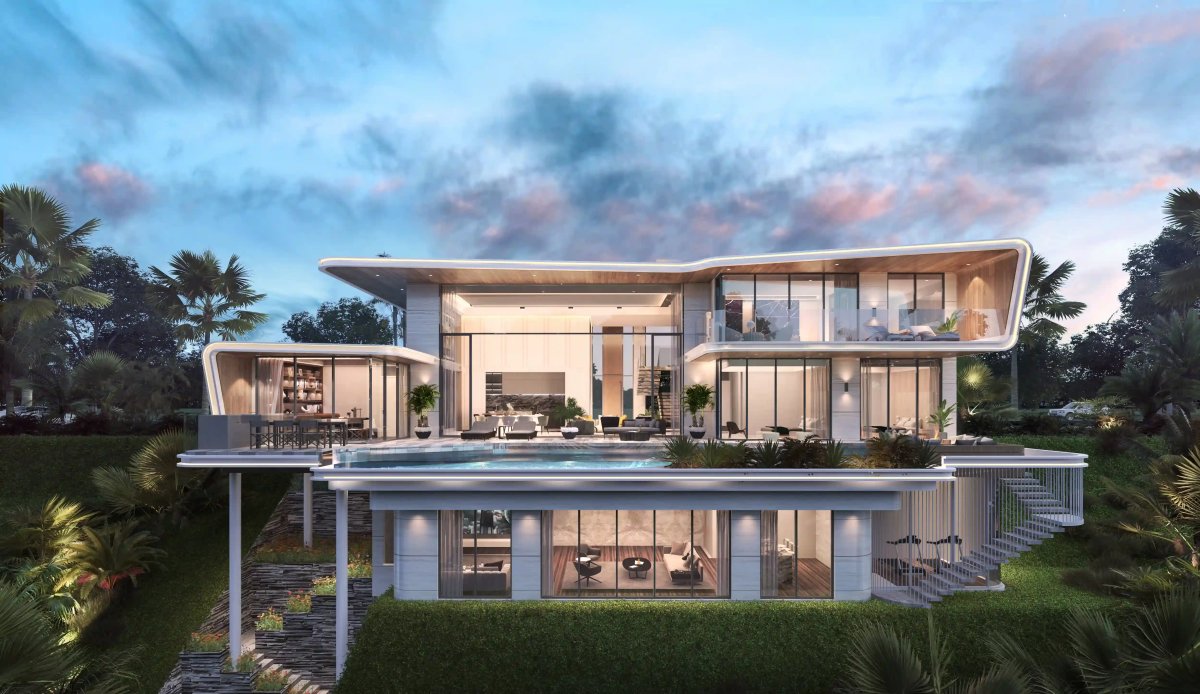
What Can I Buy in Phuket for $1,500/Month? Off-Plan Installment Guide
Quick answer: A $1,500/month payment in Phuket typically buys an off-plan studio (24-30 sqm) priced $80,000-$120,000 when the developer spreads the 30% deposit over 18-24 months. The monthly number is manageable; the 70% completion payment is where most buyers stall. Read off-plan Phuket guide for structure basics, then model your full cash-flow below.
A $1,500/month installment payment in Phuket typically gets you an off-plan studio (24-30 sqm) from $80,000-$120,000 total, using a standard 30% + 70% payment structure spread over the construction period (2-3 years). Projects like The Title Sierra Nai Yang or VIP Space Odyssey start installments around $1,200-$1,800/month during construction. At $1,500/month over 24 months, you cover approximately $36,000, which comfortably covers the standard 30% down payment on a $100,000-$120,000 studio.
Foreign buyers rarely use Thai mortgages; see foreigner mortgage guide, so installment plans are the primary affordability tool for first-time Phuket buyers earning in USD, EUR, or GBP.
How Installment Plans Work in Phuket
Structure 1: 30% + 70% (most common)
- Reservation: $2,000-$3,000 (secures the unit)
- SPA signing payment: 30% of total price (typically within 30 days of reservation)
- Final payment: 70% at handover (2-3 years later)
- Monthly installments: usually none, you pay 30% lump sum, then wait
Structure 2: 20% + Milestone Installments + 30% (common in larger projects)
- Reservation deposit: $2,000-$5,000
- SPA signing: 20% of price
- Installments: 50% spread across construction milestones (foundation, structure, roofing)
- Handover: remaining 30%
Structure 3: Extended Installments (some developers)
- Specific developers like The Title offer flexible schemes where the full 30% is spread into monthly payments across 12-24 months
- $1,500/month for 24 months = $36,000 total, covers the down payment on a $100,000-$120,000 unit
$1,500/Month Budget Calculator
| Total Property Price | Down Payment (30%) | Monthly Over 12 Mo | Monthly Over 18 Mo | Monthly Over 24 Mo |
|---|---|---|---|---|
| $80,000 | $24,000 | $2,000/mo | $1,333/mo | $1,000/mo |
| $95,000 | $28,500 | $2,375/mo | $1,583/mo | $1,188/mo |
| $110,000 | $33,000 | $2,750/mo | $1,833/mo | $1,375/mo |
| $120,000 | $36,000 | $3,000/mo | $2,000/mo | $1,500/mo |
| $130,000 | $39,000 | $3,250/mo | $2,167/mo | $1,625/mo |
| $150,000 | $45,000 | $3,750/mo | $2,500/mo | $1,875/mo |
Key insight: At $1,500/month over 24 months, you can comfortably cover the 30% down payment on a $120,000 studio. Projects up to $120,000 fit within this monthly budget when using an extended installment structure.
See Which Projects Offer $1,500/Month Installments
Some developers spread the deposit over 12-24 months. We know which ones and can negotiate on your behalf.
What You Own at Completion
| Project Price | Monthly Paid (24 mo) | Total Paid at Month 24 | Still Owed at Handover |
|---|---|---|---|
| $80,000 | $1,000/mo | $24,000 (30%) | $56,000 |
| $100,000 | $1,250/mo | $30,000 (30%) | $70,000 |
| $120,000 | $1,500/mo | $36,000 (30%) | $84,000 |
The $84,000 completion payment needs to be ready when the developer calls for it. Options: cash savings, home equity from another property, or financing. Thailand does not have a developed mortgage market for foreigners, most buyers pay cash at completion.
Planning Your Cash Flow Before Handover
- Months 1-24: Pay $1,500/month in installments (total: $36,000)
- Months 25-36 (construction continues): Save the $1,500/month toward the completion payment
- By handover: Have $36,000 saved (adds to completion fund)
- Shortfall to completion payment: Will need additional $48,000-$56,000 from other sources
If you’re relying purely on the $1,500/month savings model, plan for a lower-priced unit where the completion payment is more manageable, or ensure other assets cover the balance.
36-month cash-flow model ($120,000 studio, 30% spread over 24 months)
| Phase | Months | Monthly outflow | Cumulative paid | Notes |
|---|---|---|---|---|
| Reservation | Month 0 | $2,500 | $2,500 | Refundable hold |
| Installment phase | 1-24 | $1,500 | $38,500 | Covers 30% + reservation |
| Savings phase | 25-36 | $1,500 | $56,500 | Toward 70% balance |
| Handover | Month 36 | $63,500 | $120,000 | Remaining 70% due |
At $120,000 total, you still need $63,500 at handover even after saving $1,500/month for 36 months. That gap is why buyers wire equity from home-country property, offshore savings, or installment vs cash comparison planning.
Currency exposure table (USD earner, THB-priced SPA)
| USD/THB rate | $1,500 equals (THB) | Impact on $36K deposit target |
|---|---|---|
| 34.0 | 51,000 THB | Higher USD cost if THB strengthens |
| 35.5 (Mar 2026) | 53,250 THB | Baseline |
| 37.0 | 55,500 THB | Lower USD cost if THB weakens |
Lock a FX buffer of 5-8% above quoted installments, sudden THB moves between SPA signing and each payment date change your real monthly burden. Europeans should model similarly against EUR/THB; see proof of funds for bank transfer timing.
Buyer scenarios: who fits $1,500/month?
Scenario A, Equity recycler: You plan to sell a UK or EU flat and use proceeds for the 70% completion payment. Monthly $1,500 covers deposit phase while sale completes, coordinate SPA handover date with property sale timeline. Risk: sale delays force expensive bridge financing.
Scenario B, Assignment trader: You buy early tranche at $85,000, pay $1,200/month for 20 months ($24,000 + reservation), assign SPA at $105,000 before 70% due. Requires developer allowing assignment and strong sales velocity; see buy new vs resale.
Scenario C, Stretch buyer: $1,500/month is your maximum, choose $80,000-$90,000 units only. At $80,000, 30% = $24,000 over 16 months = $1,500/month exactly, leaving a $56,000 completion payment. Only proceed if completion source is confirmed today, not hoped for at handover.
What happens at handover: fees beyond the 70%
| Fee line | Typical amount | Notes |
|---|---|---|
| 70% balance | $84,000 | Contracted SPA price |
| Transfer fee (2%) | ~$2,400 | Land Department |
| Sinking fund / CAM prepay | $2,000-$5,000 | Project-specific |
| Furniture pack (optional) | $8,000-$15,000 | Required for rental income |
| FET + legal | $1,500-$3,000 | Lawyer + bank certificate |
Total handover week cash need on $120,000 studio: $95,000-$105,000 including 70%, not just $84,000. Underwrite with Phuket rental yield guide before assuming rental covers these costs immediately.
Risks of installment buying
Market change at handover: Property values can change between purchase and handover. If values drop, you may struggle to refinance or sell. Buying from established developers in proven rental zones reduces this risk.
Currency risk: Installments are typically priced in THB. If you earn in USD, EUR, or GBP, exchange rate movements affect your real monthly cost. At 32.7 THB to the dollar, $1,628 is about 53,240 THB.
Completion payment availability: The most common mistake: buyers who can pay monthly installments but haven’t planned for the large completion payment. Be realistic about this before committing.
SPA default: Missing two consecutive installments can trigger cancellation and forfeiture of paid deposits, read cure-period clauses with a Thai property lawyer before signing.
Red flags and what to check in the payment schedule
The instalment plan is where this kind of purchase succeeds or fails, and the terms vary far more between developers than the marketing suggests. Read for these before you sign.
| What to check | Why it matters on an instalment purchase | What a clean answer looks like |
|---|---|---|
| The cure period on a missed payment | Two missed instalments can trigger cancellation and forfeiture | A stated grace period, in days, with written notice required before any forfeiture |
| What happens to your money on cancellation | Forfeiture terms range from a percentage to everything paid | A cap, or a refund mechanism, spelled out in the contract |
| Whether instalments track milestones or dates | A date-based schedule means you keep paying while the site stands still | Payments released against verified construction progress |
| The delay clause and any grace period | Developer delay extends your instalment period, often without compensation | A stated completion date, a limited extension, and a remedy if exceeded |
| Whether assignment before completion is permitted | This is the exit for anyone who cannot fund the balance | Express permission in the SPA, with the fee and the process stated |
| Whether the price is fixed in baht | It almost always is, and you are carrying the currency risk | Confirmation in writing, so you can plan the exposure rather than discover it |
| Whether each instalment needs its own FET | Freehold registration by a non-resident depends on this paper trail | Your bank’s confirmation, obtained before the first wire, not the last |
Insider tip: ask the developer what proportion of the total falls due before the structure is topped out. That single number tells you more about your exposure than the monthly figure does, because money paid into a building that exists is in a different position from money paid into a hole in the ground. A schedule that front-loads heavily and ties payments to dates rather than progress is the combination to avoid.
Remote purchase workflow
- Video shortlist with MORE Group broker (buy from abroad guide)
- Zoom SPA review with Thai lawyer
- Wire reservation and installments from overseas account: FET certificate per transfer
- Site visit optional at 50% construction milestone
- Handover trip for title transfer and furniture pack inspection
Americans and Europeans face the same cash-completion constraint; see Americans buying Thailand and European buyer guide for nationality-specific banking notes.
Pros and cons of $1,500/month installment buying
Pros: No interest is charged during construction on most Phuket off-plan plans, so you are staging a purchase rather than borrowing, which is a materially different thing from a mortgage. Entry pricing on an early tranche is normally below the price the same unit carries at completion. The staged structure lets a buyer with income but without a lump sum accumulate a position over eighteen months rather than waiting years to save the whole amount. And assignment before completion, where the developer permits it, gives you a genuine exit that does not require you to fund the balance at all.
Cons: Completion payment remains the binding constraint, monthly affordability does not equal total affordability; THB FX moves change real USD/EUR cost; developer delay extends installment period without guaranteed penalty; default on two payments can forfeit deposits per SPA terms.
If $1,500/month is your only comfortable line item, anchor on $80,000-$95,000 total price and pre-confirm completion funding with your banker before reservation, not after the 18th monthly wire.
The question this page really turns on
Everything above is arithmetic. The decision is not.
An instalment plan converts a lump-sum problem into a monthly one, and that is genuinely useful for a buyer whose income is strong and whose savings are not yet. What it does not do is make the lump sum go away. It moves it eighteen or twenty-four months into the future and attaches a forfeiture clause to the interval, which is a reasonable trade for someone with a confirmed source for the balance and a bad trade for someone hoping one will appear.
So the test is simple and it should be applied before you look at a single unit. Name today, specifically, where the completion payment comes from: a property sale with a realistic timeline, a maturing investment, a confirmed facility from a lender who has seen your numbers, or cash you already hold. If the answer is any of those, an instalment purchase is a sensible way to buy. If the answer is that you will work it out nearer the time, you are not buying a property on instalments. You are buying an option on your own future finances, at a price of everything you pay in and with no upside if you are wrong.
Buyers who get into difficulty here almost never fail on the monthly payment. They fail at handover, which is exactly the moment when the developer has the most leverage and they have the least.
Frequently Asked Questions
Most off-plan developers in Phuket offer zero-interest installment plans during construction. You're simply paying the purchase price in stages, not borrowing money. This is fundamentally different from a mortgage. The installment structure is the developer's way of managing cash flow during construction.
Thai banks generally do not offer mortgages to foreigners for condo purchases in Thailand. A few international banks with Thai operations (HSBC, Bangkok Bank International) have limited foreign buyer programs, but qualification requirements are strict. The vast majority of foreign property buyers in Phuket pay cash, either from savings, equity in home country property, or offshore financing.
Installment defaults are governed by the SPA terms. Most developers allow a 30-90 day cure period. If you default and the unit is cancelled, you typically lose the paid installments (or a portion of them, per the contract). This is why buying within your actual budget is essential, don't stretch to a unit whose installments strain your monthly cash flow.
Yes. Pre-completion assignment (selling your contract before handover) is common in Phuket. You sell your purchase contract to another buyer, typically for a premium reflecting the market movement since you purchased. The new buyer takes over your remaining payments and the completion obligation. This is a legitimate way to capture off-plan capital appreciation without completing the purchase.
Yes, at a total project price of $100,000-$120,000 with an extended installment plan from a developer like The Title. The key constraint isn't the monthly payment, it's having the remaining 70% available at completion. Make sure your total financial plan covers both phases.
Read Also:

Maksim Shchegolev
Founder, MORE Group
Founder of MORE Group. Four years in investment banking before moving to Phuket, where he has worked in the local property market since 2018. Oversees developer relationships and every engagement above $300K.
About MORE Group →Get a Focused Phuket Property Shortlist
Share budget, area and goal. We will reply with suitable live projects, not a generic catalogue.
