The Title Zero-Interest Payment Plan: Full Breakdown 2026
Rhom Bho Property applies a zero-interest developer payment plan to every one of its 15 active The Title projects in Phuket. This means buyers spread payments across construction milestones without any interest charged on the outstanding balance, effectively receiving 0% developer credit for 12-36 months depending on the project delivery timeline. For foreign buyers who cannot access Thai bank mortgages (which Thai banks generally do not extend to foreign nationals), this payment plan is the primary, and for many buyers, the only, financing mechanism available in the Thai market. Understanding how it works in practice changes the economics of Phuket property investment fundamentally.
Why Financing Phuket Property Is Unusual
What Thai banks will not do for foreign buyers (in most cases):
- Lend in THB to non-Thai residents for property purchases
- Provide construction loans to foreign national buyers
- Offer mortgage products on leasehold or company-held property
- Accept non-Thai income statements for standard loan applications
What is actually available to foreign buyers:
- Foreign Currency Loan (FCL) from selected Thai banks, requires significant assets in Thailand and complex application
- Overseas bank financing against foreign assets (e.g., refinancing UK, Australian, or European property to fund a Thai purchase)
- Developer payment plans, by far the most common mechanism
- Cash purchase (most common among wealthy foreign buyers)
The Title’s zero-interest payment plan is therefore not a nice-to-have feature. For most foreign buyers, it is the primary mechanism by which a $107,000-$521,000 Phuket property purchase becomes manageable without liquidating all available assets at once.
How the Zero-Interest Plan Actually Works
The key components:
-
Booking deposit: A small initial deposit (typically 50,000-200,000 THB or 3-5% of purchase price) that reserves your unit and removes it from active sales. Usually refundable under specific conditions if the purchase does not proceed to contract.
-
Contract signing (within 30 days of booking): The purchase agreement is executed. A larger payment is due at this stage, typically 25-30% of the total purchase price. This is the largest single payment in the schedule and is generally not refundable after contract execution.
-
Construction milestone payments: As the building progresses through defined construction stages (typically foundation completion, structural frame completion, building envelope completion, and interior fit-out), payments are triggered. These are 10-15% tranches, with typically 2-4 milestone payments across the construction period.
-
Handover and title transfer: The final payment: usually 30-35% of the purchase price: is due when the unit is completed and ready for transfer of ownership. This payment is simultaneous with the signing of title transfer documents (condominium chanote for foreign freehold, or lease registration documents for leasehold).
The specific percentages vary by project, unit type, and occasionally by purchase timing (very early buyers may receive slightly different terms). The schedule is confirmed and documented in the purchase agreement.
Worked Example: a 3,840,000 THB unit on a 12-month schedule
| Payment Stage | Timing | Percentage | Amount (THB) | Amount (USD) |
|---|---|---|---|---|
| Booking deposit | Month 0 (now) | 3% | 115,200 | $3,523 |
| Contract signing | Month 1 | 27% | 1,036,800 | $31,706 |
| Foundation/structural milestone | Month 4-5 | 15% | 576,000 | $17,615 |
| Mid-construction milestone | Month 7-8 | 15% | 576,000 | $17,615 |
| Near-completion milestone | Month 10-11 | 10% | 384,000 | $11,743 |
| Handover and transfer | Month 12 | 30% | 1,152,000 | $35,229 |
| Total | 100% | 3,840,000 | $117,431 |
Interest charged: zero. Total cost equals the purchase price exactly.
The ticket above is an illustration of the schedule shape rather than a quote for a specific unit, and the version of this section that named one got the price wrong: it headed the table “1BR at The Title Artrio, $107,000” when Artrio’s book on our file starts at 4,263,000 THB ($130,367). Use the percentages, not the amounts, and apply them to the price on the list you are actually shown.
For comparison, a buyer borrowing 70% of a 3,840,000 THB purchase at 7% for twelve months would pay roughly 188,000 THB in interest. The zero-interest plan removes that line entirely, and the fair way to state the saving is against the borrowing you would otherwise have done, at your own rate, rather than against a market average.
Frequently Asked Questions
There is no interest line, but that does not make it free. The financing cost is frequently embedded in a list price you were never invited to negotiate. Ask what the cash price would be for the same unit, then compare: the difference is the real cost of the plan.
Cash on completed stock gives you genuine negotiating leverage, because a seller closing quickly with no financing condition is being offered something of value. An instalment plan gives you liquidity and spreads the commitment, at the cost of that discount and with construction risk still ahead of you.
Verifiable construction events certified independently, rather than calendar dates the developer certifies to itself. A schedule tied to defined stages protects you; one tied to months does not, because payment falls due whether or not work has progressed.
Whatever the contract says, and nothing more. Thai off-plan has historically run six to eighteen months late, so ask for a delay penalty with a figure attached and a long-stop date after which you may terminate and recover paid funds. A contract silent on delay leaves you without a remedy for the most likely adverse event.
Only if the SPA permits assignment, and many Thai developers restrict it, charge for it, or prohibit it until a stated percentage is paid. Read that clause before signing: a buyer needing to exit mid-build has no other route, and the market for a part-paid contract is thinnest exactly when you would need it.
See the exact payment schedule for your project
Every The Title project has a specific schedule. Our team confirms the exact milestones for your chosen unit.
Payment Schedule Across Different Project Timelines
| Project | Price From | Delivery | Approx. Instalment Window | Deferred Capital (65-70%) | Interest Saved vs 7% Loan |
|---|---|---|---|---|---|
| Serenity (Nai Yang) | $82K | Q2 2026 | 2-3 months | $53,300-$57,400 | ~$940-$1,010 |
| Heritage (Bang Tao) | $141K | Jun-Sep 2026 | 4-6 months | $91,650-$98,700 | ~$2,145-$2,305 |
| Artrio (Bang Tao) | $107K | Q1 2027 | 12 months | $69,550-$74,900 | ~$4,870-$5,243 |
| Modeva (Bang Tao) | $120K | Q1 2027 | 12 months | $78,000-$84,000 | ~$5,460-$5,880 |
| Adora (Rawai) | $120K | Jun 2027 | 15 months | $78,000-$84,000 | ~$6,825-$7,350 |
| Vivi (Bang Tao) | $98K | Oct-Dec 2027 | 20 months | $63,700-$68,600 | ~$7,433-$8,003 |
| Sierra (Bang Tao) | $72K | Jun-Sep 2028 | 27-30 months | $46,800-$50,400 | ~$8,775-$9,450 |
| Vivana (Kamala) | not on our list | Q4 2028 | 30 months | ( | ) |
The Sierra ($72K, Jun-Sep 2028) is the most capital-efficient on the instalment dimension: 27-30 months of zero-interest instalments on a $72K purchase saves $8,775-$9,450 in hypothetical interest cost, more than 12% of the purchase price in avoided financing cost.
Vivana has the longest instalment window of the group at roughly 30 months to Q4 2028, but the saving cannot be put in figures here: it carries no priced units on our list, and the $105,000 the row used to hold came from launch material.
Foreign Exchange Transfer Requirement (FET)
The rule: To register freehold condominium title in a foreigner’s name, Thai law requires that the purchase funds be transferred from abroad in a foreign currency and converted to Thai Baht. This must be documented by a Foreign Exchange Transaction (FET) form issued by the receiving Thai bank.
Practical implications:
- Each instalment payment made from abroad should be accompanied by a proper FET form from the Thai receiving bank.
- The total FET amount must equal or exceed the purchase price at the time of title transfer.
- Payments made from a Thai bank account in THB by a foreigner generally do not satisfy the FET requirement: the funds must demonstrably originate from outside Thailand.
What this means for payment scheduling:
Each instalment should be wired from a foreign bank account (your home country bank or an international account) to the developer’s designated Thai bank account. The Thai bank will issue an FET form for each transaction. Retain all FET forms throughout the construction period, you will need them at the final title transfer.
If you have Thai bank accounts funded from foreign sources, confirm with your Thai property lawyer whether payments from those accounts satisfy FET requirements for your specific transaction structure.
For leasehold purchases: The FET requirement is less stringent for leasehold registration, foreign currency documentation may still be requested but the strict condominium freehold rules do not apply uniformly to lease registration.
How the Zero-Interest Plan Differs from a Thai Mortgage
| Factor | The Title Payment Plan | Bank Mortgage |
|---|---|---|
| Interest Rate | 0% | 6-8% (Thai commercial rate) |
| Availability to Foreigners | Yes, all The Title projects | Generally not available |
| Credit Check Required | No | Yes (extensive) |
| Collateral Required | No | Property + additional security |
| Flexibility | Set schedule, some flexibility | Fixed monthly repayment |
| Duration | Until handover (1-3 years) | 10-30 years |
| Administration | Simple developer payments | Monthly bank transfer, bank oversight |
| Cost | Purchase price only | Purchase price + total interest cost |
The mortgage comparison clarifies why the zero-interest plan is genuinely significant: it delivers the cash flow spreading benefit of a mortgage without any of the costs or access barriers. For a foreign buyer who cannot get a mortgage, and who would otherwise need to deploy full capital upfront, the zero-interest plan is the difference between accessible and inaccessible.
Structuring Capital Efficiency with the Zero-Interest Plan
Strategy 1, hold and earn on deferred capital: If you have $107,000 available to purchase The Title Artrio, do not deploy all $107,000 immediately. Under the payment schedule, only $32,100 (30% booking + contract) is needed in the first month. The remaining $74,900 stays in a savings account or short-term investment earning 3-5% for 12 months, generating $2,247-$3,745 in additional income before you need to pay it.
Strategy 2: Deploy the saved capital to another project. With $214,000 in capital (enough to buy two Artrio units outright), the zero-interest plan allows you to purchase two units simultaneously, deploying only $64,200 at contract stage for both units and spreading the remaining $149,800 across construction milestones. This doubles your rental income generating capacity without doubling immediate capital deployment.
Strategy 3, buy a more expensive project than you could pay upfront: If your total capital is $80,000 and you want to purchase The Title Artrio at $107,000, the payment plan makes this achievable: the $32,100 needed at booking and contract is within reach, and the $74,900 balance can be structured from income, sales, or additional savings raised during the 12-month construction window.
Transfer Costs: What Else You Pay at Handover
| Cost Item | Typical Amount | Who Pays |
|---|---|---|
| Transfer fee (2% of registered value) | 1-2% of purchase price | 50/50 buyer-developer or negotiated |
| Specific business tax (SBT, if within 5 years) | 3.3% | Seller (developer on first sale, usually nil) |
| Stamp duty (alternative to SBT) | 0.5% | Negotiated |
| Legal fee (lawyer representation) | 30,000-80,000 THB | Buyer |
| Sinking fund (one-time community fund) | Set by development | Buyer |
| Common area maintenance (CAM) advance | 1-3 months | Buyer |
| Furnishing package (if not included) | 150,000-300,000 THB | Buyer |
A realistic total acquisition cost including transfer costs, legal fees, sinking fund, and furnishing for a $107,000 unit is approximately $115,000-$125,000 all-in. Budget accordingly when calculating effective yield.
Red flags before you sign a zero-interest schedule
| Red flag | Why it matters |
|---|---|
| Deposit becomes non-refundable before legal review | You lose leverage on FET and quota issues |
| Milestone dates are calendar-based, not construction-linked | Payments due even if building stalls |
| No named Thai bank account for each wire | FET documentation breaks at transfer |
| Late-payment interest hidden in annex | Zero-interest headline may not apply after grace period |
| Developer refuses independent lawyer on SPA | Standard risk allocation missing |
What Happens If You Cannot Make a Milestone Payment?
Late payment: Most contracts allow a grace period (typically 15-30 days after the milestone due date) before default provisions activate. Interest on late payments may apply during the grace period, even under a zero-interest plan, this refers to the deferred balance, not late payments.
Material default: If a buyer cannot make payment after the grace period, the developer typically has the right to cancel the contract and retain a portion of payments already made (often 30-50% of paid amounts as liquidated damages, depending on contract terms).
Communication is essential: If you anticipate difficulty meeting a milestone payment, contact the developer’s sales team and MORE Group immediately. Developers generally prefer to negotiate a revised schedule rather than cancel a sale, they lose the income and must resell the unit, which creates cost and uncertainty for them too.
Understanding these terms before signing is a legal necessity, not an optional exercise. Engage a Thai property lawyer to review the purchase agreement before you commit.
Projects Where the Zero-Interest Plan Has Maximum Value
The plan is worth most where the deferral runs longest, so the ranking is simply delivery date. Against our own price file, the schemes with a recorded delivery quarter and priced inventory are:
| Scheme | Area | Delivery | Priced units | Entry (THB) |
|---|---|---|---|---|
| The Title Sierra Bangtao | Bang Tao | Q3 2028 | 236 | 2,906,700 |
| The Title Adora Rawai | Rawai | Q1 2027 | 136 | 5,332,000 |
| The Title Artrio Bang-Tao | Bang Tao | Q4 2026 | 282 | 4,263,000 |
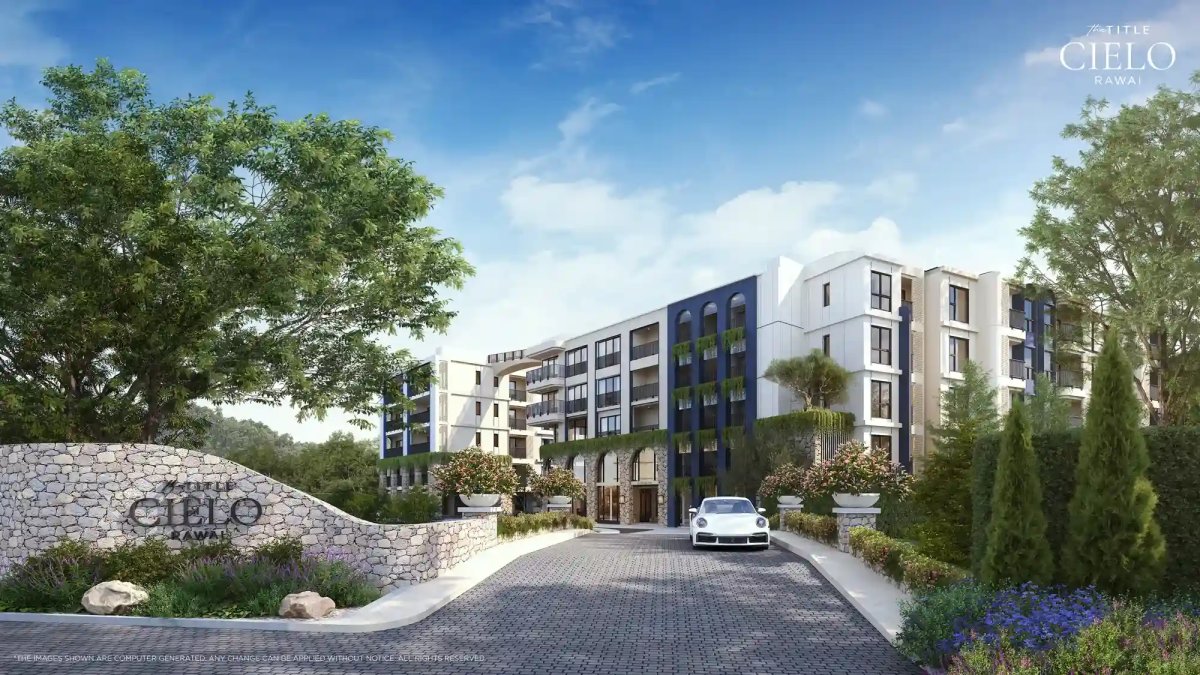
| The Title Cielo Rawai | Rawai | Q3 2026 | 35 | 4,830,000 |
| The Title Heritage Bang-Tao | Bang Tao | Q3 2026 | 362 | 5,376,000 |
| The Title Villa Kirara | Bang Tao | Q2 2026 | 23 | 29,020,000 |
| The Title Serenity Naiyang | Nai Yang | Q2 2026 | 220 | 3,429,657 |
| The Title Estella Villa Naiyang | Nai Yang | Q3 2026 | 1 | 22,418,000 |
Sierra is the outlier and the clearest case for the plan: a Q3 2028 delivery means roughly two years of deferral on a book that starts at 2,906,700 THB, the cheapest entry of any The Title scheme we hold. Two schemes, Coralina in Kamala and Balcony in Nai Yang, carry priced inventory but no delivery quarter in our record, ask for the contractual date in writing before you value the deferral, because the whole benefit is measured in months.
Two more are already finished, which removes the question entirely: The Title Legendary-Bang Tao (83 priced units from 6,828,900 THB) and The Title Halo 1 in Nai Yang (15 units from 5,128,240). On a standing building there is nothing left to defer, and the trade turns into the cash-versus-instalment question instead.
Pros and Cons of the Zero-Interest Plan
Pros
- Zero interest on the outstanding balance across the construction period, which no Thai bank offers a foreign buyer
- Your money keeps working elsewhere until each stage is called, and that return is the plan’s actual benefit
- The exchange rate is averaged across several transfer dates instead of being fixed by one
- Nothing to qualify for: no lender, no income test, no work permit
- Applied consistently across the developer’s active projects, so the terms can be compared before choosing a scheme
What to consider:
- Not a long-term financing solution, the balance must be paid in full at handover
- Each instalment should be wired from abroad to satisfy FET documentation requirements for freehold title
- Contract default provisions can result in loss of a portion of paid amounts, read the contract carefully
- Transfer costs (2-5% of purchase price) are additional to the purchase price and due at handover
- Legal advice is required before signing, the purchase agreement is binding in Thailand
Buyer scenarios: who the plan actually helps
The plan is worth different amounts to different buyers, and the difference is not about the property.
Take the buyer whose capital is already deployed. If your money is currently earning a return elsewhere, the plan’s value is the difference between that return and zero, compounded over the deferral period. The arithmetic is yours to do and it needs only two inputs you already have: the rate your capital actually earns today, and the schedule the developer has published. On a 15-month plan with 65-70% of the price deferred, multiply the outstanding balance at each stage by your own rate for the months it stays outstanding. The band this paragraph used to suggest for that rate is gone deliberately: it is a fact about your portfolio, not about Phuket, and substituting a plausible-looking number for the one you actually know is how a saving becomes a guess. This is the buyer for whom the plan does the most work, and the only one who can size it exactly.
Now take the buyer whose capital is idle. If the funds would otherwise sit in a current account, the plan defers the outflow without producing a return, so its value is optionality rather than money: you keep the ability to change your mind for longer, and you carry the developer’s completion risk in exchange.
Then the buyer stretching to a larger unit. The plan makes a more expensive project reachable without borrowing, and this is where it needs the most caution. Every deferred milestone still has to be paid, the final tranche is usually the largest, and a schedule that works on today’s exchange rate and today’s income can stop working before handover. Model the final payment at a rate ten per cent worse before committing.
And the buyer planning to sell before completion, for whom the plan looks ideal here and rarely is. Assignment liquidity in Phuket is thinner than in Bangkok, developer approval is usually discretionary, and the fee can absorb the margin. Unless your own lawyer has read and approved the assignment clause in this particular contract, plan on holding the unit to handover and treat an early sale as an option rather than as the strategy.
Frequently Asked Questions
Read Also:

Maksim Shchegolev
Founder, MORE Group
Founder of MORE Group. Four years in investment banking before moving to Phuket, where he has worked in the local property market since 2018. Oversees developer relationships and every engagement above $300K.
About MORE Group →Check Your Phuket Purchase Route Before Reservation
Send your budget and buyer status. We will flag ownership, FET and payment steps to verify.
