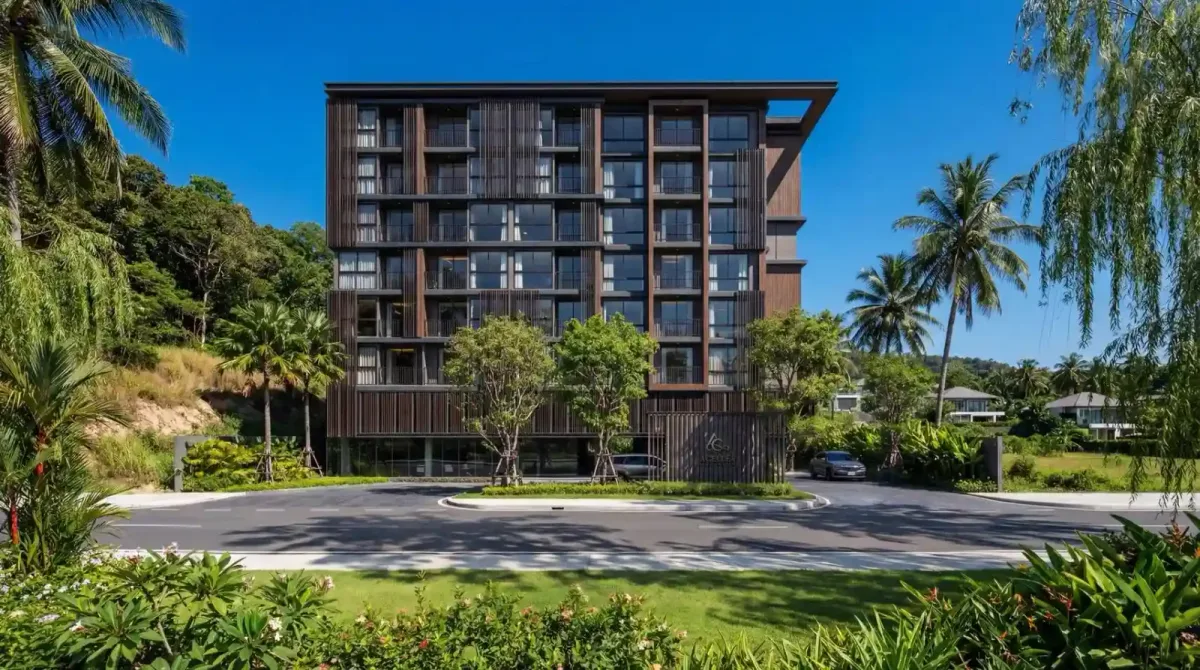
Buying a Condo in Phuket as a Foreigner: Complete Step-by-Step Guide
Quick answer: Foreigners buy Phuket condos freehold within the building’s 49% foreign quota, budget $95K+ for entry studios, $220K-$280K for Bang Tao 1-beds. Steps: verify quota, lawyer-review SPA, confirm HOA/sinking fund, arrange FET, register at Land Office. Pillar: buying property in Phuket.
For most foreign buyers, a Phuket condominium is the cleanest entry point: you can own the unit freehold in your own name (subject to the 49% foreign quota in the building), without needing a Thai company for the typical resort condo structure. That does not make condos “safe”, it makes them legally simpler than many villa structures. Read the big picture in Buying property in Phuket, then compare structures in Freehold vs leasehold in Thailand.
Foreign quota: the non-negotiable checkpoint
This is the check that decides whether the purchase is possible at all, and it is the one most often taken on trust. A foreign buyer may hold a condominium unit freehold only within the building’s 49% allowance. That allowance is measured against the total sellable floor area of the building, not by counting units, and it is consumed at registration rather than at reservation.
Both halves of that sentence matter. Because it is area-based, larger units eat the allowance faster, so a building can look half open on a unit count and have nothing left in the three-bedroom stack. Because it is consumed at registration, a reservation taken in good faith today can still fail at transfer if other buyers register ahead of you, which is a live risk on an off-plan purchase completing two years out.
| Quota question | Why it matters |
|---|---|
| Is my specific unit inside the foreign quota pool? | If not, the alternative offered is usually a lease, which is a different asset at a different value |
| What document proves it? | A dated letter from the juristic person naming your unit, in square metres, not a verbal assurance |
| Could the position change before closing? | On an off-plan purchase, yes. Ask what proportion of the remaining allowance is already committed to other reservations |
| What happens if it fails at transfer? | Whatever your reservation wording says, which is why this is checked before any money moves |
HOA fees: what “$50-150/month” really represents
| Fee component | What it usually covers |
|---|---|
| Common area maintenance | Pools, landscaping, security staffing, cleaning |
| Insurance (building) | Often shared, verify scope |
| Management office | Admin + enforcement of rules |
Ask for fee history, not only the current month.
Sinking fund: the health meter of a building
| Question | Red flag |
|---|---|
| Is the fund adequate for age? | New towers: lower near-term risk, still verify plan |
| Any major projects planned? | Roof, facade, elevators, expensive |
Off-plan condo risks and protections
| Off-plan topic | Investor question |
|---|---|
| Escrow / payment control | How is money released? |
| Permits | EIA/building permit status where relevant |
| Delay clauses | What if completion slips? |
What a condominium actually costs to hold
Recurring costs decide the net, and they are the part of a purchase most buyers estimate rather than check.
Common area maintenance is charged as a rate per square metre per month, set by the juristic person and revised at general meetings. Ask for the rate rather than a monthly total, because only the rate lets you compare buildings or work out what a larger unit will cost you, and ask for its recent history so you can see the direction of travel.
The sinking fund is separate. It is usually paid once at purchase and topped up when major works draw it down, and a fund that has been spent on a lift replacement or a facade repair will be replenished from owners. A special levy is not a small number, so the fund’s balance and the building’s planned capital works over the next five years are worth as much attention as the CAM rate.
Then the letting costs, if you let. Management takes a share of gross. Platform commissions may or may not be inside that share, and this is the single most common place where a quoted fee turns out to mean something different. Utilities during guest stays, linen, consumables and turnover cleaning all fall somewhere, and the agreement should say where. Furnishing wears out faster in short-stay use than most owners plan for, so an annual replacement reserve belongs in the model rather than arriving as a surprise in year four.
Finally Land and Building Tax annually, and Thai tax on the rental income: withheld at source at 15% for an owner in Thailand fewer than 180 days a year, generally as a final liability, and progressive personal income tax for anyone here 180 days or more.
Taxes and closing costs (planning)
Transfer fees and taxes are part of total cost. Many buyers budget transfer fee around ~2% of appraised value as a commonly cited line item, confirm with your lawyer. See Thailand property tax for foreigners.
Furniture packs: treat them as part of yield, not a free bonus
| Question | Why it matters |
|---|---|
| Who owns warranties? | Appliances fail, know who fixes them |
| Is the operator tied to a specific fit-out? | Can limit future upgrades |
| What is the replacement cycle? | Short-stay interiors wear faster |
Pros and cons (foreign buyer lens)
Pros: freehold title in your own name, on the same legal footing as a Thai owner of the unit; the widest resale market of any Phuket product, because your buyer can be foreign or Thai; a management layer that already exists, so the building runs whether or not you are here; a much lower entry ticket than any villa route; and no lease term quietly decaying in the background.
Cons: HOA dependency; short-stay restrictions; supply competition; developer risk if off-plan.
Verifying quota before you pay a deposit
| Check | Pass | Fail |
|---|---|---|
| Quota letter on the juristic person’s letterhead, dated, naming your unit | Proceed to SPA review | Wait, or choose another unit |
| Remaining allowance stated in square metres | You can judge whether your unit fits | A percentage alone tells you nothing about your stack |
| Leasehold offered as “the same as freehold” | Independent lawyer review before anything else | Usually the point to walk away |
| Other reservations against the same remaining area | Disclosed, so you know the race you are in | Refusal to say is an answer |
Land Office transfer day: what happens
| Party | Role |
|---|---|
| Buyer lawyer | SPA, quota, transfer |
| Juristic person | Quota confirmation, handover |
| Bank | FET verification |
| Land Office officer | Registration |
Short-stay rental rules in condos
This is the second thing to establish, after quota, and it is regularly misunderstood. Under the Hotel Act, letting for stays of under 30 days is hotel business, and the licence sits at premises level rather than with the individual owner. Your unit’s own rules are therefore not the whole answer: what matters is whether the building is licensed, and what its house rules and committee position actually are.
Three positions exist in practice. A building with a hotel licence and a rental programme, where nightly letting is straightforward and the operator handles it. A building whose rules permit letting but which has no licence, where nightly stays are common and not lawful. And a building whose rules prohibit short stays outright, where the question is settled.
The middle case is the dangerous one, because it looks fine until it is not. Tolerance is not permission, and a committee vote or a complaint from a resident can end it, leaving an owner who bought on a short-let yield holding a long-let asset. Ask for the building’s licence position and its house rules in writing before you commit, and treat “everyone does it here” as the warning it is.
Rental licensing context: Phuket rental yield guide.
Common foreign buyer mistakes
Five recur often enough to be worth naming.
Paying a reservation fee before the quota position is confirmed in writing. This is the single most expensive habit in the market, because the remedy afterwards depends entirely on wording you did not negotiate.
Using the developer’s recommended lawyer. Competence is not the issue; whose interests they are instructed to protect is. On a first purchase in an unfamiliar jurisdiction, independent counsel you appointed and pay is not an optional refinement.
Budgeting the purchase price rather than the total. Transfer-day charges, legal fees, furnishing to a lettable standard and the first year of running costs are all real, and a buyer who arrives at handover with nothing left cannot furnish the unit, which means it earns nothing.
Comparing gross yields. Management, platform commissions, common area charges, furnishing replacement, vacancy and Thai tax all come off before anything reaches you, and the ranking of two units frequently reverses once they do.
Assuming ownership brings a right to stay. It does not, anywhere in Thailand, and the visa route needs solving on its own timeline.
Mistakes guide: mistakes foreigners choosing projects.
After purchase: first 90 days
Four things want doing promptly, and none of them is urgent enough to feel urgent, which is why they get left.
Register the unit’s house book and get your name recorded, because utility accounts and management contracts are easier to open with it than without. Meet the juristic office in person and get on their contact list, since you will be asking them for things remotely for years. Read the building’s rules properly rather than skimming them, particularly on letting, pets and renovations. And file your FET records, the SPA and the title documents somewhere durable and shared with whoever will handle your affairs, because you will need them at resale and at repatriation, and reconstructing them years later is difficult.
If you intend to let, appoint the manager in this window rather than later. A unit that sits unfurnished and unlisted through a peak season has lost income that no amount of later optimisation recovers.
Resale liquidity for foreign-owned condos depends on quota status, building reviews, and micro-location, not bedroom count alone. Budget 4-8 weeks for lawyer review on first purchase; repeat buyers with the same firm often close in 3-5 weeks when FET trails are clean.
FAQ alignment: common foreign buyer questions
Most foreign buyers ask the same four things in the first call: Can I own freehold? What is the real all-in budget? Can I rent on Airbnb? How do I sell later? This guide answers the process; linked pillars answer yield, tax, and exit in depth. Book a shortlist when ready.
Buyer scenarios: which condominium fits
Scenario A, first purchase, buying to let, will not visit often. Prioritise the depth of the management market over the headline yield. In practice that means the corridors where several credible operators compete for your business rather than the one where a single manager has the building. Choose a finished unit if you can, so you are underwriting numbers other owners have already achieved rather than a projection.
Scenario B, buying to use for several weeks a year. Decide the weeks before the unit. Weeks taken in high season cost a disproportionate share of annual revenue, so a buyer with a flexible calendar keeps far more of the return than one tied to school holidays. Then choose a layout you would actually enjoy living in, since the compromise between a good rental and a good home is real and you will feel it every visit.
Scenario C, smallest possible entry ticket. The right comparison is not against other new stock but against older resale units in better positions, which often let for similar money. Compare on rent achieved per square metre rather than on age or specification, and check the sinking fund carefully, because an older building’s capital works land on owners.
Scenario D, buying off-plan for the launch price. Establish which release you are buying into and what the previous one sold for, since the whole advantage lives there. Then read the delay clause, the forfeiture terms and the assignment provisions, because those decide what happens if your circumstances change during the two years before you own anything.
Areas to start your search
Foreign buyers sizing a condominium should pull three same-building resale comparables dated within ninety days. Corridor averages shift quickly when a new tower launches within two kilometres, and a figure from eighteen months ago may describe a market that no longer exists. Walk the route to the beach at the hour a guest would walk it, and drive the access road in rain rather than in February.
Frequently Asked Questions
Yes, if the unit is within the foreign quota of the condominium. Always verify quota for the exact unit before paying a booking fee.
In typical condominium structures, foreign ownership is capped at 49% of sellable space, commonly described as the foreign quota. Availability is building-specific.
HOA varies widely. Many mid-market condos fall roughly around ~$50-150+/month as a planning band, premium projects can be higher. Request fee history, not a brochure line.
Studios can maximize yield density; 1-beds often balance liquidity and demand. The best choice depends on building rules, operator quality, and your net-yield model.
Transfers involve fees/taxes depending on structure and terms. See Thailand property tax for foreigners and confirm with your lawyer.
Off-plan can offer staged payments and early pricing but carries developer/timeline risk. Resale offers immediate rental and less construction uncertainty, often at a higher entry price.
Questions about this guide? Ask us on WhatsApp. The guide's title is already in the message, so you only need to write your question.
Ask on WhatsApp
Maksim Shchegolev
Founder, MORE Group
Founder of MORE Group. Four years in investment banking before moving to Phuket, where he has worked in the local property market since 2018. Oversees developer relationships and every engagement above $300K.
About MORE Group →Get a Focused Phuket Property Shortlist
Share budget, area and goal. We will reply with suitable live projects, not a generic catalogue.
