Phuket Property for Vietnamese Buyers 2026: Legal Guide,
Vietnamese buyer guide to Phuket property 2026: freehold vs 50-year Vietnam law, SBV transfers, VND-USD routing, DTA tax, and 2-hour flight access.
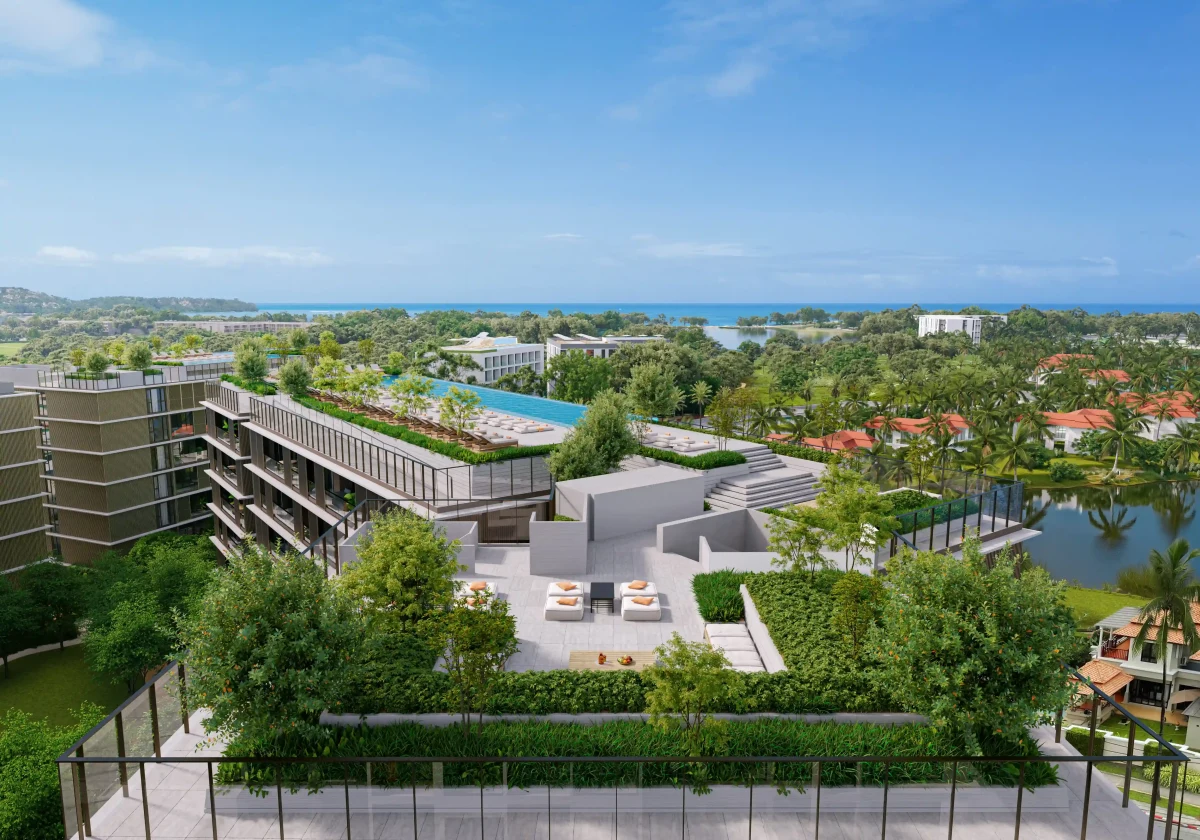
Phuket Property for Vietnamese Buyers 2026: Legal Guide, Taxes & Best Projects
Quick answer: Vietnamese citizens can own freehold Phuket condos with permanent Chanote title, structurally different from Vietnam’s 50-year apartment ownership with uncertain renewal. Flights from HCMC or Hanoi take 1.5-2 hours. Entry condos from about $85K-$120K in Rawai or Bang Tao; premium Bang Tao from $200K+. Transfer VND→USD with State Bank of Vietnam documentation, wire USD to Thailand, collect FET certificates for $50K+ receipts. Vietnam-Thailand DTA prevents double tax on rental income withheld in Thailand.
Read Phuket complete guide 2026 and best areas before reserving.
Why do Vietnamese buyers choose Phuket over domestic resorts?
Proximity and title quality headline, Vietnam’s own resort markets taught buyers to compare yield, but supply growth compressed Danang and Phu Quoc returns while Phuket’s managed condo infrastructure matured.
| Driver | Vietnamese angle |
|---|---|
| Flight time | ~90 min HCMC-HKT vs 13h to Europe |
| Ownership term | Freehold forever vs 50-year VN cap |
| Yield | 7-10% gross managed vs compressed VN resort |
| Tourism familiarity | Fast-growing Vietnamese visitor segment |
| USD savings culture | Many buyers hold USD offshore already |
Vietnamese professionals who bought Phu Quoc or Danang early understand rental management, Phuket’s quarterly operator reporting is a step up from informal domestic letting.
What ownership rights do Vietnamese citizens have?
Freehold condominium: Permanent unit ownership in your name at Land Department.
Leasehold villa: 30+30+30 registered lease, 90 years documented use vs informal renewal expectations at home.
Thai company: Not recommended for standard individual investment.
| Comparison | Vietnam (apartments) | Phuket freehold condo |
|---|---|---|
| Term | 50 years + one renewal | Permanent |
| Title registry | Vietnamese housing law | Thai Chanote |
| Foreign quota | Project-level caps | 49% per building |
| Resale pool | Domestic + limited foreign | Global buyer pool |
Do not apply Vietnamese foreign ownership percentage instincts without reading Thai juristic quota letter.
How should Vietnamese buyers move money legally?
VND is not freely convertible internationally at scale, practical routes:
| Route | Steps | Best for |
|---|---|---|
| Onshore VND→USD | Vietcombank, BIDV, Techcombank + SPA docs for SBV | First-time buyers |
| Offshore USD | Singapore/US account wire direct | Business owners with USD float |
| Staged off-plan | Multiple FET-eligible tranches | 24-36 month builds |
Critical Thailand step: Request Foreign Exchange Transaction (FET) certificate at Thai bank for each inbound transfer ≥$50,000 USD, without FET, freehold registration blocked.
See proof of funds Thailand property.
Red flag: Splitting transfers to avoid FET thresholds, Land Department aggregates source-of-funds scrutiny on resale.
How does Vietnam-Thailand tax treat rental income?
Thailand: fifteen percent Section 70 withholding on rental to non-residents.
Vietnam: DTA generally exempts same income from Vietnamese PIT if taxed in Thailand, still declare on annual return to General Department of Taxation.
SBV angle: Outbound investment documentation required for bank transfers, purchase agreement satisfies purpose test for legal property buys.
Not tax advice, use Vietnamese accountant familiar with foreign real estate.
Which areas suit Vietnamese buyer profiles?
| Area | USD entry | Vietnamese fit |
|---|---|---|
| Bang Tao | $200K-$500K | vs My Khe, more developed resort infra |
| Kata/Karon | $120K-$250K | Vietnamese tourist growth + European mix |
| Rawai | $85K-$150K | First international ticket, managed yield |
| Nai Yang | $120K-$300K | 15 min from HKT, frequent visit pattern |
Insider tip: Vietnamese buyers visiting monthly favour Nai Yang or Rawai for airport logic; Bang Tao for family holiday quality matching Danang luxury segment expectations.
Buyer scenarios for Vietnamese profiles
Scenario A: HCMC entrepreneur, first offshore asset: Rawai studio ~$90K, USD from business account, managed 6-7% gross guarantee scrutinised for fee stack.
Scenario B: Hanoi family, Danang comparison: Kata 2BR ~$220K, freehold for children vs 50-year VN anxiety, estate planning with Thai lawyer.
Scenario C: Viet Kieu USD holder: Wire from Singapore account, Bang Tao 1BR ~$180K, LTR or Elite for extended stays.
Scenario D: Domestic landlord diversifying: Sell District 2 condo, allocate $150K USD Phuket + keep VN income assets, separate tax events.
What projects fit common Vietnamese budgets?
Use rental yield guide 2026 for net math, gross guarantees mislead.
| Band | Product | Notes |
|---|---|---|
| $85K-$120K | Rawai/Bang Tao studio | Verify foreign quota |
| $120K-$200K | Kata/Karon 1BR | Tourist demand depth |
| $200K-$400K | Bang Tao branded | Higher fees, lower hassle |
| $400K+ | Laguna / sea view | Lifestyle + long hold |
Red flags for Vietnamese buyers
- Applying 50-year mental model to Thai freehold, title is permanent
- Skipping FET on split wires, registration failure at transfer
- SBV transfer without SPA, bank rejection delays
- Informal management expectations from domestic letting, sign proper agreement
- Guaranteed return without operator solvency check, read triggers
Vietnam vs Phuket comparison table
| Factor | Danang / Phu Quoc | Phuket |
|---|---|---|
| Flight from HCMC | 1h domestic | ~1.5h international |
| Freehold for VN citizen | No, 50-year structure | Yes, Thai freehold condo |
| Gross yield (2026 indic.) | 5-7% compressed | 7-10% managed |
| Buyer pool on exit | Mostly domestic | Global |
| Currency | VND | USD/THB contract |
Visa and visit patterns
Short flight enables monthly owner visits, unlike European buyers limited to 1-2 trips per year.
| Stay need | Option |
|---|---|
| 30-60 day trips | Tourist entry, track stamps |
| Multi-year | Elite, LTR, verify income proof |
| Remote work | LTR work-from-Thailand category |
Owning condo does not replace visa.
Pre-purchase checklist for Vietnamese buyers
| Step | Done? |
|---|---|
| SBV-compliant USD source documented | ✓ |
| Thai bank account or payment agent confirmed | ✓ |
| FET process explained by Thai bank | ✓ |
| Foreign quota letter obtained | ✓ |
| Vietnamese tax memo on foreign rental | ✓ |
| Management fee stack in writing | ✓ |
Phuket rewards Vietnamese buyers who treat freehold clarity and FET discipline as advantages over domestic complexity, not obstacles to re-create.
How do Vietnamese buyers use proximity for due diligence?
Monthly 90-minute flights enable progressive DD impossible for European buyers, use it.
| Visit | Purpose |
|---|---|
| Trip 1 | Area tour, operator meetings |
| Trip 2 | Rainy-season drainage check |
| Trip 3 | Pre-handover snag list |
Vietnamese tourist growth in Phuket
Vietnamese visitor volumes rose sharply pre-2020 and recovered post-pandemic, Kata and Bang Tao marketing in Vietnamese language on OTAs helps occupancy for owners targeting regional guests.
Comparing HCMC district pricing with Phuket
| Market | Entry (USD indic.) | Ownership |
|---|---|---|
| HCMC District 2 condo | $120K-250K | Vietnamese law |
| Phuket Rawai studio | $85K-120K | Thai freehold |
| Danang beach | $100K-180K | 50-year structure |
Diversification motive common, do not assume correlated yields.
SBV documentation checklist
- Signed SPA with developer legal entity details
- Passport + buyer name match wire origin
- Purpose code: overseas property investment
- Retain bank approval letter for audit
Estate planning for Vietnamese families
Freehold Chanote in personal name simplifies inheritance versus company land, Thai lawyer + Vietnamese notary coordination recommended.
See Phuket property for Vietnamese buyers legacy page only if comparing URL history, this 2026 guide supersedes for current rules.
Viet Kieu and dual-currency buyers
Overseas Vietnamese with USD accounts in Singapore or US skip SBV friction, still need FET on Thai side. Document source of funds for Land Department on resale.
HCMC vs Hanoi buyer differences
| City | Pattern |
|---|---|
| HCMC | Faster decision, Danang comparison common |
| Hanoi | Conservative DD, longer off-plan staging |
| Both | USD wire preference |
Vietnamese-language OTA marketing
Listings with Vietnamese descriptions on Agoda/Traveloka capture regional tourists, operators offering this service add 5-10 occupancy points in some Kata buildings (operator-dependent, verify).
Golden Visa analogies: manage expectations
Vietnamese buyers sometimes ask about Thailand Elite vs LTR using Golden Visa mental models, neither equals property ownership rights. Budget visa separately from condo ticket.
Payment plan discipline for Vietnamese off-plan buyers
Never miss instalment date, developers forfeit discounts or accelerate default clauses. Set SWIFT reminders 5 business days before each tranche; FX convert early if VND volatile.
Comparison with Singapore property
Some Vietnamese UHNW compare Singapore condo vs Phuket holiday asset, Singapore wins capital preservation; Phuket wins yield and lifestyle ticket at fraction of capital.
Read first time buyer Phuket complete guide for process shared across nationalities.
Techcombank vs Vietcombank wire experience (anecdotal)
HCMC buyers report Vietcombank smoother for first large USD property wire with complete SPA pack; Techcombank competitive on FX spread, compare both quotes same day.
Danang peer group influence
Vietnamese buyers in Danang investor WeChat/Zalo groups often share Phuket DD tips, verify any “guaranteed project” against independent lawyer, not group hype.
Quarterly visit DD routine
| Visit | Task |
|---|---|
| Q1 | Construction progress photos |
| Q2 | Monsoon leak check |
| Q3 | Operator statement audit |
| Q4 | Personal use + tax docs |
Thai lawyer selection for Vietnamese buyers
Choose firm with English contract review and Vietnamese client experience, explains FET and quota in terms contrasting 50-year domestic law.
Resale to other Vietnamese buyers
Growing Vietnamese buyer pool improves exit liquidity versus 2015, still smaller than European pool; price for long hold not flip.
Zalo group DD warning
Cross-check any project hype in Vietnamese social groups against Land Department title search, domestic offshore investment scams exist; lawyer first, group second.
VND devaluation stress test
If VND weakens 5% vs USD during build, final instalment costs more dong, HCMC salaried buyers should budget upper band on salary conversion.
Family multi-unit strategy
Some Vietnamese families buy two studios instead of one 2BR, finer liquidity on exit and staggered rental calendars; verify both units in same building foreign quota headroom.
Thai consulate document legalisation
Occasionally banks request notarised SPA, allow 5-10 business days in HCMC/Hanoi for chain if bank compliance demands.
Phu Quoc vs Phuket second-home logic
Vietnamese buyers owning Phu Quoc villa often add Phuket condo for international school holidays and FX diversification, two-thailand-strategy rare but growing among HCMC entrepreneurs.
English proficiency in transactions
Younger Vietnamese buyers navigate English contracts; older buyers should budget certified Vietnamese summary from lawyer, do not rely on nephew translation for million-dollar SPA.
ASEAN travel convenience
ASEAN passport ease for Thailand entries helps quarterly DD, still track stamp limits; property does not grant visa exemption beyond standard tourist rules.
Developer payment escrow
Verify whether instalments wire to escrow or developer operating account, escrow reduces completion risk on off-plan; common on larger Bangkok developers, less universal on small Kata villa builds.
Comparison table: Vietnam outbound vs Phuket inbound
| Step | Vietnam outbound | Thailand inbound |
|---|---|---|
| Bank | SBV docs | FET certificate |
| Lawyer | Optional domestic | Mandatory Thai |
| Title | Housing law | Chanote / lease |
| Agent fee | Often 2-3% | MORE Group 0% buyer |
Why Vietnamese buyers accelerate into Phuket 2026
Proximity, permanent freehold versus 50-year domestic cap, and professional rental infrastructure outweigh the legal learning curve for many HCMC and Hanoi professionals, especially those already earning USD or running regional businesses.
Vietnamese buyer decision tree
| Question | If yes → |
|---|---|
| First offshore asset? | Rawai studio + strong manager |
| Family legacy hold? | Freehold condo Chanote personal name |
| USD offshore already? | Skip SBV friction, wire direct |
| Quarterly visits feasible? | Nai Yang airport-proximate |
| Compare Danang only? | Run yield AND title term table |
Final reminder on FET
Without Foreign Exchange Transaction certificate on qualifying wires, Land Department stops freehold transfer, no certificate, no title, regardless of how many instalments you paid developer.
HCMC District 7 vs Phuket Rawai price parity (illustrative)
Similar USD ticket near $100K buys newer Vietnamese urban stock with 50-year term versus older Phuket studio with freehold, trade-off is title permanence and rental tourism depth, not square metres alone.
Vietnamese wedding gift purchase trend
Some families gift Phuket condo down payment to newlyweds, structure SPA in recipient name early to avoid SBV name mismatch on wire from parents.
Hanoi vs HCMC bank friction (2026 anecdotal)
Hanoi buyers report slightly longer SBV approval cycles for first large outbound property wire, start bank conversation two weeks before developer reservation deadline, not two days.
Viet Kieu Singapore account shortcut
Overseas Vietnamese holding USD in DBS or OCBC often complete Phuket purchase faster than onshore VND conversion, still require Thai FET on inbound leg; SBV step skipped not FET step.
Vietnamese buyers who treat Phuket freehold as permanent title, not a 50-year domestic analogue, make cleaner long-term decisions on operator selection and estate planning from the first viewing.
Save every SWIFT confirmation, SBV approval letter, and FET PDF in one shared family folder, Vietnamese heirs and Thai lawyers both need the chain when ownership passes across borders decades later.
Quarterly 90-minute flights from HCMC make snag-list inspections realistic for off-plan buyers, use that advantage European investors cannot match when developer misses handover dates.
Compare Danang and Phuket on the same spreadsheet row: title term, gross yield, exit liquidity, and visit cost, not hype posts in Zalo groups.
Frequently Asked Questions
Yes, under 49% foreign quota with permanent Chanote title, unlike Vietnam's 50-year apartment cap.
Thai freehold has no expiry. Vietnam caps at 50 years with renewal uncertainty, Phuket title is permanent and Land Department registered.
Yes, Vietnam-Thailand DTA. Thai 15% withholding generally exempts same income from Vietnamese PIT; still declare foreign assets and income at home.
Convert VND to USD with SBV documentation at licensed bank, or wire USD from offshore accounts. Collect FET certificates for $50,000+ USD inbound transfers.
About 1.5-2 hours from Ho Chi Minh City or Hanoi, enabling quarterly or monthly property visits.

MORE Group Editorial
Phuket Real Estate Experts
The MORE Group team has helped 500+ European and American buyers purchase property in Thailand. We provide legal support, 0% commission, and on-the-ground expertise with 8 years in the Phuket market.
About MORE Group →Get Your Phuket Property Shortlist
Tell us your budget and goals. Our expert sends a shortlist within 2 hours.