Real Income Potential of Phuket Condos — Gross vs Net Yield, by Area and Unit Type
Honest breakdown of real income potential from Phuket condos in 2026. Gross vs net yield, management fees, vacancy impact, and realistic scenarios by area and unit type.

Real Income Potential of Phuket Condos
The realistic net yield from a Phuket condo ranges from 4% to 10% per year, depending on location, unit type, rental structure, and management quality. Developer marketing often highlights gross yield or peak-season performance — the honest numbers look different once you account for management fees, low-season vacancy, and operating costs. This guide gives you the complete picture, with real scenario tables by area and unit type.
Looking for the right property in Phuket?
Our experts send a shortlist within 2 hours. 0% buyer commission.
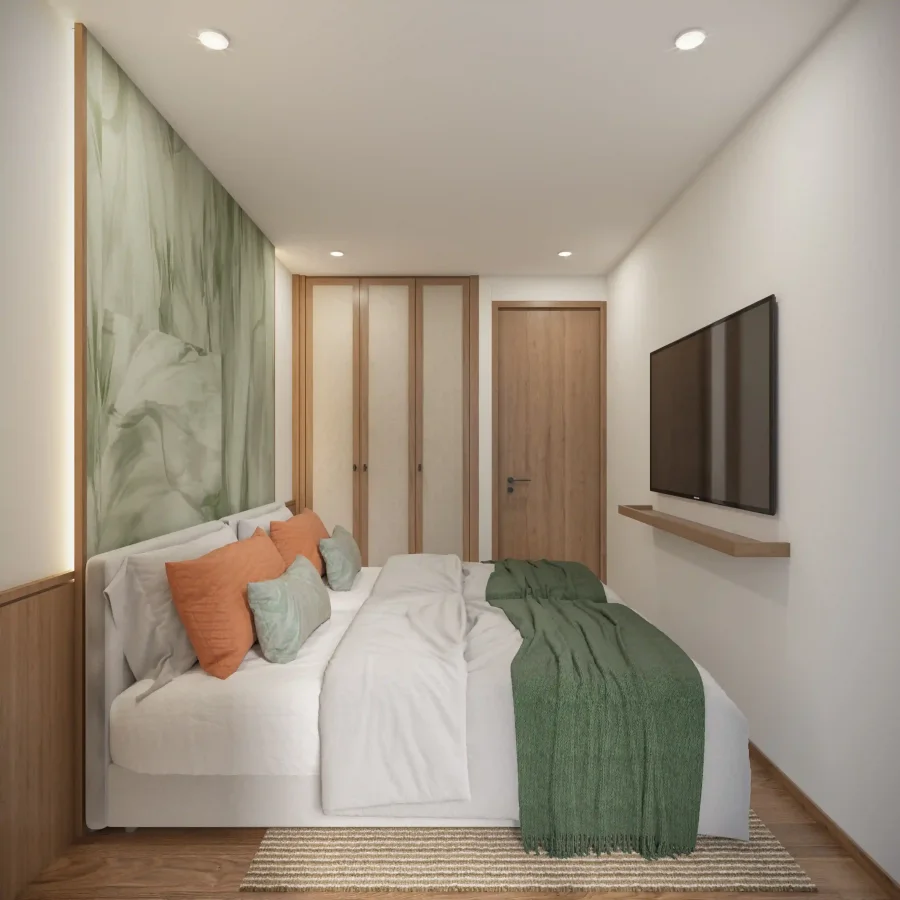


Phuket Condo Income: Key Reference Points
| Parameter | Range |
|---|---|
| Gross yield, best-performing areas | 8–12% |
| Net yield after management and costs | 5–10% |
| Management fee (rental pool) | 30% of gross revenue |
| Individual management fee | 10–20% of gross revenue |
| Annual vacancy impact (seasonal average) | 30–40% of potential nights |
| Short-term rate, 1BR | $80–$250/night |
| Long-term rate, 1BR | 20,000–45,000 THB/month ($550–$1,250) |
| Guaranteed return programs | 6–8% net (fixed, developer-backed) |
| Best-performing unit types | Studios and 1BR in Bang Tao, pool-access and sea-view |
| Annual capital appreciation (secondary market) | 5–6% historically |
Looking for the right property in Phuket?
Our experts send a shortlist within 2 hours. 0% buyer commission.
Understanding the Gap: Gross Yield vs Net Yield
This is where most investors get confused — or where most developer projections are optimistic.
Gross yield = Annual rental revenue ÷ Purchase price × 100
Net yield = (Annual rental revenue − All costs) ÷ Purchase price × 100
The difference between gross and net in Phuket is typically 3–5 percentage points, depending on the cost structure. A property marketed as “10% yield” is almost always citing gross — net may be 6–7% in the best case.
What Costs Reduce Your Net Yield?
| Cost Category | Annual Impact | Notes |
|---|---|---|
| Management fee (rental pool 30%) | Largest deduction | On $20,000 gross: costs $6,000 |
| Annual service charge (sinking fund, common area) | $500–$1,500 | Varies by project |
| Utilities (if owner-paid) | $300–$800 | Often tenants pay in long-term |
| Insurance | $200–$500 | Depends on coverage level |
| Maintenance and minor repairs | $300–$800 | Higher in older units |
| Thai personal income tax on rental | 5–15% of net | Depends on deductions and treaty |
| Furniture replacement (amortised) | $500–$1,500/year | Typical over 5-year life |
| Total estimated annual costs | $2,800–$6,600 | Excluding management fee |
Scenario Table: Income Potential by Area and Unit Type
The following scenarios are based on realistic market data for 2026, using blended high-season and low-season occupancy (not peak-season projections).
Bang Tao / Laguna — Short-Term Rental Pool
| Unit Type | Purchase Price | Avg Nightly Rate | Annual Occupancy | Gross Revenue | Mgmt (30%) | Net Operating | Net Yield |
|---|---|---|---|---|---|---|---|
| Studio (28–32 sqm) | $90,000 | $90 | 70% | $22,995 | $6,899 | $14,396 | 16.0%* |
| 1BR (38–50 sqm) | $130,000 | $130 | 72% | $34,164 | $10,249 | $20,695 | 15.9%* |
| 1BR sea view | $160,000 | $160 | 74% | $43,216 | $12,965 | $25,791 | 16.1%* |
| 2BR pool access | $220,000 | $210 | 68% | $52,164 | $15,649 | $30,855 | 14.0%* |
*Before service charges, maintenance, taxes, and insurance (deduct $3,000–$5,000 for a realistic net).
Realistic net yield after all costs: 8–10% for well-located Bang Tao units.
Kamala Beach — Short-Term Rental Pool
| Unit Type | Purchase Price | Avg Nightly Rate | Annual Occupancy | Gross Revenue | Mgmt (30%) | Net Yield (after all costs) |
|---|---|---|---|---|---|---|
| Studio | $85,000 | $85 | 68% | $21,097 | $6,329 | 7.5–8.5% |
| 1BR standard | $115,000 | $115 | 70% | $29,393 | $8,818 | 7.8–8.8% |
| 1BR sea view | $145,000 | $145 | 72% | $38,106 | $11,432 | 8.0–9.0% |
Rawai / Nai Harn — Mixed Short + Long-Term
| Unit Type | Purchase Price | Income Type | Monthly Income | Annual Net | Net Yield |
|---|---|---|---|---|---|
| Studio | $75,000 | Long-term | 20,000 THB ($555) | $5,940 | 7.9% |
| 1BR standard | $100,000 | Long-term | 28,000 THB ($778) | $8,334 | 8.3% |
| 1BR quality | $120,000 | Mixed (seasonal) | Variable | $8,400–$10,200 | 7.0–8.5% |
| 2BR | $165,000 | Long-term | 38,000 THB ($1,056) | $11,472 | 6.9% |
Karon / Kata — Short-Term Mid-Range
| Unit Type | Purchase Price | Avg Nightly Rate | Annual Occupancy | Gross Revenue | Net Yield (after all costs) |
|---|---|---|---|---|---|
| Studio | $75,000 | $75 | 65% | $17,794 | 6.5–7.5% |
| 1BR | $100,000 | $100 | 67% | $24,455 | 7.0–8.0% |
| 1BR pool access | $125,000 | $125 | 70% | $31,938 | 7.5–8.5% |
The Honest Low-Performing Scenario
Not every property achieves the numbers above. Here’s what a poor-performing investment looks like — and it’s more common than developer pitches suggest.
Scenario: 1BR in Patong, mediocre management, no OTA strategy
- Purchase price: $110,000
- Average nightly rate: $75 (oversupply pressure)
- Annual occupancy: 52% (poor low-season strategy)
- Gross revenue: $14,235/year
- Management fee (30%): $4,271
- Service charges and costs: $2,500
- Net income: $7,464/year
- Net yield: 6.8%
This is not a disaster, but it’s materially below the 8–10% a well-located, well-managed alternative would deliver. The gap is created by location (oversupply), management quality (no low-season strategy), and unit positioning (no sea view, no pool access premium).
At 40% occupancy in low season with no strategy adjustment:
- Annual occupancy: 46% blended
- Gross revenue: $12,593
- After management and costs: $6,215
- Net yield: 5.7%
This is the realistic floor for a poorly positioned Patong investment. It still beats a savings account but is far below what the “10% yield” marketing promises.
Long-Term Rental Income: Realistic Numbers
Long-term rentals (3–12 month leases) offer lower absolute yields but more predictable income, zero seasonal risk, and lower management complexity.
| Area | Unit Type | Monthly Rent (THB) | Monthly Rent (USD) | Annual Net Yield (approx.) |
|---|---|---|---|---|
| Bang Tao / Laguna | 1BR | 35,000–45,000 | $970–$1,250 | 6.5–7.5% |
| Kamala | 1BR | 28,000–38,000 | $778–$1,056 | 6.0–7.0% |
| Rawai / Nai Harn | 1BR | 22,000–32,000 | $611–$889 | 6.5–8.0% |
| Karon / Kata | 1BR | 20,000–28,000 | $556–$778 | 5.5–7.0% |
| Chalong / Phuket Town | 1BR | 18,000–25,000 | $500–$694 | 5.5–7.5% |
Long-term yields assume 10–15% management fee vs. 30% for short-term pool.
How Capital Growth Changes the Total Return Picture
Rental yield is only part of the return equation. Phuket’s secondary property market has historically appreciated at 5–6% per year over the past two decades. Some projects — particularly those bought off-plan in growing areas — have seen 35–50% value increases during construction alone.
Total return example:
- Property purchased at $150,000
- Net rental yield: 7.5% = $11,250/year
- Capital appreciation at 5%/year: $7,500/year (on original cost basis)
- Combined annualised total return: ~12.5%
This is why Phuket attracts investors who would accept a lower pure rental yield if they believe in the capital growth story. Areas in active development (Bang Tao northern extension, Layan, new Kamala developments) tend to show stronger capital appreciation potential alongside solid rental income.
What Actually Separates High Performers from Average Performers
After reviewing dozens of real investment outcomes in Phuket, the factors that most predictably separate top performers (8–10% net) from average performers (5–6% net) are:
-
Location within the location — Not just “Bang Tao” but proximity to the beach, pool access, sea view. Premium positioning adds 20–30% to nightly rates with minimal impact on occupancy.
-
Management company track record — The single biggest operator-controlled variable. A professional company with strong OTA relationships, dynamic pricing, and active low-season strategy consistently outperforms passive management.
-
Unit configuration — Studios and 1BR consistently outperform 2BR and 3BR on yield percentage. Acquisition cost scales faster than nightly rates as units get larger.
-
Hotel licensing — Units in licensed projects can legally rent short-term on OTAs. Units without licensing cannot access this market legally.
-
Furnishing standard — Professional photography and contemporary furnishing drives 20–30% better conversion on OTA platforms.
-
Owner engagement — Investors who actively monitor monthly statements, understand occupancy patterns, and engage with management companies achieve better outcomes than entirely passive investors.
Pros and Cons: Investing in Phuket Condos for Income
Pros
- Achievable net yields of 7–10% in well-chosen locations with professional management
- Two income structures to match risk profiles: rental pool (market rate) or guaranteed return (fixed)
- Long-term rental market provides low-season income buffer in residential areas
- Capital appreciation of 5–6%/year adds meaningful total return
- Short-term rentals at $80–$250/night create strong gross revenue potential
- Studios and 1BR are efficient yield generators relative to purchase cost
- Professional management infrastructure is well-developed and widely available
Cons
- Marketing figures (10%+ yields) almost always cite gross, not net — real net is 3–5 points lower
- Seasonality creates genuine income gaps — 5–6 months at 40–60% occupancy
- Management fee of 30% (rental pool) is a substantial cost that must be modelled correctly
- Hotel licensing is legally required for short-term lets — not all developments qualify
- Oversupply in Patong and some mid-market areas compresses nightly rates
- Foreign quota restrictions (49%) can limit resale liquidity
- Thai income tax on rental income applies and should be factored into net yield
Frequently Asked Questions
Realistic net yields — after management fees, service charges, vacancy, maintenance, and taxes — range from 5–10% depending on area and unit type. Bang Tao and Laguna units with professional management achieve 8–10% net. Rawai/Nai Harn averages 6–8%. Karon/Kata runs 6–8%. Poorly located or poorly managed units in oversupplied areas can yield as low as 4–5% net.
Gross yield is annual rental revenue divided by purchase price — it ignores all costs. Net yield deducts management fees (30% for rental pools), service charges, maintenance, vacancy periods, and taxes. In Phuket, the gap between gross and net is typically 3–5 percentage points. A project marketed as '10% yield' commonly delivers 6–7% net in real terms.
Studios and 1BR condos consistently generate higher yield percentages than 2BR or 3BR units. Nightly rental rates don't scale linearly with bedroom count, but purchase prices do. A studio at $80,000 achieving $90/night at 70% occupancy produces a higher yield percentage than a 2BR at $200,000 achieving $160/night at the same occupancy. Pool access and sea views add meaningful nightly rate premiums regardless of unit type.
A 30% rental pool management fee is the standard in Phuket condo developments. On $20,000 gross annual revenue, this is $6,000 — a substantial deduction. Individual management arrangements (for long-term lets or self-managed short-term) typically cost 10–20% of revenue. Long-term rental yields appear higher partly because management costs are lower, though gross revenue per unit is also lower.
Short-term rental typically generates higher gross revenue ($80–$250/night vs. $556–$1,250/month for long-term) but with higher management costs (30% vs. 10–15%) and seasonal vacancy risk. Net yields are often comparable: 7–10% for well-managed short-term in top locations, 6–8% for long-term in strong residential areas. The right choice depends on your risk tolerance, management involvement, and property location.
Historically, yes. Phuket's secondary property market has appreciated 5–6% annually over the past 20 years. Off-plan purchases in active development areas have seen 35–50% value increases during construction. Combined with rental yields of 7–10% net, this creates total returns of 12–15% in strong cases — though capital growth is not guaranteed and varies significantly by location and project quality.
Read Also
- How Rental Demand Works in Phuket
- Guaranteed Return Programs in Thailand
- Rental Pool Programs in Phuket Condos
- Phuket Condos With Strongest Rental Demand
- Cost of Owning a Condo in Phuket
Get Your Phuket Property Shortlist
Tell us your budget and goals — our expert sends a shortlist within 2 hours.

MORE Group
Phuket Real Estate Experts
The MORE Group team has helped 500+ European and American buyers purchase property in Thailand. We provide legal support, 0% commission, and on-the-ground expertise with 8 years in the Phuket market.
Get Your Phuket Property Shortlist
Tell us your budget and goals — our expert sends a shortlist within 2 hours.