See live listings in this area, matched to your budget
This page shows real project data. Tell us your budget and we send a 1-page shortlist with prices, ownership route and red flags. Free, 0% buyer commission.
Buyer commission
0% (developer-paid)
Shortlist delivery
under 2 hours
Projects in database
297 with priced units
Freehold condos from
1,450,000 THB (~$44K)
Net yield range
not published for Phuket
Legal review
included free
Buy Phuket property: start here →
Commercial landing with form + WhatsApp
Get free shortlist →
3-5 hand-picked projects in 48h
Investment calculator →
ROI model with your budget
We filter 299 projects to 3-5 that fit your budget and goals. No generic MLS spam.
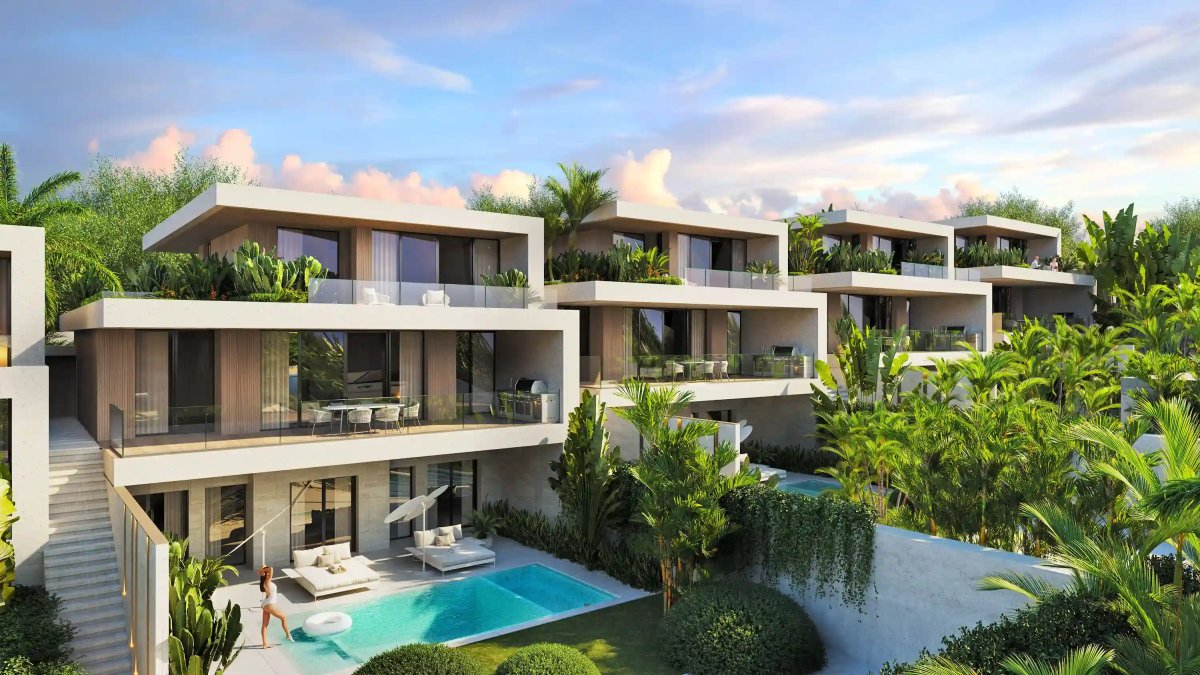
The bay is compact, the flat land near the sand is limited, and most of what is built and sold as a Kata villa sits on the slopes behind and above it. That is where the views come from, and it is also where the engineering lives.
A hillside villa is not a flat villa on a tilt. It sits on ground that has been cut into, or built out from, and it lives underneath everyone else’s rainfall. Most of what goes wrong here is a ground problem wearing a building’s clothes.
What is actually holding the villa up
Hillside plots are made level in one of two ways, and the difference matters for decades.
Cut. The platform is excavated into the natural slope. The villa sits on ground that has been there for a very long time, with a face behind it that has to be retained.
Fill. The platform is built outwards from the slope using imported material. It is level, it looks identical once landscaped, and it depends entirely on how well that fill was compacted and drained. Settlement on poorly placed fill shows up years later as cracking that follows the edge of the platform rather than the shape of the building.
You usually cannot tell which you are standing on. Ask the developer directly, ask for the platform drawings, and on any resale where the answer is vague, commission a geotechnical opinion before exchange rather than a snagging survey afterwards. It is the single highest-value inspection available on a Kata plot and it is not the one most buyers pay for.
Retaining walls deserve the same scrutiny. A wall holding back a slope is a structure, not landscaping. Establish whether it was engineered and certified or built by eye; whether it has drainage behind it, so water pressure does not build up against the back face; and whose land it stands on, because a wall on the boundary is a shared liability that surfaces when it fails.
Where the water goes
Every plot above yours drains through, past or under your plot on its way to the sea. In February this is theoretical. In a heavy monsoon downpour it is the defining feature of the property.
- Above you. What is upslope, and is it developed? A newly cleared or built plot above changes how much water arrives, and how fast, without anyone consulting you.
- Across you. Does a natural watercourse or a drainage channel cross the plot? Where does it discharge? A channel that is adequate today may be undersized once more of the hillside is built out.
- Under the access road. Culverts and roadside channels are the first things to overflow, and the road is how you leave.
- Around the pool and terraces. Hard landscaping sheds water rather than absorbing it, so a large terrace above a retaining wall increases the load on it.
Ask what happened in the last two wet seasons, and ask a neighbour rather than the seller. Water leaves evidence: staining on walls, silt lines, patched surfaces, replaced planting. Look for repairs rather than for problems, because problems get fixed before a viewing and repairs do not get hidden.
The access, and the twenty metres that matter
The road up is not one condition. A well-surfaced approach can end in a final stretch that is steep, unlit and slick when wet, and that final stretch is what decides whether an ordinary car reaches the gate in August, whether a delivery arrives, and whether an ambulance can turn.
Drive it yourself, in the rain if you can arrange it, and then reverse down it. Then ask the same questions that apply to any private access on this island: who owns the road, whether a right of way is registered in favour of your plot, and who has actually paid for the surface. On a slope those questions carry more weight than they do on the flat, because the repairs are more frequent and more expensive.
Note also that Phuket restricts what may be built as land rises, with limits tightening at height and construction prohibited above the top threshold. That rule is why hillside outlooks here tend to survive, and it is worth confirming the elevation and current permitted position for the plots between you and the view rather than assuming the greenery is permanent.
What Kata villas cost
Scheme-level ranges. Position on the slope and outlook drive the price of a specific house far more than floor area does, so treat this as a viewing list rather than a budget.
| Project | Status | Project price range (THB) | Entry, approx. USD |
|---|---|---|---|
| Mutti Family Villas | Off-plan | 17,900,000 - 46,777,500 | ~$547,000 |
| To’Summer Villa | Off-plan | from 25,800,000 | ~$789,000 |
| Laurinda Villa | Off-plan | 28,800,000 - 36,800,000 | ~$881,000 |
| Botanica Chalong Bay | Off-plan | 29,716,000 - 80,259,000 | ~$909,000 |
| Oliver Villa | Off-plan | 29,800,000 - 37,800,000 | ~$911,000 |
| Star Silas Villa | Off-plan | from 35,800,000 | ~$1,095,000 |
| Sea Central | Ready | from 51,880,000 | ~$1,587,000 |
Baht is what gets signed.
Ownership on a slope
The national rule applies unchanged: the house can be yours, the land cannot. A registered lease of the plot with the building in your own name, or a Thai company that genuinely operates, reviewed by a lawyer acting for you.
What a slope adds is a second set of documents to read alongside the lease.
- The retaining structures and where they sit. If a wall supporting your platform stands on a neighbouring plot, or a neighbour’s wall stands on yours, that relationship needs to be established in writing rather than discovered when it cracks.
- Drainage easements. If water is routed across another plot to discharge, or across yours from above, ask whether that is registered or merely how it has always run.
- The access right of way, which must appear on the title of the land it crosses rather than in an understanding between today’s owners.
A registered lease runs for a maximum of thirty years and binds a later landowner beyond three years only once registered; the renewal periods marketed alongside it are contractual undertakings from whichever company gives them. On a hillside scheme, ask specifically who remains responsible for the common retaining structures and drainage after the developer’s involvement ends, because those are the shared assets with the highest cost of failure. The hillside due-diligence guide covers the survey side in more detail.
Buyer scenarios
| Profile | What fits in Kata | The question that decides it |
|---|---|---|
| View-led buyer | An elevated plot with the outlook checked against elevation limits | Is the view protected by the building rules, or by nothing? |
| Family buyer | A lower, gentler plot with flat parking | Can a child walk to anything, and can a car reach the gate in August? |
| Letting buyer | A villa close enough to the beach to sell the walk honestly | Does the listing promise a walk you have actually done in the heat? |
| Retirement buyer | Flat access, single level, off the steepest approaches | Have you reversed down the access road? |
| Buyer wanting no slope at all | Rawai or the flat land north | Do you want the view enough to own the hillside beneath it? |
Insider tip: visit twice, and make the second visit during heavy rain even if it costs you a changed flight. Ask to see the plot, the access road and the pool terrace while it is actually raining. Every serious defect on a Kata hillside plot announces itself in a downpour and hides in the dry season, and the seller knows which season shows the property better.
Running a hillside villa
- Drainage maintenance is a recurring job, not a one-off. Channels silt up, and a blocked channel above a retaining wall is how the wall gets loaded.
- Retaining structures need inspecting, ideally after each wet season, for cracking, bulging or water seeping through the face.
- Access surfaces wear faster on a gradient, and the repairs are shared where the road is shared.
- The pool and plant run regardless of occupancy, and pumping on a slope is not the same job as pumping on the flat.
- Salt air and damp attack metal fixings and external finishes; a house that sits closed for months needs a scheduled air conditioning regime.
Give these their own budget line. A hillside villa’s costs do not scale down with occupancy, so subtracting them from rent hides how much of the year they run regardless, the rental yield guide sets out the full stack.
Before you commit to a Kata villa
- Whether the platform is cut or fill, answered from drawings rather than in conversation.
- A geotechnical opinion on any plot where that answer is vague.
- Retaining walls: engineered and certified, drained behind, and standing on whose land.
- Where stormwater arrives from, crosses and discharges, and whether any of it is registered.
- What is upslope of you, developed or not, and what may be built there.
- The access road driven and reversed, in rain, with title and right of way established.
- Elevation and permitted building position for the plots between you and the view.
- Who maintains common retaining structures and drainage after the developer leaves.
- Pool plant, roof and air conditioning inspected, with a wet-season maintenance schedule.
Frequently Asked Questions
The ground rather than the building. The two questions that matter most are what holds your platform up - a plot cut into the slope behaves very differently over decades from one built out on fill - and where stormwater goes once it leaves the plots above you. Both are visible in a heavy downpour and largely invisible in the dry season, which is when most buyers view. Ask for the platform drawings, and commission a geotechnical opinion wherever the answer is vague.
A cut platform is excavated into ground that has been stable for a very long time. A fill platform is built outwards using imported material, and depends entirely on how well that material was compacted and drained. Once landscaped the two look identical. Settlement on poorly placed fill appears years later as cracking that follows the edge of the platform rather than the shape of the house, which is why the question belongs before exchange rather than in a snagging survey afterwards.
Twice, and once in heavy rain. Look at the access road, the plot and the pool terrace while it is actually raining, then reverse a car down the final stretch of the approach. Look for evidence of past repairs rather than for current problems: staining, silt lines, patched surfaces and replaced planting all survive a tidy-up before a viewing in a way that active leaks do not. Ask a neighbour what happened in the last two wet seasons.
Partly, and by regulation rather than goodwill. Phuket restricts what may be built as land rises, with limits tightening at height and construction prohibited above the top threshold, which is why elevated outlooks here tend to survive. That protects you only where the intervening land is genuinely high. Confirm the elevation and the currently permitted position for the specific plots between you and the view instead of assuming the greenery is permanent.
The house yes, the land no, as everywhere in Thailand: a registered lease of the plot with the building owned in your name, or land held by a Thai company that genuinely operates. On a slope there are extra documents to read alongside the lease - which land the retaining walls stand on, whether drainage across neighbouring plots is registered or merely habitual, and whether your right of way up the hill is registered in your favour.
The schemes in this guide run from roughly 17,900,000 THB to over 50,000,000 THB, but these are scheme-level ranges. On a hillside, position on the slope and outlook move the price of a specific house far more than its floor area does, so two villas in one scheme can sit a long way apart. Use the ranges to decide what to view, then ask for a plot-level quotation in baht.
Related Guides:
- Kata Beach Property Guide, the bay and what sets its calendar
- Hillside Villa Due Diligence, the survey side in detail
- Villas for Sale in Nai Harn, the next bay south and a different letting model
- Phuket Pool Villa Buying Guide, what to check between contract and keys
- Phuket Rental Yield Guide, operating lines against gross

Maksim Shchegolev
Founder, MORE Group
Founder of MORE Group. Four years in investment banking before moving to Phuket, where he has worked in the local property market since 2018. Oversees developer relationships and every engagement above $300K.
About MORE Group →Compare Phuket Projects for Your Area and Budget
Send your preferred area, budget and timeline. We will shortlist live developer projects.
