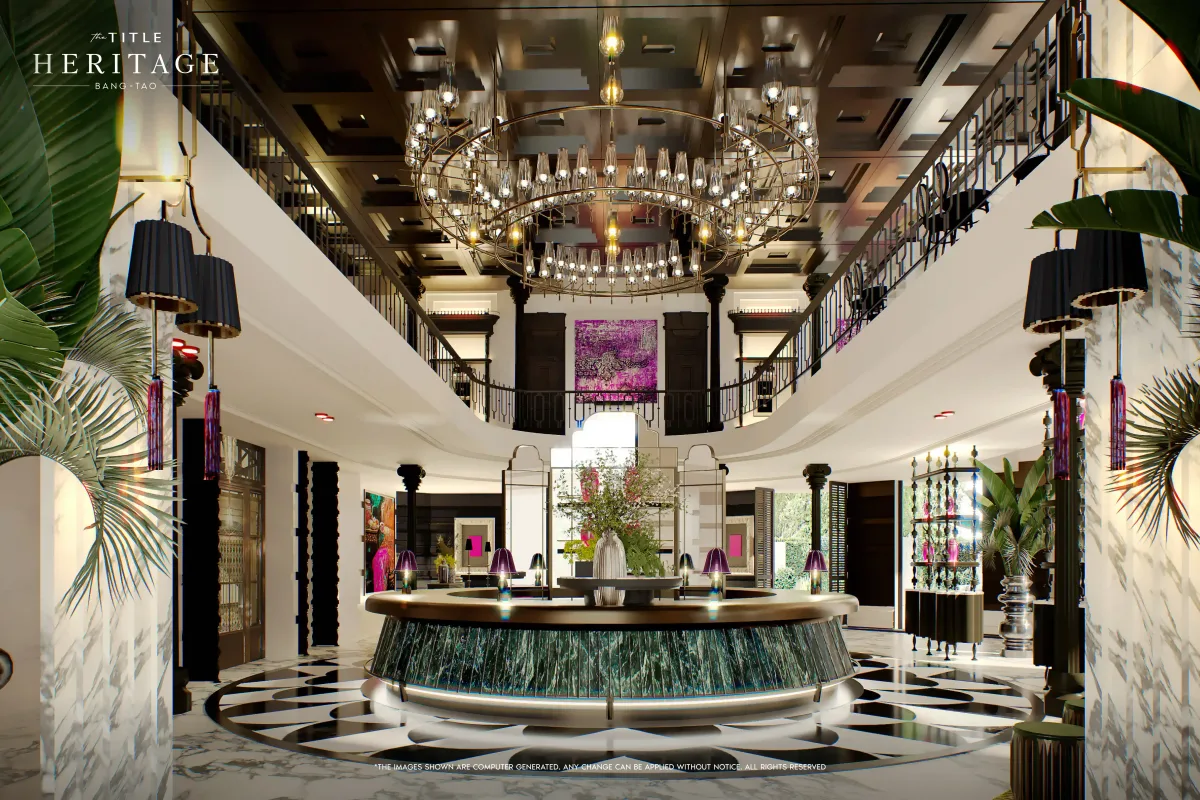
Quick answer: Indian passport holders recorded the highest average condominium ticket size in Thailand in Q1 2026, THB 6.9 million per unit, almost double the Chinese cohort’s THB 3.8 million, according to Real Estate Information Center data reported by Nation Thailand on 24 April 2026. The shift is now flowing into Phuket pricing decisions across Bang Tao, Laguna and Surin.
The Q1 2026 numbers end years of conventional wisdom that Chinese buyers set the top of the market. With overall foreign condominium transfers slumping to THB 44 billion in the quarter, Indian buyers were the only major foreign cohort whose total transfer value rose meaningfully. Chinese transfers continued to lead in volume, but the average per-unit value compressed to THB 3.8 million as buyers shifted toward smaller, lower-priced inventory.
The Q1 2026 Foreign Buyer Numbers
| Cohort | Avg ticket (THB) | Avg unit size (sqm) | Use case |
|---|---|---|---|
| Indian | 6.9M | 73.6 | Family living, multi-generational |
| Chinese | 3.8M | 36-42 | Investment, smaller resale units |
| Russian | 4.4M | 45-55 | Mix: long-stay plus investment |
| Market average | 4.1M | 41.1 | Mixed |
Source: REIC Q1 2026, reported by Nation Thailand (24 April 2026).
The 73.6 sqm Indian average is roughly 80 percent above the overall market mean of 41.1 sqm. That gap is not a rounding error, it reflects a different product entirely. Most Phuket pre-sale inventory is sized for the investor-first model: 28-45 sqm one-bedroom units with hotel-managed rental programmes. Indian buyers consistently bypass that layer in favour of 2-bedroom and 3-bedroom condominiums positioned for actual residency.
Why Indian Tickets Are Almost Double Chinese
Three structural drivers, none of them cyclical:
- Genuine residential use. KAN Homes’ 2026 foreign-buyer report describes Indian demand as family living, business expansion and long-term wealth protection, not the flip-and-resell pattern that defined Chinese investor activity from 2017 to 2022.
- A yield story, and what it is worth. The same report cites Subata Realty putting Phuket net yields at 8-12 percent against 4-6 in Dubai and 3-5 in Goa. Those are a brokerage’s figures rather than a measurement, and 8-12 percent net is well above what Phuket units evidence in owner statements once commission, common area maintenance, vacant-month utilities, furnishing replacement and Thai tax come out. The honest version of this driver is that buyers are acting on a yield comparison of that shape; whether the comparison holds is a question for the statements of specific units, not for a report.
- Capital flight from luxury Indian housing. Magicbricks Luxury Housing 2025 data shows 35 percent of Indian property buyers are now looking at luxury or ultra-luxury, with sales above ₹4 crore up 27 percent in H1 2025. Mumbai medians sit at ₹9.66 cr, Gurugram at ₹5.46 cr, Bengaluru at ₹2.91 cr. Against those, a 6,900,000 THB Phuket apartment is an entry-level second home rather than a stretch, which is the frame that makes the larger floorplan affordable.
Chinese buyers, by contrast, are still operating under domestic capital controls and a softer mainland property market. The volume cohort is intact; the per-unit ticket has compressed.
Where the Money Goes in Phuket
Indian Q1 2026 transactions on Phuket clustered in three corridors:
- Bang Tao and Laguna. International schools, the Laguna integrated resort and walkable beach access. The default destination for family buyers from Mumbai, Bengaluru and Delhi.
- Surin. Branded residences, typically a second purchase by a buyer who already holds something in Bang Tao. Our records carry 108 priced apartments there across four schemes, median 9,105,000 THB for 60 sqm, so the corridor is shallow in choice and long on price.
- Cherng Talay, away from the beach. Two-bedroom stock aimed squarely at this ticket. Across the Bang Tao and Layan stretch our records hold 1,484 priced two-bedrooms in 56 schemes, from 2,850,000 THB, with a median of 13,794,438 for 81 sqm.
Patong, Karon and Kata, historically the Chinese-investor heartland, saw negligible Indian activity. The product mix in those zones (compact studios, hotel-rental units) does not match Indian search criteria.
What This Means for Phuket Developer Pricing Strategy
For developers in Bang Tao and Laguna, the Q1 2026 data is a pricing signal, not a marketing footnote. Three implications:
- Larger 2-3BR units are pricing power, not inventory drag. Projects that under-allocated 2-3BR floors in 2024-2025 are reissuing pricing on remaining stock. Floors with 65-95 sqm units in Bang Tao moved up 4-7 percent in headline price between January and April 2026.
- Compact studio inventory is at risk. With the Chinese investor ticket softening, sub-30 sqm units priced above THB 4M are seeing extended sales cycles. Several launches have repositioned through staircased payment plans and yield guarantees rather than headline discounts.
- Phase 2 launches need Indian-specific marketing. Developer collateral that walks a Mumbai family through LRS pooling, NRI tax under the India-Thailand DTAA and the freehold quota mechanic is converting at materially better rates than generic English brochures.
Risks and Red Flags To Watch
A short checklist for buyers and developers:
- 49 percent freehold quota in Indian-favoured projects. Family-sized Bang Tao towers can hit the foreign quota faster than investor-stock buildings. Verify quota availability in writing before deposit.
- Currency volatility. A meaningful USD/INR weakening would compress Indian buying power even as THB pricing rises. Buyers running INR-denominated affordability should stress-test the cost in INR, not USD.
- Concentration scenarios. Projects pricing aggressively to a single nationality typically lose flexibility on resale. Diversified buyer mix is safer for a 5-7 year hold.
For investors building a Phuket portfolio, the implication is that 2026 is a transitional year. Inventory built for the 2018-2022 Chinese investor scenario is repricing toward the Indian family buyer, and the projects that adapt fastest will set the ceiling for the rest of the cycle.
Outlook for the Rest of 2026
Base case from the MORE Group desk: Indian average ticket holds in the THB 6.5-7.2M band through 2026, with volume rising as Bang Tao Phase 2 and 3 launches absorb genuine family demand. The cohort will not overtake Chinese volume in 2026, but it will continue to set the per-unit ceiling in the Bang Tao corridor.
Related coverage:
- Phuket property guide for Indian buyers, 2026
- LRS scheme: how Indians legally fund Thailand property
- NRI tax and the India-Thailand DTAA, 2026
- Phuket vs Goa vs Dubai for Indian HNIs, 2026
- Phuket buyer guide by nationality, 2026
- Phuket property market outlook 2026
- Earlier news: Indian families reshape Thailand condo market, April 2026
Frequently Asked Questions
Indian buyers in Q1 2026 averaged THB 6.9 million per unit because they consistently buy 2- and 3-bedroom condominiums for genuine family use rather than studios for short-term rental. The average Indian unit size reached 73.6 sqm against an overall market mean of 41.1 sqm. The decision driver is multi-generational living, schooling and long-stay use, not pure yield speculation.
Yes. Under India's Liberalised Remittance Scheme, each individual can remit up to USD 250,000 per financial year through an authorised dealer bank. A married couple legally pools USD 500,000 per year, and adult family members can each contribute their own quotas. TCS at 20 percent applies on remittances above ₹7 lakh, but it is a prepaid tax credit, not a cost. Most THB 7-18M Phuket purchases by Indian families are funded through pooled LRS transfers across one or two financial years.
Bang Tao and Laguna lead by a wide margin, driven by international schools, Laguna resort infrastructure and 2- to 3-bedroom condominium availability. Surin follows as a second-purchase destination for branded residences in the THB 12-25M band. Cherng Talay is rising fast on family-sized inventory. Patong, Karon and Kata, historically Chinese-investor heavy; see almost no Indian activity because the product mix does not match Indian buyer criteria.

Maksim Shchegolev
Phuket Real Estate Experts
The MORE Group team has helped 500+ European and American buyers purchase property in Thailand. We provide legal support, 0% commission, and on-the-ground expertise with 8 years in the Phuket market.
About MORE Group →Get Your Phuket Property Shortlist
Tell us your budget and goals. Our expert sends a shortlist within 2 hours.
