Prices and availability
Today's price list for this completed project
We send the current unit list, the payment schedule and the ownership terms, so you can choose a unit with today's numbers.
Current availability
Free units and developer prices, developer price list on request.
Foreign quota
We confirm that your unit sits within the 49% foreign freehold quota.
Payment schedule
Deposit, instalments and transfer timing for your unit.
Updated
Page updated August 2026. The price list we send is today's.
Cassia Phuket: The Most Affordable Laguna Condo Reviewed
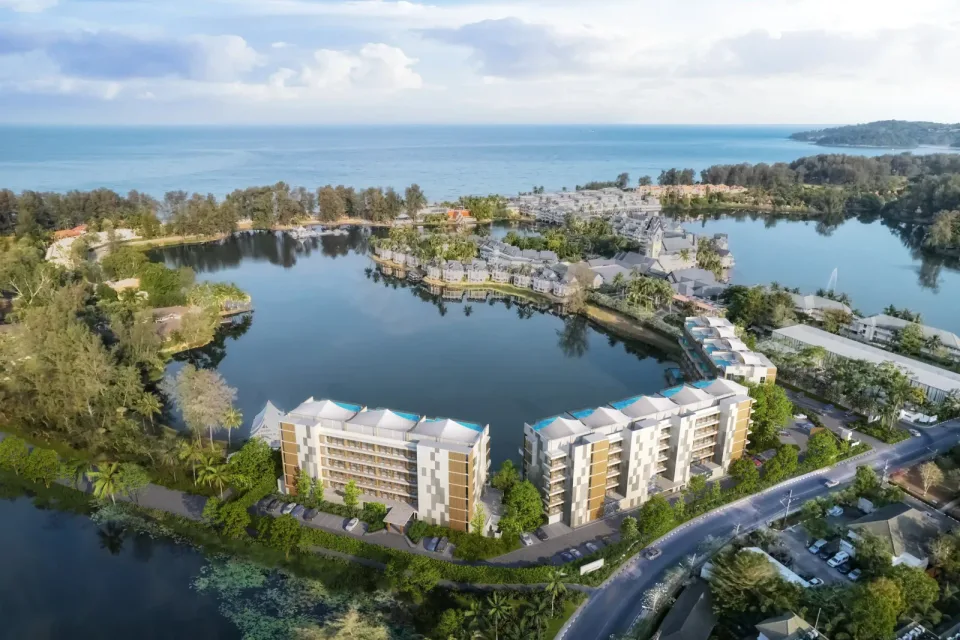
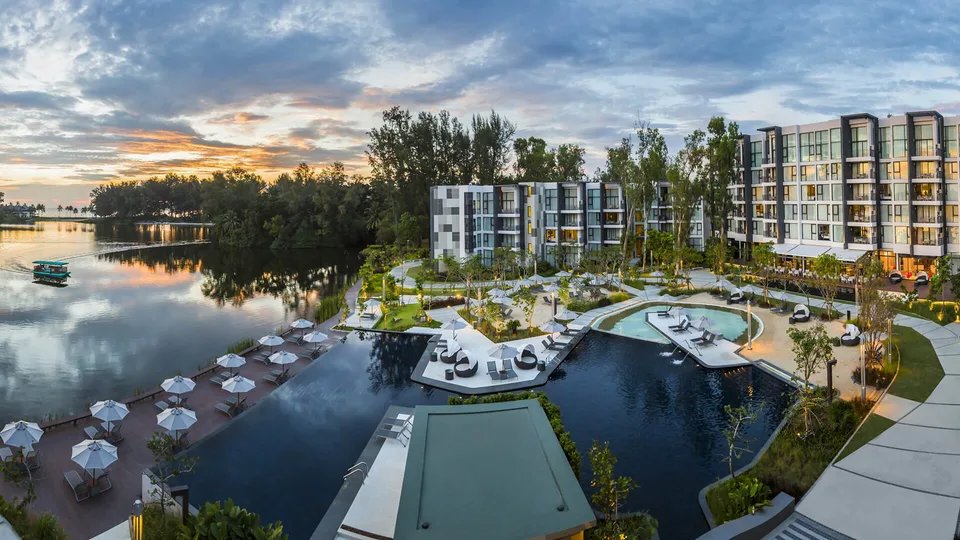
Cassia Phuket is the most affordable entry point into the Laguna Phuket ecosystem, with secondary-market units available from THB 5.75M (~$160K). Completed in 2019, this 104-unit development offers 1-bedroom and 2-bedroom condominiums with a hotel-managed rental pool programme, making it one of the few ways to own a yield-generating Banyan Group property at sub-$200K price points. This guide covers pricing, rental yield reality, who rents Cassia, and how it compares to premium Laguna alternatives.
Get Cassia Phuket market data
MORE Group is a Phuket-based property team covering Cassia secondary market. 0% buyer commission, legal support, free property tour.
What Is Cassia Phuket?
Cassia Phuket specifications:
- Total units: 104
- Status: Completed 2019 (fully operational)
- Location: Laguna Phuket, Cherng Talay, Phuket
- Unit types: 1BR (40 sqm, 54 sqm), 2BR (62 sqm, 75 sqm)
- Secondary market price: THB 5.75M-13.5M (~$160K-$375K)
- Rental programme: Hotel-managed pool (Cassia brand)
- Title: Freehold condominium (foreign quota subject to availability)
Why Cassia Is Unique in the Laguna Market
Cassia’s affordability relative to Laguna peers stems from several factors:
- No sea view / beachfront premium: Cassia is positioned within the Laguna estate but without direct sea views or beachfront access
- Smaller unit sizes: 40-75 sqm is compact even by Phuket standards
- Older construction: Completed 2019 vs newer 2026-2027 projects
- Lifestyle brand positioning: Cassia is explicitly the “affordable” Banyan Group brand
However, owners still enjoy all Laguna Phuket estate benefits: golf course access, Banyan Tree Spa access, Boat Avenue, Porto de Phuket, and Bang Tao Beach.
Cassia Rental Programme: How It Works
Programme Structure
Owners opt their unit into the Cassia rental pool. The property is then marketed and managed as part of the Cassia Phuket hotel operation, appearing on major booking platforms (Booking.com, Agoda, Expedia) under the Cassia brand.
Revenue generated by the entire pool is distributed to participating owners pro-rata based on unit size and participation nights. This pooled model smooths out individual unit occupancy variance, a high-performing week benefits all pool participants.
Revenue Split
Typical Banyan Group managed rental programmes distribute 60-70% of gross rental revenue to owners, retaining 30-40% for management, maintenance, and operations. On a THB 6M ($168K) Cassia unit generating THB 450,000 ($13,761) gross rent per year:
- Owner receives approximately THB 270,000-315,000 ($8,257-$9,633)
- Gross yield: approximately 7.5%
- Net yield (post-management): approximately 4.5-5.25%
Who Rents Cassia Phuket?
Understanding the guest profile is critical for yield projection:
- Budget-conscious Laguna visitors: Guests who want Laguna estate access without Banyan Tree or Angsana pricing
- Family groups: 2BR units accommodate families at sub-$200/night rates that Laguna alternatives can’t match
- Corporate / extended stay: Businesses placing employees in Phuket for weeks or months prefer Cassia’s apartment-style setup over hotel rooms
- Repeat Phuket visitors: Guests familiar with Laguna who book through established channels
Cassia’s ADR (average daily rate) is significantly below Angsana Oceanview or Banyan Tree, typically $80-$180/night vs $250-$600+ for Angsana. The volume model compensates: higher occupancy rates at lower ADR.
Cassia as a Lifestyle Investment
- Personal use: An owner can block personal-use weeks while keeping the unit in the pool for the rest of the year
- Annual retreat at cost: At $160K-$375K capital invested and net yield covering annual costs, a 2-3 week annual personal stay effectively becomes “free” once the investment is performing
- Laguna lifestyle at accessible price: Access to Bang Tao Beach, Laguna Golf, Banyan Tree Spa at entry prices unavailable elsewhere in the estate
For buyers who prioritise lifestyle flexibility alongside yield, particularly those not yet ready to commit $1M+, Cassia occupies a unique position in the Laguna market.
Capital Appreciation: What Has Cassia Done Since 2019?
Buyers who purchased Cassia at launch pricing in 2017-2018 at approximately THB 4.5M-9M and are now selling at THB 5.75M-13.5M have achieved cumulative appreciation of roughly 28-50% over 6-8 years, broadly consistent with Laguna area trends.
Future capital appreciation from current secondary market prices depends on:
- Broader Laguna price growth (historically 5-6%/year)
- Cassia-specific demand drivers (rental performance, Laguna brand sentiment)
- Competition from newer, higher-spec projects in the Lakelands masterplan
Key Risks for Cassia Investors
Older building: 2019 completion means Cassia is now 7 years old, not ancient, but newer Laguna projects will have fresher specifications and more modern amenities.
Limited upside from brand: Cassia is explicitly the “affordable” Banyan Group brand. It will never command Angsana or Banyan Tree ADRs, capping yield upside.
Management dependency: Cassia’s yield case depends heavily on the managed rental programme continuing to perform. Changes to management terms or programme structure affect returns.
Pros and Cons
Pros
- The most accessible entry into the Laguna ecosystem, from THB 5.75M on the secondary market
- Completed in 2019, so the juristic accounts, the reserve and a real letting record can all be read
- 104 units is a functioning scale without being anonymous
- The rental programme is operating rather than promised, with statements you can ask for
- The unit transfers on a timetable you and the seller set, and it can be earning within the month
What to consider:
- No sea views or beachfront premium, interior Laguna location
- Smaller units (40-75 sqm) limit lifestyle use for longer stays
- Older building (2019) relative to new Lakelands launches
- Competition from new Lakelands supply may affect occupancy
- Net yield of 4-5.5% after fees requires realistic expectations
Cassia’s position: the accessible end of an operating estate
Cassia is Laguna’s entry point, and that is genuinely useful. It gives access to the estate’s infrastructure and reservation network at a considerably lower ticket than the flagship products, which is a real proposition for a buyer who wants the estate rather than a beachfront address.
The trade is that you are in the estate’s most volume-oriented product. More units means more owners letting the same thing, so in-building competition is higher and individual pricing power lower. The counter is that Cassia’s rental programme is operated rather than owner-managed, which coordinates rates across participating units instead of leaving owners to undercut each other.
What to ask about the programme
Whether distribution is pooled across all participating units or calculated on your own unit’s bookings, because that determines whether a well-positioned unit subsidises a weaker one or the reverse. Then the owner-usage allowance, the blackout dates over peak weeks, and the notice period.
Ask for a worked twelve-month statement on comparable Cassia inventory showing gross, every deduction itemised, and the net actually paid to owners. On a pooled programme the number that matters is what reached accounts, not what the building generated.
The estate charges, which are permanent
Estate-level charges are billed whether or not you use the facilities, and they continue for as long as you own. Ask for the current figure, its three-year history, and what capital works the estate has scheduled. On a long hold that annual line matters more than the difference in entry price between Cassia and a comparable independent building.
Ask finally how many Cassia units are already in the operated programme, since that is the pool your distribution is calculated against.
The rental pool programme: what to establish before buying in
Cassia’s yield comes through a hotel-managed pool rather than from letting the unit yourself, and the programme’s terms decide the return more than the unit does.
| Question | Why it decides the yield |
|---|---|
| Is income pooled across units, or unit-specific? | Pooled means your unit’s performance is not your income |
| What share does the operator take, on gross or net? | The two produce very different numbers on the same revenue |
| Which costs are charged back on top? | Cleaning, linen, utilities and marketing can sit either side |
| How many owner nights, and in which weeks? | Peak weeks blacked out changes what you actually own |
| Can you opt out and let it yourself? | If not, the programme’s rate is the only rate you will ever get |
| What are the estate charges, separately? | They are permanent, and they run whether the unit lets or not |
From about THB 5.75M on the secondary market, ask for the last two years of actual distributions per unit, not a projected yield. On a completed 2019 building that record exists.
Who this suits
- A buyer who wants the Laguna address at the accessible end. That is the whole proposition, and it is a real one.
- A hands-off owner. The programme runs the letting; if you wanted to manage a unit yourself, this structure works against you.
- Someone buying a compact unit deliberately. At 40 to 75 sqm these are small by Phuket standards, which suits the couple-and-short-stay market and rules out families.
It does not suit an investor who wants control of pricing and calendar, or one whose model needs the unit’s own performance to be the unit’s own income.
Frequently Asked Questions
The accessible entry point, which is genuinely useful: it gives access to the estate's infrastructure and reservation network at a lower ticket than the flagship products. The trade is that you are in the estate's most volume-oriented product, so in-building competition among owners is higher.
As an operated programme rather than a private manager arrangement, which is why the fee is higher and why the owner-usage clause matters. Ask for the night allowance, the blackout dates over peak weeks, the notice period, and whether distribution is pooled across participating units or based on your own unit's bookings.
Within the building's 49% foreign-quota floor area, measured by area rather than unit count and consumed as foreign buyers register. Ask for a dated letter from the juristic person stating remaining square metres for the specific unit, since general availability is not an allocation.
Ask for the operated programme's actual twelve-month distribution on comparable units rather than a projected figure, with the operating deductions itemised. On a pooled programme the number that matters is what reached owners' accounts, not the gross the building generated.
For: estate infrastructure that exists today, a recognised name at resale, and the lowest entry into Laguna. Against: estate charges you pay whether or not you use the facilities, and a volume product where your competition at letting and resale is the other owners in the same building.
Read Also:
- Proof of Funds and FET
- Condo Transfer Fees in Thailand
- Foreign Quota in Thai Condominiums
- Due Diligence, Step by Step
- Best Areas to Buy in Phuket
- Documents to Check Before Buying
- Phuket Property Market Outlook
Ask what the operated programme’s owner-usage allowance is in nights, and which weeks are excluded, before treating the property as available to you.
Ask finally what the estate charges are on top of the building’s own CAM, since inside Laguna both apply and a sales conversation usually mentions only one of them.
Both are obtainable in writing before you reserve.
Live developer data · Phuket specialist reply
Check Availability, Quota and Floor Plans
Send your contact and budget. We will reply with current stock, payment plan and foreign buyer notes.

MORE Group Editorial
Phuket Real Estate Experts
The MORE Group team has helped 500+ European and American buyers purchase property in Thailand. We provide legal support, 0% commission, and on-the-ground expertise with 8 years in the Phuket market.
About MORE Group →Check Availability, Quota and Floor Plans
Send your contact and budget. We will reply with current stock, payment plan and foreign buyer notes.
