Prices and availability
Today's price list for this off-plan project
We send the current unit list, the payment schedule and the ownership terms, so you can choose a unit with today's numbers.
Current availability
Free units and developer prices, from 8M THB.
Foreign quota
We confirm that your unit sits within the 49% foreign freehold quota.
Payment schedule
Deposit, instalments and transfer timing for your unit.
Updated
Page updated October 2026. The price list we send is today's.
What Are the Key Facts for Laguna Lakelands Waterside Phuket?
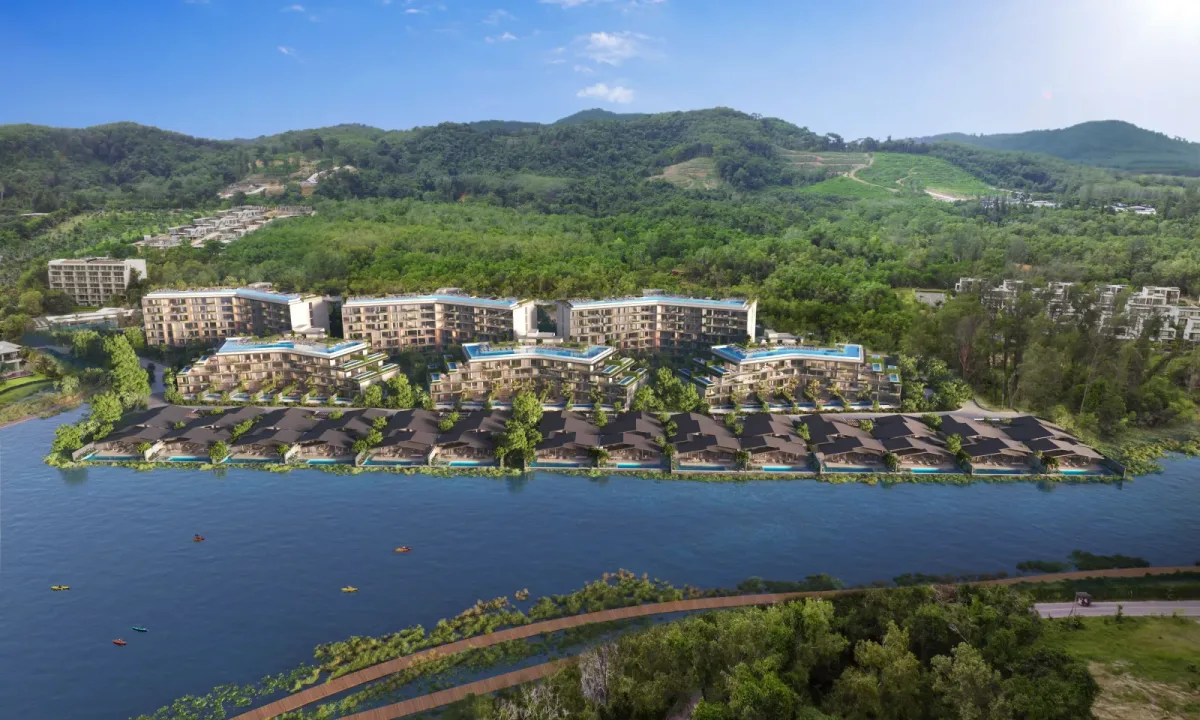
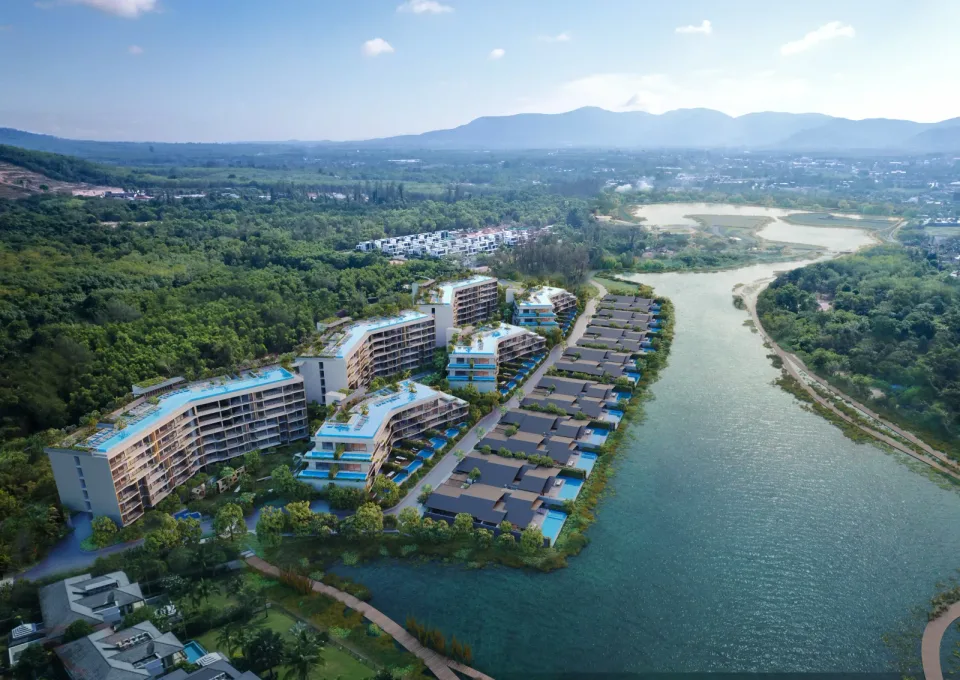
Laguna Lakelands Waterside, also sold as Lakeview Residences, is a low-rise condominium in Laguna Lakelands, the new lake district the Laguna Phuket developer is building next to the original estate. Instead of beach or golf views it looks over the lakes and forest, which gives it a calmer, more residential feel than the beachfront Laguna stock. The developer’s own page now carries the Waterside name; some listings still call the same buildings Laguna Lakelands Phase 2, and that name redirects here.
Entry from 8,000,000 THB ($245k) makes Waterside one of the lowest tickets into a Laguna-branded scheme on our list, below Laguna Golf Residences Hibiscus and the beachfront Bayside residences. According to our project data the scheme is six buildings, three of four storeys and three of seven, with about 306 residences in all.
Compare Laguna Lakelands Waterside with similar projects in Bang Tao/Laguna
MORE Group: 0% commission from buyers, honest analysis, Phuket-based team.
Project Overview
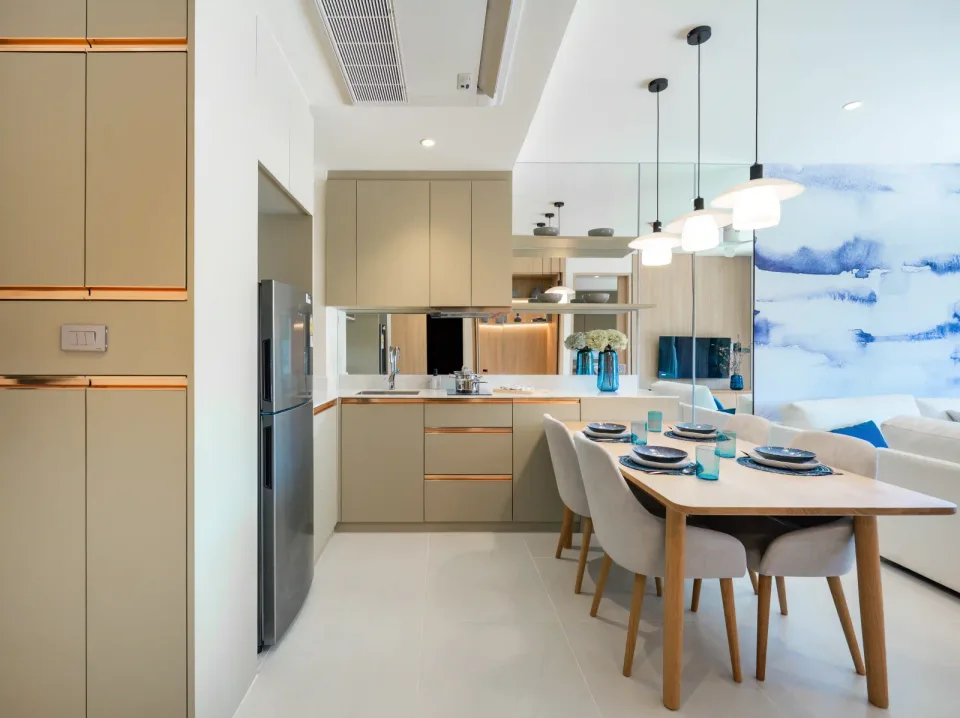
Laguna Lakelands Waterside occupies a quieter, more residential part of the Laguna Lakelands masterplan, among lakes, gardens and forest trails, away from the hotel strip. Layouts run from 48 square metre one-bedrooms to three-bedrooms of over 250 square metres, and some residences have private pools, rooftop gardens or duplex layouts. Shared facilities include rooftop pools, sky parks, gardens, a fitness centre, a children’s room, concierge and 24-hour security. This makes Waterside particularly suited to long-term residents and owners who will use the home themselves for extended periods.
Get the current Laguna Lakelands Waterside price list
Prices and availability change weekly. Our advisors have live data.
Location and Area
Waterside sits in Choeng Thale, Thalang district, on the lake system of Laguna Lakelands. According to our project data Bang Tao Beach is about 9 minutes by car, the nearest mall about 11 minutes and the airport about 20 minutes. The beach is a drive, not a walk: about 57 minutes on foot. Boat Avenue, Porto de Phuket and the schools of the Bang Tao corridor are within a short drive.
Living Inside a Resort Estate
Owning inside Laguna Phuket means the estate does much of the work of a home. Landscaping, security and the internal roads are run by the estate, the beach shuttle connects the residential zones with the beach club, and the golf course, spas and restaurants of the resort hotels are part of daily life. For owners who spend a few months a year in Phuket, the home is looked after while they are away, and for families HeadStart International School and the Boat Avenue shops are 10 to 15 minutes by car.
At resale, the Laguna name carries weight with international buyers who know the estate from their own holidays, which keeps the buyer pool broad.
Who Waterside Suits
- Extended-stay owners who spend weeks or months in Phuket and want resort services around them
- Families drawn by the schools and the Bang Tao lifestyle infrastructure
- Brand-led investors who want the Laguna reservation network behind their rental income
- First Laguna buyers entering the estate at the lowest ticket before stepping up to a beach or golf residence
What Is Actually on the Price List
Our price list holds 69 released residences, from 8,000,000 to 37,910,000 THB:
| Format | Sizes released | Prices | Per square metre |
|---|---|---|---|
| One-bedroom | 48 to 68 sqm | 8,000,000 to 13,280,000 THB | 166,667 to 195,294 THB |
| Two-bedroom | 70 to 114 sqm | 11,380,000 to 18,130,000 THB | 155,833 to 199,211 THB |
| Three-bedroom | 122 to 260 sqm | 21,920,000 to 37,910,000 THB | 145,808 to 219,542 THB |
Source: the MORE Group price list for this scheme.
Read the table by the right-hand column. The cheapest square metre in the release is in the large three-bedrooms, and the dearest is also a three-bedroom, so the spread inside one format is wider than the gap between formats. Floor, view over the water and a private pool explain most of it, which is why two units of the same size can sit far apart on the list.
What We Do Not Quote
No yield or occupancy figure is quoted on this page. Thailand publishes no letting register for privately owned units, so occupancy and achieved nightly rates exist only in the books of whoever manages a building. If you intend to let, ask for the written terms of any rental programme on offer (owner-use nights, the fee split, and whether income is pooled across the building or earned unit by unit) and judge the unit on those, not on a brochure range.
The case for Waterside rests on what can be checked: the entry price against the beachfront Laguna stock below, the setting on the lakes and the developer’s record on the neighbouring estate.
Laguna Projects on This Site
Laguna Phuket offers several residential lines, and Waterside is the most accessible way into the estate. Entry prices are the published figures on each project’s page on this site:
| Project | Format | Entry price |
|---|---|---|
| Laguna Lakelands Waterside | Lakeview condominium | 8,000,000 THB |
| Laguna Aster | Condominium | 10,500,000 THB |
| Laguna Golf Residences Hibiscus | Golf residences | 12,880,000 THB |
| Laguna Beach Residences Seashore | Beach residences | 22,700,000 THB |
| Laguna Beach Residences Bayside | Beachfront residences | 27,700,000 THB |
| Laguna Lakelands Waterfront | Pool villas | 54,800,000 THB |
The same estate, the same shuttle and the same reservation network run through all of them; what changes is the outlook and the distance to the sand.
Payment Plan
| Stage | Share | On the 8,000,000 THB entry unit |
|---|---|---|
| First payment | 20% | 1,600,000 THB |
| Second payment | 20% | 1,600,000 THB |
| Third payment | 20% | 1,600,000 THB |
| Fourth payment | 20% | 1,600,000 THB |
| Fifth payment | 20% | 1,600,000 THB |
Our project data holds the plan as five equal payments of 20%, and the build is due to finish in the third quarter of 2027. Ask for the milestone attached to each payment in the contract. For a freehold purchase every payment arrives from abroad in foreign currency, and the FET form from your bank is filed at the Land Department at transfer.
Price List and Rental Programme Terms
The full price list. Resort-brand inventory is priced through authorised partners rather than a public list, and as an authorised partner we send the full schedule across unit sizes and floors, together with recent transaction prices for comparable units.
The rental programme terms. We send the terms of any programme on offer: owner-use nights, the peak-season calendar, and whether distribution is pooled across the building or based on your unit’s bookings, which helps you choose the unit that fits your plans.
Why Buyers Choose Laguna Lakelands Waterside
- Laguna’s amenity ecosystem and reservation network at roughly a third of beachfront entry pricing
- A quieter, more residential zone of the estate, which suits owners planning extended personal stays
- A choice of 69 released residences from one to three bedrooms, with private pools on some of the larger units
- Resort-brand stock resells into a recognisable name rather than an unknown developer
Buying Laguna Lakelands Waterside with MORE Group
A lakeview home at Laguna Lakelands Waterside is bought in five steps, from the first price list to the keys, and we handle every one of them with you.
-
Current price list and free units
We ask the developer for today's price list for Laguna Lakelands Waterside and send you the units that match your budget, with floor plans.
-
Foreign quota on your unit
Foreign buyers hold condo freehold within the 49% foreign quota of the building, counted by floor area. We confirm with the developer that the unit you choose sits inside that quota. How the foreign quota works
-
Reservation and payment schedule
A reservation deposit holds the unit, and the balance follows the developer's payment schedule, which we send with the price list.
-
Transfer and registration
The purchase money arrives from abroad in foreign currency with an FET form, and the unit is registered in your name at the Land Department. The FET form explained
-
After the keys
We stay in touch after handover and help with rental options and a future resale when you want them.
0% buyer commission. Ask for the current price list
Frequently Asked Questions
Laguna Lakelands Waterside is located within the Laguna Phuket integrated resort complex in the Bang Tao area, northwest Phuket. It sits on the Lakelands lake system, about 9 minutes by car from Bang Tao Beach and about 20 minutes from the airport, according to our project data.
Entry pricing starts at 8,000,000 THB ($244,648) for lakeview units. Full pricing across all unit sizes and configurations requires direct inquiry through an authorized sales partner such as MORE Group.
That depends on the terms of the rental programme for your unit, which we send in writing. No yield figure is quoted here: Thailand publishes no letting register for privately owned units, so occupancy and nightly rates for this scheme are not measured anywhere we can cite.
Laguna Lakelands Waterside is under construction in Laguna Lakelands. Our project data gives five equal payments of 20% and completion in the third quarter of 2027, and we send the latest construction update together with the price list.
Yes. Foreign buyers can purchase condominium units at Laguna Lakelands Waterside under the 49% foreign ownership quota, which allows freehold title. We prepare the Sale and Purchase Agreement with you, with our legal support.
Read Also:
Live developer data · Phuket specialist reply
Check Availability, Quota and Floor Plans
Send your contact and budget. We will reply with current stock, payment plan and foreign buyer notes.

MORE Group Editorial
Phuket Real Estate Experts
The MORE Group team has helped 500+ European and American buyers purchase property in Thailand. We provide legal support, 0% commission, and on-the-ground expertise with 8 years in the Phuket market.
About MORE Group →Check Availability, Quota and Floor Plans
Send your contact and budget. We will reply with current stock, payment plan and foreign buyer notes.
