Best Property in Thailand for Retirement 2026: Phuket, Chian
Best Thailand property for retirement in 2026: low-maintenance condos from $100K, LTR visa, healthcare access, rental income to fund lifestyle. Honest area c...
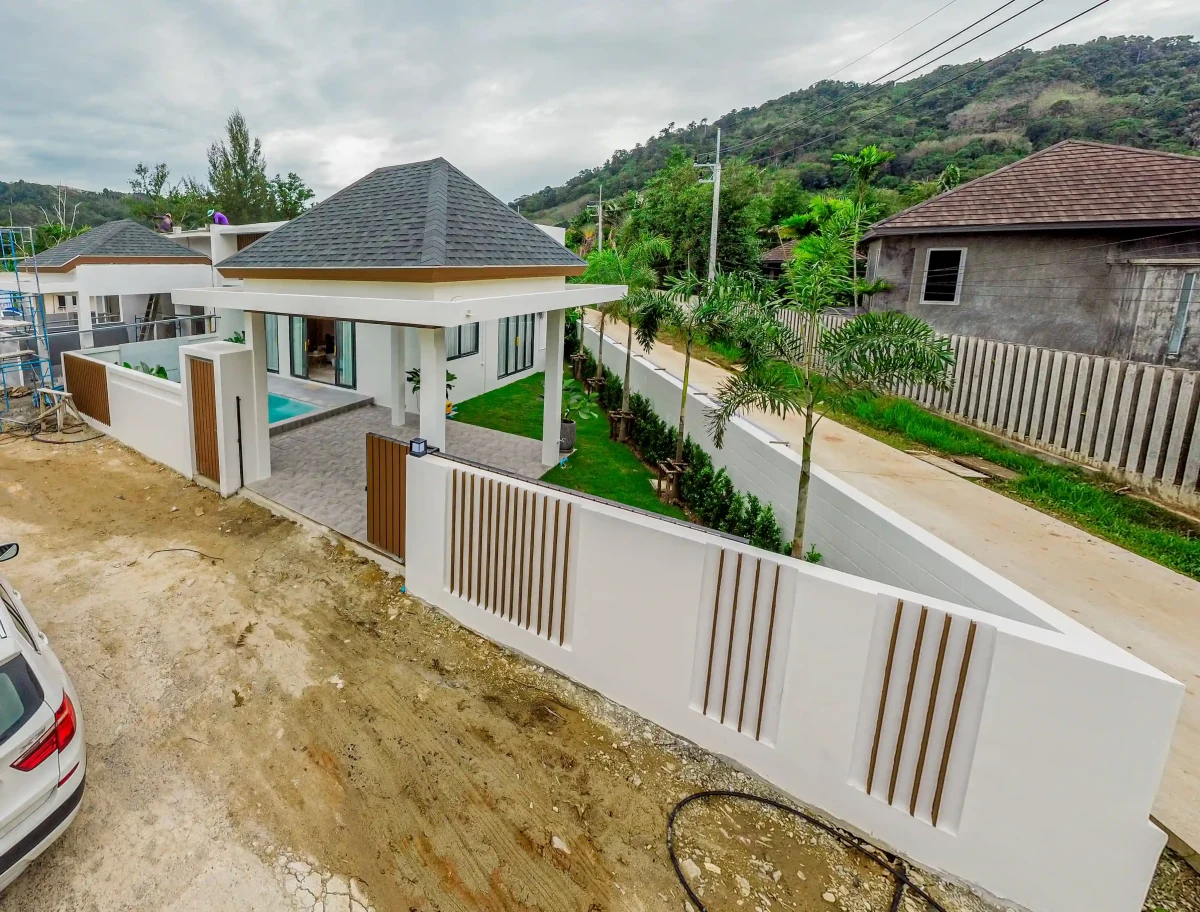
Best Property in Thailand for Retirement 2026: Phuket, Chiang Mai, Hua Hin
Quick answer: Retiring to Thailand works in 2026 when you match property type to visa plan, healthcare access, and rental income needs. South Phuket suits active retirees who want beach plus 6-9% gross yields; Hua Hin suits quiet budgets; Chiang Mai suits lowest cost of living. Start with buying property Thailand retirement and Phuket LTR guide.
Retiring to Thailand is a plan that hundreds of thousands of foreigners have already executed successfully, and 2026 is arguably the best year yet to make that move. Visa options have expanded, healthcare infrastructure has improved, and a well-chosen property can generate enough rental income to cover a significant portion of your living costs.
But the decision of where and what to buy matters enormously. A condo in Chiang Mai serves a completely different lifestyle than a pool villa in Phuket’s south. This guide gives you an honest comparison across Thailand’s three main retirement destinations, along with the legal and financial framework you need to buy with confidence.
Why Thailand Still Works for Retirees in 2026
The fundamentals that drew early expat retirees to Thailand haven’t changed, they’ve improved:
- Cost of living remains significantly lower than Western Europe, Australia, or North America. A comfortable retirement lifestyle in Phuket (international restaurants, occasional golf, healthcare, domestic help) costs roughly $2,000-$3,500 per month for a couple.
- Healthcare is excellent. Bangkok Hospital Phuket, Bumrungrad International Bangkok, and Chiang Mai Ram Hospital are internationally accredited and significantly cheaper than equivalent private care in the UK, US, or Australia.
- Property yields on well-positioned condos and villas are strong enough (6-10%) to make property a genuine income asset, not just a lifestyle purchase.
- Visa framework has been restructured with the LTR (Long-Term Resident) visa offering 10-year residency for qualifying retirees.
The LTR Visa: What Retirees Need to Know
Thailand’s Long-Term Resident (LTR) visa was introduced in 2022 and has been progressively expanded. For retirees, the relevant category is the Wealthy Pensioner track:
Requirements:
- Passive income of at least $40,000 per year (pension, dividends, rental income), OR
- A combination of passive income of at least $25,000 per year plus investment of $250,000 in Thai property, bonds, or funds
What you get:
- 10-year visa (renewable)
- Work permit eligibility (up to 20 hours per week)
- 90-day reporting requirement replaced by annual reporting
- Personal income tax exemption on foreign-sourced income brought into Thailand
- Fast-track immigration lanes at Thai airports
For buyers who meet the $250,000 investment threshold through property, the LTR visa essentially converts a property purchase into a long-term residency solution, a significant upgrade over the standard Non-Immigrant O-A retirement visa.
The standard retirement visa (Non-OA) remains available for those aged 50+ with a minimum bank balance of 800,000 Thai Baht (approximately $22,000) or income of 65,000 Baht per month. It’s renewable annually and remains a practical option for buyers who don’t meet LTR thresholds.
Looking for the right property in Phuket?
Our experts send a shortlist within 2 hours. 0% buyer commission.
Best Retirement Destinations in Thailand
Phuket South: The Active Retiree’s Choice
Rawai, Nai Harn, and Chalong in south Phuket have emerged as the most popular retirement areas on the island. They sit away from the tourist-heavy west coast, with calmer roads, lower prices, and a genuine residential community of long-term expats.
Why it works for retirees:
- Nai Harn beach is calm, clean, and walkable from most residential areas
- Rawai seafront has fresh seafood restaurants and a relaxed pace
- Chalong has the island’s main sailing club, dive operators, and several international restaurants
- Bangkok Hospital Phuket (one of Thailand’s best) is 20 minutes from most south Phuket locations
Property options:
- Freehold condos from $90,000 (studio) to $250,000 (2BR with sea view)
- Pool villas on leasehold from $250,000-$600,000
- Low-maintenance condo in a managed building is the most popular choice for retirees who travel or plan to spend part of the year elsewhere
Expat community: South Phuket has a well-established international community, Scandinavian, British, Australian, Russian. Language barrier is minimal in daily life.
Hua Hin: The Quiet Achiever
Hua Hin is Thailand’s oldest resort town, 200km south of Bangkok on the Gulf Coast. It has long been popular with Thai royalty and Bangkok weekenders, and now has a significant expat retirement community.
Why it works for retirees:
- Significantly cheaper than Phuket, freehold condos from $70,000, pool villas from $180,000
- Good infrastructure: hospital, golf courses (6 courses within 30km), international supermarkets
- Calmer, more conservative atmosphere, less party tourism
- 3-hour drive from Bangkok’s international airports
Property options:
- Condo market is active, freehold units available, strong supply
- Pool villa communities common, both freehold Thai company structures and leasehold
Watch out for: Hua Hin’s rental yield potential is lower than Phuket. If you’re counting on rental income to fund your lifestyle, Phuket is the stronger choice. Hua Hin works best for buyers who will primarily use the property themselves.
Chiang Mai: The Cultural and Budget Option
Chiang Mai is Thailand’s second city and the headquarters of the country’s digital nomad and long-term expat community. It’s in the north, no beaches, but for retirees who prefer mountains, culture, and a lower cost of living, it’s genuinely excellent.
Why it works for retirees:
- Lowest cost of living of the three destinations, a comfortable retirement lifestyle is achievable from $1,500/month
- Excellent hospitals (Chiang Mai Ram, Bangkok Hospital Chiang Mai, McCormick Hospital)
- Rich cultural life, temples, night markets, cooking schools, art scene
- International airport with direct connections to Bangkok, Singapore, Kuala Lumpur, and several Chinese cities
Property options:
- Freehold condos from $60,000 (studio) to $180,000 (2BR)
- The condo market is smaller and less internationally liquid than Phuket, resale can take longer
Watch out for: Chiang Mai has seasonal air quality issues from March to May due to agricultural burning. Some retirees choose to travel during this period. Also, the seasonal heat (April) is intense, and Chiang Mai lacks beach access.
Looking for the right property in Phuket?
Our experts send a shortlist within 2 hours. 0% buyer commission.
Property Types That Work Best for Retirees
Low-Maintenance Condo in a Managed Building
The most popular choice. You pay common area maintenance (CAM) fees, typically $1-$3 per sqm per month, and the building management handles security, pool, garden, and facilities. When you travel, you can lock and leave.
Many managed condo developments in Phuket also offer rental management programs where the property is rented on your behalf while you’re away, generating income to offset CAM fees and potentially more.
Best for: Retirees who spend part of the year in Thailand and part elsewhere, or those who want minimal property management responsibility.
Pool Villa (Leasehold)
A private pool villa is the dream retirement property for many, morning swims, indoor-outdoor living, space for visiting family. In south Phuket and Hua Hin, good pool villas are available from $250,000 on leasehold.
The ongoing costs are higher: pool maintenance, garden upkeep, security, utilities. Many retirees hire a part-time property manager ($200-$400/month) to handle this.
Best for: Retirees who will primarily use the property, who want privacy, and who have the budget for ongoing maintenance.
Using Rental Income to Fund Retirement
A well-positioned condo in Phuket generating 7-9% gross yield can meaningfully offset living costs. For example:
- $200,000 condo at 8% gross yield = $16,000/year gross ($1,333/month)
- After management fees (12%) and Thai income tax (15% withholding): approximately $11,500/year net ($960/month)
This doesn’t fully fund a retirement in Phuket (where lifestyle costs are $2,000-$3,500/month for a couple), but it covers a significant portion, the equivalent of a part-time income that requires no active work.
Retirees who own two or three properties in this range can potentially cover living costs entirely from rental income, which is the investment thesis that attracts many buyers to Phuket.
Healthcare: The Non-Negotiable
Healthcare quality is non-negotiable for retirees, and Thailand is well-positioned:
- Bangkok Hospital Phuket, Joint Commission International (JCI) accredited, private rooms, English-speaking doctors across all major specialties
- Bumrungrad International, Bangkok, One of Asia’s most internationally recognised private hospitals
- Chiang Mai Ram Hospital, Strong regional hospital with international patient unit
Costs for routine consultations, specialist appointments, and common procedures are 30-70% below comparable private healthcare in Australia or Western Europe.
Health insurance: comprehensive private health insurance for a 60-year-old is typically $2,000-$5,000/year depending on coverage and pre-existing conditions. This is significantly cheaper than equivalent coverage in most Western countries.
Summary: Area Comparison for Retirees
| Factor | Phuket South | Hua Hin | Chiang Mai |
|---|---|---|---|
| Beach access | Yes (Nai Harn, Rawai) | Yes (Gulf Coast) | No |
| Entry price (condo) | From $90,000 | From $70,000 | From $60,000 |
| Rental yield potential | 6-9% | 4-6% | 4-6% |
| Healthcare quality | Excellent | Good | Excellent |
| Expat community | Large, international | Large, mostly European | Very large, diverse |
| Cost of living | Medium | Low-Medium | Low |
| Best for | Active, investment-minded | Quiet lifestyle | Culture, budget |
Red flags for retirement property purchases
| Red flag | Why retirees get hurt |
|---|---|
| Leasehold villa without renewal terms | Exit at age 80+ becomes costly |
| Off-plan without developer completions | Delays clash with relocation timeline |
| No healthcare drive test | Emergency access matters more than pool photos |
| Over-sized villa for two people | Maintenance outlasts energy |
| Buying without visa plan | Property does not auto-grant long stay |
| 30-day visa assumption | Use 60-day visa exempt rules for scouting, long stay needs proper visa |
Insider tip: Retirees who block peak rental weeks for personal use often underestimate lost income, model owner calendar before choosing “income-funded retirement” thesis. Read due diligence process Thailand step by step before any off-plan reservation.
Buyer scenarios: Scenario A and Scenario B
Scenario A: Income-assisted retirement (Phuket south, $180K-$280K)
Buy freehold 1-2BR managed condo in Rawai or Nai Harn. Rent 7-9 months, occupy 3-5 months. Target 5-7% net on rented months. Requires LTR or Non-OA visa planning and health insurance quote before purchase. See buying for retirement plus rental.
Scenario B: Full-time quiet retirement (Hua Hin or Chiang Mai, $90K-$200K)
Purchase lower-ticket condo for owner-occupier use, minimal rental. Prioritise hospital proximity and expat community over yield. Chiang Mai suits budget; Hua Hin suits Gulf beach without Phuket price tag. Compare best Thai market retirement if undecided on city.
Retirement cost table (couple, monthly indicative 2026)
| Expense | Phuket south | Hua Hin | Chiang Mai |
|---|---|---|---|
| Housing (owned, CAM) | $350-$700 | $250-$500 | $200-$400 |
| Healthcare insurance | $250-$450 | $250-$450 | $250-$450 |
| Food + dining | $600-$1,000 | $500-$800 | $400-$700 |
| Transport | $200-$400 | $150-$300 | $100-$250 |
| Total comfortable | $2,000-$3,500 | $1,700-$2,800 | $1,500-$2,400 |
Pros and cons of retiring with Thai property
| Pros | Cons |
|---|---|
| Lower living costs vs West | Visa rules change, monitor policy |
| Quality private healthcare | Baht exposure on pensions |
| Rental can offset CAM | Villa maintenance if over-sized |
| Active expat communities | Seasonal air (Chiang Mai Mar-May) |
| Freehold condos available | Legal diligence non-optional |
Retirement property in Thailand succeeds when healthcare, visa, and maintenance are solved before the deposit, not after the view seduces you on a two-week holiday.
Healthcare access by retirement zone
| Facility | Phuket | Hua Hin | Chiang Mai |
|---|---|---|---|
| Bangkok Hospital tier | Phuket branch | Hua Hin clinic + Bangkok drive | Chiang Mai branch |
| JCI accredited | Yes (Phuket) | Limited local | Yes (Chiang Mai Ram) |
| English-speaking GPs | Wide | Moderate | Wide |
| Emergency response | Good west coast | Good | Good urban |
Visa planning reminder for retirees
Standard Non-OA retirement visa remains available at 50+ with 800,000 THB bank balance or 65,000 THB monthly income proof. LTR Wealthy Pensioner track suits buyers with $40,000+ passive income or $25,000 income plus $250,000 Thailand investment. Property purchase alone does not replace visa compliance, plan immigration before furniture shopping. Short scouting trips use 60-day visa exempt entry for many nationalities; do not confuse tourist stay limits with retirement residency.
Closing checklist for retirement buyers
- Visa pathway confirmed independent of SPA marketing
- Healthcare facility visited within 30 minutes of property
- Freehold quota or leasehold terms reviewed by lawyer
- CAM and maintenance budget fits fixed income
- Rental management contract read if funding lifestyle
- Emergency flight insurance and repatriation plan in place
Frequently Asked Questions
The most common options are the Non-Immigrant O-A (retirement) visa for those aged 50+ with 800,000 THB in a Thai bank account or monthly income of 65,000 THB, and the LTR Wealthy Pensioner visa for those with passive income over $40,000/year or income of $25,000/year plus $250,000 invested in Thailand. The LTR visa offers 10-year residency and significant advantages.
Chiang Mai has the lowest property prices, freehold condos from around $60,000, combined with the lowest cost of living among major retirement destinations. Hua Hin is the second most affordable. Phuket is more expensive but offers stronger rental yield potential if you want income from the property.
Yes. Many retirees spend 3-6 months in Thailand and rent their property for the rest of the year. Managed condo buildings typically offer rental management programs handling bookings, check-in, cleaning, and maintenance. Net yields of 5-7% are realistic in well-managed Phuket buildings.
Yes. Bangkok Hospital Phuket, Bumrungrad Bangkok, and Chiang Mai Ram are internationally accredited facilities with English-speaking doctors and modern equipment. Medical costs are 30-70% below comparable private care in Western countries. Private health insurance for a 60-year-old costs approximately $2,000-$5,000 per year.
Key risks include: leasehold property (for villas) where you don't own the land; developers who don't complete off-plan projects; currency fluctuation affecting the value of income or assets in home currency; and changes to visa regulations. Using a reputable Thai property lawyer, buying freehold condo title where possible, and choosing established developers significantly mitigates these risks.
MORE Group keeps best thailand property retirement 2026 data current with monthly developer checks on price, quota and handover risk in 2026. Request a refreshed shortlist if your wire date moves.

MORE Group Editorial
Phuket Real Estate Experts
The MORE Group team has helped 500+ European and American buyers purchase property in Thailand. We provide legal support, 0% commission, and on-the-ground expertise with 8 years in the Phuket market.
About MORE Group →Get Your Phuket Property Shortlist
Tell us your budget and goals. Our expert sends a shortlist within 2 hours.