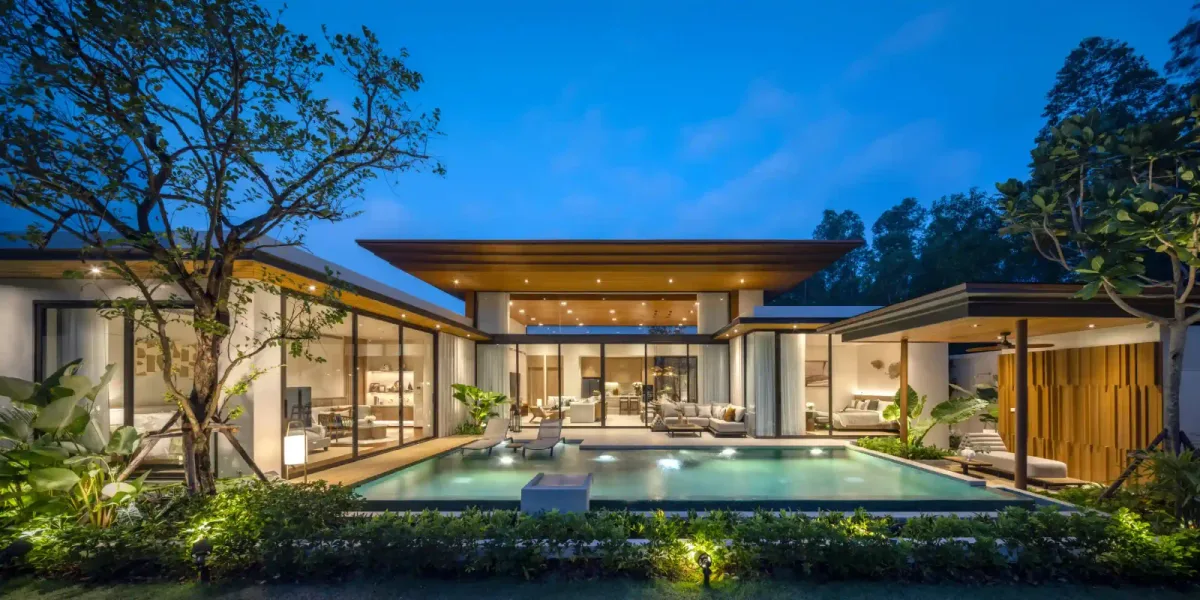
Yes. As of October 2026, comparable Phuket rental properties have historically earned gross yields of 7-12% a year (5-8% net after fees), a foreigner can hold freehold title in a registered condominium within the 49% floor-area quota, and 12,054 priced apartments sit on our price list at a median 6,750,000 THB; and the island runs one international airport that carried more than 17 million passengers in 2024. For foreign investors, freehold condo ownership is fully legal and straightforward. The key is choosing the right location, structure, and entry price.
MORE Group benchmark based on the rental history of properties owned by our clients in Phuket. Past results do not guarantee future returns: changes in Thai law, tourism flows, global events and the market can change income.
This page belongs to Phuket Property Investment Master Guide 2026.
Phuket Investment Snapshot: Key Numbers for 2026
| Metric | Figure |
|---|---|
| Average gross rental yield | historically 7-12% p.a. (MORE Group benchmark) |
| Guaranteed rental programs | From 6% p.a., according to the developers |
| Entry price (studio condo) | From $80,000 (Rawai / Chalong) |
| Mid-range condo (Bang Tao) | $150,000-$400,000 |
| Luxury villa | $300,000-$2,000,000+ |
| Transfer fee | 2% of appraised value |
| Specific business tax (if sold less than 5 yrs) | 3.3% |
| Stamp duty (alternative to SBT) | 0.5% |
| Buyer commission at MORE Group | 0% |
| Tourist arrivals (Phuket, 2024) | ~10 million |
MORE Group benchmark based on the rental history of properties owned by our clients in Phuket. Past results do not guarantee future returns: changes in Thai law, tourism flows, global events and the market can change income.
Looking for the right property in Phuket?
Comparing options? Our experts give honest, no-pressure analysis.
Why Phuket Outperforms Most Markets?
2. Legal Freehold Ownership for Foreigners
Foreign nationals can own a condominium unit freehold under the Thai Condominium Act, provided the building’s foreign quota (49% of total floor area) has not been exceeded. This is genuine, title-deed ownership, not a lease, not a nominee structure. The process is well-established and investor-friendly.
For villas and landed property, foreigners typically use long-term leasehold (30+30+30 years) or purchase through a Thai company. Both structures are widely used and, when set up correctly with proper legal documentation, are stable and secure.
3. Yields That Western Markets Can’t Match
In most European or North American markets, a 3-4% net rental yield is considered acceptable. In Phuket, gross yields of 7-12% have historically been standard, and net yields of 5-8% after management fees. Entry cost is the other difference: the median priced apartment on our list is 6,750,000 THB, roughly $206,000, at 150,000 per square metre. Many developers offer guaranteed rental programmes at 6-8% p.a. for the first 3-5 years, backed by a rental pool management structure, according to the developers. Management fees are the part of this that is quotable in advance: 18-25% of gross on a managed condominium and 25-30% on a villa. For the method and the denominator by area in Phuket 2026](/guides/phuket-property-rental-yield-by-area-2026/).
MORE Group benchmark based on the rental history of properties owned by our clients in Phuket. Past results do not guarantee future returns: changes in Thai law, tourism flows, global events and the market can change income.
4. Capital Appreciation Potential
Off-plan properties in well-located projects in the Bang Tao, Laguna and Layan corridors have historically delivered 20-40% capital gains by completion, typically 18-36 months from launch. Part of what is real about buying early is the discount, and it is contractual rather than statistical: a developer prices launch stock below the same units later in the build, and that difference is on the price lists you can ask both parties for. The risk you take for it is also concrete. Of 12,054 priced apartments on our records only 871 are finished, so the market you would be joining is mostly a set of promises with handover dates.
MORE Group benchmark based on the rental history of properties owned by our clients in Phuket. Past results do not guarantee future returns: changes in Thai law, tourism flows, global events and the market can change income.
What Are the Risks? (Honest Assessment)
No market is risk-free, and Phuket is no exception.
Foreign ownership restrictions on land: Foreigners cannot own land freehold. While leasehold and company structures are workable, they add legal complexity and require proper due diligence.
Developer risk on off-plan: Buying off-plan means putting capital into a project that hasn’t been built yet. Not all developers complete on time, or complete at all. Choosing established, track-record developers mitigates this significantly.
Currency risk: If you earn in USD or EUR and the Thai Baht weakens, your local returns look better but your home-currency returns are affected. Conversely, THB appreciation has benefited many investors over the long term.
Liquidity: Phuket property is not as liquid as stocks. Selling typically takes 3-12 months. This is an asset class for medium-to-long-term holders (5+ years), not short-term traders.
Management quality: Rental yields depend heavily on management. A poorly managed property in a great location can underperform a well-managed one in a secondary area.
Investment Scenarios: What Returns Look Like
Three scenarios built on the gross yields comparable units have historically earned:
| Scenario | Purchase price | Gross yield, historically | Annual gross income | Management fee | Net income | Net yield |
|---|---|---|---|---|---|---|
| A: Entry-level condo (Rawai/Chalong) | $90,000 | 8% | $7,200 | 20%: -$1,440 | $5,760 | 6.4% |
| B: Mid-range condo (Bang Tao) | $220,000 | 9% | $19,800 | 20%: -$3,960 | $15,840 | 7.2% |
| C: Villa with pool | $450,000 | 10% | $45,000 | 25%: -$11,250 | $33,750 | 7.5% |
MORE Group benchmark based on the rental history of properties owned by our clients in Phuket. Past results do not guarantee future returns: changes in Thai law, tourism flows, global events and the market can change income.
What the same three tickets actually buy, from the price records:
| Ticket | What the list holds |
|---|---|
| ~$90,000 (2,900,000 THB) | Inland at Chalong, Kathu or Wichit, median 29-35 sqm. Below the 35 sqm line, so monthly tenants are largely out and letting is nightly only |
| ~$220,000 (7,200,000 THB) | Bang Tao at its median of 7,017,150, around 46 sqm. Both letting channels open, and 4,589 comparable units for a resale |
| ~$450,000 (14,700,000 THB) | Not a Rawai villa: the cheapest priced villas on our list start near 9,000,000 THB but Rawai’s median is 24,800,000. At this ticket it is a large apartment, 69 sqm at the median across 1,809 units in this band |
Set the scenarios above against these tickets, and check the gross against a comparable unit’s own statements before you buy.
Who Is Phuket Property Ideal For?
Best fit:
- Investors who will underwrite from a comparable unit’s own statements rather than from a headline yield
- Buyers who want a holiday home that pays for itself
- Retirement buyers seeking a warm-climate lifestyle asset with income
- Diversifiers looking for non-correlated assets outside their home country
Less suitable for:
- Buyers needing high liquidity (hold for 5+ years for optimal returns)
- Those unwilling to use professional management
- Investors expecting guaranteed capital gain (appreciation is likely but not guaranteed)
Pros and Cons Summary
Pros:
- Prices per square metre well below comparable beach markets, from 98,550 THB inland to 234,561 in Patong
- Legal freehold ownership available for condos
- Strong tourism infrastructure and growing international demand
- 0% buyer commission at MORE Group
- Lifestyle value: personal use + rental income
- A launch discount against later phases of the same building, which the developer’s own price lists will show you
Cons:
- Foreigners cannot own land freehold
- Developer risk on off-plan projects
- Property management quality varies significantly
- Relatively illiquid compared to financial assets
- Currency and regulatory risk (Thai law can change)
- Rental income taxed in Thailand (progressive rates for individuals)
What are red flags before you invest in Phuket property?
Phuket’s fundamentals are strong; losses usually trace to execution. Treat these as investment red flags:
- Guaranteed yield without audited operator history: a guaranteed percentage for three years may simply be priced into the metre. Compare the scheme against non-guaranteed resales in the same building, per square metre, and see whether the premium is there.
- Foreign quota “almost available”: without juristic confirmation, you cannot register freehold. Walk away until the letter is issued.
- Off-plan developer with no completed Phuket delivery: escrow and track record matter. Ask for handover dates on prior projects, not renderings.
- Management fee quoted without OTA order: gross-to-net spread can halve advertised yield. Demand three sample months.
- Patong micro-location with noise complaints: high gross on paper, poor reviews in practice, slower resale.
- Leasehold villa without registered renewal terms: 30+30+30 must be filed correctly; unregistered leases create exit risk.
Investor checklist:
- Foreign quota or lease registration confirmed
- Developer completion track record (2+ Phuket projects)
- Net yield model with CAM, management, and furnishing
- Tax residency plan (180-day rule)
- Exit liquidity: resales in building last 24 months
- Insurance and juristic rules on short-term rental
Use Phuket property due diligence checklist before reservation.
Market depth: why demand is not only tourism hype
| Driver | 2024-2026 signal | Investment implication |
|---|---|---|
| International arrivals | ~10M to Phuket | Supports ST rental occupancy |
| Airport expansion | Direct routes recovering | Easier owner access + guest inflow |
| Bangkok wealth migration | Second-home buying upcountry | Bang Tao / Laguna liquidity |
| Digital nomad visas | Long-stay renters | Monthly lease demand in Rawai, Cherng Talay |
| Supply pipeline | Selective new launches | Off-plan discount in weaker locations |
Tourism alone does not guarantee yield, operator quality and micro-location still decide outcomes. Two buildings a hundred metres apart can run very different calendars, and the difference is pool, parking, view and the manager rather than the area on the map. Markets with 75-85% peak occupancy have historically still shown 50% in low season where the building lacks pool appeal or parking.
MORE Group benchmark based on the rental history of properties owned by our clients in Phuket. Past results do not guarantee future returns: changes in Thai law, tourism flows, global events and the market can change income.
Capital appreciation: realistic bands
| Entry strategy | Typical hold | Appreciation expectation |
|---|---|---|
| Off-plan launch discount | 24-36 months to completion | Historically 15-35% if location correct |
| Resale ready condo | 5+ years | Historically 3-6% CAGR in prime corridors |
| Villa leasehold | 7+ years | The remaining lease term shortens every year, whatever the market does |
MORE Group benchmark based on the rental history of properties owned by our clients in Phuket. Past results do not guarantee future returns: changes in Thai law, tourism flows, global events and the market can change income.
Appreciation is not contractual. Rental cash flow should justify the purchase even if prices flatline for 3 years.
Financing and cash-buyer advantage
Most foreign buyers purchase cash. Thai mortgage access for non-residents is limited, expect 30-50% LTV where available, higher rates, and longer approval. Cash buyers gain negotiation leverage of 3-8% on resale and faster closings (14-21 days vs 45+ with financing contingencies).
If you need leverage, model home-country refinancing separately; Thai rental income may not service Western mortgage underwriters without history.
Tax and fee drag on total return
| Cost type | Typical range | Impact on $200K condo |
|---|---|---|
| Transfer fee (buyer share ~1%) | 1% effective | $2,000 |
| Annual LBT | 800-2,500 THB | Minimal |
| Rental income tax / WHT | 1-15% of gross | $150-$2,400/year |
| Management + CAM | 25-35% of gross | Largest recurring drag |
| Exit SBT if under 5 years | 3.3% of registered value | Can erase 1 year net yield |
See rental income tax Thailand and cost of owning condo Phuket for full stacks.
Where the gross-to-net gap actually goes
The single most useful thing a prospective buyer can do is stop comparing gross yields and start building the deduction stack in baht. The lines below are the ones that appear on real statements.
| Deduction | Typical basis | Note |
|---|---|---|
| Management fee | 20-35% of gross for full service | Ask what sits inside it and what is billed on top |
| Cleaning per changeover | Fixed per turnover | Does not scale down with unit size or booking value |
| Platform commission | Percentage of each booking | Applies to the discounted rate, not the headline one |
| CAM | Rate per square metre per month | Payable whether the unit is let or empty |
| Sinking fund | One-off at purchase, plus assessments | Special assessments land on the unit, not the calendar |
| Utilities | Including vacant nights | Air conditioning left running between bookings is a real line |
| Furnishing replacement | Every 3-5 years under turnover | Budget annually rather than meeting it in one year |
| Income tax | On Thai-source rental income | Filed in Thailand regardless of where you live |
The two Phuket years, side by side
| High season (Nov-Apr) | Low season (May-Oct) | |
|---|---|---|
| Nightly demand | Strong across the west coast | Thin outside licensed resorts and the deepest corridors |
| Achievable rate | Peak pricing, short lead times | Discounting, longer lead times |
| Monthly demand | Steady | Steady: this is the half that carries the year |
| What decides income | Rate | Occupancy |
An annual average blends these two into a number that describes neither. Ask for the months separately, and look hardest at May, June, September and October, the four that separate a Phuket asset that works from one that only works in the brochure.
Insider tip: underwrite net, not gross yield
Insider tip: Model net yield after operator fees, CAM, vacancy, and transfer costs, not the headline gross percent on the brochure. Entry stock between roughly $80,000 and $200,000 is 2,600,000 to 6,500,000 THB, which on our list is a 29 to 46 sqm apartment depending on how far from a beach it stands. CAM runs near 30 to 45 THB per sqm monthly. On that entry pricing, comparable managed units have historically earned 7 to 9% gross and 5 to 7% net after operator fees, and managed one-bedroom stock has run at 72 to 78% blended occupancy under professional operators.
MORE Group benchmark based on the rental history of properties owned by our clients in Phuket. Past results do not guarantee future returns: changes in Thai law, tourism flows, global events and the market can change income.
Decision framework: should you invest in Phuket now?
| Question | If yes | If no |
|---|---|---|
| Hold 5+ years? | Proceed to due diligence | Consider REITs or deposits |
| Comfortable with illiquidity? | OK for condos/villas | Avoid off-plan |
| Will you use professional management? | ST rental viable | Budget lower net or long-term only |
| Need land freehold? | Condo only, or leasehold villa | Look elsewhere in ASEAN |
| Diversifying 5-15% of net worth? | Sensible sizing | Over-concentration risk |
Phuket is good for property investment when your plan matches rental reality, not when you need quick flips or guaranteed appreciation.
Buyer scenarios for 2026 entry
Scenario A, first-time ASEAN exposure ($90K-$120K): a Chalong or Kathu studio at 2,700,000 to 3,900,000 THB, let monthly to a resident tenant, where comparable units have historically netted 5.5-6.5%. Under 35 sqm, so nightly letting is the only alternative channel, and the appreciation case is unmeasurable rather than slow.
MORE Group benchmark based on the rental history of properties owned by our clients in Phuket. Past results do not guarantee future returns: changes in Thai law, tourism flows, global events and the market can change income.
Scenario B, balanced income and lifestyle ($180K-$280K): a Bang Tao one-bedroom at 5,900,000 to 9,200,000 THB, branded operator, six weeks of personal use, where comparable units have historically netted 6-7% on non-occupied nights. Above 40 sqm, so both letting channels stay open, and 2,914 priced one-bedrooms in the area means a comparable set exists at resale.
MORE Group benchmark based on the rental history of properties owned by our clients in Phuket. Past results do not guarantee future returns: changes in Thai law, tourism flows, global events and the market can change income.
Scenario C, Family villa income ($450K+): a leasehold pool villa with a professional short-stay operator; comparable villas have historically earned 9-11% gross and 6-7% net after 25% fees. Only 14 of the island’s 172 villa schemes are in finished buildings, so in most cases you are underwriting a house that does not exist yet. Capex and tax complexity are both materially higher than on a condominium, and the operator fee at this level commonly runs 25-30% of gross.
MORE Group benchmark based on the rental history of properties owned by our clients in Phuket. Past results do not guarantee future returns: changes in Thai law, tourism flows, global events and the market can change income.
Scenario D, Off-plan at launch pricing: Cherng Talay or Layan, completion 2027-2028, with the intention of selling at handover. This was headed “appreciation play” and cannot be underwritten as one: Thailand publishes no transaction index for Phuket, so the gain between launch and handover has never been measured for any scheme. What is real is the risk profile, developer default is the highest exposure in the corpus, and Layan carries 1,901 priced apartments with nothing finished, and the assignment clause in the SPA, which decides whether you can sell before transfer at all. Read that clause before the payment plan.
Area comparison: where investment cases differ
Prices come from our price list; the gross yield column is the range comparable units in each area have historically earned. Liquidity is the count of priced one-bedrooms in the area, which is a number rather than a judgement.
| Area | Cheapest priced apartment | 1BR median | Priced 1BR (the liquidity number) | Gross yield, historically | Best investor fit |
|---|---|---|---|---|---|
| Bang Tao / Laguna | $55,046 | $181,346 | 2,914 | 7-10% | Branded short-stay, resale to foreigners |
| Layan | $91,284 | $242,199 | 786 | 6-8% | Premium lifestyle, patient hold; nothing finished yet |
| Rawai | $92,731 | $203,450 | 627 | 7-9% | Value long-term plus light short-stay |
| Kata | $91,437 | $170,856 | 702 | 6-9% | Family short-stay; check slope parking |
| Kamala | $129,928 | $216,343 | 385 | 6-8% | Premium lifestyle, patient hold |
| Karon | $137,615 | $273,089 | 248 | 6-9% | Family short-stay at the second dearest metre |
| Chalong | $81,688 | $84,385 | 234 | 7-9% | Residential letting only, no beach premium |
| Patong | $183,180 | $363,303 | 149 | 8-11% | High turnover, noise tolerance, dearest metre |
MORE Group benchmark based on the rental history of properties owned by our clients in Phuket. Past results do not guarantee future returns: changes in Thai law, tourism flows, global events and the market can change income.
There is no single best zone: match operator strength to your hold period. The table also shows the two things that decide an exit: how many comparable units exist when you want to sell, and what you paid relative to them. Bang Tao holds nineteen times Patong’s one-bedroom stock. Rawai’s asking long-term rents run 20,000-32,000 THB a month on current listings, which you can check yourself today: that is an asking figure, not an achieved one, and it is the only kind of rental number anyone can show you before you buy.
How Phuket compares to Bali and Dubai (2026 snapshot)
| Market | Foreign freehold condo | Regulation feel |
|---|---|---|
| Phuket | Yes, within the Condominium Act’s 49% quota | Mature, documented, transfers registered at the Land Department |
| Bali | No: leasehold, or a nominee structure carrying real risk | Complex ownership |
| Dubai | Yes, in designated freehold zones | Higher entry, currency pegged to the dollar |
On the Phuket side, comparable condominium units have historically netted 5-8%.
MORE Group benchmark based on the rental history of properties owned by our clients in Phuket. Past results do not guarantee future returns: changes in Thai law, tourism flows, global events and the market can change income.
Phuket’s edge for conservative investors is legal clarity on condo freehold plus a decade-long track record of foreign transfers at the Land Department. Higher headline yields elsewhere frequently attach to leasehold or nominee structures that a Western lawyer will flag, and a yield on a depreciating lease is not comparable to one on freehold title whatever the two numbers are.
What has to be true for the answer to be yes
Rather than a verdict, it is more useful to state the conditions. Where these hold, Phuket works as an investment; where they do not, it works as a holiday home that happens to earn something.
The unit is in a corridor with year-round demand, not only holiday demand. Bang Tao and Cherng Talay, Patong and its hinterland, Kathu, Rawai and the airport corridor all have resident populations attached to actual jobs. A beautiful unit in a quiet bay does not.
It clears the size threshold where monthly letting is possible, which in condominium terms is roughly 35 square metres and up. Below that, the income depends entirely on nightly letting and therefore on a licence you may not have.
The letting permissions are documented rather than assumed. The hotel licence position and the house rules, both in writing, before a deposit.
The holding period is long enough to absorb the round trip. Buying costs 3 to 6% and selling costs more, so a plan that might need the capital inside three or four years is fighting the transaction costs rather than the market.
And the income model was built by you, in baht, month by month, from figures somebody was willing to put their name to, rather than accepted as a percentage from a brochure.
Where all five hold, the numbers in this market are genuinely competitive with mature European resort markets, and the tax position is simpler than most of them. Where two or three fail, no amount of location premium fixes it.
The comparison that actually settles it
Most buyers arrive having compared Phuket against a mental picture of their home market, which is not a comparison at all. The useful version has three columns and takes an afternoon.
Take the same capital and price it three ways: this Phuket purchase, the nearest equivalent in your own country, and one other resort market you would genuinely consider: Bali, Da Nang, the Algarve, wherever the alternative actually is. For each, write down the net yield after every deduction, the transaction costs in and out, the tax treatment of the rental income in your own hands, and how long a sale realistically takes.
Phuket wins on transaction simplicity: a foreigner can hold freehold title in a condominium and the purchase completes in weeks, and loses on financing availability, since Thai banks rarely lend to foreigners. Knowing which of those matters most to you is the decision. Everything else is presentation.
Read Also:
Holding period and exit math
Average days-on-market for liquid Bang Tao 1-beds runs 4-10 months; villas and niche Kamala stock can sit 9-18 months. Price realistically on exit, Phuket is not a panic-sell market like equities.
Infrastructure projects that support long-term demand
Phuket International Airport continues adding routes; the Patong tunnel and west-coast road upgrades reduce peak-season congestion. Healthcare capacity (Bangkok Hospital Phuket, Siriroj) supports medical tourism and retiree second homes, demand drivers that outlive a single holiday season.
These do not replace micro-location diligence, but they explain why institutional buyers still allocate to west-coast Thailand despite cyclical tourism headlines.
2026 Supply Pipeline: How New Stock Affects Your Entry Timing
Understanding new supply is critical for Phuket investment decisions because over-supplied micro-markets compress yield even when overall tourism demand remains strong.
Roughly 4,200 new condominium units are expected to complete in Phuket across 2026 and 2027 on current pipeline estimates, concentrated in three zones: Bang Tao-Layan (38% of pipeline), Rawai-Nai Harn (27%), and Karon-Kata (18%). The remaining 17% is spread across Surin, Kamala, and central Phuket.
What this means for investors:
| Zone | New supply 2026-27 (units) | Demand driver | Investor implication |
|---|---|---|---|
| Bang Tao-Layan | ~1,600 | Laguna resort ecosystem, international airport proximity | Absorbs well; select buildings with strong operators |
| Rawai-Nai Harn | ~1,130 | Digital nomad demand, expat long-stay | Moderate absorption; avoid buildings with weak management |
| Karon-Kata | ~760 | Mid-market family tourism | Selective; older stock risks undersupply of premium inventory |
| Surin | ~380 | Ultra-premium boutique demand | Low supply, premium pricing; tight resale pool |
| Kamala | ~220 | International school demand, hillside views | Supply tight; villa land remains constrained |
For buyers entering in 2026, the worst risk is buying in a building that completes into a zone with 400+ new units simultaneously, without a differentiated operator. Concentrate on buildings that have pre-sold over 70% and have a branded management program or established operator track record in place before construction completes.
How Phuket Compares With Competing Asian Resort Markets
Investors often compare Phuket against Bali, Vietnam beach markets, and Philippines resort zones. The comparison usually favours Phuket on risk-adjusted returns for four structural reasons.
Foreign ownership clarity. Thailand’s condominium act provides a clear freehold title path for foreign buyers within the 49% quota. Indonesia (Bali) and Vietnam restrict foreign freehold ownership, requiring nominee structures or long-term use rights that add legal and counterparty risk. The Philippines allows freehold condo ownership but with less established rental management infrastructure.
Airport connectivity. Phuket International Airport served more than 17 million passengers in 2024, over 10.5 million of them international, with direct routes from a wide range of long-haul and regional markets. Bali’s Ngurah Rai handles comparable volumes but with fewer direct routes from Europe, generating more guest booking friction. Da Nang and Nha Trang lag significantly on international seat capacity.
Established management ecosystem. Phuket has over 200 licensed property management companies with multi-year track records. Short-stay management in Bali is fragmented; in Vietnam it is early-stage outside of a few Da Nang projects. The management layer is what converts tourism demand into investor cash flow.
Legal due diligence pathway. Thai property law is well-codified, and international property lawyers with Phuket expertise are readily available. Transaction costs are transparent and published by the Land Department. Many competing markets have less predictable transaction costs or regulatory changes affecting foreign buyers.
For buyers comparing Phuket against Bali, Da Nang, or Nha Trang specifically: the practical test is whether you can get independent legal due diligence from a firm not connected to the developer, verify title at the local land office, and find a professional management company with an auditable track record for the building you are considering. In Phuket, all three are routinely available. In several competing markets, one or more of these conditions is difficult or unavailable without significant effort.
Frequently Asked Questions
Yes. Foreigners can own condominium units freehold under the Thai Condominium Act, subject to the 49% foreign quota per building. Land ownership is restricted, but leasehold (30+30+30 years) and Thai company structures are widely used for villas.
Historically, gross yields of 7-12% depending on location, property type and management, and 5-8% net after management fees. What is quotable in advance is the cost stack, management at 18-25% of gross on a condominium and 25-30% on a villa, plus common charges, sinking fund and Thai tax. What is exact is the price. Build the rest from a year of the operator's statements on a like-for-like unit in that building. A guaranteed programme is a contract rather than a yield: read who is liable, out of what revenue, for how long, and what happens the year after it ends. MORE Group benchmark based on the rental history of properties owned by our clients in Phuket. Past results do not guarantee future returns: changes in Thai law, tourism flows, global events and the market can change income.
Yes, for buyers who hold 5+ years and use professional management. Comparable rental properties have historically earned 7-12% gross and 5-8% net, foreigners can hold condominium freehold within the 49% floor-area quota, and Phuket International Airport carried more than 17 million passengers in 2024. Choose the corridor, the building and the operator before the headline price. MORE Group benchmark based on the rental history of properties owned by our clients in Phuket. Past results do not guarantee future returns: changes in Thai law, tourism flows, global events and the market can change income.
The main ones are structural and manageable: foreigners cannot own land freehold, so villas use leasehold or company structures; off-plan purchases depend on the developer completing; returns move with the baht; and a sale typically takes 3-12 months. Management quality decides much of the income, so choose an established developer, a professional operator and a 5+ year hold.
Entry-level studios in areas like Rawai and Chalong start from approximately $80,000. In prime areas like Bang Tao or Laguna, expect $150,000+ for a well-located condo. Villas start from $300,000 but most quality options are $500,000+.
The optimal holding period is 5+ years. Short-term flipping is possible with off-plan (buying at launch, selling at completion), but for rental income to compound and cover transaction costs (transfer fee 2%, SBT 3.3% if sold within 5 years), a longer hold maximizes returns.
No. Professional property management companies handle everything remotely, guest check-in, cleaning, maintenance, booking management, and monthly remittances. You receive monthly statements and income transfers. MORE Group can connect you with vetted management partners.
Phuket offers clearer legal ownership for foreigners (freehold condos), better infrastructure, and a more established rental market. Bali has restrictions on freehold foreign ownership. Phuket's advantage is legal: a foreigner can hold freehold title in a condominium here, which most competing resort markets in the region do not offer at all.
Read Also:
Questions about this guide? Ask us on WhatsApp. The guide's title is already in the message, so you only need to write your question.
Ask on WhatsApp
Maksim Shchegolev
Founder, MORE Group
Founder of MORE Group. Four years in investment banking before moving to Phuket, where he has worked in the local property market since 2018. Oversees developer relationships and every engagement above $300K.
About MORE Group →Get a Focused Phuket Property Shortlist
Share budget, area and goal. We will reply with suitable live projects, not a generic catalogue.
