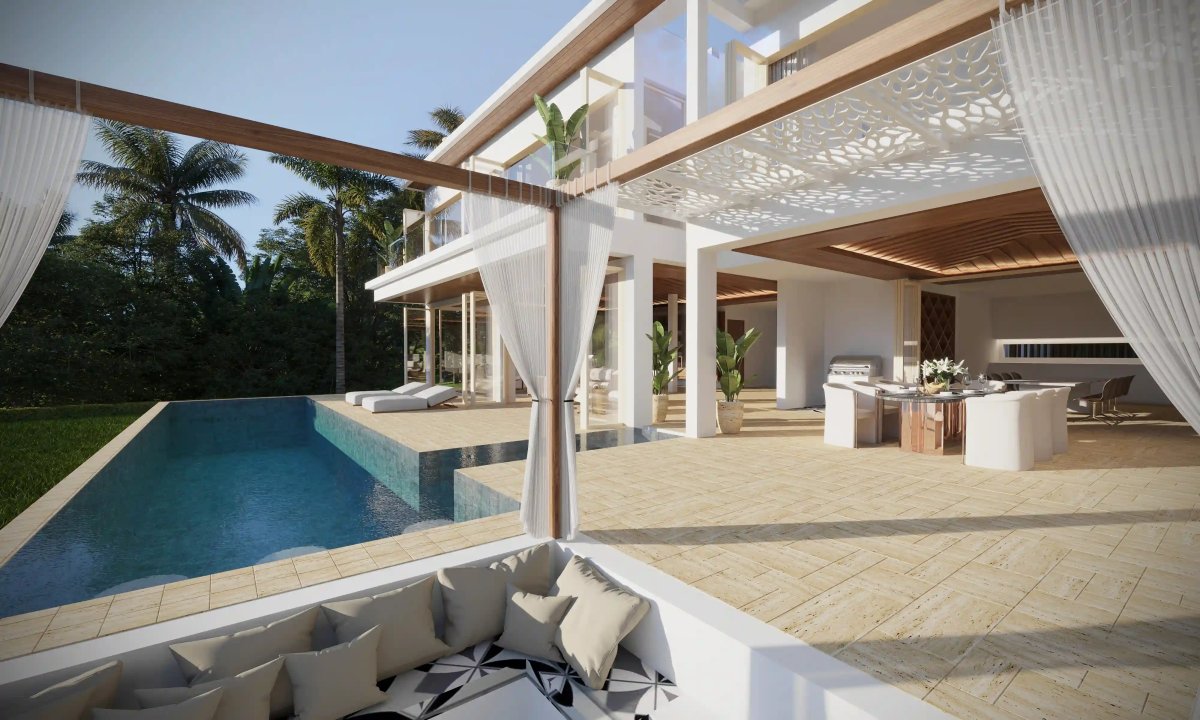
Quick answer: High-net-worth buyers in Phuket typically allocate $500K-$5M+ into west-coast premium condos, branded residences, or hillside villas where the thesis is lifestyle optionality, geographic diversification, and selective rental income, not guaranteed returns. Freehold condominiums under the 49% foreign quota remain the cleanest foreign ownership path; ultra-luxury villas on hillside land often involve leasehold structures that require specialist Thai counsel. Indicative gross rental yields in premium segments may reach 4-7% when personal use is limited, but branded management fees of 25-40% of gross and 30-90 owner-use nights can compress net outcomes materially.
Phuket competes with Dubai, Bali, and southern European coasts as a wintering and family-holiday base for buyers from Europe, Russia, Australia, and Singapore. The island’s advantage is mature tourism infrastructure, international schools, hospital capacity, and two marinas within a 25-45 minute drive of most premium west-coast addresses. The trade-off is Thai ownership law: foreigners cannot own land freehold, so product choice and legal structure matter more than brochure photography.
Part of the Phuket Property Complete Guide 2026, ownership routes, due diligence, and market context for serious buyers.
Which premium zones actually suit UHNW use patterns?
| Zone | Typical ticket (indicative) | Best for | Main friction |
|---|---|---|---|
| Kamala / Surin hillside | $800K-$4M+ | Privacy, entertaining, winter base | Leasehold villas common; steep access roads |
| Laguna integrated resort | $600K-$2.5M | Family holidays, golf, marina day trips | HOA-style fees; rental program rules vary |
| Layan / north Bang Tao | $500K-$3M | Newer stock, quieter west coast | Fewer walkable restaurants than Kamala |
| Cape Yamu / east views | $1M-$5M+ | Yacht proximity, sunrise views | Less beach-walk lifestyle |
Buyer scenario, European family wintering three months per year: A $1.2M-$1.8M Kamala or Laguna condo with 2-3 bedrooms, hospital access within 20 minutes, and school commute under 35 minutes often beats a standalone hillside villa if staff and maintenance simplicity matter.
Buyer scenario, yacht-owner principal: Prioritise Royal Phuket Marina (east) or Ao Po Grand Marina access; drive-time to daily services matters more than beach name. Budget berth waiting lists separately, marina capacity is finite.
How do branded residences differ from standard luxury condos?
| Fee type | Typical range (indicative) | What to verify |
|---|---|---|
| Management / rental program | 25-40% of gross rental | Included services; exit clauses |
| Sinking fund / capex reserve | $3K-$15K/year by size | Recent major works history |
| Owner renovation obligations | Every 5-7 years in some brands | Cost caps in SPA |
| Personal use nights | 30-90 nights/year common | Peak-season blackout rules |
Red flag: Marketing that quotes 8-12% guaranteed gross yield without disclosing owner-use limits, fee stacks, or furniture replacement cycles. Model net after fees, vacancy, and personal nights, not brochure gross.
Red flag: Branded residence without a readable rental-program opt-out. Some contracts effectively require pool participation; others allow owner-only use with penalties.
For ownership basics and foreign quota checks, cross-read How foreigners own condos in Thailand and the due diligence step-by-step guide.
What ownership structures do HNW buyers actually use?
| Structure | Foreign use | Liquidity | Counsel required |
|---|---|---|---|
| Condo freehold (quota) | Direct title in name | Strongest among foreign options | SPA + quota certificate |
| Leasehold villa | Use rights, not land | Depends on lease terms | Lease review + registration |
| Thai company holding land | Complex | Weaker for foreign resale | Specialist only |
Privacy goals must align with banking KYC and Land Department transparency. Complete anonymity is unrealistic where legal title, FET forms, and wire transfers exist. Buyers who need cross-border estate planning should engage home-country counsel plus Thai property counsel before reservation deposits, not after handover.
How should HNW buyers think about yield versus lifestyle?
Buyer scenario, yield-light, lifestyle-heavy: A $2M hillside villa used 120+ nights per year may show negative cashflow on a rental spreadsheet but still rational if the alternative is €4K-€8K per week in comparable resort rentals across multiple family holidays.
Buyer scenario, income-oriented HNW condo: A $750K-$1.1M Laguna or Bang Tao freehold condo, limited to 45 owner nights, professionally managed, may target indicative 5-6% net in strong years, verify with 12 months of comparable building data, not launch brochures. Broader yield context sits in the Phuket rental yield guide.
Currency exposure matters: many buyers quote in USD or EUR but settle in THB. The baht has traded in a rough 32-37 per USD band across recent years, model sensitivity, not precision forecasts.
What infrastructure do principals over 55 actually need?
Marina access: Royal Phuket Marina (east, near Phuket Town) and Ao Po Grand Marina support yachts from roughly 12m to 40m+; berth availability and waiting lists vary seasonally. Budget $1,500-$4,500/month all-in for serious villa staffing (housekeeper, driver part-time, pool/garden) depending on hours and language requirements, indicative only, not quotes.
What does due diligence look like at $1M+ tickets?
Checklist before any wire transfer:
- Confirm foreign quota availability in writing, not a sales desk verbal.
- Read rental-program fee tables and owner-use blackout calendars.
- Request 12 months of comparable unit ADR and occupancy from management, not project averages.
- Verify EIA and construction permits for any off-plan component via counsel.
- Map exit liquidity: who is the likely second buyer at your price point?
Off-plan premium exposure connects to payment schedules and off-plan red flags. Villa versus condo trade-offs are covered in Phuket condo vs villa.
What premium actually buys at this level
The word is used loosely enough in Phuket marketing to be worth defining by what is scarce rather than by what is expensive.
Position that cannot be replicated. Beachfront, or an outlook protected by topography or zoning rather than by the current absence of a building next door. This is the only component a later refurbishment cannot manufacture, and it is where a genuine premium is justified.
Density is the second: fewer households sharing the same facilities, larger plots or floor areas, and real separation from neighbours. Guests and owners both notice this immediately and neither can articulate it from a photograph.
An operator rather than a manager. Someone running the property to hotel standards, with staffing and service protocols behind it, which is what separates a premium guest experience from an expensively furnished apartment.
A specification built for the climate. Materials, plant and detailing chosen to survive humidity and salt air rather than to photograph well at handover. Invisible on a viewing and decisive at year seven.
What is not scarce, whatever it costs: a furniture package, a licensed brand name with no operator behind it, a marble lobby attached to ordinary construction, or a high price per square metre in an ordinary position. Each of those can be bought by anyone, which is precisely why none of them holds value.
How do HNW buyers assemble a Phuket portfolio slice?
Diversification logic: Phuket drivers (tourism, ASEAN travel, seasonal European demand) differ from home-country equities and bonds, correlation is not zero, but the asset class behaves differently. Treat Phuket as a lifestyle option with optional income, not a replacement for regulated securities portfolios.
Who should not buy premium Phuket property?
Four profiles are consistently disappointed at this level, and all four are identifiable before viewing.
Anyone whose case depends on yield. Net returns at the top of the Phuket market are generally lower than in the mid-market, because rates rise with specification but not proportionally with price while the operating cost base rises faster. A buyer stretching the assumptions to make a premium purchase work on rental return has already made the mistake.
Anyone who may need liquidity within a few years. Comparable transactions at this level are scarce and many are private, price discovery is genuinely difficult, and time-to-sell runs to quarters rather than weeks. A forced sale here is expensive in a way it is not lower down the market.
Anyone who will not visit. Most of what the premium buys is consumable: privacy, space, service, position. An owner who is rarely here is paying for a guest’s experience rather than their own, and the same capital would work harder in mid-market stock let year-round. This is the profile that most often ends up selling within five years, having discovered that they bought an experience they never had time to take.
Anyone buying to satisfy a residency threshold. Property confers no right to stay in Thailand at any price. Qualifying investment can count toward an LTR category, which is a different thing, and working backwards from a visa threshold to a purchase price produces a property chosen for the wrong reason.
For broader market context, see Is Phuket property a good investment in 2026 and the Kamala and Surin area guide.
How do transfer costs and running costs scale at the top end?
| Cost line | Indicative range (premium segment) | Notes |
|---|---|---|
| Transfer fees / taxes | 1-2% of registered value | Lawyer confirms actual |
| Fit-out beyond developer spec | $50K-$200K+ villas | Imported finishes, landscaping |
| Annual sinking / HOA | $5K-$20K/year | Branded residences higher |
| Insurance (structure + contents) | $2K-$8K/year | Villa higher than condo |
| Security / monitoring | $200-$800/month | Hillside villas |
Budget running costs before modelling yield. A villa showing indicative 5% gross may drop to 2-3% net after full cost stack, or negative if personal use dominates.
What do UHNW buyers get wrong about Phuket liquidity?
Liquidity checklist:
- Is title freehold condo or leasehold villa?
- How many competing units in the same project at similar price?
- Does rental program restrict owner resale timing?
- Are there outstanding juristic person disputes or fee arrears?
Mainstream condo liquidity principles from Phuket complete guide apply differently above $2M, plan exit before entry.
How does personal use interact with rental programs at scale?
| Use pattern | Product fit | Watch-out |
|---|---|---|
| 4-6 months personal | Owner-friendly condo or villa | Rental pool opt-out |
| under 45 nights | Managed STR condo | Fee load |
| Entertainment / events | Large villa + staff | Leasehold terms |
| Pure income | Non-branded managed condo | Less prestige, better net |
What tax and reporting questions do HNW buyers raise first?
Do not rely on informal structures to avoid reporting. Engage cross-border tax counsel before purchase if asset is material to your global return. MORE Group provides property intelligence, not tax advice.
How do marina and aviation access shape residence choice?
Scenario, Singapore-based principal, monthly long weekends: Bang Tao or Laguna condo with lock-and-leave, hospital under 25 minutes, no villa maintenance burden.
Scenario, European principal, 3-month winter with 40ft yacht: East-coast or Cape Yamu orientation with verified berth contract separate from property purchase.
What questions should you ask on the first premium viewing?
Ask these before the tour becomes a conversation about furniture.
Who is selling, and why now? At this level motive shapes the negotiation more than at any other price point, and it is the question agents least expect to be asked directly.
What has the property cost to run over the last three years, itemised, with the invoices for the three largest lines? Owners generally know the headline figure and are frequently wrong about its composition, and the composition tells you which costs will keep rising.
What is the foreign quota position for this specific unit, in square metres? For a condominium. For a villa, what structure is on offer, what term remains, and what the renewal mechanism actually provides.
What did comparable properties sell for, and how long did they take? Both halves matter. At this level time-to-sell is the more informative number and the one you are least likely to be told voluntarily.
What is planned or approved within sight of this property? A view that can be built out is a premium you are paying once and losing later.
May I come back at a different time of year, and in bad weather? The answer tells you as much as the visit would.
Ask also who else has seen the property and for how long. Something quietly available for a year is a different proposition from something that came to market last week, and the difference belongs in your offer rather than in the agent’s framing of it.
Patience beats urgency at $2M+. Off-market introductions exist but still require the same diligence stack as public listings.
Frequently Asked Questions
There is no official threshold. In practice, HNW conversations on Phuket often start around $500K for premium condos and extend to $5M+ for hillside villas and branded residences. Ticket size matters less than structure, liquidity, and net outcome after fees and personal use.
Brand can help marketing and guest expectations, but financial outcomes depend on fee load, owner-use nights, renovation obligations, and rental-program rules. Some branded assets underperform simpler freehold condos on net yield. Model net, not gross brochure figures.
Foreigners cannot own land freehold. Ultra-luxury villas are often sold via leasehold structures or corporate arrangements that require specialist Thai legal review. Condominium freehold under the 49% foreign quota remains the cleanest titled path for foreign buyers.
Complete anonymity is unrealistic where legal title, banking KYC, and Land Department records exist. Privacy goals must align with compliance in your home jurisdiction and Thailand. Specialist cross-border counsel is required, not informal nominee arrangements.
Define use versus yield versus legacy goals in writing, then match zones and product types. Premium inventory is thin and often off-market. Independent legal counsel and foreign quota verification should precede reservation deposits, not follow them.
MORE Group charges buyers 0% commission on typical buyer-side engagements. Developer or seller compensation structures vary by project. Economics should be disclosed upfront before shortlisting.

Maksim Shchegolev
Founder, MORE Group
Founder of MORE Group. Four years in investment banking before moving to Phuket, where he has worked in the local property market since 2018. Oversees developer relationships and every engagement above $300K.
About MORE Group →Get a Focused Phuket Property Shortlist
Share budget, area and goal. We will reply with suitable live projects, not a generic catalogue.
