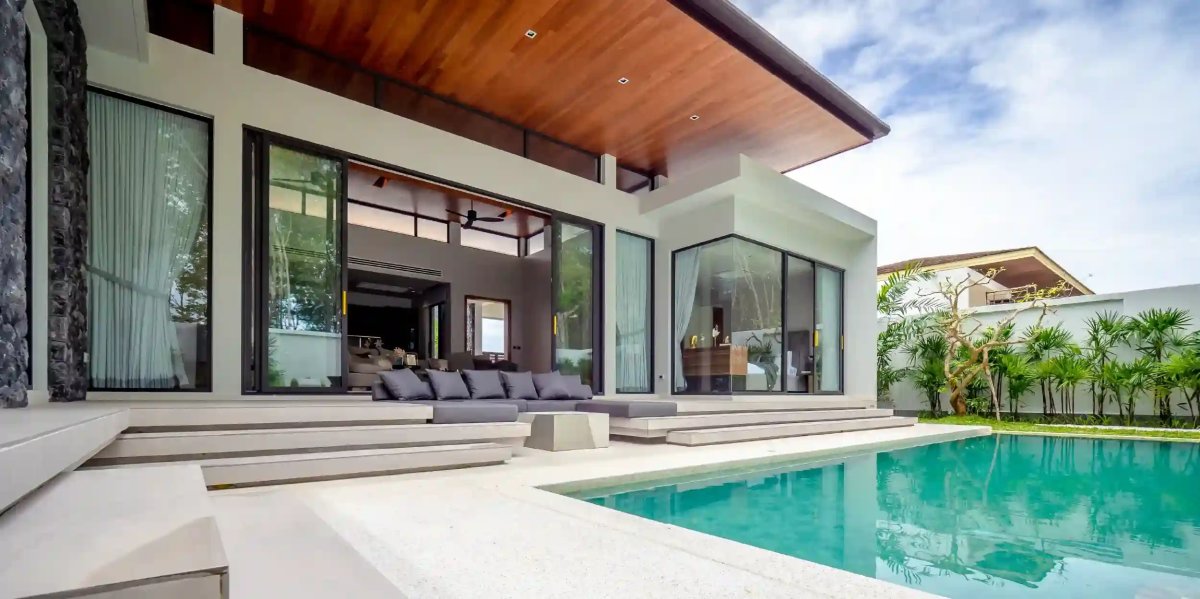
Quick answer: If you hold Thai nationality, Phuket property law treats you as a domestic buyer, you may own land, villas, and condos without foreign-quota caps. Overseas Thais in the US, UK, Australia, Japan, or the Gulf face a different problem set than Europeans: cross-border remittance, tax residency if you return, Tabien Baan (house registration), and family inheritance across two countries.
This guide is for Thai passport holders living abroad. Foreign nationals should read can foreigners buy property in Thailand instead.
How is an overseas Thai buyer different from a foreign investor?
| Topic | Overseas Thai national | Foreign buyer |
|---|---|---|
| Condominium freehold | No 49% quota limit | Quota capped per building |
| Land + villa ownership | Allowed in freehold | Leasehold / complex structures |
| House registration (Tabien Baan) | Eligible | Not applicable |
| Inheritance to Thai heirs | Straightforward Thai succession | Quota and structure issues |
| FET on inbound funds | Depends on currency source | Required for foreign-currency inbound |
The pipeline percentages and the budget bands the earlier version gave here were internal impressions without a source and are withdrawn. What holds without a figure: most diaspora enquiries are about a home for someone, a parent or a returning family, and yield is the second question rather than the first.
Can overseas Thais buy land and villas in Phuket?
What a Thai national meets at the Land Department, against the foreigner’s route:
| Item | Thai national | Note |
|---|---|---|
| Land and house | Chanote title in your own name | No lease, no company, no foreign share to check |
| Transfer fee | 2% of the appraised value, commonly split with the seller by agreement | Current rates on hidden costs of buying in Thailand |
| Seller-side taxes | The same as for any Thai seller, settled at the Land Office on the day | Who pays what is written into the contract |
| Legal and survey | Priced by the firm; the range the earlier version quoted had no source | Get two written quotes |
Insider tip: Diaspora buyers sometimes use a Thai relative’s name to “simplify” a deal while still funding from abroad. If you are not the registered owner, you have zero legal protection, register in your own name or use a documented loan structure reviewed by counsel.
Do overseas Thai buyers need an FET certificate?
| Funding source | Typical documentation |
|---|---|
| Wire from a US, UK or Australian bank in dollars, pounds or Australian dollars | The Thai bank converts and may complete the FET form as its own reporting record |
| Existing Thai baht account (local savings) | Domestic transfer, no FET |
| Gift from Thai parent in Thailand | Gift letter + their source of funds trail |
| Mixed offshore salary + Thai account | Lawyer maps cleanest path before SPA |
For a Thai national the Land Office does not ask for the FET record, because the foreign-purchase rule it evidences does not apply to you; keep whatever the bank issues anyway, since it shows where the money came from, and the Land Department wants a coherent money trail matching the buyer on the title. Overseas Thais who worked abroad for 20 years should not assume a branch counter understands diaspora remittance on the first visit; book an international transfer desk appointment.
Details: proof of funds for Thailand property.
The 180-day question, and why it should be settled early
The single decision that shapes an overseas Thai buyer’s tax position is not where the property is. It is how many days a year you spend in Thailand.
Thai tax residency is triggered at 180 days or more in a calendar year, counted across the whole year rather than per visit. Below that threshold you are a non-resident for Thai tax purposes and your exposure is limited to Thai-source income. At or above it, you are a Thai tax resident, and rules on foreign-sourced income brought into Thailand apply to you.
The rule changed on 1 January 2024. Under Revenue Department Order Por. 161/2566, foreign-sourced income that a Thai tax resident brings into Thailand is assessable in the year it arrives, whenever it was earned, and Por. 162/2566 keeps income earned before 2024 outside that. Someone who has worked abroad for two decades and intends to move savings across should take current advice on what counts as income and what counts as capital, rather than relying on what was true when they left.
The practical point is one of sequencing. If you are going to relocate, the year in which you cross 180 days is a year you can often choose, and there are usually better and worse orders in which to sell a foreign home, remit the proceeds, and take up residence. That planning is worth doing before the first wire, not after.
Two further things to settle with an adviser in your country of residence rather than only in Thailand. Whether that country continues to tax you after you leave, which varies enormously and catches US citizens in particular, since the United States taxes its citizens wherever they live, a rule this site holds in its register of unverified home-country claims. And whether disposing of a foreign home to fund the purchase triggers a capital gains charge there, and whether timing it around a change of residence changes the answer.
What tax issues should overseas Thais plan for?
| Scenario | Planning note |
|---|---|
| Retire to Phuket full-time | Model Thai tax on pensions + foreign accounts |
| 90-day winter stays only | Different residency profile, document days |
| Rent condo while living in US | Thai rental withholding + US worldwide reporting |
| Sell UK home, buy Phuket villa | FX timing + cross-border CGT, use advisers in both countries |
We do not provide tax advice, engage a Thai CPA and an adviser in your country of residence before you wire.
Which Phuket zones fit overseas Thai buyer profiles?
Diaspora buyers choose differently from foreign investors, because the property usually has to work as a home for someone rather than only as an asset.
Rawai and Chalong take the largest share. Flat, walkable, genuinely residential, with markets, clinics and schools built for people who live there rather than visit. Villa stock here is priced for residents rather than for the resort market; compare specific listings, since this page no longer quotes a band. The atmosphere suits parents who will be there full time; see the Rawai area guide and the Chalong area guide. Short-term rental performance is modest, which matters little if the property is not primarily an income asset.
Phuket Town and Kathu suit buyers who will work on the island or who want the lowest cost of living. Town has the hospitals, the government offices, the schools with Thai-curriculum options, and a price per square metre set by a resident market rather than a resort one. It is also central enough that anywhere on the island is a manageable drive; see the Phuket Town investment guide.
Bang Tao and Laguna attract the higher budgets, typically UK and Australia-based families buying a villa that will be used seasonally and let in between. More expensive, more international, better rental depth, and further from the practical infrastructure a resettling parent needs.
Kamala and Surin sit in between and are chosen mostly for the setting rather than for any structural advantage.
A pattern worth naming: buyers purchasing for parents consistently overweight the beach and underweight the walk to a market and the drive to a hospital. The parents almost always end up wanting the second set. Area context: best areas to buy property in Phuket.
Condo vs villa: what should diaspora buyers choose?
Holding Thai nationality changes this decision more than any other, because the villa route that is structurally awkward for foreign buyers is simply open to you.
A foreign buyer weighing condo against villa is really weighing freehold against a 30-year lease, and that asymmetry usually decides it. You have no such constraint. You can own the land and the house outright, on the same terms as any domestic buyer, which means the choice comes down to what the property is for rather than to what the law permits.
A villa makes sense if someone will live there, if there are parents or children involved, if you want a garden and space that a condominium cannot give, or if the plan is eventual relocation. It costs more to run once staff, pool maintenance, garden, insurance and repairs are counted; the dollar range the earlier version gave here is withdrawn in favour of the itemised figures on the cost of owning a villa, and it needs someone present or a manager you trust.
A condominium makes sense if the property will be empty for long stretches, if you want it let with minimal involvement, or if this is a first purchase and you would rather test the market at a smaller ticket. Running costs are predictable, security is handled, and you can leave it for six months without anything going wrong.
The mistake to avoid is buying a villa because you can. The right to own land is a genuine advantage, but an empty villa deteriorates faster and costs more than an empty apartment, and diaspora buyers who are still working abroad often discover that three years before they intended to move.
Compare: Phuket condo vs villa and cost of owning a villa.
What is the buying process for overseas Thai buyers?
The process is the domestic one, which is simpler than the foreign route in most respects and harder in one.
The timeline is the domestic one: on completed stock the parties set the transfer date, on off-plan the developer’s schedule runs, and the day count the earlier version gave had no source. There is no quota letter to chase and no foreign-purchase evidence to produce, whichever account the money sits in.
The complication is documentary rather than legal. If you have lived abroad for fifteen or twenty years, your Thai identity documents may be out of date, your house registration may have lapsed, and your name may appear differently across your Thai ID, your foreign passport and your overseas bank accounts. The Land Office needs those to reconcile. Sort it before you find a property, not during a thirty-day completion window.
Practically that means checking that your Thai national ID card is valid, that you can produce a current house registration extract or arrange one, that your name in Thai script matches across every document, and that any change of name through marriage is documented in both jurisdictions. A Thai lawyer can list exactly what your district office will want.
If you cannot be in Thailand for the registration, a power of attorney works, prepared in Thai, specific to the transaction, and legalised through a Thai embassy or consulate in your country of residence rather than through an apostille; Thailand’s accession to the Apostille Convention was approved by the cabinet in December 2025 but was not in force at the last check. The lead time is different from a notary appointment, which is worth knowing early; the power of attorney guide covers the form the Land Office expects.
Buying property in Phuket guide.
How do overseas Thais handle inheritance and family ownership?
| Heir profile | Planning note |
|---|---|
| Thai child, lives in Thailand | Straightforward transfer |
| Thai child, lives in US/UK | Still Thai, no quota issue |
| Mixed Thai + foreign child | Structure needs counsel |
| Spouse foreign national | A foreign heir to a condominium unit must fit within the building’s 49% share; a foreign heir to land must obtain permission or dispose of it within the Land Code’s time limit |
Diaspora buyers often purchase for parents while working abroad. Register parents on title only if they are the economic owner, otherwise use loan agreement + mortgage registration documented by Thai lawyer.
What schools and hospitals matter for diaspora resettlement?
| Zone | School / hospital access |
|---|---|
| Rawai / Chalong | HeadStart, BCIS, Chalong Hospital |
| Phuket Town | Kajonkietsuksa, Bangkok Hospital Phuket |
| Bang Tao | UWC Thailand (short drive), Bangkok Hospital clinic |
| Kathu | Central location for island commutes |
Scenario: US-based Thai engineer buys Rawai 2-bed for parents, priorities are flat walk to market, hospital under 15 minutes, not maximum Airbnb yield.
Registering Tabien Baan (house book) for parents
- Confirm blue house book registration eligibility at district office
- Link utility accounts to registered address
- Register hospital preference locally
- Keep buyer name = fund source documented
Without Tabien Baan, parents may struggle with local administrative tasks despite living there full-time.
Case study: Sydney Thai family buying Rawai villa
| Step | Action |
|---|---|
| Structure | Thai freehold villa Rawai, no leasehold |
| Funding | AUD wire → FET |
| Use years 1-7 | Parents live + light long-term rent |
| Year 8 | Owner relocates; as a Thai national no visa is involved |
| Running cost | Itemised on the cost of owning a villa; the single annual figure the earlier version attributed to that guide is not in it and is withdrawn |
Phuket Town vs beach zones for diaspora employment
| Factor | Phuket Town | Bang Tao beach |
|---|---|---|
| Condo THB/sqm | Lower | Higher |
| Commute to offices | Short | Longer, across the island |
| Expense living | Local markets | Tourist pricing |
| Rental if relocating again | Long-stay demand | Holiday rent |
Diaspora not yet retired should model Town first, beach second.
Checklist before you wire
Once money moves it becomes much harder to fix a structural mistake. Work through this first.
- The name on the title is your name. If it is a relative’s, you own nothing, regardless of who paid. This is the single most common and most expensive error diaspora buyers make.
- Your Thai documents are current. ID card, house registration, and consistent name spelling across everything the Land Office will see.
- The money trail matches the buyer. The Land Department wants the funds and the title holder to be coherently connected. Mixed sources routed through relatives break that.
- You have decided the tax residency question. Whether you will cross 180 days in Thailand in a calendar year changes your position materially, and it is easier to plan for than to unwind.
- A Thai lawyer has read the contract, independent of the seller and the agent.
- Title and encumbrances are searched, including any mortgage, lease or usufruct registered against the land.
- You know the annual running cost, honestly, including the months nobody is there.
- The inheritance path is written down, particularly where heirs hold mixed nationalities and the quota rules would apply to some of them and not others.
- You have appointments booked, not walk-ins. An international transfer desk understands diaspora remittance; a branch counter frequently does not.
Related guides:
- Phuket property by nationality hub
- Freehold vs leasehold in Thailand
- Annual ownership costs in Thailand
- How to check a Phuket condo title deed
- What happens after buying property in Phuket
Get a free Phuket property consultation
MORE Group shortlist and due-diligence support.
Frequently Asked Questions
Yes, Thai citizens may own land and houses in freehold without the 49% foreign quota that applies to condominiums purchased by non-Thais. You still need clean title, survey, and Land Department registration like any domestic buyer.
If purchase funds are remitted from abroad in foreign currency, Thai banks typically issue an FET form. Thai nationals funding from local Thai-baht accounts follow domestic transfer rules, your lawyer confirms which path applies to your deal.
Thai tax residency (180 days or more in Thailand in a calendar year) brings foreign income remitted into Thailand into scope from 2024 under Revenue Department Order Por. 161/2566, whenever it was earned, with income earned before 2024 excluded. Overseas Thais living abroad full-time face different obligations than retirees resettling in Phuket; verify with a Thai tax adviser.
Bang Tao and Laguna for resort-style second homes; Rawai and Chalong for family resettlement near schools; Phuket Town for work-linked buyers. Diaspora buyers skew lifestyle-first versus pure yield.
Thai nationals inherit land and condos under Thai succession law without foreign-quota complications. Cross-border estate planning still matters if heirs hold mixed nationalities, coordinate Thai counsel with advisers in your country of residence.

Maksim Shchegolev
Founder, MORE Group
Founder of MORE Group. Four years in investment banking before moving to Phuket, where he has worked in the local property market since 2018. Oversees developer relationships and every engagement above $300K.
About MORE Group →Get a Focused Phuket Property Shortlist
Share budget, area and goal. We will reply with suitable live projects, not a generic catalogue.
