
Thailand Holiday Home Guide: Buying a Property You’ll Use and Earn From
The Phuket holiday home model is simple: you use the property for four to eight weeks a year and a management company lets it for the rest. The share of ownership costs that income covers, the gross rental figure and the net yield this paragraph used to promise are all withdrawn, Thailand keeps no letting register, so none of the three has been measured for any Phuket property. What is knowable in advance is the cost side, in full, and the personal-use value, which you can price from what you would otherwise pay for a comparable holiday rental. This guide is built on those two, because they are the parts that exist. This guide explains exactly how to structure a Phuket holiday home purchase to maximise both personal enjoyment and financial return.

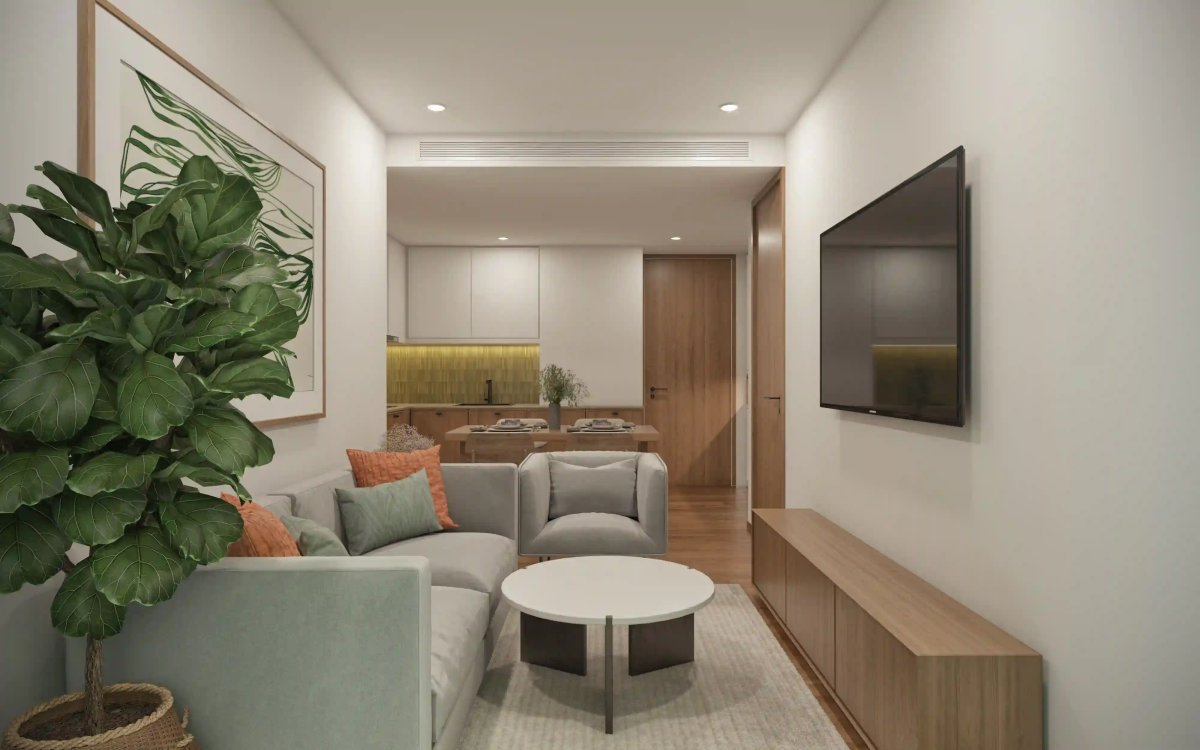
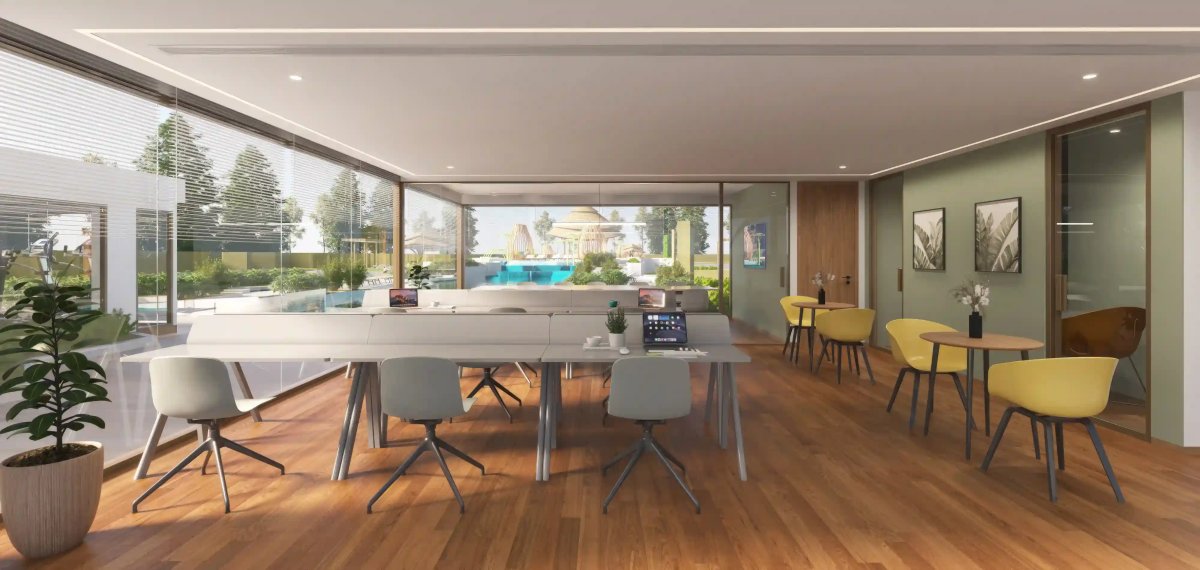
Holiday Home Investment Model: How It Works
The key to making this work is understanding two parallel universes: the weeks you use it (personal value) and the weeks it rents (investment return).
Typical annual timeline for a Phuket holiday home:
| Period | Weeks | Activity |
|---|---|---|
| Owner personal usage (January-March) | 4-6 weeks | Family holidays, winter escape |
| High season rental (Oct-Mar, excluding owner weeks) | 12-16 weeks | Peak rates, highest income |
| Shoulder season rental (Apr, May, Oct) | 8-10 weeks | Moderate rates |
| Low season rental (Jun-Sep) | 12-16 weeks | Lower rates, still profitable |
| Annual rental weeks | ~42-44 weeks | Net of personal usage |
This structure generates far higher income than most European holiday destinations because Thailand’s peak season aligns with European winter, when owners are most motivated to escape their home climate anyway.
Rental Programs Available in Phuket
1. Guaranteed Return Program
How it works: the developer guarantees a fixed annual payment for a defined period, usually three to ten years, regardless of actual occupancy. The rate is whatever the SPA clause says: it is a contract term, so it is the one percentage in this guide that means something, and it should be read from the document rather than from a range. The typical band this line used to give is withdrawn: guarantees vary by scheme and the only number that binds anyone is the one in your own agreement.
Pros:
- Predictable, risk-free income during the guarantee period
- No management involvement required
- Great for buyers who want simplicity
Cons:
- Typically no personal usage (or very limited)
- Developer bears the occupancy risk, check their financial strength
- After the guarantee period, actual income may be lower
- Higher purchase price (the guarantee cost is baked in)
Best for: Buyers who want a passive investment and will visit Thailand via hotels, not their own property.
2. Rental Pool Program
How it works: Your unit joins a pool of managed units across the complex. Gross income from all units in the pool is distributed proportionally (by unit size and type). You share the upside and downside with other owners.
Pros:
- More transparent over the long term than guaranteed returns
- Management handled by the complex (professional, consistent)
- Usually includes owner usage weeks (30-60 days/year)
- Rental rates and occupancy auditable by owners
Cons:
- Income varies with occupancy (no guarantee)
- Quality depends on the management company
- Limited flexibility on pricing your own unit
Typical returns: not measurable. No Phuket letting income is recorded by any authority, so a return range for a hotel-managed pool describes nothing observed. What is contractual is the operator’s share of gross, customarily 35 to 45% in a hotel programme.
Best for: Buyers who want passive management with some personal usage, and understand that actual results vary.
3. Self-Managed Short-Term Rental
How it works: You (or an independent property manager you appoint) list the property on Airbnb, Booking.com, Agoda and manage it independently.
Pros:
- Maximum control over pricing and availability
- Higher potential income (no pool dilution)
- Flexible personal usage (block whatever dates you want)
- Can test different rental strategies
Cons:
- More management involvement required
- Responsive to guest enquiries and reviews
- Property manager cost still 15-25% of income
- No income guarantee if occupancy is low
Typical returns: not measurable, for the same reason. The relevant contractual figure here is the manager’s commission at 15 to 25% of income, which is materially lower than a hotel pool’s share: that gap is the actual argument for self-management, and it is quotable.
Best for: Buyers who are actively engaged, want maximum flexibility, and have time to select a hands-on local manager.
Looking for the right property in Phuket?
Questions about Phuket rental programs and yields? FREE consultation with MORE Group.
ROI Modelling: Real Numbers for Holiday Home Buyers
Property: 2-bedroom condo, Bang Tao area, pool view Purchase price: 8,500,000 THB (~$259,939 / ~€230,000) Rental program: Rental pool (open market)
| Revenue Item | Amount (THB/year) |
|---|---|
| High season (16 weeks @ 4,500 THB/night, 85% occ.) | 430,560 THB |
| Shoulder (8 weeks @ 3,000 THB/night, 65% occ.) | 109,200 THB |
| Low season (12 weeks @ 2,500 THB/night, 50% occ.) | 105,000 THB |
| Gross rental income | 644,760 THB |
| Expense Item | Amount (THB/year) |
|---|---|
| Property management (25%) | -161,190 THB |
| Thai withholding tax (15% of gross) | -96,714 THB |
| Insurance | -15,000 THB |
| Annual property tax | -6,000 THB |
| Common area maintenance (CAM) | -36,000 THB |
| Maintenance reserve | -20,000 THB |
| Total expenses | -334,904 THB |
| Net Result | Amount |
|---|---|
| Total annual costs, from the rows above | 334,904 THB |
| Personal usage value (6 weeks in a comparable rental) | 162,000 THB |
| Cost remaining for rental income to cover | 172,904 THB |
The two yield lines that used to close this table are withdrawn, and so is the net income figure they were computed from: the revenue side of it was an assumption, and dividing an assumption by a purchase price does not produce a measurement.
What the table can still do, and this is the more useful calculation, is run backwards. The costs are documentary: the management share, the CAM rate per square metre, the sinking fund, insurance, the land and building tax and a maintenance reserve. Add them up, subtract what your own six weeks would otherwise cost you in a comparable rental, and you have the annual figure the letting has to reach before the property costs you nothing. Then ask an operator for twelve months of statements from a comparable unit and see whether it does.
That is a threshold you can test, rather than a return you have to believe.
Two things make the threshold move, and both are yours to set. The first is how many weeks you take and when. Six weeks in high season removes the most valuable inventory from the letting calendar and simultaneously saves you the most in accommodation you would otherwise pay for, so the threshold falls, and so does the ceiling on what the property could have earned. Six weeks in May and October does the opposite on both sides. Neither is wrong; they are different purchases, and the arithmetic makes the difference visible before you commit.
The second is the management model. A hotel-operated pool takes 35 to 45% of gross and asks you to block owner nights in advance; a local manager on a short-stay programme takes 20 to 25%; a twelve-month tenancy takes 8 to 12% and removes personal use altogether. Those three shares are contractual, they differ by more than twenty points of gross, and the choice between them changes the threshold more than any assumption about occupancy ever could.
Note: assumes 6 personal usage weeks in high or shoulder season, excluded from any rental calculation.
Location: Where to Buy Your Holiday Home in Phuket
Tier 1: Maximum Rental Demand (Beach Proximity)
- Bang Tao / Layan: Long beach, Laguna resort infrastructure, highest European tourist demand. Best for rental income
- Kamala: Stunning bay, mix of boutique hotels and family tourists. Very strong rental demand
- Surin: Boutique upscale beach. Luxury rental market, premium nightly rates
Tier 2: Lifestyle Balance (Beach + Local Life)
- Kata / Karon: Traditional beach town feel. Good rental demand from families and couples
- Nai Harn: Beautiful beach in the south. Quieter, popular with longer-stay visitors
For personal enjoyment priority: Kamala or Surin, beautiful, quieter than Bang Tao, easy access to Patong for nightlife when desired
For income priority: Bang Tao, strongest tourist demand and rental platform visibility in Phuket
Structuring Personal Usage and Rental Weeks
Best practice approach:
- Determine your preferred usage windows (e.g., January 1-15, April 10-24, November 1-14)
- Block these dates in your property management system at the start of each year
- Set advance notice requirements: block personal dates at least 3-6 months ahead
- Avoid blocking the highest-income weeks (Christmas, New Year, February) unless you have no choice
Owner usage rules by program type:
- Guaranteed return programs: typically no personal usage (or very limited designated weeks)
- Rental pool programs: typically 30-60 days/year owner usage at no charge
- Self-managed: unlimited, you control your calendar entirely
Tax implication: Weeks when you use the property personally do not generate rental income, reducing your annual income and therefore your home-country taxable income. However, you cannot deduct the costs allocated to personal usage weeks in most jurisdictions.
Tax Implications of the Holiday Home Model
In your home country:
- Rental income must be declared (see country-specific tax guides for UK, US, EU, German, French, Australian buyers)
- Personal usage complicates the tax picture: if you use the property personally and rent it, some countries require you to split expenses proportionally
- Capital gains tax applies in your home country when you sell (Thailand has no CGT for individuals)
UK buyers: The personal usage vs rental split matters for expense deductibility. HMRC has rules on “mixed use” holiday lets.
US buyers: IRS has the “14-day rule” for vacation homes: if you use the property more than 14 days/year (or 10% of rental days, whichever is higher), it is a “vacation home” not a “rental property” and different expense deductibility rules apply.
Australian buyers: ATO rules similarly require apportionment of expenses between private and income-producing use.
Foreign Quota: 49% Sellable Floor Area
Before reserving, request a juristic-person letter dated within 30 days showing remaining foreign quota by unit type. Cross-check against the unit you want on the SPA schedule. If quota is below 5% headroom, price in a resale-only exit, selling to another foreigner requires quota at transfer, not only at purchase. Our foreign buyer guide and condo ownership walkthrough explain FET documentation and Land Department registration in sequence.
| Quota check | Pass | Fail |
|---|---|---|
| Juristic letter | Under 30 days, type-specific | Sales deck percentage only |
| Unit on foreign schedule | Named on SPA exhibit | Verbal assurance |
| Resale depth | 3+ foreign resales in 12 months | Zero transfers logged |
Personal Stays, the 60-Day Visa Exemption, and Longer Visits
If you want 90-180 days per year on the island, budget time for Tourist Visa (60+30 extension) or explore LTR / retirement routes, owning a condo does not grant residency. Block owner weeks in the rental calendar before marketing peak dates; managers need 90-120 days notice for Christmas and Songkran blocks on pooled programs.
Key Questions to Ask Before Buying
About personal usage:
- Exactly how many days/year can I use the property personally?
- Can I book my usage dates flexibly or are they fixed?
- Are the most desirable dates (Christmas, New Year) available for personal usage?
- Is the personal usage rate-free or at reduced occupancy cost?
About the property itself:
- What is the current foreign quota availability (you need to be in the freehold 49%)?
- What are the annual common area maintenance fees (CAM)?
- Is there a sinking fund and how is it managed?
- What is the rental track record of this specific complex?
Practical Steps to Buying Your Phuket Holiday Home
Disclaimer: Rental yields and income projections are illustrative based on market data as of March 2026. Actual results vary with market conditions, property quality, and management. This guide does not constitute financial or investment advice. Always conduct independent due diligence.
The weeks you will actually use it
The single most useful exercise before buying a holiday home in Thailand is to write down, honestly, how many weeks a year you will be there, and when.
Most buyers overestimate. The property is bought in the enthusiasm of a good trip, and the plan is six weeks a year; the reality for many is two or three, constrained by work, school terms and the cost of the flights. That gap matters because it changes the entire calculation: at six weeks the property is a home you also let, at two weeks it is a let property you occasionally visit, and those are different purchases with different priorities.
The timing matters as much as the count. If you are tied to school holidays, your weeks fall in the northern summer, which is Phuket’s monsoon low season, and at Christmas, which is the single most valuable week of the rental year and the one a managed programme will almost certainly black out. If you are retired or work flexibly, you can take the shoulder months of April, May and October, when the island is quiet, rates are lower, and the conflict with your own letting largely disappears.
Write the number down before you shortlist, and let it decide the format. Two weeks a year argues for a smaller, easily managed unit with strong letting demand. Two months a year argues for space, storage, and somewhere you can genuinely live, with letting as a secondary consideration.
Red flags when buying a holiday home
A holiday home is bought emotionally more often than any other property type, which is precisely why a checklist helps. These are the signals worth slowing down for.
- The purchase only works if it is let. A holiday home that must earn to be affordable is an investment property you also use, and it should be underwritten as one. Run the numbers with the weeks you intend to occupy already removed, because those are the weeks it earns nothing.
- The rental programme’s blackout dates cover your holidays. Hotel-managed pools typically cap owner nights at thirty to sixty a year and exclude peak weeks entirely, which for a northern-hemisphere buyer means Christmas and February. Read that clause before, not after.
- A villa described as freehold. A foreigner cannot hold freehold title to land in Thailand. It is a registered lease or a Thai company structure, and the distinction should be drawn unprompted by whoever is selling.
- Foreign quota confirmed verbally. It is 49% of the building’s total floor area, measured by area and consumed as foreigners register. Ask for a dated letter stating remaining square metres.
- A short-let income assumption with no hotel licence. Stays under 30 days are hotel business under the Thai Hotel Act absent a licence, and house rules can prohibit them independently.
- No total annual cost of ownership. CAM, sinking fund, insurance, the annual land and building tax, and on a villa the pool and garden. This is the figure you pay every year whether or not you visit.
- Buying inside a single visit. A reservation fee with a refund condition tied to due diligence costs little and buys weeks. A deal that cannot survive that pause has told you something.
Insider tip: before committing, spend a week in the area at the time of year you would actually use the property, not on a viewing trip in perfect weather. September in Phuket is a different place from February, and a holiday home is bought for the months you will be in it. The people who regret these purchases almost always visited once, in high season, and generalised from it.
Buyer scenarios
Pair this guide with holiday home investment mechanics, guaranteed return programs, due diligence steps, Phuket buying timeline, and rental yield planning. Verify live quota and the management profit and loss on inspection day, not on renderings.
Frequently Asked Questions
Yes. Most Phuket holiday home rental programs allow 30-60 days of personal owner usage per year at no charge. Self-managed properties allow unlimited personal usage. The key is blocking your dates in the management system well in advance, ideally at the start of each year, to avoid conflicts with confirmed guest bookings.
None can be quoted. Thailand keeps no letting register, so the gross and net yield ranges this answer used to give had nothing behind them, and the combined figure that added imputed personal-use value to them inherited the same problem. The half of the calculation that does exist is the cost side, the management share of gross, the CAM rate per square metre, the sinking fund, insurance, land and building tax and a maintenance reserve, plus the value of the weeks you use yourself, which you can price from what a comparable holiday rental would cost you. Add those and you have the annual figure the letting must reach to make the property cost-neutral. That is a threshold you can test against an operator's statements.
A guaranteed return means the developer promises a fixed annual payment for a defined period, usually two to ten years, regardless of actual occupancy. The rate is a contract term: read it in the SPA clause rather than from a typical range, because only the clause binds anyone. These programmes provide certainty for their term and typically restrict personal usage. Reliability depends entirely on who is liable, check whether the payer is the developer or a sales company, and research the track record, completed projects and financial position of whoever it turns out to be.
Bang Tao / Layan consistently generates the highest rental demand from European tourists due to the long beach and Laguna resort infrastructure. Kamala and Surin are strong in the luxury segment. Kata and Karon attract family renters with reliable demand. Rawai and Nai Harn attract long-stay guests at lower nightly rates.
Yes, significantly. The US IRS applies the '14-day rule': if you use the property more than 14 days/year (or 10% of rental days), it becomes a 'vacation home' with different expense deductibility rules. UK HMRC has rules on Furnished Holiday Lettings requiring minimum rental periods. Australian ATO requires proportional cost apportionment between personal and income-producing use. Tax treatment varies, consult your country's specialist.

Maksim Shchegolev
Founder, MORE Group
Founder of MORE Group. Four years in investment banking before moving to Phuket, where he has worked in the local property market since 2018. Oversees developer relationships and every engagement above $300K.
About MORE Group →Get a Focused Phuket Property Shortlist
Share budget, area and goal. We will reply with suitable live projects, not a generic catalogue.
