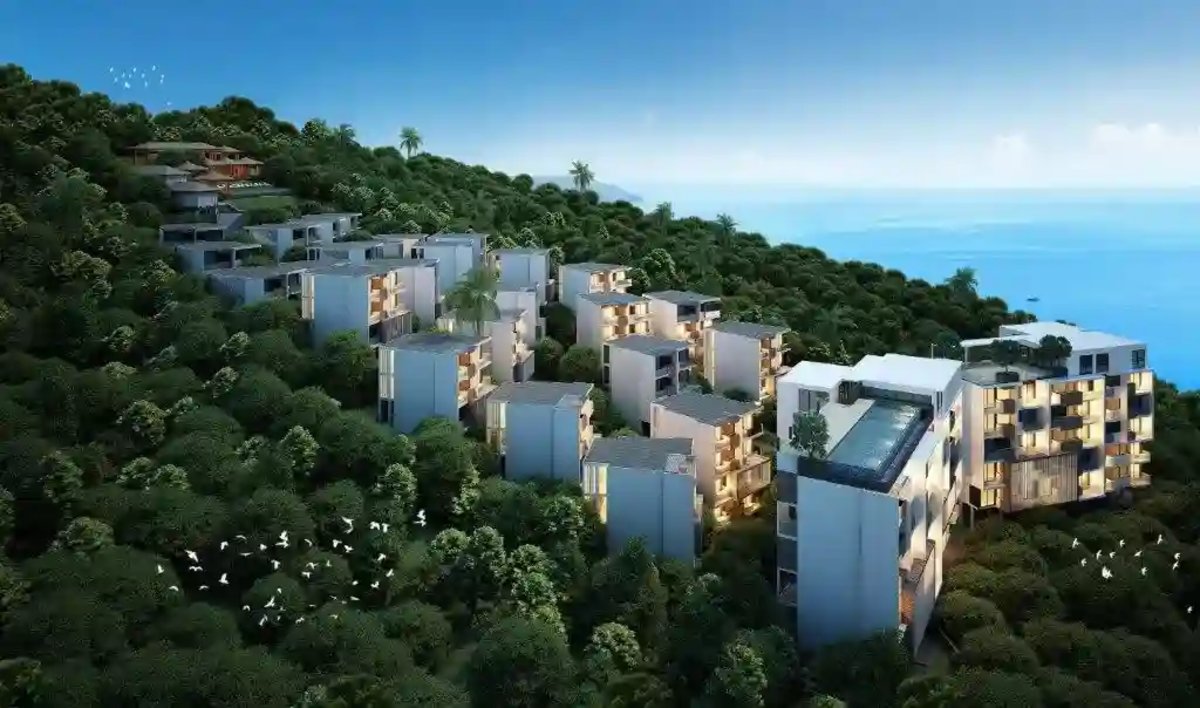
Why Phuket Outperforms Most Resort Property Markets?
Phuket consistently outperforms comparable resort property markets, Bali, Algarve, Tenerife, Koh Samui, on five key metrics: freehold foreign ownership rights, professional management infrastructure, depth of international buyer demand, capital appreciation trajectory, and legal protection within Thai law. The combination matters more than any single headline number. This is a claim worth testing with data, and the data holds up when you compare net outcomes, not brochure gross yields alone. Start with Phuket vs Bali property investment if Bali is your main alternative.



See how Phuket compares to your current market?
Our analysts compare Phuket against European and Asian markets for your specific goals. Free consultation.
Ownership Rights: The Fundamental Advantage
Phuket: Genuine Freehold Under National Law
Under Thailand’s Condominium Act (1979, amended multiple times), foreign nationals can own condominium units on freehold title. The title deed (Nor Sor 4 Jor / Chanote) provides the highest level of Thai title, registered at the Land Department, and is enforceable in Thai courts. The 49% foreign quota per building, often discussed as the 49% sellable floor area ceiling for foreign freehold, is the main limitation. Within available quota, ownership is registered government title, not a private lease promise.
This means: you own the unit on freehold when quota permits, not a lease on it. Verify allocation before deposit via freehold vs leasehold in Thailand and due diligence step-by-step.
Bali: Leasehold Only: A Fundamental Legal Difference
Indonesian property law does not permit direct freehold ownership by foreign nationals. The Hak Milik (freehold) title is reserved for Indonesian citizens. Foreign buyers access Bali property through:
- Hak Pakai (Right to Use): 25-80 year term, requires renewal, not automatically transferable
- Hak Sewa (Leasehold): Typically 25-30 year initial term with renewal options
- Indonesian company (PT PMA) structure: Allows freehold purchase through a foreign-owned company, with legal complexity and ongoing compliance costs
The practical risk: when a Bali leasehold expires, you own nothing. You have a right to negotiate renewal, but the landowner holds the leverage. In a rising market, that leverage is real.
Algarve and Tenerife: Full EU Property Rights
Portugal and Spain offer the cleanest ownership structures for European buyers, EU property law means full freehold ownership with comprehensive legal protection, no quotas, and courts backed by European regulatory standards. This is genuinely excellent legal protection.
The tradeoff was previously stated as a yield gap, with figures for the Algarve, Tenerife and Phuket. All three are withdrawn. Thailand keeps no letting register, so the Phuket side of that comparison was never measured; and the European figures carried no attribution to any publishing body, so they could not be checked either. What is genuinely different, and needs no percentage, is the ownership structure: full freehold with EU-standard legal recourse on one side, and on the other a 49% foreign quota measured by floor area, with land closed to foreign freehold entirely.
Management Infrastructure: Why It Matters for Net Returns
Phuket’s Management Ecosystem
Phuket’s short-stay rental management has matured through 25+ years of international tourism. The ecosystem includes:
- Hotel-affiliated management programmes: Banyan Tree Residences, Marriott Residences, Anantara, Wyndham, and Holiday Inn all operate co-branded programmes in Phuket, providing hotel-standard management with global booking infrastructure
- Independent specialist managers: Dozens of established local management companies with 10+ year track records, international booking platform relationships, and professional maintenance systems
- Booking platform dominance: Phuket is among the top-10 destinations globally on Airbnb and Booking.com, meaning platform algorithms actively surface Phuket properties to the widest possible international audience
The result: A Phuket property owner can genuinely achieve passive management. Hand the keys to a management company, review quarterly statements, and collect income without learning Thai or managing contractors. This operational passivity is rare in global resort markets and is a primary reason international investors prefer Phuket.
Bali’s Fragmented Management Landscape
Bali has strong short-stay rental demand: the yield figures this sentence used to attach to it are withdrawn as unsourced, but the demand itself is not in question. What differs is the management infrastructure, which is significantly more fragmented. Most Bali villas operate through small local management companies with variable quality, inconsistent maintenance standards, and less developed booking distribution.
The result: achieving Bali’s headline yields requires active involvement or finding one of the smaller number of quality management operators, a harder task than Phuket’s more mature ecosystem provides.
Buyer Demand Depth: The Liquidity Foundation
| Market | Annual International Visitors | Active International Property Buyers | Foreign Purchase Share |
|---|---|---|---|
| Phuket | 12.5 million | Very high | 45-55% (prime zones) |
| Bali | 6-7 million (recovering) | High | ~40% |
| Algarve | 5-6 million | Moderate (EU-focused) | 15-25% |
| Tenerife | 6 million | Moderate | 20-30% |
| Koh Samui | 2-3 million | Low | 10-20% |
Phuket’s buyer depth is unique among tropical resort markets because it draws from a truly global source mix: Europeans, Americans, Australians, Russians, Chinese, Indians, Singaporeans, and Koreans are all simultaneously active as buyers and tenants. No other tropical resort market has this breadth at the same scale.
| Buyer origin (illustrative) | Share of prime-zone inquiry volume | Typical ticket size |
|---|---|---|
| Russia / CIS | High | $120K-280K condos |
| Europe (UK, FR, DE) | High | $150K-350K |
| China / Singapore | Moderate-high | $200K-500K+ |
| Australia / US | Moderate | $180K-400K |
Depth supports both rental demand (tenant competition) and resale liquidity (buyer competition). Shallow markets like Koh Samui can deliver lifestyle prestige but struggle to absorb resale inventory quickly when macro conditions shift, a hidden cost investors discover only at exit.
Airport connectivity: the underrated variable
Direct flights decide resort property returns more than almost any local factor, and it is worth being explicit about why.
A destination reachable on a direct flight from several source markets draws a wider and more resilient guest pool than one requiring a connection, because a connection removes a large share of short-break travellers entirely and adds friction for everyone else. That shows up as higher occupancy in the shoulder seasons rather than in the peak, since peak demand fills regardless and shoulder demand is where the marginal traveller decides.
It also diversifies the risk. A destination fed by one or two source markets is exposed to whatever happens in those countries: a currency move, a recession, a change in travel patterns. A destination reachable directly from many is not, and that difference is invisible in a good year and decisive in a bad one.
The corollary for a buyer is that route news is genuinely relevant market information, in both directions. A new direct route from a wealthy source market is a real demand signal. A withdrawn one is a real warning, and it tends to be reported far less prominently.
Airport connectivity and supply discipline
Supply on the island is physically constrained by topography and protected land, which is a genuine limit rather than a marketing line, and it applies unevenly: the constraint is severe near the coast and much weaker inland. That does not prevent localized oversupply in one sub-market, but it supports long-run prime-zone pricing power relative to sprawling mainland resort corridors. Compare sub-markets using best areas to buy property in Phuket rather than island-wide averages.
Capital appreciation: what can and cannot be said
This section previously gave a decade of annual appreciation rates for prime Phuket, a five-year compound figure, and comparisons against Bali and the Algarve. All of it is withdrawn, and the heading it sat under (“The Data”) is exactly the claim that was wrong. No transaction index covers Phuket resort condominiums. There is no series in which any of those rates was measured, so nothing was being reported.
What the price file does show is today’s market and what is arriving in it. Across 299 schemes and 14,322 priced units: 918 units sit in finished schemes, 3,689 are due in 2026 and 5,578 in 2027. Bang Tao alone has 4,687 still under construction against 446 finished apartments. Any appreciation thesis for the island has to be held against that pipeline, which is countable, rather than against a growth rate that is not.
- Tenerife: 10-20%, lower growth in mass-market zones
Phuket’s appreciation trajectory is driven by: structural land scarcity on a finite island, increasing global demand, airport connectivity growth, and luxury brand entry validating the premium market position.
The comparison that can actually be completed
Every resort-market comparison eventually reduces to one question: which side can show you what it is claiming. On that test the markets separate cleanly, and not always in Phuket’s favour.
What Phuket can show you. A price file: 299 schemes and 14,322 priced units, with unit mix, floor area, delivery quarter, payment plan and distance to the beach for each. That is a real document, and this site publishes figures out of it throughout. It supports a price comparison, a depth-of-choice comparison and a supply comparison, all in numbers.
What Phuket cannot show you. Anything about income. No letting register, no occupancy series, no transaction index for resort condominiums. So the yield and appreciation arguments that dominate most Phuket-versus-elsewhere writing (including earlier versions of this page) have no evidence behind them on the Phuket side, however confident they sound.
What the European markets can show you. Full freehold, EU-standard legal recourse, national statistical offices that publish housing series, and a transaction record. When a figure is quoted for the Algarve or Tenerife, ask which body published it; there is usually an answer, and the ability to check is itself part of what a buyer is paying for there.
What Bali can show you. Strong short-stay demand, and a leasehold structure with no freehold path for foreign nationals. The renewal risk and the resale discount that go with a term structure are real and do not need a percentage to matter.
Set against that, Phuket’s genuine advantages are ownership and market structure rather than return:
| Dimension | Phuket | What it rests on |
|---|---|---|
| Title | Freehold condominium within a 49% floor-area quota | Condominium Act B.E. 2522 (1979) |
| Land | Closed to foreign freehold; villas via registered lease or company | Land Code |
| Depth of stock | 12,054 priced apartments, 4,589 in Bang Tao alone | Our own price file |
| Entry | From 1,450,000 THB, about $44,343 at 32.7 | Our own price file |
| Supply ahead | 3,689 units due 2026, 5,578 in 2027, against 918 finished | Delivery dates on the file |
| Arrivals | 10.5m international passengers in 2024 of 17m total | Airports of Thailand |
| Income | Not measured, by anyone | No letting register exists |
The last two rows are the honest shape of the case. The demand side has a published number behind it; the income side does not, and a buyer choosing Phuket over the Algarve should do it for the title, the ticket size and the depth of choice, not for a return nobody has observed.
Legal Protection: A Nuanced Picture
Phuket’s legal framework is robust within the Thai system but operates under Thai law, which includes realities like judicial process timelines, language barriers for foreign plaintiffs, and the potential for regulatory changes. The risk is manageable (Thailand has maintained consistent condominium ownership rules for 40+ years) but not zero.
What makes Phuket’s legal framework work in practice:
- 40+ years of established precedent under the Condominium Act
- A thriving specialist legal industry with deep foreign-buyer expertise
- Government incentive alignment, Thailand’s property revenue depends on continued foreign buyer participation, creating institutional support for ownership clarity
- Chanote title provides the highest Thai title protection available
The tradeoff: Phuket’s legal framework is strong within its jurisdiction, not as strong as EU law, but significantly stronger than Bali’s leasehold structures and most emerging market alternatives.
What Other Markets Do Better?
Bali wins on: Lifestyle authenticity, cultural depth, and potential for the highest gross yields if you’re willing to accept leasehold structures and active management Algarve wins on: Legal certainty (EU law), European lifestyle quality, and proximity for European buyers Tenerife wins on: Year-round climate consistency (no monsoon season), EU ownership rights, and easy access for mainland European buyers Koh Samui wins on: Boutique exclusivity, lower tourist density, and premium villa lifestyle
Phuket doesn’t win on all metrics. But it wins on the combination that matters most for most foreign investment buyers: the total package of yield + appreciation + legal clarity + management infrastructure + resale liquidity is superior to any individual competitor for many profiles, not for every buyer.
Where the outperformance argument breaks down
A page with this title owes the reader the limits of its own case, so here they are.
It is a market-level argument, not a property-level one. Everything above concerns why demand for Phuket accommodation is deep and durable. None of it says a specific building is well run, that a specific unit will let, or that a specific price is sensible. The variation between two buildings in one corridor routinely exceeds the variation between Phuket and a rival market, which means the market argument narrows your search and decides nothing.
Outperformance is measured in gross, and you live on net. Phuket’s income advantage is real and so is its cost line: management fees for short-stay letting, furnishing that wears out on a short cycle, seasonal vacancy, and Thai tax on the income. Compared net to net against a long-let market, the gap is considerably smaller than the headline suggests.
Ownership is constrained in ways the alternatives sometimes are not. No foreign freehold of land, and condominium freehold only within a building’s quota. For a buyer who wants a house on its own plot in their own name, no amount of rental outperformance addresses the problem.
Past performance here covers an unusual decade. The period most figures are drawn from includes a collapse in tourism and a hot recovery, and averaging across it produces a number describing a particular decade rather than a normal one.
The honest version of the case is narrower than the title: Phuket is unusually good at producing short-stay rental income within a legal framework foreigners can use, and everything else is a separate question.
Buyer scenarios: when Phuket beats the alternatives
Scenario A: European security-first buyer with Asia satellite allocation: You already own EU property for legal certainty and add Phuket for return diversification. You visit within the 60-day visa-free entry window for due diligence, then rely on managers ten months per year. You prioritise Bang Tao or Kamala liquidity and read is Phuket a good property investment before wiring deposits.
Match scenario to market, Phuket is not a replacement for EU residency planning or Bali lifestyle immersion.
Red flags when comparing resort markets
- Bali gross yield quoted without leasehold discount and renewal risk at term end
- Phuket gross yield quoted as net, management fees and 5% withholding ignored
- No foreign quota letter on Phuket condo, 49% sellable floor area ceiling exhausted on your floor
- A net figure for one market set against a gross figure for another, or either quoted without saying who measured it
- Developer track record ignored on Phuket off-plan, delivery risk is market-specific
- Visa plan missing, scouting on 60-day entry does not cover snagging and fit-out timelines
- Liquidity assumed, Koh Samui and niche Bali villas can take 12+ months to resell
Two or more mean rebuild the comparison on net yield, ownership type, and exit time, not brochure headlines.
| Checkpoint | Pass | Fail |
|---|---|---|
| Comparison basis | Net against net, in the same currency | Thai gross against home-market net |
| Cost stack | Management, CAM, vacancy and tax applied in full | A brochure gross |
| Currency | The baht exposure stated rather than ignored | Returns quoted only in your currency |
| Horizon | Entry and exit costs spread over a real holding period | A one-year snapshot |
Cross-check with due diligence step-by-step, buying property in Phuket, best areas guide, and Thailand vs Spain investment.
Frequently Asked Questions
The fundamental advantage is ownership structure: Phuket offers freehold condominium title to foreign buyers within the 49% quota under the Condominium Act B.E. 2522 (1979), while Bali offers foreign nationals leasehold structures with no freehold path. Beyond ownership, Phuket has a larger and more established management market. The visitor-volume comparison, the appreciation claim and the risk-adjusted yield comparison this answer used to make are all withdrawn, none was sourced, and Thailand measures neither rental yield nor price appreciation. Phuket International Airport handled over 10.5 million international passengers in 2024 out of more than 17 million total, on Airports of Thailand figures; no equivalent published figure is cited here for Bali.
The Algarve offers full freehold under EU law with EU-standard legal recourse; Phuket offers freehold condominium title within the 49% foreign quota, and no foreign freehold in land at all. That difference is real and does not need a number. The yield and appreciation comparison this answer used to draw is withdrawn: Thailand keeps no letting register and no transaction index for Phuket resort property, so the Phuket side was never measured, and the Algarve figures carried no attribution to any publishing body. If return is your reason for the comparison, ask each market for evidence rather than for a range.
Phuket ranks high on resort market safety metrics: freehold title under a 40+ year legal framework, government institutional interest in maintaining foreign buyer activity, deep international buyer pool providing exit liquidity, and professional management infrastructure reducing operational risk. It is safer than Bali (leasehold), most Southeast Asian markets (weaker legal frameworks), and comparable in security (though not in EU-backed legal strength) to Mediterranean alternatives.
Neither can be quoted, and the figures this answer used to give for both markets are withdrawn. Thailand keeps no letting register, so no Phuket yield has been measured; the Bali figures carried no attribution. What survives without numbers is the structural point: a leasehold asset carries a renewal risk and a resale discount that a freehold one does not, and a fragmented management market puts more of the outcome on the operator you pick. Both are reasons to prefer the freehold market, and neither depends on a yield gap.
Phuket has structural advantages for foreign resale: freehold condominium title transfers cleanly, the agent and platform infrastructure is established, and the buyer pool is international rather than local. The average sale times and visitor figure this answer used to cite are withdrawn as unsourced; what is checkable per building is how many units sold there in the last twelve months and at what asking prices, which the juristic person or the building's agents can tell you.
Unanswerable as asked, and the four figures this answer used to give are withdrawn. Thailand keeps no letting register, so no Phuket yield exists to compare, and the Algarve figures were unattributed. The reason the question keeps being answered anyway is that a yield gap is the easiest thing to assert and the hardest thing to check. What you can check on the Phuket side is the price file, the delivery pipeline and the cost stack; on the Algarve side, ask what body publishes the rental figures you are shown.

Maksim Shchegolev
Founder, MORE Group
Founder of MORE Group. Four years in investment banking before moving to Phuket, where he has worked in the local property market since 2018. Oversees developer relationships and every engagement above $300K.
About MORE Group →Get a Focused Phuket Property Shortlist
Share budget, area and goal. We will reply with suitable live projects, not a generic catalogue.
