Angsana Oceanview Residences Phuket Review 2026
Angsana Oceanview Residences Phuket secondary market guide 2026: from $1.2M, sea-view penthouses, rental yield analysis, liquidity vs off-plan Banyan Tree.
Verify before you reserve
Check availability before you reserve
Project pages can go out of date quickly. Request the latest unit list, payment schedule and foreign buyer notes for this completed project.
Current availability
Get live stock, reserved units and developer prices, from ฿45.8M.
Foreign quota check
Ask us to confirm remaining foreign freehold quota before reservation.
Payment schedule
Compare deposit, construction milestones, transfer timing and cash flow.
Last checked
Content updated August 2026. Ask for current availability before paying a deposit.
Angsana Oceanview Residences Phuket: Secondary Market Guide 2026
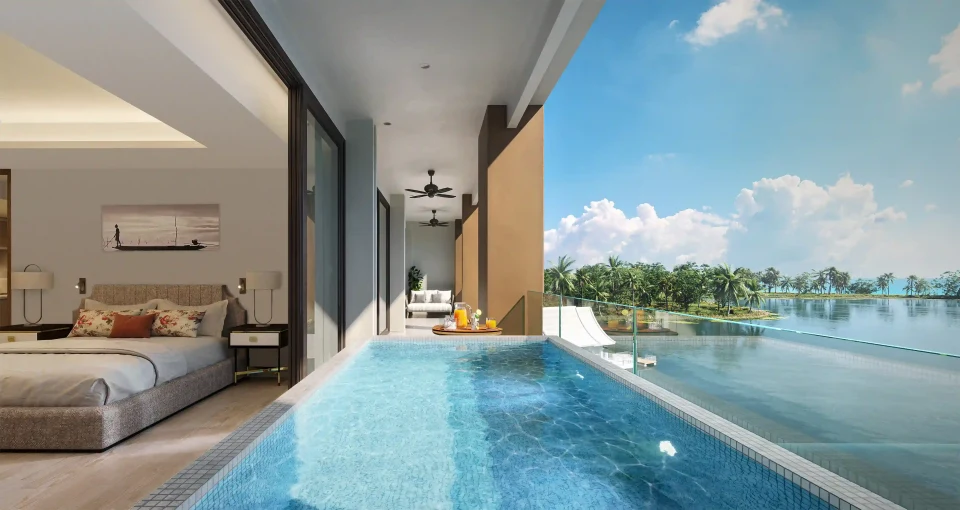
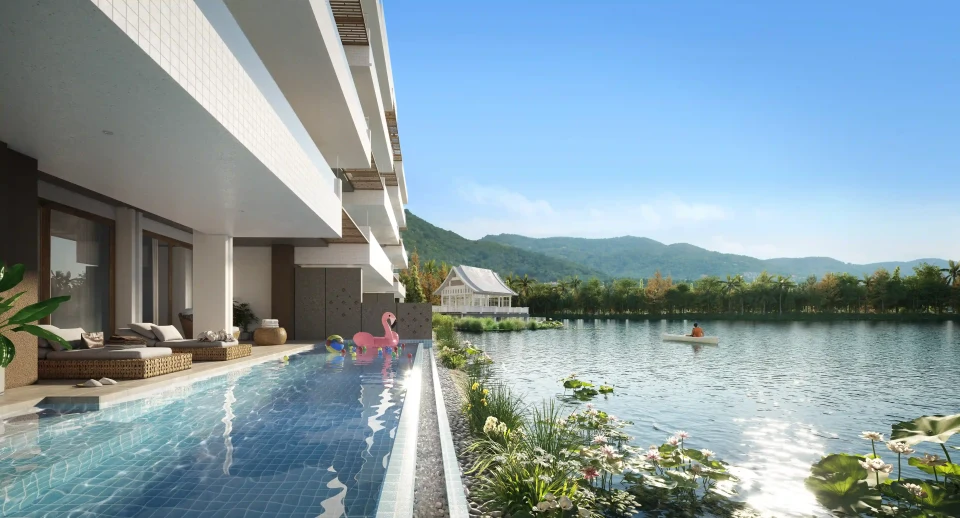
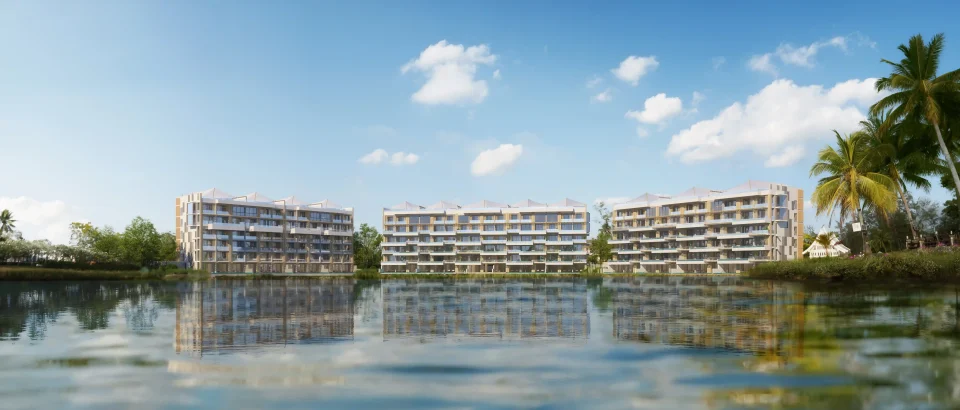
Angsana Oceanview Residences completed in 2021 and sits within the Laguna Phuket estate overlooking the Andaman Sea. With 149 units available on the secondary market from approximately $1.2M (£960K), this is the most accessible entry point into a ready, income-generating Angsana-branded property in Phuket. This guide covers current pricing, rental yield data, resale liquidity, and how Angsana compares to buying off-plan Banyan Tree products.
Get Angsana Oceanview secondary market data
MORE Group is a Phuket-based property team. 0% buyer commission, legal support, free property tour.
What Is Angsana Oceanview Residences?
Project specifications:
- Total units: 149
- Status: Completed 2021 (ready for occupancy and rental)
- Location: Laguna Phuket, Cherng Talay, Phuket
- Views: Andaman Sea (oceanview to full ocean panorama)
- Price on secondary market: From approximately £960K (~$1.2M)
- Ownership: Freehold condominium (foreign quota subject to availability)
- Brand: Angsana (Banyan Group)
Angsana Brand in Context
For property investors, this distinction matters:
| Factor | Banyan Tree | Angsana |
|---|---|---|
| Brand tier | Ultra-luxury | Luxury |
| Target guest | UHNWI, 35-65 | Affluent, 30-55 |
| ADR premium | Highest | High |
| Resale market | Narrow | Broader |
| Entry price | $4.7M+ (Oceanus) | From $1.2M (secondary) |
Angsana’s broader appeal means a deeper resale market: more potential buyers at the $1.2M-$2.5M price point than at $4.7M+.
Secondary Market Pricing Analysis
Current secondary market price estimates:
- Entry-level units (lower floors, partial sea view): From ~$1.2M (£960K)
- Mid-tier (higher floors, full oceanview): $1.5M-$2.2M
- Penthouse levels (panoramic sea view): $2.5M+
These are indicative ranges; actual pricing depends on floor level, unit size, sea view angle, interior condition, and furnishing specification.
Price trends since completion: Laguna Phuket as an area has recorded 5-6% annual price appreciation historically. Units purchased at launch in 2019-2020 at approximately $800K-$1.1M (estimated) and now trading at $1.2M-$2.5M reflect cumulative appreciation consistent with this trend.
Rental Yield Analysis: Angsana Oceanview
Gross Yield Estimates
| Unit Type | Approx. Price | Estimated Annual Gross Rental | Gross Yield |
|---|---|---|---|
| Oceanview (lower floor) | $1.2M | $65K-$84K | 5.4-7% |
| Oceanview (mid-floor) | $1.7M | $85K-$120K | 5-7% |
| Penthouse | $2.5M+ | $140K-$200K+ | 5.6-8% |
Rental Rate Context
Angsana-branded condominium units in Laguna Phuket generate rental premiums over non-branded equivalents due to:
- Brand recognition with international guests booking through Banyan Group channels
- Laguna estate access: golf course, Banyan Tree Spa, Bang Tao Beach
- Managed rental programme administration
- Higher ADR (average daily rate) associated with Angsana branding
Short-term rental rates for Angsana Oceanview units range from approximately $250-$600 per night depending on floor, size, and season. Peak season (November-April) commands 40-60% premiums over low season.
Net Yield Reality
After Angsana-managed rental programme fees (typically 30-35% of gross revenue), property tax, maintenance, and HOA costs, net yields for buyers in the $1.2M-$2M range typically land at approximately 3.5-5%. This is consistent with branded luxury condominiums globally.
Laguna Phuket: Why Location Sustains Yields
Laguna Phuket amenities adjacent to Angsana Oceanview:
- Bang Tao Beach: 8km beach, consistently rated top 5 in Phuket
- Laguna Golf Phuket: 18-hole championship course
- Banyan Tree Spa: One of Asia’s most recognised spa brands
- Boat Avenue: Premium retail, restaurants, lifestyle
- Porto de Phuket: Waterfront dining and entertainment
- BISP (British International School Phuket): 5 min
This infrastructure means Angsana Oceanview is not a pure tourist rental play, it also attracts long-stay residents (3-12 months) who value Laguna’s lifestyle infrastructure and school proximity.
Angsana Oceanview vs Off-Plan Banyan Tree: Which Makes More Sense?
| Factor | Angsana Oceanview (Secondary) | Banyan Tree Garrya (Off-plan) |
|---|---|---|
| Status | Ready, income-generating now | Q2 2027 delivery |
| Price | From $1.2M | From $430K |
| Brand | Angsana (Banyan Group) | Garrya wellness (Banyan Group) |
| Yield start | Immediate | 18-24 months from now |
| Capital appreciation captured | Already happened | Potential 35-50% during construction |
| Risk | Low (completed) | Construction timeline risk |
| Location | Sea view, Laguna | 200m Bang Tao Beach |
| sqm pricing | ~$6,000-9,000/sqm | ~$8,300/sqm |
The case for Angsana Oceanview (secondary):
- No construction or delivery risk
- Rental income starts immediately
- Tested market: you can verify actual rental rates and occupancy data
- Sea views from completed, established Laguna address
The case for Garrya off-plan:
- Lower entry price ($430K vs $1.2M+)
- Construction appreciation potential (35-50%)
- Newer building, latest design standards
- Wellness brand positioned for growing demand
- Beachfront proximity (200m)
For yield-first buyers who can’t wait 18 months: Angsana secondary. For appreciation-first buyers with patience: Garrya off-plan.
Resale Liquidity Assessment
Angsana Oceanview Residences benefits from several liquidity factors:
- Brand recognition reduces buyer due diligence time: international buyers already understand what Angsana is
- Completed and income-generating means buyers can verify rental history before purchasing
- Laguna Phuket address is universally understood as a quality benchmark
- Price range ($1.2M-$2.5M) is accessible to a broader HNW buyer universe than Banyan Tree Oceanus ($4.7M+)
Limitations:
- Secondary market for branded luxury condos above $1M in Phuket has moderate depth, expect 6-18 months to find the right buyer at full price
- Foreign ownership quota must be available or buyer must consider leasehold structure
Legal Considerations for Secondary Market Buyers
Title due diligence: Verify the unit holds a clean Chanote (freehold title deed) and that there are no encumbrances, loans, or disputes registered against it.
Foreign quota: Confirm the unit is registered under the foreign quota (or available to convert). If all foreign quota units in the project are owned, incoming foreign buyers must purchase via leasehold (30+30+30 years).
Transfer tax: Secondary market purchases incur transfer fee (2% of appraised value), specific business tax (3.3% if held less than 5 years) or stamp duty (0.5% if held over 5 years), and income withholding tax on seller.
Rental history: Request 12-24 months of actual rental income and occupancy records from the current owner or management programme to validate yield assumptions.
Pros and Cons
Pros
- Secondary-market units in a building completed in 2021, so the reserve and the accounts have a real history
- Already producing income, which means the rental record can be inspected rather than projected
- Inside the Laguna estate, with its access, security and infrastructure
- The Angsana rental programme is running rather than promised for a future handover
- No construction risk and no waiting period between purchase and income
What to consider:
- From $1.2M is a significant capital commitment vs off-plan Laguna alternatives at $265K-$430K
- Net yields of 3.5-5% are respectable but not exceptional for the capital deployed
- Foreign quota availability must be verified before proceeding
- No off-plan appreciation remaining, capital gains depend on future price growth
Buying on the secondary market inside an estate
A resale inside an integrated resort is a different transaction from an off-plan purchase, and the advantages are worth using rather than treating as incidental.
The building exists and has a history. Ask the juristic person what the CAM rate per square metre is now and what it was three years ago, how much the sinking fund holds and against which major works, and whether there has been a special assessment. Ask to read the minutes of the last two owners’ meetings: the most candid document in any condominium transaction, because they record what owners actually disagreed about.
The rental programme has a record too. If the unit has been let, ask for the last three years of statements: occupancy by month, achieved rates, what the operator deducted and under which headings. That evidence is the whole difference between a resale and a projection, and a seller who cannot produce it is telling you something.
And the estate charge exists as a real figure rather than an estimate. Ask for it separately from the building’s own CAM, with the schedule of capital works planned across the estate over the next five years.
What to settle before the transfer date
On a resale everything happens on one day at the Land Office, so the protections have to be in place before it.
Get the title checked and the encumbrance position confirmed by counsel you appointed. Get the debt-free certificate from the juristic person, because outstanding CAM and sinking fund arrears attach to the unit rather than to the departing owner, and the Land Office will not register the transfer without it; ask for it early rather than on the day.
Get the foreign quota position in writing as a dated figure in remaining square metres against this specific unit. On a resale the answer depends on whether the seller held the unit in the foreign allowance or in the Thai one, and a unit bought from a Thai owner does not automatically come with quota attached.
For a freehold purchase as a non-resident, the funds must reach Thailand from abroad in foreign currency and the receiving bank issues the FET record the Land Department requires at registration. On a resale the timing is tighter than on an off-plan purchase, so agree it with your bank in advance.
Then ask what is included at transfer. On a furnished resort residence the difference between a unit sold with its furniture, appliances and soft furnishings and one sold bare is a substantial sum, and it should be a written inventory rather than an understanding.
The programme terms matter more than the yield quoted
If the unit comes with a place in the estate’s rental programme, two clauses decide most of what you will actually receive.
The distribution basis: whether the programme pays on the building’s total revenue shared between participating owners, or on the bookings your own unit takes. In the first case unit selection matters much less and a strong unit subsidises a weaker one; in the second it matters a great deal.
And owner usage: how many nights you may take, which dates are excluded, what notice is required, and whether unused nights carry forward. Peak weeks are almost always blacked out, and those are the weeks owners want.
Ask as well whether participation transfers automatically with the sale, whether it is optional, what it costs to leave, and whether you may appoint your own manager instead. A programme you cannot exit is a term of the purchase rather than a service.
Read Also:
- Bang Tao & Laguna Property Guide
- Buying Property in Phuket
- Freehold vs Leasehold in Thailand
- Condo Transfer Fees in Thailand
- Due Diligence, Step by Step
- Thailand Property Tax for Foreigners
- Resale Potential of Phuket Condos
Who this suits
- A buyer who wants the Laguna address without an off-plan wait. This is secondary-market stock, so the building exists and the record can be read rather than projected.
- An owner who values liquidity over the launch discount. Buying at resale means paying today’s price; it also means an exit into a market that already has comparable transactions, which an off-plan buyer will not have for years.
- Someone letting to the sea-view guest. The outlook is the asset here, and it reaches a guest who chose the building for it rather than on price.
It does not suit a buyer chasing the developer’s payment terms (those belong to new launches, not resales) or one who needs the lowest entry price in the corridor. At this level the case is the position and the ability to inspect it, not the ticket.
What is on the list, and what the rate says
Listings have included two-bedroom residences of 209 and 304 square metres at 45.82M and 84.94M THB, and a three-bedroom of 281 square metres at 58.68M.
As rates those run from about 208,800 to 279,400 THB per square metre. The three-bedroom is the cheapest space despite the extra bedroom, and the dearest is a two-bedroom, which tells you the premium here is attached to position rather than to layout. Ask which floor and which aspect each unit occupies, and what specifically the top of that range is paying for.
At these sizes the residences are apartments in name and villas in scale. A 304 square metre two-bedroom is a very particular product: enormous living space, few bedrooms, and a buyer pool of people who want exactly that rather than capacity. It is excellent for an owner in residence and awkward as a letting asset, because holiday accommodation is priced by how many people it sleeps. If letting is the plan, the three-bedroom is the more commercial format at a lower rate per square metre, and that is worth weighing before the view decides it for you.
Branded residences inside Laguna: what the premium buys
At this level you are buying a hospitality product with a residential component, and the useful questions are contractual rather than architectural.
Ask for the hotel management agreement or brand licence in writing, naming the licensor entity and the term. What you are establishing is whether the operator contractually runs the rental programme, or whether the name is licensed for marketing while a local manager handles day-to-day operations. Phuket has both, and the gap in what an owner actually receives is wide.
Then ask about the term itself. Brand agreements frequently run for a fixed period with renewal at the operator’s discretion, and a resale in year twelve into a market that knows the name is coming off the building is a different proposition from one where the agreement runs on.
The documents that decide this purchase
| Document | What it settles | The question to ask |
|---|---|---|
| Brand licence agreement | Whether Angsana operates the residence or licenses its name | Which entity is the licensor and for what term |
| Rental programme agreement | How revenue is split and when it is paid | Gross or net, paid how often, and what is charged back |
| Owner-use schedule | Which weeks you can actually take | Blackout dates, notice period, whether unused nights carry |
| Programme exit terms | Whether participation is a service or a term of the purchase | What it costs to leave and whether you may appoint your own manager |
| Estate charge and building CAM | The two standing costs inside a resort estate | Both rates per square metre, with their history |
| Foreign quota against your unit | Freehold is capped at 49% of the building by floor area | A dated letter from the juristic person, in square metres |
Risks and what to check
The brand is a contract, not a guarantee. A genuine operated residence has an agreement the developer can show under NDA. If the answer to who operates this is a rendering rather than a document, that is the answer.
Peak weeks are the weeks the programme wants. Owner-use allowances almost always exclude the periods you would most like to be here. Read the blackout list before the price.
Quota on a large unit runs out first. At this ticket the apartments are big, and a big apartment consumes several times a studio’s share of the foreign allowance. On a building that has been trading for years the allowance has been drawn down by earlier resales, so ask for the remaining figure in square metres, dated, against your specific unit.
Two charges, not one. Inside Laguna you pay the building’s common area maintenance and the estate’s own charge. Both are revisable, and both are payable whether or not you visit.
Frequently Asked Questions
Units are priced from 45,820,000 THB for 2-bedroom residences up to 84,940,000 THB for the 3-bedroom configurations. Prices reflect the Angsana brand premium and the Laguna Phuket resort address.
Properties within the Laguna Phuket resort zone are typically structured as leasehold. Foreign buyers can hold units on a 30+30+30 year leasehold basis, which is the standard ownership framework for this area. Our legal team can walk you through the specific title structure.
Yes. Angsana's hospitality management team operates a rental program for unit owners. When you are not in residence, your unit can be placed in the managed short-stay pool, operated under Angsana's brand, reservation infrastructure, and OTA presence.
Branded managed residences in the Laguna zone typically achieve gross yields between 5-8% depending on unit size, management program terms, and personal-use allocation. Specific yield projections are best discussed with our team based on your target ownership structure.
The payment schedule is split into five equal stages of 20% each, tied to construction milestones. This is one of the most balanced payment structures available for a luxury Phuket project, allowing buyers to manage capital deployment over the construction timeline rather than front-loading the purchase.
Frequently Asked Questions
The building completed in 2021, so units trade between owners rather than from the developer. That means no construction risk, a documented operating history you can inspect, and a price set by individual sellers rather than by a developer's price list.
The juristic person's financial statements for the last two or three years: the sinking fund balance against the building's age, the trend, and the owner delinquency rate. Then twelve months of actual occupancy and achieved rates from comparable units, which on completed stock is documented rather than projected.
Within the building's 49% foreign floor-area allowance. Branded stock at this level attracts almost entirely foreign demand, which means quota is the binding constraint rather than availability of units. Get it confirmed in writing before any non-refundable payment.
Hotel-operated programmes typically cap owner nights at thirty to sixty a year with peak weeks blacked out entirely. Ask for the night allowance, the blackout dates, the notice period, and whether distribution is pooled across participating units or based on your own unit's bookings.
Everything is knowable. Twenty-plus years of resort operation behind the residential product means occupancy history exists, common areas can be inspected, and comparable units have transacted. You give up construction-period appreciation in exchange for removing the guesswork.
Live developer data · Phuket specialist reply
Check Availability, Quota and Floor Plans
Send your contact and budget. We will reply with current stock, payment plan and foreign buyer notes.

MORE Group Editorial
Phuket Real Estate Experts
The MORE Group team has helped 500+ European and American buyers purchase property in Thailand. We provide legal support, 0% commission, and on-the-ground expertise with 8 years in the Phuket market.
About MORE Group →Check Availability, Quota and Floor Plans
Send your contact and budget. We will reply with current stock, payment plan and foreign buyer notes.