Ayana Residence Phuket: Full Branded Layan Review 2026
Ayana Residence Phuket full review 2026. Unit types, pricing, location, payment plan, rental yields, and honest investment assessment for international buyers.
Verify before you reserve
Check availability before you reserve
Project pages can go out of date quickly. Request the latest unit list, payment schedule and foreign buyer notes for this off-plan project.
Current availability
Get live stock, reserved units and developer prices, from ฿5.4M.
Foreign quota check
Ask us to confirm remaining foreign freehold quota before reservation.
Payment schedule
Compare deposit, construction milestones, transfer timing and cash flow.
Last checked
Content updated June 2026. Ask for current availability before paying a deposit.
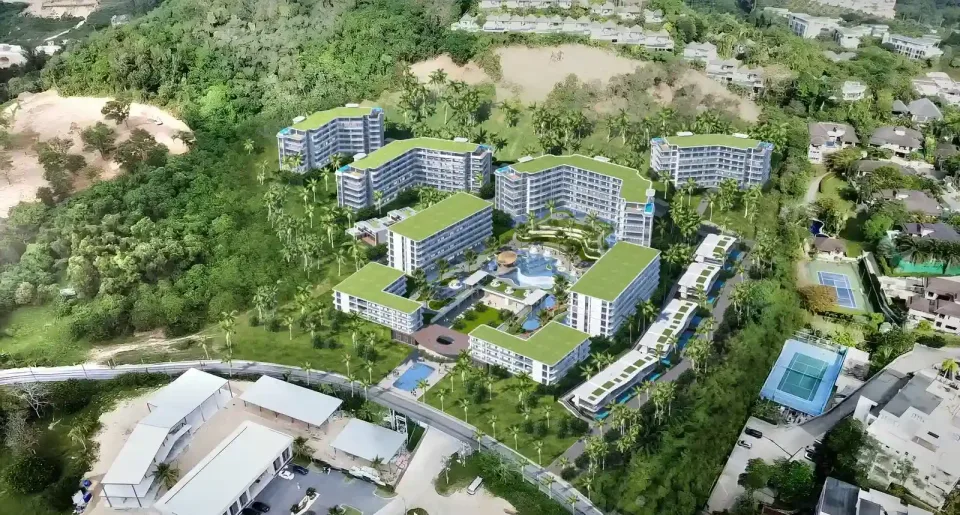
Ayana Residence Phuket sits at an unusual intersection in the island’s property market: it is not simply a branded condominium project, it is a residential product backed by one of Asia’s most recognised independent hospitality groups. Prices begin from 5,426,101 THB, approximately 150,000 USD at current exchange rates, placing the project within reach of buyers who want genuine hotel-grade management without the seven-figure entry ticket that most other international branded residences in Phuket demand. The site occupies a position in Layan, the quieter northern extension of the Bang Tao corridor, where land values remain below those of central Cherng Talay while access to the beach and the Laguna complex stays within 15 minutes by car.
For a buyer weighing this project against the dozens of other off-plan launches on the island, two questions determine whether Ayana Residence is the right decision: what does the Ayana brand actually deliver in a residential context, and does the Layan location support the rental demand that justifies the premium over a non-branded equivalent in the same price range? This review works through both questions in detail, with specific attention to pricing benchmarks, yield modelling, ownership structure, and the due diligence steps that matter most before signing a sale and purchase agreement. Buyers who want an overview of how Phuket’s off-plan market works before reading unit-specific data should start with the off-plan property Phuket guide.
What Should You Know About Ayana Hotels: Brand Background and Asia Hospitality Reputation?
Ayana Hotels: Brand Background and Asia Hospitality Reputation for Ayana Residence Phuket means matching layan tenant demand to unit size and walk time to beach, because ADR swings 15 to 25% within one postcode. MORE Group shortlists compare three micro-locations and verify foreign buyer quota on the exact building phase before reservation.
| Factor | MORE Group benchmark |
|---|---|
| Net yield | 5 to 7% after 20 to 25% operator fees |
| Peak occupancy | 75 to 85% on comparable managed units |
From that Bali origin, the group expanded across the Asia-Pacific region. Rimba by Ayana, also in Bali, targets a younger and slightly more accessible price point while maintaining the resort scale of the parent brand. Ayana Komodo Resort on Flores Island, Indonesia, brought the group into eco-luxury territory, catering to high-spending travellers drawn to the Komodo National Park diving and wildlife experience. Delonix Hotel Karawang and AYANA Midplaza Jakarta extended the group into urban Indonesia. In South Korea, AYANA Residences Gangnam established the group’s credentials in branded residential real estate before the Phuket launch, giving the management company direct operational experience with the specific challenges of running a residential programme alongside a hotel operation.
This regional portfolio matters for buyers considering Ayana Residence Phuket for two practical reasons. First, Ayana has built and managed properties across genuinely different demand environments: island leisure tourism in Bali and Komodo, urban business in Jakarta and Seoul. That breadth means the management company understands seasonal occupancy patterns of the kind that define Phuket’s rental calendar, where the earnings gap between November to April peak season and May to October shoulder season can determine whether a rental pool delivers 8% gross or 4% gross over the full year. Management teams with experience only in mature European or North American hotel markets often underestimate how extreme this seasonality is. Ayana does not have that blind spot.
Second, Ayana’s position as an independent operator rather than a sub-brand of a global hotel chain gives the group more flexibility in pricing, programming, and distribution. Hotel companies managed under IHG, Marriott, or Hyatt licences carry their own brand standards, fee structures, loyalty programme obligations, and distribution agreements. An independent operator like Ayana sets its own terms and can adapt them to the specific product it is managing. This can be a benefit for buyers, since management agreements are potentially more negotiable than they would be under a major chain’s standardised contract, though it can also mean less visibility into the group’s long-term financial stability compared to a publicly listed global brand.
For buyers who are new to branded residences as a property category, the model works as follows. A developer builds to the brand’s design and service specifications, then licenses the brand name and contracts the hotel company to manage operations once the building is complete and handed over. In return for the brand association, the developer can charge a premium over comparable unbranded product, typically between 15% and 30% more per square metre at launch, and the management company earns a fee from rental revenue generated by participating owner units. Buyers own the freehold or leasehold title to their individual unit, and they participate in a managed rental programme if they choose to do so. They do not manage the property themselves. They receive a revenue share after the management company deducts its operating costs and management fee from the pooled rental income.
This structure suits a specific profile: a buyer who wants a real-asset investment with income potential but does not want the direct responsibility of managing short-stay guests, coordinating maintenance, or competing for bookings on platform aggregators. It does not suit buyers who plan to manage their own listings independently, who need unrestricted personal access to the property throughout the year, or who are optimising purely for the highest possible gross yield number without concern for service quality or management overhead.
What Ayana Residence Delivers?
What Ayana Residence Delivers on Ayana Residence Phuket means foreign buyers should verify quota, payment milestones, and net rental assumptions in writing before deposit. MORE Group layan reservation files require documented checks on every off-plan purchase, with 49% foreign quota confirmed per unit, not per project marketing alone.
| Factor | MORE Group benchmark |
|---|---|
| Net yield | 5 to 7% after 20 to 25% operator fees |
| Peak occupancy | 75 to 85% on comparable managed units |
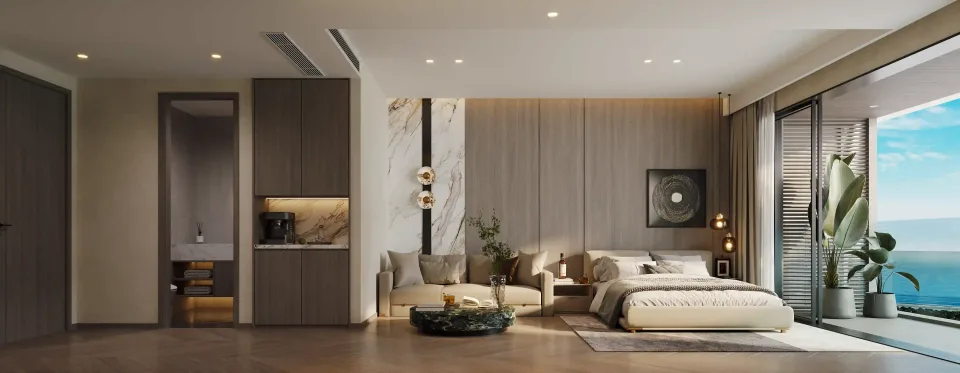
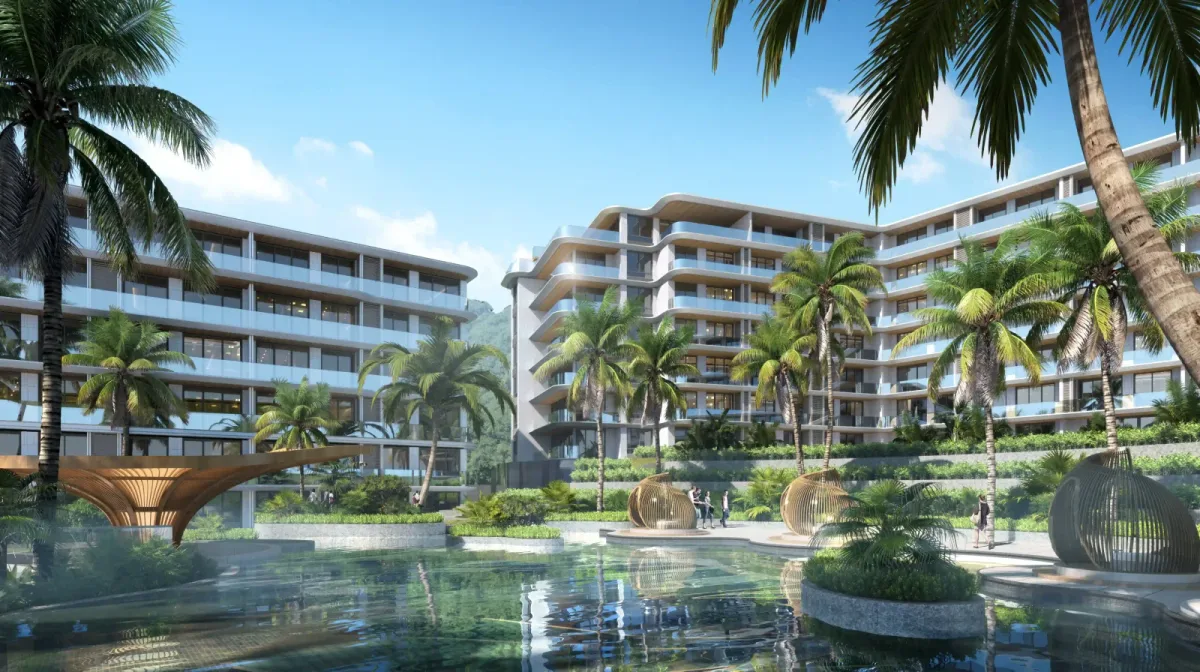
Spa and wellness provision operates on the same principle. An Ayana-managed spa is not a small treatment room bolted onto a gym. It is a full-service wellness facility with trained therapists, branded product lines, a treatment menu spanning traditional Thai massage through advanced body treatments, and a booking system that integrates with the hotel’s guest management platform. The spa serves both resident owners and paying outside guests, which creates a revenue line for the property that supplements the rental programme income and contributes to common area operational costs.
Food and beverage is another component that separates branded residences from their non-branded competitors. Ayana properties consistently include at least one restaurant or bar facility operated to the management company’s standards and open to guests from outside the residence. For rental guests, access to on-site dining reduces the friction of a resort stay, particularly in Layan, where the nearest off-site restaurants are a 10 to 15 minute drive. For the investment case, an active F&B outlet on the property supports the quality score that drives booking platform ratings, which in turn influences occupancy rates and nightly rate achievement.
The managed rental programme is the financial engine of the product for investor buyers. Under a standard arrangement, owner units are made available to the hotel’s booking and distribution platform during pre-agreed rental windows. The hotel markets units as serviced resort apartments through its own direct booking channel and through online travel agencies. Revenue collected across participating units is pooled by unit category, operating costs are deducted, and the net pool is distributed to owners according to each unit’s share of the relevant pool. The pooling structure smooths out occupancy variance between individual units, which benefits owners whose unit may not be the most desirable position in the building, since they participate in the collective performance of the broader pool rather than carrying the risk of their specific unit’s occupancy alone.
Service standards under Ayana management include daily housekeeping for rented units, 24-hour concierge and security, guest services coordination, maintenance management, and owner portal access for revenue and occupancy tracking. For buyers who live outside Thailand and cannot monitor the property directly, this level of management structure materially reduces the practical burden of overseas ownership. The alternative, self-managing a short-stay property in Phuket from Europe, North America, or the Gulf, involves managing time zone differences, guest communications, maintenance contractors, and platform accounts simultaneously. The managed programme eliminates most of this operational load in exchange for the management fee.
What Should You Know About Unit Mix and Pricing?
What Should You Know About Unit Mix and Pricing on Ayana Residence Phuket means foreign buyers should verify quota, payment milestones, and net rental assumptions in writing before deposit. MORE Group layan reservation files require documented checks on every off-plan purchase, with 49% foreign quota confirmed per unit, not per project marketing alone.
The table below reflects typical unit configurations for a branded resort residence of Ayana’s scale in the Layan corridor, with pricing benchmarks derived from comparable launches in this sub-market. Buyers should confirm the current price list and exact unit mix with MORE Group before committing a reservation deposit.
| Unit type | Size range (sqm) | Price from (THB) | Price from (USD) | Suited to |
|---|---|---|---|---|
| Studio or junior suite | 35 to 55 | 5,426,101 | approx. 150,000 | Yield investor, entry position |
| 1-bedroom residence | 60 to 85 | 8,000,000 | approx. 222,000 | Lifestyle buyer, managed rental |
| 2-bedroom residence | 95 to 140 | 12,000,000 | approx. 333,000 | Couple or family, higher yield capacity |
| Penthouse or villa suite | 180 and above | 22,000,000 | approx. 611,000 | Capital appreciation, premium rental |
Price per sqm context: Branded resort residences in Layan and the Bang Tao corridor currently launch in the range of 120,000 to 200,000 THB per sqm, depending on view category, floor level, and unit size. This range places them consistently above non-branded condominiums in the same corridor, where comparable sizes sell from 80,000 to 130,000 THB per sqm at launch. The premium is supported by brand recognition on booking platforms, the cost of resort-grade amenity construction, and the management infrastructure that a non-branded developer does not provide.
Payment stage alignment: Off-plan buyers at Ayana Residence pay in stages tied to construction milestones rather than in a single transaction. The purchase price is spread across a reservation deposit, SPA payment, construction-phase instalments, and a final transfer payment. This structure is covered in detail in the payment plan section below, and buyers unfamiliar with staged payment mechanics in Thai off-plan purchases should review the Phuket property market prices 2026 overview for broader context on how purchase costs are structured across the island.
What Should You Know About Layan Location Analysis?
What Should You Know About Layan Location Analysis for Ayana Residence Phuket means matching layan tenant demand to unit size and walk time to beach, because ADR swings 15 to 25% within one postcode. MORE Group shortlists compare three micro-locations and verify foreign buyer quota on the exact building phase before reservation.
| Factor | MORE Group benchmark |
|---|---|
| Net yield | 5 to 7% after 20 to 25% operator fees |
| Peak occupancy | 75 to 85% on comparable managed units |
Why Layan over central Bang Tao: The Laguna complex, which sits just south of Layan, brings both benefits and drawbacks for buyers. Properties within or immediately adjacent to Laguna gain access to its golf course, integrated beach club, and hotel brand infrastructure, but land inside the complex is expensive and frequently encumbered by leasehold structures tied to the Laguna master development. Layan offers a position adjacent to this infrastructure without the Laguna land premium. Travel time from a Layan address to the Laguna beach club entrance is typically under 10 minutes on a scooter and 12 to 15 minutes by car.
Beach access: Bang Tao Beach, one of Phuket’s longest and least crowded beaches, is reachable from most Layan addresses in 10 to 15 minutes by car. Layan Beach itself, a small cove at the northern tip of the corridor, is closer still and significantly less developed than the main Bang Tao stretch. Neither beach has the mass-market tourist infrastructure of Patong or Kata, which is precisely the appeal for buyers targeting long-stay leisure travellers, digital nomads, and high-spending guests who prefer quieter environments over crowded beach strips.
Airport proximity: Phuket International Airport is located in the north of the island, making the Layan corridor one of the closest residential zones to arrivals and departures. Travel time from a Layan address to the airport is typically 20 to 25 minutes outside peak traffic hours. This proximity is a genuine operational advantage for rental management: guests arriving on late flights or departing early do not face a long transfer, which reduces friction compared with properties in Kata, Rawai, or Chalong in Phuket’s south, where airport transfers of 45 to 60 minutes are common.
Local supply and everyday amenities: The Layan and Cherng Talay area has developed considerably over the past decade. Boat Avenue in Cherng Talay, approximately 10 to 15 minutes from most Layan addresses, offers a concentration of international restaurants, coffee shops, a Tops supermarket, and a Lotus’s for everyday grocery supply. Porto de Phuket, a lifestyle retail centre adjacent to the Laguna development, adds further food and beverage options within a short drive. Medical facilities are concentrated further south near Thalang and Phuket Town, which represents the main practical limitation of the northern corridor: a serious medical event requiring specialist care involves a 30 to 45 minute transfer, which is a consideration for buyers targeting older or longer-staying tenants.
Layan vs other northwest Phuket sub-markets: Buyers comparing Layan to Surin, Kamala, or Bang Tao central will find that Layan occupies a mid-point position. It is more exclusive than the main Bang Tao zone, less developed and quieter than Surin, and more accessible from the airport than Kamala. Its hillside positions support sea view premiums that flat-land Bang Tao plots cannot match. For a detailed comparison of all northwest Phuket sub-markets and how rental demand varies between them, see the best areas to buy property in Phuket guide and the Bang Tao and Laguna area property guide.
What Do Rental Yield Analysis for Branded Resort Residences Mean for Foreign Buyers?
Rental Yield Analysis for Branded Resort Residences on Ayana Residence Phuket means underwriting 7 to 9% gross yield and 5 to 7% net after operator fees on ฿5.43M entry ($151k), with CAM near ฿30 to ฿45 per sqm monthly in net models. MORE Group layan case study data from 2024 shows managed 1-bedroom stock at 72 to 78% blended occupancy under professional operators.
Phuket’s seasonal demand pattern: The island operates on a strongly seasonal calendar. November through April is high season, when European leisure travellers, domestic Thai visitors, Gulf-state tourists, and Russian visitors combine with long-haul arrivals from Australia, Scandinavia, and East Asia. This five to six month window is where branded residences in Layan earn the majority of their annual rental revenue. May through October, the southwest monsoon season, brings lower average occupancy across all property types, though July and August see a secondary peak driven by European summer school holidays. Branded resort residences typically achieve occupancy of 75% to 85% during high season months and 40% to 55% during low season, producing full-year weighted averages in the range of 60% to 70%.
Nightly rate benchmarks for Layan branded residences (2025 to 2026): A one-bedroom branded resort residence in good condition and with a pool view achieves nightly rates of approximately 3,500 to 6,000 THB (97 to 167 USD) during high season months. Two-bedroom units with strong views reach 6,000 to 10,000 THB per night at peak. These rates assume hotel-managed distribution and units presented to consistent brand standards, including furniture, linens, and in-room amenities at the level guests expect from a five-star affiliated property.
| Scenario | Gross revenue (annual) | Management fee deducted | Estimated net to owner |
|---|---|---|---|
| Studio, managed pool, average occupancy | 480,000 to 650,000 THB | 25 to 30% of gross | 336,000 to 455,000 THB |
| 1-bed, managed pool, average occupancy | 650,000 to 900,000 THB | 25 to 30% of gross | 455,000 to 630,000 THB |
| 2-bed, managed pool, average occupancy | 1,000,000 to 1,400,000 THB | 25 to 30% of gross | 700,000 to 980,000 THB |
Gross yield worked example: A 1-bedroom unit at 8,000,000 THB purchase price generating 775,000 THB gross revenue annually produces approximately 9.7% gross yield before fees. After a 28% management and operating deduction, net revenue to the owner falls to approximately 558,000 THB, representing a net yield of roughly 7.0% on the purchase price. This sits at the higher end of realistic expectations for managed resort residences in Phuket and should be treated as a target case rather than a guaranteed outcome.
Factors that support yield performance:
Units on higher floors with unobstructed sea or pool views consistently command premium nightly rates compared with lower-floor equivalents. Branded distribution channels reduce the owner’s dependency on platform aggregators, which typically charge commission of 15% to 18% of the booking value, eroding gross revenue before it reaches the management pool. Management quality, maintenance response times, and guest review scores on booking platforms directly drive the occupancy rate that determines annual income. A property with consistently high guest ratings achieves materially better occupancy in the shoulder season than one with average or inconsistent reviews.
Factors that reduce net yield:
Common area maintenance charges (CAM), charged per square metre of unit area, are paid by the owner regardless of occupancy and are not deducted from the rental pool distribution. Sinking fund contributions are required under Thai condominium law and represent an additional annual cost. Personal use windows during high-season months reduce the available rental days in the highest-earning period of the year. Buyers who plan to use the property for four weeks in December or January should model their yield numbers on the rental income available after those personal use days are excluded. For a detailed methodology on modelling net yields for Phuket condominium investments, see the Phuket rental yield guide.
What Do Payment Plan and Buying Process Mean for Foreign Buyers?
Payment Plan and Buying Process on Ayana Residence Phuket means underwriting 7 to 9% gross yield and 5 to 7% net after operator fees on ฿5.43M entry ($151k), with CAM near ฿30 to ฿45 per sqm monthly in net models. MORE Group layan case study data from 2024 shows managed 1-bedroom stock at 72 to 78% blended occupancy under professional operators.
| Factor | MORE Group benchmark |
|---|---|
| Net yield | 5 to 7% after 20 to 25% operator fees |
| Peak occupancy | 75 to 85% on comparable managed units |
A typical staged payment schedule for a branded off-plan project in Phuket at Ayana’s price level proceeds as follows:
- Reservation deposit: 2% to 5% of purchase price, payable within 7 days of reservation to secure the specific unit and remove it from the sales inventory.
- Sale and purchase agreement signing: 20% to 30% payable within 30 to 60 days of reservation, once the SPA has been reviewed, negotiated if necessary, and signed by both parties.
- Foundation completion: 10% to 15% payable upon verified completion of foundation and basement works.
- Structural frame completion: 10% to 15% payable upon verified completion of the building’s structural frame.
- Fit-out, MEP, and interior completion: 10% to 15% payable upon verified completion of mechanical, electrical, plumbing, and interior fit-out works.
- Transfer and title registration: 20% to 30% payable on the day of legal title transfer at the Land Department.
Foreign Exchange Transfer documentation: Foreign buyers purchasing condominium units on a freehold basis in Thailand are required under Thai law to demonstrate that purchase funds entered Thailand from abroad and were converted to Thai Baht through the Thai banking system. Thai banks issue a Foreign Exchange Transfer certificate, referred to as a FET or TorTor 3 document, for qualifying transactions. This certificate is required at the Land Department for freehold title registration in the foreign buyer’s name. Buyers who source funds through cash deposits in Thailand, third-party transfers that obscure the original source, or accounts that do not generate a qualifying FET document risk being unable to register their unit in the foreign quota. Buyers should confirm the exact fund transfer and banking process with their Thai property lawyer before any funds are committed.
Management participation agreement: The agreement that governs rental pool participation, personal use rights, revenue distribution methodology, and the management company’s fee structure is a separate legal document from the SPA. It is typically signed at or shortly after SPA signing. Both documents require independent review by a qualified Thai property lawyer before signature. The SPA and the management participation agreement interact in important ways, for example, the personal use provisions in the management agreement may limit the times of year when the buyer can stay in their own unit, which is a practical reality that some buyers discover only after signing. For the full purchase process walkthrough, including the role of the Land Department, escrow arrangements, and lawyer selection, see the due diligence process guide for Thailand property.
Construction timeline and delay provisions: Buyers should request a written construction schedule from the developer at SPA stage, including milestone dates and the penalty provisions that apply if the developer misses the agreed transfer date. Standard Thai SPA contracts include a penalty clause that becomes payable by the developer if transfer is delayed beyond the agreed date, typically expressed as a daily penalty rate on the purchase price. The specific rate and trigger conditions should be confirmed with a lawyer and negotiated before signature if the standard terms are not satisfactory.
What Should You Know About Buyer Scenarios?
What Should You Know About Buyer Scenarios on Ayana Residence Phuket means foreign buyers should verify quota, payment milestones, and net rental assumptions in writing before deposit. MORE Group layan reservation files require documented checks on every off-plan purchase, with 49% foreign quota confirmed per unit, not per project marketing alone.
| Factor | MORE Group benchmark |
|---|---|
| Net yield | 5 to 7% after 20 to 25% operator fees |
| Peak occupancy | 75 to 85% on comparable managed units |
The key verification step for this buyer is confirming the management fee structure in writing and modelling three scenarios before committing: a high-season optimistic case, a full-year average case, and a low-season stress case. If the low-season stress case produces negative or near-zero net income after CAM and management fees, the yield model depends entirely on high-season performance, which introduces meaningful seasonal risk. A buyer who cannot tolerate a period of near-zero net income during low season should have a cash reserve covering 6 to 12 months of CAM and loan repayments before purchasing.
Lifestyle buyer seeking a Phuket base with rental income to offset carrying costs: For buyers who intend to use the property personally for four to eight weeks per year and rent it for the remainder, the Ayana managed programme is well suited. The hotel handles bookings, cleaning, and guest management during all rental periods. The owner arrives to a property maintained to the hotel’s standard, with linens, supplies, and in-room setup handled by the management team. The income generated during rental periods reduces or eliminates the annual carrying cost of ownership, including mortgage payments for buyers using finance, CAM, and sinking fund contributions.
The practical tradeoff is that personal use is typically restricted to pre-agreed windows outside peak rental demand. A buyer who wants unrestricted access during December, January, and February will find this conflicts with the rental programme’s peak earning period. Those weeks generate the highest nightly rates and the management company will need them available to maximise pool performance. Buyers who value complete personal-use flexibility should discuss this tradeoff explicitly with the project sales team and review the management participation agreement’s personal use provisions before reserving.
Portfolio diversifier adding Thailand real estate to a broader asset mix: Phuket property has historically demonstrated capital value growth driven by supply constraints, limited available land for beachside and hillside development, and rising international demand from buyers across Europe, Russia, the Gulf, China, and Southeast Asia. Branded residences carry a specific resale advantage within this market: when the owner decides to exit, the brand name provides a quality signal to prospective buyers that reduces the research burden compared with unbranded product. A unit in an Ayana-managed residence is easier to market internationally than an equivalent-sized unit in an unnamed condominium project, because the brand communicates consistent service and quality standards without requiring the buyer to independently verify developer credibility or management quality.
This resale advantage does not eliminate exit risk. The buyer pool for branded residences is smaller in absolute terms than the buyer pool for mid-market condominiums, because the price premium filters out a portion of potential purchasers. But buyers who do enter the market for branded product tend to be more financially qualified and more decisive, which can support a faster and cleaner sale when the owner decides to exit.
What Should You Know About Foreign Ownership and Legal Structure?
Foreign Ownership and Legal Structure on Ayana Residence Phuket means foreign buyers should verify quota, payment milestones, and net rental assumptions in writing before deposit. MORE Group layan reservation files require documented checks on every off-plan purchase, with 49% foreign quota confirmed per unit, not per project marketing alone.
| Factor | MORE Group benchmark |
|---|---|
| Net yield | 5 to 7% after 20 to 25% operator fees |
| Peak occupancy | 75 to 85% on comparable managed units |
Freehold registration process: At the time of title transfer, buyer and seller, or their legally appointed representatives under a notarised power of attorney, appear at the Land Department to execute the registration. The buyer presents the FET certificate, their passport, and the SPA. The seller presents the condominium juristic person’s confirmation of quota availability. The Land Department registers the title in the buyer’s name on the Chanote document and stamps the foreign quota entry. The Chanote, the highest form of land title under Thai law, is then issued to the buyer. Transfer fees and taxes apply at this stage and should be allocated between buyer and seller in the SPA.
Leasehold as an alternative or contingency: If freehold quota is fully subscribed at the time of purchase, or if a buyer prefers a leasehold structure for other reasons, Thai law permits registered 30-year leases on condominium units for non-Thai holders. Lease renewal clauses for additional 30-year terms can be included in the contract, though renewal rights beyond the first registered lease period are not automatically enforceable under Thai law and depend entirely on the contractual language and the willingness of the lessor to honour renewal at the time it falls due. Leasehold units typically trade at a discount of 10% to 20% compared with freehold equivalents in the secondary market, reflecting the weaker title security.
Ownership through a Thai company: Some buyers consider holding Thai property through a Thai-registered limited company with Thai and foreign shareholders, which in some configurations allows access to title types that are not available to foreign individuals. This structure carries its own annual compliance requirements, accounting costs, risk of regulatory scrutiny if the Thai shareholder arrangement is deemed to circumvent foreign ownership restrictions, and legal complexity that makes it inappropriate for standard condominium purchases. This option should only be explored under the guidance of a qualified Thai property lawyer with specific experience in the structure, and it is not the recommended vehicle for a straightforward condominium purchase. For a full comparison of the freehold and leasehold options available to foreign buyers across different property types in Thailand, see the freehold vs leasehold Thailand guide and the buying property in Phuket guide.
What Risks and What to Verify Should Foreign Buyers Track?
Risks and What to Verify for foreign buyers on Ayana Residence Phuket means confirming 49% quota in writing, SPA milestones tied to construction, and net yield after 20 to 25% operator fees before any reservation fee. MORE Group layan files stress-test at 70 to 80% peak occupancy using 2024 to 2025 sister-unit data, not brochure ADR alone.
| Risk area | Verification step before committing |
|---|---|
| Construction delay | Request a written schedule with milestone dates. Confirm penalty provisions in the SPA for delays beyond agreed transfer date. |
| Foreign quota exhaustion | Obtain a written statement from the condominium juristic office confirming current foreign quota percentage available. |
| Management fee stack | Get the full annual fee schedule in writing: base management percentage, CAM rate per sqm, sinking fund contribution rate, and any onboarding fees. |
| Rental income projections | Ask for historical occupancy data from comparable managed units if available. Do not model yield from peak-week screenshots only. |
| Developer credibility and licences | Confirm the developer holds a valid Environmental Impact Assessment approval and condominium building permit. Review the SPA with a Thai-licensed lawyer. |
| Personal use restrictions | Read the management participation agreement before signing. Confirm the personal use window dates in writing, not as a verbal assurance. |
| Transfer cost allocation | Confirm in the SPA which party covers transfer fee, specific business tax, withholding tax, and stamp duty at the Land Department. |
| Resale exit timeline | Research recent secondary market transactions for comparable branded residences in Layan. Confirm a realistic buyer pool for exit in 3 to 5 years. |
Due diligence starting points: Run your checklist against the due diligence step-by-step guide for Thailand property purchases. For off-plan-specific risks including developer financial health, escrow arrangements, and construction defect periods, the off-plan property Phuket guide covers each risk in detail.
Who this project suits: Ayana Residence Phuket is most suitable for buyers who want genuine brand-managed quality, are comfortable with the managed rental model’s restrictions on personal use timing, and plan a holding period of at least 3 to 5 years. Buyers who need unrestricted personal access throughout the year, who intend to self-manage short-stay rentals, or who are working with a budget below 150,000 USD will find the project’s structure and price points less aligned with their goals. Buyers who are still comparing Ayana Residence against other northwest Phuket launches can review the full project index for comparison across price points, location, and ownership structure.
Get current Ayana Residence Phuket pricing and unit availability
MORE Group: independent buyer representation, no buyer commission, direct developer access.
Frequently Asked Questions
Ayana Residence Phuket is an off-plan branded residential project managed by the Ayana hospitality group, the company behind Ayana Resort and Spa Bali, Ayana Komodo Resort, AYANA Midplaza Jakarta, and AYANA Residences Gangnam in Seoul. It combines private condominium ownership with hotel-grade resort amenities and a managed rental programme. Entry pricing starts from 5,426,101 THB (approximately 150,000 USD), making the Ayana brand accessible at a lower threshold than most other internationally affiliated branded residences in Phuket.
Yes, foreign nationals can purchase condominium units at Ayana Residence on a full freehold Chanote title basis under Thai condominium law, which allows up to 49% of total floor area in any registered condominium building to be held by non-Thai buyers. Buyers must confirm before reserving that the foreign quota has not been fully subscribed. Purchase funds must enter Thailand from abroad and be converted to Thai Baht through the Thai banking system to obtain the Foreign Exchange Transfer certificate required for freehold title registration at the Land Department. Units beyond the foreign quota allocation are available to foreign buyers on a 30-year registered leasehold basis.
Managed rental pool programmes at branded resort residences in the Bang Tao and Layan corridor have delivered gross yields in the range of 7% to 10% annually for well-positioned units in recent seasons. After management fees of 25% to 30% of gross revenue and common area maintenance charges paid separately by the owner, realistic net distributions typically fall in the 5% to 7% range. Actual yield depends on unit size, floor level, view category, occupancy achieved across the full year including low season months, and the specific terms of the management participation agreement. Buyers should model at least three scenarios before relying on income projections.
Ayana Residence Phuket is located in the Layan area of northwest Phuket, at the northern end of the Bang Tao corridor adjacent to the Laguna Phuket development. Layan offers a quieter and lower-density character than central Cherng Talay. Bang Tao Beach is approximately 10 to 15 minutes by car. Layan Beach, a small and secluded cove, is closer. Phuket International Airport is approximately 20 to 25 minutes away, which is among the shortest airport transfer distances of any premium residential zone on the island and a practical advantage for rental management and owner visits.
Before committing any deposit, confirm four things in writing: the remaining foreign freehold quota from the condominium juristic office, the full annual fee structure including management fee percentage, CAM rate per sqm, and sinking fund rate, the SPA terms including penalty provisions for construction delays beyond the agreed transfer date, and the management participation agreement terms including the exact personal use window dates. Engage a Thai-licensed property lawyer to review both the SPA and the management agreement before signature. Ensure that all purchase funds enter Thailand from an overseas account and are converted to Thai Baht through a Thai bank to generate the FET certificate required for freehold title registration.
Live developer data · Phuket specialist reply
Check Availability, Quota and Floor Plans
Send your contact and budget. We will reply with current stock, payment plan and foreign buyer notes.
MORE Group Editorial
Phuket Real Estate Experts
The MORE Group team has helped 500+ European and American buyers purchase property in Thailand. We provide legal support, 0% commission, and on-the-ground expertise with 8 years in the Phuket market.
About MORE Group →Check Availability, Quota and Floor Plans
Send your contact and budget. We will reply with current stock, payment plan and foreign buyer notes.