The Deck PatongThe Deck Phuket review 2026Patong condo investment 2026

The Deck Patong: STR Investment Condo Phuket Review

Full review of The Deck Patong Phuket 2026. Patong location, unit types, pricing, short-term rental yields, payment plan, and investment analysis for buyers.

· 7 min read · By MORE Group Editorial
The Deck Patong: STR Investment Condo Phuket Review

Verify before you reserve

Check availability before you reserve

Project pages can go out of date quickly. Request the latest unit list, payment schedule and foreign buyer notes for this project.

01

Current availability

Get live stock, reserved units and developer prices, developer price list on request.

02

Foreign buyer route

Ask us to confirm land structure, lease or company route before reservation.

03

Payment schedule

Compare deposit, construction milestones, transfer timing and cash flow.

04

Last checked

Content updated June 2026. Ask for current availability before paying a deposit.

The Deck Patong is a short-term rental-focused condominium in Patong Beach, the area of Phuket with the highest year-round tourist footfall on the island. For investors whose primary goal is consistent occupancy and measurable yield, Patong occupies a different category from lifestyle zones like Bang Tao or Surin. It is not the place to buy if you want a quiet family holiday home. It is the place to buy if you want the most reliable rental income calendar on the island, including during shoulder months that make other zones nervous.

This review covers the project, its unit mix, realistic pricing and yield expectations, how Patong compares to Bang Tao from a yield perspective, what it takes to manage a short-term rental in this zone, and what foreign buyers need to verify before signing anything.

What Should You Know About Patong Beach: Phuket’s Most Consistent Rental Market?

Patong Beach: Phuket’s Most Consistent Rental Market on The Deck Patong means underwriting 7 to 9% gross yield and 5 to 7% net after operator fees on typical Phuket entry pricing entry ($80k to $200k), with CAM near ฿30 to ฿45 per sqm monthly in net models. MORE Group Phuket case study data from 2024 shows managed 1-bedroom stock at 72 to 78% blended occupancy under professional operators.

FactorMORE Group benchmark
Net yield5 to 7% after 20 to 25% operator fees
Peak occupancy75 to 85% on comparable managed units

That infrastructure density is precisely what makes Patong valuable to a short-term rental investor. When Bang Tao resorts are running occupancy around 55 to 65 percent in June and July, and Rawai beach villas are half-empty in August, Patong Airbnb and Booking.com listings are consistently running 70 to 80 percent. The guests who come to Phuket for nightlife, water sports, and beach access do not stay home because it rained on a Tuesday. Patong has less weather-driven seasonality for its core audience than any other zone on the island.

The numbers from property managers working in Patong confirm this picture. Across multiple years including the post-COVID recovery period, occupancy for well-managed studio and one-bedroom units in Patong has averaged between 75 and 85 percent annually. By comparison, comparable condominiums in Bang Tao average 60 to 75 percent annually, with a sharper dip from June through September.

What drives Patong’s occupancy floor:

  • Bangla Road and the surrounding entertainment zone draws visitors regardless of season
  • Patong is the default first stop for first-time Phuket tourists, who represent a large share of platform bookings
  • Jungceylon shopping mall, the largest retail complex in Phuket outside Phuket Town, keeps foot traffic high year-round
  • Proximity to Phuket International Airport (approximately 40 minutes) captures the short-break traveller segment
  • Business travel and conference guests use Patong hotels and nearby accommodation due to central transport access
  • The beach itself, while not the most exclusive on the island, is accessible and crowded by the active choice of guests who book here

The practical result for an investor is a yield profile with less seasonal volatility than most Phuket zones. You give up some nightly rate premium. You gain a shallower revenue trough across the year.

For a full picture of how Patong compares to Phuket’s other investment areas, the best areas to buy property in Phuket guide covers location-by-location yield and lifestyle tradeoffs.

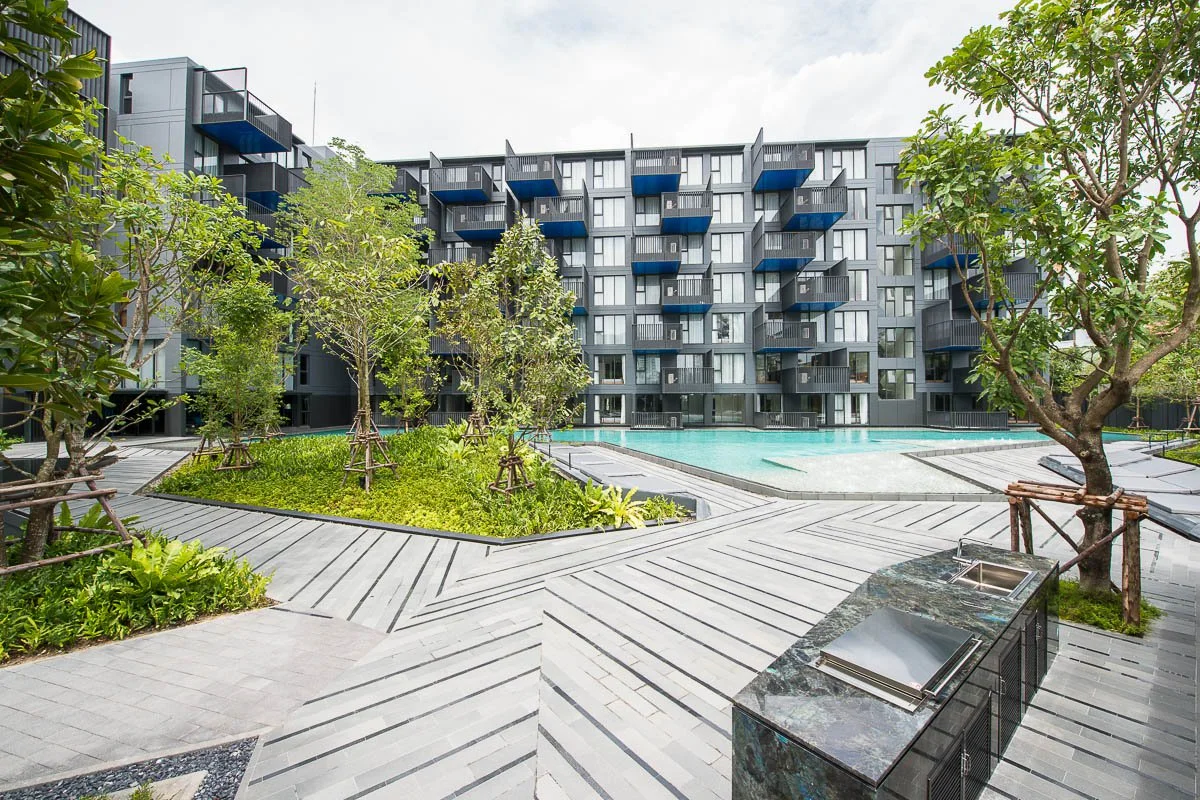
The Deck Patong exterior view from the front

What Should You Know About Deck Patong: Project Concept and Amenities?

The Deck Patong: Project Concept and Amenities for The Deck Patong means matching Phuket tenant demand to unit size and walk time to beach, because ADR swings 15 to 25% within one postcode. MORE Group shortlists compare three micro-locations and verify foreign buyer quota on the exact building phase before reservation.

FactorMORE Group benchmark
Net yield5 to 7% after 20 to 25% operator fees
Peak occupancy75 to 85% on comparable managed units

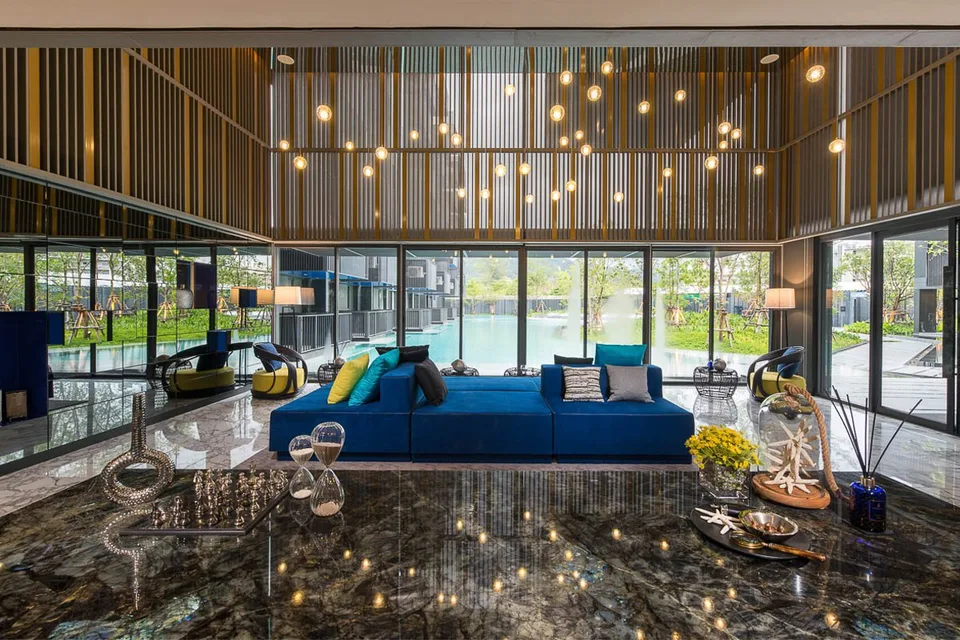
The project delivers the key amenities that affect nightly rate on STR platforms:

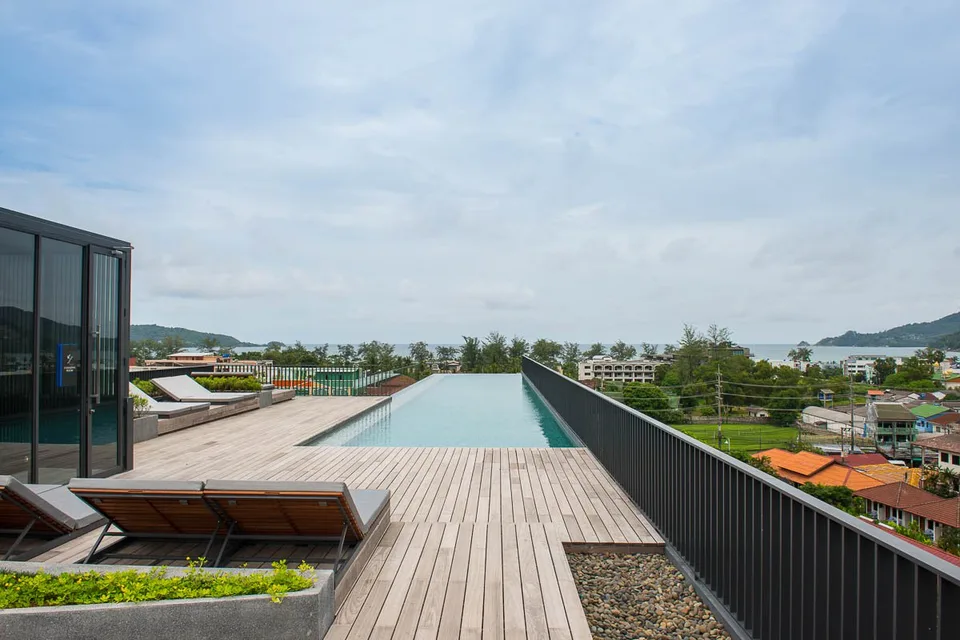
  • Swimming pool: The central amenity for Phuket holiday rentals. Units that feature pool access in photos consistently outperform units without it on booking platforms. Nightly rate premiums of 20 to 30 percent are common for pool-access listings versus comparable non-pool units in the same postcode.
  • Fitness centre: A standard expectation for any STR-focused property targeting European, Russian, and Chinese travellers. Its absence is increasingly flagged in guest reviews.
  • Lobby and reception area: Important for the guest arrival experience, which directly affects review scores and rebooking rates. A well-maintained lobby signals quality from the first impression.
  • Security and CCTV: Required for the all-day, every-day guest turnover of a managed STR building. Guests booking through Airbnb increasingly filter for properties with stated security features.
  • Unit fitout: Fully furnished units are standard in Patong investment condominiums. Buyers should confirm the furniture and appliance specification, since this directly affects time-to-rental after handover and the nightly rate ceiling.

The Deck Patong sits within walking distance of Patong Beach, Bangla Road, and Jungceylon. That walkability is a material factor in nightly rates. On Airbnb and Booking.com, the “walking distance to beach” filter eliminates a large share of competing listings. Being genuinely walkable, as opposed to 10 minutes by scooter, adds a pricing tier that compounds across hundreds of nights per year.

The project’s STR-ready positioning also means the building is designed to accept a high volume of guest turnovers without friction. Buildings designed for owner-occupier residents often develop informal rules or owner-committee pressures against constant Airbnb turnover. Buildings like The Deck Patong are built around it, which reduces management friction and legal ambiguity over time.

What Should You Know About Unit Mix and Pricing?

What Should You Know About Unit Mix and Pricing on The Deck Patong means foreign buyers should verify quota, payment milestones, and net rental assumptions in writing before deposit. MORE Group Phuket reservation files require documented checks on every off-plan purchase, with 49% foreign quota confirmed per unit, not per project marketing alone.

FactorMORE Group benchmark
Net yield5 to 7% after 20 to 25% operator fees
Peak occupancy75 to 85% on comparable managed units

The studio segment at The Deck Patong is the pure yield play. Lower entry price, higher gross yield, easier management, and a Patong guest profile (often a solo traveller or couple on a budget beach holiday) that is comfortable with a compact room. Studios are also the most liquid unit type in Patong’s resale market, since other yield-focused investors represent the primary buyer pool.

One-bedroom units offer a better guest experience and slightly higher nightly rates, which can push gross yields to comparable or higher levels than studios when occupancy is equivalent. The bedroom-living separation is meaningful on Booking.com. Guests filtering for “1 bedroom” see a different search results page than those browsing studios, reducing direct competition.

Two-bedroom units in Patong attract families and small groups, a guest profile that books longer stays and generates less turnover cost per night. The challenge is that absolute nightly rates for two-bedroom units in Patong are lower than Bang Tao equivalents, so the yield math is less compelling unless you find a unit at the lower end of the price band.

For context on how Phuket condo prices have moved over recent years and what the current market is doing, see the Phuket property market prices guide.

The Deck Patong building exterior and surrounding area

What Do Rental Yield Deep Dive for Patong Mean for Foreign Buyers?

Rental Yield Deep Dive for Patong on The Deck Patong means underwriting 7 to 9% gross yield and 5 to 7% net after operator fees on typical Phuket entry pricing entry ($80k to $200k), with CAM near ฿30 to ฿45 per sqm monthly in net models. MORE Group Phuket case study data from 2024 shows managed 1-bedroom stock at 72 to 78% blended occupancy under professional operators.

Nightly rate benchmarks for Patong STR (mid-2026):

| Unit type | High season (Nov to Apr) | Shoulder season (May, Jun, Oct) | Low season (Jul to Sep) | |-----------|--------------------------|----------------------------------|--------------------------|| | Studio | 2,200 to 3,600 THB/night | 1,800 to 2,800 THB/night | 1,600 to 2,400 THB/night | | 1-bedroom | 2,800 to 4,800 THB/night | 2,200 to 3,600 THB/night | 2,000 to 3,000 THB/night | | 2-bedroom | 4,500 to 7,200 THB/night | 3,500 to 5,500 THB/night | 3,000 to 4,800 THB/night |

In USD terms, studios run roughly 60 to 100 dollars per night in high season and 45 to 70 dollars in low season. One-bedroom units run 80 to 140 dollars in high season and 55 to 85 in low season. These are realistic market rates for a well-photographed, well-reviewed listing in a resort-pool condo within walking distance of the beach.

Occupancy assumptions:

Patong’s occupancy advantage is the defining factor in its yield profile. Annual occupancy for a well-managed, well-listed Patong condo runs 75 to 85 percent. This is higher than any other major zone in Phuket. Bang Tao typically achieves 65 to 78 percent. Kata and Karon run 60 to 75 percent. Rawai and Nai Harn, further south, run 55 to 70 percent depending on the property.

The difference compounds significantly. A studio running at 80 percent occupancy on an average nightly rate of 2,500 THB generates approximately 730,000 THB per year in gross revenue. At 65 percent occupancy on the same rate, the gross drops to approximately 593,000 THB. That 15-percentage-point occupancy difference represents around 137,000 THB or nearly 3,800 USD in lost annual revenue on a single unit.

Gross yield calculation for a studio:

Take a studio purchased at 4,500,000 THB. Annual gross revenue at 80 percent occupancy and 2,500 THB average nightly rate is approximately 730,000 THB. That is a gross yield of around 16 percent of the property price before management fees and platform costs.

After Airbnb and Booking.com platform fees (typically 10 percent of gross), gross revenue net of platform fees is approximately 657,000 THB, a yield of around 14.6 percent of the purchase price.

After full-service property management at 22 percent of gross, the net revenue is approximately 511,000 THB, giving a yield of around 11.4 percent before common area maintenance.

Subtracting CAM fees at a midpoint of 27,000 THB annually for a 35 sqm studio, net yield adjusts to approximately 484,000 THB, or around 10.8 percent of the purchase price.

The realistic net yield range for Patong: 8 to 12 percent for well-managed studio and one-bedroom units. This exceeds any other zone in Phuket for yield-focused investors. Bang Tao nets 6 to 9 percent. Kata and Karon net 6 to 8 percent. Rawai nets 5 to 8 percent.

For a deeper analysis of how Phuket yields are calculated and what distinguishes gross from net, see the Phuket rental yield guide.

Patong vs Bang Tao: Which Is the Better STR Investment?

Patong vs Bang Tao: Which Is the Better STR Investment on The Deck Patong means foreign buyers should verify quota, payment milestones, and net rental assumptions in writing before deposit. MORE Group Phuket reservation files require documented checks on every off-plan purchase, with 49% foreign quota confirmed per unit, not per project marketing alone.

FactorPatongBang Tao
Annual occupancy75 to 85%65 to 78%
Studio entry price (USD)88,000 to 152,000140,000 to 250,000
Average nightly rate (studio)60 to 100 USD/night80 to 140 USD/night
Gross yield (studio, typical)10 to 14%8 to 12%
Net yield (after management and CAM)8 to 12%6 to 9%
Lifestyle appeal for owner-occupiersLow to moderateHigh
Resale buyer profileYield investorLifestyle buyer and yield investor
Low-season occupancy floor70 to 80%55 to 65%
Guest profileBudget to mid-range travellerMid-range to premium traveller

Bang Tao wins on nightly rate and lifestyle positioning. The higher nightly rates are real and structural. Bang Tao is where premium villa resorts and international hotel brands concentrate, and the nightly rate expectations of guests in that zone are persistently higher. A one-bedroom in Bang Tao on Airbnb can achieve 120 to 180 USD per night in high season. The equivalent Patong unit achieves 80 to 140 USD.

But Patong wins on occupancy consistency and entry price, and the yield math can favour Patong significantly when both factors are combined. A 100,000 USD Patong studio generating net 9 percent produces 9,000 USD per year. A 200,000 USD Bang Tao studio generating net 7 percent produces 14,000 USD per year. In absolute dollar terms Bang Tao generates more, but you also deployed twice the capital. Return on capital is higher in Patong.

Who should choose Patong: investors with limited capital who want maximum yield on deployed funds, investors who want the most reliable low-season income, investors who are not planning to use the property personally, investors comparing property against other asset classes purely on cash return.

Who should choose Bang Tao: investors who want personal use alongside rental income, investors with larger budgets who want the premium positioning and capital appreciation story, investors whose exit strategy relies on selling to a lifestyle buyer rather than another yield investor.

There is no objectively correct answer. The right zone is the one that matches your capital deployment and income objectives. For a broader look at how Phuket investment zones compare across the island, the holiday home Phuket investment guide covers the interplay between personal use and yield in each major area.

The Deck Patong facilities and pool terrace

What Should You Know About Managing a Short-Term Rental in Patong?

Managing a Short-Term Rental in Patong on The Deck Patong means underwriting 7 to 9% gross yield and 5 to 7% net after operator fees on typical Phuket entry pricing entry ($80k to $200k), with CAM near ฿30 to ฿45 per sqm monthly in net models. MORE Group Phuket case study data from 2024 shows managed 1-bedroom stock at 72 to 78% blended occupancy under professional operators.

FactorMORE Group benchmark
Net yield5 to 7% after 20 to 25% operator fees
Peak occupancy75 to 85% on comparable managed units

Turnover frequency: Patong attracts a high proportion of short-stay guests. Stays of 2 to 5 nights are the average rather than the 7 to 14 nights common in more lifestyle-oriented zones. Higher turnover means more cleaning per month, more check-ins, more guest communications, and more maintenance events per rental year. This operational cost should be factored into your yield projections.

Choosing a property management company: Patong has dozens of companies offering property management services. Quality varies significantly. The factors that separate good management from poor management in this specific zone include:

  • Response time: Patong guests are demanding and leave reviews quickly. A property manager who takes 4 hours to respond to a guest issue will accumulate negative reviews that erode nightly rate within months.
  • Platform reach: The best Patong managers list across Airbnb, Booking.com, Agoda, and Expedia simultaneously, using dynamic pricing tools that adjust rates to occupancy. Managers who list on a single platform consistently leave income on the table.
  • Housekeeping standard: Patong guests filter by review score. Properties maintaining a rating of 4.7 or above on Airbnb consistently outperform on both nightly rate and occupancy. That requires reliable housekeeping across hundreds of turnovers per year, which in turn requires a management company with dedicated cleaning staff rather than freelancers.
  • Transparent reporting: Monthly statements that show gross revenue, platform fees, management fees, and maintenance costs are the minimum acceptable. Be wary of managers who provide only a net payout figure without a full revenue breakdown.

Management fee structure: Standard full-service management in Patong runs 20 to 25 percent of gross rental revenue. Some operators offer 15 percent structures with reduced services (guest communications only, with the owner responsible for cleaning). For a hands-off investor based outside Thailand, 20 to 25 percent is typically the realistic floor for a service that protects review scores and maximises occupancy.

Legal requirements for short-term rentals in Thailand: Thai law requires a hotel licence for properties renting to guests for fewer than 30 days per stay. In practice, many Patong STR operators work through management companies that hold the relevant hotel licences and cover the properties on their books. Foreign buyers should confirm the management company’s licence status and that the building’s juristic office permits STR operations before completing a purchase. This is a material legal risk that can affect both income continuity and legal standing.

Platform mix for Patong: Both Airbnb and Booking.com perform well in this zone. Airbnb attracts a higher proportion of Western and Australian guests. Booking.com has strong penetration with Russian, Chinese, and Asian regional travellers, who represent a large and growing share of Patong’s tourist mix. Most successful Patong operators use both platforms with unified availability management to prevent double bookings. Single-platform operations consistently underperform multi-platform setups.

For due diligence on Thai property acquisition processes including licence and legal structure verification, see the due diligence process for Thailand guide.

The Deck Patong furnished apartment interior

What Should You Know About Buyer Profile for Patong Investment?

Buyer Profile for Patong Investment on The Deck Patong means foreign buyers should verify quota, payment milestones, and net rental assumptions in writing before deposit. MORE Group Phuket reservation files require documented checks on every off-plan purchase, with 49% foreign quota confirmed per unit, not per project marketing alone.

FactorMORE Group benchmark
Net yield5 to 7% after 20 to 25% operator fees
Peak occupancy75 to 85% on comparable managed units

The pure yield investor is Patong’s primary buyer. This is someone who views property as an income-generating asset, wants maximum cash-on-cash return, and is comfortable with Patong’s tourism character. They are unlikely to use the property personally and do not place value on the lifestyle positioning. They compare Patong to other asset classes on a yield basis. For this buyer, Patong’s 8 to 12 percent net yield range is genuinely compelling, especially relative to bank deposit rates and government bond yields in many home markets.

The budget-entry Phuket buyer is someone who wants exposure to Phuket property but cannot yet access the Bang Tao and Surin price bands. A 90,000 to 150,000 USD entry into a yield-generating Patong condominium gives this buyer a foothold in the Phuket market with cash flow from day one of rental operations.

The investor prioritising low-season income stability is another natural fit. For buyers whose property income needs to cover mortgage or financing costs across the full calendar year, Patong’s lower seasonal variance is valuable. A property that maintains 75 percent occupancy in August, versus 60 percent for a Bang Tao equivalent, covers 15 percentage points more financing cost per month during the most difficult part of the rental calendar.

Patong is not the right zone for buyers planning regular personal use of the property, buyers whose exit strategy relies on a lifestyle buyer paying a premium, or buyers who are sensitive to noise and entertainment district character. These buyers should look at Bang Tao, Surin, Kamala, or Nai Harn depending on budget and priorities. Patong is a specific investment thesis, not a general-purpose Phuket condominium decision.

What Do Foreign Ownership and Payment Plan Mean for Foreign Buyers?

Foreign Ownership and Payment Plan on The Deck Patong means underwriting 7 to 9% gross yield and 5 to 7% net after operator fees on typical Phuket entry pricing entry ($80k to $200k), with CAM near ฿30 to ฿45 per sqm monthly in net models. MORE Group Phuket case study data from 2024 shows managed 1-bedroom stock at 72 to 78% blended occupancy under professional operators.

What this means in practice: before reserving any unit, confirm with the developer or juristic office that freehold quota remains available for your specific unit. In popular projects, the foreign quota can sell out well before completion. Units purchased after the quota is exhausted must either be structured as a 30-year leasehold or held through a Thai company. Both alternatives have different ownership and resale implications.

For a complete explanation of freehold versus leasehold structures in Thai property and when each option makes sense for a foreign buyer, see the freehold vs leasehold Thailand guide.

Typical off-plan payment structure for Patong condominiums:

MilestoneTypical payment percentage
Reservation deposit2 to 5%
Contract signing (within 30 days of reservation)15 to 25%
Construction progress milestones (2 to 4 instalments)25 to 40%
Completion and title transfer30 to 40%

Patong has a mix of completed and off-plan stock available at any point. For off-plan units, request a written payment schedule tied to specific construction milestones rather than calendar dates. Milestone-linked payments give you a basis for negotiation if delays occur and ensure you are not funding construction ahead of progress.

Transfer costs: Budget 6 to 7 percent of the registered property value for transfer fees, divided between buyer and seller by contract negotiation. A 50/50 split is common in practice. For foreign buyers remitting funds from abroad, you will need a Foreign Exchange Transaction (FET) form issued by the receiving Thai bank to register freehold title in a foreign name. The FET records the inward remittance in foreign currency and is a legal requirement for the title registration process.

For a comprehensive walkthrough of the Phuket buying process from reservation through title transfer, see the buying property in Phuket guide.

For the off-plan buying process specifically, the off-plan property Phuket guide covers developer due diligence, payment structure verification, and what to examine in the Sales and Purchase Agreement.

What Risks and What to Verify Should Foreign Buyers Track?

Risks and What to Verify for foreign buyers on The Deck Patong means confirming 49% quota in writing, SPA milestones tied to construction, and net yield after 20 to 25% operator fees before any reservation fee. MORE Group Phuket files stress-test at 70 to 80% peak occupancy using 2024 to 2025 sister-unit data, not brochure ADR alone.

RiskWhy it mattersHow to verify
Tourism cycle sensitivityPatong’s occupancy is driven by international arrivals. A major disruption hits Patong harder than lifestyle zones that retain resident demandReview post-COVID occupancy data for the specific management company; ask for monthly occupancy records covering 2020 through 2023
Noise and entertainment zone characterPatong’s nightlife concentration is an occupancy asset but a potential negative for resale to buyers who want a quieter environmentWalk the access road to the unit at 11pm; confirm distance from Bangla Road and the building’s acoustic insulation standard
Management company qualityA weak management company can destroy nightly rates and review scores within one seasonRequest references from 3 current owners managed by the same company; check Airbnb listing history for score trends
STR licence statusOperating short-term rentals without proper licensing is a legal risk for the management company and potentially the unit ownerConfirm the building’s juristic rules permit STR; request the management company’s hotel licence registration number
Foreign quota availabilityBuying after quota fills means leasehold rather than freehold, which changes your exit options materiallyRequest written confirmation of remaining foreign quota from the juristic office or the developer’s legal team
Developer track recordOff-plan risk is higher in Patong where smaller developers operate alongside established onesReview the developer’s completed projects; check the current project’s land title status (Chanote preferred) before signing
Resale buyer pool depthPatong’s resale market is primarily yield investors rather than lifestyle buyers, which can limit price premium on exitResearch recent transaction prices in the same development or comparable Patong projects before assuming capital appreciation

Get independent advice on The Deck Patong before you reserve

MORE Group provides 0% buyer commission and honest analysis of Patong investment projects.

Frequently Asked Questions

Patong delivers the highest short-term rental occupancy of any area in Phuket, typically 75 to 85 percent annually compared to 65 to 78 percent in Bang Tao. This occupancy advantage, combined with lower entry prices, produces net yields of 8 to 12 percent for well-managed studios and one-bedroom units. The trade-off is lower nightly rates than premium lifestyle zones and a resale market that targets yield buyers rather than lifestyle buyers. For pure yield investment on a limited budget, Patong is the strongest zone on the island.

Studio units at The Deck Patong start from approximately 3.2 million THB, which is around 88,000 USD at mid-2026 exchange rates. This makes Patong one of the most accessible entry points for foreign buyers seeking freehold condominium ownership in Phuket. One-bedroom units start from around 5.2 million THB and two-bedroom units from around 9.5 million THB. Confirm the current price list with the developer or a licensed agent, as pricing adjusts with construction progress and remaining inventory.

Yes. As a registered condominium development, The Deck Patong is eligible for freehold title registration by foreign nationals under Thailand's Condominium Act. Up to 49 percent of the total floor area can be registered in foreign names. Before reserving any unit, confirm that the foreign quota remains available for your specific unit, since popular projects can sell out the foreign allocation before completion. If the quota is exhausted, units can be structured as a 30-year leasehold or held through a Thai company, each with different resale implications.

Gross yields before management fees run 10 to 14 percent for studios and one-bedroom units based on Patong's typical annual occupancy of 75 to 85 percent and current nightly rates of 60 to 100 USD for studios and 80 to 140 USD for one-bedrooms in high season. After property management fees of 20 to 25 percent of gross and common area maintenance charges, net yields of 8 to 12 percent are achievable for well-managed units. These figures are higher than any other major Phuket zone. Verify actual occupancy track records and management fee terms with your property manager before committing.

Patong offers higher annual occupancy (75 to 85 percent vs 65 to 78 percent for Bang Tao), lower entry prices (studios from 88,000 USD vs 140,000 USD in Bang Tao), and higher net yields on deployed capital. Bang Tao offers higher nightly rates, stronger capital appreciation potential, and a premium lifestyle positioning that attracts a broader resale buyer profile. For maximum yield on capital deployed, Patong is the stronger choice. For personal use combined with rental income and longer-term capital gain potential, Bang Tao is the stronger choice.

Live developer data · Phuket specialist reply

Check Availability, Quota and Floor Plans

Send your contact and budget. We will reply with current stock, payment plan and foreign buyer notes.

MORE Group Editorial

MORE Group Editorial

Phuket Real Estate Experts

The MORE Group team has helped 500+ European and American buyers purchase property in Thailand. We provide legal support, 0% commission, and on-the-ground expertise with 8 years in the Phuket market.

About MORE Group →

Check Availability, Quota and Floor Plans

Send your contact and budget. We will reply with current stock, payment plan and foreign buyer notes.

WhatsApp
💬 Hi! I'm Alex. Ask me anything about Phuket property.