Rental Pool Programs in Phuket Condos — How They Work, Splits, and Risks
How rental pool programs work in Phuket condos. Explained: the 70/30 revenue split, hotel licensing, management responsibilities, risks, and how pools compare to guaranteed returns.

Rental Pool Programs in Phuket Condos
A rental pool program in Phuket aggregates rental revenue from multiple condo units and distributes it proportionally to owners — typically on a 70% owner / 30% management split. Unlike guaranteed return programs, the income is market-rate: in a strong high season, owners can outperform a guaranteed rate significantly; in a weak low season, income drops with occupancy. This is the dominant income structure in Phuket’s hotel-licensed condo developments and is worth understanding in depth before you buy.
Looking for the right property in Phuket?
Our experts send a shortlist within 2 hours. 0% buyer commission.
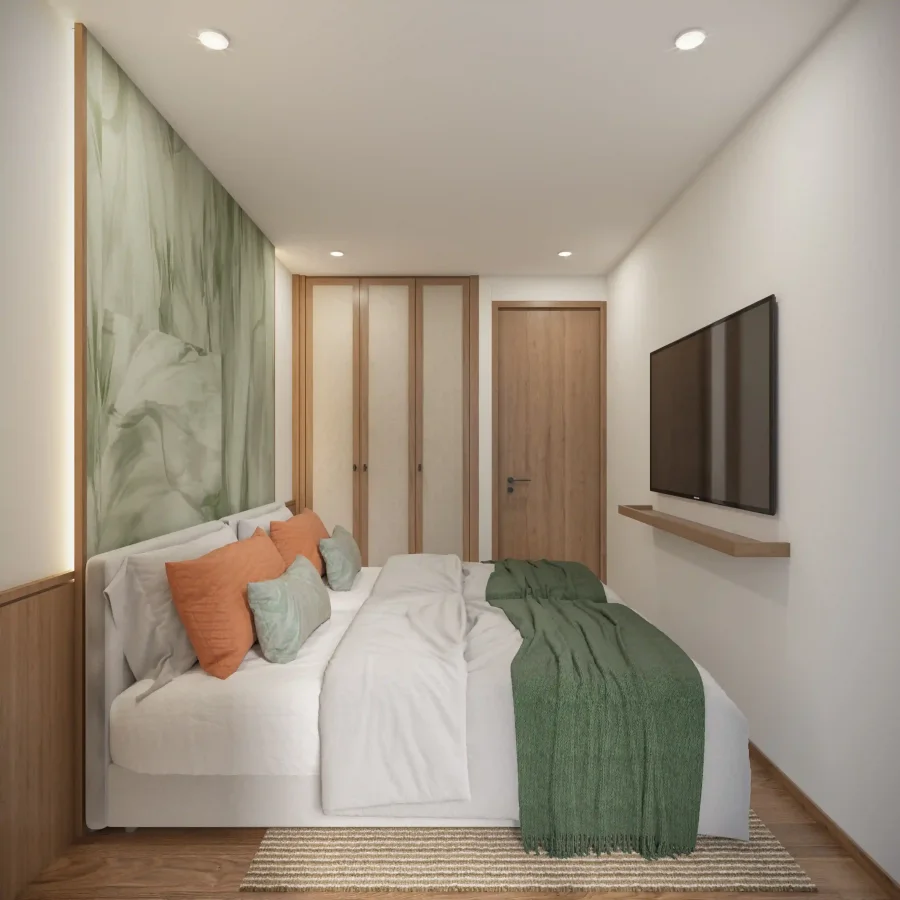


Rental Pool Key Parameters
| Parameter | Typical Structure |
|---|---|
| Revenue split | 70% owner / 30% management company |
| Management covers | Marketing, OTA fees, housekeeping, guest services, maintenance |
| Income basis | Actual rental revenue (variable, not fixed) |
| Hotel license required | Yes — most pools operate under project-level hotel license |
| Owner usage | Typically 30–45 days/year (varies by project) |
| Occupancy-linked income | Yes — income rises/falls with occupancy and nightly rates |
| Reporting | Monthly statements from management company |
| Minimum commitment | Usually 1 year (some projects require 3+ years in pool) |
Looking for the right property in Phuket?
Our experts send a shortlist within 2 hours. 0% buyer commission.
What Is a Rental Pool?
A rental pool is a collective rental management structure. Instead of each owner independently marketing and renting their unit, all participating units in a development are managed together by a single management company. Here’s how the mechanics work:
Revenue aggregation: All rental income from pool units — regardless of which specific unit was occupied — is combined into a single pool. This eliminates the unfairness of some units always getting rented (corner units, high floors, sea views) while others sit empty. Every participating owner shares in the collective performance.
Equal sharing: Revenue is distributed based on each unit’s proportional entitlement — typically determined by unit size or type. A 45 sqm 1BR owner receives a larger share than a 30 sqm studio owner. The split is defined in the pool agreement signed at purchase.
Management deduction: Before distribution, the management company deducts its fee — the standard in Phuket is 30% of gross rental revenue. This covers: OTA platform fees (Airbnb, Booking.com, Agoda charge 15–20%), housekeeping, front desk, marketing, maintenance, and management overhead.
Owner payment: The remaining 70% is distributed to owners monthly, typically in the second or third week of the following month.
Why the 70/30 Split Matters
The 30% management fee sounds high. But it’s important to understand what it covers vs. what a private short-term rental owner would pay managing independently:
| Cost Component | Rental Pool (included in 30%) | Independent Management |
|---|---|---|
| OTA platform fees (Airbnb, Booking) | Included | 15–20% of revenue |
| Housekeeping per stay | Included | $20–$50 per turnover |
| Front desk / reception | Included | Not applicable (self-managed) |
| Dynamic pricing tool | Included | $30–$100/month software |
| Marketing and photography | Included | $500–$1,500 one-time |
| Maintenance coordination | Included | Owner responsibility |
| Guest communication (24/7) | Included | Owner responsibility |
In practice, a self-managed short-term rental in Phuket incurs 25–35% in operating costs if run professionally. The rental pool’s 30% is roughly equivalent once all costs are counted — with the addition of professional marketing infrastructure the individual owner cannot replicate.
The Hotel License: Why It Matters for Rental Pools
This is the element most investors miss. Thai law (Hotel Act B.E. 2547 / 2004) defines “hotel” as any premises offering accommodation for stays shorter than 30 days in exchange for payment. Operating short-term rentals without a hotel license is technically illegal — and enforcement has increased in recent years.
How rental pools handle this: Rental pool programs in Phuket operate under a project-level hotel license, held by the management company or developer entity. When your unit is in the pool, it is legally covered by this license. This is one of the most important reasons to participate in the rental pool rather than try to self-manage short-term rentals.
What this means in practice:
- Units in licensed rental pools can legally list on Airbnb, Booking.com, and other OTAs
- Units self-managed outside the pool may operate in legal grey area
- Some developments have individual hotel licenses per unit (rare and more expensive)
- Always verify the hotel licensing status of any development you purchase in
How Revenue Is Actually Generated
Understanding the revenue generation side of a rental pool helps investors set realistic expectations.
Dynamic pricing: Professional management companies use revenue management tools to adjust nightly rates based on demand, competitor pricing, local events, and forward booking pace. A well-managed pool in Bang Tao actively adjusts rates daily.
OTA distribution: Properties in well-run pools appear across Airbnb, Booking.com, Agoda, Expedia, and sometimes direct booking engines. Multi-channel distribution consistently outperforms single-channel (e.g., Airbnb only).
Occupancy floor: The revenue pool structure means your unit receives income even on nights when a different unit was rented — not your specific unit. This equalisation is a genuine benefit in high-demand periods.
Seasonal rate calendar: During peak weeks (Christmas, New Year, Chinese New Year), minimum stay requirements increase, rates spike, and revenue per unit peaks. During low season, rates compress and strategies shift to monthly pricing.
Sample Revenue Calculation: 1BR in Bang Tao Rental Pool
Assumptions:
- Unit value: $150,000
- Annual gross revenue from pool (per unit): $20,000
- Management fee: 30% ($6,000)
- Net to owner: $14,000 (9.3% net yield)
Breakdown by season:
| Season | Months | Occupancy | Avg Nightly Rate | Monthly Gross | Owner Share (70%) |
|---|---|---|---|---|---|
| High (Dec peak) | 0.5 | 95% | $200 | $2,850 | $1,995 |
| High season | 4.5 | 85% | $130 | $3,323 | $2,326 |
| Shoulder | 2 | 62% | $90 | $1,674 | $1,172 |
| Low season | 5 | 48% | $80 | $1,152 | $806 |
Annual net (70% share): ~$13,800–$15,000
Net yield: ~9.2–10%
This represents a strong-performing unit in a top area. Average performers in the same pool earn 7–8% net. Units in weaker areas or without pool/sea-view premiums earn 5–7%.
Comparing Rental Pool vs. Guaranteed Return
| Factor | Rental Pool | Guaranteed Return |
|---|---|---|
| Income variability | High — tracks market | None — fixed |
| Upside in strong seasons | Yes — can exceed 10% | Capped at guarantee rate |
| Downside in weak seasons | Yes — income drops | Protected |
| Developer dependency | Low | High — depends on developer solvency |
| Transparency | Monthly statements showing actual occupancy | Fixed payment (actual occupancy not shown) |
| Owner usage flexibility | Typically 30–45 days/year | Typically 15–30 days/year |
| Capital appreciation pricing | Generally at market rates | Sometimes premium-priced |
| Best for | Investors comfortable with variability | Investors prioritising certainty |
Risks in Rental Pool Programs
Risk 1: Management Company Performance
Your income directly depends on the quality of the management company. A poorly run pool — weak OTA relationships, inadequate housekeeping, slow guest response — will consistently underperform a well-run competitor. Unlike a guaranteed return, there is no income floor to protect you.
Mitigation: Request 2–3 years of historical occupancy data and actual owner payment records from the development. Ask specifically: what was the average occupancy in June, July, August? What was the average monthly owner payout in the last low season?
Risk 2: Oversupply Within the Pool
If a large number of units in the pool are owned by investors (rather than developers holding units), there is a risk of supply excess within the pool that compresses individual payouts during low occupancy periods. This is less common in established projects but worth noting for new developments where pre-sales have been high.
Risk 3: Pool Agreement Lock-In
Some rental pool agreements require owners to remain in the pool for a minimum period (1–3 years). If you decide to exit the pool — to self-manage, sell, or switch to a different arrangement — exit terms and any penalties should be reviewed before signing.
Risk 4: Owner Usage Timing
Pool management companies need to maximise bookings to generate revenue. Your 30–45 days of personal usage cannot overlap with periods the management company needs for commercial bookings. This is managed through booking systems and advance notice requirements — but conflicts can arise. Clarify the booking process for personal stays before purchasing.
Risk 5: Management Company Changes
The management company managing the pool when you buy may not be the same one managing it in year 3 or year 5. Developer changes, company acquisitions, or contract terminations can result in management transitions. New management can mean different performance standards and a learning curve that impacts occupancy and income.
How to Evaluate a Rental Pool Before Buying
Due diligence checklist:
- Request historical performance data — Actual monthly owner payouts for the last 2 years. Not projections. Not “expected” returns.
- Verify hotel license status — Confirm the project holds a valid hotel license under the Hotel Act.
- Review the pool agreement — Lock-in period, exit terms, owner usage policy, reporting frequency.
- Check OTA visibility — Search the project on Airbnb and Booking.com. Are there reviews? Occupancy signals? Review ratings?
- Understand the 30% fee breakdown — What is included? Are OTA fees part of the 30% or deducted separately?
- Ask about low-season strategy — What does the management company do from June–September to maintain occupancy?
- Inspect the furnishing standard — Professional photography and quality furnishing directly impacts nightly rates and occupancy.
Pros and Cons of Rental Pool Programs
Pros
- Market-rate upside — can significantly outperform guaranteed rates in strong seasons
- Legal hotel-license coverage for short-term lets
- Professional management infrastructure (OTA listings, housekeeping, guest services)
- Revenue equalisation across units — you benefit from collective pool performance
- More owner-use days (typically 30–45) vs. guaranteed programs (15–30)
- More transparent — monthly statements show actual occupancy and revenue
Cons
- Income is variable — low season creates real income risk
- Management company quality is the critical variable — hard to assess pre-purchase
- No income floor — poor occupancy means poor income
- Lock-in periods may limit flexibility to exit or self-manage
- Owner-use timing subject to management company calendar
- 30% management fee is a real cost — net yield is meaningfully below gross
Frequently Asked Questions
A rental pool is a collective rental management structure where all participating units in a development are rented as a group by a single management company. Revenue is aggregated and distributed proportionally to owners — typically on a 70% owner / 30% management split. Your income reflects the collective performance of the pool, not just whether your specific unit was occupied.
The 30% management fee covers the full cost of running a short-term rental operation: OTA platform fees (15–20%), housekeeping, front desk, marketing, maintenance, and management overhead. When these costs are accounted for individually in a self-managed property, they typically reach 25–35% anyway. The 30% pool fee is roughly equivalent to what a professional independent operator would spend.
Yes. Thai law requires a hotel license for any accommodation rented for less than 30 days. Most rental pool programs operate under a project-level hotel license, which legally covers all units in the pool. Units self-managed outside the pool may operate without this legal protection. Always confirm the hotel licensing status of any development before purchasing for rental purposes.
Yes, but with restrictions. Most rental pool programs allow 30–45 days of personal usage per year. However, peak-season dates (Christmas, New Year) may be subject to blackout periods or booking conflicts with commercial guests. You typically must notify the management company in advance to block dates for personal use.
It depends on your priorities. A rental pool offers market-rate upside — in strong years, you can exceed 10% net yield — but income varies with occupancy and season. A guaranteed return (6–8% net) provides income certainty but caps your upside and introduces developer counterparty risk. Investors comfortable with variability and confident in the management company typically prefer rental pools; investors wanting predictable cash flow prefer guarantees.
Key terms to review: the minimum participation period and exit conditions, owner-use days and blackout policies, exactly what the 30% management fee covers (including whether OTA fees are inside or outside this percentage), monthly reporting obligations, and what happens if the management company changes or underperforms. Have a Thai property lawyer review the Rental Management Agreement alongside the SPA.
Read Also
- Guaranteed Return Programs in Thailand
- How Rental Demand Works in Phuket
- Real Income Potential of Phuket Condos
- Phuket Condo vs Villa: Investment Comparison
- Cost of Owning a Condo in Phuket
Get Your Phuket Property Shortlist
Tell us your budget and goals — our expert sends a shortlist within 2 hours.

MORE Group
Phuket Real Estate Experts
The MORE Group team has helped 500+ European and American buyers purchase property in Thailand. We provide legal support, 0% commission, and on-the-ground expertise with 8 years in the Phuket market.
Get Your Phuket Property Shortlist
Tell us your budget and goals — our expert sends a shortlist within 2 hours.