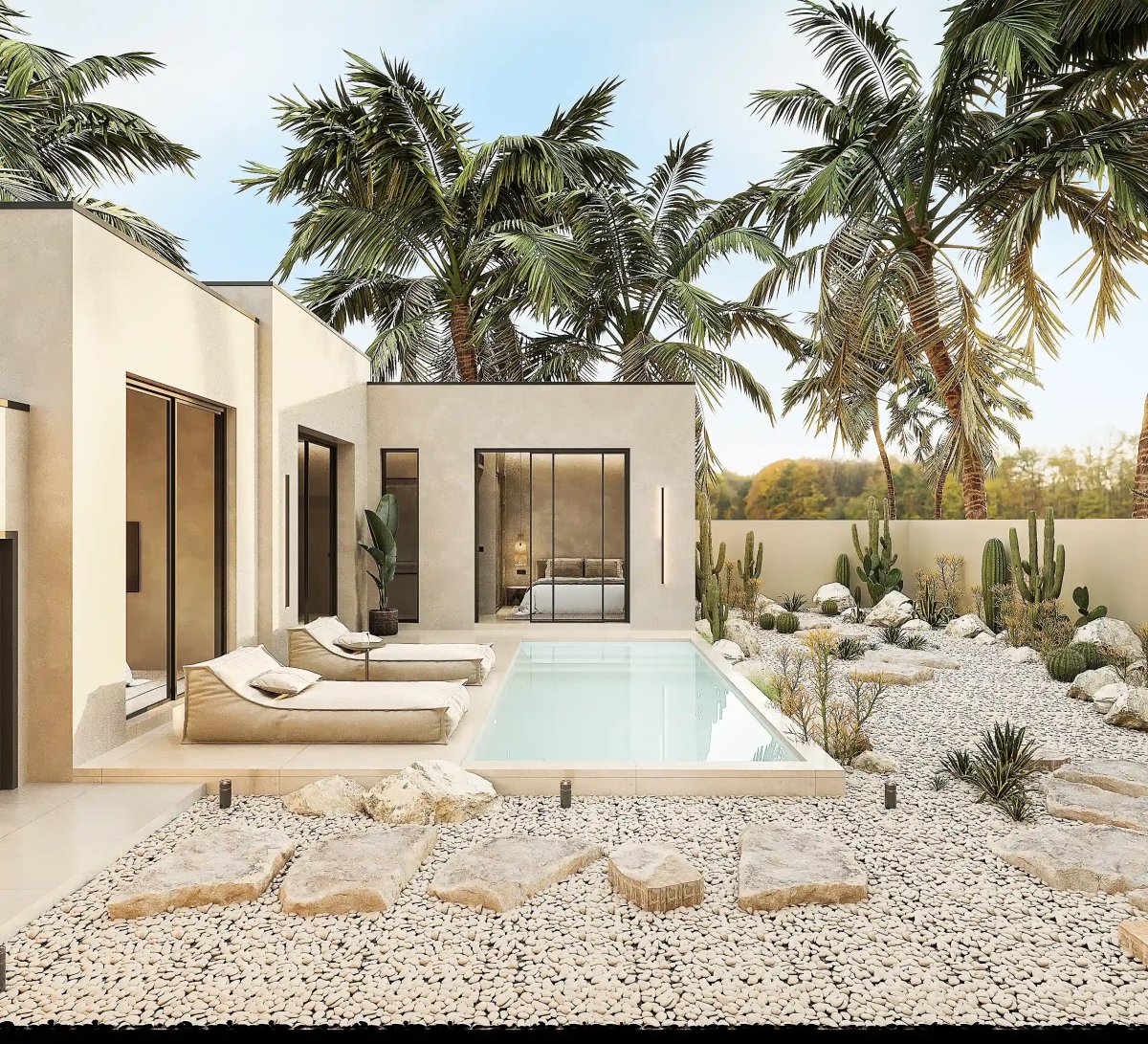
Phuket Villa Under $500K 2026: Leasehold Options by Zone
A villa under $500,000 in Phuket is achievable, but not everywhere and not on every structure. This page is about where that budget genuinely reaches and what the annual cost of ownership looks like once you get there.
Where a sub-$500K villa actually exists
The west-coast villa belt does not start here. Kata villas begin around 17.9M THB and Nai Harn around 17.7M THB, roughly $505,000 at 32.7 to the dollar, so those markets open just above this ceiling rather than inside it. What is genuinely available under $500,000 sits in the airport corridor, parts of south Phuket, and inland Cherng Talay.
| Corridor | Entry level for villa stock | Character |
|---|---|---|
| Nai Yang and the airport corridor | From around 5.49M THB, with a median near 17.8M | Widest choice, aircraft noise varies sharply by plot |
| South Phuket, Rawai and inland Nai Harn | Mid-to-high teens in millions of THB | Swim beaches, established expat community |
| Inland Cherng Talay | Around and above this ceiling | Close to the premium corridor without the beach premium |
| Kata and Nai Harn beach-adjacent | From roughly 17.7-17.9M THB | Opens above $500K, hillside plots |
The honest summary is that under $500,000 buys a real pool villa with genuine space, in an area chosen for value rather than for a beach postcode. That is a good purchase for the right buyer and a disappointing one for anyone expecting a west-coast address.
The annual cost, which decides the investment case
A villa’s gross yield looks similar to a condominium’s. Its net does not, and the reason is that you fund alone what a condominium shares.
| Cost line | Villa | Condominium |
|---|---|---|
| Pool service | Weekly, yours alone | Shared through CAM |
| Garden and grounds | Yours alone, year-round | Shared through CAM |
| Turnover cleaning | Whole house, multiple bathrooms, pool | One unit |
| Management fee | 25-30% of gross, full service | 15-20% private, 20-35% pooled |
| Capital repairs | Roof, pool plant, air-conditioning, all yours | Largely the building’s |
Budget an annual reserve rather than treating capital repairs as surprises. A pool pump, a compressor and a roof are not unexpected events over a ten-year hold; they are scheduled ones that most buyers fail to schedule.
Structure: the part that decides resale
A foreigner cannot hold freehold title to land. Every villa at this budget is therefore a registered lease over the plot with the building owned in your name, or land held through a Thai company. Both are legitimate; neither is freehold, and the difference shows up at resale rather than at purchase.
A lease is worth close to freehold on day one and demonstrably less at year twenty, because your buyer acquires a shorter remaining term. Establish at purchase who grants the renewals, whether they are enforceable against a successor, and what the registered term actually is as opposed to what the brochure totals up to. On a company structure, establish who the Thai shareholders are and what their genuine role is; a shell existing purely to hold land for a foreigner is not a structure your lawyer should be comfortable with.
What you are actually acquiring, in legal terms
No villa on this page comes with freehold land, because no foreigner can hold freehold title to land in Thailand. The route available is a registered lease over the plot, up to 30 years in a single registration, with the villa building owned outright in your name. At this budget the company structure comes up often, and it is worth being plain: a Thai company put together so a foreigner can control land is a nominee holding, and the Land Code does not allow it.
The building and the land are legally separate, and that separation works in your favour if the paperwork is done properly. A foreigner can own the house outright even where the land beneath is leased, provided the construction permit and the building sale are registered correctly. Skipping that step is the most common reason a villa becomes difficult to resell, and it is almost always skipped by a buyer rushing to close inside a two-week visit.
On the lease itself, read the renewal wording rather than the summary. Thai law registers a maximum of 30 years at a time, so “30+30+30” is one registered term plus two contractual promises. Establish who those promises bind, what happens if that party sells the land or ceases to exist, and whether a successor is bound. On a company structure, establish who the Thai shareholders are and what they actually do; a shell existing only to hold land for a foreigner is not something your lawyer should sign off.
If the villa will be let nightly, the Hotel Act applies here too: stays under 30 days are hotel business without a licence.
Sub-$500K villas, with the running costs attached
Every villa we send comes with the annual cost of ownership modelled, pool and garden included, plus the ownership structure stated up front.
Frequently Asked Questions
The airport corridor, parts of south Phuket, and inland Cherng Talay. The west-coast villa belt starts above this ceiling: Kata and Nai Harn begin around 17.7 to 17.9 million baht, roughly $505,000.
No. A foreigner cannot hold freehold title to land in Thailand at any price, so every villa here is a registered lease over the plot with the building owned in your name, or a Thai company holding the land.
Weekly pool service, year-round garden maintenance, turnover cleaning across the whole house, management at 25 to 30% of gross if you let, and roof, pool plant and air conditioning as capital items on known replacement cycles. Budget an annual reserve rather than treating those as surprises.
Correct registration of the building in your name, separately from the land, at the outset. It is the step most often skipped by a buyer rushing to close inside a two-week visit, and it is what makes the property sellable afterwards.
The renewal wording rather than the summary. Thai law registers a lease for a maximum of 30 years at a time, so a '30+30+30' structure is one registered term plus contractual promises. Establish who those bind and whether a successor to the land is bound.

Maksim Shchegolev
Founder, MORE Group
Founder of MORE Group. Four years in investment banking before moving to Phuket, where he has worked in the local property market since 2018. Oversees developer relationships and every engagement above $300K.
About MORE Group →Get a Focused Phuket Property Shortlist
Share budget, area and goal. We will reply with suitable live projects, not a generic catalogue.
