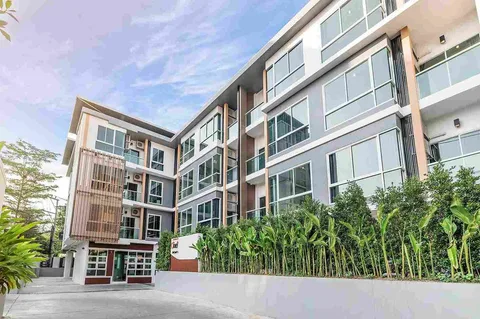
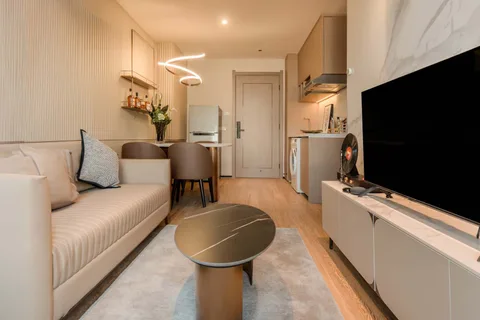
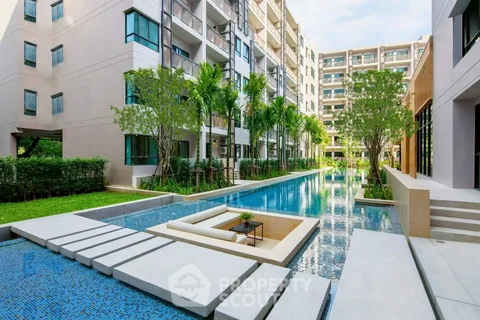
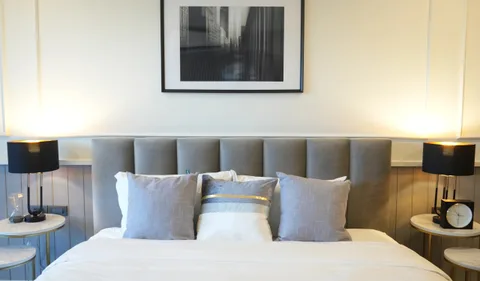
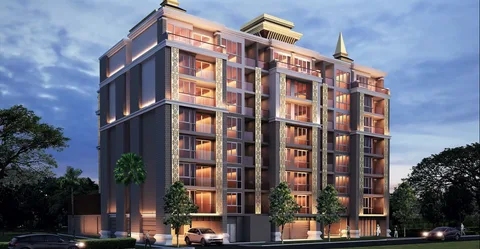
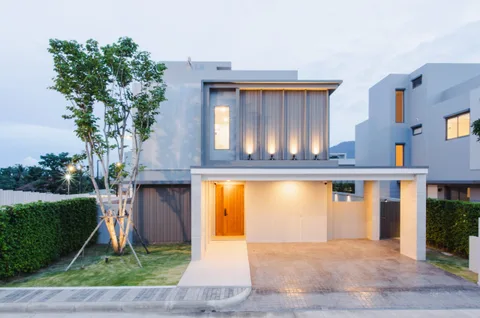
Mahidol Condo
Chiang Mai city · Dingthai Group Company Limited
- Price from
- 1,772,760 THB
- In dollars
- about $54,200
- Type
- Condo, 136 units
- Status
- completed
The northern city: low-rise condos, valley villas, long-stay residents · Updated 2026-09-06
Quick answer: Chiang Mai is the inland market: a university city of a million people in a mountain valley, six hundred kilometres north of Bangkok and an hour by air, where foreigners buy low-rise condominiums in the city district and pool villas and estate homes in Hang Dong, Mae Rim and San Sai. On 6 September 2026 this site holds 14 Chiang Mai developer projects, all completed: 8 condominium buildings from 1,772,760 THB with a median starting price of 2,697,943 THB, and 6 estates from 8,300,000 THB. A foreigner owns a condominium unit freehold within the 49 percent quota, which Chiang Mai's Thai-first buildings rarely fill, and a house as a building on a registered 30-year land lease or through a Thai company. The registry is young and drawn from an agency list read in 2024 and 2025; prices are re-read from developers before any figure is repeated to a buyer.
Chiang Mai city · Dingthai Group Company Limited
Chiang Mai city · Karnkanok Property
Chiang Mai city · LC Land
San Sai · Charn Issara Development
Chiang Mai city · Sansiri
Chiang Mai city · Ornsirin Group
Hang Dong · Hylife Development
Chiang Mai city · Home & Pakkasem Co., Ltd.
San Sai
Hang Dong · 999 Developments
Hang Dong · 999 Developments
Hang Dong · 999 Developments
Mae Rim · Hylife Development
Hang Dong · 3Doordevelopment Co., Ltd
| Typical product | Low-rise condominiums in the city, pool villas and estates in the valley |
| Buyer profile | Thai professionals, long-stay foreigners, retirees, students |
| MORE Group inventory | Chiang Mai condominiums and estates (catalogue below) and Phuket projects |
MORE Group tours and sells Phuket property with 0% buyer commission on eligible primary sales. Chiang Mai enquiries go through the same team; ask for one shortlist covering both markets if you are undecided.
Chiang Mai is the only market on this site with no sea, and it is on the site because foreigners have been buying property in it for forty years for reasons that have nothing to do with a beach: a walkable old city, a university, mountains at the end of every street, a cool season with cold nights, the lowest living costs of Thailand’s main expatriate destinations, and an airport an hour from Bangkok. Every district that has a project on this site on 6 September 2026 is in the table below, worked out from the cards themselves; a card names the page it was read from and the date of the reading.
| District | Cards | Product mix | Lowest starting price | Median start | Finished | Character |
|---|---|---|---|---|---|---|
| City district: Chang Khlan, Chang Phueak, Pa Daet, Wat Ket, Fa Ham, Mae Hia | 6 | 6 condominium buildings | 1,772,760 THB (about $54,213 at 32.7 THB per dollar) | 2,690,000 THB | 6 | The old town, Nimmanhaemin, the river at Chang Khlan and the ring roads; low-rise buildings and two towers |
| Hang Dong | 5 | 1 condominium building, 3 pool villa estates, 1 house estate | 4,460,000 THB (about $136,391) | 14,605,000 THB | 5 | South-west toward the airport and the international schools; most of the city’s villa estates |
| San Sai | 2 | 1 condominium building, 1 house estate | 2,565,886 THB (about $78,467) | 5,432,943 THB | 2 | North-east by Mae Jo university; the cheapest estate homes |
| Mae Rim | 1 | 1 pool villa estate | 26,475,800 THB (about $809,657) | 26,475,800 THB | 1 | North among the orchards and the flower farms; mountain views and large plots |
| All Chiang Mai | 14 | 8 condominium buildings, 4 villa estates, 2 house estates | 1,772,760 THB | 4,654,566 THB (about $142,341) | 14 | 2,044 units and homes across the catalogue |
The catalogue is young and honest about it. The fourteen cards were read from an agency’s list of new developments whose pages were last updated between 2024 and 2025, which is why every project is completed and why the developer’s current price is confirmed before any figure on a card is repeated to a buyer. New launches by Sansiri, Ornsirin, Karnkanok and the valley’s local builders are added as the developers publish them, and the Chiang Mai condos listing and the Chiang Mai houses listing filter the two products separately.
Chiang Mai’s prices follow the valley’s roads outward from the old city, and a buyer who knows four names can read the market.
The city district is the moat and everything inside a few kilometres of it. Nimmanhaemin and Chang Phueak to the north-west hold the cafes, the university and the buildings that foreign long-stay residents choose first; Chang Khlan by the river holds the Night Bazaar, the hotels and the two towers on this page, The Astra Sky River’s 520 units on 17 floors from 4,000,000 THB and The Erawan’s 49 units from 4,849,131 THB; and the ring-road districts of Pa Daet, Fa Ham and Mae Hia hold the entry prices, Mahidol Condo from 1,772,760 THB, One Plus Jedyod 3 from 2,161,000 THB and Le Chamonix Phase 2 from 2,550,000 THB, with Sansiri’s Base Height, 630 units on 31 floors in Wat Ket, from 2,830,000 THB. A unit here is bought for the walk to a cafe and the drive to nowhere.
Hang Dong is the south-west, the road from the city past the airport toward the Samoeng hills, and it is where the valley’s houses are. The international schools cluster around Kad Farang, the golf courses and the gated estates run along the Hang Dong road, and the villages of Nam Phrae, Ban Waen, Nong Khwai and San Phak Wan hold the pool villas: 999 Developments’ three estates from 9,900,000, 14,605,000 and 18,626,000 THB, The Wolf House’s seven villas from 28,960,000 THB, and Hylife’s Hyparc Residences, a seven-floor building of 41 units from 4,460,000 THB for the buyer who wants the district without the garden. The airport is fifteen minutes away and the moat thirty.
Mae Rim is the north, the valley toward the Mae Sa waterfalls and the flower farms, where HyLuxe Mae Rim’s five villas from 26,475,800 THB sit on large plots with the mountains behind them. It is the buyer’s choice for a view and a garden, and the drive to the city is twenty to forty minutes depending on the plot.
San Sai is the north-east, flat and cheap, along the road to Mae Jo university, with The Issara’s 265 units from 2,565,886 THB and The Britt’s 138 estate homes from 8,300,000 THB. Its buyer is a Thai family or a retiree who wants a house at the lowest price in the valley and does not mind twenty minutes to the old town.
Insider tip: visit Chiang Mai in March before you buy, not only in December. The burning season runs from roughly February to April, when agricultural fires across the north push the valley’s air readings among the worst in Asia and many residents leave for the coast. A house with sealed windows and good filtration costs the same as one without, and the difference is the whole of March.
Chiang Mai’s condominium is a Thai product first. The buildings on this page were built for students at the two universities, for professionals in the city’s growing service economy, and for Bangkok families who keep a northern flat; foreign buyers, long-stay residents from Europe, America, Japan, Korea and China, and the retirees who arrived on the cool season and stayed, take a minority of the units. That has a practical consequence: the 49 percent foreign quota is rarely the constraint it is in Phuket’s or Pattaya’s marketed towers, and a foreign buyer can usually choose among a building’s unsold units without a queue. The developers are the country’s listed groups, Sansiri with two projects on this page, Charn Issara Development and Ornsirin Group with one each, and the valley’s own builders, Karnkanok Property, LC Land, Hylife Development and Home & Pakkasem, whose records are visible in the buildings they have already finished.
The house is the other product, and its buyer is different. Estates in Hang Dong and San Sai and villa groups in Mae Rim are bought by families near the international schools, by retirees who want a garden and a view, and by the remote workers for whom Chiang Mai has become a base; 999 Developments’ three small estates in Hang Dong, five to fifteen villas each, are typical of the small-builder model that also runs Samui and Hua Hin, and The Britt’s 138 homes in San Sai of the volume-builder model. A foreigner owns the house itself and holds the plot either on a 30-year lease written into the title or through a Thai company, as in every Thai province, and the houses catalogue explains the structures beside the estates of the other five markets.
The law is national and the mechanics are the same as in Bangkok. A condominium unit is registered in the foreign buyer’s own name at the Chiang Mai Land Office inside the building’s 49 percent foreign quota, with a title deed, once the price has come in from abroad as foreign currency and the buyer’s Thai bank has issued the Foreign Exchange Transaction record that the Land Office asks to see; the quota arithmetic is in the Condominium Act guide and the record itself in the foreign quota guide. A house or villa belongs to the foreigner as a building, while the plot beneath it is either leased for up to 30 years, the lease written into the title at the Land Office, or held by a Thai company whose Thai shareholders are real people with real money in it; the lease, the right of superficies and the company route are compared in the 30-year lease guide and on the land page. None of the 14 cards states the structure the developer offers a foreigner, because the agency pages they were read from do not, and the question is put to each developer in writing before a reservation.
Chiang Mai has one habit of its own worth knowing. Because its condominiums are older and more Thai-owned than the coasts’, a buyer of a resale unit in a building from 2015 or 2018 is often buying from a Thai owner into a quota with room to spare, and the juristic person’s accounts go back a decade; that history is the diligence, and it is better than any brochure.
Every project on this page is finished, with completion years from One Plus Jedyod 3 in 2015 to The Wolf House and 999 World Club Land in 2025, and the buyer’s task is the completed-building task. Inspect the unit or the house; read the juristic person’s accounts and the regulations, which for a building of 630 units like The Base Height are a small company’s books; confirm the quota position at the Land Office; ask the estate who maintains the road and the common garden on a seven-villa group in Hang Dong; and check the age of the building’s systems, since a 2015 building’s lifts and pumps are ten years old. The condominium catalogue sets out the documents in the order a lawyer reads them. Off-plan Chiang Mai, the new launches on Nimman and in Hang Dong, is added to the catalogue as developers publish, and the off-plan guide applies to it as to any Thai city.
Send us the Chiang Mai buildings or estates you like and we confirm the current price, the quota and the accounts
The cards on this page were read from an agency list dated 2024 and 2025; we ask each developer for the current list, pull the juristic accounts or the estate's arrangements, confirm the quota at the Land Office, and reply with a plain summary before you commit a reservation.
| Chiang Mai | Phuket | Bangkok | Hua Hin | |
|---|---|---|---|---|
| Projects on this site | 14 | 284 | 30 | 34 |
| Median condominium start | 2,697,943 THB | 5,066,250 THB | 3,930,000 THB | 7,445,000 THB |
| Cheapest house or villa estate | 8,300,000 THB | 5,490,000 THB | 8,900,000 THB | 2,390,000 THB |
| Completed projects | 14 of 14 | 41 of 284 | 19 of 30 | 12 of 34 |
| Airport | International, inside the city, an hour from Bangkok | International, on the island | Two international airports | Few scheduled flights; three hours by road |
| Buyer base | Thai first; students, professionals, long-stay foreigners, retirees | International resort buyers | Thai and expatriate professionals | Retirees and Bangkok families |
| Nightly letting | Most juristic persons forbid it | Allowed in licensed branded towers | Most juristic persons forbid it | Long-stay market |
| What the buyer gives up | The sea, the resort market, the resale pool of foreigners | Price, finished stock | Air and mountains | The city, the airport |
The comparison is a description of four different lives. A buyer who wants a city with mountains and cool winters at the lowest price in the country chooses Chiang Mai and accepts the burning season and the absence of a beach; the Phuket versus Chiang Mai guide works through the trade-offs, the Chiang Mai condo investment guide goes building by building, and the Thailand property guide compares all six markets on the law and the process.
Chiang Mai charges what the rest of Thailand charges; only the appraised values are lower. On a condominium the Land Office takes a transfer fee of 2 percent of its own appraisal, split between the parties however the contract says, and the buyer adds a one-off sinking fund at the building’s per-square-metre rate, the first year’s common fee, and a lawyer at roughly 40,000 THB and upward; a seller inside five years of ownership pays 3.3 percent specific business tax, a seller after five years pays 0.5 percent stamp duty, and both pay withholding on the sale. On a house the lease registration costs the buyer about 1.1 percent of the lease value at the Chiang Mai Land Office, and the building changes hands with its own transfer fee unless it is built new under the buyer’s own permit. The 0.01 percent transfer rate that runs to June 2027 belongs to Thai individuals buying a home priced up to 7,000,000 THB, and no foreigner qualifies for it. Owning a unit afterwards means the common fee each year, Land and Building Tax at 0.02 percent of the assessed value, insurance for contents and the city’s electricity and water at the national tariff; a house adds the garden, the pool where there is one and the car, which the valley makes necessary outside Nimman. The transfer fees guide and the tax guide carry the worked examples.
The city’s rental market is a resident’s market: students by the semester, professionals and long-stay foreigners by the year, and Bangkok families by the cool season. Any owner may let for 30 days or longer; anything shorter is a hotel in the eyes of the Hotel Act, and Chiang Mai’s juristic persons, with their Thai owner majorities, mostly write a ban into the regulations, so the holiday-flat model that fills Patong does not exist in Nimman. A foreign tenant is notified on a TM30 within 24 hours of moving in; if the owner is not a Thai tax resident the tenant’s agent withholds 15 percent of the rent, and an owner who is resident declares it with the standard 30 percent expense deduction. This page carries no income or occupancy number because Thailand has no letting register that could support one; the evidence a buyer can get is the management company’s record of what comparable units in the same building actually let for last year.
Chiang Mai International Airport is inside the city, an hour from Bangkok and with direct flights from China, Korea, Singapore, Malaysia and the Gulf in season; the overnight train from Bangkok arrives at dawn. The city has several private hospitals that treat foreigners in English, a dozen international schools mostly in Hang Dong and the city’s south, two universities, and a cafe and co-working culture that made it a remote-work capital before the term existed. The cost of living is the lowest of the main expatriate destinations, and the Thailand cost of living guide sets out the household lines with the sources behind each. The cool season from November to January is dry and cold at night; the hot season from March to May peaks with the burning season; the rains from June to October are green and mostly clear. Buying a home gives no right to stay in it, and Chiang Mai’s owners hold the same permissions as everyone else: the yearly retirement extension in the retirement guide, the Destination Thailand Visa in the DTV guide, or the ten-year Long-Term Resident visa in the LTR guide.
The remote worker. A one-bedroom in a city-district building within a walk of Nimman, from about 2,000,000 THB, completed, in a building with a juristic person that has kept its accounts for years.
The retiree. A house on a Hang Dong or San Sai estate, from 8,300,000 THB, near the hospitals and the golf, or a two-bedroom in Hyparc Residences from 4,460,000 THB for the buyer who wants the district without the garden.
The family. Hang Dong, near the international schools around Kad Farang, in a pool villa from 9,900,000 THB on one of 999 Developments’ small estates.
The buyer who wants the mountains. Mae Rim, on a large plot with a view, from 26,475,800 THB at HyLuxe, and a car for everything.
The buyer of a city base. A unit in The Astra Sky River or The Erawan by the river in Chang Khlan, from 4,000,000 THB, for the Bangkok family or the foreign owner who spends the cool season in the north.
| Project | District | Developer | Units or homes | Finished | Starts from |
|---|---|---|---|---|---|
| Mahidol Condo | Pa Daet, city | Dingthai Group | 136 units | 2023 | 1,772,760 THB |
| One Plus Jedyod 3 | Chang Phueak, city | Karnkanok Property | 78 units, 7 floors | 2015 | 2,161,000 THB |
| Le Chamonix Phase 2 | Pa Daet, city | LC Land | 146 units, 4 floors | 2025 | 2,550,000 THB |
| The Issara Chiangmai | San Sai Noi, San Sai | Charn Issara Development | 265 units, 7 floors | 2018 | 2,565,886 THB |
| The Base Height Chiang Mai | Wat Ket, city | Sansiri | 630 units, 31 floors | 2024 | 2,830,000 THB |
| The Astra Sky River | Chang Khlan, city | Ornsirin Group | 520 units, 17 floors | 2023 | 4,000,000 THB |
| Hyparc Residences Hangdong | Hang Dong | Hylife Development | 41 units, 7 floors | 2023 | 4,460,000 THB |
| The Erawan Condo by Treasure | Chang Khlan, city | Home & Pakkasem | 49 units, 8 floors | 2020 | 4,849,131 THB |
| The Britt Chiangmai | San Phranet, San Sai | developer not yet confirmed | 138 estate homes | 2024 | 8,300,000 THB |
| 999@Ban Waen Modern Pool Villas | Nam Phrae, Hang Dong | 999 Developments | 7 pool villas | 2024 | 9,900,000 THB |
| 999@Ban Wang Tan Modern Pool Villas | San Phak Wan, Hang Dong | 999 Developments | 15 pool villas | 2024 | 14,605,000 THB |
| 999@World Club Land Pool Villas | Nong Khwai, Hang Dong | 999 Developments | 7 pool villas | 2025 | 18,626,000 THB |
| HyLuxe Mae Rim | Rim Tai, Mae Rim | Hylife Development | 5 pool villas | 2024 | 26,475,800 THB |
| The Wolf House | Ban Pong, Hang Dong | 3Door Development | 7 two-storey houses | 2025 | 28,960,000 THB |
Three things stand out from the list. The first is scale: two buildings, Sansiri’s Base Height and Ornsirin’s Astra Sky River, hold 1,150 of the 1,405 condominium units on this page, and the other six buildings average 76 units, which is the Chiang Mai norm of the four-to-eight-storey block on a city plot. The second is age: One Plus Jedyod 3 is eleven years old and The Issara eight, and a buyer in either is buying a resale from a Thai owner with a decade of juristic accounts behind the building, not a developer’s unsold stock. The third is the house market’s shape: apart from The Britt’s 138 homes, every estate has between five and fifteen houses, built by a local firm on a family plot, with a shared road and sometimes nothing else in common, so the questions to ask are about who maintains the road and the gate, not about a clubhouse.
A card in the Chiang Mai section is a passport, the same format as the Hua Hin and Bangkok cards, and it is read in a particular order. The starting price is the lowest unit or house the developer or the listing agency published on the date shown; for a 2015 building it is a price that no longer exists as a developer’s price and survives only as a Thai owner’s asking price, which is why the card’s source line says “Lazudi page last updated 2024 to 2025; prices to be re-read from the developer”. The unit count is the count in the building’s registration, and it tells the buyer the size of the quota: 49 percent of 630 units is 308 foreign-owned units possible at The Base Height, and 49 percent of 41 is 20 at Hyparc. The completion year on a card is the year the agency recorded, and on a finished building it is checked against the date on the title deed, not the brochure. The floor count matters in a valley with a view: a seventh-floor unit at One Plus Jedyod 3 looks at Doi Suthep, a fourth-floor unit at Le Chamonix does not. The fields left blank on a card are the developer’s to fill, and the title structure for a foreigner is blank on all 14 because the agency pages the cards came from never state it.
Three million THB, about $91,743 at 32.7 THB per dollar, is the budget with which a buyer can compare the valley with every coast on this site, because it is under the cheapest villa anywhere and over the cheapest condominium everywhere. In Chiang Mai it reaches five of the eight buildings: Mahidol Condo and Le Chamonix Phase 2 on the Pa Daet ring road, One Plus Jedyod 3 in Chang Phueak within a walk of the university and Nimman, The Issara in San Sai and The Base Height’s smaller units in Wat Ket by the river, all finished, all in buildings whose juristic accounts a lawyer can read this week. In Phuket the same budget reaches 15 projects out of 284, almost all of them off-plan studios in Kathu and Thalang due in 2027 or 2028; in Pattaya it reaches 10 buildings, most on the Jomtien and Pratumnak slopes; in Bangkok 9, in the outer districts along the Sukhumvit and Bang Na lines; in Hua Hin 5, of which two are condominiums and three are estate homes in Cha-Am; on Koh Samui one. The difference is not only the count but the kind: in Chiang Mai the budget buys a finished unit in a Thai-majority building near a university, in Phuket it buys a promise on a hillside near a beach, and a buyer who wants to live in the unit rather than let it will find the valley’s offer the more usable of the two.
Because every Chiang Mai project on this page is finished, the process is the resale process, and it runs in a fixed order. A buyer views the unit and asks the juristic person for the current foreign-quota register, which shows how many of the building’s units are already foreign-owned and whether the quota has room; at Chiang Mai’s Thai-majority buildings the answer is almost always yes. A lawyer of the buyer’s choosing reads the title deed, the building’s regulations and the last two years of accounts, and confirms the seller’s outstanding common fees, because a unit with arrears cannot transfer until they are paid. A reservation agreement fixes the price for two to four weeks and a sale agreement follows with a deposit of 10 to 20 percent. The buyer sends the balance from abroad in foreign currency, naming the unit in the transfer instruction, and the receiving bank issues the Foreign Exchange Transaction record. On transfer day at the Chiang Mai Land Office the parties sign, the fees are paid at the counter, and the title deed comes back the same day with the foreigner’s name on it; the whole sequence, from viewing to deed, takes four to eight weeks when the funds are ready. A house on an estate runs the same way except that the lease of the plot is registered on the land title at the same counter on the same day, and the buyer receives two documents, the building’s transfer and the registered lease, rather than one.
Is the quota open? Ask the juristic person for the register in writing; a verbal yes at a viewing is not a document.
How old are the systems? In a 2015 or 2018 building the lifts, pumps and roof membranes are near the end of their first life, and the sinking fund shows whether the money to replace them exists.
What does the building ban? Read the regulations for the short-let rule, the pet rule and the renovation rule before, not after, the reservation.
Who owns the road? On a seven-villa estate in Hang Dong the road and the gate may be common property, the developer’s property or the first buyer’s property, and the answer decides who pays when it floods.
Where is the school run? A family that will drive to the international schools around Kad Farang every morning should time the Hang Dong road at 7:30, not at noon.
What does March look like? A buyer who has only seen the valley in December has not seen it; the burning season is the price of the cool season, and a house with sealed glazing and air filtration is worth the difference.
MORE Group is licensed in Phuket and handles Chiang Mai with the same team that runs its other markets. The 14 projects here came into the registry in September 2026 from an agency’s published pages dated 2024 and 2025; a card shows where each figure was read and when, wears a placeholder until the developer supplies a render, and leaves blank whatever the developer has not confirmed, which on all 14 includes the structure offered to a foreign buyer. Where a developer still holds unsold units the developer pays the agency and the buyer pays the list price; where a building is sold out and the unit comes from a Thai owner, the price is a negotiation and the fee is agreed in writing beforehand. What the buyer receives is a shortlist against a written brief, the juristic accounts and quota position read by a lawyer the buyer chooses, the contract explained clause by clause, the money brought in from abroad in the form the Land Office needs, the transfer day itself, and a plain no whenever a building fails the reading. Buyers weighing the valley against the coasts can start from the whole catalogue.
Tell us the district, the budget and whether the home is for you or for a tenant
We reply within 2 hours with matching Chiang Mai buildings and estates from the 14 on this site, the developer's current price for each, and the questions we would ask before a deposit.
On this site's catalogue on 6 September 2026 the eight Chiang Mai condominium buildings start between 1,772,760 THB, for Mahidol Condo in Pa Daet, and 4,849,131 THB, for The Erawan by the river in Chang Khlan, with a median starting price of 2,697,943 THB, about $82,506 at 32.7 THB per dollar. Five of the eight start under 3,000,000 THB. The starting price is the smallest unit in the building, and the cards were read from an agency list last updated in 2024 and 2025, so ask for the developer's current list before comparing two buildings.
Yes, under the national rules. A condominium unit is owned freehold in the foreigner's own name within the 49 percent foreign quota of the building, paid for with funds sent from abroad and recorded on a Foreign Exchange Transaction form; Chiang Mai's buildings sell mostly to Thai buyers, so the quota is rarely full. A house or villa is owned as a building while the plot is held on a 30-year lease registered at the Chiang Mai Land Office or through a Thai company with genuine shareholders. Land cannot be owned by a foreign individual.
The city district for a condominium within a walk of Nimmanhaemin, the university and the old town, or by the river in Chang Khlan; Pa Daet, Fa Ham and Mae Hia on the ring roads for the entry prices. Hang Dong, south-west toward the airport, for pool villas near the international schools, where five of the six estates on this page are. Mae Rim, north among the orchards, for a mountain view and a larger plot. San Sai, north-east by the university, for the cheapest estate homes.
Because it has no beach and no resort rental market, and because its buyers are Thai first: students, professionals, families and the retirees who have chosen the city for its climate and its cost of living rather than for holidays. The median condominium on this page starts at 2,697,943 THB against 3,390,000 THB in Pattaya, 3,930,000 THB in Bangkok and 5,066,250 THB in Phuket; a Hang Dong pool villa starts at 9,900,000 THB where a comparable Phuket estate starts near 20,000,000 THB.
For part of the year. The burning season, roughly February to April, brings smoke from agricultural fires across the north and some of the worst air readings in Asia, and many residents leave the valley for those weeks. From May to January the air is clear, and the cool season from November to January, with dry days and cold nights, is the reason most foreign residents chose the city. Buyers should visit in March before they buy, not only in December.
All 14 on this page are completed, with completion years from 2015 to 2025, because the registry was built from an agency list of finished buildings and estates rather than from launches. A completed building can be inspected, its juristic person's accounts read, and its foreign quota confirmed at the Land Office on the day, which makes Chiang Mai the simplest first purchase in Thailand after Bangkok. New launches by Sansiri, Ornsirin and the local builders are added as developers publish them.
By air into Chiang Mai International Airport, about an hour from Bangkok and with direct flights from China, Korea, Singapore, Malaysia and the Gulf in season; by the overnight train from Bangkok; or by road, about nine hours. The airport is inside the city, fifteen minutes from Nimman and from Hang Dong, which is why the estates cluster there. Owners who work remotely and fly to Bangkok for meetings treat the flight as a commute.
By the month or longer, yes, to the city's students, professionals and long-stay foreigners. Nightly letting is hotel business under the Hotel Act and most Chiang Mai juristic persons ban it, so the holiday model does not apply. Foreign tenants are reported on a TM30 form; rent paid to an owner who is not a Thai tax resident carries 15 percent withholding tax. No income or occupancy figure appears on this page because Thailand keeps no letting register.
Budget, timeline and the districts you like; we reply within 2 hours with Chiang Mai projects, Phuket options, or both.