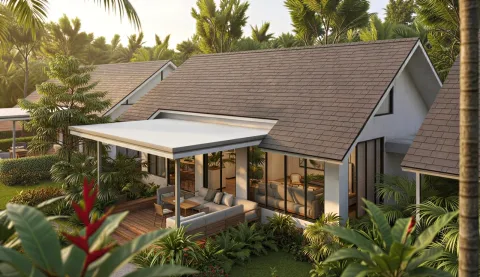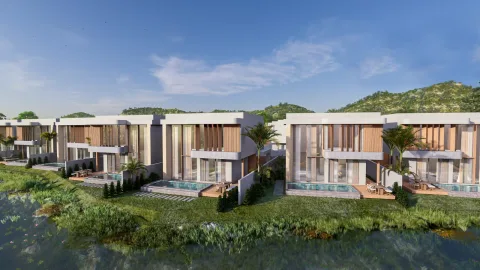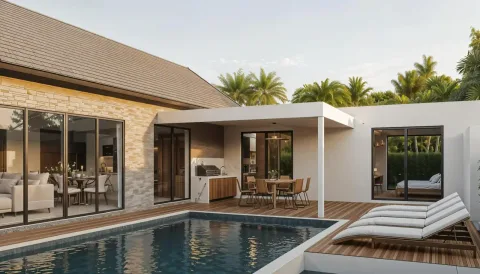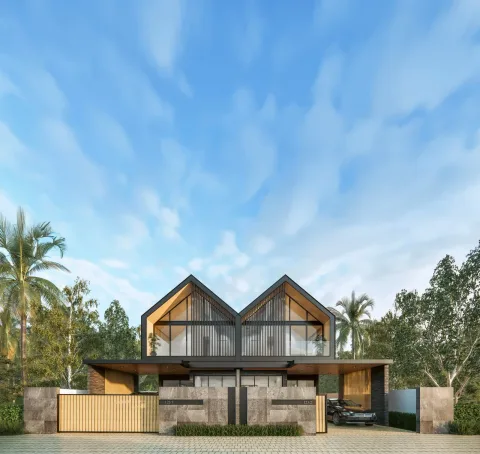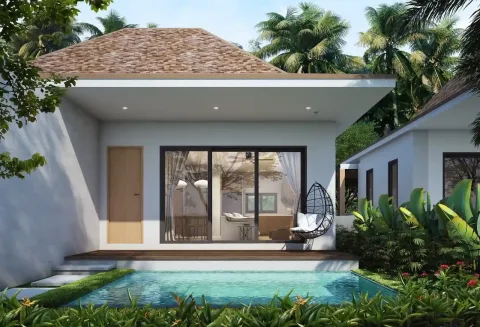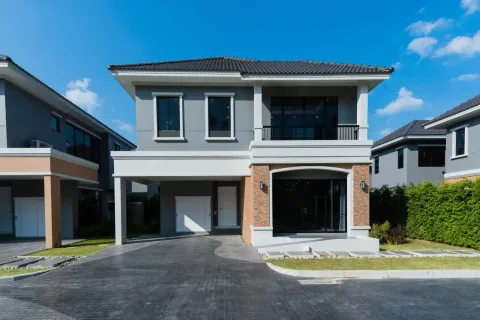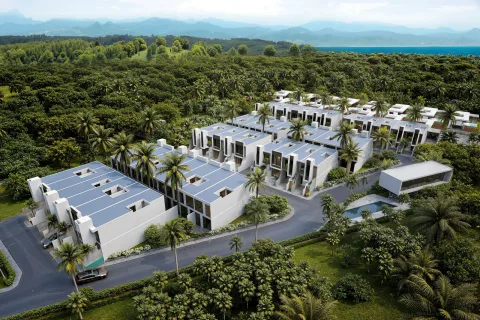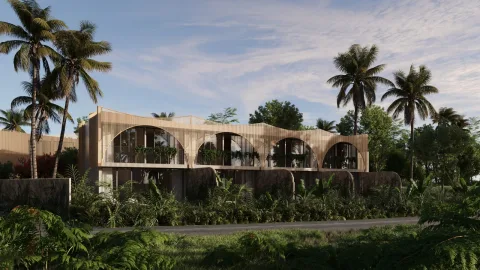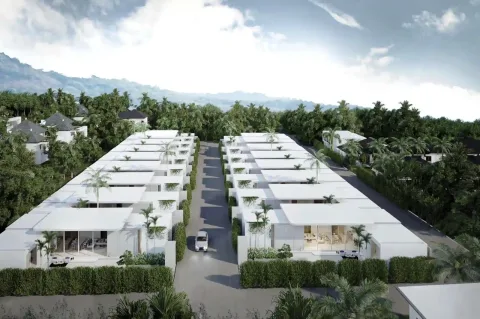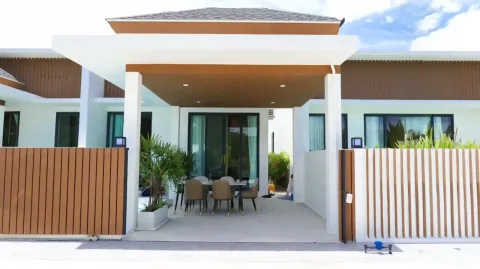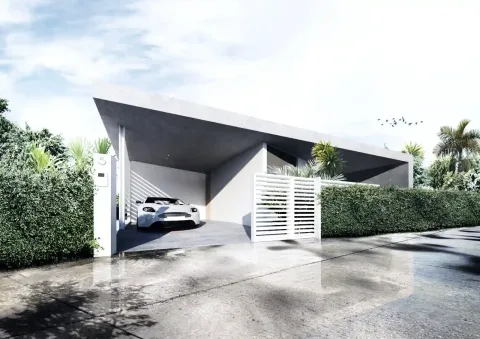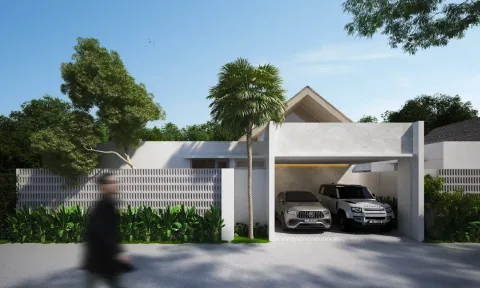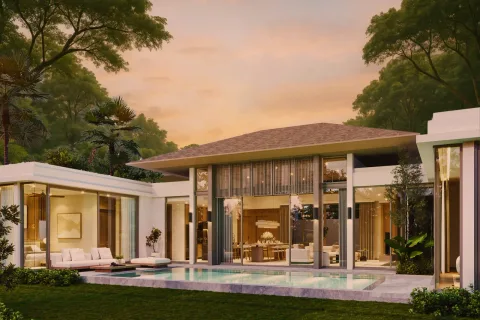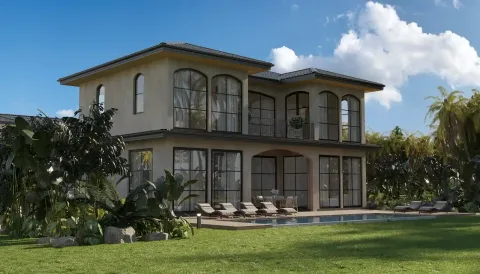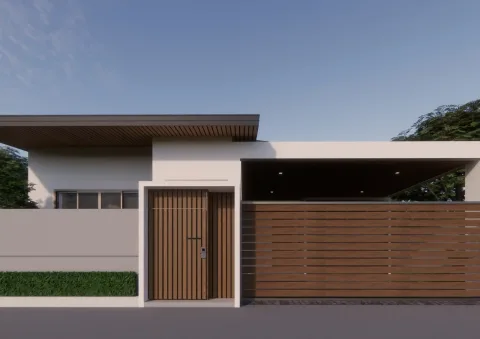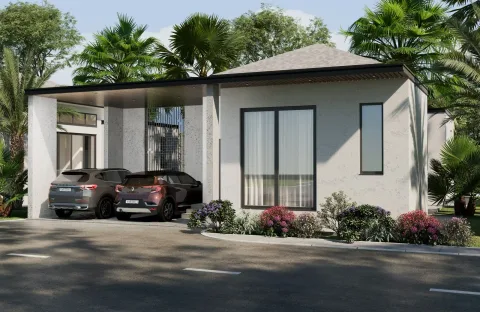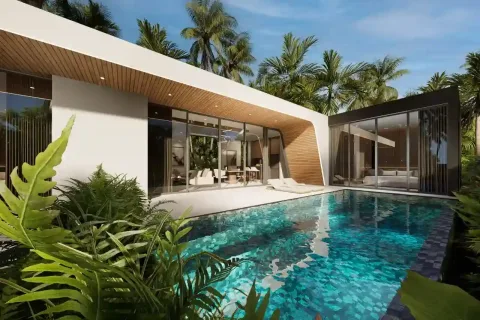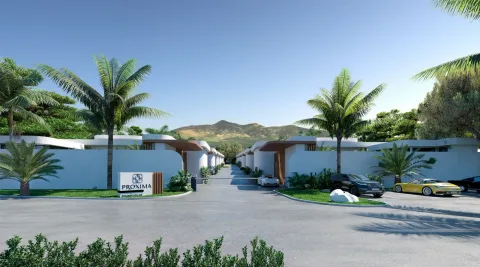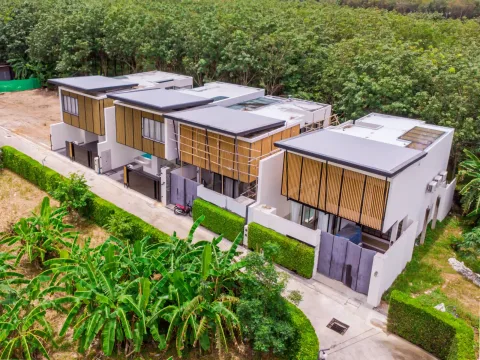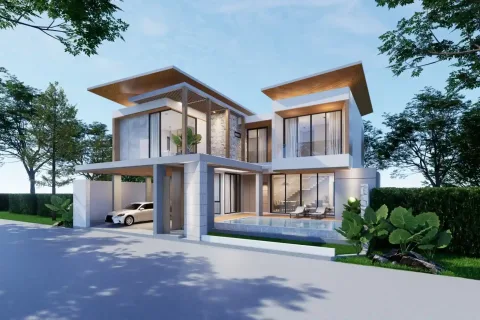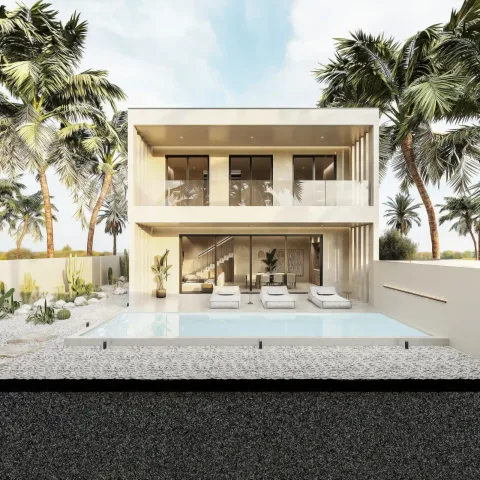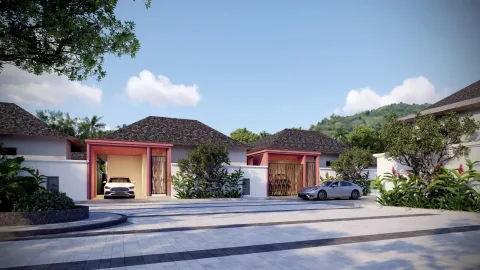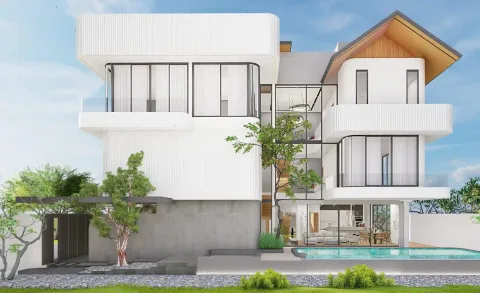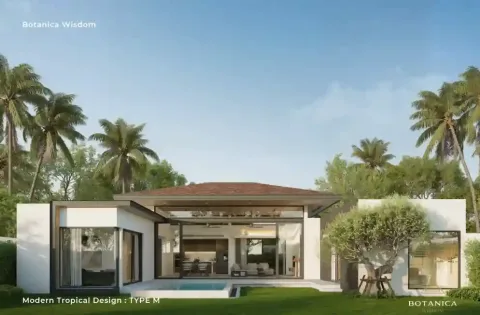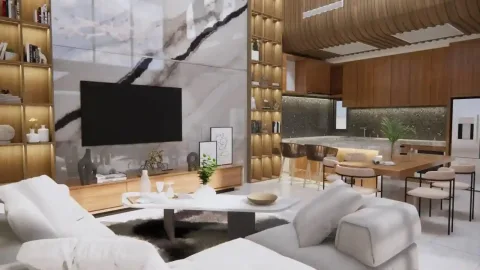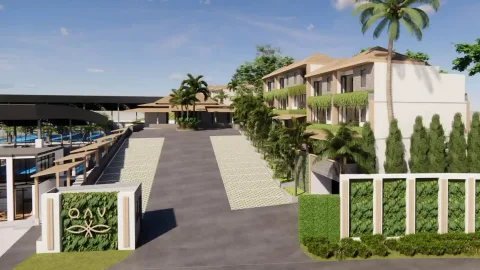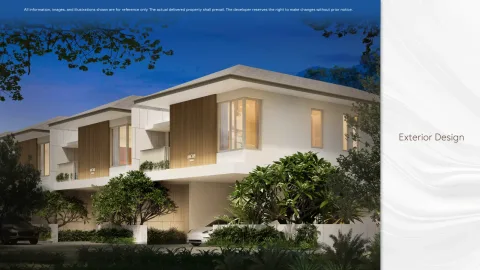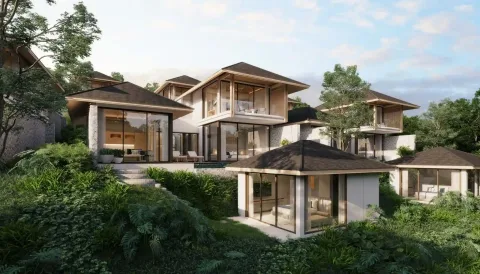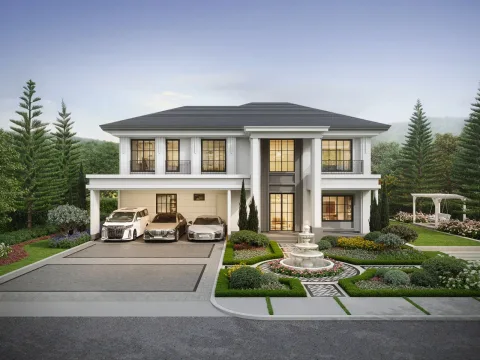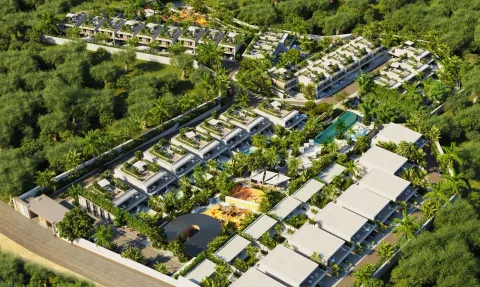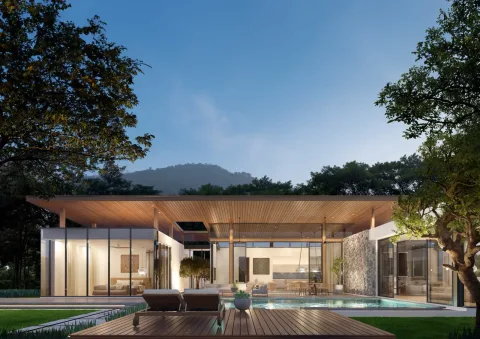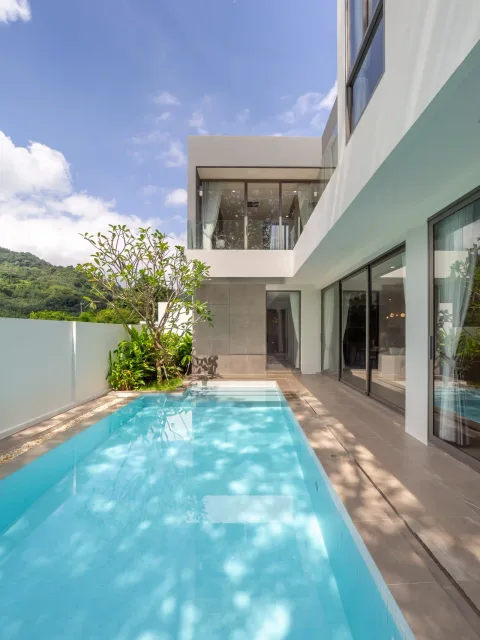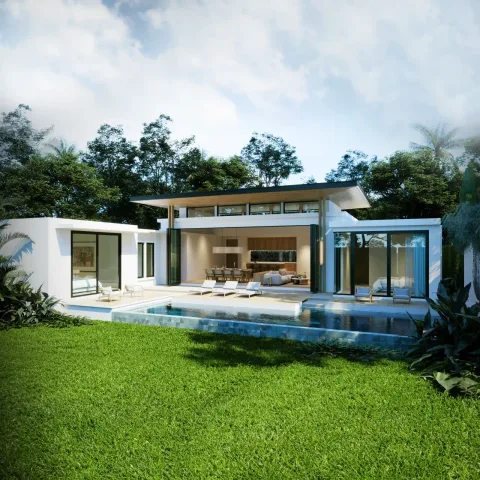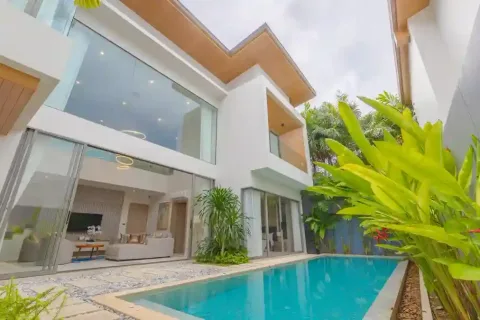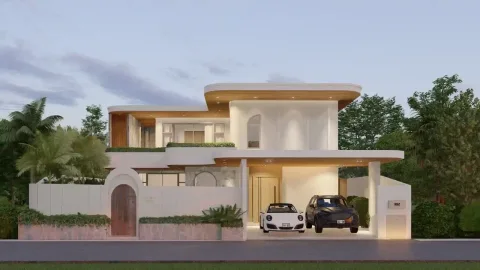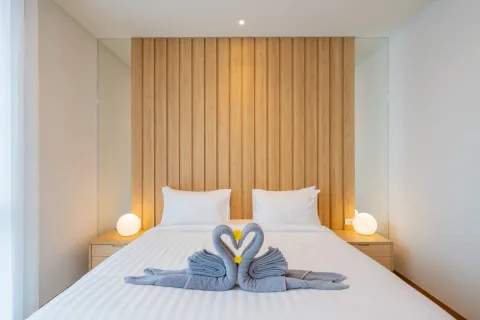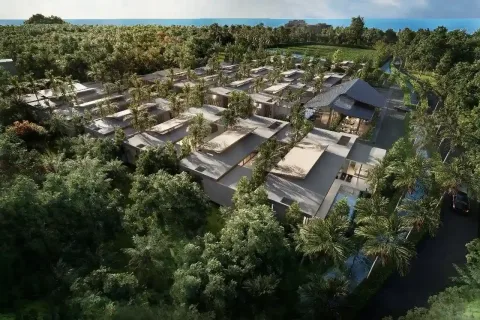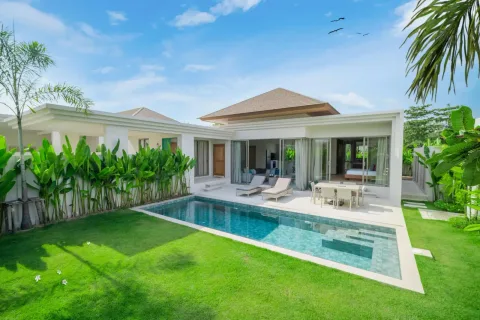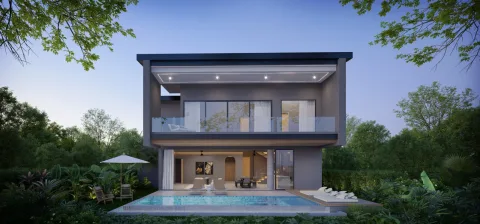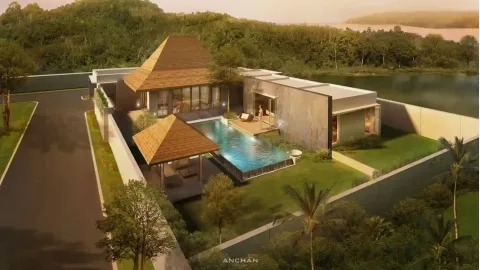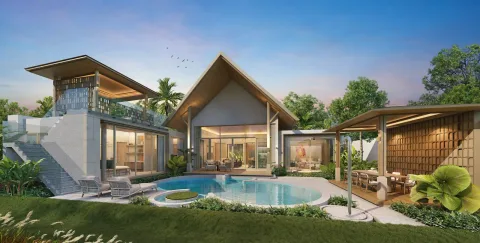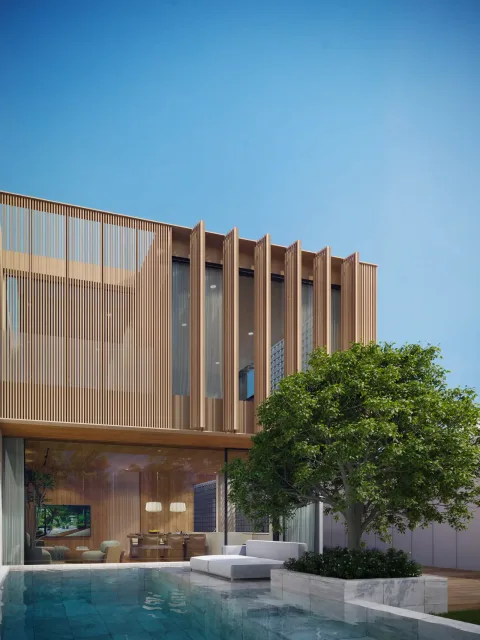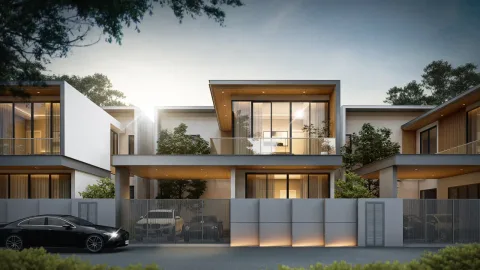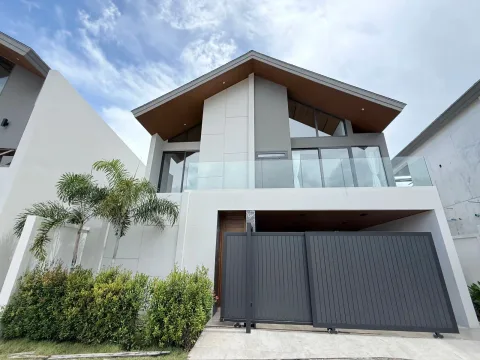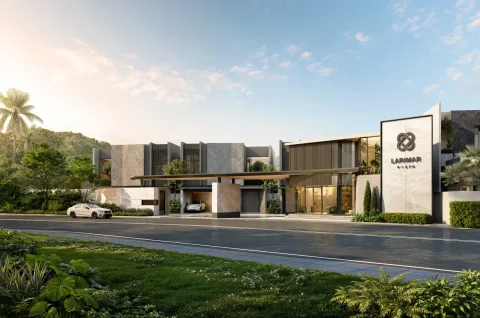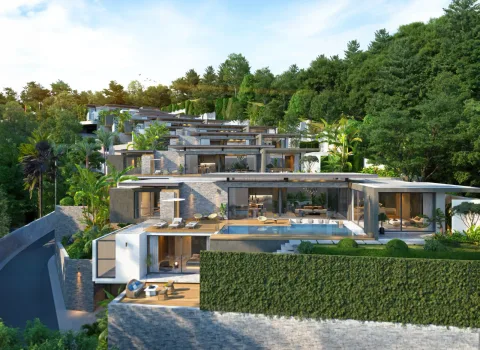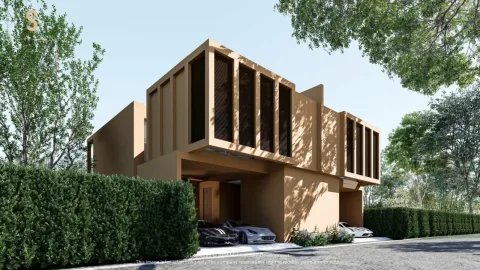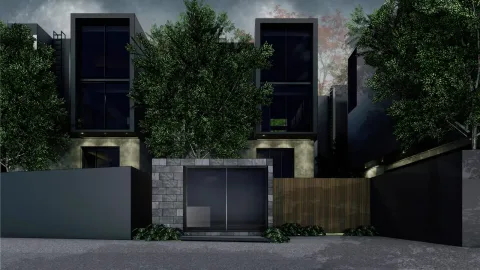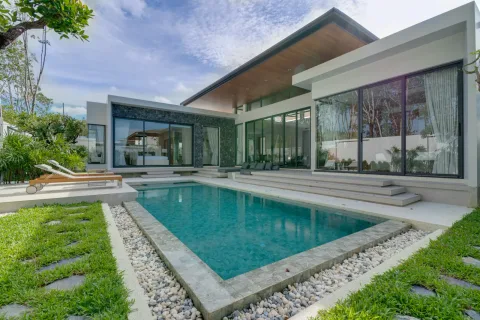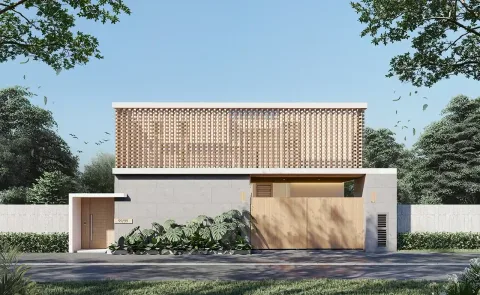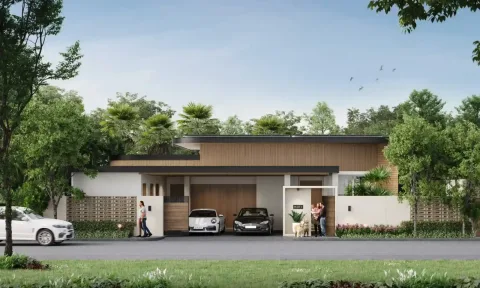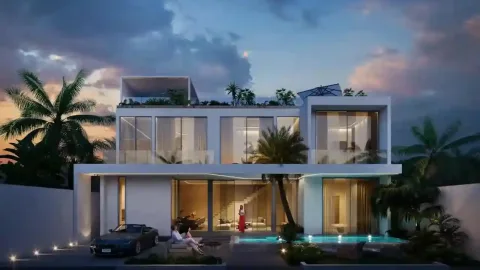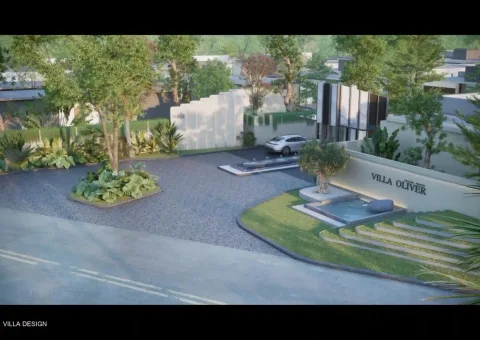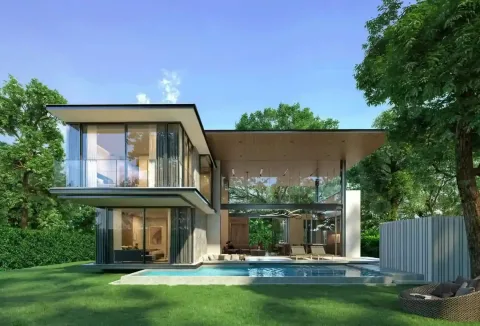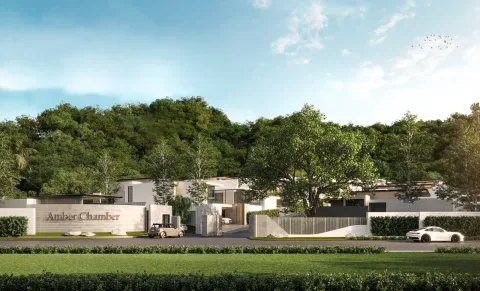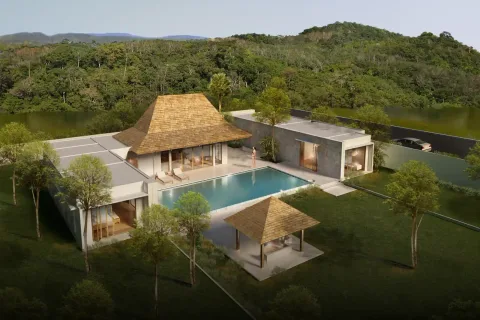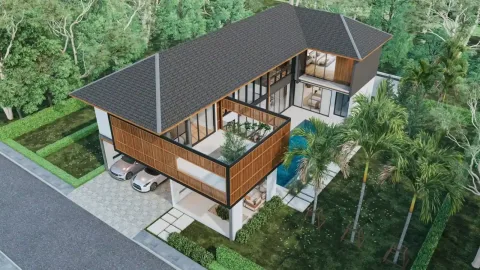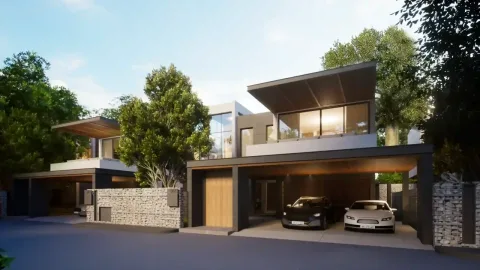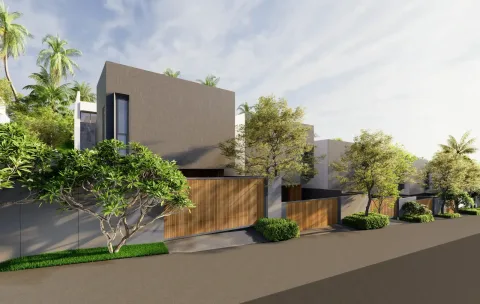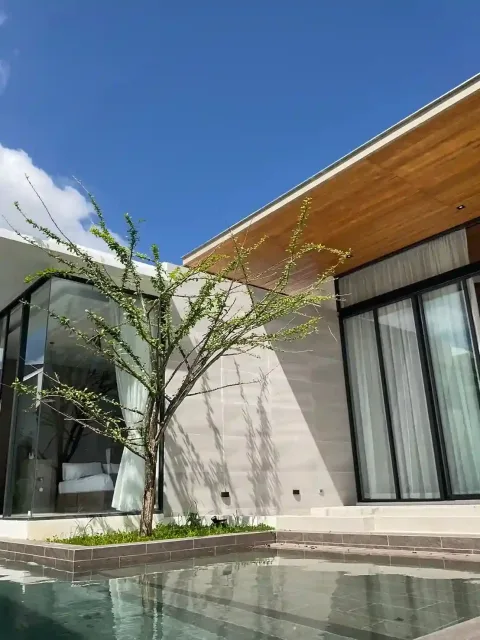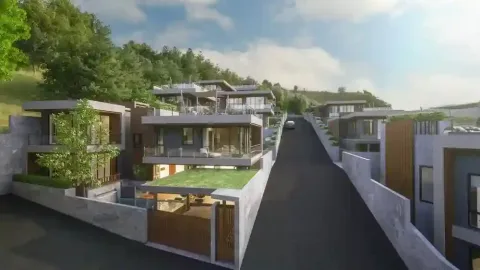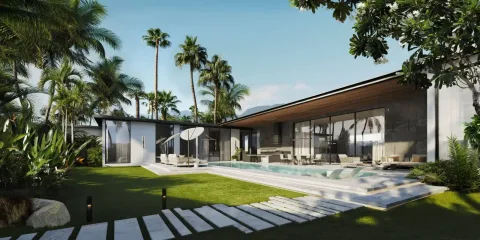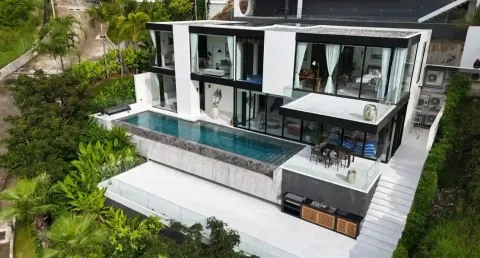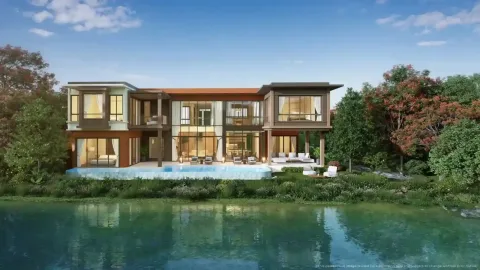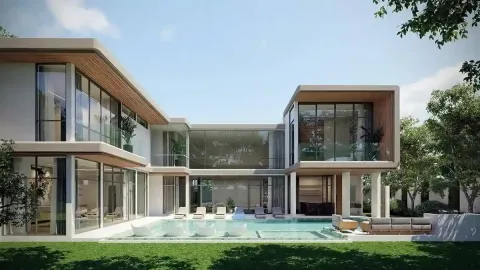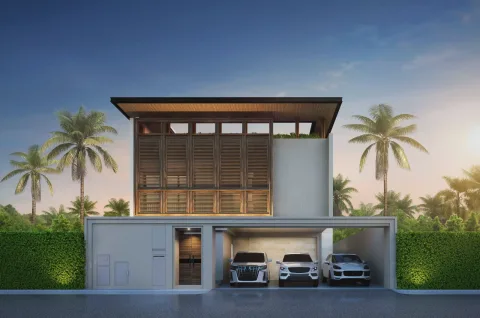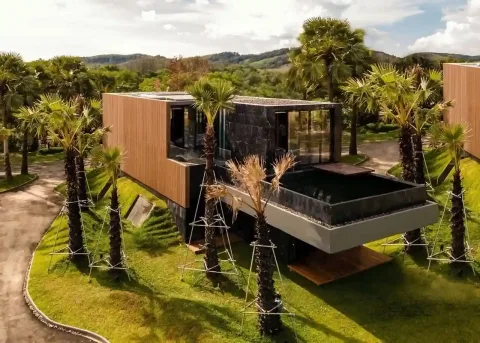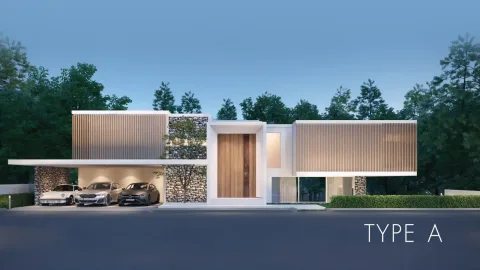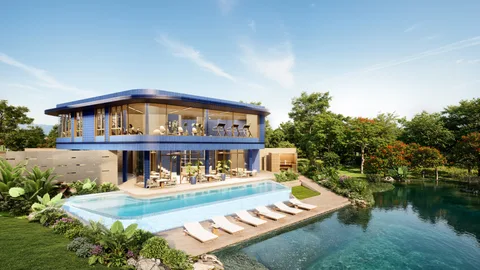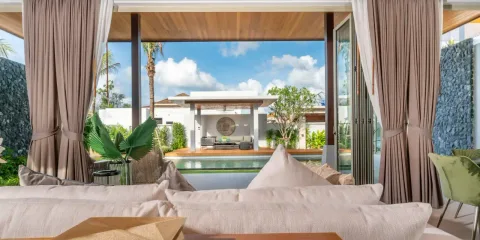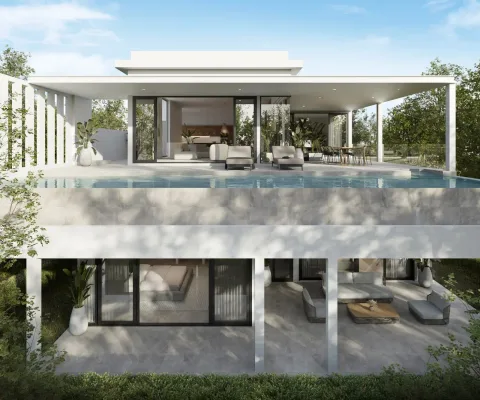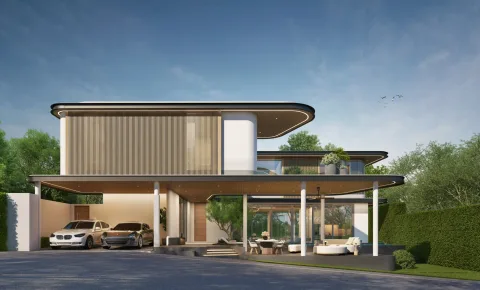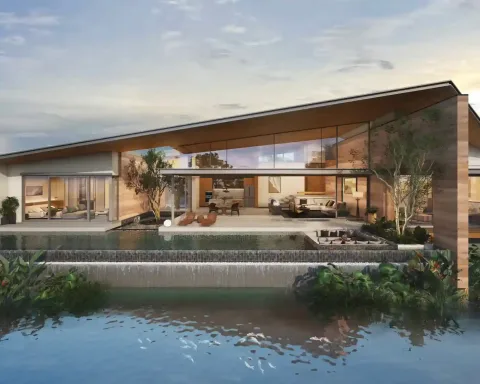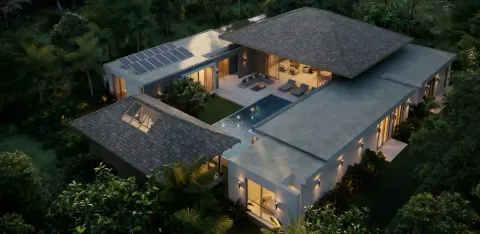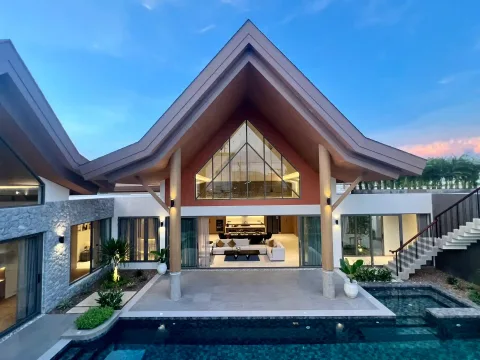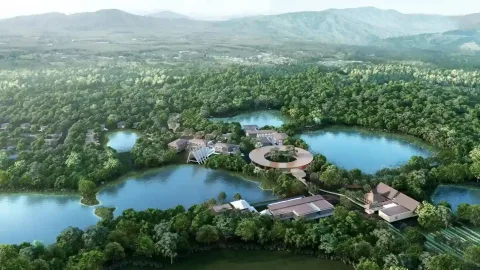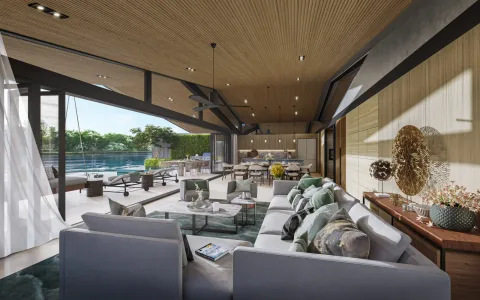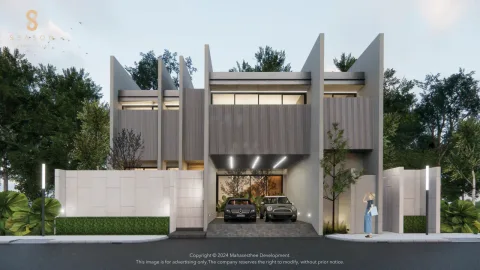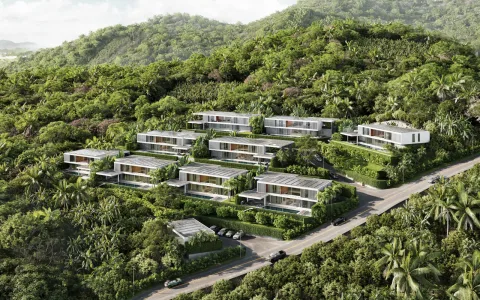
Anasiri Paklok by Sansiri: Family Homes from 5.49M THB
Pa Khlok
- Price from
- 5,490,000 THB
- In dollars
- about $167,900
- Type
- Villa
- Status
- completed
Phuket · Pool villa estates · Updated
Quick answer: On 5 September 2026 this site holds 148 Phuket pool villa estates from developers, 144 of them priced, from 5,490,000 THB for completed family homes in Pa Khlok to 160,000,000 THB for beachfront residences in Laguna, with a median starting price of 26,911,000 THB. Only 13 estates are completed; 135 are sold from plans or during construction. Bang Tao holds 55 estates, Layan 32 and Nai Yang 19. The typical Phuket villa is a three- or four-bedroom two-storey house of 340 to 500 square metres with a private pool, and a foreign buyer owns the house outright while holding the plot on a 30-year lease registered at the Phuket Land Office.
145 villa estates on the island, from 5,490,000 THB (about $167,890 at 32.7 THB per dollar), median entry 26,900,000 THB (about $822,630); 13 completed, 132 under construction or off-plan. Bang Tao 49 · Layan 31 · Nai Yang 17 · Chalong 11.
Entry prices are the developer's starting price on the MORE Group price list, converted at 32.7 THB per dollar.
Pa Khlok
Nai Yang
Bang Tao
Nai Yang
Layan
Bang Tao
Ko Kaeo
Layan
Bang Tao
Rawai
Nai Yang
Rawai
Bang Tao
Layan
Chalong
Nai Yang
Nai Yang
Naithon
Bang Tao
Bang Tao
Chalong
Bang Tao
Nai Yang
Nai Yang
Nai Yang
Mai Khao
Bang Tao
Bang Tao
Bang Tao
Ko Kaeo
Layan
Nai Harn
Nai Yang
Chalong
Naithon
Kathu
Rawai
Ko Kaeo
Nai Yang
Ko Kaeo
Bang Tao
Greater Patong
Rawai
Chalong
Bang Tao
Layan
Nai Yang
Layan
Nai Yang
Mai Khao
Rawai
Rawai
Nai Yang
Nai Yang
Layan
Bang Tao
Cape Yamu
Bang Tao
Chalong
Layan
Layan
Layan
Layan
Bang Tao
Layan
Chalong
Mai Khao
Bang Tao
Layan
Layan
Layan
Bang Tao
Bang Tao
Bang Tao
Greater Patong
Nai Yang
Rawai
Chalong
Nai Yang
Bang Tao
Layan
Bang Tao
Layan
Bang Tao
Chalong
Nai Harn
Chalong
Layan
Bang Tao
Naithon
Chalong
Mai Khao
Kamala
Bang Tao
Karon
Bang Tao
Layan
Chalong
Bang Tao
Mai Khao
Layan
Bang Tao
Bang Tao
Naithon
Ko Kaeo
Nai Yang
Kamala
Bang Tao
Bang Tao
Bang Tao
Bang Tao
Layan
Bang Tao
Layan
Bang Tao
Bang Tao
Layan
Bang Tao
Bang Tao
Bang Tao
Bang Tao
Bang Tao
Layan
Bang Tao
Bang Tao
Layan
Ko Kaeo
Bang Tao
Kata
Layan
Greater Patong
Layan
Layan
Layan
Kata
Bang Tao
Layan
Layan
Bang Tao
Bang Tao
Bang Tao
Ao Yon
Surin
Bang Tao
Bang Tao
The figures in the guide below are dated to the catalogue of 5 September 2026; the counts at the top of the page, the figures block and the grid are recalculated from the project cards at every build.
Phuket has more pool villa estates for sale than any other place in Thailand, and they are not spread evenly. Three districts on the north-west of the island, Bang Tao, Layan and Nai Yang, hold 106 of the 148 estates on this site; the rest of the island shares 42. The table lists every district with a villa estate on the catalogue on 5 September 2026, with the number of estates, how many are finished, the lowest and the median developer price, and the kind of villa the district sells. Every figure is computed from the project cards, and each card names its source and date.
| District | Estates | Completed now | Lowest entry | Middle of the market | What you find there |
|---|---|---|---|---|---|
| Bang Tao | 55 | 4 | 8,990,000 THB | 32,500,000 THB | Cherng Talay estates of 20 to 130 villas, Laguna’s branded beachfront residences, the island’s resale depth |
| Layan | 32 | 3 | 9,500,000 THB | 29,210,000 THB | Hillside and valley estates north of Bang Tao, Anantara-branded villas, the biggest plots on the west coast |
| Nai Yang | 19 | 0 | 6,500,000 THB | 17,800,000 THB | Thalang and Sakhu estates ten minutes from the airport, all under construction |
| Rawai | 10 | 1 | 12,280,000 THB | 20,000,000 THB | Owner-occupier estates between Nai Harn and Chalong, some single-storey |
| Kata | 7 | 1 | 17,900,000 THB | 29,800,000 THB | Sea-view hillside schemes above the beach town, two of them above 60,000,000 THB |
| Mai Khao | 4 | 1 | 15,838,050 THB | 29,400,000 THB | Low-density estates beside the national park and the northern beach |
| Naithon | 4 | 0 | 13,500,000 THB | 25,663,500 THB | A quiet beach between Layan and Nai Yang with a handful of new schemes |
| Chalong | 3 | 1 | 13,990,000 THB | 29,716,000 THB | Completed and off-plan estates near the marinas and the Big Buddha road |
| Patong | 3 | 0 | 19,970,000 THB | 27,400,000 THB | Hillside villas above the town, including one ultra-luxury scheme |
| Kamala, Nai Harn, Surin, Cape Yamu, Karon, Kathu, Pa Khlok, Ao Yon | 11 | 2 | 5,490,000 THB (Pa Khlok) | 17,700,000 THB to 117,500,000 THB | Single estates or pairs: Sansiri’s family homes in Pa Khlok at the bottom, Veranda at Ao Yon near the top |
Read the bands rather than the medians if you have a budget. Seven estates start under 10,000,000 THB, 36 between 10,000,000 and 20,000,000 THB, 69 between 20,000,000 and 40,000,000 THB, and 32 at 40,000,000 THB or more. The middle of Phuket’s villa market is the 20,000,000 to 40,000,000 THB band, roughly $611,621 to $1,223,242 at 32.7 THB per dollar, and it is where most Cherng Talay and Layan estates sell their three- and four-bedroom houses.
The estates on this page are the latest layer of a market that has been forming for four decades, and the layers explain the prices. Laguna Phuket opened on reclaimed tin-mine land at Bang Tao in 1987 as Asia’s first integrated resort, and its owner, Banyan Tree, began selling residences beside the hotels in the following decade; the Laguna orbit has anchored foreign villa demand on the island ever since, and it is the reason Bang Tao carries 55 of the 148 estates here and the highest median. The first wave of independent villa estates followed in the early 2000s on the hillsides of Kamala, Surin and Kata, selling sea views to European buyers, and it is where the island’s older leasehold and company structures, and their problems at resale, now sit. The Cherng Talay plain filled in the 2010s with estates of twenty to a hundred villas aimed at families near the international schools, the product that most buyers on this page will end up owning. Since 2022 the supply has moved north and inland, to Thep Krasattri, Sakhu and Nai Yang, where land is cheaper and the airport is close, and to the Layan hills, where the branded schemes have followed Anantara. C9 Hotelworks’ 2026 review of Asia’s residential market counts 3,465 branded residence units in Phuket, more than in any other resort market in the region, and most of that number is within a few kilometres of Bang Tao beach. The Real Estate Information Center’s transfer statistics cannot measure the villa side of this history, because the lease on a villa plot is recorded under the landowner’s name; the estates on this page are the nearest thing to a count.
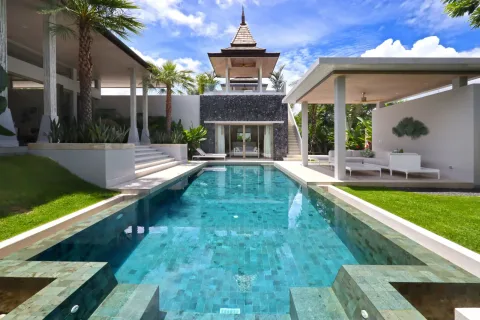
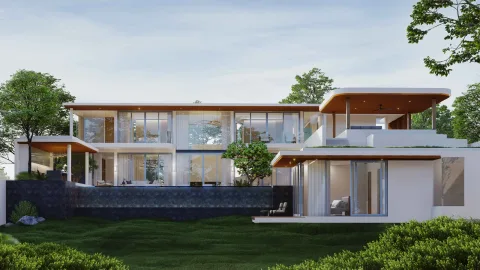
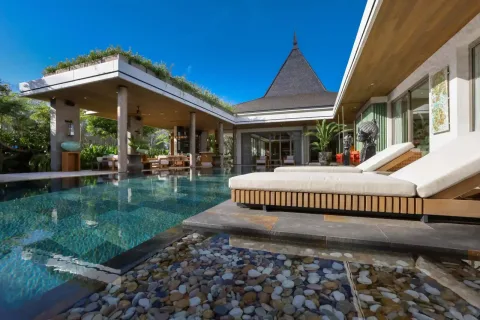
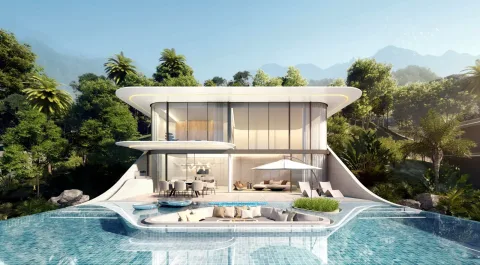
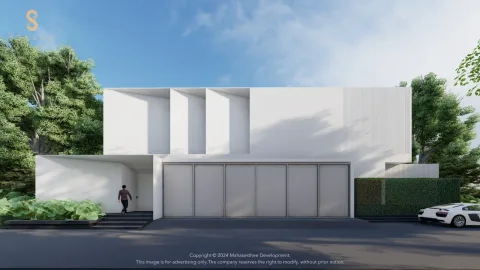
Phuket’s developers build in four recognisable styles, and the style is a maintenance decision as much as a taste. The Thai-Balinese villa of the early estates, with its high pitched roofs, timber columns, open pavilions and ponds, is the most photogenic and the most demanding: hardwood weathers, thatch and shingle roofs need replacing, and open plans invite the monsoon in. The modern tropical villa that dominates Cherng Talay, with flat or low-pitched roofs, large glazed sliding walls, a rectangular pool and a rendered finish, is cheaper to build and to keep, provided the flat roof’s membrane and the glazing’s seals are good. The minimalist villa of the newest Layan and Si Sunthon schemes, white or grey, with concealed gutters and long cantilevers, photographs best and leaks first if the detailing is careless; Wintery by Season is the type. The branded villa, Banyan Tree’s or Anantara’s, is built to the brand’s specification and kept by the operator, which is what the management fee buys. A buyer choosing between two houses at the same price should ask what each will cost to keep looking like the brochure in year five, and the answer is usually the plainer one.
The same estate serves two buyers badly if they do not know which one they are. A villa to live in wants a quiet estate with owner-occupier neighbours, a school run under twenty minutes, a hospital within thirty, a plot large enough for a garden the children can use, storage, a kitchen a family can cook in, and regulations that keep nightly guests out. Rawai, Chalong, the Pa Khlok side of Thalang and the inland Cherng Talay estates fit that brief, and the completed estates fit it best because the neighbours already exist. A villa to let wants the opposite in several respects: a location tourists search for, a pool and view that photograph, bedrooms with their own bathrooms, an estate whose rules permit short stays, a management company on site, and a house that a stranger can operate without a manual. Bang Tao, Layan, Kamala and Kata fit that brief, and the branded and managed estates fit it best. Estates that promise both usually deliver neither, and the regulations, not the sales office, say which one an estate is. The villa rental income guide and the absentee owner guide take the letting brief further; the area guides above take the living one.
A Phuket villa is a specific product, and knowing it saves a buyer from comparing houses that are not alike. Of the 77 estates on this site that state bedroom counts, 37 start at three bedrooms, 27 at four, 6 at five and 7 at two; the largest house in most estates has four or five bedrooms, and only three estates go to six. Of the 108 estates that publish built areas, the smallest villa in a typical estate is about 337 square metres and the largest about 501. The standard house is therefore two storeys, three or four bedrooms each with its own bathroom, an open living and dining room on the ground floor opening to a covered terrace and a private pool, a maid’s room or utility room behind the kitchen, and covered parking for two cars.
Around that standard the market spreads in both directions. AG Club Villas in Thep Krasattri sells 26 identical four-bedroom houses of 208 square metres, sixteen of them at exactly 14,490,000 THB, a scheme where the only variable is the plot. At the other end, Anann Villa in Bang Tao sells twelve houses of 735 to 891 square metres from 93,680,000 THB, and Island Collection in Layan sells nine completed villas of 907 square metres from 75,304,743 THB. Between them sit the Cherng Talay estates, where a 350-square-metre three-bedroom on a 400 to 600 square metre plot is the house that most foreign buyers end up owning.
Two numbers that estates rarely volunteer decide value more than the bedroom count. The plot area on the deed, because the lease you register is a lease of that plot and the garden and pool sit on it. And the built area net of terraces and pool deck, because developers count covered outdoor space differently and a 400-square-metre villa can have 280 square metres of rooms. Ask for both in writing, with the ceiling heights.
Buyers who want to walk through a finished house rather than a show unit have thirteen estates to choose from on this site, and they are worth naming because the list is short. Prices are the developer’s starting prices on the card; two of the thirteen do not publish one.
| Estate | District | Starting price | What it is |
|---|---|---|---|
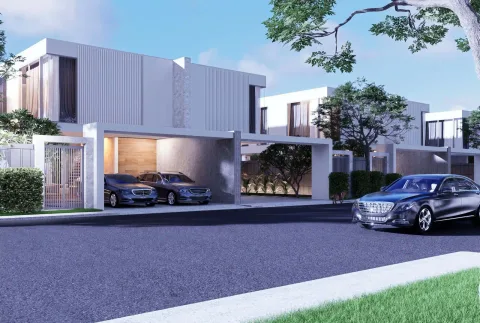
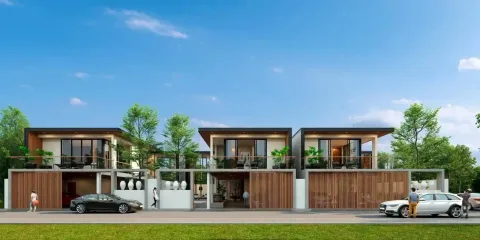
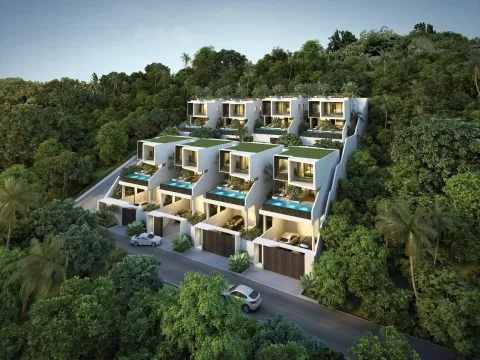
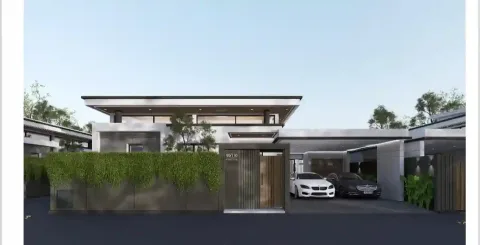
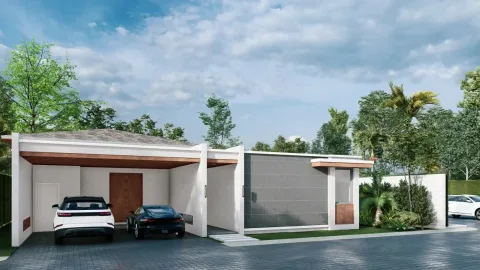
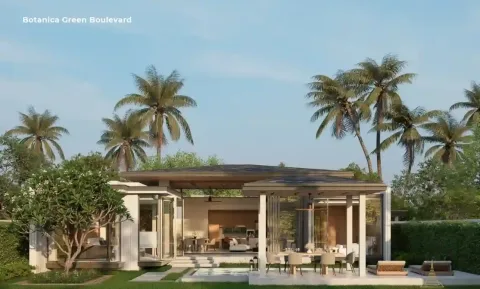
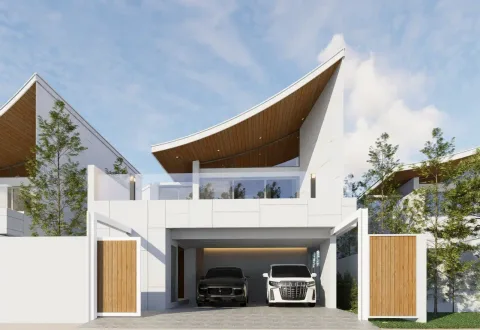
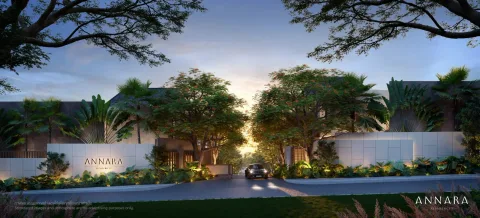
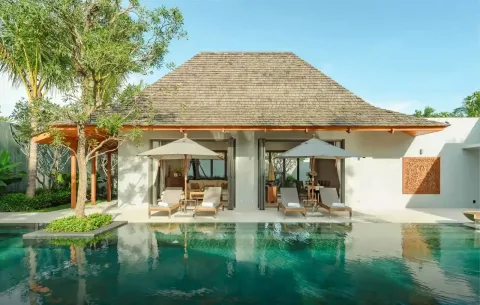
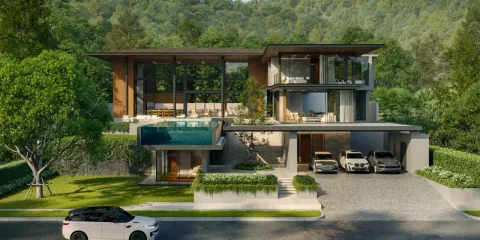
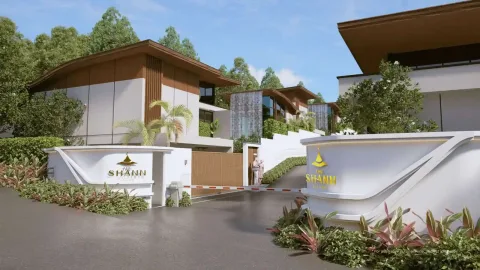
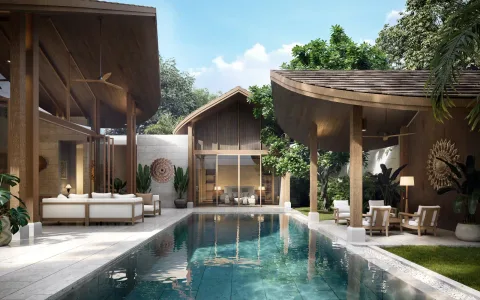
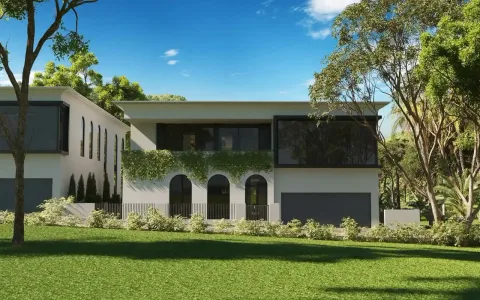
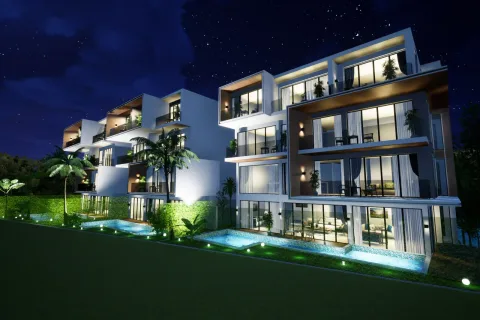
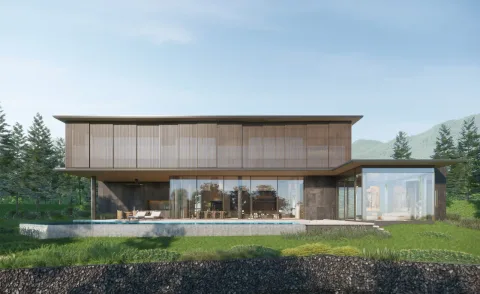
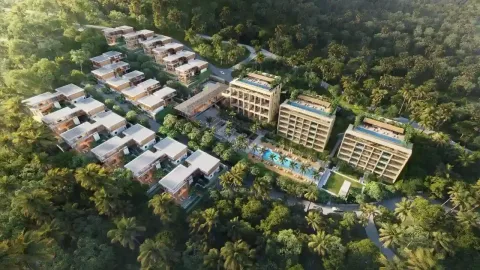
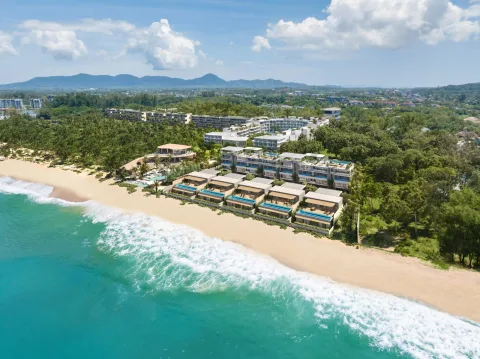
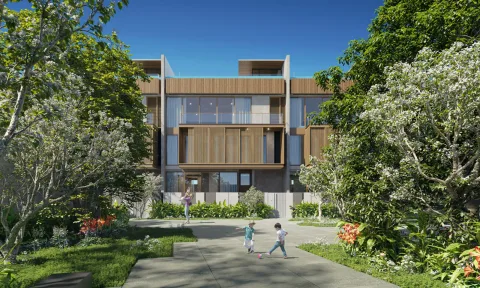
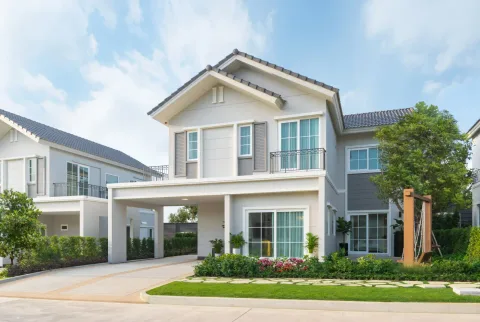
| Anasiri Paklok | Pa Khlok | 5,490,000 THB | Sansiri’s completed family homes on the east coast; the cheapest villa product on the island |
| Phirunda Pool Villa | Chalong | 13,990,000 THB | Seventeen pool villas delivered in August 2025 near the Chalong marinas |
| WamDom Villas | Rawai | 20,000,000 THB | Completed pool villas ready to occupy in the south |
| Mouana Breeze | Mai Khao | 25,900,000 THB | Three- and four-bedroom villas of about 404 to 430 square metres by the northern beach |
| Le Villa Lake | Layan (Thep Krasattri) | 26,680,000 THB | Sixteen three-bedroom pool villas completed in the first quarter of 2026 |
| Wintery by Season | Bang Tao (Si Sunthon) | 34,000,000 THB | A minimalist three-bedroom pool villa near Bang Tao and Layan |
| ISOLA | Layan | 35,000,000 THB | Twelve completed pool villas with immediate handover |
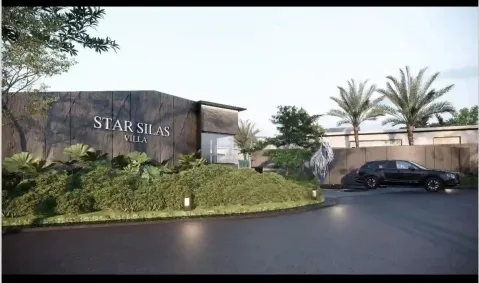
| Star Silas Villa | Kata (Chalong side) | 35,800,000 THB | A premium pool villa completed in the first quarter of 2026 |
| Clover Residence | Bang Tao (Cherng Talay) | 43,600,000 THB | Completed three- to five-bedroom pool villas |
| Erawana Grand | Bang Tao (Choeng Thale) | 49,500,000 THB | Finished four-bedroom pool villas, six priced on the file |
| Island Collection | Layan | 75,304,743 THB | Nine completed 907-square-metre villas |
| Baan Phu Prana | Surin | on request | Single 9-bedroom villa above Surin, the whole house is listed by agencies |
| Laguna Homes | Bang Tao | on request | Forty-one villas inside the Laguna resort, delivered 2024 |
A completed estate changes the buyer’s task. There is nothing left to deliver, so the diligence shifts to the house itself, the estate’s accounts and the title: whether the plots are subdivided with their own deeds so the lease can be registered on the day, whether the estate’s common roads and water supply are held by an owners’ body or still by the developer, and whether the first monsoon has already found the roof. It also changes the price, because a finished villa in Cherng Talay or Layan carries the premium of certainty over the off-plan estate next door.
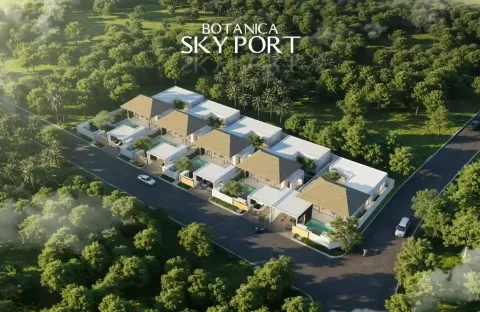
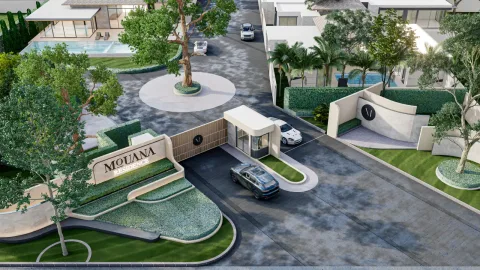
One hundred and thirty-five estates here are being sold off-plan or while they are built, so the buyer of an off-plan villa is buying a developer as much as a house. A few names account for a large share of the supply. Botanica appears on 13 estates on this site, across Cherng Talay, Layan, Bang Tao and Nai Yang, and the Botanica guide sets out its delivery record phase by phase. Banyan Tree carries five schemes in Laguna, from the Residences to the Oceanus and Varuna beachfront residences at 160,000,000 THB and 106,900,000 THB, covered in the Banyan Group guide. Anchan has four estates, Mouana four, Aileen three. Anantara’s brand sits on Kiara Reserve in Layan, and the Anantara guide and the Laguna developer guide explain what a hotel brand does and does not add to a villa.
The payment schedule is the shape of the purchase. AG Club Villas publishes 35 percent on contract and 20, 20 and 20 percent at construction stages with 5 percent at handover, which is typical of the inland estates; the branded schemes tend to ask for less up front and more at completion. Whatever the split, the questions are the same: does the developer hold a construction permit for your plot, has the estate’s land been subdivided, is the environmental approval in place where the scheme’s size requires one, what did the developer deliver last time against the dates it advertised, and what does the contract say happens to your instalments if delivery runs late. The off-plan developer comparison, the track record guide and the off-plan guide answer them developer by developer and clause by clause.
Insider tip: in a Phuket estate where every villa is the same house, the price list tells you what the developer thinks of each plot. When sixteen of twenty-three identical villas carry one price and the other seven carry more, the seven are the corner plots, the view plots or the ones nearest the pool, and the buying decision is whether the developer’s view of those plots is yours.
Every Phuket villa sits in one of three landscapes, and each has its own price and its own risk.
The hillsides of Kata, Kamala, Layan and the slopes above Patong carry the sea views and the highest prices per square metre. They also carry the island’s construction risk. Phuket’s town plan restricts building on steep gradients and at elevation, retaining walls and drainage decide whether a house survives its first monsoon, and access roads often cross neighbouring land under rights of way that were informal when the developer built. A hillside villa needs a survey of the plot against the slope rules, a look at the retaining structures and the storm drains, and a registered servitude for the road. The hillside villa guide is the checklist.
The flat land of the Cherng Talay plain, Thep Krasattri, Sakhu and Pa Khlok is where most estates are built, because it is cheap to build on and close to the schools and the Laguna orbit. The plots are larger, the prices lower for the same house, and the risk is water: parts of the plain flood in heavy monsoon years, and an estate’s drainage design and its elevation above the road matter more than the brochure suggests. Ask where the water goes.
The beachfront is rare and expensive, Banyan Tree’s residences on Bang Tao beach at the top of the market, and it is governed by coastal setback rules that have been enforced hard in 2025 and 2026. The beachfront demolitions report explains what happened to buildings that sat where they should not, and why the title deed and the setback line belong in the first conversation about any villa within sight of the water.
Send us three estates from the grid and we send back the plots and the permits
We pull the land title, the subdivision, the construction permit and the developer's delivery history for each, and reply with a plain summary before you commit a reservation fee.
A Phuket villa is three registrations, not one, and a buyer should be able to name all three before signing.
The land is a plot with its own title deed, ideally a Chanote with a GPS survey, owned by the developer or a landholding company. A foreign buyer takes a lease of that plot for up to 30 years, and the lease is endorsed on the deed at the Phuket Land Office for a fee of 1 percent of the total rent plus 0.1 percent stamp duty. That endorsement is the buyer’s right; the renewal promises in a 30+30+30 contract are the developer’s obligations, enforceable against the developer but not registered against the land. The 30-year lease guide explains what the endorsement does and does not protect.
The house is a separate asset that a foreigner may own outright. It is registered in the buyer’s name either by a transfer of the building at the Land Office, with a 2 percent transfer fee on its appraised value, or by the construction permit being issued in the buyer’s name so that the house is the buyer’s from the first brick. A superficies, a registered right to own a building on someone else’s land, is the cleanest way to record the arrangement, and good lawyers ask for one.
The estate is the roads, walls, drainage, security and sometimes a clubhouse that every villa shares. On estates registered under the land allocation law the common areas pass to an owners’ body funded by the estate fee; on others the developer keeps them and charges for them. Which of the two applies decides who fixes the road in ten years, and it is on the licence.
A Thai company holding the land instead of a lease is lawful when the company is real and unlawful when its Thai shareholders are nominees, and the checks that tightened in 2025 and 2026 have caught up with structures set up a decade ago. The company purchase guide sets out when a company is defensible. Buyers weighing a villa against the freehold certainty of a condominium can read the condo versus villa comparison.
Phuket villas are built the Thai way, reinforced concrete post and beam with brick or block infill, rendered and painted, under a pitched roof of concrete tiles or a flat roof with a membrane. Built well it lasts; built quickly it leaks, and the monsoon finds out which within a year. Eight things to inspect or to specify in the contract.
None of this is exotic; it is what a surveyor checks at home. The difference in Phuket is that the buyer is often abroad at handover, so someone who works for the buyer should be there with the list.
A villa’s running costs are the estate fee, the pool and the garden, insurance, utilities and tax, and the first three are the ones that surprise. The estate fee covers roads, security, lighting and shared landscaping; it is set per estate, quoted on the card where the developer publishes it, and worth checking against two years of accounts on a completed estate. A weekly pool contract keeps the water balanced and the pump alive whether or not anyone is in the house, and a gardener keeps a tropical garden from becoming a forest in one wet season. Building insurance is required by most estates and cheap by Western standards. Electricity for air-conditioning and the pool pump is the largest utility bill; water depends on the supply.
Tax is the smallest line. Land and Building Tax on a residence is charged at 0.02 percent a year on the assessed value, payable by the end of April, and the assessed value is well below the price. On sale, the seller pays specific business tax of 3.3 percent if the villa is sold within five years or stamp duty of 0.5 percent after, plus withholding tax; the tax guide has the worked examples.
Owners who live abroad add a management company to collect the rent, report guests, pay the bills and open the house before they arrive, and the absentee owner guide sets out what such a company should do and what it should cost as a share of rent rather than as a promise.
Phuket’s villa estates were built for owners who let, and the rules are settled. A tenancy of 30 days or more is a plain lease any owner may grant. Letting by the night counts as hotel business under the Hotel Act, except where the villa is registered with the Thalang or Kathu district office as a small establishment of up to four rooms and twenty guests, and estates increasingly write their own limits into the regulations every owner signs, from a minimum stay to an outright ban. Every foreign guest is reported to immigration on a TM30 form, and the management company that does this should be able to show the filings. Rent paid to an owner who is not Thai tax resident carries 15 percent withholding at source.
What the rules do not settle is the income, and this page does not pretend to. Thailand keeps no letting register, and every occupancy or nightly-rate figure a buyer is shown is the seller’s forecast. The villa rental income guide explains how to model a villa’s letting from an estate’s real history rather than from a brochure.
A family compound near the schools. Cherng Talay, Thep Krasattri and the Pa Khlok side of Thalang, where a four-bedroom on a large flat plot is within a short drive of the international schools; from 5,490,000 THB in Pa Khlok and 8,990,000 THB in Bang Tao.
A sea-view retreat. The hills of Kata, Kamala and Layan, from 17,900,000 THB in Kata, with the hillside checks above.
A branded beachfront residence. Laguna, and only Laguna at this depth: Banyan Tree’s residences from 106,900,000 THB, with a management contract to read as closely as the title.
An entry-price villa. Nai Yang and Sakhu from 6,500,000 THB, or the Thalang inland estates from about 9,000,000 THB, with the airport ten minutes away and the beach a drive. The guide to pool villas under a million dollars sets out the price bands from Rawai to Bang Tao.
A single-storey retirement home. Rawai and Chalong, from 12,280,000 THB, near the Chalong hospitals and the Nai Harn beach road, in completed estates with accounts to read.
Buyers comparing Phuket with the rest of Thailand can set these estates beside Koh Samui’s and Pattaya’s on the Thailand villas page; buyers still choosing between a villa and a condominium can start from all Phuket property or the Phuket condos page. The area guides for Bang Tao, Cherng Talay, Layan, Rawai, Kata and Kamala go street by street.
MORE Group’s office is on the island, and its team has reviewed every estate above: the card gives the source and date of every figure and leaves empty any field the developer has not confirmed. Developers pay the agency’s fee on new-build sales, so the buyer pays the published price. A villa buyer gets a shortlist built from a written brief, then the land title, subdivision and permit checks run by a lawyer the buyer chooses, the contract read against the schedule and the delay clause, a snagging visit at handover, and a plain answer when an estate does not stand up.
Give us the district, the bedrooms and whether the villa is a home or a managed asset
We answer within 2 hours with the estates from this page that fit, the lease terms each developer registers, and the points to settle before any deposit.
Developer starting prices across the 144 priced estates on this site on 5 September 2026 run from 5,490,000 THB in Pa Khlok to 160,000,000 THB on Bang Tao beach. The median estate starts at 26,911,000 THB, about $822,966 at 32.7 THB per dollar. Seven estates start under 10,000,000 THB, 36 between 10,000,000 and 20,000,000 THB, 69 between 20,000,000 and 40,000,000 THB, and 32 at 40,000,000 THB or more.
The inland corridor of Thalang and Nai Yang, north of the Cherng Talay plain and close to the airport, where 19 estates start at 6,500,000 THB and the median estate starts at 17,800,000 THB. Pa Khlok on the east coast carries the single cheapest project, Sansiri's completed family homes at 5,490,000 THB. The dearest districts are Bang Tao and Layan, with medians of 32,500,000 THB and 29,210,000 THB.
A foreigner can own the villa building in their own name and cannot own the land under it. The plot is leased for the maximum registrable term of 30 years, with the lease endorsed on the land title at the Phuket Land Office, or held by a Thai company with genuine Thai shareholders, or registered to a Thai spouse. A villa advertised as freehold is freehold for a Thai buyer or a company; for a foreign individual the accurate word is leasehold.
A reservation fee, a contract deposit, and instalments tied to construction stages over 12 to 36 months, with the balance at handover and registration. AG Club Villas in Thep Krasattri, for example, publishes a 35, 20, 20, 20, 5 percent schedule. The instalments are the closest thing to financing most foreign buyers find in Phuket, and they carry the developer's delivery risk, so the contract's delay clause and refund right matter more than the price.
An estate fee for roads, security and landscaping, stated per project; a weekly pool and garden contract; building insurance; electricity and water; and Land and Building Tax, charged yearly at 0.02 percent on the assessed value. Villas cost more to hold than condominiums of the same price because there is no juristic person spreading the pool pump, the roof and the garden across two hundred owners. Absentee owners add a management company.
The slope. Phuket's town plan limits building on steep gradients and at elevation, retaining walls and drainage decide whether a house survives its first monsoon, and access roads across neighbouring land need a registered right of way. Kata, Kamala and the Layan hills carry most of the island's sea-view estates and most of its hillside risk; a survey of the plot and the permit against the slope rules belongs before the reservation, not after.
Tell us the district, the bedrooms, the budget and whether the villa is a home or a managed asset; we reply within 2 hours with matching estates and the lease terms each developer registers.