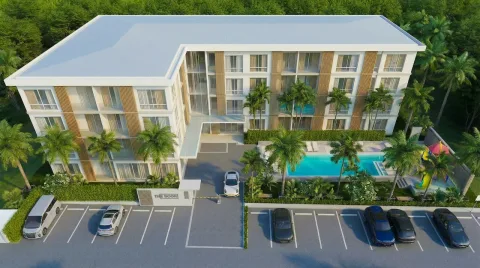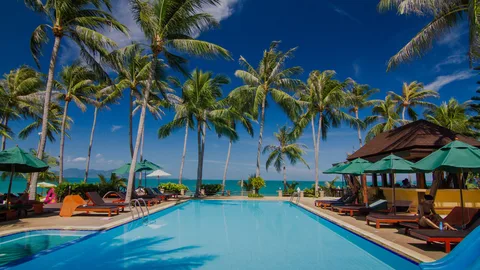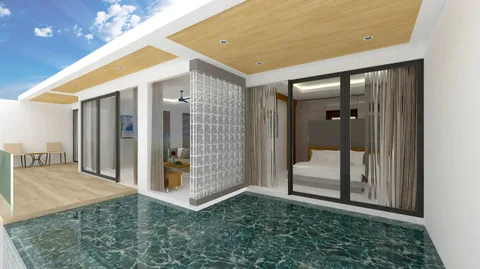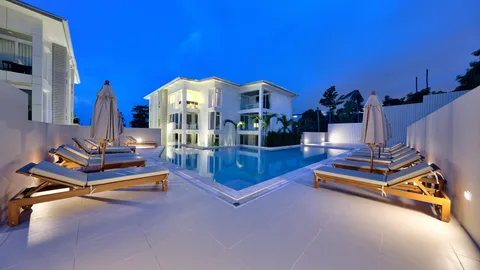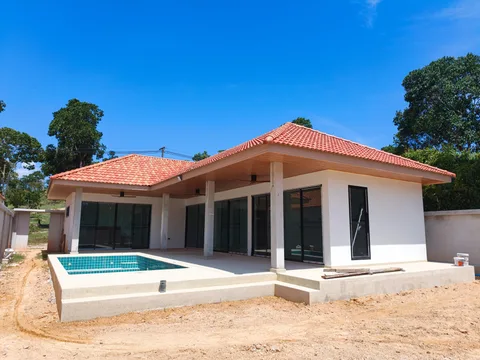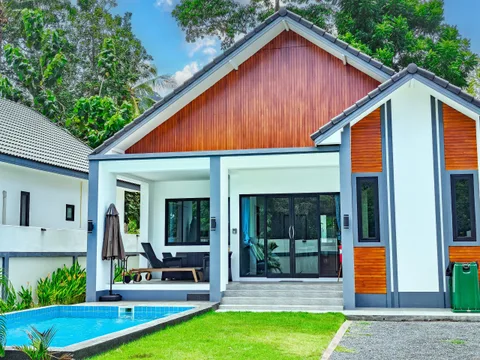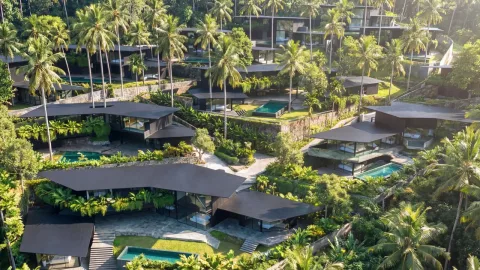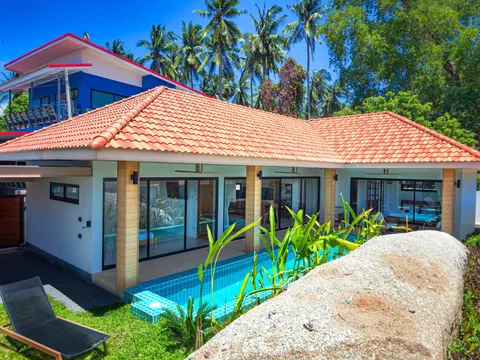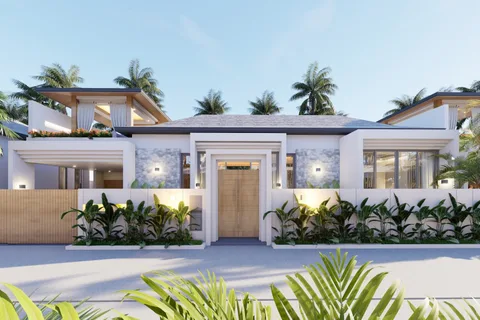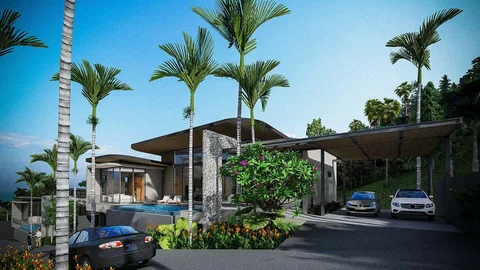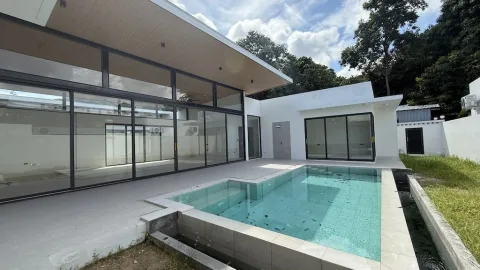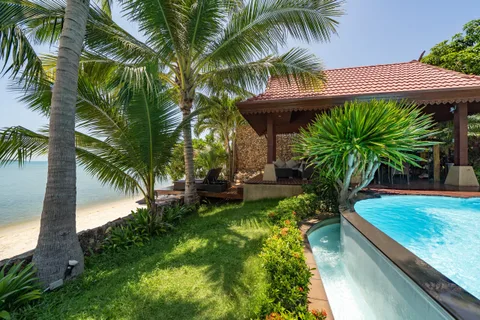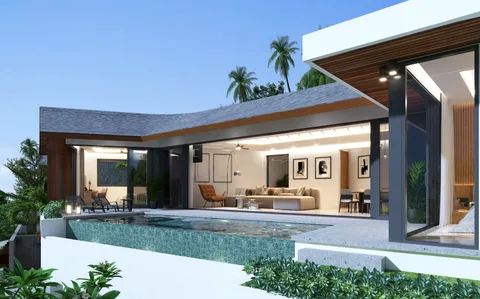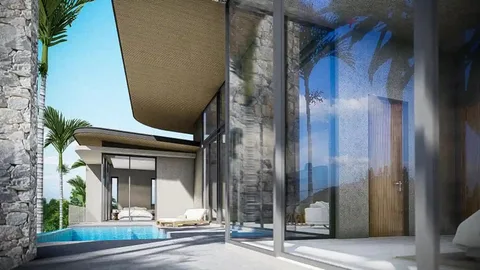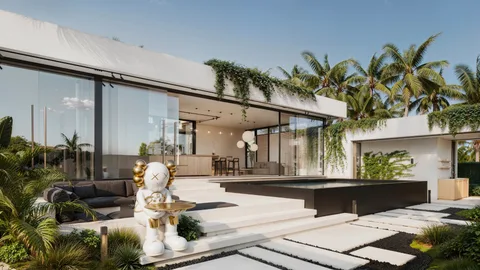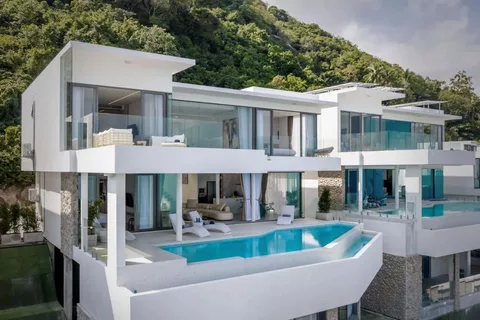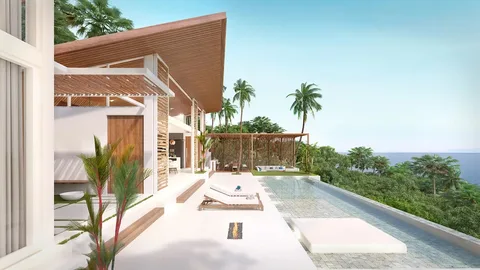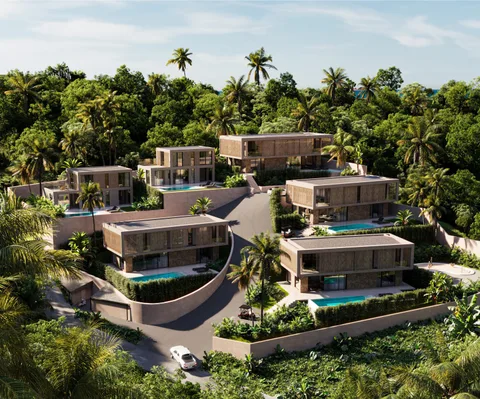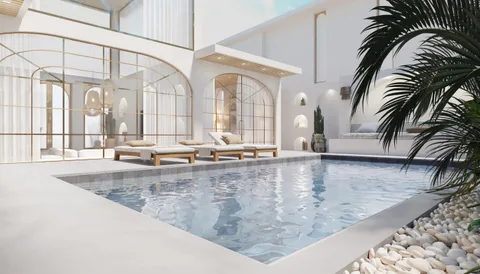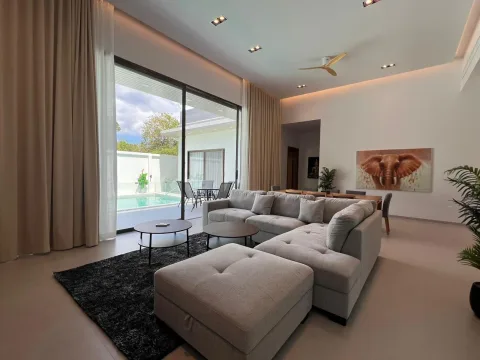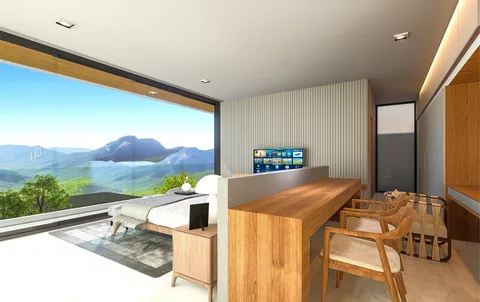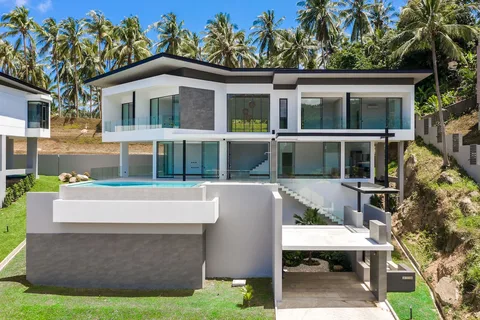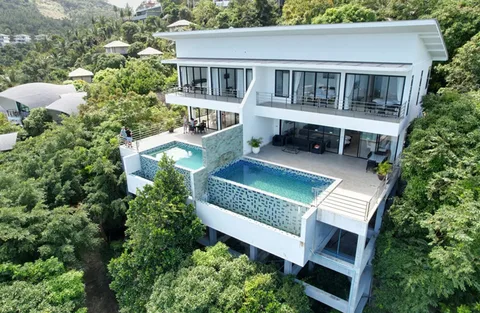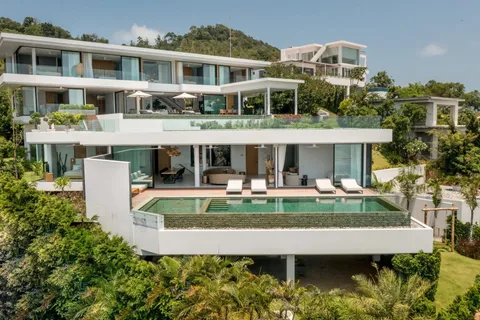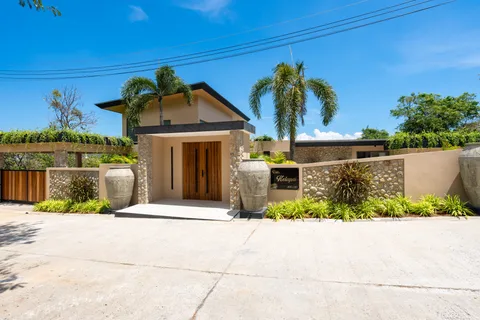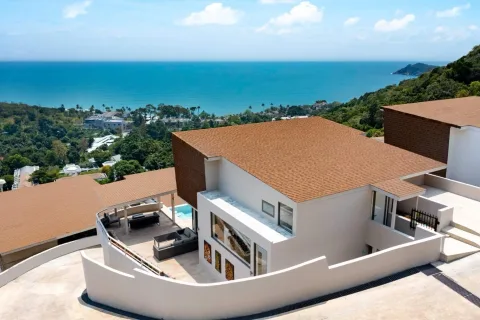
The Ville Condo At Phru Chaweng
Bo Phut
- Price from
- 2,630,000 THB
- In dollars
- about $80,400
- Type
- Condo, 40 units
- Status
- completed
Island lifestyle, leasehold villas, premium retreats · Updated 2026-09-06
Quick answer: Koh Samui is a villa island. On 6 September 2026 this site holds 167 Samui developer projects: 152 pool villa and house estates from 3,200,000 THB with a median starting price of 12,850,000 THB, and 15 low-rise condominiums from 2,630,000 THB. One hundred and fifty-six of the 167 are already finished, which is the highest completed share of any market on this site, and Bo Phut and Maenam hold 132 of them. A foreigner owns the villa building and holds its plot on a registered 30-year lease or through a Thai company; the condominiums can be owned freehold within the 49 percent quota. Samui's median villa starts at half of Phuket's, and almost nothing here is sold from a plan.
Bo Phut
Bo Phut · Wing Samui Condo Co., Ltd.
Bo Phut · Wing Samui Condo Co., Ltd.
Bo Phut
Bo Phut
Bo Phut · Zhongfa Property (HK) Limited
Maenam
Bo Phut · Euro Thai Property Co., Ltd.,
Maenam
Maenam
Maret (Lamai) · Pahili
Maret (Lamai) · Premium Construction Co., Ltd.
Bo Phut · Horizon Home
Maenam
Ang Thong · 24/7 Real Estate Co.,Ltd.
Maret (Lamai) · Premium Construction Co., Ltd.
Na Mueang · Baansuay Land and House
Maenam · Code Samui
Maenam
Bo Phut · Cabina
Na Mueang
Maret (Lamai)
Na Mueang
Taling Ngam · Nemo Vitosti Samui
Bo Phut
Bo Phut
Maenam
Maenam
Maenam
Maenam
Bo Phut
Bo Phut · Longevity Property Group
Lipa Noi · Nemo Vitosti Samui
Maenam
Bo Phut
Bo Phut · Galex Samui
Maret (Lamai)
Bo Phut · Three Seasons Properties
Bo Phut
Maret (Lamai) · Nemo Vitosti Samui
Bo Phut
Maenam
Bo Phut
Bo Phut
Maenam · Probuild Samui Development Co., Ltd.
Maenam · Azur Samui
Bo Phut
Maret (Lamai) · Samui Happiness
Maret (Lamai) · Samui Sway
Maret (Lamai) · Verdant Developments LDA
Maenam · Samui Grand Park Group
Bo Phut
Maenam · Sawasdee Pool Villa
Maret (Lamai) · Baansuay Land and House
Maenam
Maenam
Maenam
Maenam · Samui Happiness
Bo Phut · ROONGRUEANGCIVILIZE CONSTRUCTION CO., LTD.
Bo Phut
Taling Ngam · Samui Paradise Villa
Maret (Lamai)
Maenam
Maenam · North Coast Developments
Maenam · Verdant Developments LDA
Bo Phut
Bo Phut
Bo Phut
Bo Phut
Maret (Lamai) · Eden Development
Maenam
Bo Phut · Vova
Maret (Lamai) · The Olive Village
Maenam · Three Seasons Properties
Bo Phut
Maenam · Samui Paradise Villa
Bo Phut
Bo Phut · Tri-P Asset Group
Bo Phut · Horizon Home
Maret (Lamai)
Bo Phut
Maret (Lamai) · CAVIAR DEVELOPMENT
Maret (Lamai)
Maenam
Bo Phut
Maenam · Cera Properties
Bo Phut · Sawasdee Pool Villas
Bo Phut
Maret (Lamai) · Samui Paradise Villa
Maenam · Samui Grand Park Hill
Bo Phut
Maenam · The Wave Real Estate Group
Maenam · Cera Properties
Bo Phut · IO Construction
Maenam · Samui Grand Park Group
Bo Phut · ATARA Development
Bo Phut · Samui Sway
Bo Phut · Baansuay Land and House
Bo Phut
Maret (Lamai)
Bo Phut · Autumn Life Properties
Bo Phut
Bo Phut · Hillside Village
Maenam · Samui Happiness
Maret (Lamai) · Samui Sway
Bo Phut
Bo Phut
Bo Phut
Ang Thong
Maenam
Maret (Lamai) · Samui Paradise Villa
Bo Phut
Bo Phut
Bo Phut · Baansuay Land and House
Bo Phut · Baansuay Land and House
Maenam · Samui Grand Park Group
Maret (Lamai)
Maenam · The Wave Real Estate Group
Maenam
Bo Phut · Baansuay Land and House
Bo Phut
Maenam
Maenam · The Rice
Maenam
Lipa Noi · Supalai
Na Mueang · Sisaran Group Co., Ltd.
Bo Phut
Bo Phut · Almafi Koh Samui Co.,Ltd.
Maenam · Pacific Palisade
Maenam
Na Mueang
Bo Phut · Vastu Villa Studio
Bo Phut
Maenam · AB CAPITAL ASIA
Bo Phut
Maenam · Darika
Maenam
Maenam · Infinity Riches Property and Hospitality Management Co., Ltd.
Bo Phut
Maret (Lamai)
Bo Phut · Almafi Koh Samui Co.,Ltd.
Bo Phut
Bo Phut
Maenam
Maenam
Bo Phut · Samui Sway
Bo Phut
Maenam
Bo Phut
Bo Phut · Sense Eight Samui Villa Co.,Ltd
Bo Phut · Triwalan Estates
Bo Phut
Bo Phut
Bo Phut
Bo Phut
Bo Phut · The Heights
Bo Phut
Bo Phut
Ang Thong · Domo Development
Bo Phut
| Typical product | Villas (leasehold) + boutique condos |
| Foreign title | Often leasehold for villas, verify structure |
| MORE Group inventory | Samui villas and condos (catalogue below) plus Phuket projects |
MORE Group tours and sells Phuket property with 0% buyer commission on eligible primary sales. Koh Samui enquiries go through the same team; ask for one shortlist covering both markets if you are undecided.
Koh Samui’s property market fits on one page because it is small, and it is small on purpose. The island’s planning rules keep buildings low and the hillsides largely empty, its airport is private and expensive, and its developers are for the most part local construction companies that build a handful of villas at a time and sell them finished. Every district that has a project on this site appears in the table below, with figures computed from the cards on 5 September 2026; each card names its source and the date it was read.
| District | Villa and house estates | Condominiums | Starting price from | Median project start | Completed | What the district is |
|---|---|---|---|---|---|---|
| Bo Phut (Chaweng, Bang Rak, Choeng Mon) | 71 | 9 | 2,630,000 THB (a condominium) | 13,700,000 THB (about $418,960 at 32.7 THB per dollar) | 75 of 80 | The north-east: the airport, Chaweng, Bang Rak and the Choeng Mon headland; the island’s deepest market |
| Maenam and Bang Por | 49 | 3 | 3,200,000 THB (about $97,859) | 10,700,000 THB (about $327,217) | 48 of 52 | The north coast; the island’s quiet family side and the second-deepest supply |
| Maret (Lamai) | 20 | 3 | 3,900,000 THB (about $119,266) | 10,400,000 THB | 22 of 23 | Sea-view hillsides above the island’s second town |
| Na Mueang | 5 | 0 | 4,900,000 THB (about $149,847) | 6,200,000 THB | 4 of 5 | The south, inland of the waterfalls; the cheapest estates on the island |
| Ang Thong, Taling Ngam, Lipa Noi | 7 | 0 | 4,725,000 THB (about $144,495) | 12,809,500 THB | 7 of 7 | The west and south-west; Nathon’s port, larger plots, sunsets and a longer drive |
| All Samui | 152 | 15 | 2,630,000 THB | 11,900,000 THB (about $363,914) | 156 of 167 | 3,097 villas and condominium units across the catalogue |
Three numbers describe the island better than any brochure. Seventy of the 167 projects start under 10,000,000 THB and 27 at 20,000,000 THB or more, seventeen between 10,000,000 and 20,000,000 THB, and three above, the top being The Heights above Chaweng at 49,000,000 THB. Twenty-three estates have ten homes or fewer, fourteen have between eleven and thirty, and one, Longevity Resort in Bo Phut, has 69. And 30 of the 38 estates are finished, with the other eight all due in 2027, which makes Samui the one Thai market on this site where a buyer chooses between houses that exist rather than plans.
The Samui villas listing filters the 38 estates by district, status and price; the Thailand villa catalogue sets them beside Phuket’s 149 and Pattaya’s 8.
Samui sells the finished pool villa, and it sells it to two buyers. The first is the owner-occupier, a retiree or a family or a couple who have holidayed on the island for years and want a house on a hill with the Gulf of Thailand in front of it; this buyer wants a completed estate near Bo Phut or Maenam, a registered lease, and neighbours. The second is the second-home owner who will use the villa for a few months a year and let it in between, and who wants Chaweng or Choeng Mon within reach, a manager, and an estate whose regulations allow the letting. Both buyers arrive by air into an airport that has no low-cost carriers and a ferry that takes ninety minutes, and both accept a quieter island for the privilege.
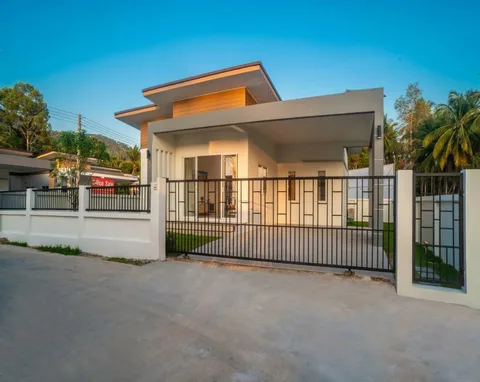
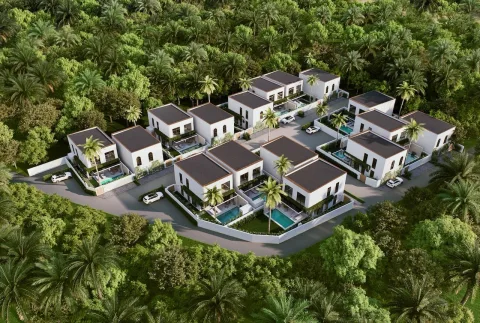
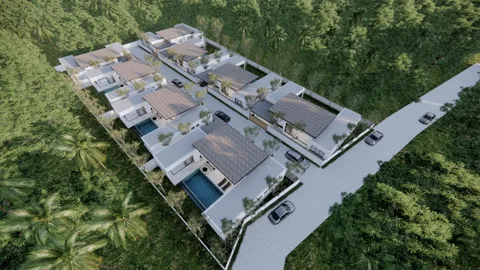
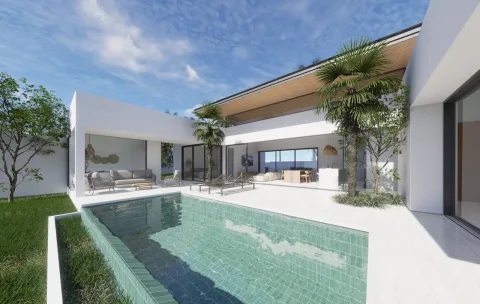
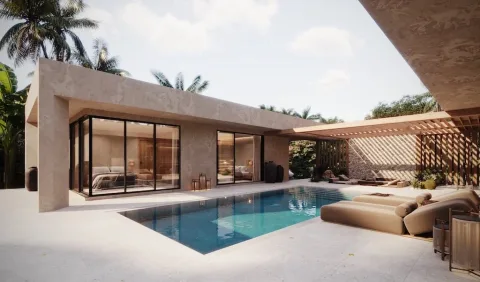
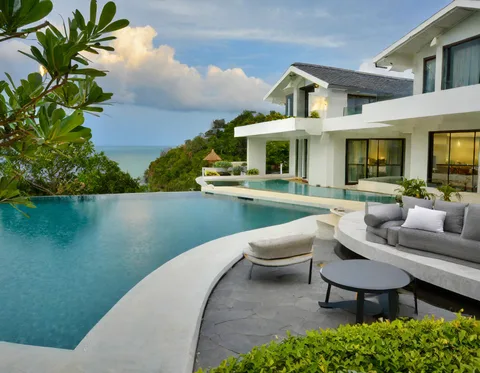
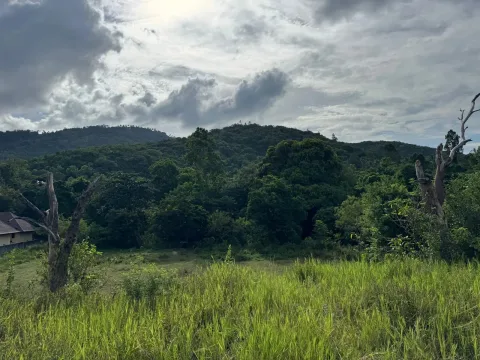
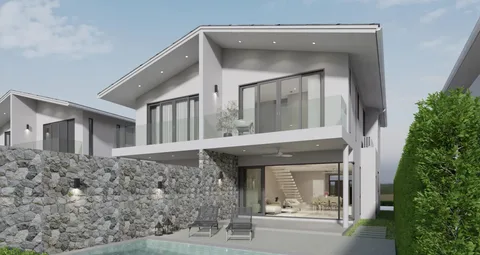
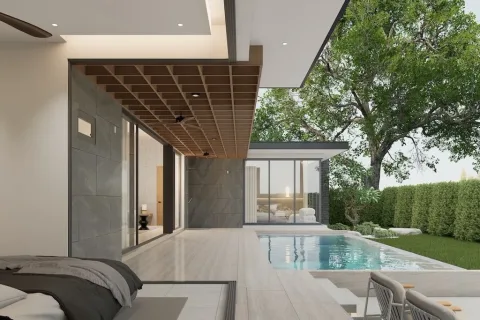
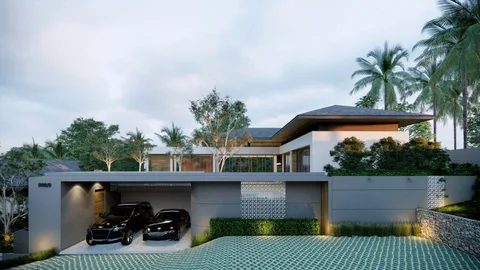
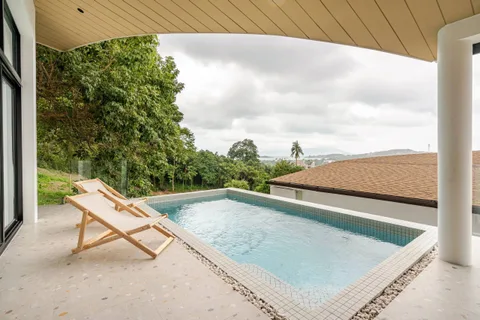
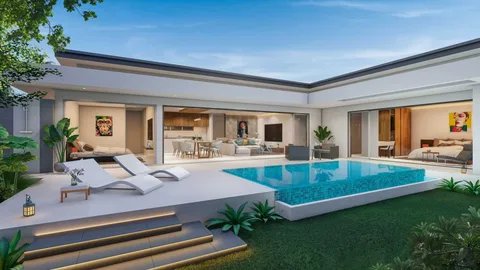
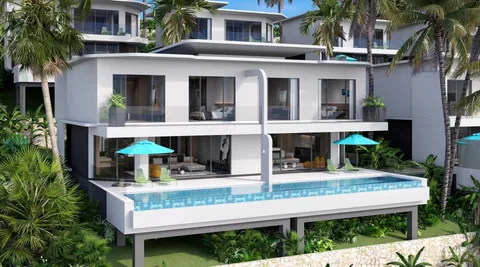
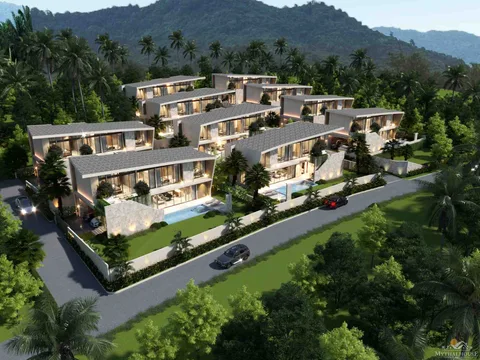
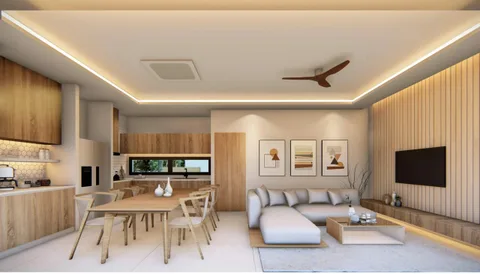
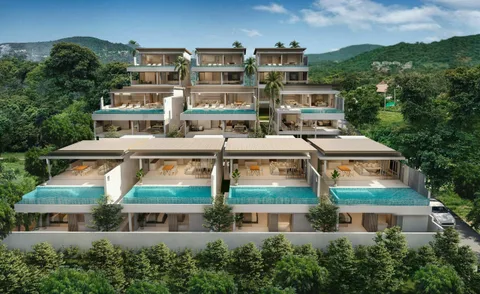
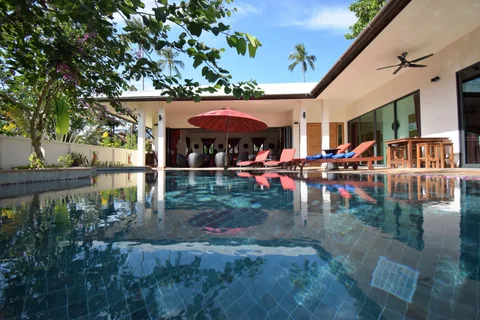
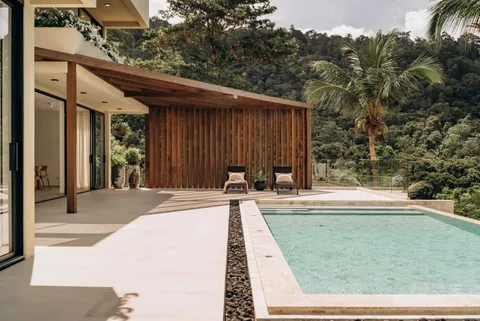
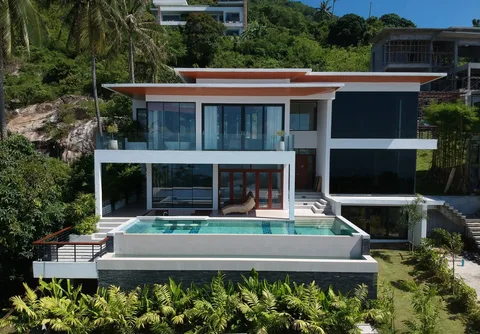
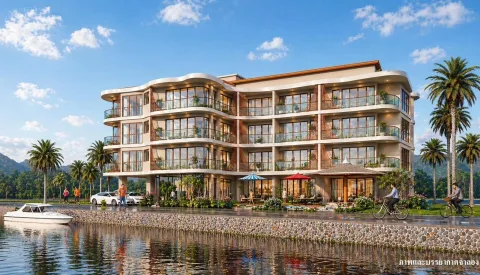
What Samui does not sell is the condominium in depth. Three low-rise buildings appear on this site: The Ville Condo at Phru Chaweng, a finished building of forty units priced from 2,630,000 THB; The BOON in Bo Phut, sixty units priced from 3,080,000 THB, due 2027 and sold freehold inside the quota; and Palm by the Sea in Maenam, a finished eleven-unit building from 3,700,000 THB sold on a lease. The island’s planning regulation is the reason: buildings near the shore are held to a low height and the hillsides above a set elevation and gradient are closed to construction, so the tower that gives Pattaya and Bangkok their condominium markets cannot be built here. A buyer who wants an apartment near a Samui beach is choosing among a handful of buildings, and the condominium catalogue shows how thin the choice is beside the other three markets.
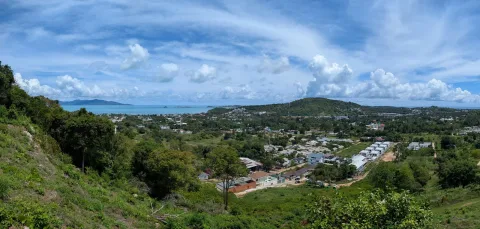
Bo Phut is the island’s north-east and its centre of gravity. It holds Fisherman’s Village and its Friday market, Bang Rak and the Big Buddha pier, Plai Laem and Choeng Mon with their quieter beaches, and the hills behind Chaweng Noi where the sea-view estates sit. It is ten minutes from the airport and twenty from the island’s hospitals, which is why fourteen of its seventeen projects are completed and why its median villa starts at 11,000,000 THB, the highest of the districts with depth. The stock runs from Longevity Resort’s 69 villas from 7,650,000 THB to Spirit Rock Hill’s eight from 27,500,000 THB and The Heights’ nineteen from 49,000,000 THB; the typical estate is five to fifteen villas built by a company whose name appears on two or three other cards.
Maenam and Bang Por run along the north coast west of Bo Phut, from the Maenam pier to the quiet sand at Bang Por. This is where the island’s new small estates are being built and where the entry prices are: Win Win Homes at 3,650,000 THB, Coconut Valley Villas at 7,000,000 THB, Hidden Lotus at 7,300,000 THB and Boho Chic Village at 7,350,000 THB, up to Paradise Spring Village at 20,000,000 THB and Pacific Noma at 18,900,000 THB. Ten of the fifteen projects are completed and five are due in 2027. The beach is long and shallow, the drive to Chaweng is twenty-five minutes, and the buyer is more often a resident than a holidaymaker.
Maret is Lamai, the island’s second town, with a beach as long as Chaweng’s and a fraction of the noise. Four estates sit on the hillsides above it, from Nichakul Villas and Loft Pool Villa Lamai at 7,900,000 and 8,900,000 THB to Park Lane Residence Resort at 16,600,000 THB, due in 2027. Lamai has its own market, hospital clinic and international school, and buyers who choose it usually know the island already.
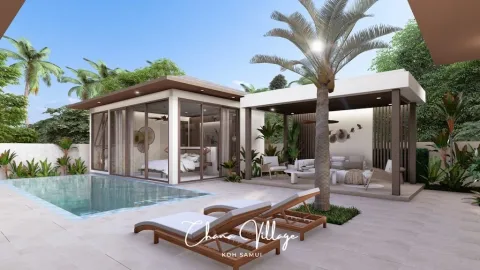
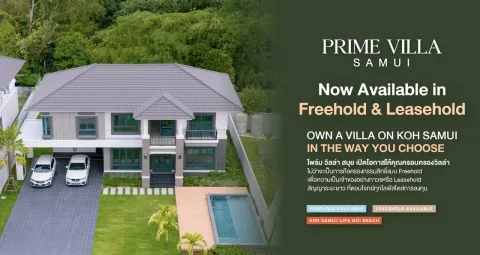
Na Mueang, Taling Ngam and Lipa Noi are the south and the west, the side of the island that faces the sunset and the Ang Thong marine park. Plots are larger, estates are smaller, the ferry pier at Lipa Noi is near and Chaweng is forty minutes away. The five estates here are all finished, from Chana Village at 6,200,000 THB and Taling Ngam Serenity Villas at 6,300,000 THB to Supalai’s Prime Villa Samui at 17,919,000 THB and Eco Home Samui’s 17 villas from 18,000,000 THB, and they suit the buyer who wants the island rather than its towns.
Chaweng itself, the main tourist town, has no developer project on this site because its beachfront is hotels and its inland is low-rise Thai housing; the estates that market themselves as Chaweng sit in the hills of Bo Phut and Maret and appear there.
Insider tip: the first question on a Samui hillside is not who owns the plot but who owns the track that reaches it. Many hillside estates were built at the end of a private track across a neighbour’s land, and a right of way that was a handshake when the developer built becomes a problem the day you sell. The answer you want is a servitude registered on the neighbour’s title; the land page explains what a servitude is and how to check for one.
Samui looks the way it does because of a planning regulation, and a buyer who understands it reads the market correctly. The island’s town-planning rules hold building height low across the whole island and lower still near the shore, restrict construction on steep slopes and above a set elevation, and require larger projects to pass environmental assessment. The results are visible from the ferry: no towers, villas that step up the hills and stop, and hotels that spread rather than rise. The rules also explain the product on this page, small estates of low villas on plots the developer could permit, and they explain why a hillside villa’s building permit deserves a closer look than a Phuket condominium’s.
Two consequences matter at the point of purchase. A villa built above the permitted elevation or on a slope steeper than the rules allow can be ordered demolished, and a buyer’s lawyer should read the permit against the plot’s survey rather than accept the developer’s assurance. And an estate that has not yet subdivided its land cannot register a buyer’s lease against an individual plot, so a buyer signing before subdivision holds a contract rather than a right until the Land Office has drawn the new deeds. The hillside due diligence guide was written for Phuket and applies to Samui’s hills with the same force.
The structure is the country’s. A foreign buyer owns the villa as a building, registered in their own name, and holds the plot under a lease of no more than 30 years, registered at the Koh Samui branch of the Surat Thani Land Office, or through a Thai limited company with real Thai shareholders, or in a Thai spouse’s name. The lease is a real right for its term and binds any later owner of the land; the further 30-year terms written into many Samui contracts are promises between the parties and should be valued as options, not as years owned. The 30-year lease guide sets out what is registered and what is not.
Samui has a history with the company route. For twenty years villa estates on the island were sold to foreigners through Thai companies whose Thai shareholders held their shares for the buyer, and the enforcement that began in 2025, with the registrar and the Land Office now asking where the Thai shareholders’ money came from, has made those structures a liability at resale. A buyer offered a company today should ask who the Thai shareholders are and what they paid, and should expect the honest answer on a holiday home to be that a lease is the right structure.
Six of the 38 villa estates on this site state the structure the developer offers a foreign buyer: Coconut Valley, Hikaru Garden, Luma Villas and Bocami Villas as leasehold, Boho Chic Village as freehold or a 30-year lease on a Chanote title, Sawasdee Pool Villas as freehold or leasehold. The other 32 cards say the structure is unconfirmed, because the developer has not published it, and the agency asks before any reservation. The three condominiums follow the Condominium Act: The BOON is offered freehold within the 49 percent quota, Palm by the Sea leasehold, and The Ville’s quota position is confirmed at the Land Office on the day.
The ratio inverts everything a buyer has read about buying in Thailand. On Phuket the diligence is the developer, because the house does not exist yet; on Samui the house exists and the diligence is the house, the land under it and the small company that built it.
A completed Samui villa can be surveyed, and should be. The roof, the waterproofing, the pool shell and the retaining walls on a hillside plot are where small builders economise, and a structural survey before the deposit costs a fraction of the first repair. The estate’s accounts, where the estate has an owners’ body, show whether the common road and the water system are being maintained and by whom; on a three-villa estate there may be no body at all, and the buyer should know who will fix the road. The water supply deserves its own question, because Samui has had dry-season shortages and estates on boreholes or tanker deliveries pay more in April than the brochure implies. And the land title should be pulled at the Land Office to confirm that the plot has its own deed, that the deed is a Chanote or a Nor Sor 3 Gor, and that no mortgage or servitude sits on it that the seller forgot to mention.
The eight estates under construction, all due in 2027, are bought the Phuket way: instalments tied to construction stages, a penalty and a refund right if delivery slips, a permit that names the plot, and the developer’s record on its previous estates, which on Samui usually means two or three earlier projects a short drive away that a buyer can visit. The off-plan guide sets out the contract terms.
Send us the Samui estates you like and we send back the title, the road and the water
We pull the land deed, confirm the subdivision and the lease terms the developer registers, check who owns the access road and where the water comes from, and reply with a plain summary before you commit a reservation.
The cards for the 167 Samui projects were built in 2026 from a registry of sources rather than from the agency’s own price file, and a buyer should read them with that in mind. Each card names the developer where the developer has a public face, gives the number of villas or units, the promised or actual completion year, the lowest published price and the district, and lists the websites read and the date. Where a developer has published the title structure it offers a foreigner, the card says so; where it has not, the card says the structure is unconfirmed rather than guessing leasehold. Twenty-eight of the destination cards across Samui, Pattaya and Bangkok carry a placeholder image because no developer render without an agency watermark was available on the day, and those are replaced as developers send material.
Three fields carry most of the weight on a Samui card. The unit count tells you whether you are buying into an estate with an owners’ body and shared costs or into three houses on a private track. The completion status tells you whether the diligence is the house or the developer. And the developer’s name, where it appears twice or three times in the catalogue, tells you there is a record to inspect on the island: Samui Paradise Villa, Cera Properties, Probuild, Pacific Palisade, Sisaran and Supalai all have earlier estates within a short drive of their current ones, and a visit to the earlier estate is the cheapest survey a buyer can commission.
A completed Samui villa can go from first call to registered lease in six to ten weeks, and the sequence protects the buyer if it is kept in order. The brief comes first: district, budget in the buyer’s currency, how many months a year the villa will be used, whether it will be let, and how the title will be held. The shortlist follows from the grid above, with video walk-throughs for a buyer abroad and a visit for one on the island. The lawyer, appointed by the buyer and not supplied by the developer, pulls the deed at the Koh Samui Land Office, confirms the subdivision, reads the building permit against the plot’s survey, checks the access road and the water, and reports in writing before any money moves. A refundable reservation then holds the villa for a few weeks while the sale and lease agreements are read. The purchase funds arrive by international transfer from the buyer’s own account, in the buyer’s currency rather than baht, which is what produces the Foreign Exchange Transaction record a seller later needs to send proceeds home. On registration day the lease is endorsed on the land title and the building transferred into the buyer’s name, the fees are paid, and the buyer leaves the Land Office with certified copies of everything. A buyer who cannot be present signs the Land Office’s own power of attorney form, notarised and legalised; the remote purchase guide covers that paperwork.
Buyers arrive at this page having compared the two islands on holiday, and the property comparison is different from the holiday one. The figures are from this site’s catalogue on 5 September 2026.
| Koh Samui | Phuket | |
|---|---|---|
| Projects on this site | 167 | 299 |
| Villa estates, median starting price | 38, 10,350,000 THB | 149, 26,911,000 THB |
| Villa estates starting under 10,000,000 THB | 18 | 7 |
| Completed projects | 156 of 167 | 43 of 299 |
| Condominium buildings | 3 | 135 |
| Typical estate | 3 to 15 villas by a local builder | 20 to 100 villas by a resort developer |
| Branded residences | A first pipeline; C9 Hotelworks names Samui the next branded villa market | 3,465 units, the most of any Asian resort market in C9 Hotelworks’ 2026 count |
| Airport | Bangkok Airways’ private airport, about an hour from Bangkok, no low-cost carriers | International airport, long-haul and low-cost carriers |
| International schools | Four on the island | About a dozen, concentrated in Cherng Talay, Koh Kaew and Kathu |
| Hospitals | Two private hospitals, in Chaweng and Bo Phut | Several private hospitals in Phuket Town and on the bypass |
| Resale pool for a foreign seller | Thin, mostly European and Australian buyers of villas | Deep, international, for condominiums and villas |
| What the buyer gives up | Flights, schools, condominium choice, resale depth | Price, finished stock, quiet |
The comparison is not a verdict. A family with school-age children and a job that needs an airport chooses Phuket; a couple who will live in the house and fly out twice a year chooses Samui and saves half the price for the same pool. The Phuket versus Koh Samui comparison goes deeper on the trade-offs, and the Phuket catalogue puts the island’s 284 projects beside these 41.
Purchase costs are national and modest. A villa buyer pays, on the day the lease is endorsed, a registration fee and stamp duty that together come to about 1.1 percent of the price (1 percent and 0.1 percent of the total rent for the term); where the house is transferred as an existing building rather than built under the buyer’s own permit, a 2 percent transfer fee applies and is shared as the contract says; the seller’s specific business tax of 3.3 percent or stamp duty of 0.5 percent and withholding tax are the seller’s by law; and legal fees for a lease purchase start near 60,000 THB. A condominium buyer pays the 2 percent transfer fee, shared, a sinking fund contribution set per square metre, and the first common-area fee. The 0.01 percent transfer relief advertised on some listings until June 2027 belongs to Thai individual buyers of homes priced up to 7,000,000 THB; a foreign purchase pays the full rate.
Holding a Samui villa costs more than holding a condominium of the same price, and more than holding the same villa in a Phuket estate, because the estates are small and the bills are not shared. The yearly Land and Building Tax, 0.02 percent of the assessed value for a home, is trivial; the pool contract, the gardener, the building insurance, the borehole pump or the water deliveries, and the private road are not, and on a three-villa estate the owners pay for the road themselves. Ask a completed estate for two years of accounts, and ask a small one who has been paying for the road. The tax guide carries the statutory detail.
Samui’s rental market is a holiday market, and most second-home owners let their villas for part of the year. The law is the national one: a tenancy of a month or longer needs no licence, nightly letting is hotel business under the Hotel Act unless the house is registered with the district office as a small establishment (no more than four rooms and twenty guests), and each foreign guest goes on a TM30 notification. Estates add their own rules, and a buyer who intends to let should read them before reserving. Rent paid to an owner who is not a Thai tax resident carries 15 percent withholding; an owner who spends 180 days or more on the island files a Thai return with the 30 percent standard deduction.
No income, occupancy or nightly-rate figure appears on this page, because Thailand keeps no letting register and Samui’s small estates publish nothing; a villa manager on the island can show an owner the actual statements of comparable villas, and that is the only honest basis for a model.
Samui’s airport belongs to Bangkok Airways, which flies from Bangkok in about an hour and, in season, from Singapore, Hong Kong and Kuala Lumpur, at fares well above Phuket’s; the ferries from Donsak on the mainland take about ninety minutes and carry cars. The island’s two private hospitals, Bangkok Hospital Samui in Chaweng and Samui International Hospital in Bo Phut, treat foreigners in English and refer complex cases to Bangkok. Four international schools serve the expatriate families, in Chaweng, Bo Phut, Maenam and Lamai. The ring road around the island takes about ninety minutes to drive; the interior is steep and mostly closed to building. Water is the island’s structural weakness in the dry season, electricity arrives by undersea cable from the mainland, and fibre internet reaches the towns and most estates. Visas are a separate question from ownership, and the routes most Samui owners use, the retirement extension, the Destination Thailand Visa and the Long-Term Resident visa, are set out in the guides to the retirement extension, the Destination Thailand Visa and the Long-Term Resident visa.
Thailand’s official statistics measure condominium transfers to foreigners, and Samui has almost no condominiums, so the island’s foreign market is unmeasured by the state. The Real Estate Information Center’s half-year 2025 figure, 6,533 condominium units passing to foreigners for 28.267 billion THB, is a count of Bangkok, Chonburi and Phuket. What exists for Samui is reporting: The Nation put the island’s villa-led development pipeline at 53 billion THB in 2026, and C9 Hotelworks’ 2026 review of Asia’s residential market named Samui as the next branded villa market after Phuket, with the first hotel-branded estates now on the Chaweng and Choeng Mon hills. Neither source says what a Samui villa earns or what it will be worth, and this page does not either.
The couple who will live there. A completed two- or three-bedroom pool villa in Maenam or Bo Phut from about 7,000,000 THB, on an estate with neighbours and a registered lease, near the north-coast beach and twenty minutes from the hospital. Half the price of the same house in Phuket, and available this month.
The family with school-age children. Bo Phut or Lamai within reach of the international schools, on a completed estate with accounts, having first decided that Samui’s airport and school choice are enough; the alternative is Phuket’s Cherng Talay.
The second-home owner who lets between visits. Bo Phut’s Chaweng hills or Choeng Mon, on an estate whose regulations permit letting and where a manager is on the island, with the first branded estates as the top of the range.
The buyer of a quiet house on a large plot. The south and west, Taling Ngam and Lipa Noi, where the five estates are finished, the plots are larger, and Chaweng is forty minutes away.
The buyer who wants an apartment. One of three buildings, and a candid conversation about whether Samui is the right island for a condominium at all.
MORE Group holds a Phuket agency licence and keeps its own people on Samui; the 167 projects here have passed the agency’s registry check, every figure on a card carries its source and date, and a field the developer has not confirmed stays empty. Twenty-eight destination cards still show placeholders until developers send renders. Developers pay the fee on new-build sales, so the buyer pays the published price. For that the buyer gets a shortlist built to a written brief, title, subdivision, road and water checks by a lawyer of the buyer’s choosing, a contract read, the money routed from abroad correctly, and the Land Office day on the island, with a straight answer whenever an estate falls short. Buyers weighing Samui against the rest of the country can start from the Thailand property guide or the whole catalogue.
Tell us the district, the budget and whether the villa is for you or for letting
We reply within 2 hours with matching Samui estates from the 41 on this site, the lease terms each developer registers, and the questions we would ask before a deposit.
On this site's catalogue on 5 September 2026 the 38 Samui villa estates start between 3,650,000 THB, for Win Win Homes in Maenam, and 49,000,000 THB, for The Heights above Chaweng, with a median starting price of 10,350,000 THB, about $316,514 at 32.7 THB per dollar. Eighteen estates start under 10,000,000 THB, seventeen between 10,000,000 and 20,000,000 THB, and three above. Prices are the developers' own starting figures and move between phases.
Yes, on the same terms as anywhere in Thailand. A condominium unit is owned freehold in the foreigner's own name within the building's 49 percent foreign quota; Samui has three such buildings on this site. A villa is owned as a building, with the land held on a lease of up to 30 years registered at the Koh Samui Land Office, or through a Thai company with genuine Thai shareholders. Land itself cannot be owned by a foreign individual.
Bo Phut, which includes Fisherman's Village, Bang Rak, Plai Laem and the Chaweng hills, for proximity to the airport, the restaurants and most completed estates: 15 villa estates and 2 condominiums, median starting price 11,000,000 THB. Maenam and Bang Por on the north coast for the entry prices, 14 estates from 3,650,000 THB. Lamai for the second town, and the south and west, Na Mueang, Taling Ngam and Lipa Noi, for larger plots, sunsets and a longer drive.
For a villa, yes, by a wide margin on this catalogue: the median Samui villa estate starts at 12,850,000 THB against 26,922,000 THB in Phuket, and the cheapest at 3,650,000 THB against 5,490,000 THB. For a condominium the two islands are close at the entry, 2,630,000 THB against 1,450,000 THB, but Samui has three buildings and Phuket 135. Samui is also far more often finished: 32 of 41 projects completed against 41 of 284.
For a foreign buyer, leasehold on the land and freehold on the building, or a company structure; the word freehold on a Samui villa listing describes what a Thai buyer or a company gets. Six of the 38 estates on this site state the structure the developer offers: four leasehold, two offering a choice. Ask the developer in writing, and price the villa on the 30-year registered term rather than on the renewals promised in the contract.
Because Samui's developers are mostly local builders putting up estates of three to fifteen villas, financed as they go and sold on completion or during a short build, while Phuket's are estates of twenty to a hundred homes sold from plans to fund construction. Thirty of the 38 Samui villa estates on this site are finished; the eight under construction are all due in 2027. The buyer's diligence shifts from the developer's delivery record to the quality of what is already standing.
By air into Samui's own airport, run by Bangkok Airways with flights of about an hour from Bangkok and direct links to Singapore, Hong Kong and Kuala Lumpur in season, or by ferry from Donsak on the mainland, about ninety minutes. The airport is small and its fares are high, which keeps the island quieter than Phuket and shapes who buys: owners who fly in for weeks rather than weekends, and residents who stay.
The land title deed and its type, whether the estate's plots have their own deeds yet, the building permit against Samui's height and hillside rules, who owns the access road and whether a right of way is registered, where the water comes from in the dry season, the developer's company record and, on a completed estate, two years of accounts. The due diligence guide and the land page on this site walk through each item.
Budget, timeline and the districts you like; we reply within 2 hours with Koh Samui projects, Phuket options, or both.