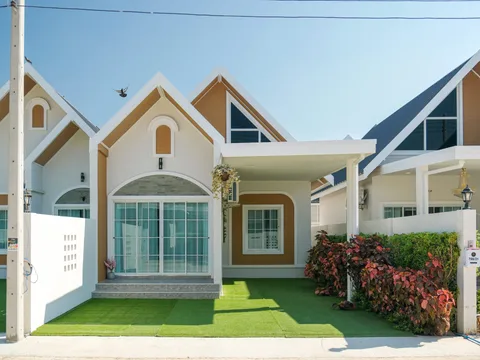
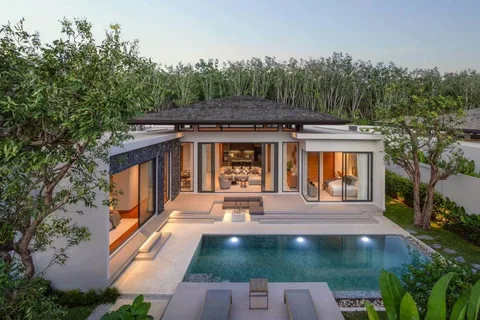
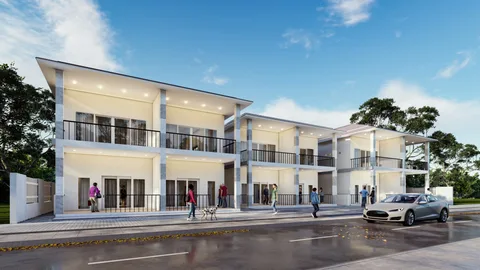
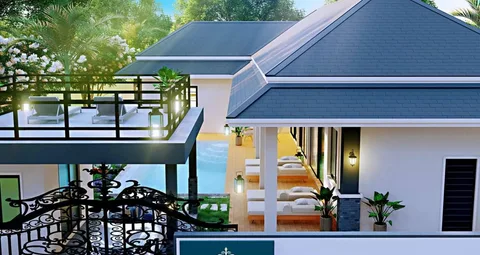
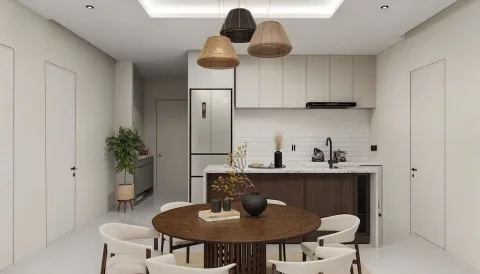
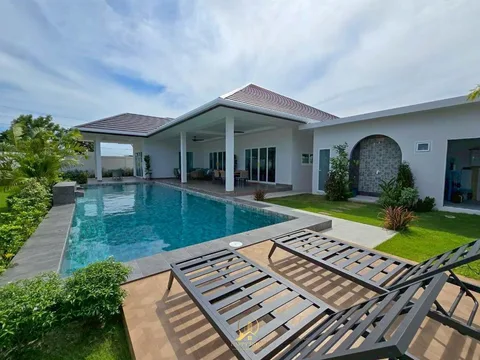
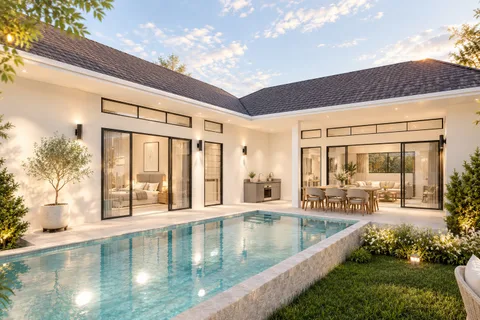
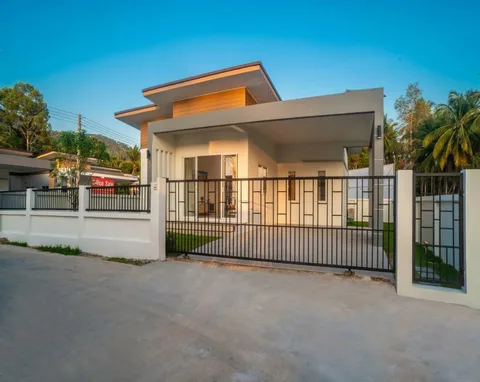
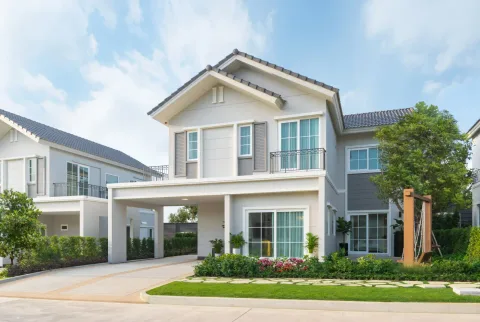
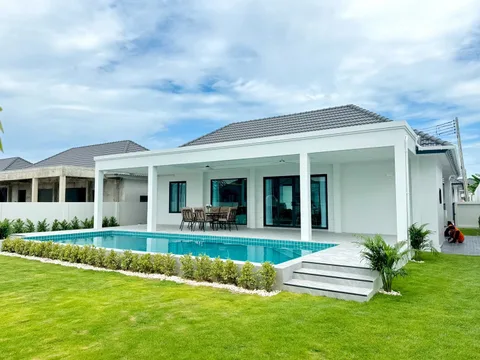
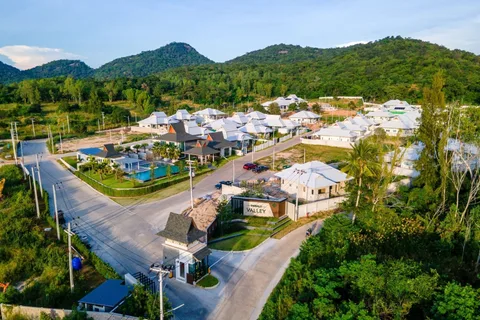
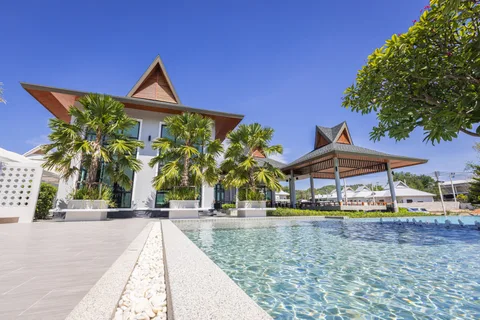
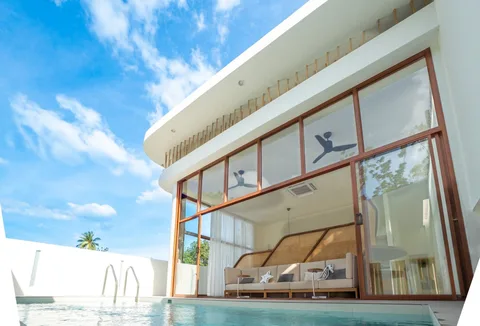
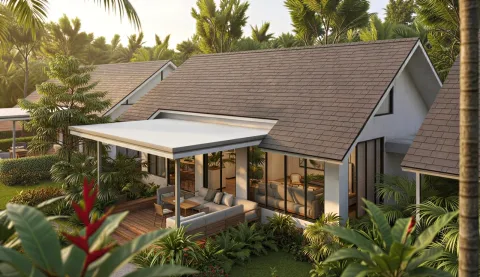
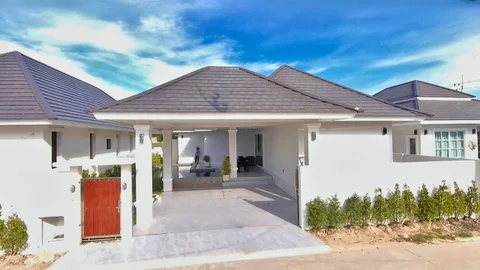
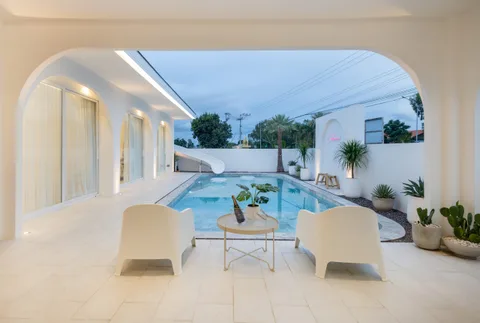
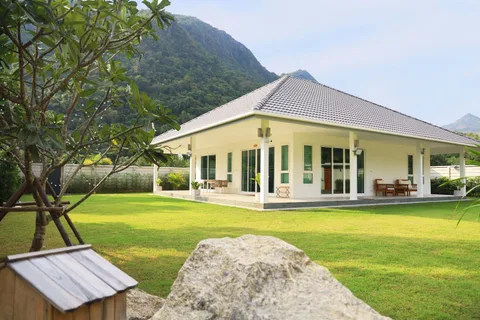
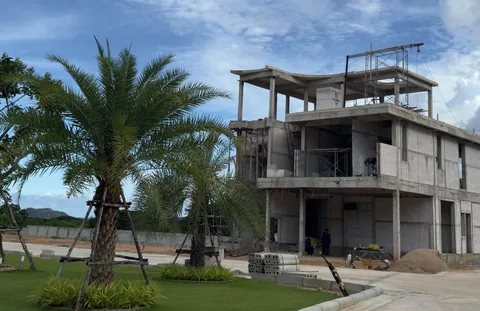
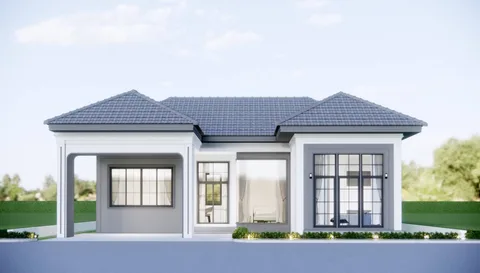
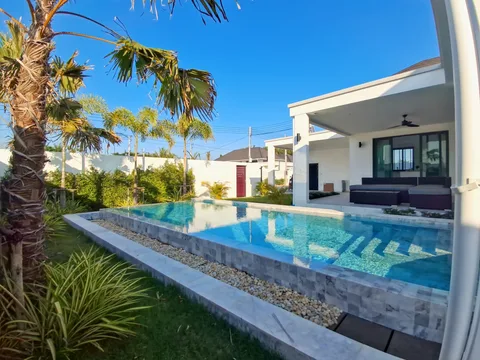
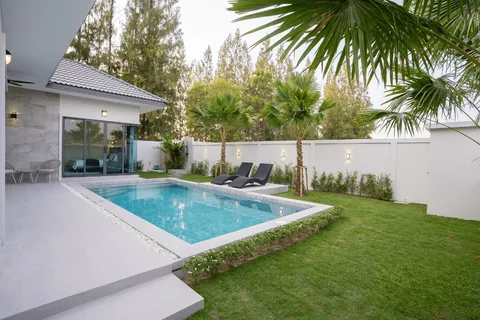
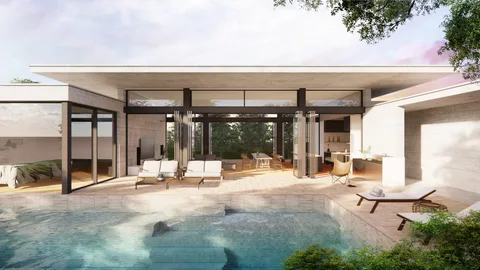
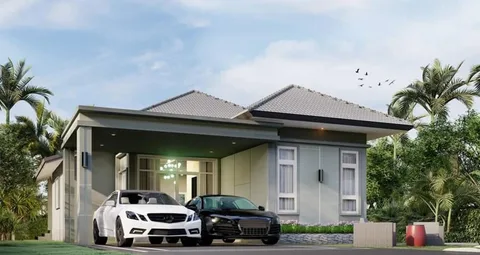
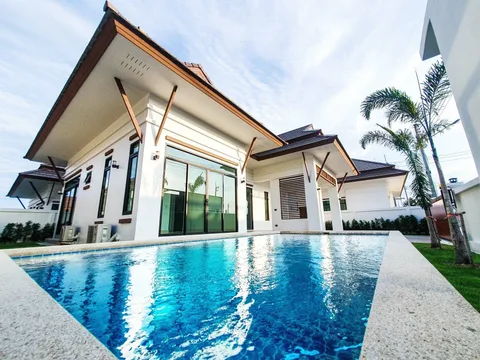
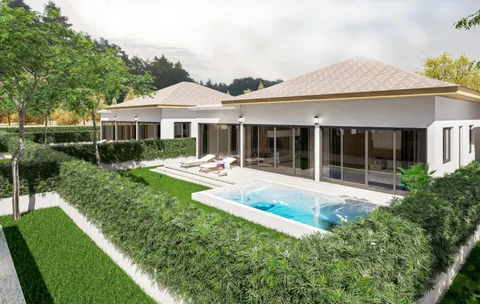
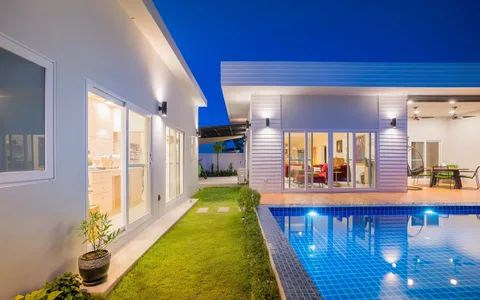
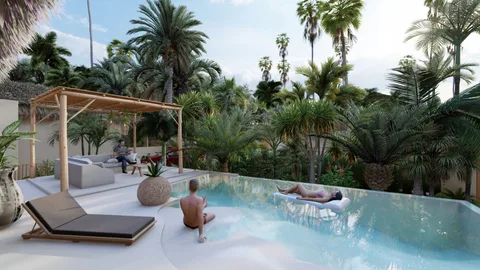
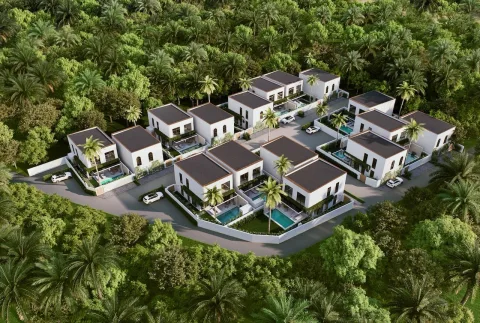
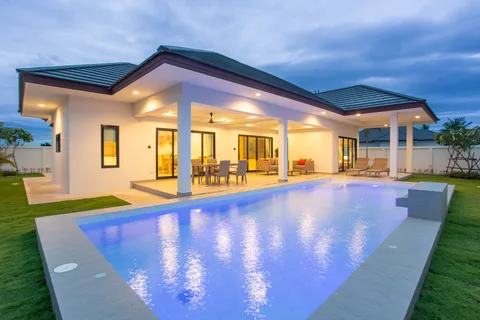
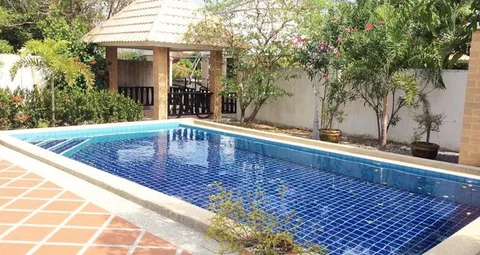
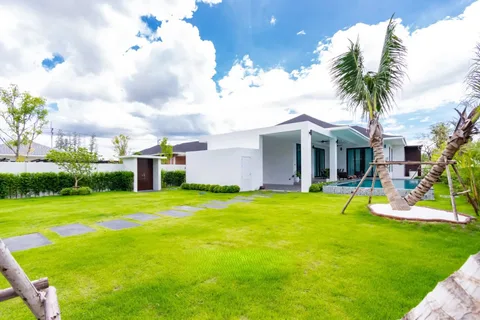
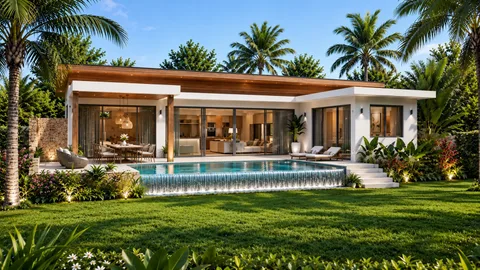
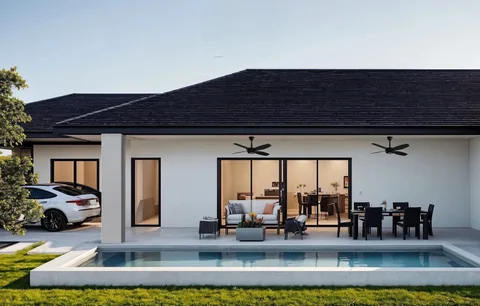
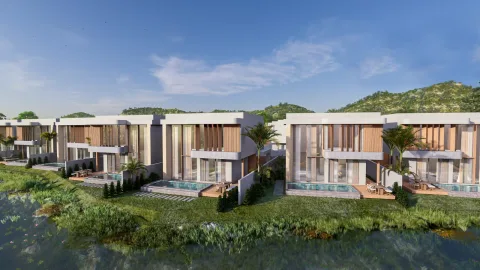
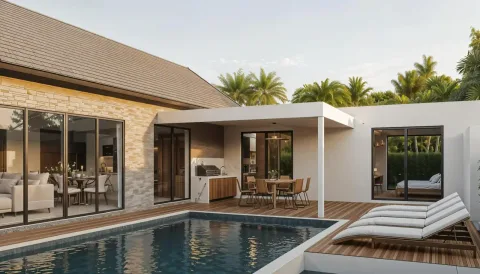
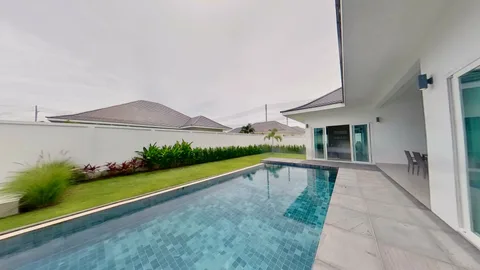
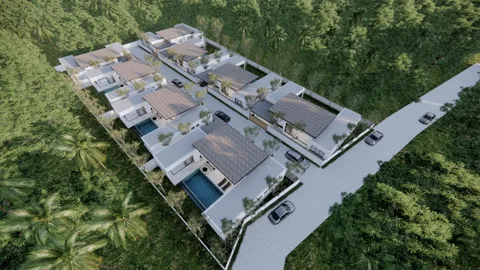
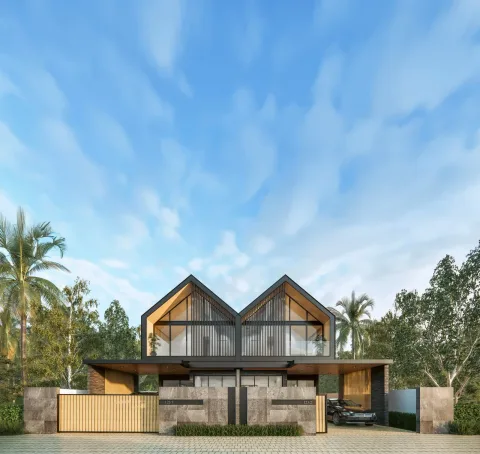
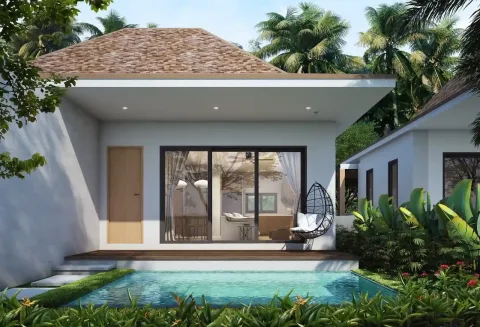
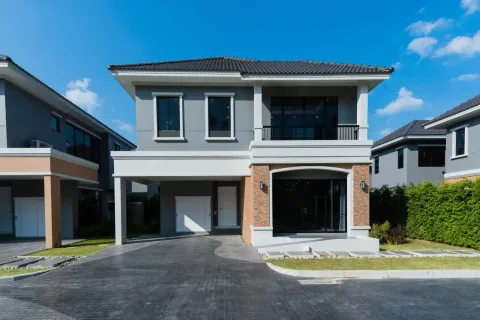
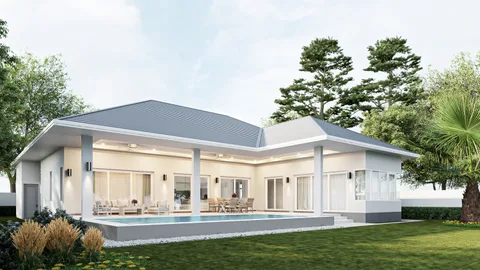
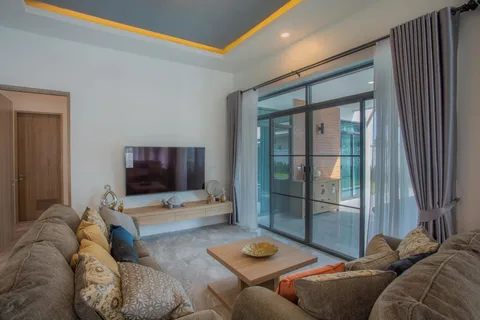
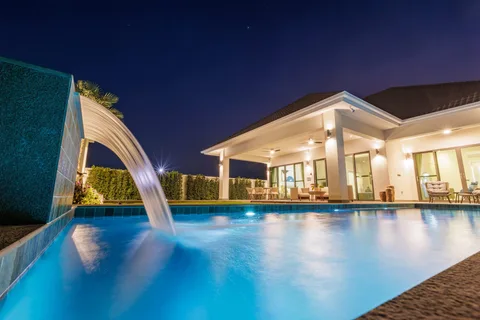
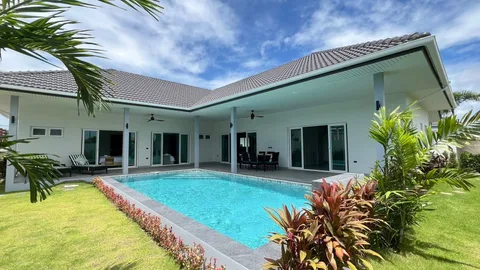
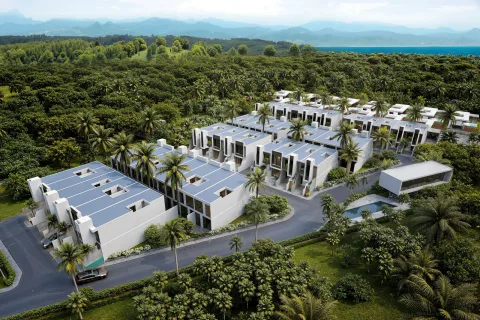
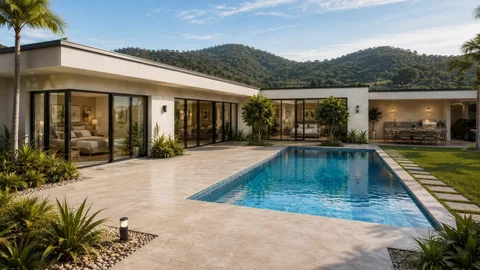
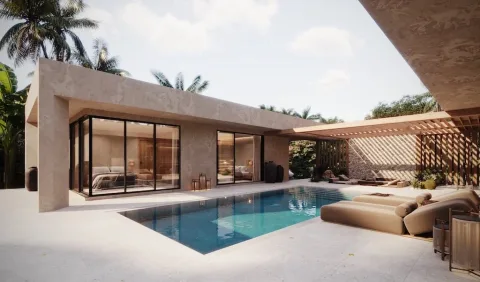
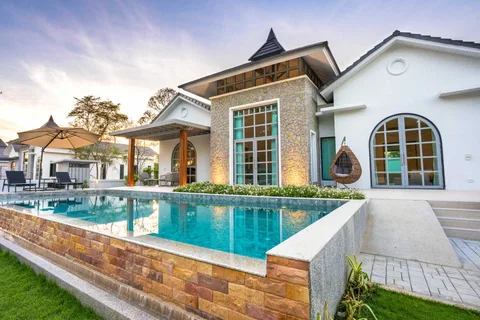
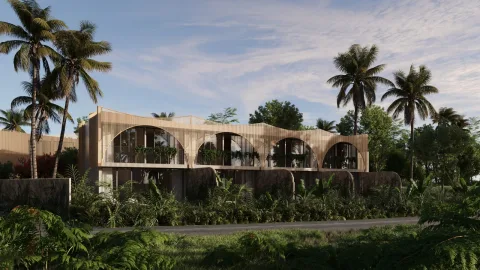
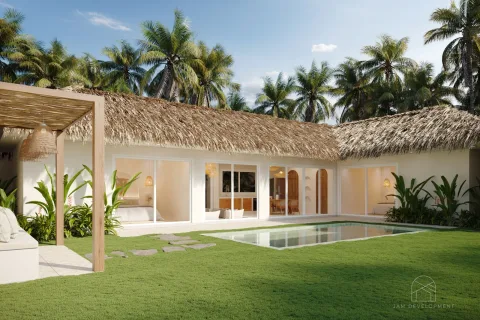
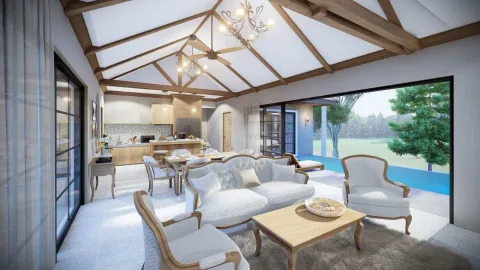
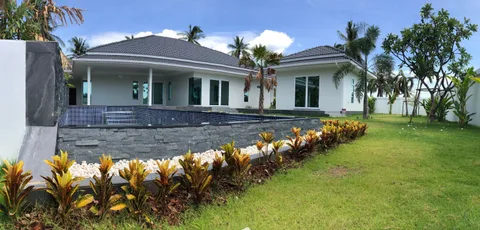
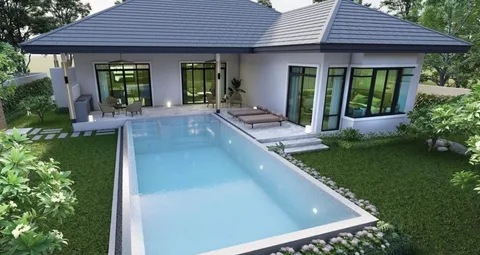
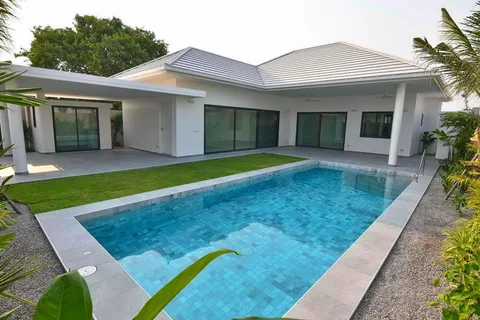
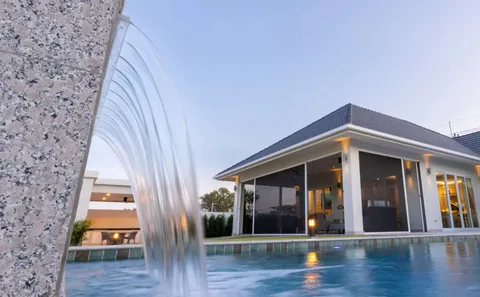
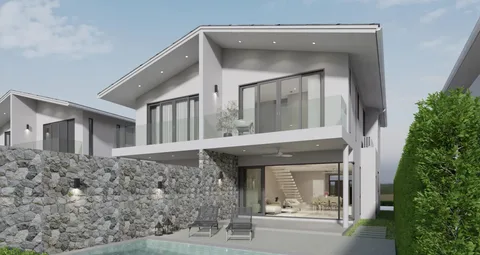
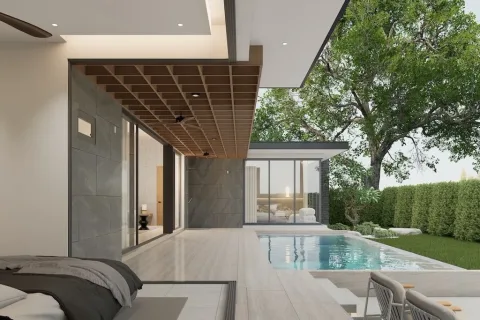
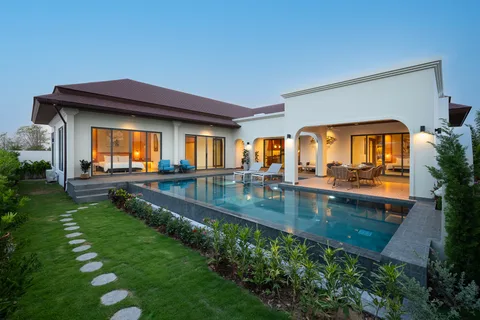
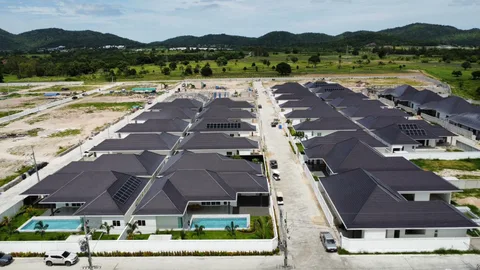
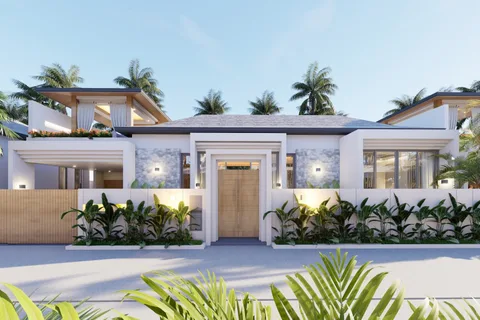
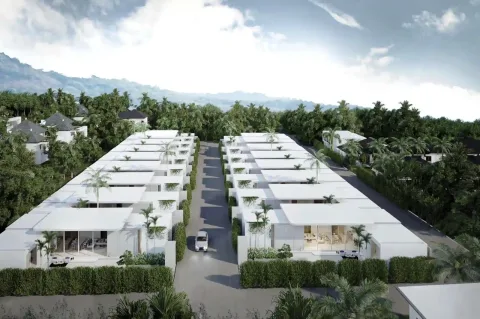
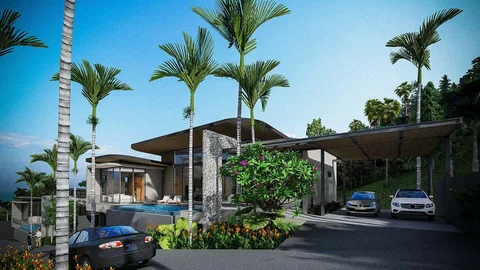
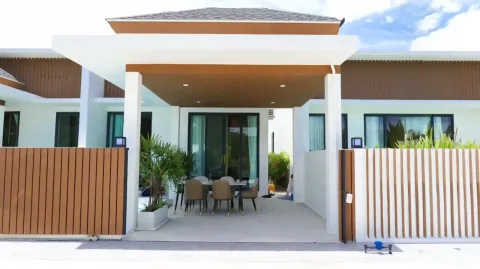
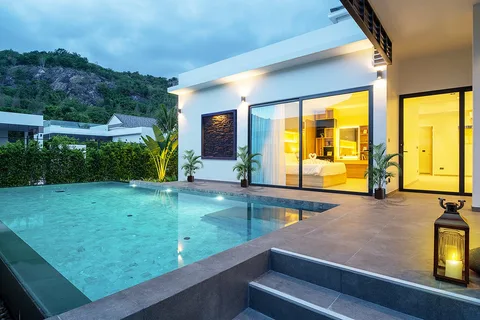
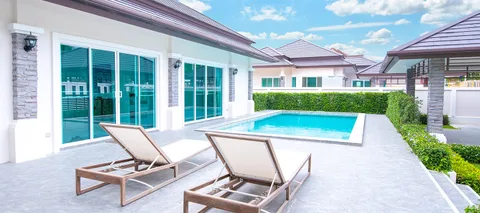
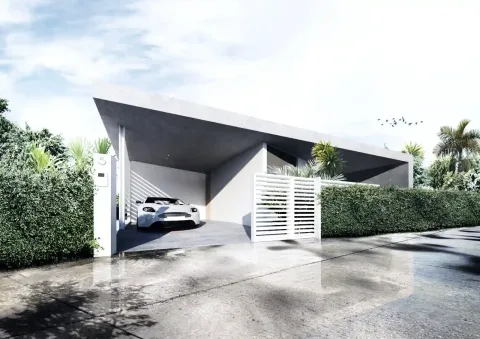
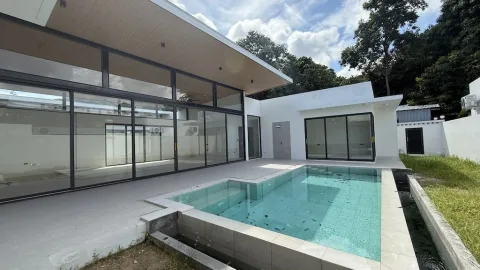
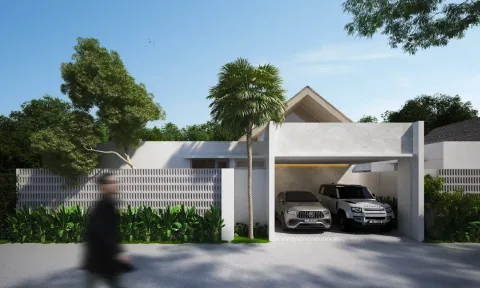
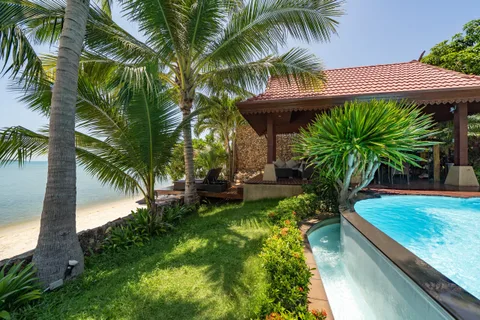
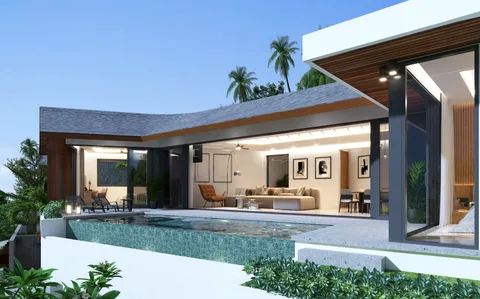
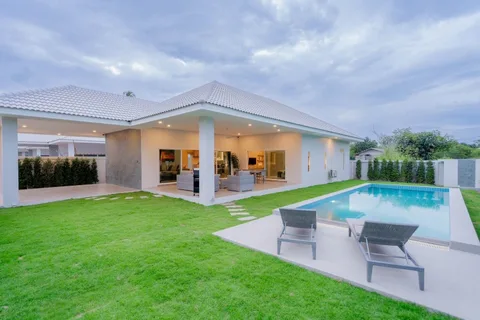
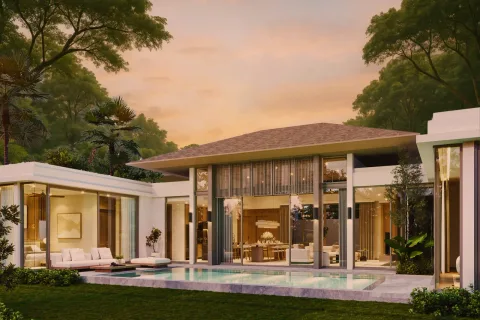
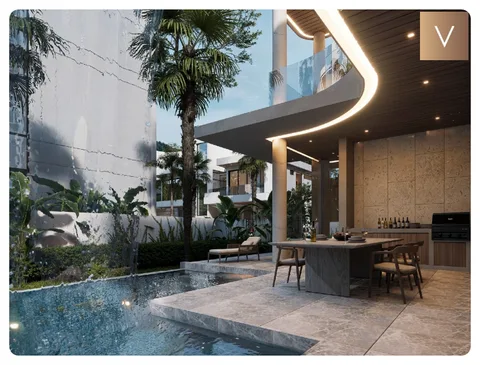
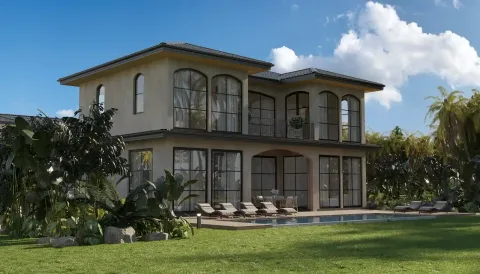
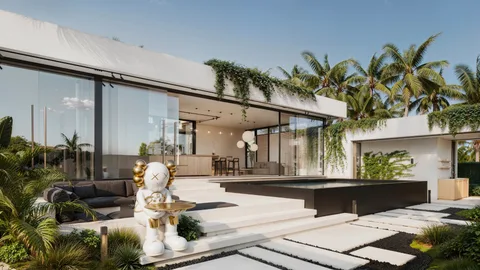
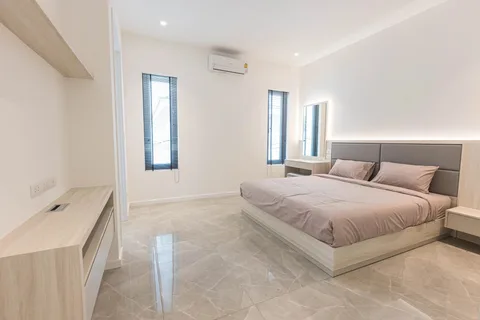
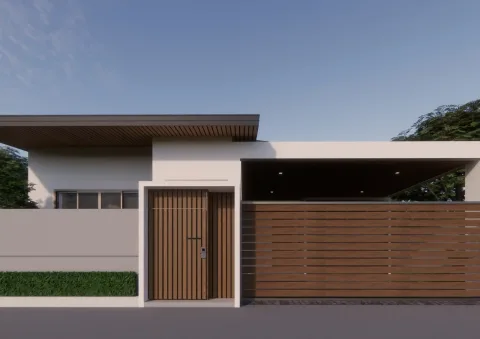
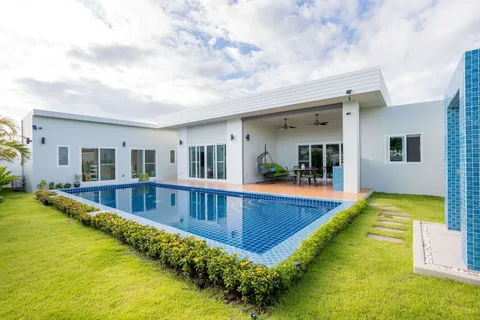
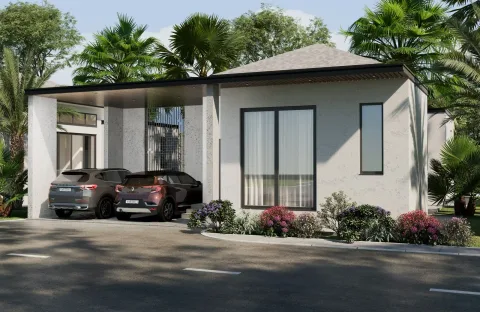
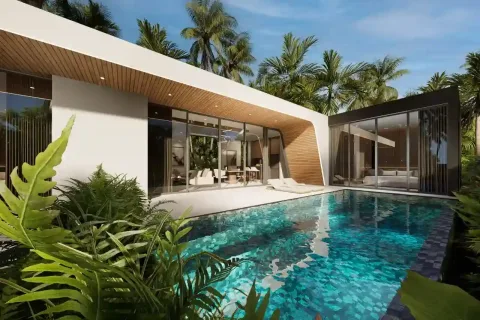
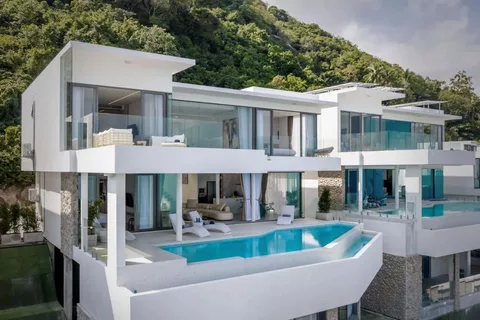
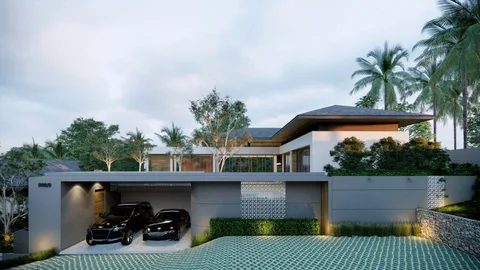
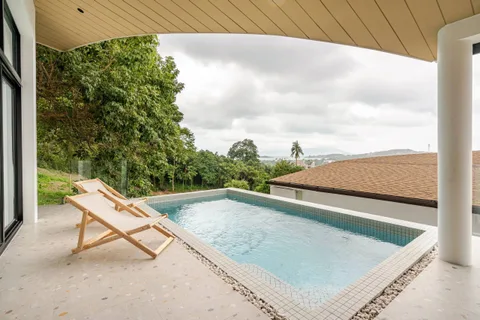
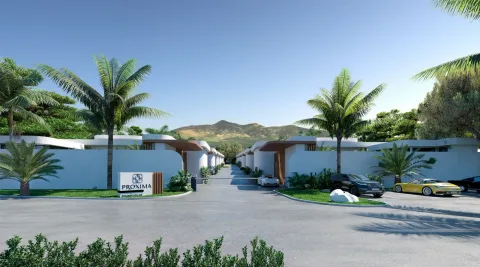
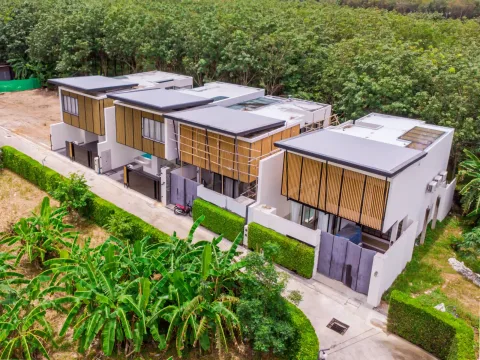
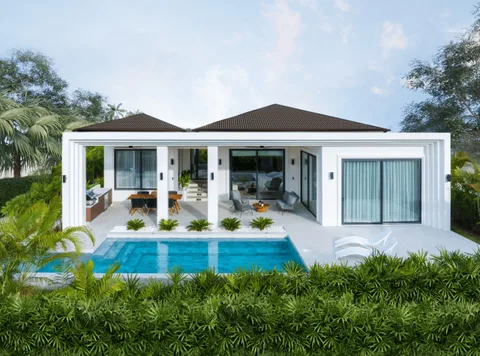
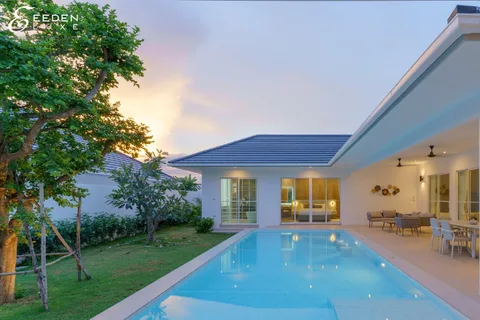
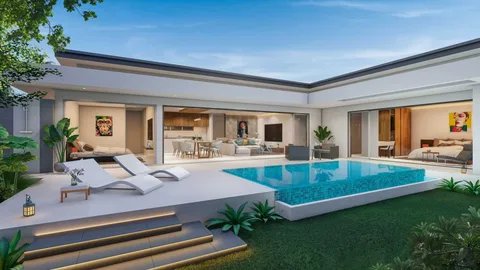
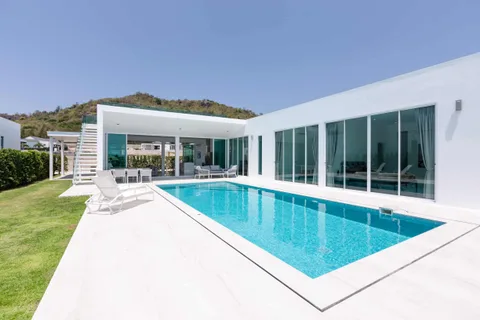
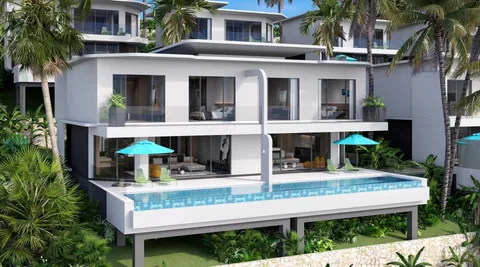
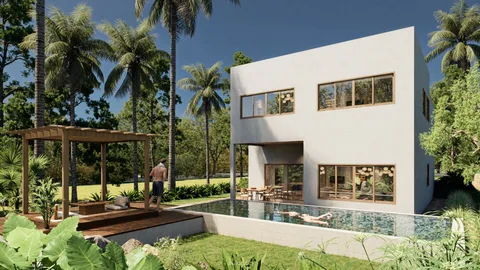
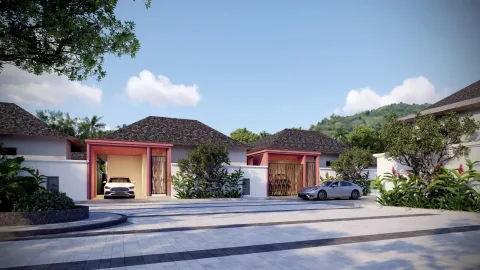
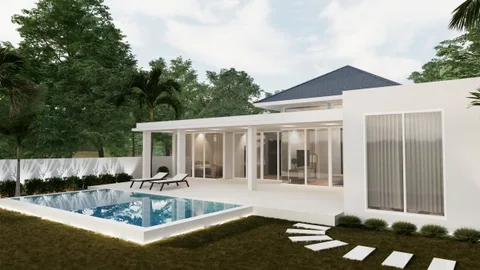
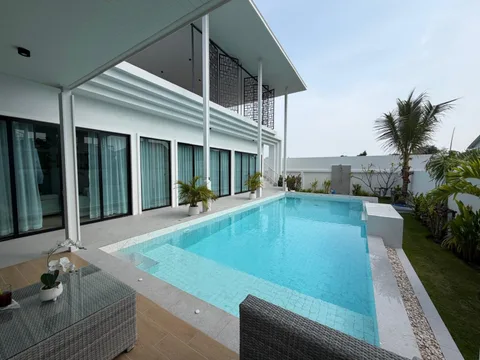
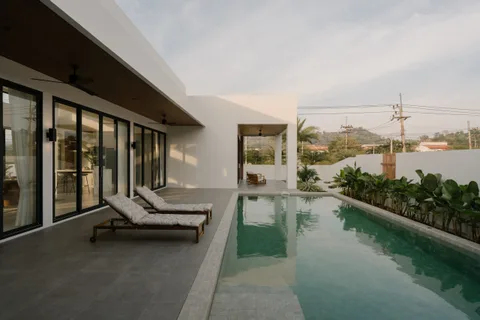
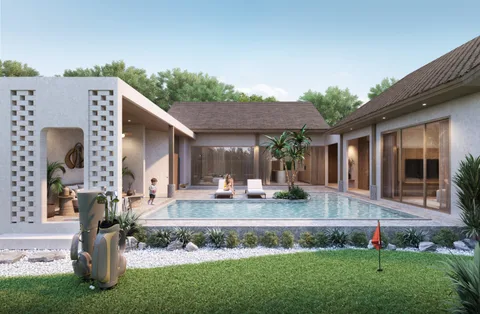
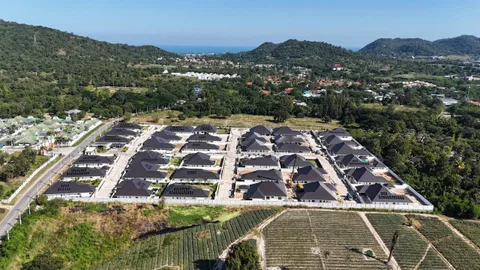
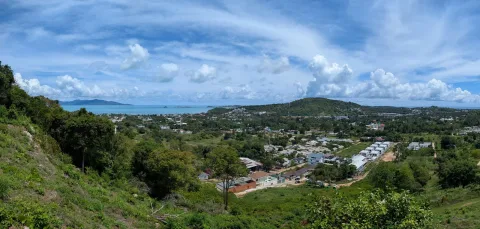
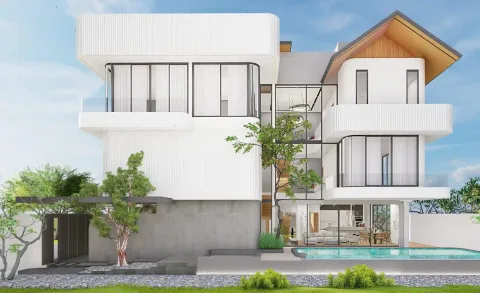
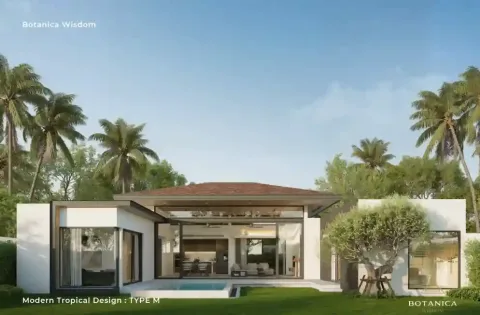
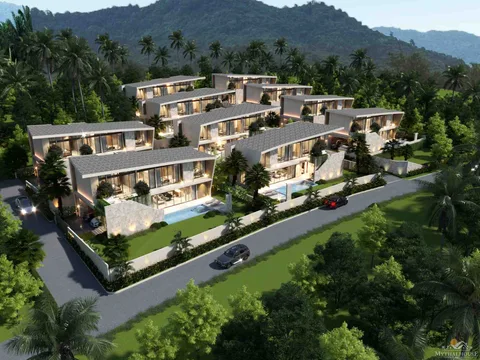
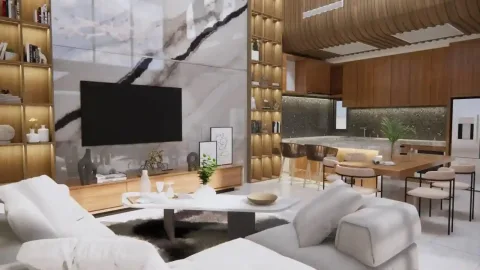
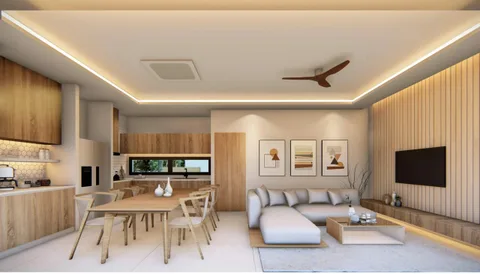
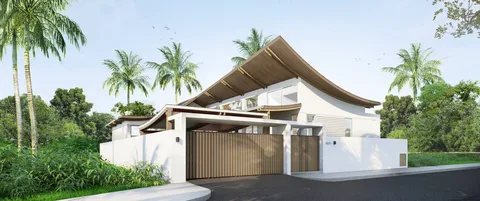
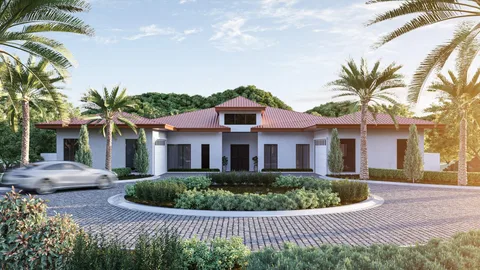
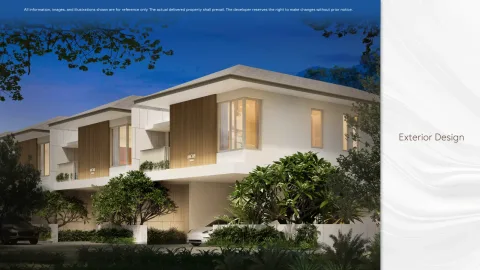
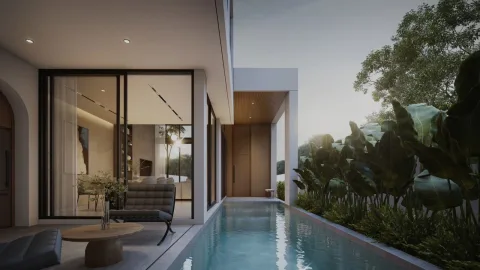
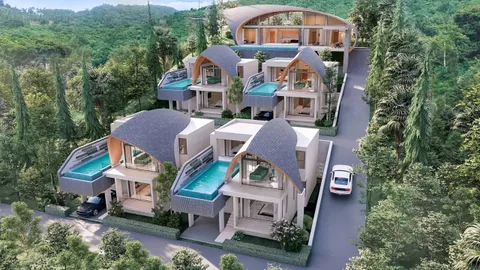
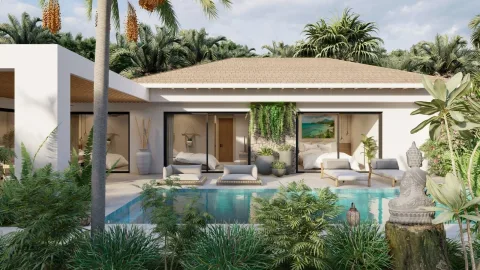
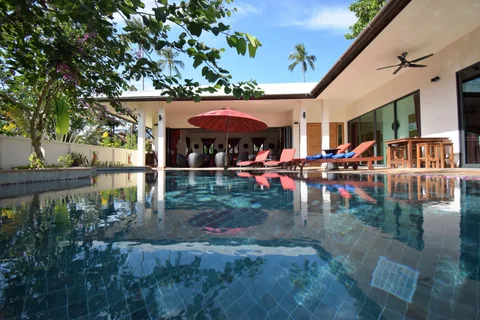
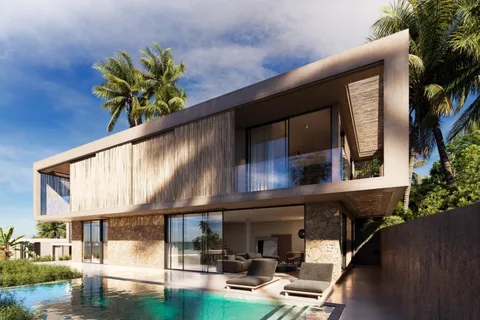
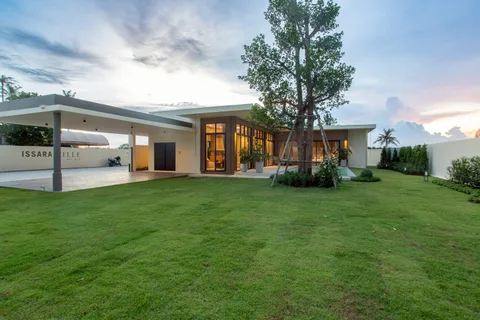
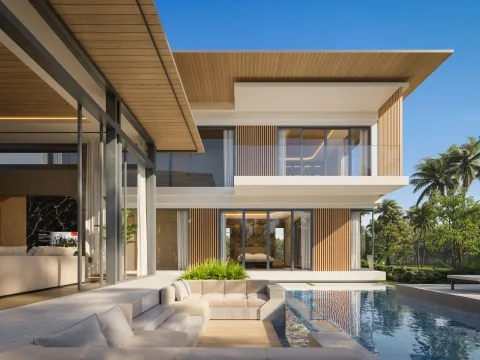
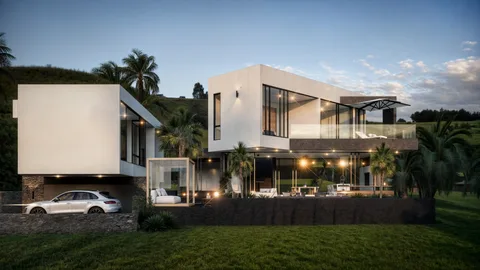
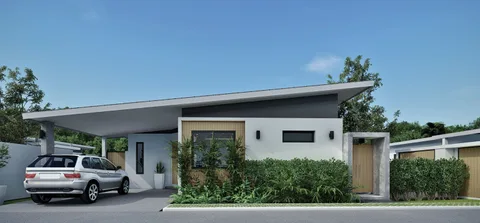
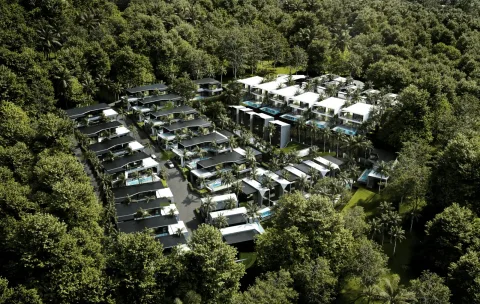
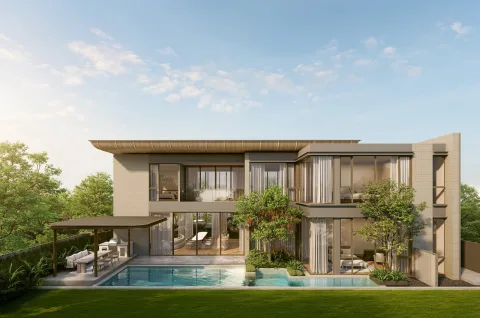
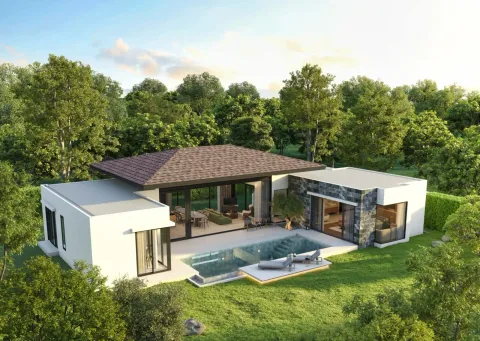
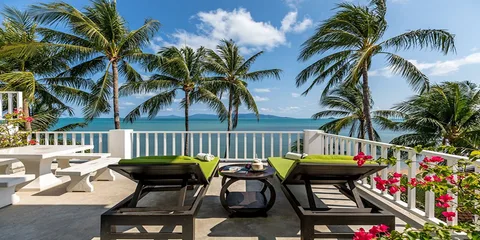
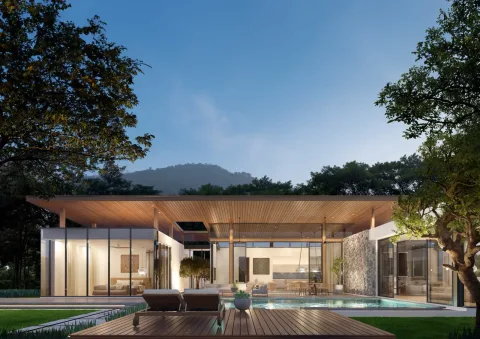
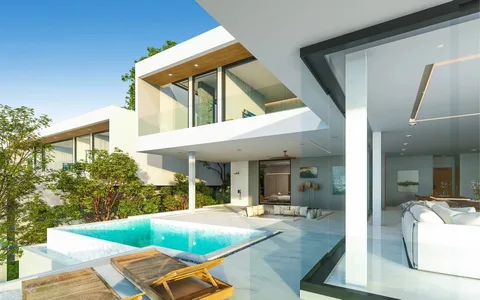
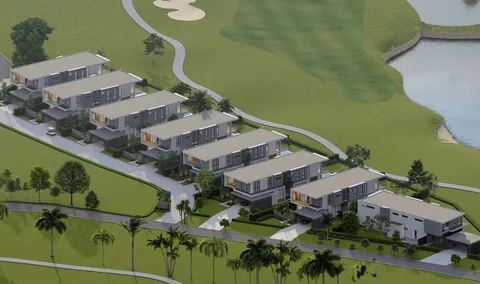
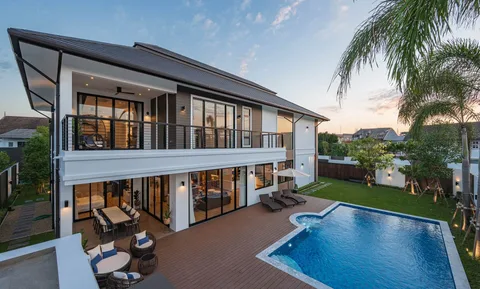
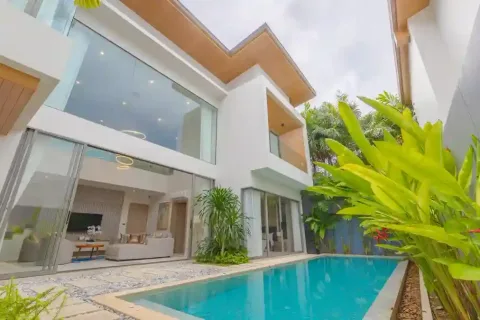
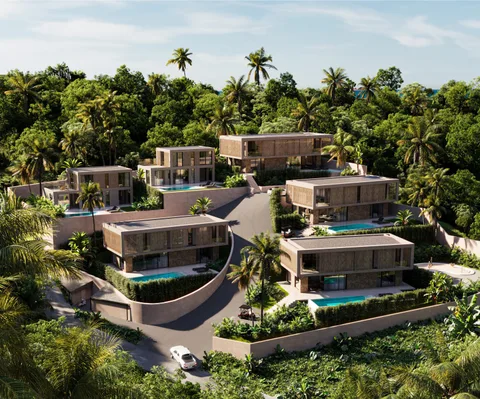
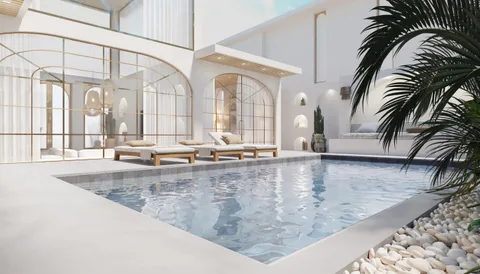
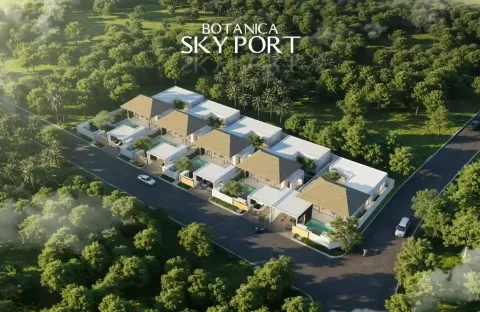
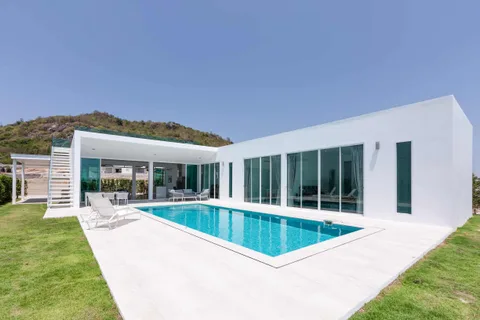
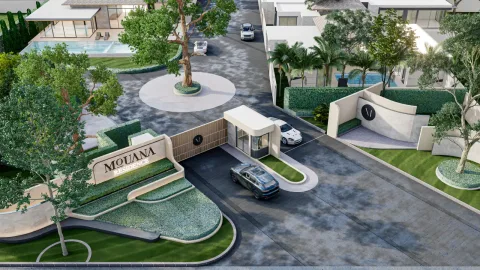
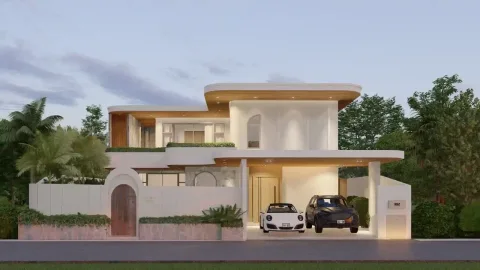
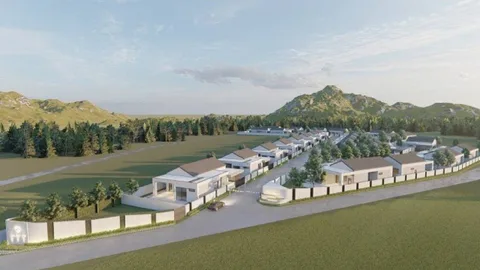
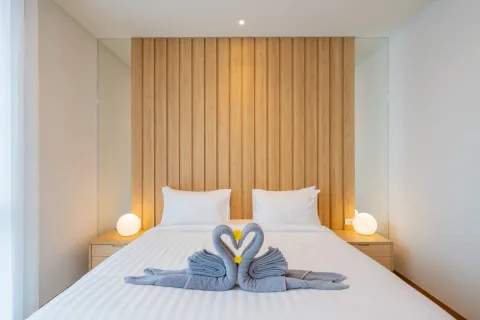
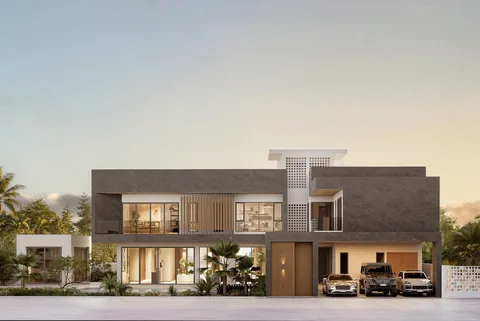
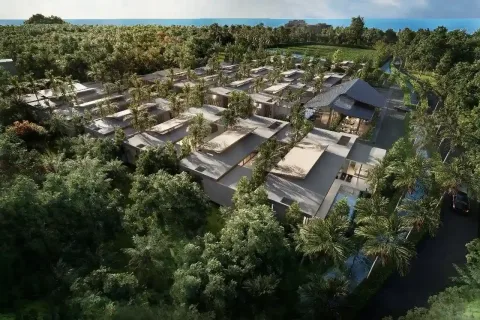
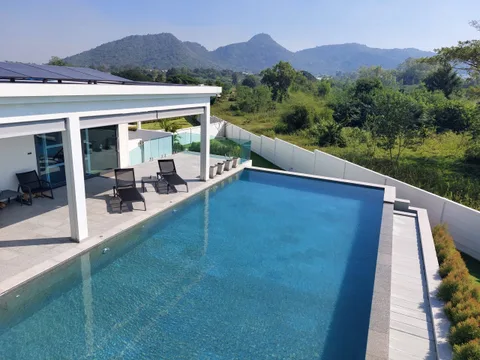
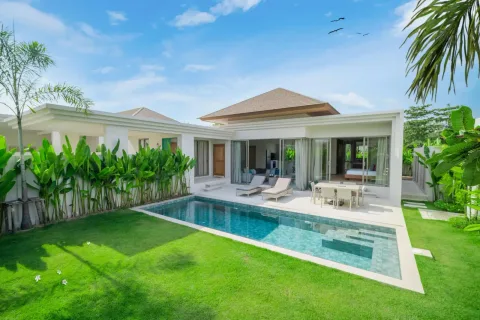
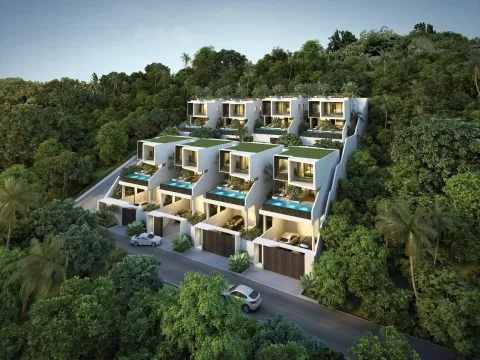
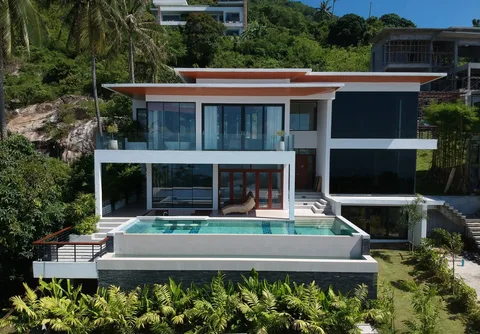
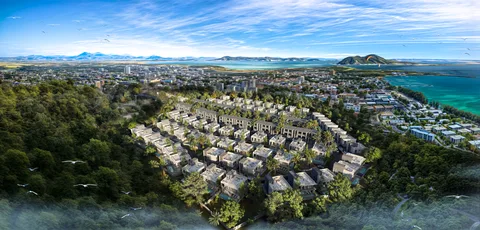
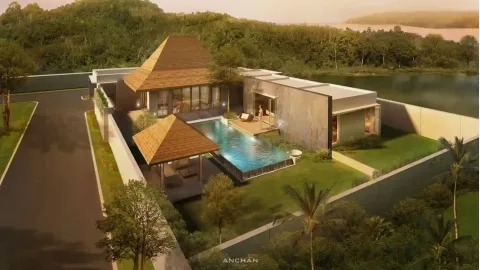
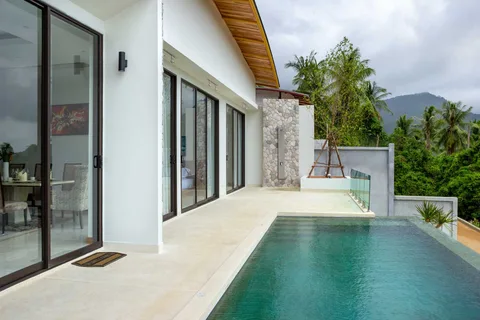
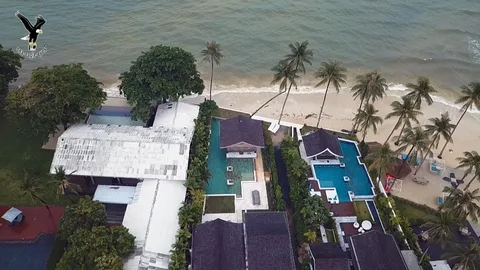
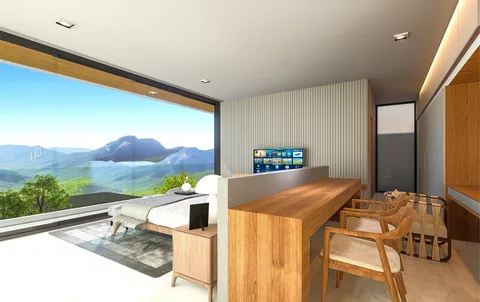
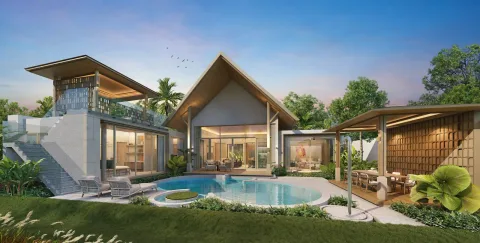
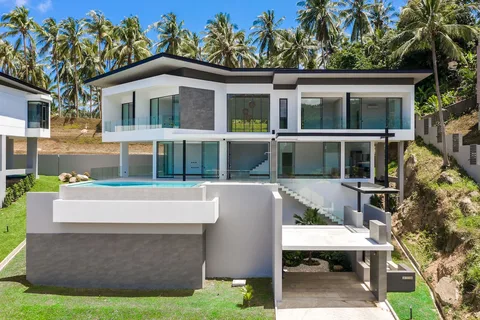
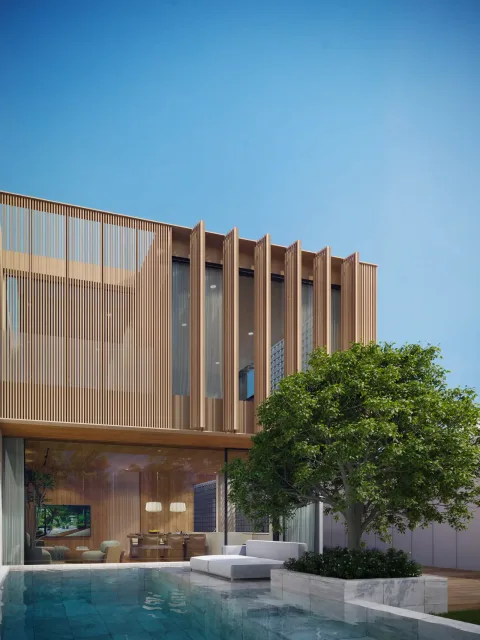
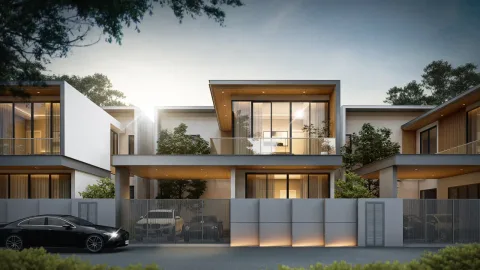
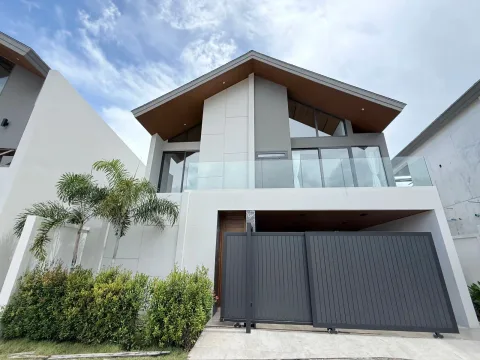
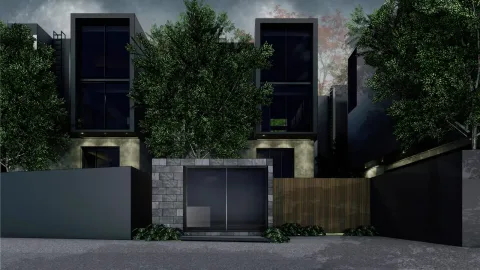
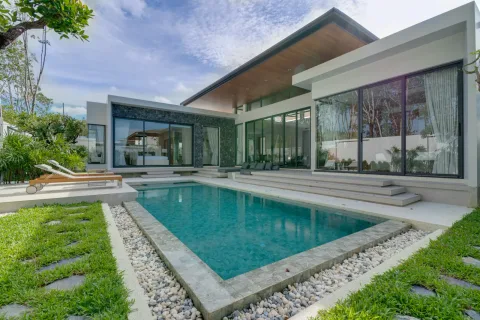
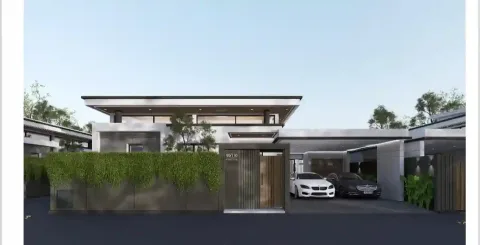
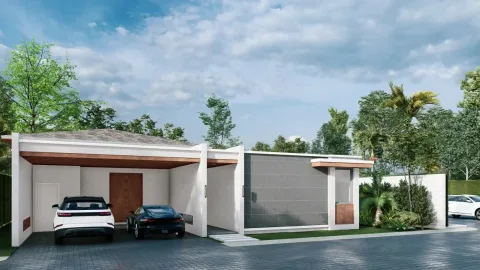
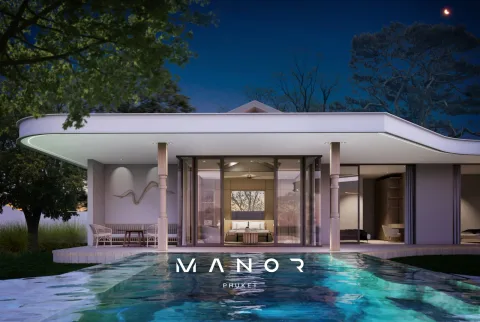
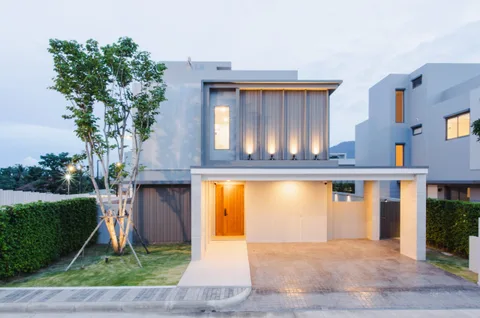
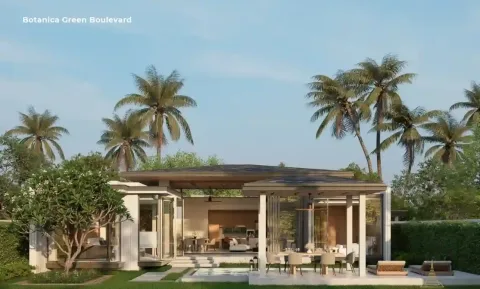
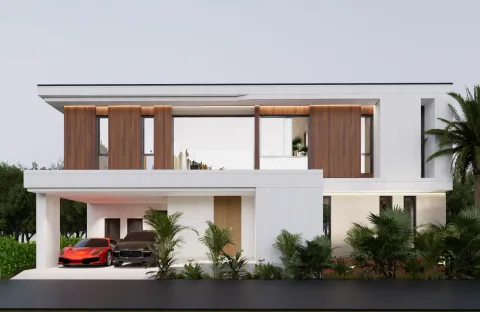
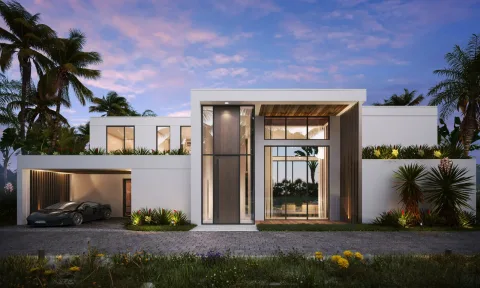
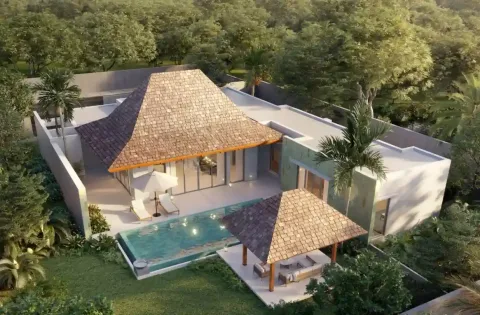
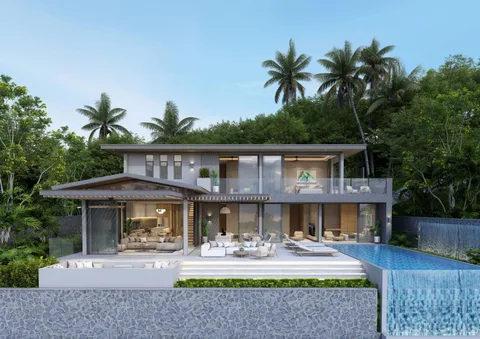
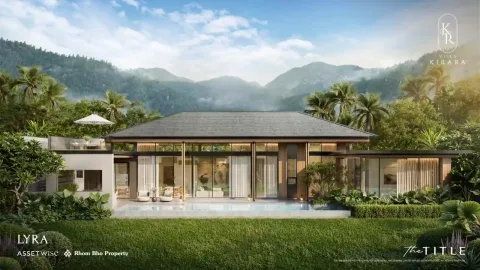
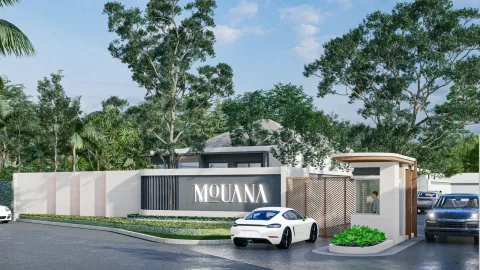
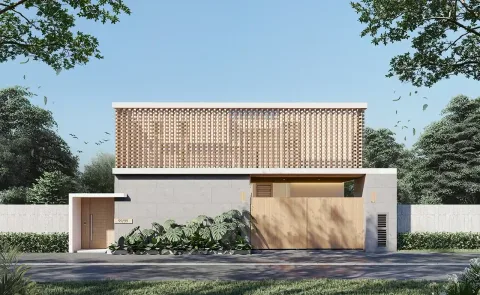
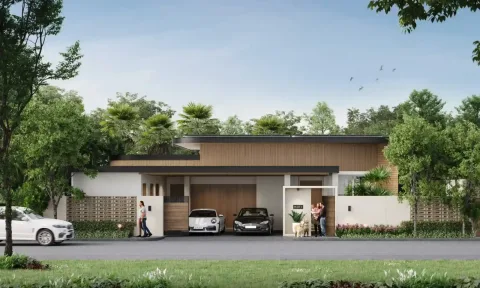
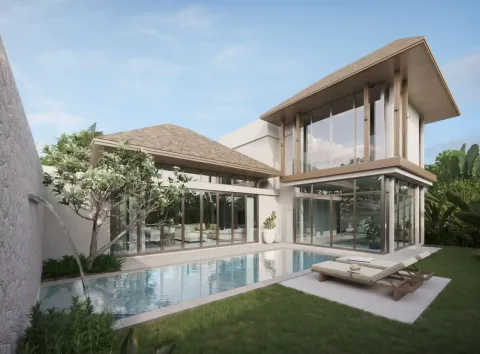
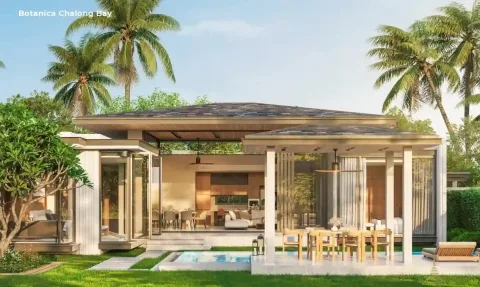
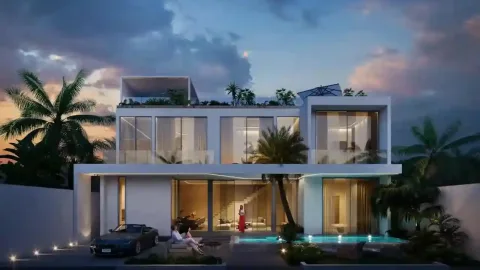
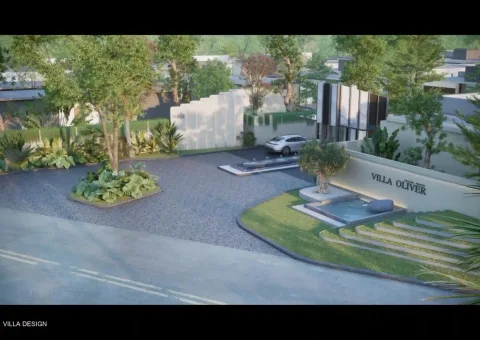
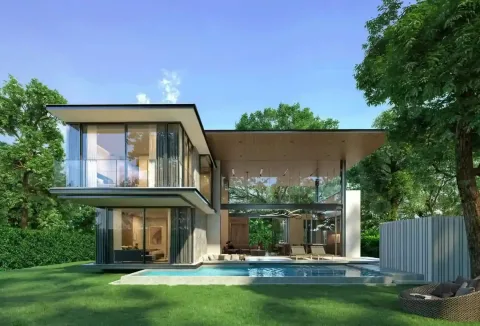
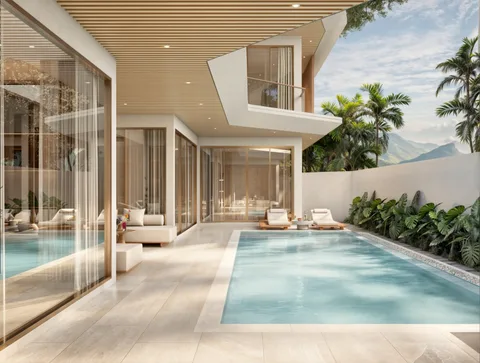
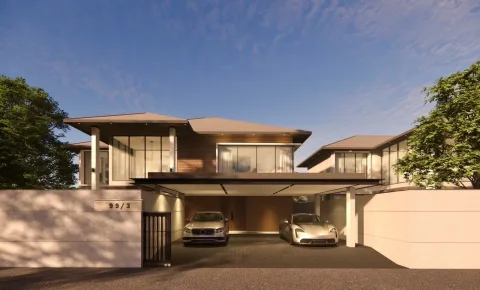
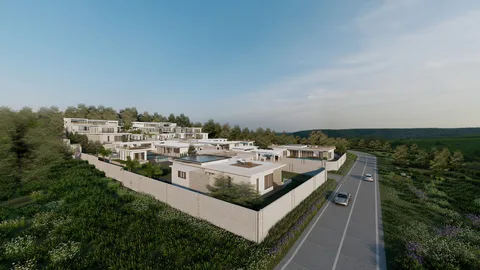
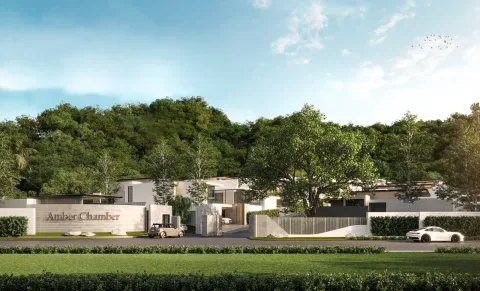
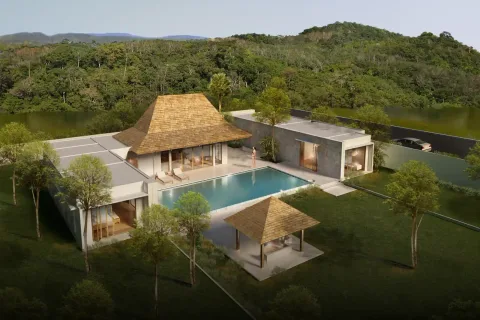
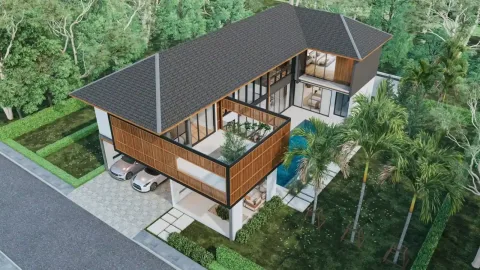
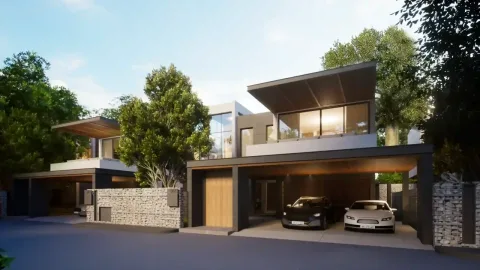
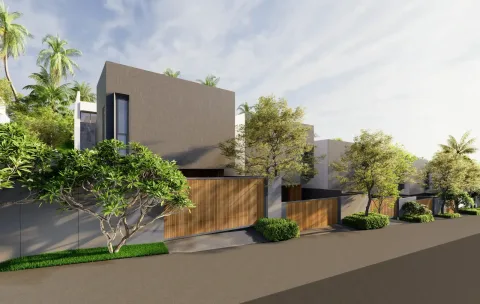
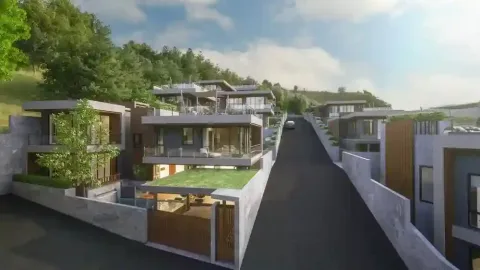
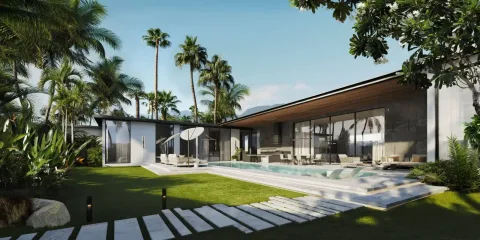
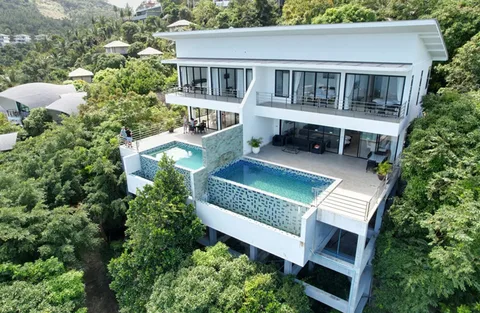
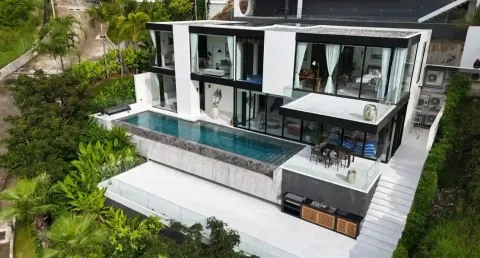
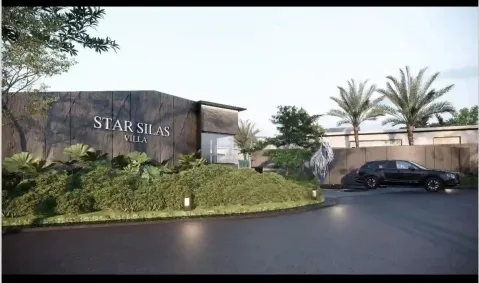
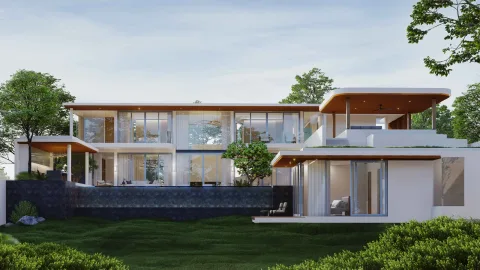
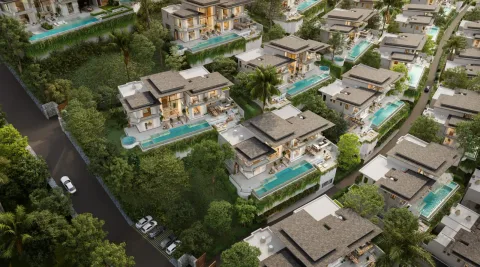
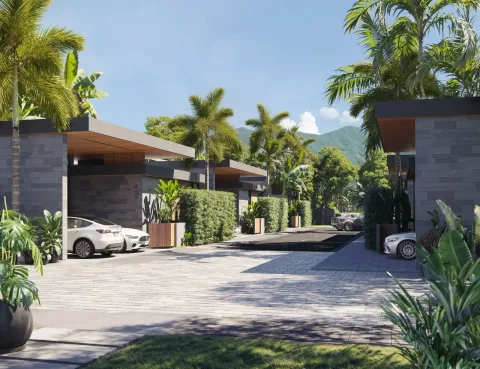
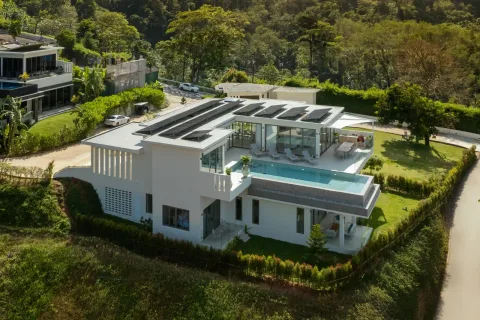
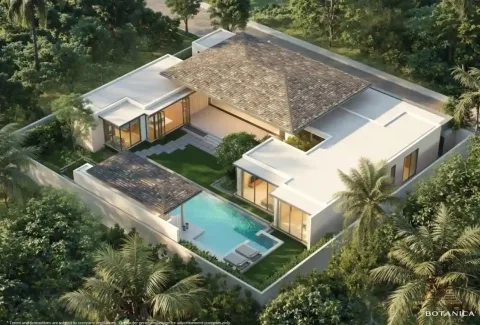
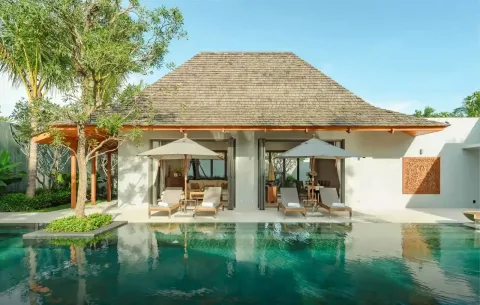
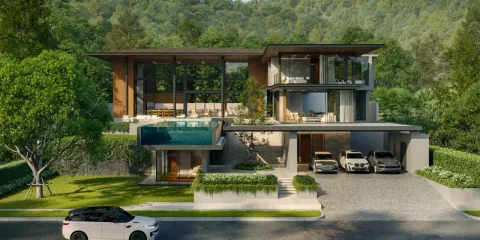
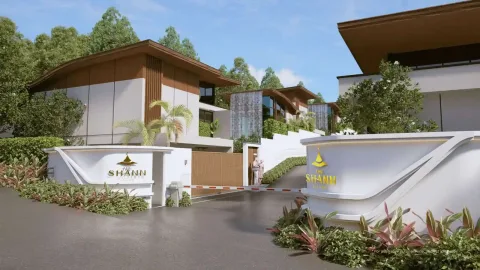
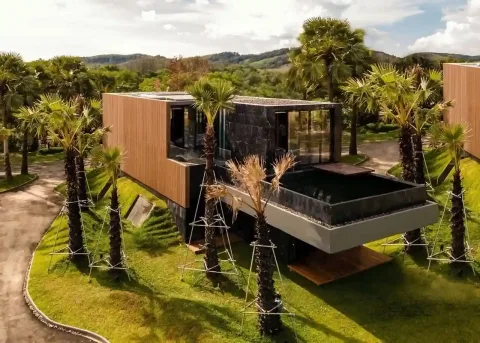
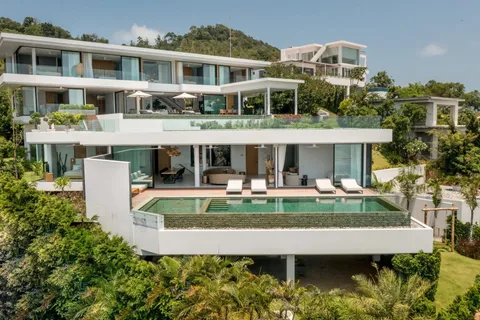
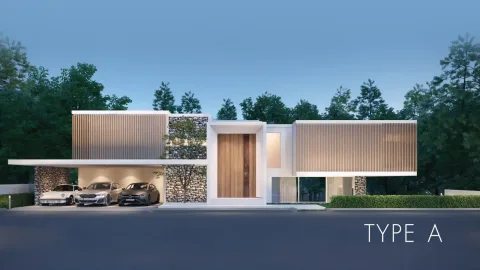
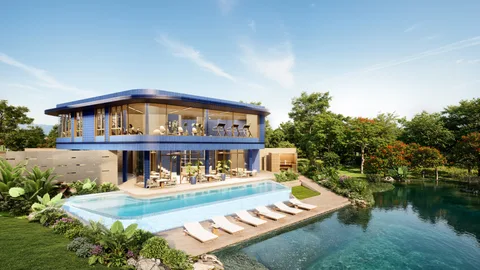
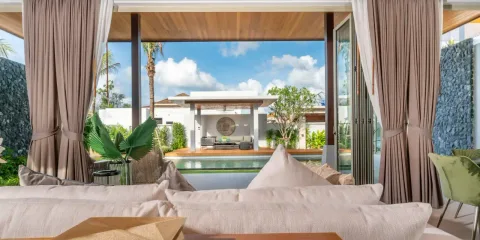
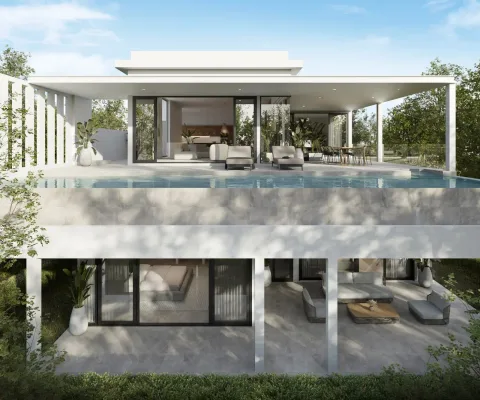
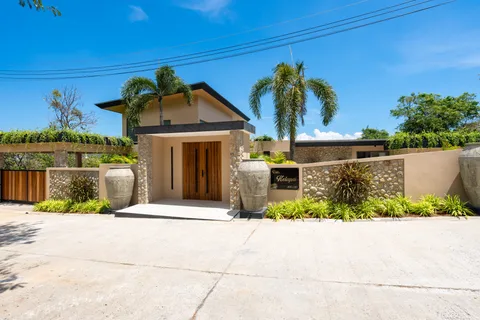
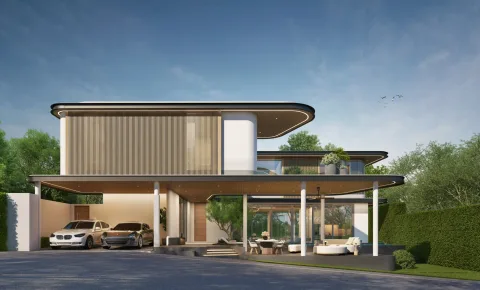
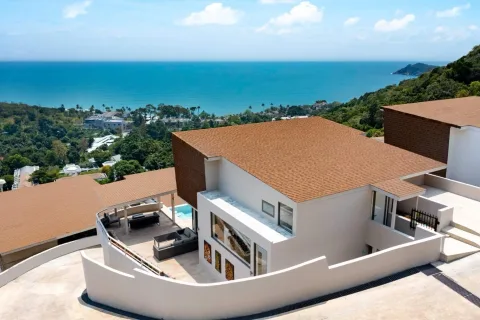
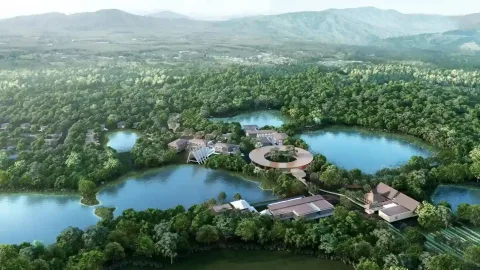
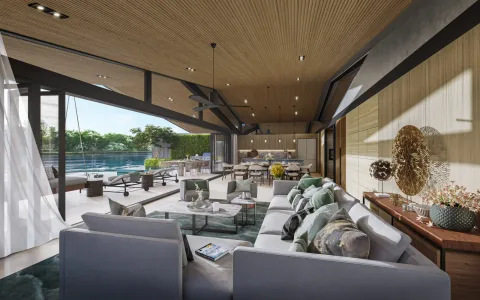
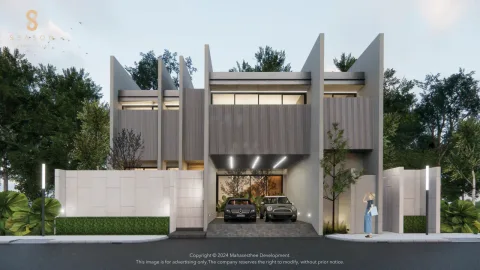
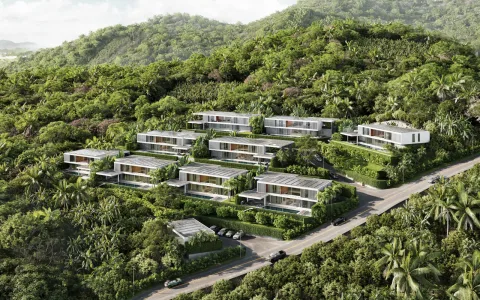
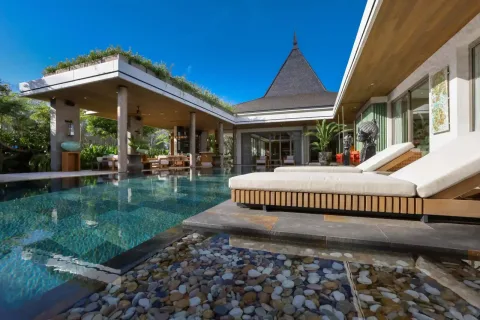
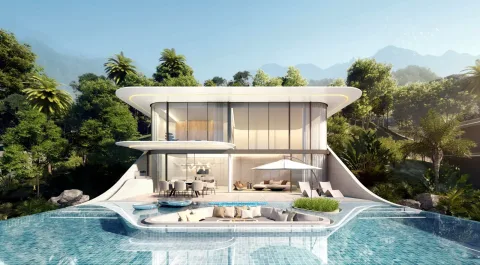
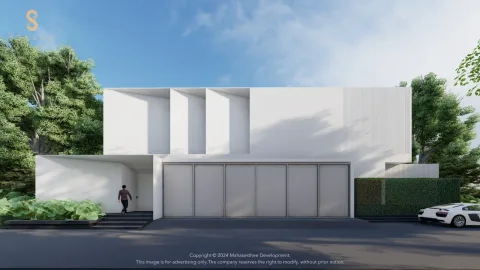
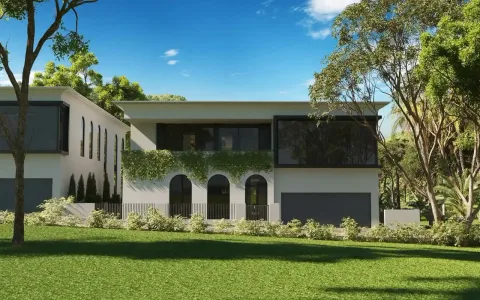
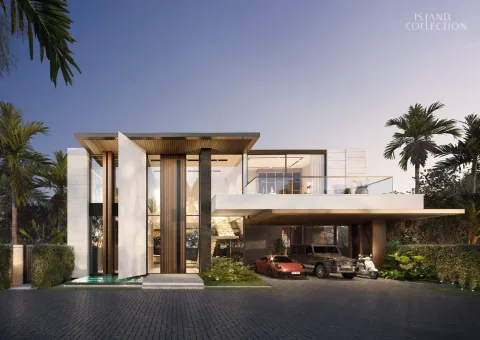
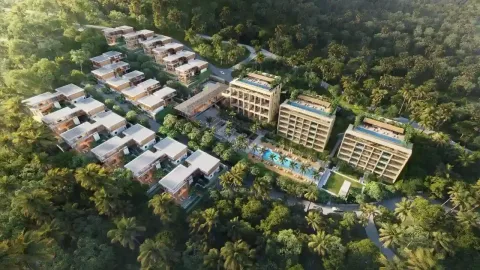
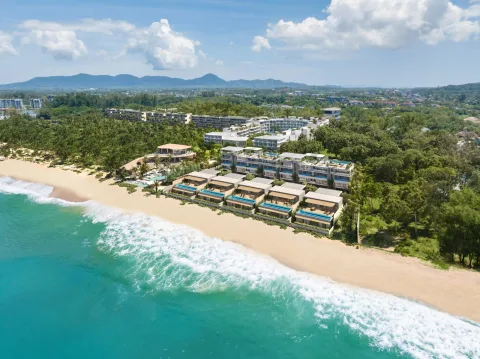
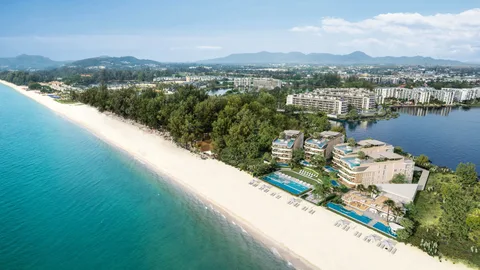
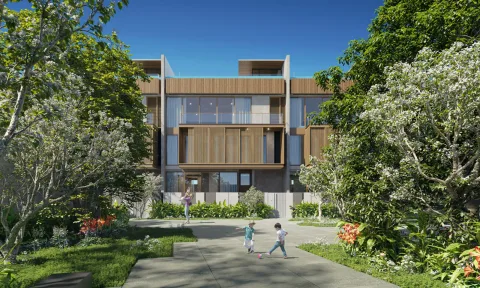
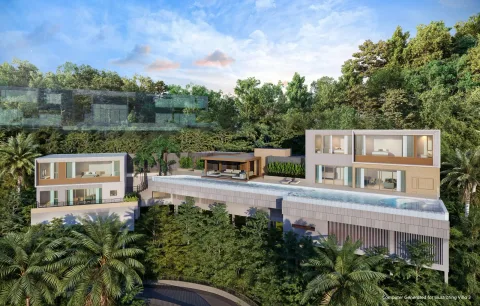
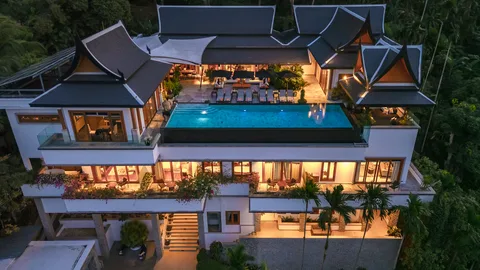
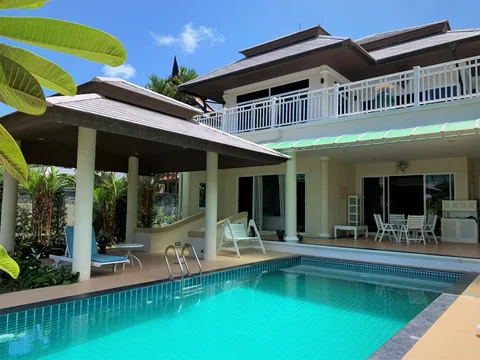
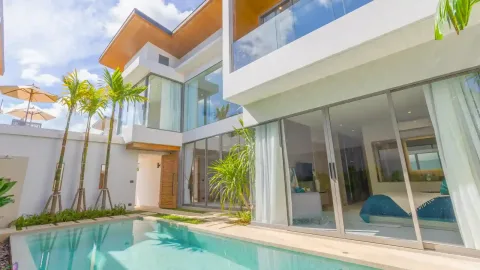
MP House Asset
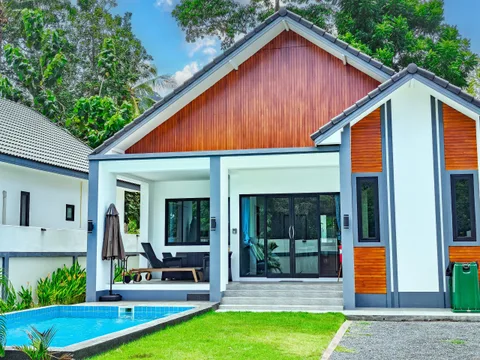
Hua Hin · Nong Kae (Khao Takiab) · MP House Asset
- Price from
- 1,890,000 THB
- In dollars
- about $57,800
- Type
- Villa, 53 units
- Status
- completed
Thailand · Pool villas · Updated 2026-09-06
Quick answer: On 5 September 2026 this catalogue lists 477 pool villa projects from developers in five Thai markets: 149 in Phuket from 5,490,000 THB with a median starting price of 26,911,000 THB, 38 in Koh Samui from 3,650,000 THB with a median of 10,350,000 THB, 28 in Hua Hin from 2,499,000 THB with a median of 8,900,000 THB, 8 in Pattaya from 16,030,000 THB, and 4 in Chiang Mai from 9,900,000 THB. A foreigner owns the villa building outright and holds the land on a registered 30-year lease, through a Thai company, or via a Thai spouse; villas are never freehold in a foreign name. Every price is the developer's own starting figure, dated on the card.
434 projects in 5 markets, from 1,890,000 THB (about $57,798 at 32.7 THB per dollar); 269 completed, 165 under construction or off-plan. Koh Samui 144 from 3,200,000 THB · Hua Hin 143 from 1,890,000 THB · Phuket 132 from 5,490,000 THB · Pattaya 11 from 9,911,000 THB · Chiang Mai 4 from 9,900,000 THB
Hua Hin · Nong Kae (Khao Takiab) · MP House Asset
Hua Hin · Hin Lek Fai
Hua Hin · Thap Tai
Koh Samui · Maenam
Hua Hin · Cha-Am
Hua Hin · Hin Lek Fai · Avatar Manor
Koh Samui · Maenam
Hua Hin · Thap Tai
Hua Hin · Hin Lek Fai
Hua Hin · Thap Tai
Hua Hin · Cha-Am
Hua Hin · Hin Lek Fai · Supalai
Hua Hin · Thap Tai · Rawiya Land & House Co.,Ltd
Hua Hin · Nong Kae (Khao Takiab) · Khemanatra Villa
Hua Hin · Hin Lek Fai · Khar Luek
Hua Hin · Hin Lek Fai
Koh Samui · Maenam
Hua Hin · Pran Buri
Hua Hin · Hin Lek Fai
Koh Samui · Ang Thong · 24/7 Real Estate Co.,Ltd.
Hua Hin · Pran Buri · Baan Yu Yen
Koh Samui · Na Mueang · Baansuay Land and House
Hua Hin · Thap Tai
Hua Hin · Hin Lek Fai
Phuket · Pa Khlok
Koh Samui · Maenam
Hua Hin · Cha-Am
Hua Hin · Thap Tai · Loft Property Hua Hin Co., Ltd.
Hua Hin · Thap Tai · Emerald Valley Hua Hin 3
Koh Samui · Bo Phut · Cabina
Hua Hin · Hin Lek Fai · Supalai
Koh Samui · Maret (Lamai)
Hua Hin · Hin Lek Fai
Hua Hin · Pran Buri
Hua Hin · Hin Lek Fai · Mura Pool Villa Hua Hin
Koh Samui · Na Mueang
Koh Samui · Taling Ngam · Nemo Vitosti Samui
Hua Hin · Hin Lek Fai · Supalai
Hua Hin · Sam Roi Yot
Phuket · Nai Yang
Koh Samui · Bo Phut
Hua Hin · Thap Tai
Hua Hin · Hin Lek Fai
Hua Hin · Cha-Am
Hua Hin · Pran Buri · Cabana Pool Villa
Hua Hin · Sam Roi Yot
Koh Samui · Bo Phut
Koh Samui · Maenam
Hua Hin · Thap Tai
Hua Hin · Thap Tai
Hua Hin · Hin Lek Fai · Estate 28 - Property & Development
Hua Hin · Cha-Am
Hua Hin · Hin Lek Fai
Hua Hin · Hin Lek Fai
Koh Samui · Maenam
Hua Hin · Thap Tai
Hua Hin · Hin Lek Fai
Koh Samui · Maenam
Koh Samui · Maenam
Koh Samui · Bo Phut
Hua Hin · Nong Kae (Khao Takiab)
Koh Samui · Bo Phut · Longevity Property Group
Koh Samui · Lipa Noi · Nemo Vitosti Samui
Hua Hin · Hin Lek Fai · Estate 28 - Property & Development
Koh Samui · Maenam
Hua Hin · Pran Buri · Nova Real Estate
Hua Hin · Cha-Am · Plumeria Villa Hua
Hua Hin · Nong Kae (Khao Takiab) · Tnergy Elegance
Hua Hin · Pran Buri · Talaycation HuaHin - Pranburi
Hua Hin · Hua Hin town
Koh Samui · Bo Phut
Koh Samui · Bo Phut · Galex Samui
Koh Samui · Maret (Lamai)
Koh Samui · Bo Phut · Three Seasons Properties
Hua Hin · Cha-Am · Reeva
Hua Hin · Thap Tai · MeeDee Homes
Hua Hin · Thap Tai · Rawiya Land & House Co.,Ltd
Hua Hin · Nong Kae (Khao Takiab) · Baan Thai Pool Villa
Hua Hin · Nong Kae (Khao Takiab) · CLC Development Co., Ltd.,
Hua Hin · Pran Buri · Moda Residences
Koh Samui · Bo Phut
Koh Samui · Maret (Lamai) · Nemo Vitosti Samui
Hua Hin · Cha-Am · Blue Sky Pool Villa Cha Am
Koh Samui · Bo Phut
Koh Samui · Maenam
Koh Samui · Bo Phut
Koh Samui · Bo Phut
Hua Hin · Thap Tai
Hua Hin · Thap Tai · Chada Homes
Hua Hin · Thap Tai · Prime Realty Management Thailand Co.,Ltd.
Koh Samui · Maenam · Probuild Samui Development Co., Ltd.
Hua Hin · Sam Roi Yot · White Beach Villa
Hua Hin · Hin Lek Fai
Koh Samui · Maenam · Azur Samui
Hua Hin · Thap Tai
Hua Hin · Hin Lek Fai
Hua Hin · Sam Roi Yot · CCM Group Project
Koh Samui · Maret (Lamai) · Samui Happiness
Koh Samui · Maret (Lamai) · Samui Sway
Hua Hin · Thap Tai
Koh Samui · Maret (Lamai) · Verdant Developments LDA
Hua Hin · Thap Tai
Phuket · Bang Tao
Koh Samui · Maenam · Samui Grand Park Group
Phuket · Nai Yang
Koh Samui · Bo Phut
Hua Hin · Thap Tai · Aria 4 Hua Hin
Koh Samui · Maenam · Sawasdee Pool Villa
Hua Hin · Nong Kae (Khao Takiab)
Hua Hin · Thap Tai
Koh Samui · Maret (Lamai) · Baansuay Land and House
Phuket · Layan
Koh Samui · Maenam
Koh Samui · Maenam
Koh Samui · Maenam
Koh Samui · Maenam · Samui Happiness
Phuket · Bang Tao
Hua Hin · Nong Kae (Khao Takiab)
Phuket · Ko Kaeo
Hua Hin · Thap Tai · Nantra Villa
Hua Hin · Thap Tai
Hua Hin · Cha-Am · Plumeria Villa Hua
Hua Hin · Thap Tai · SBS SOMBUN SAB REAL ESTATE
Hua Hin · Hin Lek Fai · The Smart Hamlet
Hua Hin · Hin Lek Fai
Koh Samui · Bo Phut · ROONGRUEANGCIVILIZE CONSTRUCTION CO., LTD.
Chiang Mai · Hang Dong · 999 Developments
Hua Hin · Thap Tai
Koh Samui · Bo Phut
Koh Samui · Taling Ngam · Samui Paradise Villa
Koh Samui · Maret (Lamai)
Hua Hin · Pran Buri
Koh Samui · Maenam
Hua Hin · Pran Buri
Koh Samui · Maenam · Verdant Developments LDA
Pattaya · Huai Yai
Hua Hin · Cha-Am
Hua Hin · Hin Lek Fai · Highland Villa 4
Koh Samui · Bo Phut
Koh Samui · Bo Phut
Hua Hin · Thap Tai
Koh Samui · Bo Phut
Hua Hin · Thap Tai
Phuket · Layan
Hua Hin · Pran Buri · Mountainside Company Limited
Koh Samui · Bo Phut
Koh Samui · Maret (Lamai) · Eden Development
Hua Hin · Thap Tai · Vana Varin
Phuket · Bang Tao
Koh Samui · Maenam
Koh Samui · Bo Phut · Vova
Koh Samui · Maret (Lamai) · The Olive Village
Hua Hin · Sam Roi Yot · White Beach Villa
Hua Hin · Thap Tai
Koh Samui · Maenam · Three Seasons Properties
Koh Samui · Bo Phut
Hua Hin · Hin Lek Fai · ROSSE REAL ESTATE CO.,LTD.
Koh Samui · Maenam · Samui Paradise Villa
Hua Hin · Pran Buri
Hua Hin · Hin Lek Fai · Thai Country Homes
Hua Hin · Hin Lek Fai
Hua Hin · Pran Buri
Koh Samui · Bo Phut
Koh Samui · Bo Phut · Tri-P Asset Group
Koh Samui · Bo Phut · Horizon Home
Koh Samui · Maret (Lamai)
Hua Hin · Hin Lek Fai · Panorama
Hua Hin · Thap Tai · Aria Hua Hin
Hua Hin · Hua Hin town
Koh Samui · Bo Phut
Hua Hin · Pran Buri
Koh Samui · Maret (Lamai) · CAVIAR DEVELOPMENT
Phuket · Rawai
Koh Samui · Maret (Lamai)
Koh Samui · Maenam
Koh Samui · Bo Phut
Koh Samui · Maenam · Cera Properties
Hua Hin · Thap Tai · MeeDee Homes
Phuket · Nai Yang
Hua Hin · Nong Kae (Khao Takiab) · Bangkok Living Development
Hua Hin · Hin Lek Fai · Hua Hin Grand Hills
Phuket · Rawai
Koh Samui · Bo Phut · Sawasdee Pool Villas
Phuket · Bang Tao
Koh Samui · Bo Phut
Koh Samui · Maret (Lamai) · Samui Paradise Villa
Hua Hin · Thap Tai · La Felice Hua Hin
Hua Hin · Thap Tai · MeeDee Homes
Phuket · Layan
Koh Samui · Maenam · Samui Grand Park Hill
Hua Hin · Nong Kae (Khao Takiab)
Hua Hin · Nong Kae (Khao Takiab)
Phuket · Chalong
Hua Hin · Thap Tai · Orchid Palm Homes
Koh Samui · Bo Phut
Hua Hin · Pran Buri
Hua Hin · Hin Lek Fai · Highland Villas
Phuket · Nai Yang
Hua Hin · Cha-Am
Hua Hin · Thap Tai · Moda Residences
Hua Hin · Pran Buri
Phuket · Nai Yang
Phuket · Naithon
Koh Samui · Maenam · The Wave Real Estate Group
Koh Samui · Maenam · Cera Properties
Koh Samui · Bo Phut · IO Construction
Phuket · Bang Tao
Phuket · Bang Tao
Hua Hin · Nong Kae (Khao Takiab) · BelVida Estates
Hua Hin · Thap Tai
Koh Samui · Maenam · Samui Grand Park Group
Koh Samui · Bo Phut · ATARA Development
Hua Hin · Nong Kae (Khao Takiab) · Phu Montra K-Haad
Koh Samui · Bo Phut · Samui Sway
Hua Hin · Sam Roi Yot
Koh Samui · Bo Phut · Baansuay Land and House
Hua Hin · Nong Kae (Khao Takiab) · Zermatt Hua Hin
Phuket · Chalong
Phuket · Bang Tao
Koh Samui · Bo Phut
Chiang Mai · Hang Dong · 999 Developments
Koh Samui · Maret (Lamai)
Hua Hin · Nong Kae (Khao Takiab) · Botanica Luxury Phuket
Hua Hin · Hin Lek Fai
Phuket · Nai Yang
Hua Hin · Hua Hin town · Universe Villas
Koh Samui · Bo Phut · Autumn Life Properties
Koh Samui · Bo Phut
Hua Hin · Nong Kae (Khao Takiab)
Hua Hin · Hua Hin town · Berlayar
Koh Samui · Bo Phut · Hillside Village
Koh Samui · Maenam · Samui Happiness
Hua Hin · Cha-Am
Koh Samui · Maret (Lamai) · Samui Sway
Hua Hin · Hin Lek Fai
Koh Samui · Bo Phut
Koh Samui · Bo Phut
Hua Hin · Hin Lek Fai · The Cloud Hua Hin
Koh Samui · Bo Phut
Phuket · Nai Yang
Phuket · Nai Yang
Koh Samui · Ang Thong
Koh Samui · Maenam
Koh Samui · Maret (Lamai) · Samui Paradise Villa
Phuket · Mai Khao
Koh Samui · Bo Phut
Koh Samui · Bo Phut
Koh Samui · Bo Phut · Baansuay Land and House
Hua Hin · Pran Buri
Hua Hin · Thap Tai · Rosewood Hill
Hua Hin · Hin Lek Fai
Phuket · Bang Tao
Pattaya · Pong (East Pattaya) · Honour Group
Koh Samui · Bo Phut · Baansuay Land and House
Phuket · Bang Tao
Pattaya · Na Kluea (Wongamat, North Pattaya)
Koh Samui · Maenam · Samui Grand Park Group
Koh Samui · Maret (Lamai)
Hua Hin · Thap Tai
Phuket · Bang Tao
Phuket · Ko Kaeo
Koh Samui · Maenam · The Wave Real Estate Group
Pattaya · Pong (East Pattaya)
Koh Samui · Maenam
Koh Samui · Bo Phut · Baansuay Land and House
Hua Hin · Thap Tai
Pattaya · Nong Prue (Central Pattaya, Jomtien, Pratumnak)
Koh Samui · Bo Phut
Koh Samui · Maenam
Koh Samui · Maenam · The Rice
Phuket · Layan
Hua Hin · Nong Kae (Khao Takiab)
Koh Samui · Maenam
Pattaya · Nong Prue (Central Pattaya, Jomtien, Pratumnak) · Infinite Real Estate
Phuket · Nai Yang
Hua Hin · Hin Lek Fai
Phuket · Chalong
Koh Samui · Lipa Noi · Supalai
Koh Samui · Na Mueang · Sisaran Group Co., Ltd.
Koh Samui · Bo Phut
Phuket · Naithon
Koh Samui · Bo Phut · Almafi Koh Samui Co.,Ltd.
Hua Hin · Hin Lek Fai
Chiang Mai · Hang Dong · 999 Developments
Phuket · Kathu
Phuket · Rawai
Koh Samui · Maenam · Pacific Palisade
Hua Hin · Hua Hin town · Thipurai Group Hua Hin Co.,Ltd
Koh Samui · Maenam
Koh Samui · Na Mueang
Phuket · Ko Kaeo
Koh Samui · Bo Phut · Vastu Villa Studio
Koh Samui · Bo Phut
Phuket · Nai Yang
Hua Hin · Nong Kae (Khao Takiab)
Hua Hin · Thap Tai
Phuket · Ko Kaeo
Phuket · Bang Tao
Hua Hin · Nong Kae (Khao Takiab) · CLC Development Co., Ltd.,
Koh Samui · Maenam · AB CAPITAL ASIA
Koh Samui · Bo Phut
Phuket · Chalong
Phuket · Bang Tao
Phuket · Layan
Pattaya · Siam Tree Villa Co., Ltd.
Phuket · Nai Yang
Hua Hin · Thap Tai
Phuket · Layan
Phuket · Mai Khao
Hua Hin · Cha-Am · Veranda Resort Public Company Limited
Pattaya · Nong Prue (Central Pattaya, Jomtien, Pratumnak)
Koh Samui · Maenam · Darika
Phuket · Rawai
Phuket · Nai Yang
Koh Samui · Maenam
Koh Samui · Maenam · Infinity Riches Property and Hospitality Management Co., Ltd.
Koh Samui · Bo Phut
Koh Samui · Maret (Lamai)
Koh Samui · Bo Phut · Almafi Koh Samui Co.,Ltd.
Hua Hin · Pran Buri
Phuket · Layan
Koh Samui · Bo Phut
Koh Samui · Bo Phut
Phuket · Bang Tao
Hua Hin · Thap Tai · Banthi Hua Hin
Phuket · Cape Yamu
Phuket · Bang Tao
Phuket · Chalong
Phuket · Layan
Phuket · Layan
Koh Samui · Maenam
Koh Samui · Maenam
Phuket · Layan
Phuket · Bang Tao
Phuket · Layan
Phuket · Chalong
Phuket · Mai Khao
Koh Samui · Bo Phut · Samui Sway
Phuket · Bang Tao
Chiang Mai · Mae Rim · Hylife Development
Phuket · Layan
Phuket · Layan
Phuket · Bang Tao
Phuket · Bang Tao
Koh Samui · Bo Phut
Koh Samui · Maenam
Koh Samui · Bo Phut
Phuket · Rawai
Phuket · Chalong
Phuket · Nai Yang
Koh Samui · Bo Phut · Sense Eight Samui Villa Co.,Ltd
Phuket · Bang Tao
Phuket · Layan
Phuket · Bang Tao
Phuket · Layan
Phuket · Bang Tao
Phuket · Chalong
Phuket · Nai Harn
Phuket · Chalong
Phuket · Layan
Hua Hin · Nong Kae (Khao Takiab)
Pattaya · Nong Prue (Central Pattaya, Jomtien, Pratumnak)
Koh Samui · Bo Phut · Triwalan Estates
Pattaya · Pong (East Pattaya)
Phuket · Bang Tao
Phuket · Naithon
Phuket · Chalong
Phuket · Mai Khao
Phuket · Kamala
Phuket · Karon
Hua Hin · Cha-Am
Phuket · Bang Tao
Koh Samui · Bo Phut
Phuket · Layan
Phuket · Chalong
Phuket · Bang Tao
Phuket · Mai Khao
Phuket · Layan
Phuket · Bang Tao
Phuket · Bang Tao
Phuket · Naithon
Phuket · Ko Kaeo
Phuket · Nai Yang
Phuket · Kamala
Phuket · Bang Tao
Koh Samui · Bo Phut
Phuket · Bang Tao
Phuket · Bang Tao
Phuket · Bang Tao
Hua Hin · Cha-Am · Privaco Pool Villa
Hua Hin · Pran Buri
Phuket · Layan
Phuket · Bang Tao
Phuket · Layan
Koh Samui · Bo Phut
Phuket · Bang Tao
Phuket · Bang Tao
Phuket · Layan
Phuket · Bang Tao
Pattaya · Nong Prue (Central Pattaya, Jomtien, Pratumnak) · Silk road development Co., Ltd
Koh Samui · Bo Phut
Phuket · Bang Tao
Phuket · Bang Tao
Phuket · Bang Tao
Koh Samui · Bo Phut · The Heights
Phuket · Bang Tao
Phuket · Layan
Phuket · Bang Tao
Phuket · Bang Tao
Phuket · Layan
Phuket · Ko Kaeo
Phuket · Bang Tao
Phuket · Kata
Hua Hin · Cha-Am
Koh Samui · Bo Phut
Phuket · Layan
Phuket · Greater Patong
Hua Hin · Thap Tai
Phuket · Layan
Phuket · Layan
Koh Samui · Bo Phut
Phuket · Layan
Phuket · Kata
Koh Samui · Ang Thong · Domo Development
Phuket · Bang Tao
Phuket · Layan
Koh Samui · Bo Phut
Phuket · Bang Tao
Phuket · Bang Tao
Phuket · Bang Tao
Phuket · Ao Yon
Phuket · Surin
Phuket · Bang Tao
Phuket · Bang Tao
Thailand’s villa market is five markets that share a word. Phuket sells estates of twenty to a hundred pool villas, most of them from plans, priced for buyers who want a resort address near Laguna and are prepared to wait two years for delivery. Koh Samui sells small finished estates of three to fifteen villas built by local contractors, priced for buyers who want a house on a hill this year. Hua Hin sells single-storey pool villas on flat land west of the highway, by national builders and small local ones, to retirees and Bangkok families at the lowest prices on this site. Pattaya sells a handful of completed pool-villa estates inland from the coast to families and long-stay residents who have already decided on the city. Chiang Mai sells small completed villa groups in the valley around the northern city, in Hang Dong near the international schools and in Mae Rim among the orchards, to residents who want mountains rather than sea. The table below is the catalogue as it stood on 5 September 2026, computed from the project cards and not typed in.
| Market | Projects | Starting price from | Median starting price | Upper quartile | Completed | Where the supply is |
|---|---|---|---|---|---|---|
| Phuket | 162, 157 priced | 5,490,000 THB (about $167,890 at 32.7 THB per dollar) | 26,911,000 THB (about $822,966) | 38,992,000 THB | 14 | Bang Tao 56, Layan 32, Nai Yang 19, Rawai 10, Kata 7 |
| Koh Samui | 151 | 3,200,000 THB (about $97,859) | 12,900,000 THB (about $394,495) | 16,950,000 THB | 142 | Bo Phut 15, Maenam 14, Maret 4, south and west coasts 5 |
| Hua Hin | 149 | 1,890,000 THB (about $57,798) | 9,800,000 THB (about $299,694) | 13,598,000 THB | 111 | Hin Lek Fai 11, Thap Tai 10, Cha-Am 3, Pran Buri 3, Nong Kae 1 |
| Pattaya | 11 | 9,911,000 THB (about $303,088) | 17,300,000 THB (about $529,052) | 29,900,000 THB | 11 | Nong Prue 4, Pong 3, Na Kluea 1 |
| Chiang Mai | 4 | 9,900,000 THB (about $302,752) | 16,615,500 THB (about $508,119) | 18,626,000 THB | 4 | Hang Dong 3, Mae Rim 1 |
| All five | 477, 472 priced | 1,890,000 THB | 14,825,000 THB (about $453,364) | 25,000,000 THB | 284 |
Read the price bands rather than the medians if you have a budget in mind. In Phuket, 7 projects start under 10,000,000 THB, 36 between 10,000,000 and 20,000,000 THB, 69 between 20,000,000 and 40,000,000 THB, and 32 at 40,000,000 THB or more. On Samui, 18 estates start under 10,000,000 THB, 17 between 10,000,000 and 20,000,000 THB, and 3 above. In Hua Hin, 17 of 28 start under 10,000,000 THB, 9 between 10,000,000 and 20,000,000 THB, and 2 above. A buyer with 15,000,000 THB, about $458,716, is therefore choosing among roughly a fifth of Phuket’s estates and three quarters of Samui’s.
The word villa hides a legal structure that every buyer should be able to draw on a napkin before signing. There is a building, which a foreigner may own outright and register in their own name. There is a plot of land, which a foreigner may not own; it is leased for the longest term the Land Office will register, 30 years, or it sits in a Thai company or a Thai spouse’s name. And there is the estate, a set of shared roads, walls, drainage and sometimes a clubhouse, owned by the developer or by an owners’ association and paid for through a common-area fee.
The lease is the part that needs explaining. A lease registered at the Land Office is endorsed on the land title itself. It binds anyone who later buys the land, it can be inherited if the contract says so, and it is the foreign buyer’s real, enforceable right for 30 years. What it cannot be is longer than 30 years: Thai law has no registrable 90-year residential lease, and the 30+30+30 language in developers’ contracts is a promise to grant two further leases, enforceable against the promisor but not registered against the land. The parliamentary proposals to allow 99-year leases, floated since 2024, remain proposals in September 2026. A careful buyer prices a leasehold villa on the term that is registered, asks who will own the land in 2056 and what the renewal will cost, and treats the second and third terms as options.
The company route deserves a plain warning because it is still marketed. A Thai limited company may own land, and a foreigner may hold up to 49 percent of its shares and be its director. A company set up solely to hold a foreigner’s villa, with Thai shareholders who paid nothing and hold their shares for the foreigner, is a nominee structure, unlawful under the Land Code and the Foreign Business Act. Both the company registrar and the Land Department tightened their checks on such companies in 2025 and 2026, and buyers who used them in Phuket and Samui a decade ago now find that resale is where the structure comes apart. If you have a genuine Thai business or Thai partners with money at stake, a company can be right. If you do not, lease.
Insider tip: the phrase “freehold villa” on a Thai listing means freehold for the Thai or corporate buyer, not for you. Ask the developer to say in writing which structure it offers to a foreign individual and what the lease registration will cost at the Land Office. The answer, on the estates that have thought it through, is a 30-year registered lease at 1.1 percent of the price, with the building transferred in your name on the same day.
Phuket has more villa estates than the rest of the country’s resort markets combined, and the supply clusters hard. Bang Tao and Layan together hold 88 of the 149 projects, most of them inland from the Laguna resort complex on the west coast, in the estates that have turned the Cherng Talay plain into the island’s villa district. The table gives each district’s projects, entry price and median, computed from the cards on 5 September 2026.
| District | Projects | Starting price from | Median starting price | Completed | What the district is |
|---|---|---|---|---|---|
| Bang Tao | 56 | 8,990,000 THB | 32,500,000 THB | 5 | Laguna and the Cherng Talay plain; branded villas, beachfront residences, and the deepest resale market on the island |
| Layan | 32 | 9,500,000 THB | 29,210,000 THB | 3 | The hills and valley north of Bang Tao; larger plots, sea-view hillsides, and the Anantara-branded estates |
| Nai Yang | 19 | 6,500,000 THB | 17,800,000 THB | 0 | Beside the airport; the west coast’s lowest villa prices, every estate still under construction |
| Rawai | 10 | 12,280,000 THB | 20,000,000 THB | 1 | The south; owner-occupier estates near Nai Harn beach and the Chalong marinas |
| Kata | 7 | 17,900,000 THB | 29,800,000 THB | 1 | Hillside sea views above the beach town; small projects, two of them above 60,000,000 THB |
| Mai Khao | 4 | 15,838,050 THB | 29,400,000 THB | 1 | The northern beach beside the airport and the national park |
| Naithon | 4 | 13,500,000 THB | 25,663,500 THB | 0 | A single quiet beach between Layan and Nai Yang |
| Chalong, Patong, Kamala, Nai Harn, Surin, Cape Yamu, Kathu, Karon, Pa Khlok, Ao Yon | 17 | 5,490,000 THB (Pa Khlok) to 117,500,000 THB (Ao Yon) | varies | 3 | Single projects or pairs; Pa Khlok on the east coast carries the island’s cheapest villa project |
Three markets hide inside those numbers. The first is the Laguna orbit, where Banyan Tree’s beachfront residences start at 106,900,000 THB and 160,000,000 THB and the branded estates around them sell resort living with a management contract attached. C9 Hotelworks’ 2026 survey of Asian residential markets gives Phuket 3,465 branded residence units, more than any other resort destination in the region, and most of that count sits within a few kilometres of Bang Tao beach. The second is the Cherng Talay villa estate, twenty to eighty three- and four-bedroom pool villas on 400 to 700 square metre plots from 20,000,000 to 45,000,000 THB, sold from plans to buyers who want the address without the resort. The third is the corridor market in Nai Yang, Naithon and Mai Khao, where the same product costs a third less because the beach is quieter and the drive to the restaurants is longer.
Phuket’s ratio of off-plan to completed projects, 135 to 14, is the fact to hold onto. A buyer who wants to walk through a finished villa on the island has fourteen estates to choose from on this catalogue; everyone else is buying a construction contract with a payment schedule, and the developer’s record of delivery, the building permit for the specific plot, and the environmental approval where the estate’s size requires one, become the diligence rather than the finishes.
Samui’s villa market is the mirror image of Phuket’s. Thirty of its 38 estates are completed. Twenty-three have ten villas or fewer. The developer named on the card is often a local construction company or a family firm rather than a listed group, and the buyer is usually buying a finished house on a hill from the person who built it.
| District | Projects | Starting price from | Median starting price | Completed | Character |
|---|---|---|---|---|---|
| Bo Phut | 15 | 7,650,000 THB | 11,000,000 THB | 12 | Fisherman’s Village, Bang Rak, Plai Laem and the Chaweng hills; closest to the airport and the restaurants |
| Maenam | 14 | 3,650,000 THB | 10,200,000 THB | 9 | The north coast; the island’s cheapest estates and most of its new small projects; Bang Por at the western end |
| Maret (Lamai) | 4 | 7,900,000 THB | 9,795,000 THB | 3 | Sea-view hillsides above Lamai; the island’s second town |
| Na Mueang, Taling Ngam, Lipa Noi | 5 | 6,200,000 THB | 9,900,000 THB | 5 | The south and west; sunset coast, larger plots, a longer drive to Chaweng |
In 2026 The Nation put a figure of 53 billion THB on Samui’s villa-led pipeline, and C9 Hotelworks singled the island out as the region’s next branded villa market after Phuket. The visible result on this catalogue is a run of new estates in Maenam and Bang Por, a first branded pipeline on the Chaweng and Choeng Mon hills, and a completed stock that lets a buyer compare finished houses rather than renderings. The invisible result is that Samui’s water, roads and permits are under strain, and the estate’s own water supply, road ownership and building permit belong at the top of the diligence list rather than the bottom.
Insider tip: on Samui, ask who owns the road to the villa. Many hillside estates were built on plots reached by a private road across someone else’s land, and a right of way that was informal when the developer built is a problem when you sell. A registered servitude on the neighbour’s title is the answer; a handshake is not.
Pattaya’s villa market is small, complete and inland. All eight estates on the catalogue are finished; four are in Nong Prue, three in Pong around Lake Mabprachan, and one in Na Kluea near Wongamat. The entry price is 16,030,000 THB at Spectra Residence in Pong, the median project starts at 17,100,000 THB, and the top of the market is Merge Residence at 45,500,000 THB in Nong Prue. Five of the eight estates have fewer than ten villas.
Pattaya’s villa buyer is not Phuket’s. The city’s foreign market is overwhelmingly condominiums, and Chonburi’s roughly one-third share of the country’s foreign condominium transfers, in the Real Estate Information Center’s data, is a Pattaya number; its villa buyers are mostly residents who have lived in the city for years, know the lake area and the international schools, and want a house with a pool ten minutes from both. The catalogue’s Pattaya houses page sets the villas beside the city’s housing estates, which start at 8,290,000 THB and serve the same relocating family at half the price without the pool.
A villa price means little without three numbers that most listings bury: the built area, the plot area and the bedroom count, and the catalogue cards carry them where the developer has published them. Two examples from the top of the Phuket market show why the numbers matter more than the headline. Anann Villa in Bang Tao sells twelve villas of 735 to 891 square metres from 93,680,000 THB; Katalux Beach Villas near Kata sells three five-bedroom villas of about 800 square metres from 79,990,000 THB. The two prices are close; the second buys a beach walk and a smaller estate, the first buys a valley address and a larger house, and neither fact is visible in a listing that shows only bedrooms and price.
Lower down, the same arithmetic separates estates that look identical. A three-bedroom Cherng Talay villa of 300 square metres on a 400 square metre plot and one of 380 square metres on a 600 square metre plot can carry the same starting price, and the second has more house, more garden and more resale market. Ask every developer for the built area net of terraces and pool deck, the plot area on the deed, and the ceiling heights; a villa sold by the bedroom is a villa sold on the buyer’s imagination.
The plot number matters again at the Land Office. The lease you register is a lease of a specific plot by deed number and area, and the area on the deed should match the area in the brochure. Where an estate has not yet subdivided its land, the brochure plot is an intention; the hillside villa guide explains what a survey should confirm before you pay for a slope.
A completed villa with a subdivided plot can go from reservation to registered lease in four to eight weeks; an off-plan villa takes the construction period plus the same closing. The sequence is the same in both cases, and the order protects the buyer.
The reservation comes first, a fee that takes the villa off the market for two to four weeks while the lawyer works; ask for it to be refundable if the title check fails. The title check follows, and it is the reason for the pause: the lawyer pulls the deed, confirms the owner, the encumbrances and the subdivision, and reads the building permit against the plans. The sale and lease agreements are signed next, with the deposit, and on an off-plan estate the instalment schedule starts here. Construction runs, if there is construction, with milestone inspections by someone who works for you. Handover is a snagging visit with a written defects list and a retention held until it is cleared. Registration is the last day: the lease goes onto the land title at the Land Office, the building is transferred into your name, the fees are paid, and the balance is released. Buyers who fly in for one day should make it that one, and should leave with certified copies of everything that was registered.
The money should arrive in Thailand as a foreign-currency transfer marked as payment for the villa, so that the bank on the Thai side produces a Foreign Exchange Transaction record. The record is not required to register a lease, but it is required to send the proceeds home when you sell, and a buyer who paid from a Thai account or in cash will find that out at the worst time.
Buyers meet three products under one name and should be able to tell them apart from the brochure.
A branded residence villa carries a hotel brand, is built to the brand’s specification, is managed by the operator, and is usually sold with a rental programme that puts the villa into the resort’s inventory when the owner is away. The buyer gets the brand at resale, the resort’s facilities, and a professional operator; the buyer gives up a management fee, a share of rental income, and, on many contracts, the freedom to use the villa whenever they like. Banyan Tree, Anantara, Wyndham and the Laguna estates in Phuket, and the first branded pipeline on Samui, are this product.
A managed villa in an estate is a plain villa whose estate offers an optional rental and maintenance service, without a hotel brand. The owner can use the villa freely, let it long or short through the estate or independently, and pay for the services they use. Most of the Cherng Talay estates and most of Samui’s completed estates are this product.
A plain villa on a small estate or a standalone plot has no operator at all. The owner arranges the pool contract, the gardener, the insurance and the letting, or does not let. The Samui south coast, Rawai in Phuket and the Pattaya lake estates are this product, and it suits owners who intend to live in the house.
None of the three is better in the abstract. A buyer who wants a managed asset with a brand at resale should pay the branded premium knowingly; a buyer who wants a home should not pay it at all.
Send us three villas from the grid and we send back the title and the developer's record
We pull the land title, the lease terms the developer actually registers, the building permit and the estate's accounts, and reply with a plain summary before you commit a deposit.
The purchase costs of a villa follow the structure, and the holding costs follow the pool. The figures are statutory rates and the fee ranges seen in contracts this year; the tax guide carries the worked examples.
| Cost | Villa on a 30-year lease | Villa through a company or spouse | Notes |
|---|---|---|---|
| Lease registration | Registration fee of 1 percent and stamp duty of 0.1 percent, both on the total rent over the term; call it 1.1 percent of the price | not applicable | On a 26,911,000 THB villa about 296,021 THB, about $9,053 at 32.7 THB per dollar |
| Transfer fee on the building or freehold plot | 2 percent of the appraised value of the building where the house is transferred rather than built under your permit | 2 percent of the appraised value of land and building | Split by contract; developers often absorb it on off-plan sales |
| Specific business tax or stamp duty on the seller’s side | 3.3 percent if the seller held for under five years, else 0.5 percent | same | Normally the seller’s cost; check that the contract does not pass it to you |
| Legal fees | Fixed quotes start near 60,000 THB for an uncomplicated lease purchase | Higher for company formation and annual compliance | Appoint your own lawyer, not the developer’s |
| Land and Building Tax, yearly | Residential rate of 0.02 percent on the assessed value up to 50,000,000 THB | same | Empty land is taxed at 0.3 percent and the rate climbs every three years, so do not buy a plot and leave it idle |
| Estate common-area fee | Published per project; Oceans Chaweng Phase 2 on Samui quotes roughly 9,000 THB a month | same | On a finished estate, read two years of accounts before you sign |
| Pool, garden, insurance, utilities | Weekly pool and garden contracts priced locally; building insurance yearly | same | An empty villa still has a pool to balance and a garden to cut |
| On sale, withholding tax | Charged on a sliding scale against the appraised value, less an allowance that grows with years of ownership; around 1 to 2 percent in practice | same | Keep the Foreign Exchange Transaction records from the purchase to repatriate proceeds |
Listings sometimes quote a transfer fee of 0.01 percent. That is the government’s relief for Thai individual buyers of homes priced up to 7,000,000 THB, extended to the end of June 2027, and a foreign villa buyer pays the full rate.
Since 135 of Phuket’s 149 estates are sold before completion, the contract is the product for most buyers, and six clauses decide whether it is a good one.
The off-plan guide works through each clause, and the developer checklist sets out how to verify the builder before signing. Between them they take an afternoon and save more than any negotiation on price.
Thai law treats nightly letting as hotel-keeping. The Hotel Act of 2004 requires a licence unless the property is a small establishment, four rooms and twenty guests at most, registered with the district office, and many estates go further and ban short stays in the regulations every owner signs. Monthly and longer tenancies are unrestricted. Immigration expects a TM30 notification for each foreign guest within a day of arrival, so pick an operator who can show the filings rather than one who promises them.
Tax on the rent depends on where the owner lives, not on their passport. Below 180 days in the country the owner is non-resident, the tenant or agent withholds 15 percent at source, and that is usually the end of the matter in Thailand. At 180 days or more the owner is resident, files a Thai return, and deducts a flat 30 percent from the rent before the progressive rates apply. Whoever collects the rent should be the one withholding and remitting, and should hand over certificates the owner’s home tax office will accept.
Readers will notice that this page gives no rental income, no occupancy and no nightly rate. That is deliberate: there is no letting register in Thailand and no dataset that would make such a figure honest. What a developer can give you is the estate’s real letting history and the management contract’s split of gross rent between owner and operator, and those two documents are worth more than any projection.
A second home for the family, used a few months a year. Cherng Talay or Layan in Phuket for the resort orbit and the schools, or Bo Phut on Samui for the finished estates near the airport. Phuket costs twice Samui at the median and delivers in two years; Samui delivers now.
A managed asset with a brand behind it. Bang Tao and Layan, and nowhere else with the same depth. Read the management contract as carefully as the title.
A home to live in year-round. Rawai and Nai Harn in Phuket, the Samui south coast, or Pattaya’s lake estates. Completed, owner-occupied estates with accounts to read and neighbours to ask.
An entry-price villa. Maenam and Bang Por on Samui from 3,650,000 THB, or Nai Yang in Phuket from 6,500,000 THB, with the understanding that the cheapest villa on an island is cheap for reasons a survey will find.
Buyers still choosing between a villa and a condominium can compare the two products on the Thailand property for sale page; the condominium catalogue covers the freehold product, and the houses catalogue sets villas beside Pattaya’s housing estates and Bangkok’s townhouses. Market pages: Phuket villas, Koh Samui villas, Hua Hin villas and houses, Pattaya houses, Chiang Mai houses.
Official statistics on foreign buyers stop at the condominium, because a condominium transfer carries the foreign owner’s name and a villa lease carries the landowner’s. The Real Estate Information Center’s half-year count for 2025, 6,533 units and 28.267 billion THB, is therefore a count of apartments, and the villa market sits outside it. The indicators that do exist point in one direction: The Nation’s reporting on Russian demand in early 2026, C9 Hotelworks’ branded residence tally and the Samui pipeline all describe Phuket’s west coast and Samui’s north coast. None of them says what a villa earns or what it will fetch in five years, and this page does not guess.
MORE Group holds a Phuket agency licence and runs Koh Samui, Hua Hin, Pattaya and Chiang Mai purchases with its own people rather than referrals. Developers pay the agency’s fee on new-build sales, which leaves the buyer paying the published price and no commission. What the buyer receives is a shortlist built to a written brief, the land title and permit checks run by a lawyer of the buyer’s choosing, a contract read against the six clauses set out above, and someone at the Land Office on registration day. Where an estate fails those checks, the buyer hears it plainly, and where a card above shows a blank field, it is because the developer has not yet confirmed the fact.
Tell us the market, the budget and whether you want a home or a managed asset
We reply within 2 hours with matching estates from the catalogue, the lease terms each developer registers, and the questions we would ask before a deposit.
Across the 222 priced villa projects on this site on 6 September 2026 the starting prices run from 2,499,000 THB in Hin Lek Fai, Hua Hin, to 160,000,000 THB for beachfront residences in Laguna, Phuket. The middle of the market is 14,825,000 THB. Phuket's median project starts at 26,911,000 THB, Samui's at 10,350,000 THB, Hua Hin's at 8,900,000 THB, Pattaya's at 17,100,000 THB and Chiang Mai's at 16,615,500 THB. A budget of 10,000,000 THB reaches 18 of Samui's 38 estates, 17 of Hua Hin's 28 and 7 of Phuket's 149.
A foreigner can own the villa building and cannot own the land under it. The standard structure is a 30-year lease of the plot registered at the Land Office, with the house transferred or built in the foreign buyer's own name. Alternatives are a Thai limited company holding the land, which is lawful only with genuine Thai shareholders, and registration in a Thai spouse's name. Villas sold as freehold are freehold for a Thai buyer or a company; for a foreign individual the honest word is leasehold.
Nai Yang, on the airport corridor of the west coast, where 19 estates start at 6,500,000 THB and the median project starts at 17,800,000 THB. Pa Khlok on the east coast carries the island's single cheapest villa project at 5,490,000 THB. Bang Tao and Layan, with 85 estates between them, have medians near 30,000,000 THB and are where the branded and beachfront supply sits.
A villa built to a hotel brand's design standard, managed by the hotel operator and usually sold with a rental programme, inside or beside the resort. C9 Hotelworks counts 3,465 branded residence units in Phuket in 2026, the most of any resort market in Asia. The premium buys the operator's management, the resort's facilities and a recognisable name at resale; it costs a management fee, restrictions on the owner's own use, and often a share of rental income. Whether it is worth it depends on whether you want a home or a managed asset.
A completed villa on a subdivided plot with a registered lease is the safer purchase, because there is nothing left to deliver and the title can be checked as it stands. In Phuket that describes only 14 of 149 projects; 135 are sold from plans or during construction with instalments over 12 to 36 months. On Samui the ratio inverts: 30 of 38 estates are completed. Off-plan is not unsafe, but it moves the diligence from the villa to the developer, the permit and the payment schedule.
Long lets of 30 days or more are open to any owner. Nightly letting is licensed under the Hotel Act, with an exemption for small establishments of up to four rooms and twenty guests registered with the district office, and estate regulations often add their own limits. Guests must be reported on a TM30 form; rent paid to a non-resident owner carries 15 percent withholding tax. No income figures appear on this page because Thailand keeps no letting register.
Land and Building Tax at 0.02 percent of the assessed value a year, the estate's common-area fee stated on each project card, building insurance, a weekly pool and garden contract, and utilities. Tax is small; the pool, garden and roof are not. A villa costs more to hold than a condominium of the same value because there is no juristic person spreading the bills across two hundred owners.
Yes, on this catalogue and this date. Samui's median villa project starts at 10,350,000 THB against 26,911,000 THB in Phuket, and Samui's cheapest project starts at 3,650,000 THB against 5,490,000 THB. Samui's estates are smaller, its developers are mostly local builders, and 30 of 38 projects are completed, so a buyer is usually choosing a finished house rather than a plan.
Tell us the market, the budget and whether you want a home or a managed asset; we reply within 2 hours with matching estates and the lease terms each developer registers.