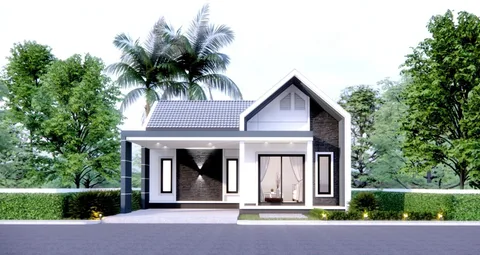
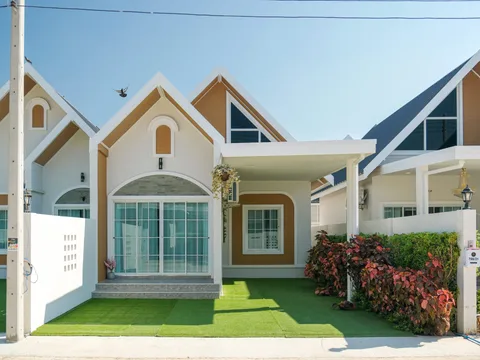
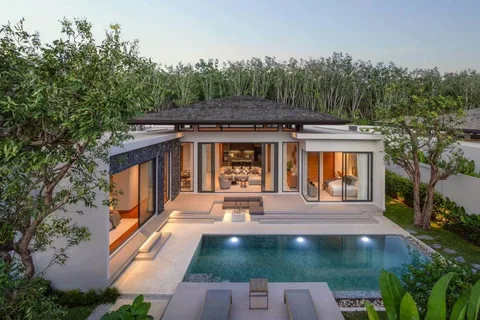
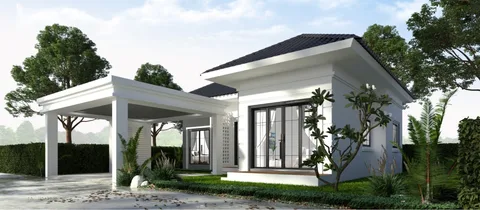
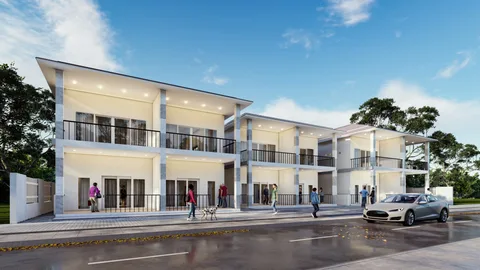
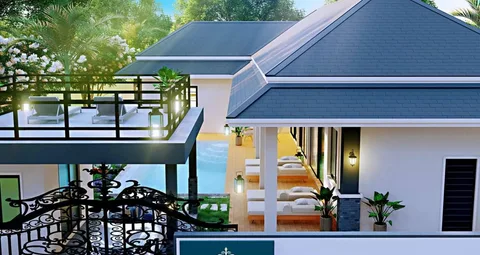
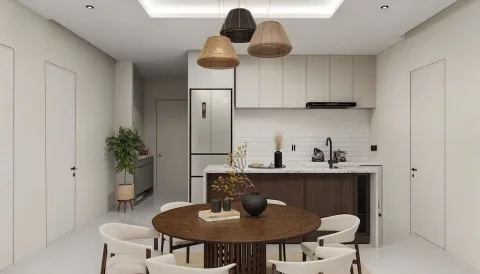
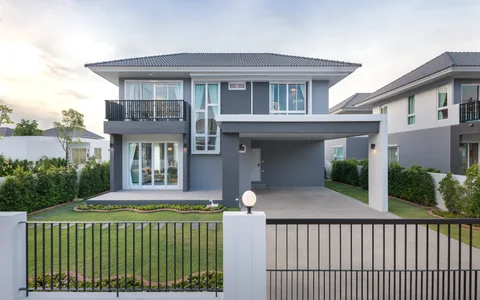
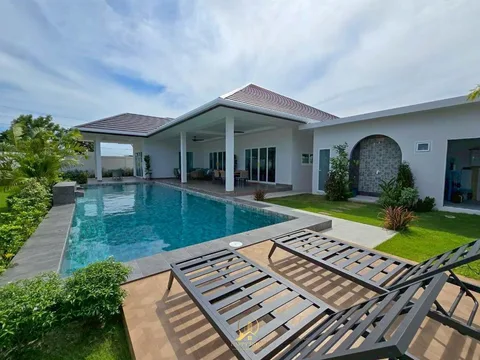
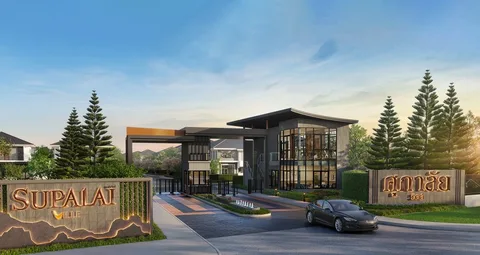
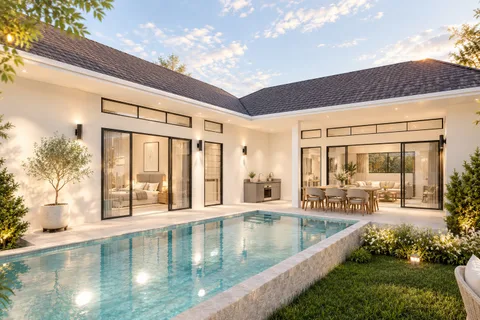
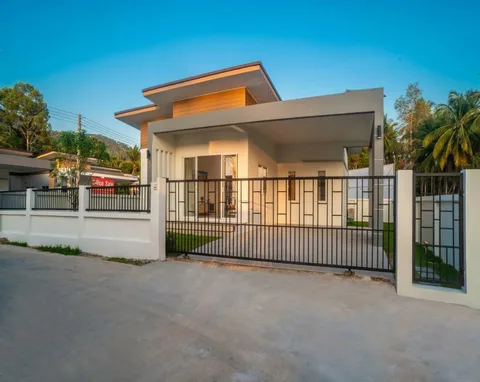
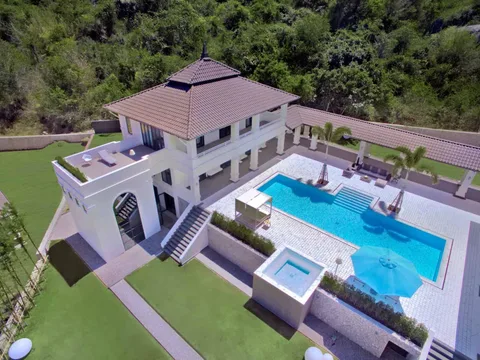
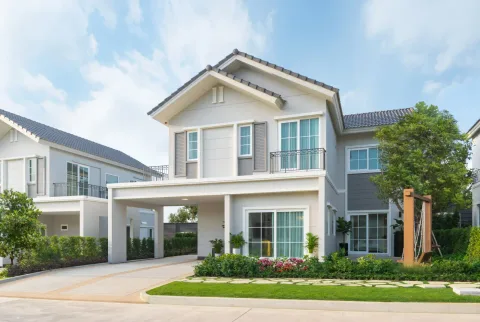
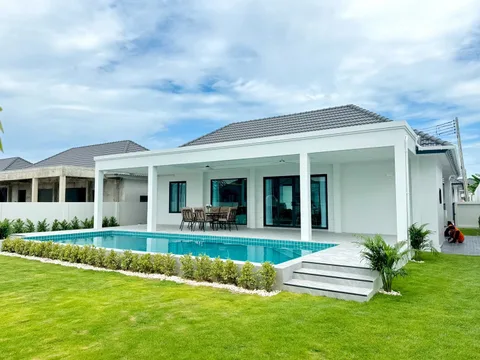
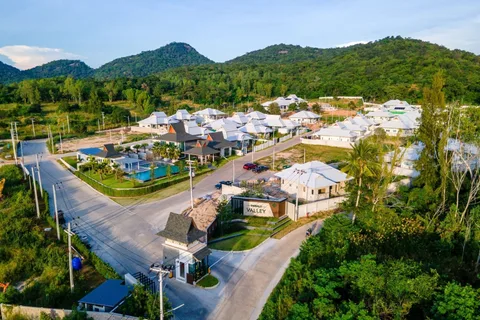
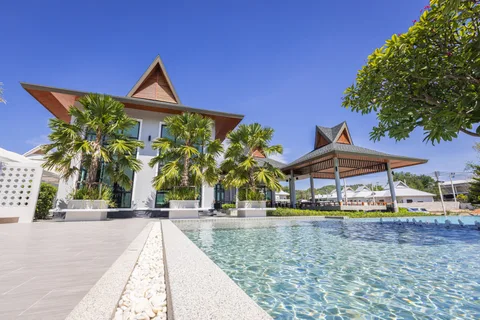
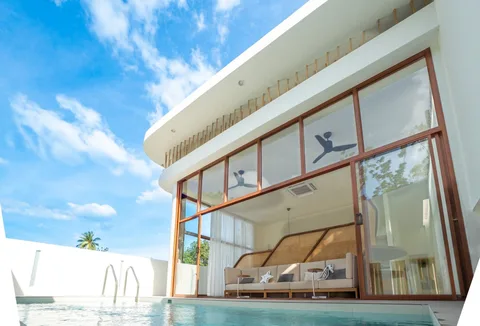
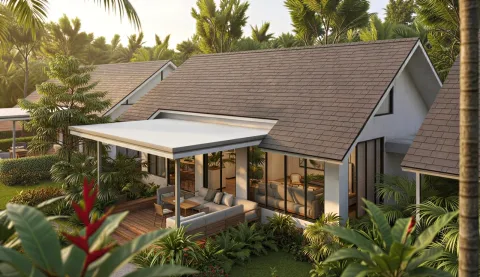
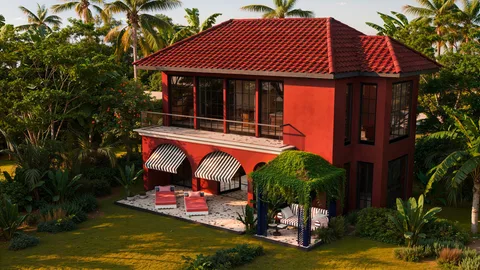
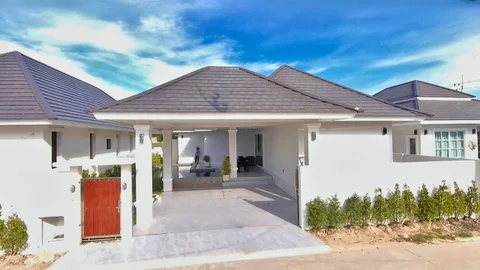
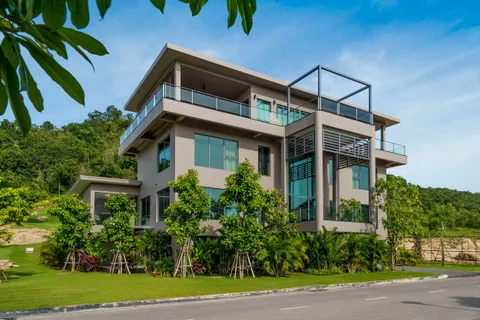
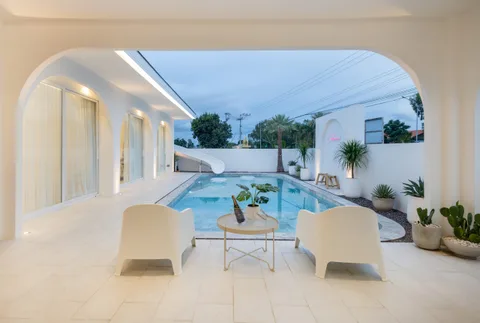
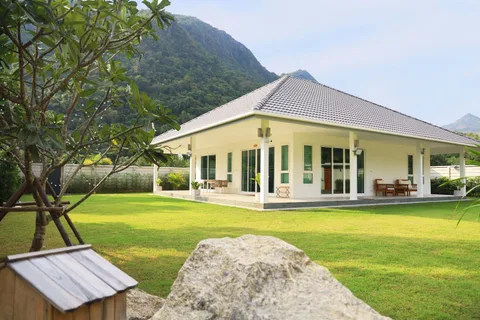
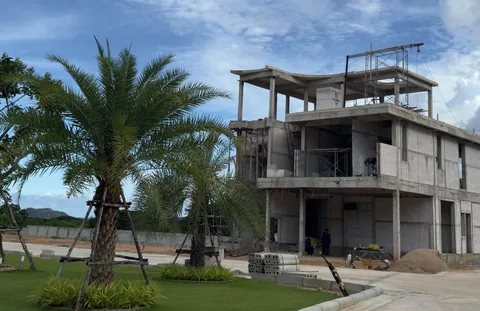
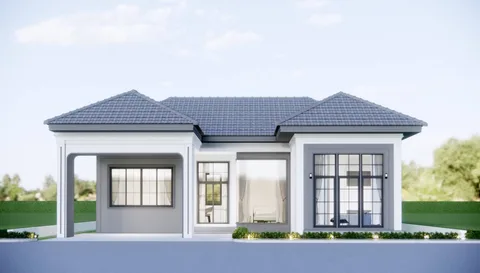
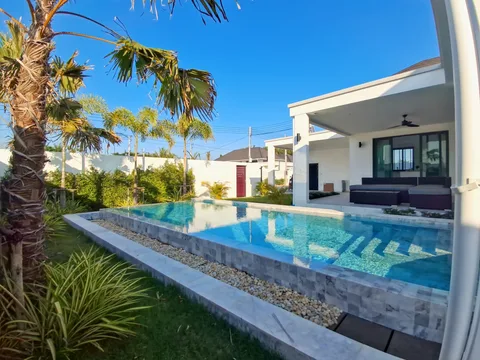
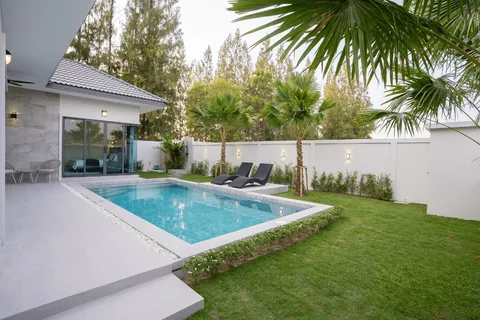
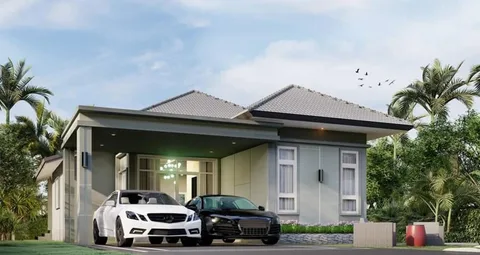
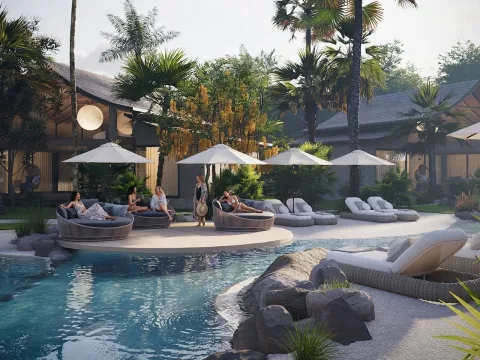
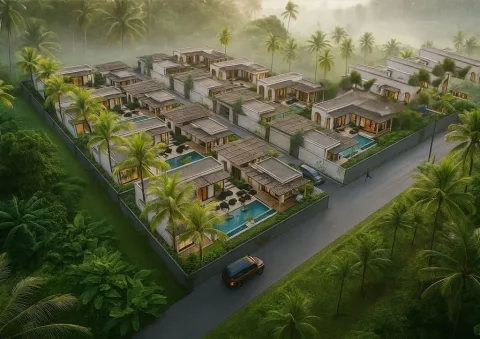
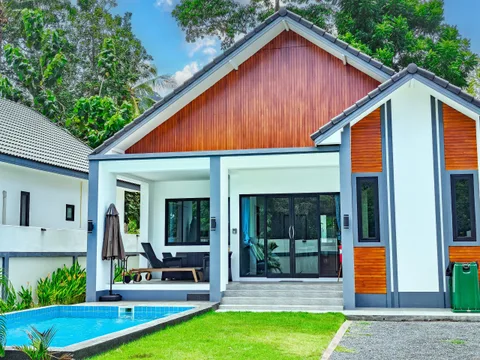
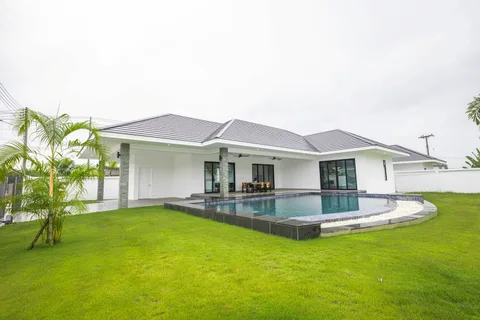
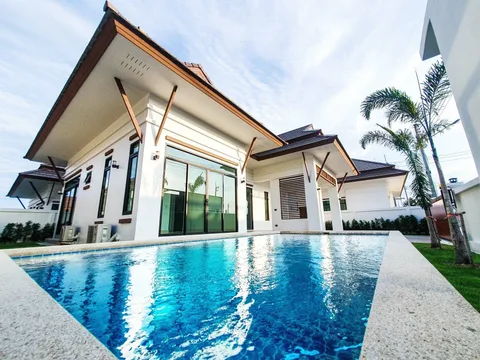
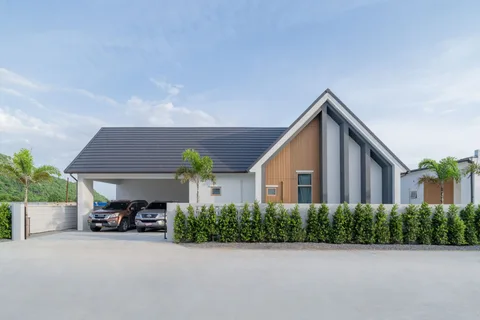
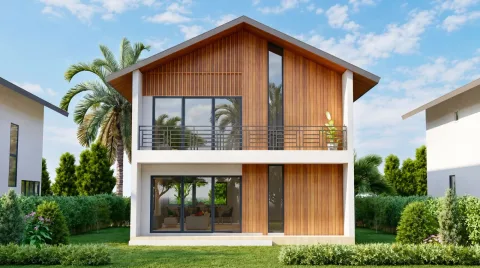
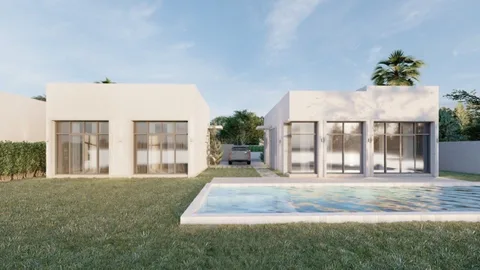
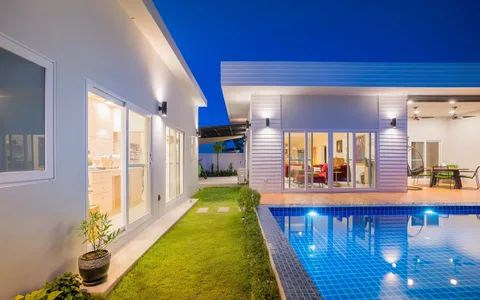
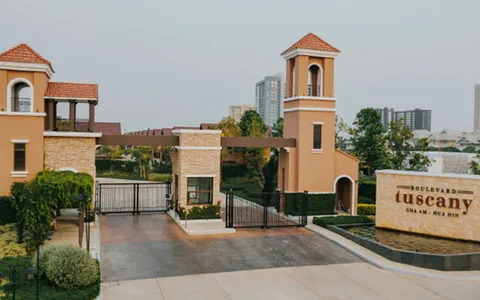
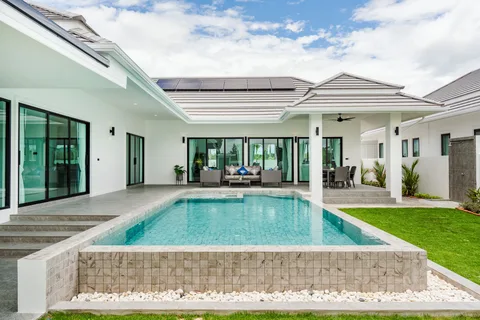
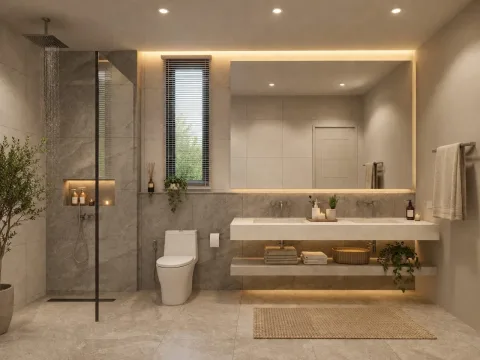
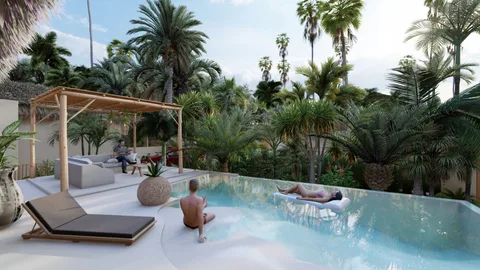
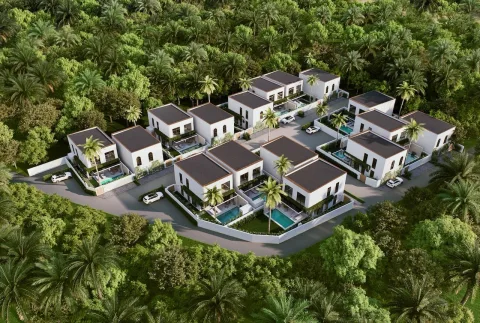
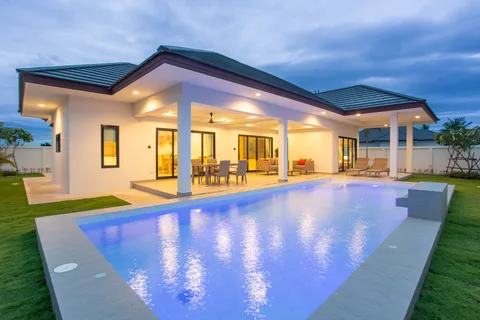
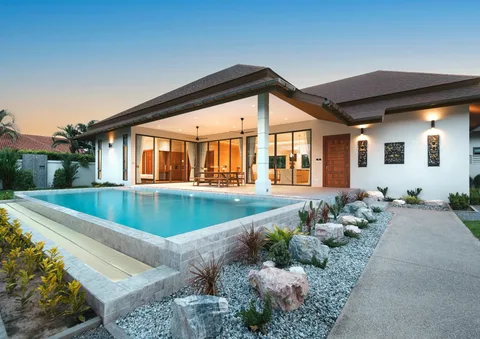
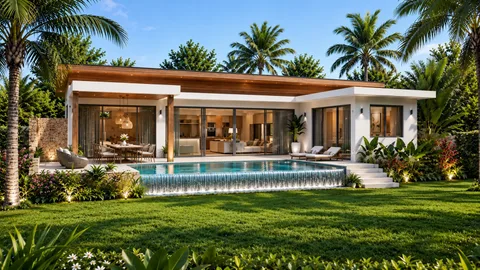
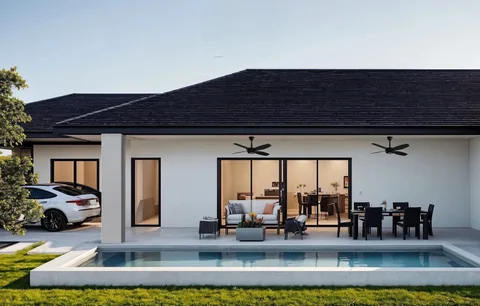
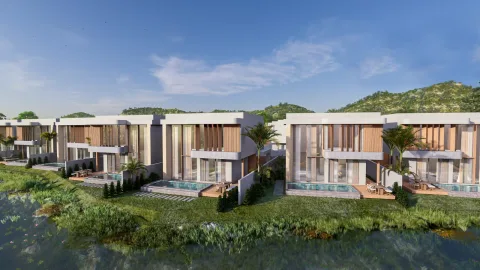
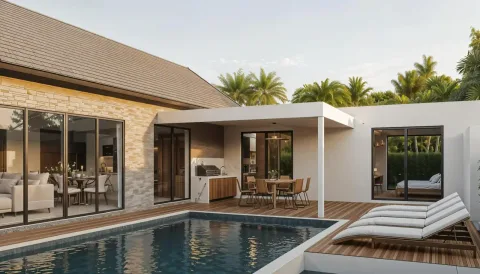
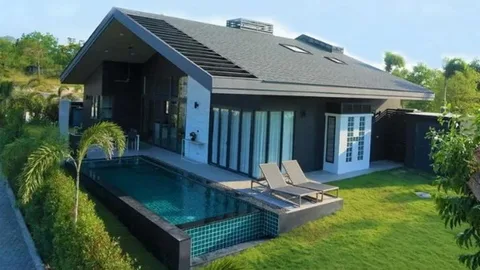
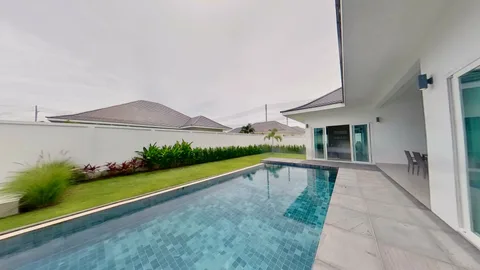
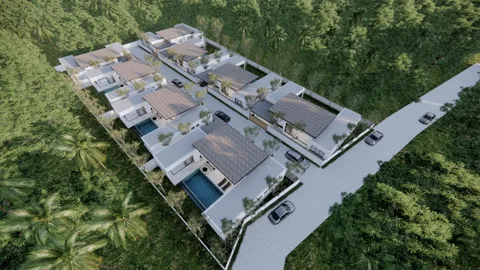
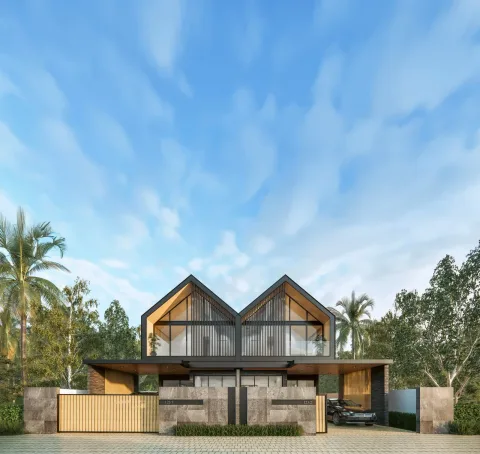
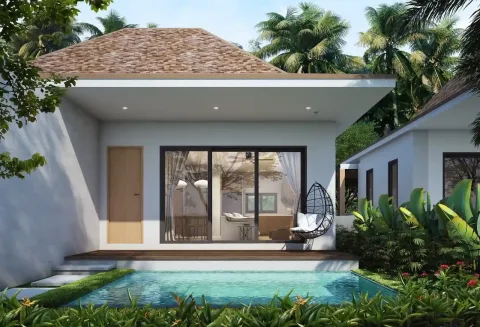
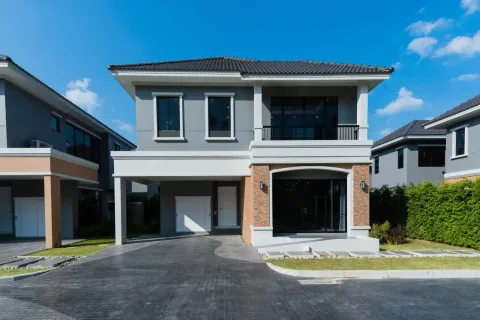
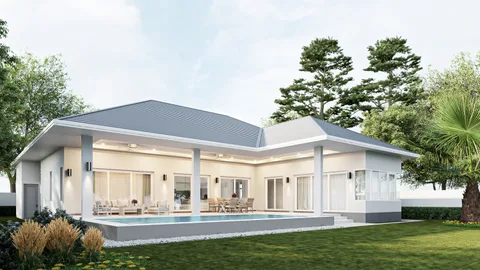
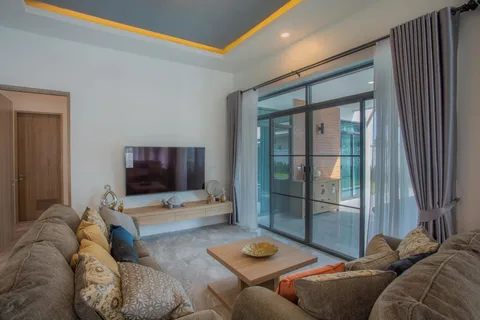
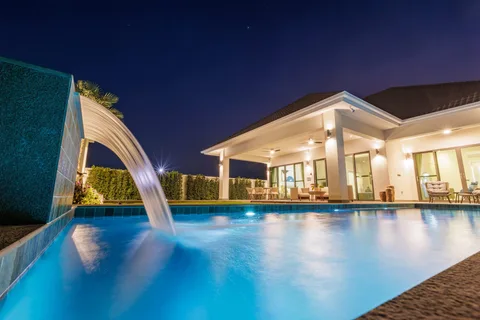
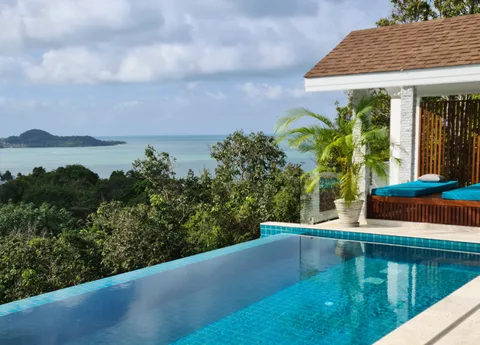
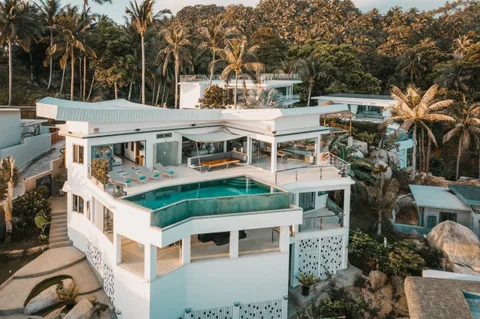
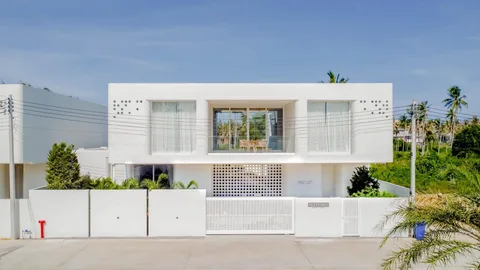
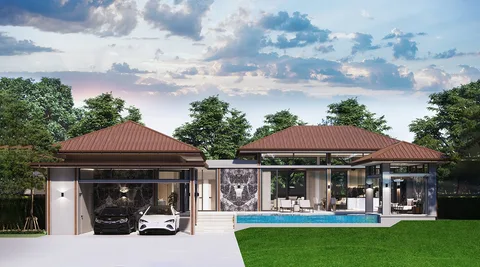
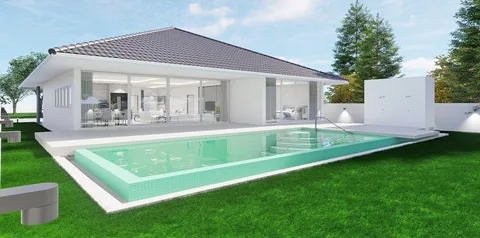
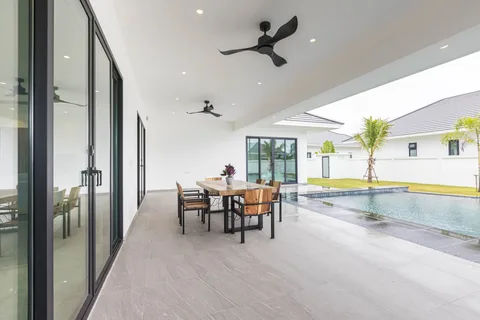
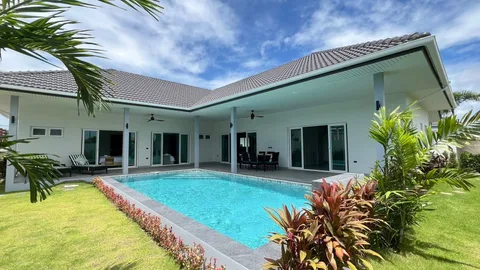
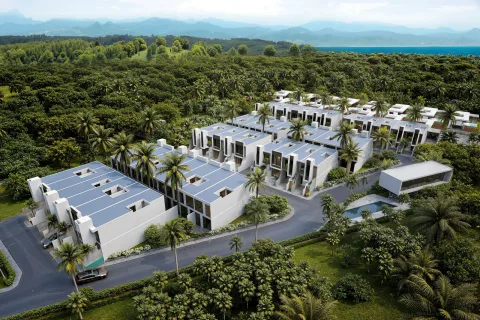
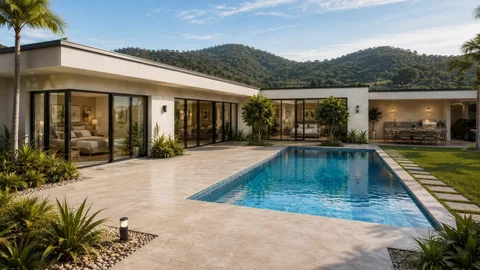
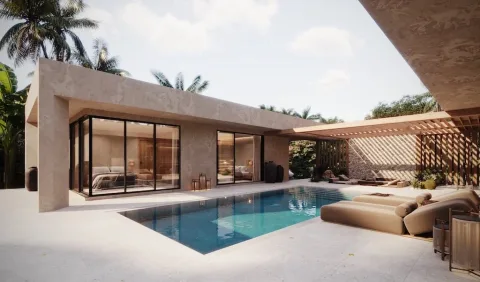
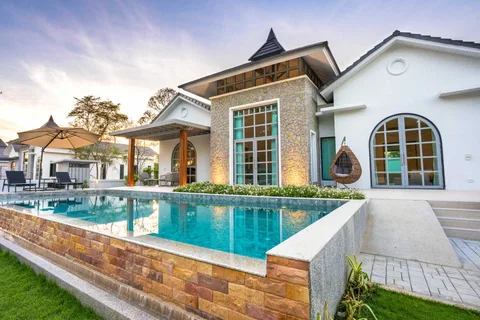
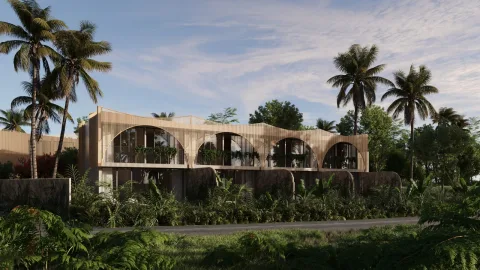
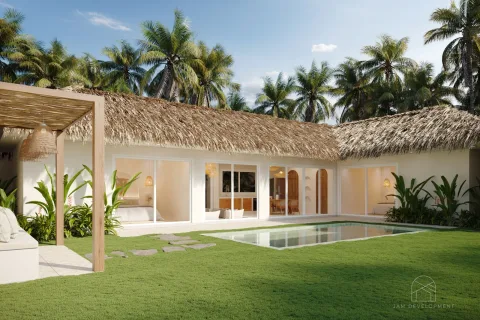
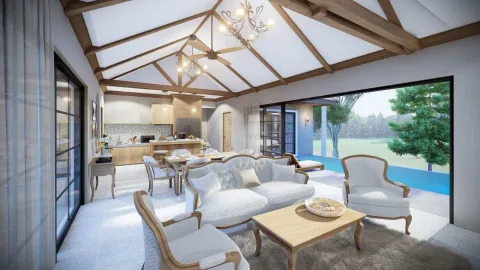
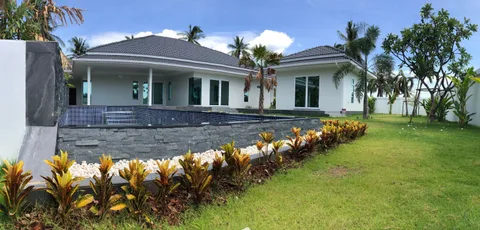
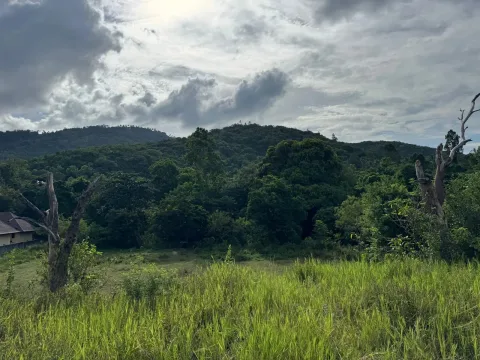
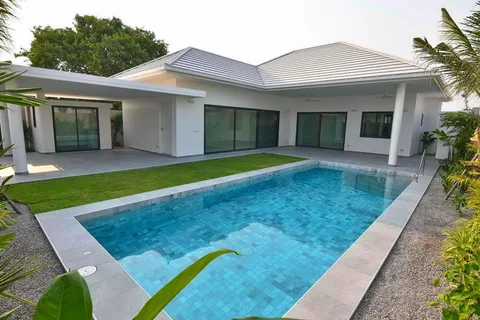
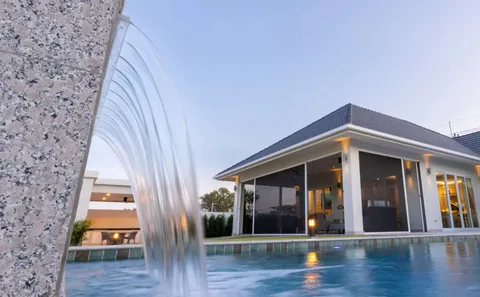
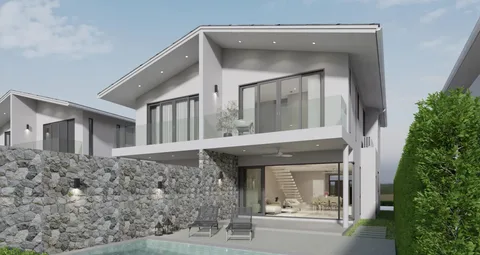
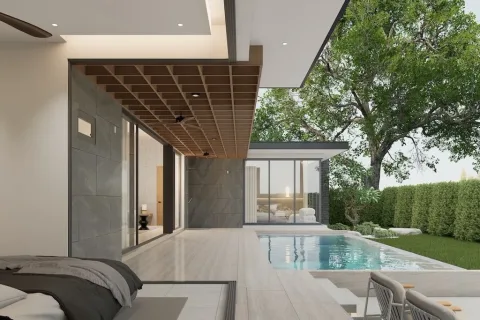
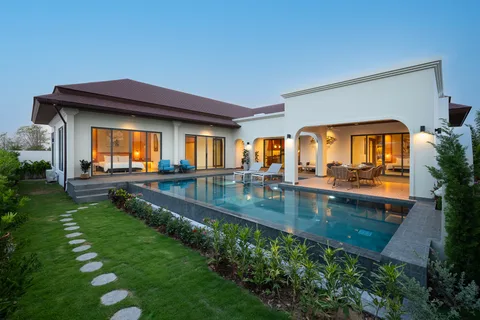
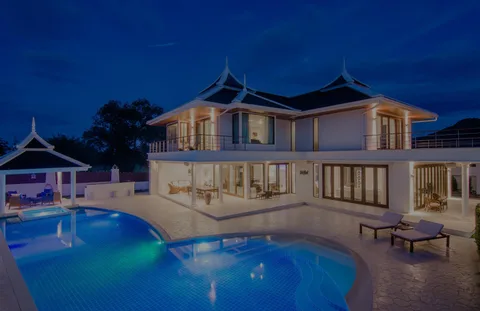
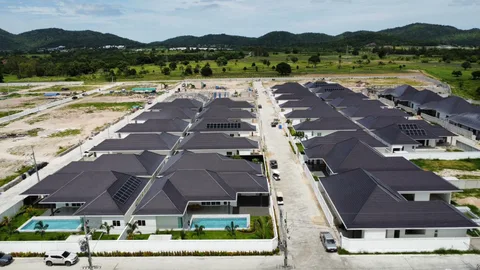
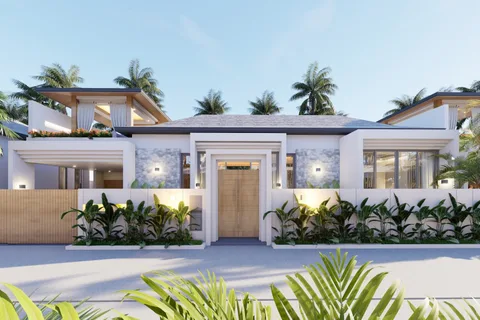
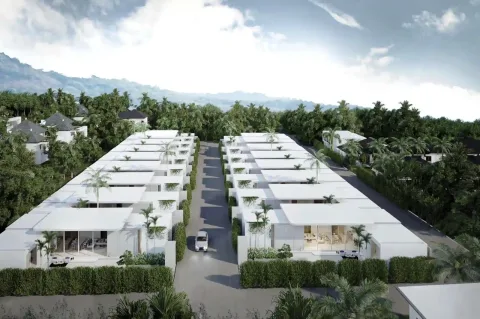
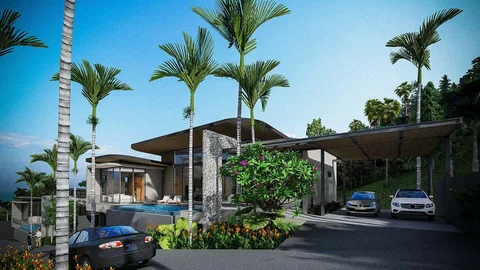
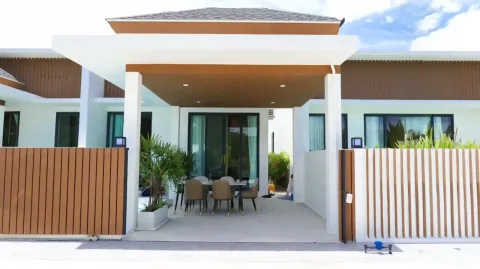
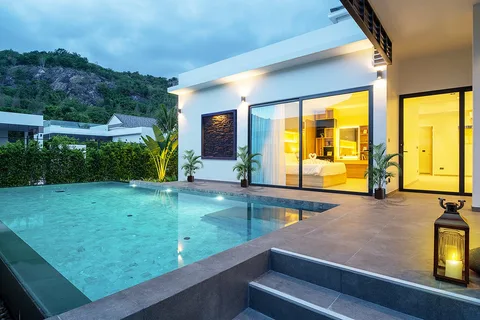
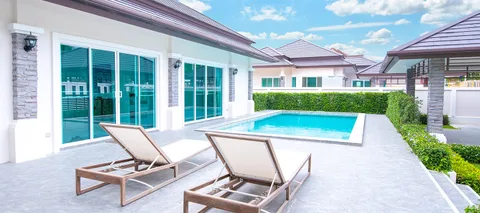
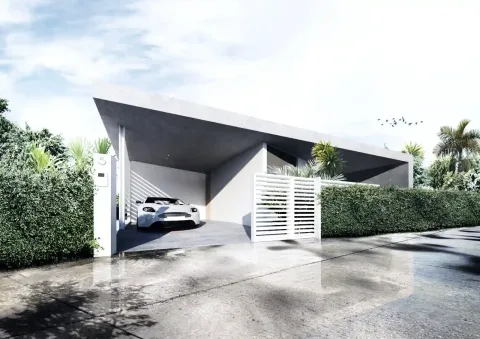
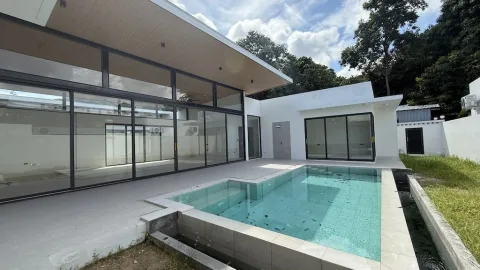
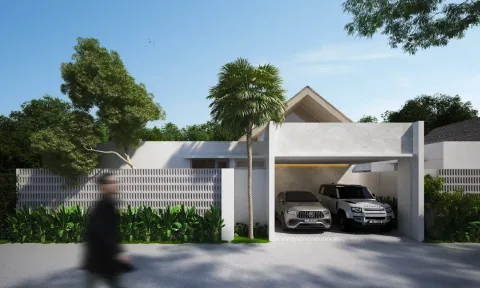
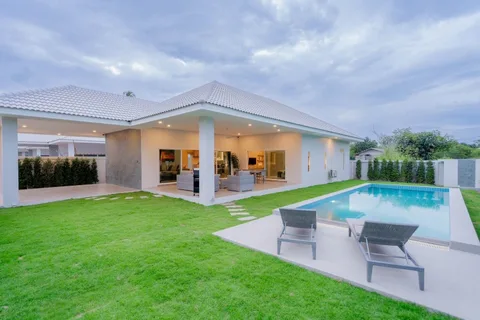
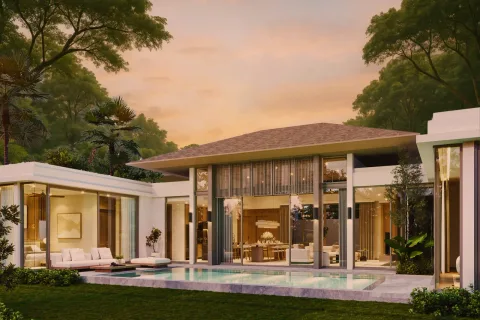
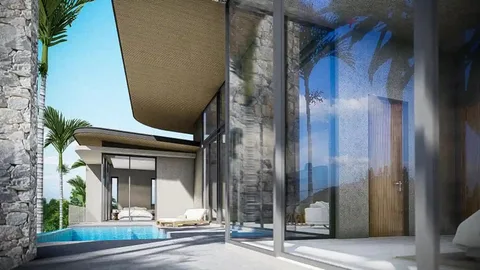
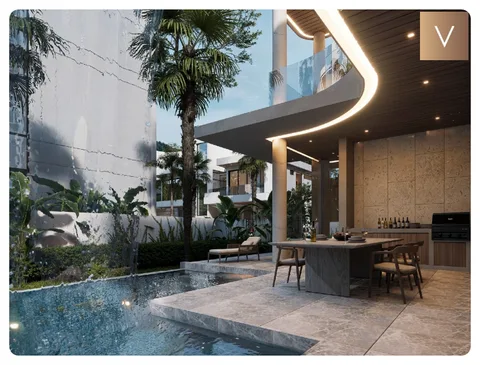
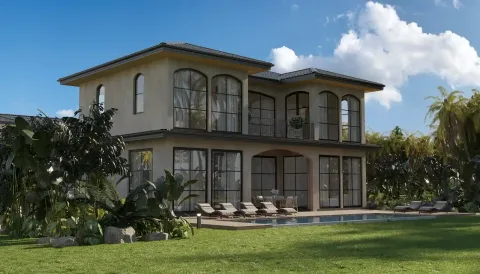
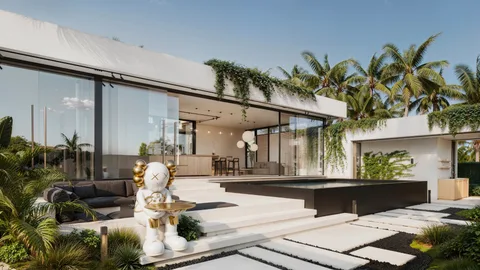
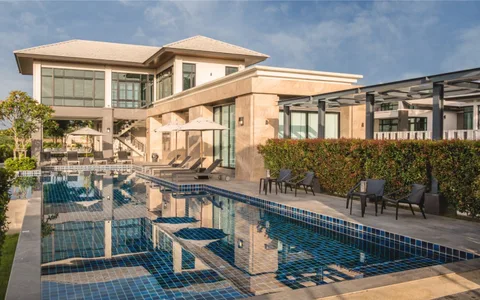
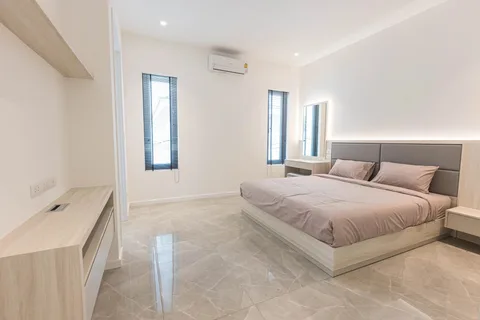
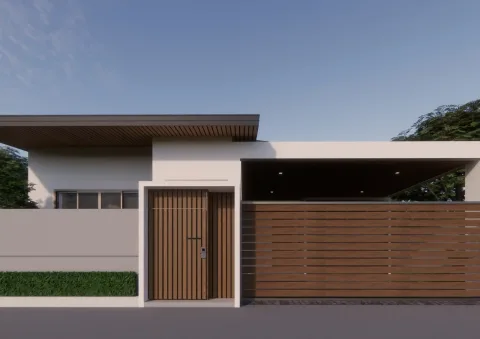
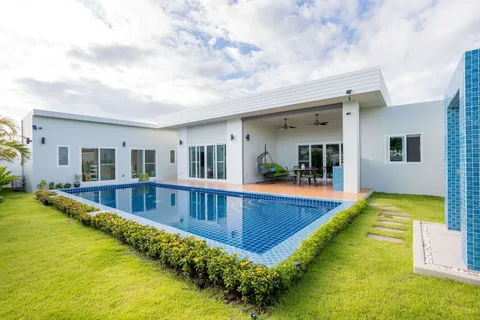
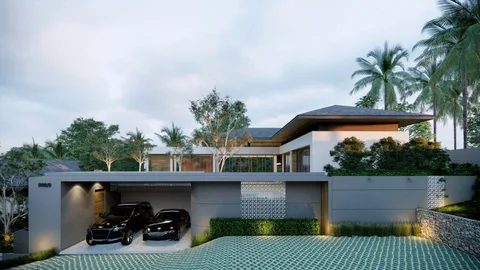
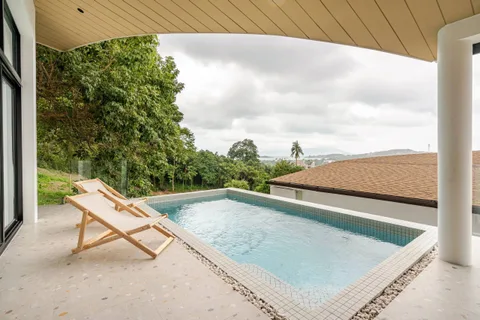
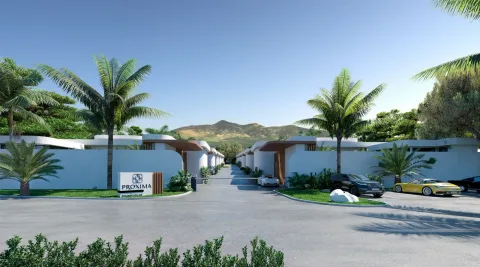
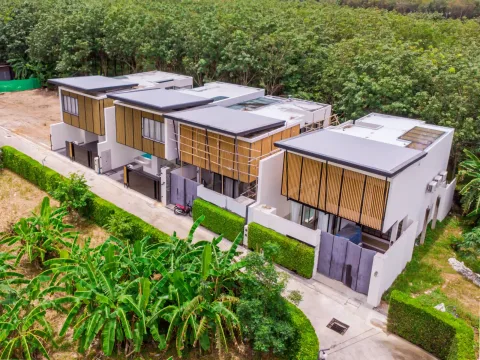
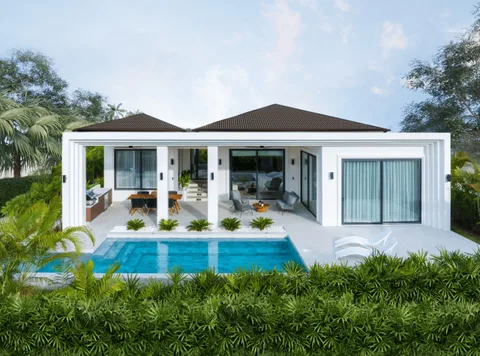
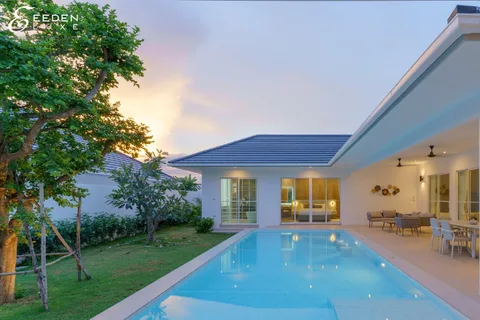
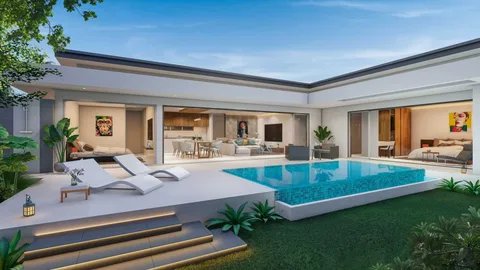
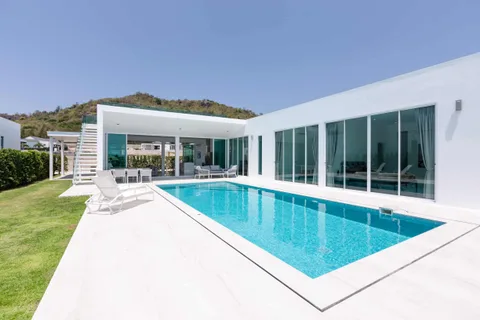
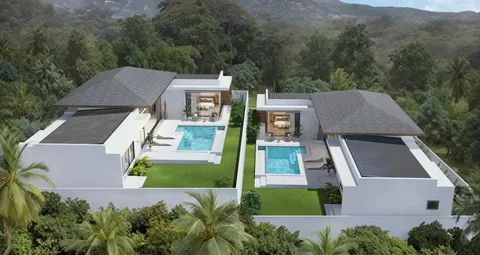
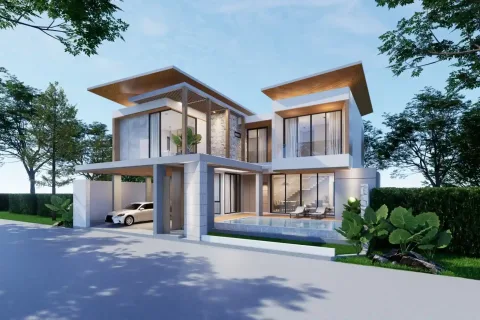
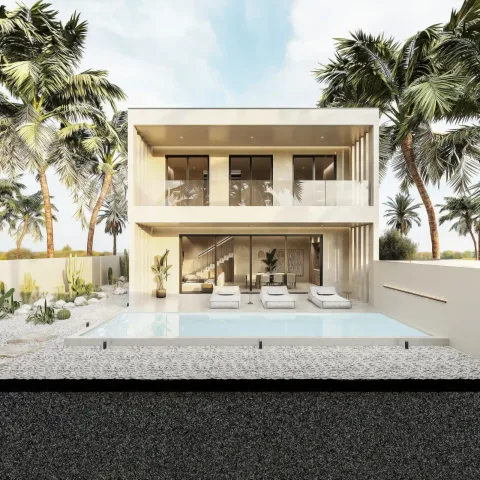
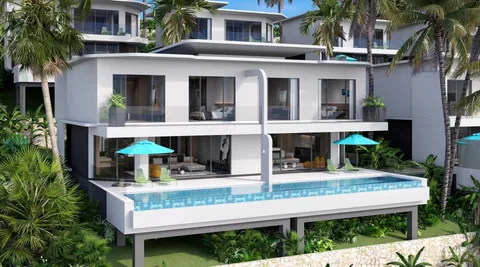
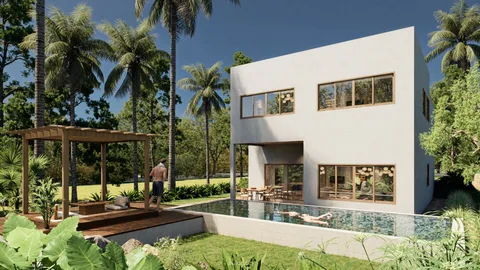
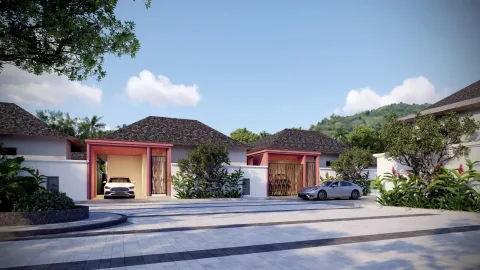
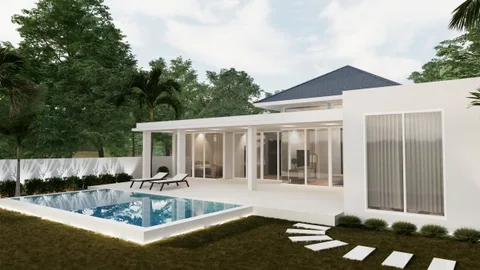
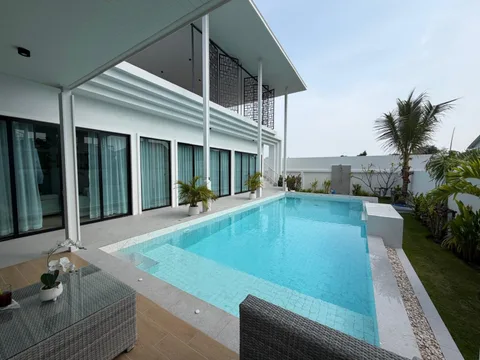
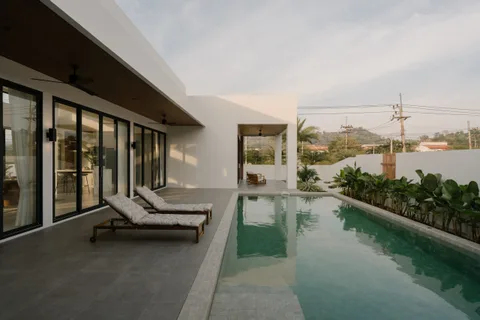
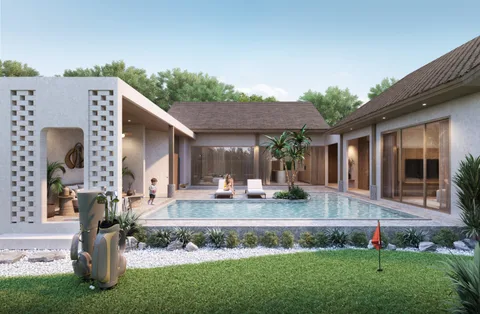
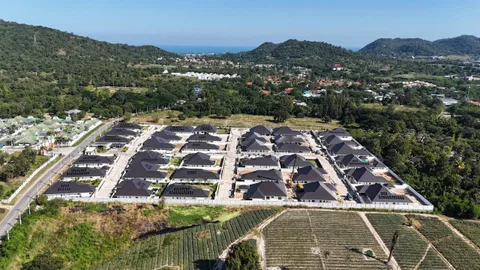
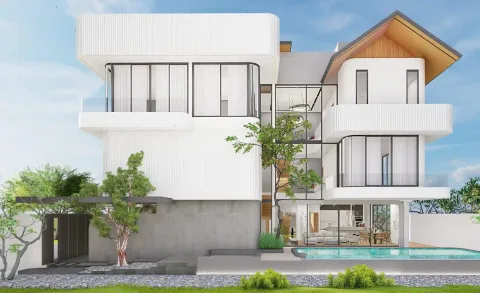
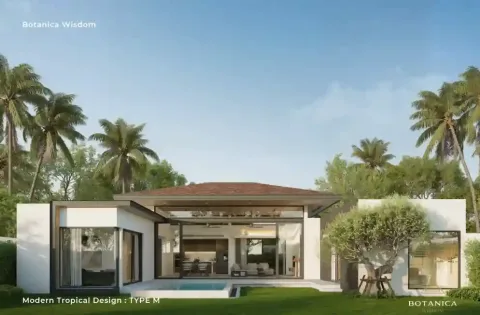
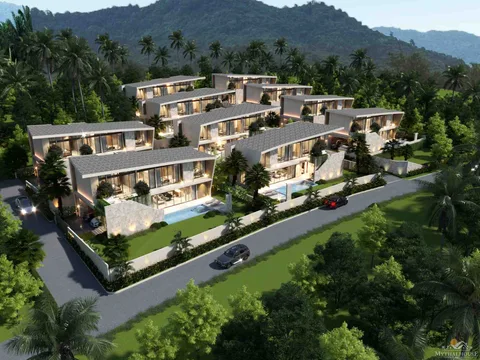
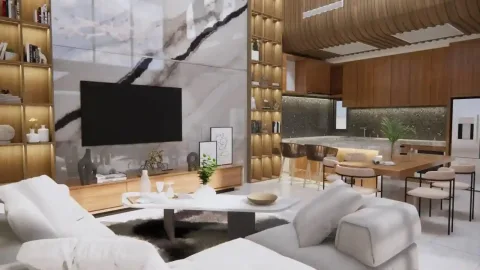
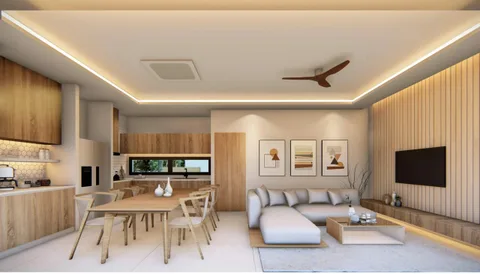
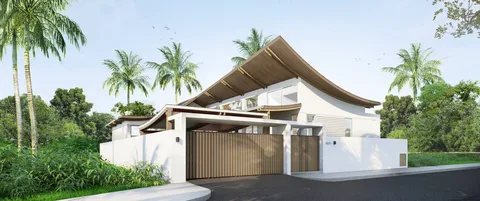
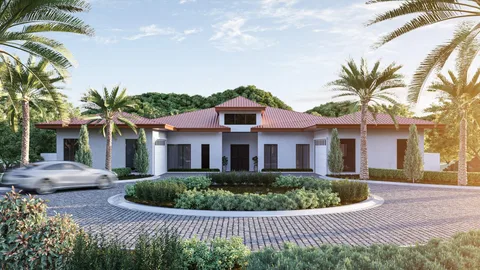
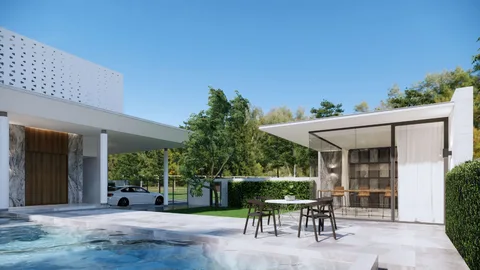
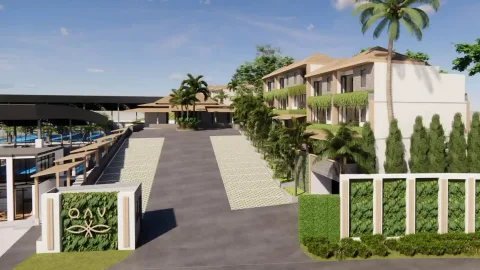
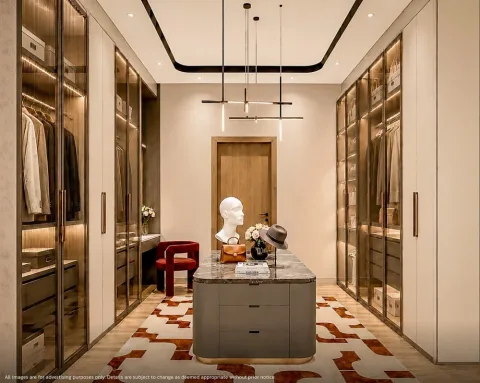
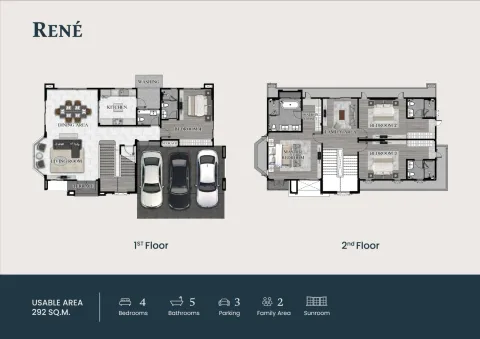
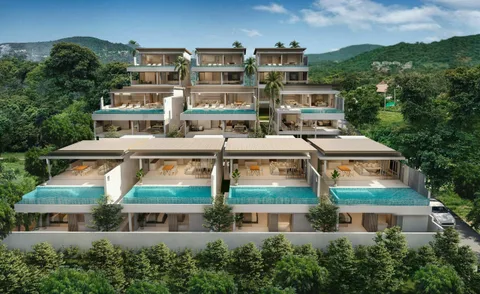
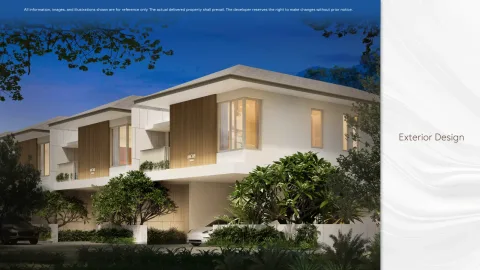
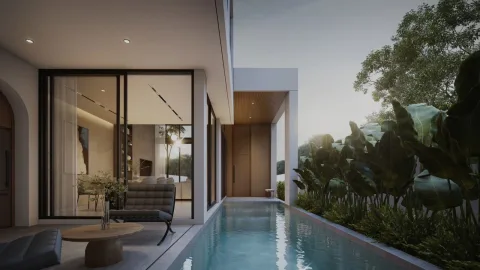
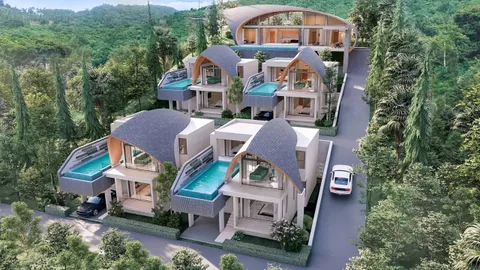
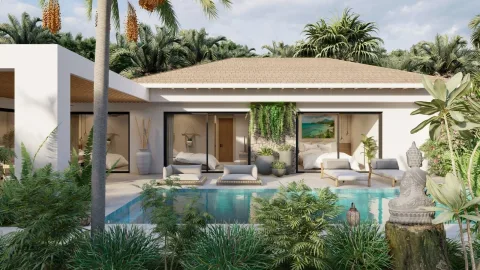
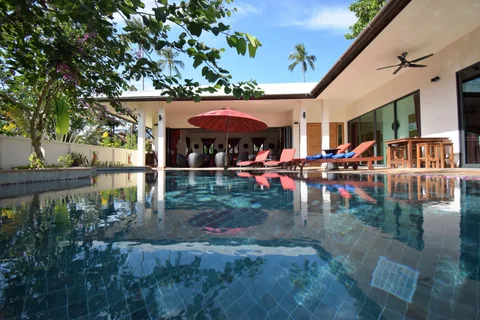
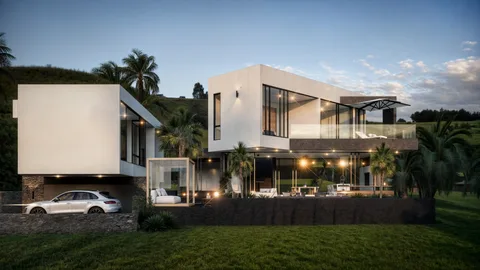
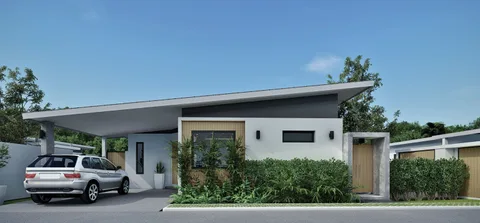
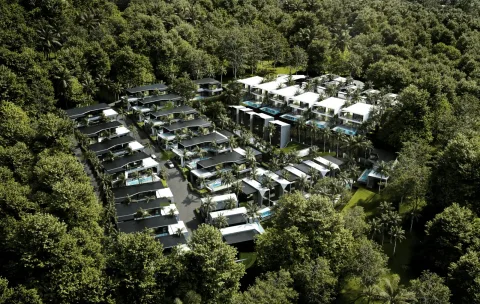
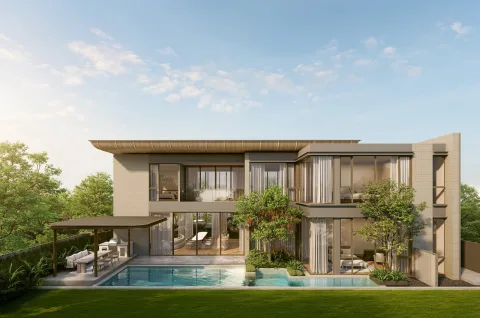
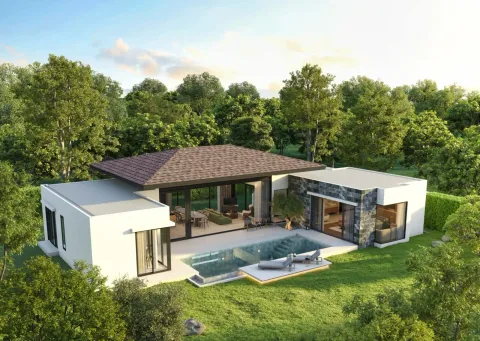
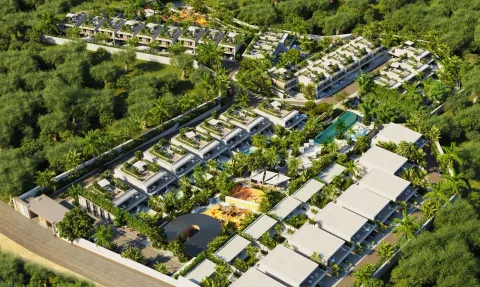
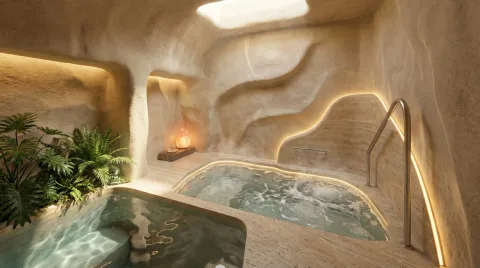
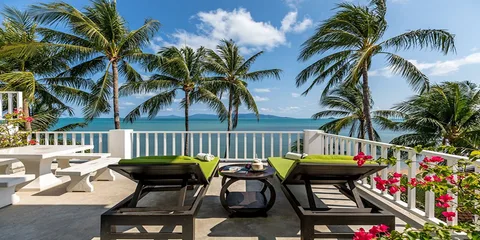
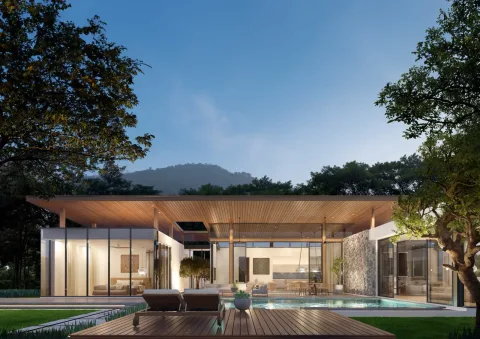
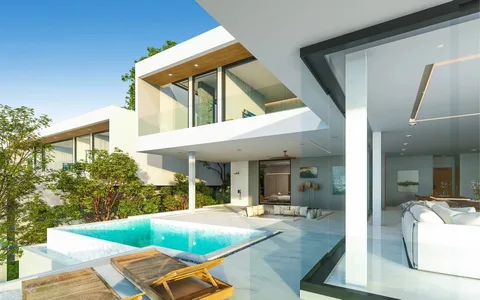
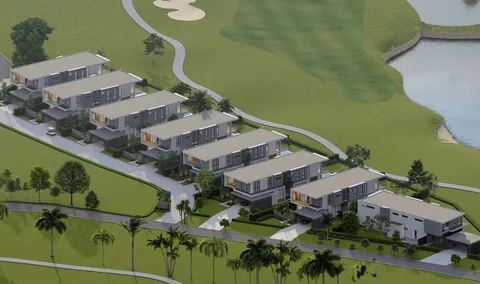
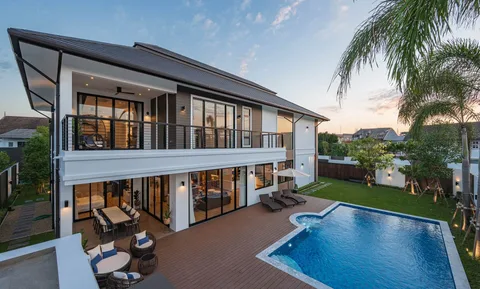
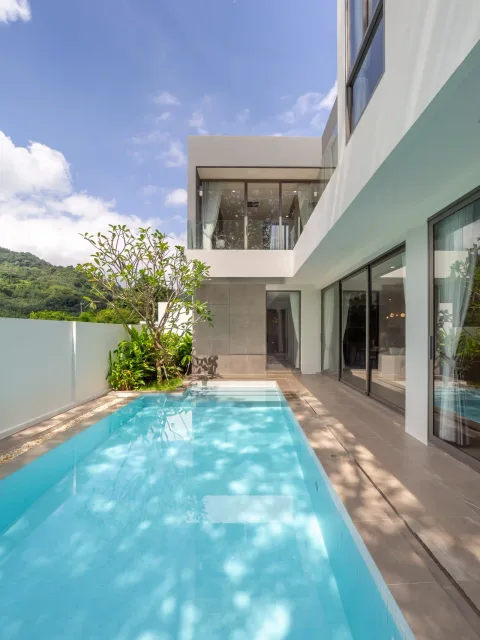
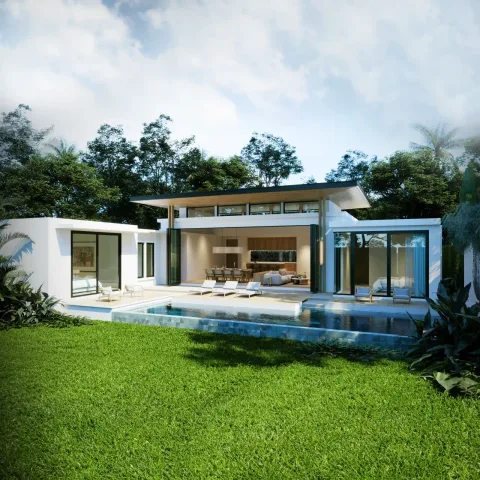
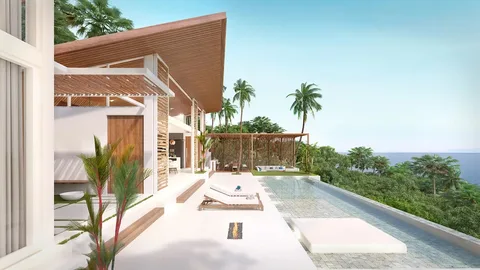
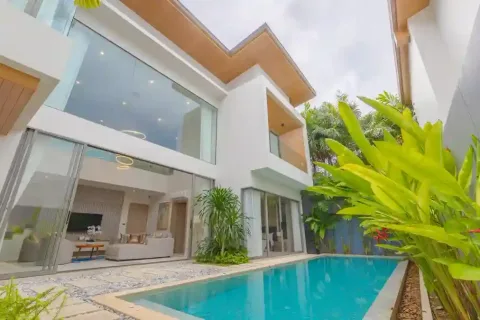
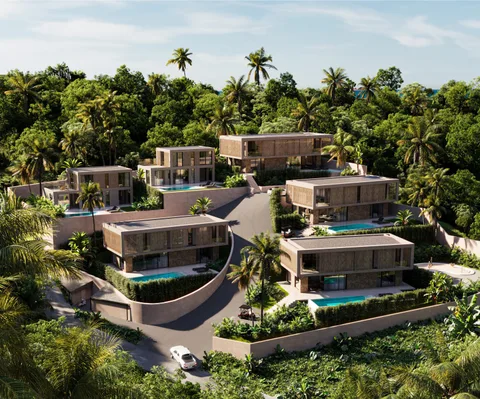
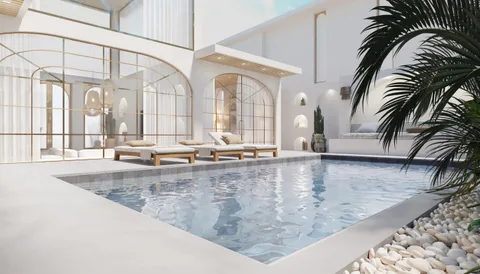
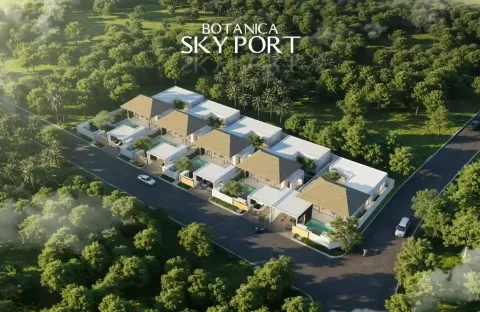
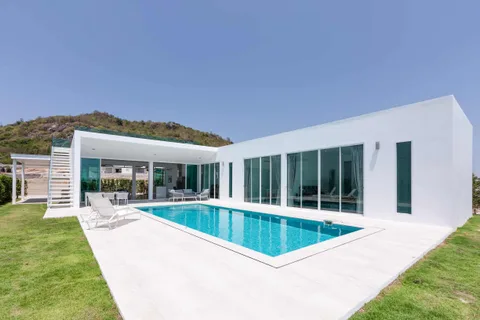
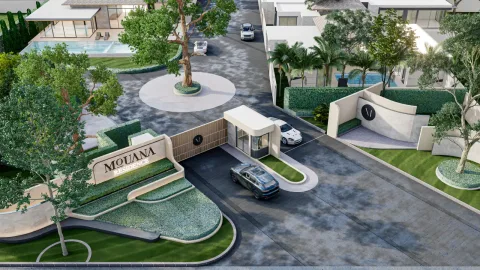
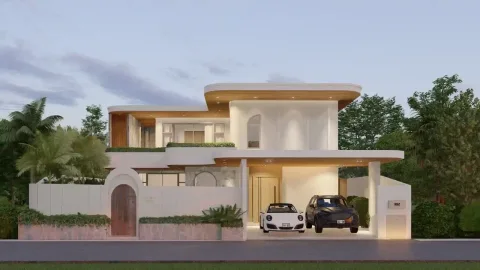
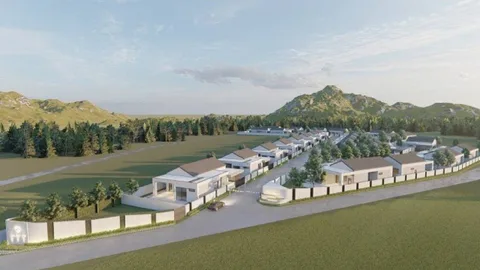
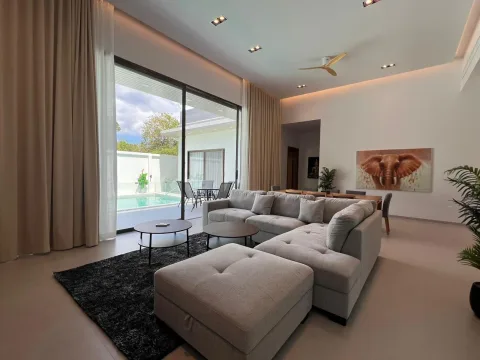
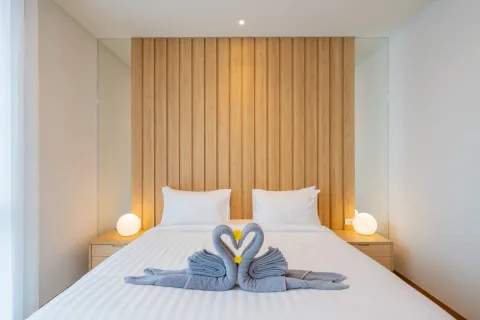
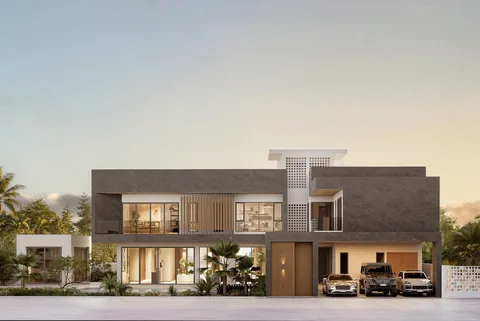
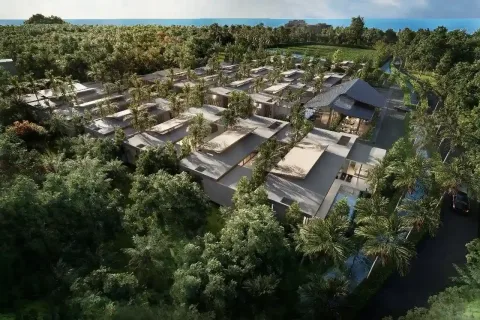
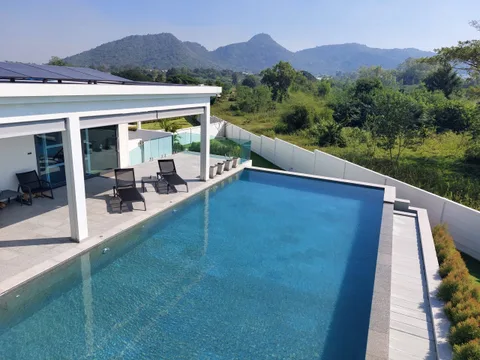
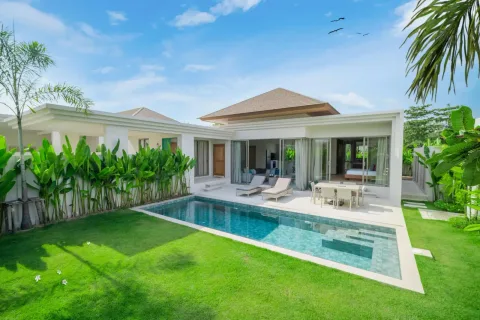
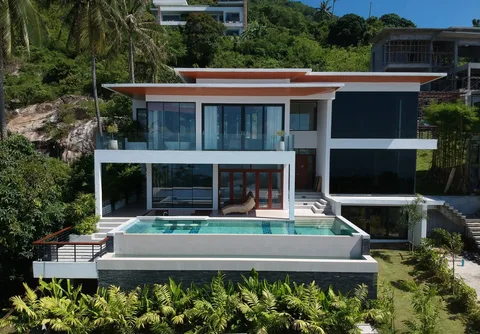
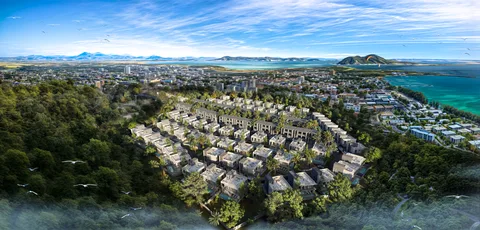
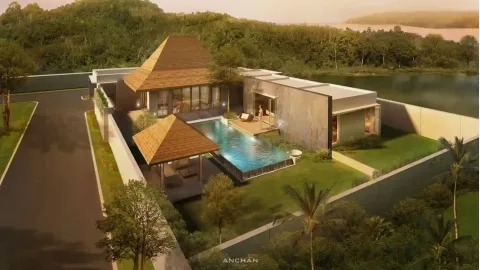
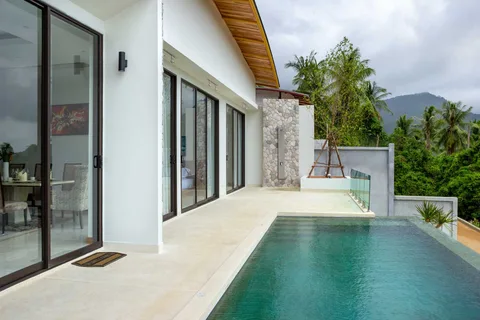
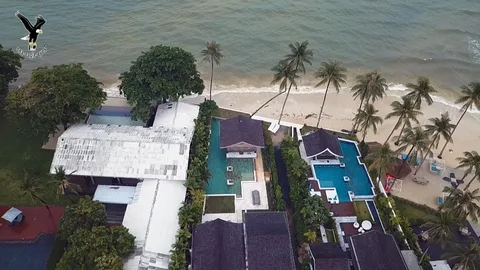
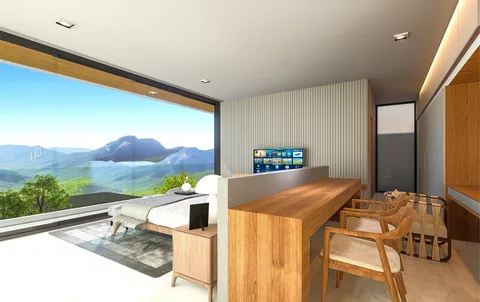
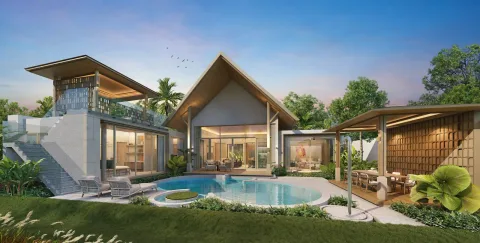
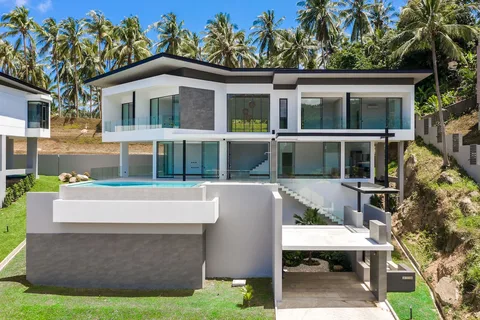
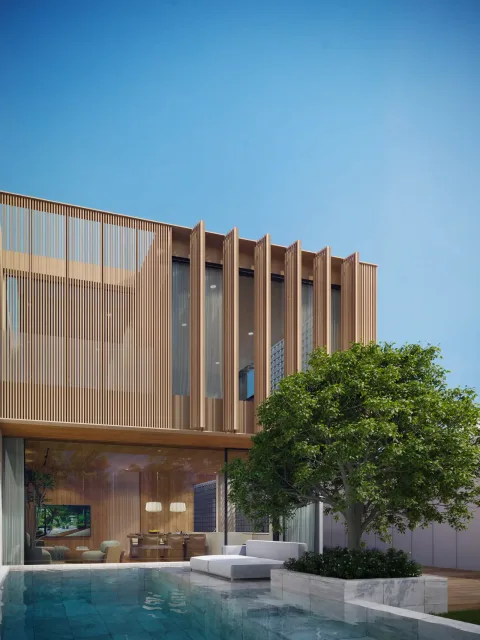
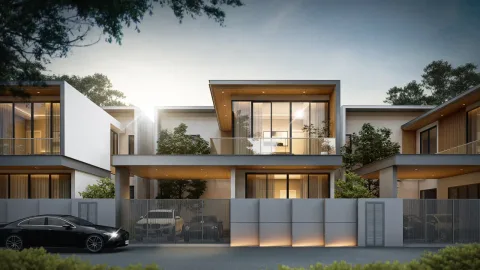
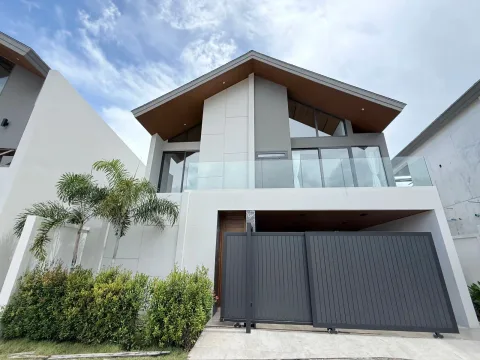
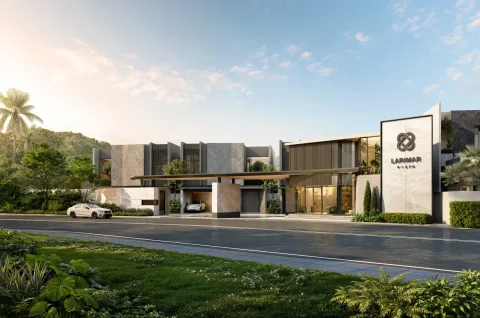
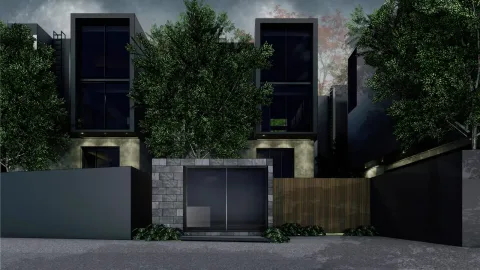
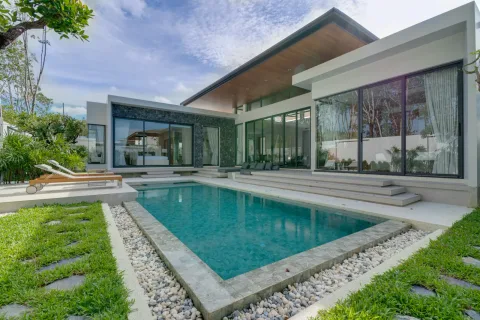
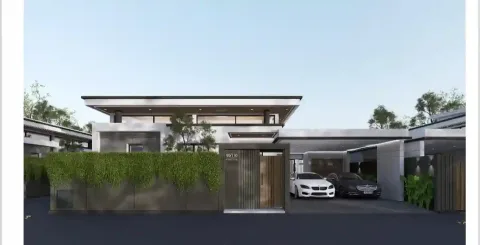
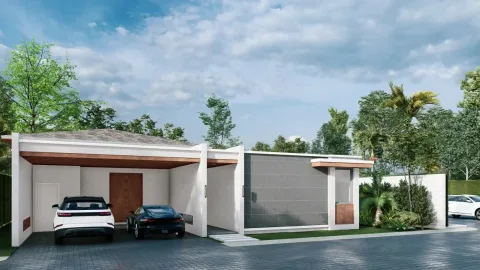
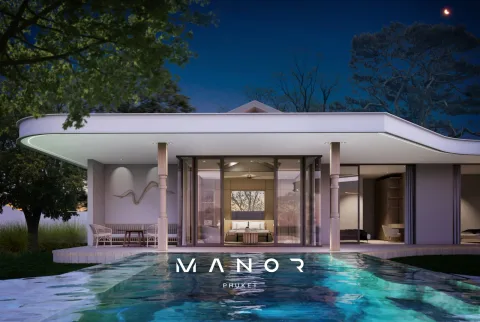
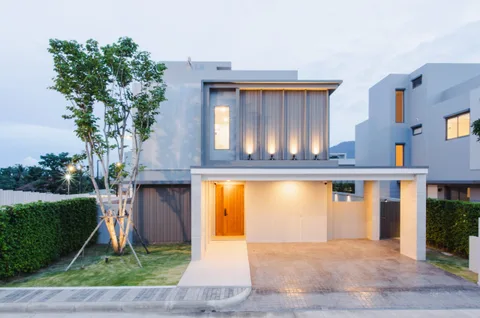
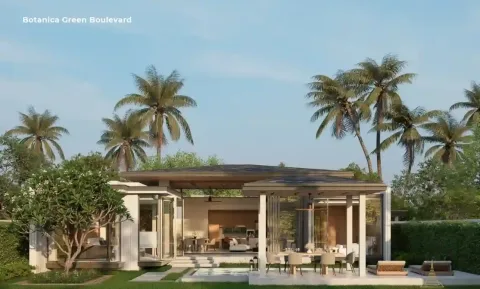
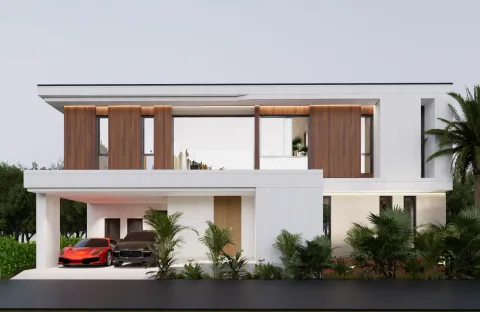
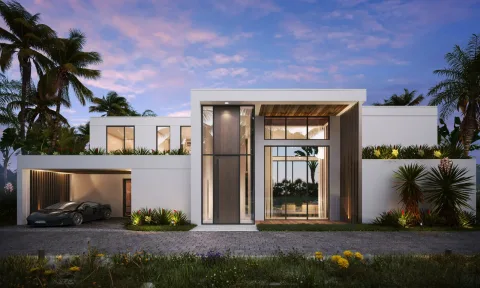
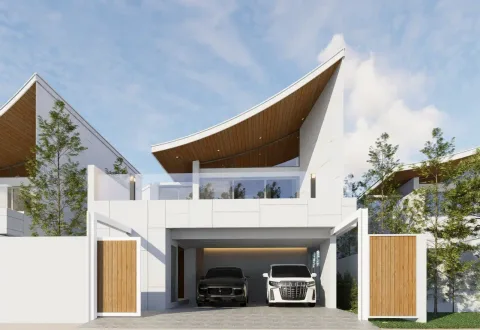
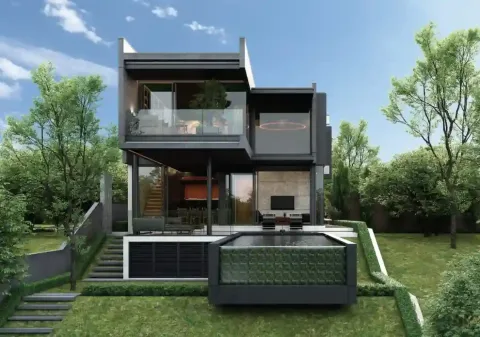
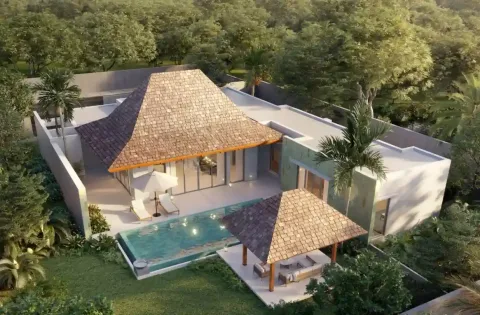
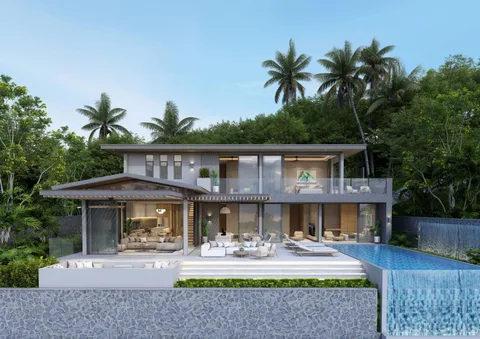
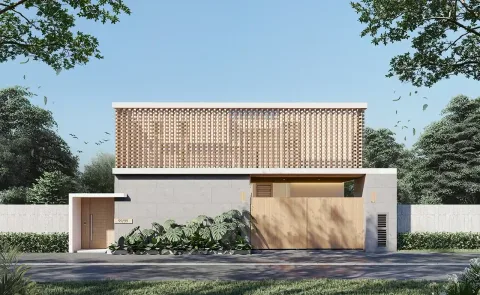
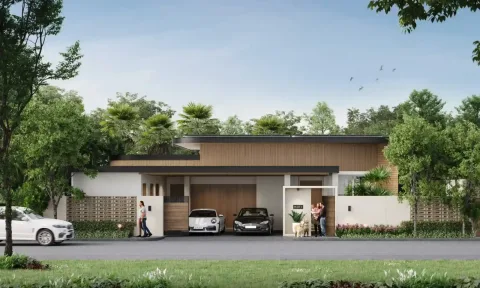
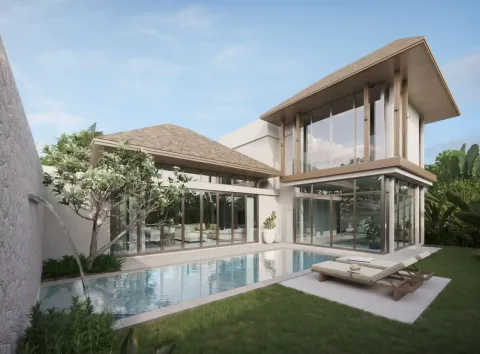
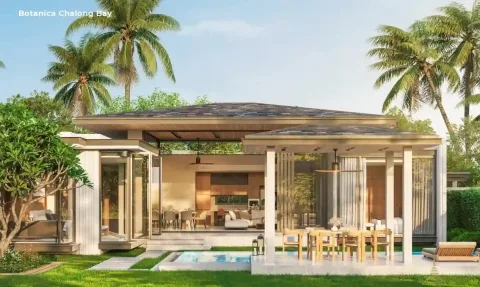
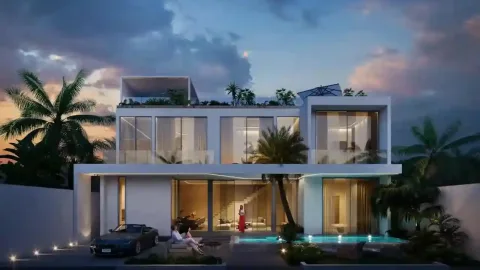
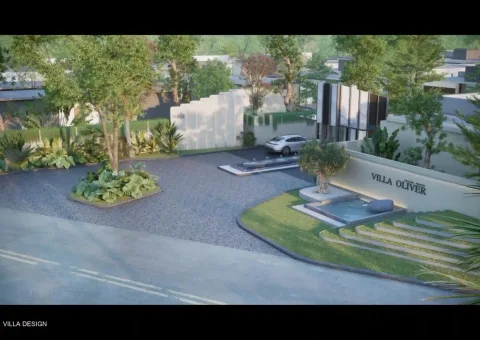
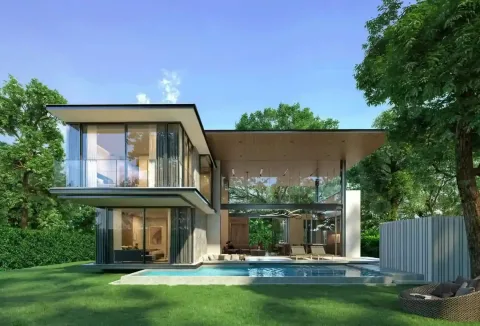
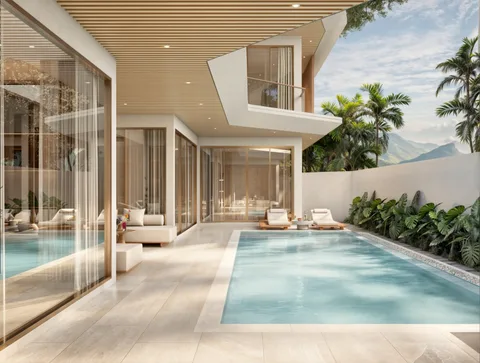
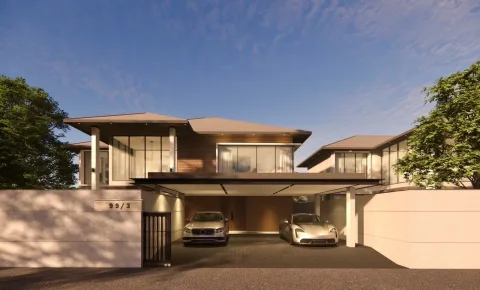
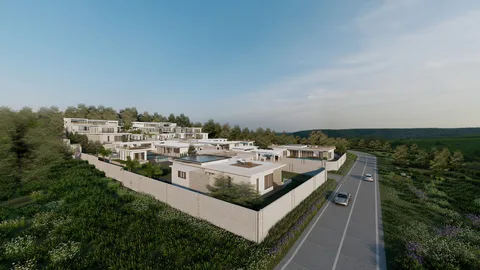
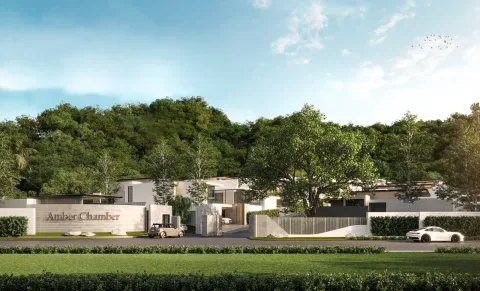
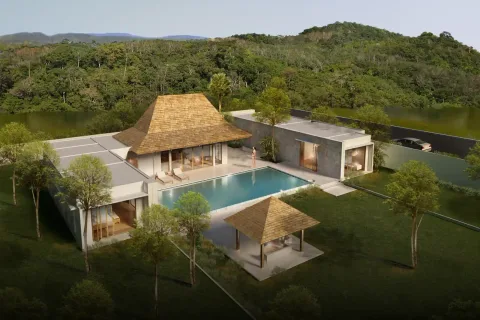
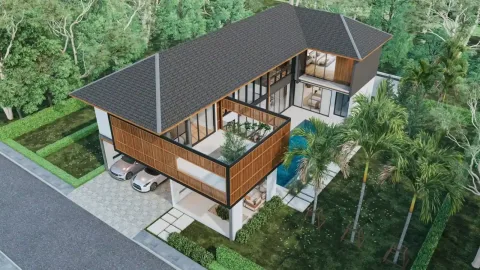
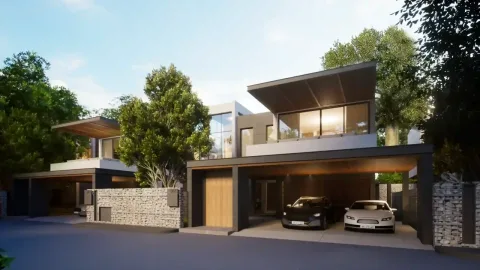
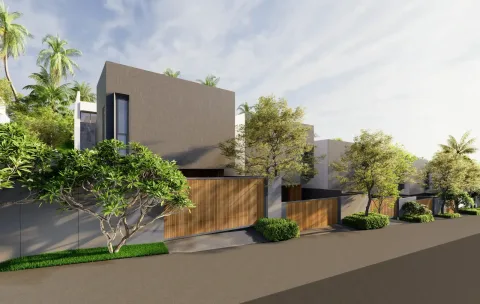
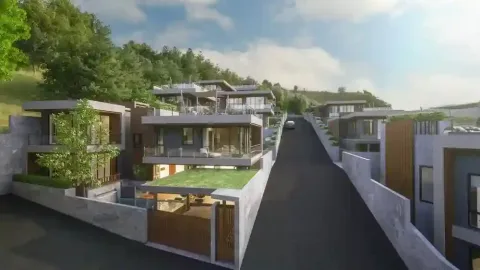
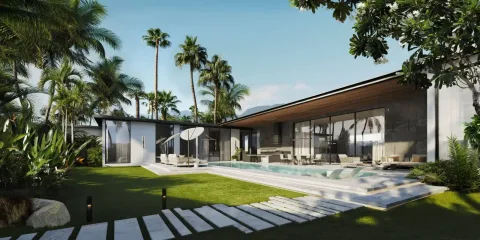
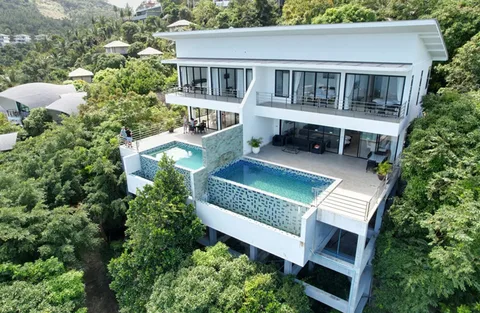
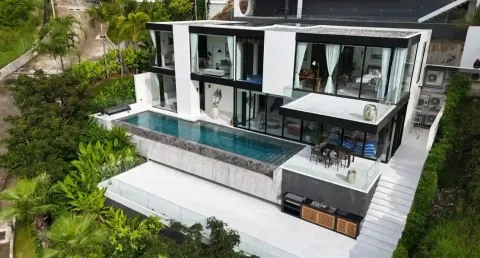
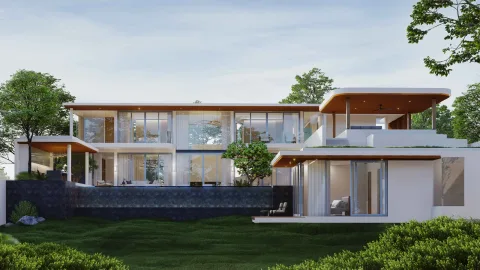
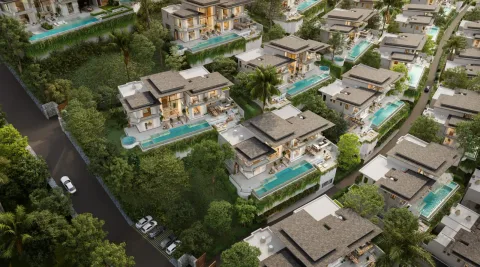
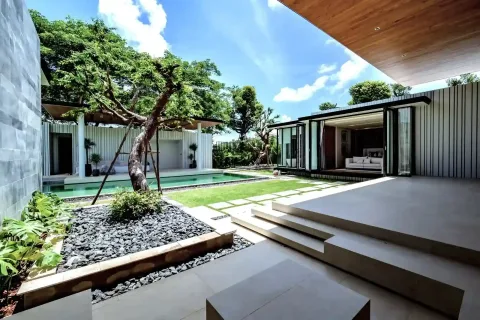
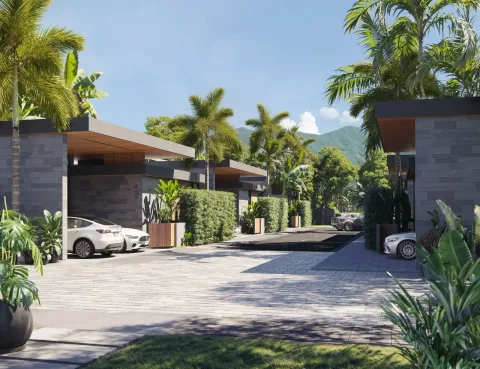
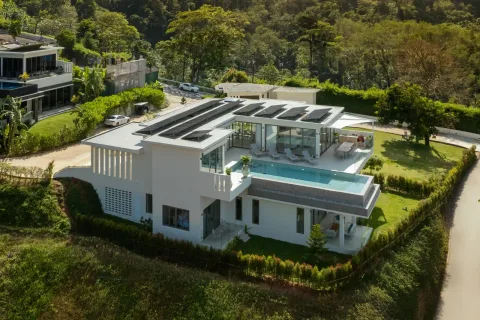
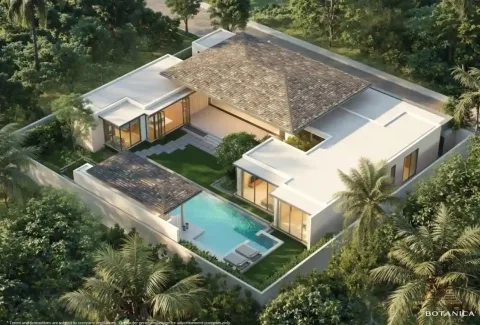
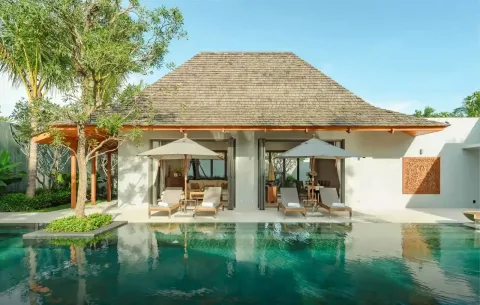
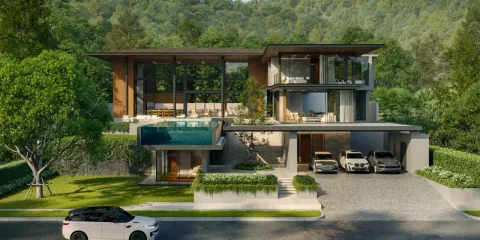
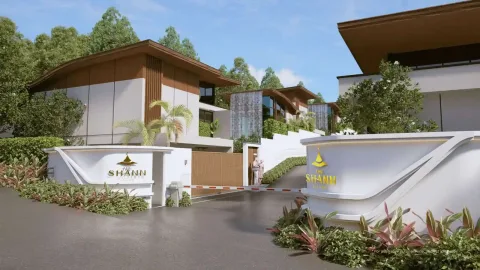
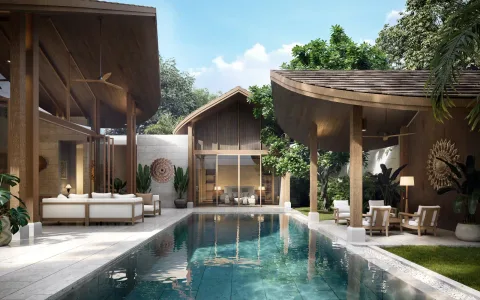
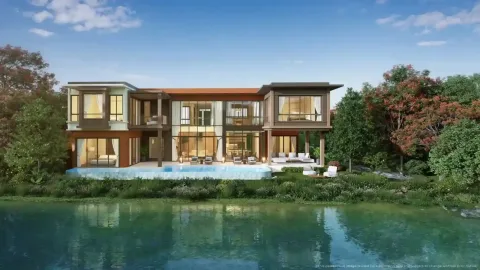
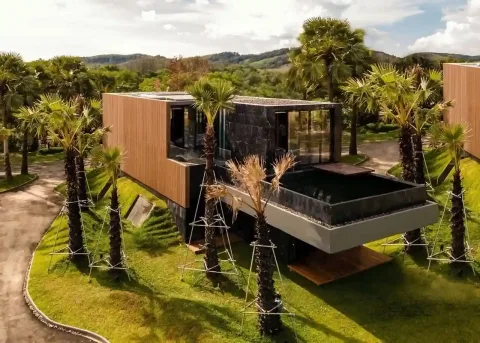
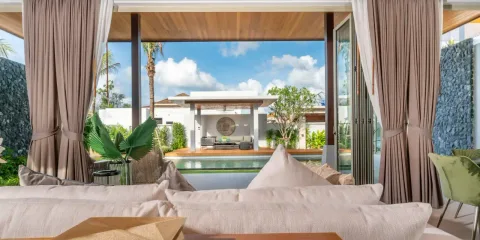
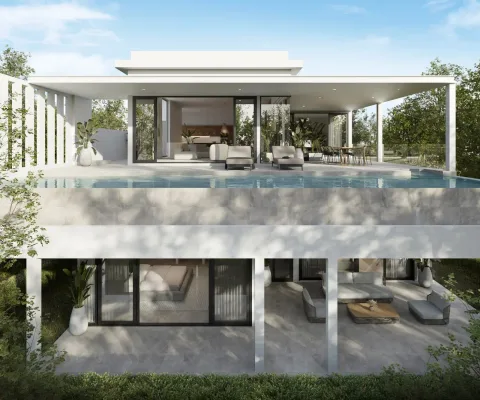
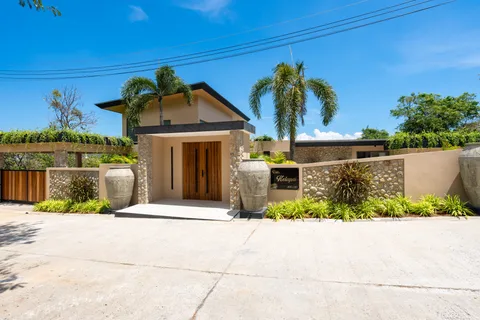
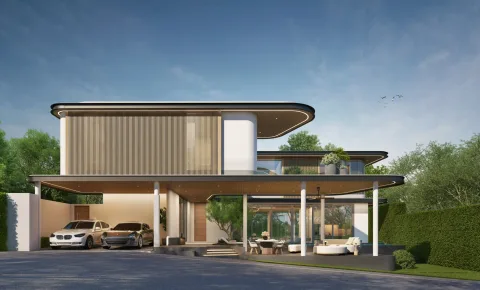
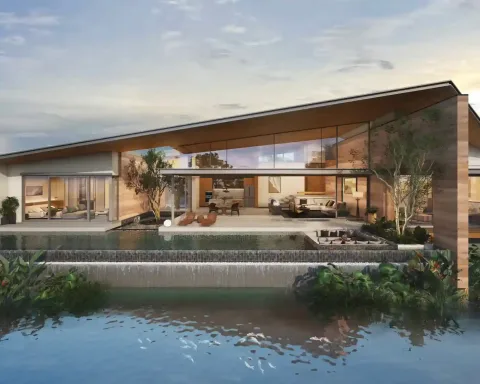
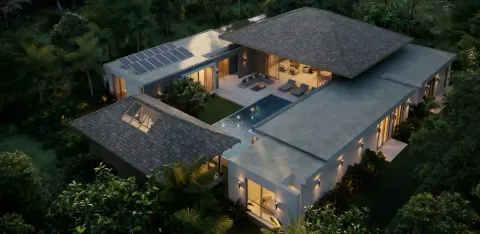
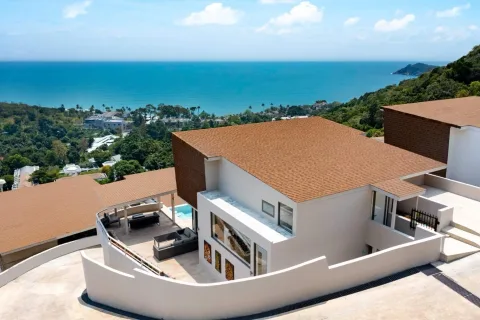
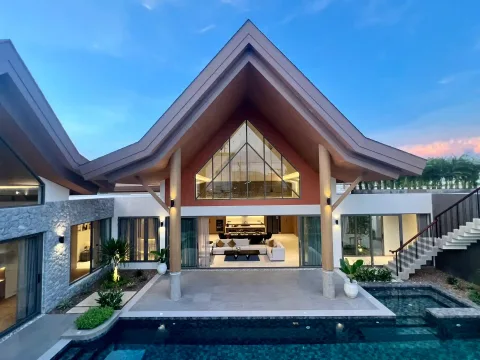
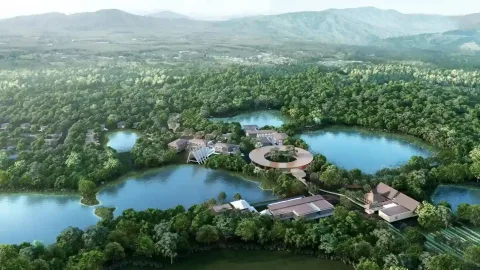
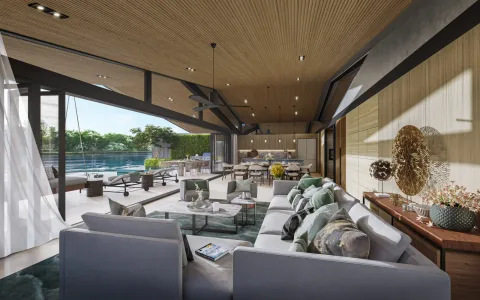
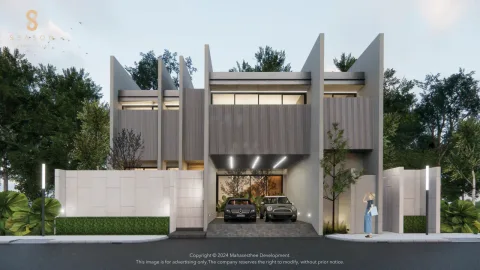
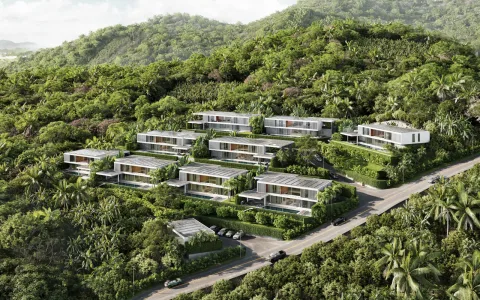
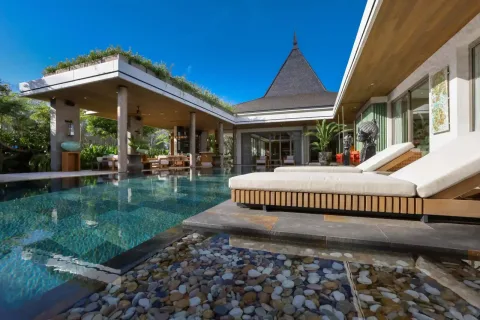
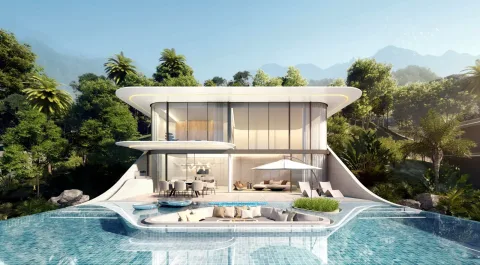
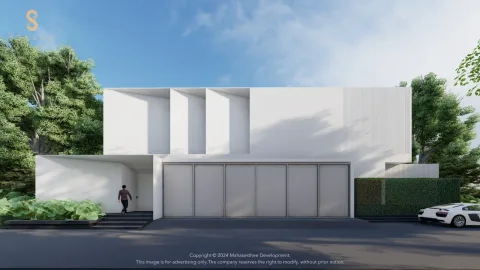
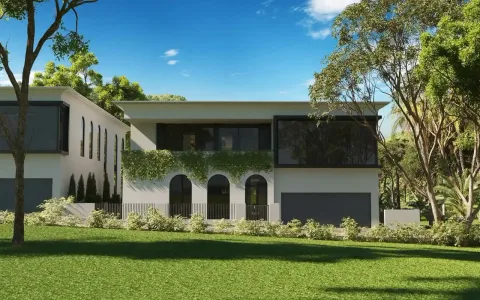
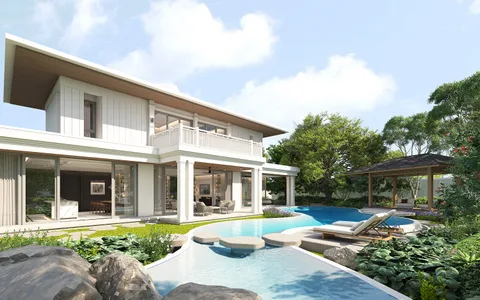
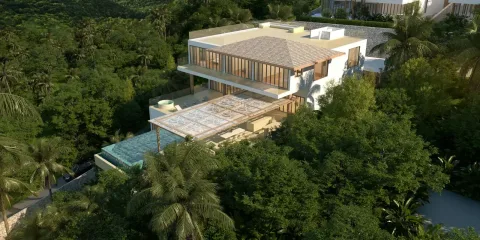
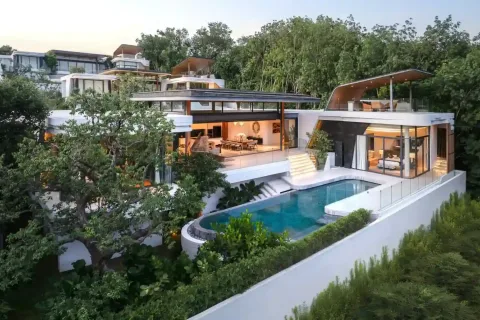
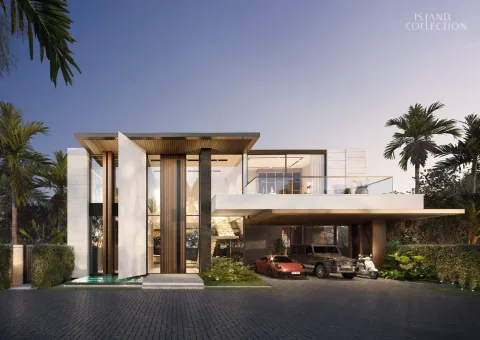
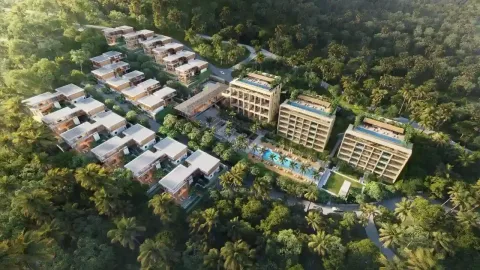
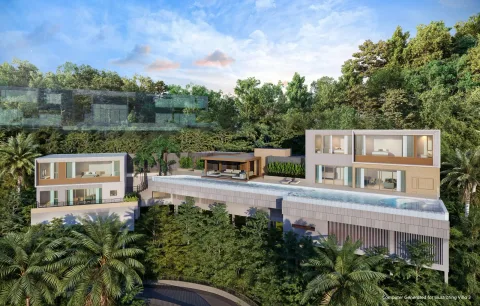
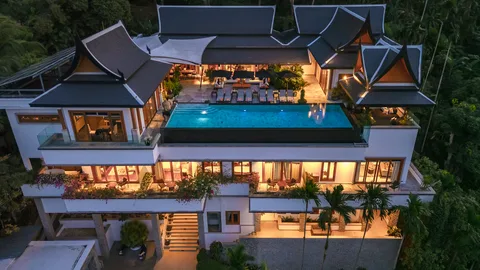
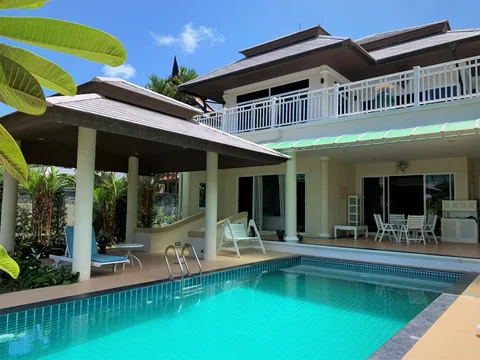
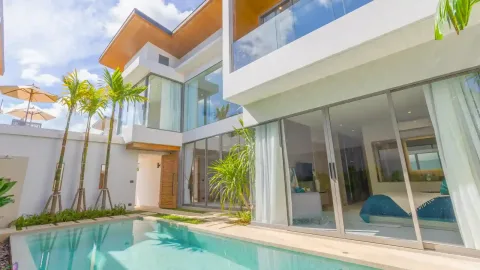
La Vallee Village Town 2
Hua Hin · Hin Lek Fai · LHM Property Group
- Price from
- 1,250,000 THB
- In dollars
- about $38,200
- Type
- House, 138 units
- Status
- completed
Thailand · Houses, pool villas and townhouses · Updated 2026-09-06
Quick answer: A foreigner can buy a house in Thailand and own the building, but not the land under it, so every house on this page is held through a registered 30-year lease of the land, a Thai company, or a Thai spouse. On 6 September 2026 this catalogue holds 239 house, villa and townhouse projects: 149 Phuket villa projects from 5,490,000 THB, 38 Koh Samui villa projects from 3,650,000 THB, 32 Hua Hin villa and house estates from 2,390,000 THB, 13 Pattaya houses and villas from 8,290,000 THB, 6 Chiang Mai estates from 8,300,000 THB and one Bangkok townhouse estate at 8,900,000 THB. Prices are the developers' own starting prices, read and dated on each card.
471 projects in 6 markets, from 1,250,000 THB (about $38,226 at 32.7 THB per dollar); 299 completed, 172 under construction or off-plan. Hua Hin 171 from 1,250,000 THB · Koh Samui 145 from 3,200,000 THB · Phuket 132 from 5,490,000 THB · Pattaya 16 from 8,290,000 THB · Chiang Mai 6 from 8,300,000 THB · Bangkok 1 from 8,900,000 THB
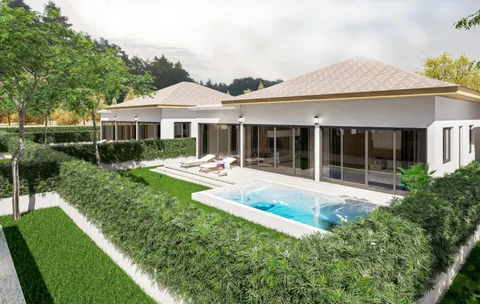
Hua Hin · Hin Lek Fai · LHM Property Group
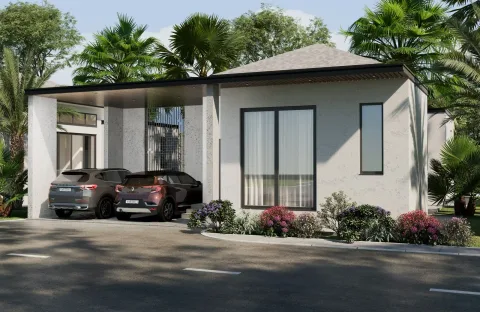
Hua Hin · Hin Lek Fai
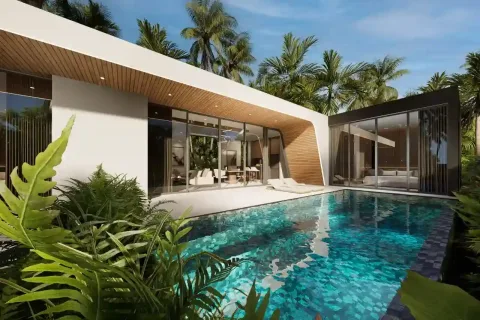
Hua Hin · Thap Tai · The Bibury Property
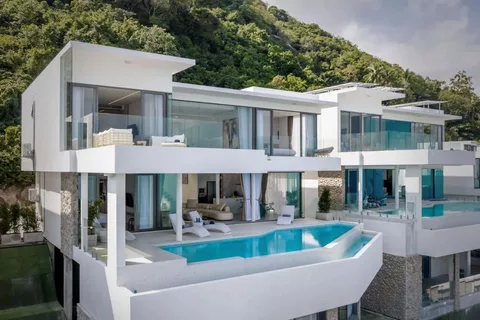
Hua Hin · Nong Kae (Khao Takiab) · MP House Asset
Hua Hin · Pran Buri · The 9 Khao Tao
Hua Hin · Cha-Am · FullRich Asset
Hua Hin · Cha-Am · AD House
Hua Hin · Hin Lek Fai
Hua Hin · Thap Tai
Hua Hin · Thap Tai
Hua Hin · Hin Lek Fai · Splp Land&Property Group
Hua Hin · Cha-Am · Estate GuRu
Koh Samui · Maenam
Hua Hin · Cha-Am · FullRich Asset
Hua Hin · Cha-Am
Hua Hin · Hin Lek Fai
Hua Hin · Hin Lek Fai · Avatar Manor
Hua Hin · Pran Buri · Baan Rak Phase 4
Koh Samui · Maenam
Hua Hin · CCM Group Project
Hua Hin · Thap Tai
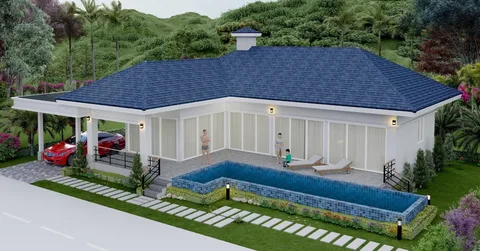
Hua Hin · Hin Lek Fai · LHM Property Group
Hua Hin · Hin Lek Fai
Hua Hin · Thap Tai
Hua Hin · Cha-Am · FullRich Asset
Hua Hin · Cha-Am
Hua Hin · Hin Lek Fai · Supalai
Hua Hin · Thap Tai · Rawiya Land & House Co.,Ltd
Hua Hin · Nong Kae (Khao Takiab) · Khemanatra Villa
Hua Hin · Hin Lek Fai · Khar Luek
Hua Hin · Hin Lek Fai
Koh Samui · Maenam
Hua Hin · Pran Buri
Hua Hin · Cha-Am · Huguh Home Pool Villa
Hua Hin · Hin Lek Fai
Koh Samui · Ang Thong · 24/7 Real Estate Co.,Ltd.
Hua Hin · Pran Buri · Baan Yu Yen
Koh Samui · Na Mueang · Baansuay Land and House
Hua Hin · Cha-Am
Hua Hin · Nong Kae (Khao Takiab) · BelVida Estates
Hua Hin · Thap Tai
Hua Hin · Hin Lek Fai
Phuket · Pa Khlok
Koh Samui · Maenam
Hua Hin · Cha-Am
Hua Hin · Thap Tai · Loft Property Hua Hin Co., Ltd.
Hua Hin · Thap Tai · Emerald Valley Hua Hin 3
Koh Samui · Bo Phut · Cabina
Hua Hin · Hin Lek Fai · Supalai
Hua Hin · Hin Lek Fai · Arty Perfect Home
Koh Samui · Na Mueang
Koh Samui · Maret (Lamai)
Hua Hin · Hin Lek Fai
Hua Hin · Pran Buri
Hua Hin · Hin Lek Fai · Mura Pool Villa Hua Hin
Hua Hin · Thap Tai
Koh Samui · Na Mueang
Koh Samui · Taling Ngam · Nemo Vitosti Samui
Hua Hin · Hin Lek Fai · Supalai
Hua Hin · Sam Roi Yot
Phuket · Nai Yang
Koh Samui · Bo Phut
Hua Hin · Thap Tai
Hua Hin · Hin Lek Fai
Hua Hin · Hin Lek Fai
Hua Hin · Cha-Am
Hua Hin · Pran Buri · Cabana Pool Villa
Hua Hin · Sam Roi Yot
Koh Samui · Bo Phut
Koh Samui · Maenam
Hua Hin · Thap Tai
Hua Hin · Thap Tai
Hua Hin · Thap Tai
Hua Hin · Hin Lek Fai · Estate 28 - Property & Development
Hua Hin · Cha-Am
Hua Hin · Hin Lek Fai
Hua Hin · Cha-Am · FullRich Asset
Hua Hin · Hin Lek Fai
Koh Samui · Maenam
Hua Hin · Thap Tai
Hua Hin · Hin Lek Fai
Koh Samui · Maenam
Koh Samui · Maenam
Koh Samui · Bo Phut
Hua Hin · Nong Kae (Khao Takiab)
Koh Samui · Bo Phut · Longevity Property Group
Koh Samui · Lipa Noi · Nemo Vitosti Samui
Hua Hin · Hin Lek Fai · Estate 28 - Property & Development
Koh Samui · Maenam
Hua Hin · Pran Buri · Nova Real Estate
Hua Hin · Cha-Am · Plumeria Villa Hua
Hua Hin · Nong Kae (Khao Takiab) · Tnergy Elegance
Hua Hin · Pran Buri · Talaycation HuaHin - Pranburi
Hua Hin · Hua Hin town
Koh Samui · Bo Phut
Koh Samui · Bo Phut · Galex Samui
Koh Samui · Maret (Lamai)
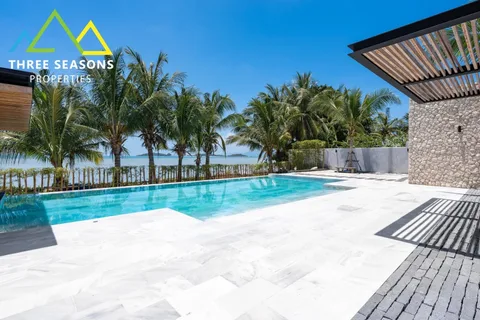
Koh Samui · Bo Phut · Three Seasons Properties
Hua Hin · Cha-Am · Reeva
Hua Hin · Thap Tai · MeeDee Homes
Hua Hin · Thap Tai · Rawiya Land & House Co.,Ltd
Hua Hin · Nong Kae (Khao Takiab) · Baan Thai Pool Villa
Hua Hin · Nong Kae (Khao Takiab) · CLC Development Co., Ltd.,
Hua Hin · Pran Buri · Moda Residences
Koh Samui · Bo Phut
Koh Samui · Maret (Lamai) · Nemo Vitosti Samui
Hua Hin · Cha-Am · SC Asset
Pattaya · Huai Yai · PATTA
Chiang Mai · San Sai
Hua Hin · Cha-Am · Blue Sky Pool Villa Cha Am
Pattaya · Nong Prue (Central Pattaya, Jomtien, Pratumnak) · Sirisa
Hua Hin · Thap Tai · Hua Hin Counrty Home
Koh Samui · Bo Phut
Koh Samui · Maenam
Koh Samui · Bo Phut
Koh Samui · Bo Phut
Hua Hin · Thap Tai
Hua Hin · Thap Tai · Chada Homes
Hua Hin · Thap Tai · Prime Realty Management Thailand Co.,Ltd.
Koh Samui · Maenam · Probuild Samui Development Co., Ltd.
Hua Hin · Sam Roi Yot · White Beach Villa
Hua Hin · Hin Lek Fai
Koh Samui · Maenam · Azur Samui
Hua Hin · Thap Tai
Hua Hin · Hin Lek Fai
Hua Hin · Sam Roi Yot · CCM Group Project
Bangkok · Suan Luang · Peace and Living
Koh Samui · Maret (Lamai) · Samui Happiness
Koh Samui · Maret (Lamai) · Samui Sway
Hua Hin · Thap Tai
Koh Samui · Maret (Lamai) · Verdant Developments LDA
Hua Hin · Thap Tai
Phuket · Bang Tao
Koh Samui · Maenam · Samui Grand Park Group
Phuket · Nai Yang
Koh Samui · Bo Phut
Hua Hin · Thap Tai · Sanctuario
Hua Hin · Thap Tai · Aria 4 Hua Hin
Koh Samui · Maenam · Sawasdee Pool Villa
Hua Hin · Nong Kae (Khao Takiab)
Hua Hin · Thap Tai
Koh Samui · Maret (Lamai) · Baansuay Land and House
Phuket · Layan
Koh Samui · Maenam
Hua Hin · Thap Tai · The Bibury Property
Koh Samui · Maenam
Koh Samui · Maenam
Koh Samui · Maenam · Samui Happiness
Phuket · Bang Tao
Hua Hin · Nong Kae (Khao Takiab)
Phuket · Ko Kaeo
Hua Hin · Thap Tai · Nantra Villa
Hua Hin · Thap Tai
Hua Hin · Cha-Am · Plumeria Villa Hua
Hua Hin · Thap Tai · SBS SOMBUN SAB REAL ESTATE
Hua Hin · Hin Lek Fai · The Smart Hamlet
Hua Hin · Hin Lek Fai
Koh Samui · Bo Phut · ROONGRUEANGCIVILIZE CONSTRUCTION CO., LTD.
Chiang Mai · Hang Dong · 999 Developments
Hua Hin · Thap Tai
Koh Samui · Bo Phut
Koh Samui · Taling Ngam · Samui Paradise Villa
Koh Samui · Maret (Lamai)
Hua Hin · Pran Buri
Koh Samui · Maenam
Hua Hin · Pran Buri
Koh Samui · Maenam · Verdant Developments LDA
Pattaya · Huai Yai
Hua Hin · Cha-Am
Hua Hin · Hin Lek Fai · Highland Villa 4
Koh Samui · Bo Phut
Koh Samui · Bo Phut
Hua Hin · Thap Tai
Koh Samui · Bo Phut
Hua Hin · Thap Tai
Phuket · Layan
Hua Hin · Pran Buri · Mountainside Company Limited
Koh Samui · Bo Phut
Koh Samui · Maret (Lamai) · Eden Development
Hua Hin · Thap Tai · Vana Varin
Phuket · Bang Tao
Koh Samui · Maenam
Koh Samui · Bo Phut · Vova
Koh Samui · Maret (Lamai) · The Olive Village
Hua Hin · Sam Roi Yot · White Beach Villa
Hua Hin · Thap Tai
Koh Samui · Maenam · Three Seasons Properties
Pattaya · Nong Prue (Central Pattaya, Jomtien, Pratumnak) · Apus Development Group
Koh Samui · Bo Phut
Hua Hin · Hin Lek Fai · ROSSE REAL ESTATE CO.,LTD.
Koh Samui · Maenam · Samui Paradise Villa
Hua Hin · Pran Buri
Hua Hin · Hin Lek Fai · Thai Country Homes
Hua Hin · Hin Lek Fai
Hua Hin · Pran Buri
Koh Samui · Bo Phut
Koh Samui · Bo Phut · Tri-P Asset Group
Koh Samui · Bo Phut · Horizon Home
Koh Samui · Maret (Lamai)
Hua Hin · Hin Lek Fai · Panorama
Hua Hin · Nong Kae (Khao Takiab) · Falcon Hill
Hua Hin · Thap Tai · Aria Hua Hin
Hua Hin · Hua Hin town
Koh Samui · Bo Phut
Hua Hin · Pran Buri
Koh Samui · Maret (Lamai) · CAVIAR DEVELOPMENT
Phuket · Rawai
Koh Samui · Maret (Lamai)
Koh Samui · Maenam
Koh Samui · Bo Phut
Koh Samui · Maenam · Cera Properties
Hua Hin · Thap Tai · MeeDee Homes
Phuket · Nai Yang
Hua Hin · Nong Kae (Khao Takiab) · Bangkok Living Development
Hua Hin · Hin Lek Fai · Hua Hin Grand Hills
Phuket · Rawai
Koh Samui · Bo Phut · Sawasdee Pool Villas
Phuket · Bang Tao
Koh Samui · Bo Phut
Koh Samui · Maret (Lamai) · Samui Paradise Villa
Hua Hin · Thap Tai · La Felice Hua Hin
Hua Hin · Thap Tai · MeeDee Homes
Phuket · Layan
Koh Samui · Maenam · Samui Grand Park Hill
Hua Hin · Nong Kae (Khao Takiab)
Hua Hin · Nong Kae (Khao Takiab)
Phuket · Chalong
Hua Hin · Thap Tai · Orchid Palm Homes
Koh Samui · Bo Phut
Pattaya · Pong (East Pattaya) · PATTA
Hua Hin · Pran Buri
Hua Hin · Hin Lek Fai · Highland Villas
Phuket · Nai Yang
Hua Hin · Cha-Am
Hua Hin · Thap Tai · Moda Residences
Hua Hin · Pran Buri
Phuket · Nai Yang
Phuket · Naithon
Koh Samui · Maenam · The Wave Real Estate Group
Koh Samui · Maenam · Cera Properties
Koh Samui · Bo Phut · IO Construction
Phuket · Bang Tao
Phuket · Bang Tao
Hua Hin · Nong Kae (Khao Takiab) · BelVida Estates
Hua Hin · Thap Tai
Koh Samui · Maenam · Samui Grand Park Group
Koh Samui · Bo Phut · ATARA Development
Hua Hin · Nong Kae (Khao Takiab) · Phu Montra K-Haad
Koh Samui · Bo Phut · Samui Sway
Hua Hin · Sam Roi Yot
Koh Samui · Bo Phut · Baansuay Land and House
Hua Hin · Nong Kae (Khao Takiab) · Zermatt Hua Hin
Phuket · Chalong
Phuket · Bang Tao
Koh Samui · Bo Phut
Chiang Mai · Hang Dong · 999 Developments
Koh Samui · Maret (Lamai)
Hua Hin · Nong Kae (Khao Takiab) · Botanica Luxury Phuket
Hua Hin · Hin Lek Fai
Phuket · Nai Yang
Hua Hin · Hua Hin town · Universe Villas
Koh Samui · Bo Phut · Autumn Life Properties
Koh Samui · Bo Phut
Hua Hin · Nong Kae (Khao Takiab)
Hua Hin · Hua Hin town · Berlayar
Koh Samui · Bo Phut · Hillside Village
Koh Samui · Maenam · Samui Happiness
Hua Hin · Cha-Am
Koh Samui · Maret (Lamai) · Samui Sway
Hua Hin · Hin Lek Fai
Koh Samui · Bo Phut
Koh Samui · Bo Phut
Hua Hin · Hin Lek Fai · The Cloud Hua Hin
Koh Samui · Bo Phut
Phuket · Nai Yang
Phuket · Nai Yang
Koh Samui · Ang Thong
Koh Samui · Maenam
Koh Samui · Maret (Lamai) · Samui Paradise Villa
Phuket · Mai Khao
Koh Samui · Bo Phut
Koh Samui · Bo Phut
Koh Samui · Bo Phut · Baansuay Land and House
Hua Hin · Pran Buri
Hua Hin · Thap Tai · Rosewood Hill
Hua Hin · Hin Lek Fai
Phuket · Bang Tao
Pattaya · Pong (East Pattaya) · Honour Group
Pattaya · Nong Prue (Central Pattaya, Jomtien, Pratumnak) · Apus Development Group
Koh Samui · Bo Phut · Baansuay Land and House
Phuket · Bang Tao
Pattaya · Na Kluea (Wongamat, North Pattaya)
Koh Samui · Maenam · Samui Grand Park Group
Koh Samui · Maret (Lamai)
Hua Hin · Thap Tai
Phuket · Bang Tao
Phuket · Ko Kaeo
Koh Samui · Maenam · The Wave Real Estate Group
Pattaya · Pong (East Pattaya)
Koh Samui · Maenam
Koh Samui · Bo Phut · Baansuay Land and House
Hua Hin · Thap Tai
Pattaya · Nong Prue (Central Pattaya, Jomtien, Pratumnak)
Koh Samui · Bo Phut
Koh Samui · Maenam
Koh Samui · Maenam · The Rice
Phuket · Layan
Hua Hin · Nong Kae (Khao Takiab)
Koh Samui · Maenam
Pattaya · Nong Prue (Central Pattaya, Jomtien, Pratumnak) · Infinite Real Estate
Phuket · Nai Yang
Hua Hin · Hin Lek Fai
Phuket · Chalong
Koh Samui · Lipa Noi · Supalai
Koh Samui · Na Mueang · Sisaran Group Co., Ltd.
Koh Samui · Bo Phut
Phuket · Naithon
Koh Samui · Bo Phut · Almafi Koh Samui Co.,Ltd.
Hua Hin · Hin Lek Fai
Chiang Mai · Hang Dong · 999 Developments
Phuket · Kathu
Phuket · Rawai
Koh Samui · Maenam · Pacific Palisade
Hua Hin · Hua Hin town · Thipurai Group Hua Hin Co.,Ltd
Koh Samui · Maenam
Koh Samui · Na Mueang
Phuket · Ko Kaeo
Koh Samui · Bo Phut · Vastu Villa Studio
Koh Samui · Bo Phut
Phuket · Nai Yang
Hua Hin · Nong Kae (Khao Takiab)
Hua Hin · Thap Tai
Phuket · Ko Kaeo
Phuket · Bang Tao
Hua Hin · Nong Kae (Khao Takiab) · CLC Development Co., Ltd.,
Koh Samui · Maenam · AB CAPITAL ASIA
Koh Samui · Bo Phut
Phuket · Chalong
Phuket · Bang Tao
Phuket · Layan
Pattaya · Siam Tree Villa Co., Ltd.
Phuket · Nai Yang
Hua Hin · Thap Tai
Phuket · Layan
Phuket · Mai Khao
Hua Hin · Cha-Am · Veranda Resort Public Company Limited
Pattaya · Nong Prue (Central Pattaya, Jomtien, Pratumnak)
Koh Samui · Maenam · Darika
Phuket · Rawai
Phuket · Nai Yang
Koh Samui · Maenam
Koh Samui · Maenam · Infinity Riches Property and Hospitality Management Co., Ltd.
Koh Samui · Bo Phut
Koh Samui · Maret (Lamai)
Koh Samui · Bo Phut · Almafi Koh Samui Co.,Ltd.
Hua Hin · Pran Buri
Phuket · Layan
Koh Samui · Bo Phut
Koh Samui · Bo Phut
Phuket · Bang Tao
Hua Hin · Thap Tai · Banthi Hua Hin
Phuket · Cape Yamu
Phuket · Bang Tao
Phuket · Chalong
Phuket · Layan
Phuket · Layan
Koh Samui · Maenam
Koh Samui · Maenam
Phuket · Layan
Phuket · Bang Tao
Phuket · Layan
Phuket · Chalong
Phuket · Mai Khao
Koh Samui · Bo Phut · Samui Sway
Phuket · Bang Tao
Chiang Mai · Mae Rim · Hylife Development
Phuket · Layan
Phuket · Layan
Phuket · Bang Tao
Phuket · Bang Tao
Koh Samui · Bo Phut
Koh Samui · Maenam
Koh Samui · Bo Phut
Phuket · Rawai
Phuket · Chalong
Chiang Mai · Hang Dong · 3Doordevelopment Co., Ltd
Phuket · Nai Yang
Koh Samui · Bo Phut · Sense Eight Samui Villa Co.,Ltd
Phuket · Bang Tao
Phuket · Layan
Phuket · Bang Tao
Phuket · Layan
Phuket · Bang Tao
Phuket · Chalong
Phuket · Nai Harn
Phuket · Chalong
Phuket · Layan
Hua Hin · Nong Kae (Khao Takiab)
Pattaya · Nong Prue (Central Pattaya, Jomtien, Pratumnak)
Koh Samui · Bo Phut · Triwalan Estates
Pattaya · Pong (East Pattaya)
Phuket · Bang Tao
Phuket · Naithon
Phuket · Chalong
Phuket · Mai Khao
Phuket · Kamala
Phuket · Karon
Hua Hin · Cha-Am
Phuket · Bang Tao
Koh Samui · Bo Phut
Phuket · Layan
Phuket · Chalong
Phuket · Bang Tao
Phuket · Mai Khao
Phuket · Layan
Phuket · Bang Tao
Phuket · Bang Tao
Phuket · Naithon
Phuket · Ko Kaeo
Phuket · Nai Yang
Phuket · Kamala
Phuket · Bang Tao
Koh Samui · Bo Phut
Phuket · Bang Tao
Phuket · Bang Tao
Phuket · Bang Tao
Hua Hin · Cha-Am · Privaco Pool Villa
Hua Hin · Pran Buri
Phuket · Layan
Phuket · Bang Tao
Phuket · Layan
Koh Samui · Bo Phut
Phuket · Bang Tao
Phuket · Bang Tao
Phuket · Layan
Phuket · Bang Tao
Pattaya · Nong Prue (Central Pattaya, Jomtien, Pratumnak) · Silk road development Co., Ltd
Koh Samui · Bo Phut
Phuket · Bang Tao
Phuket · Bang Tao
Phuket · Bang Tao
Koh Samui · Bo Phut · The Heights
Phuket · Bang Tao
Phuket · Layan
Phuket · Bang Tao
Phuket · Bang Tao
Phuket · Layan
Phuket · Ko Kaeo
Phuket · Bang Tao
Phuket · Kata
Hua Hin · Cha-Am
Koh Samui · Bo Phut
Phuket · Layan
Phuket · Greater Patong
Hua Hin · Thap Tai
Phuket · Layan
Phuket · Layan
Koh Samui · Bo Phut
Phuket · Layan
Phuket · Kata
Koh Samui · Ang Thong · Domo Development
Phuket · Bang Tao
Phuket · Layan
Koh Samui · Bo Phut
Phuket · Bang Tao
Phuket · Bang Tao
Phuket · Bang Tao
Phuket · Ao Yon
Phuket · Surin
Phuket · Bang Tao
Phuket · Bang Tao
Buyers search for a house; developers sell villas; the Land Office registers buildings and land as two different things. Understanding that vocabulary is the first practical step, because it decides what you can own and what you can only lease.
A villa in Thai marketing is a detached house with its own plot and, almost always, a private pool, sold inside a gated estate of anything from three to a hundred and forty homes. A house in the sense a Bangkok or Pattaya developer uses it is a detached or semi-detached home on a housing estate built by a volume builder, usually without a pool, aimed first at Thai families. A townhouse is a two- or three-storey terraced home on a small plot, the standard product of the outer Bangkok suburbs and increasingly of East Pattaya. All three sit on land, and that is the fact the law cares about.
The Land Code of 1954 bars a foreign individual from holding land freehold. The Condominium Act of 1979 carves out the exception that makes condominiums the freehold product for foreigners, up to 49 percent of a building’s saleable floor area. Houses are not in the exception. So a foreigner who buys a house in Thailand is buying two things at once: the building, which can be owned outright and registered in a foreign name at the Land Office, and a right to the land under it, which is a lease, a company shareholding or a spouse’s title. Every project on this page is sold on one of those three structures, and the card for each project states which one the developer offers when the developer has said so.
The distinction has a second consequence that buyers rarely hear from a portal. Foreign house purchases do not appear in Thailand’s official foreign-ownership statistics. The Real Estate Information Center counts condominium transfers to foreign nationals, 6,533 units worth 28.267 billion THB in the first half of 2025 by its own report, and it counts them because those transfers register in a foreign name. A villa leased for 30 years registers in the landowner’s name with the foreign lessee noted on the deed, so the size of the foreign house market is not measured by anyone. The catalogue below is the closest thing to a count that we can offer: what developers are selling to foreigners, market by market, at the prices they publish.
The figures are computed from the project cards on this site on the date shown. A starting price is the lowest price the developer published for the project, not an average; a median is the middle project’s starting price in that market, which says more about what a typical estate charges to get in than about any individual unit.
| Market | Projects | Starting price from | Median starting price | Product | Status |
|---|---|---|---|---|---|
| Phuket | 149 villa projects, 144 priced | 5,490,000 THB (about $167,890 at 32.7 THB per dollar), Pa Khlok | 26,911,000 THB (about $822,966) | Pool villa estates of 20 to 100 homes; Bang Tao 53 projects, Layan 32, Nai Yang 19 | 135 off-plan or under construction, 14 completed |
| Koh Samui | 152 villa and house projects | 3,200,000 THB (about $97,859), Maenam | 12,850,000 THB (about $316,514) | Boutique estates: 23 of 38 have ten homes or fewer, 443 villas in total | 32 completed, 9 under construction |
| Pattaya | 8 villa projects and 5 house estates | 8,290,000 THB (about $253,517), Huai Yai; villas from 16,030,000 THB | 10,990,000 THB (houses), 17,100,000 THB (villas) | Volume-built estates in Huai Yai and Pong, private pool villas in Nong Prue and Pong | 24 off-plan, 16 completed across all Pattaya cards |
| Bangkok | 1 townhouse estate | 8,900,000 THB (about $272,171), Suan Luang | 8,900,000 THB | Three-storey townhomes of 150 to 153 sqm, 68 units | Completed |
| Hua Hin | 149 villa estates and 29 house estates | 1,250,000 THB (about $38,226), Cha-Am; villas from 2,499,000 THB | 8,900,000 THB (villas) | Single-storey pool villas and estate homes on flat land west of the highway; Hin Lek Fai 11 villa estates, Thap Tai 10, Cha-Am 3, Pran Buri 3 | 11 completed, 21 under construction |
| Chiang Mai | 4 villa estates and 2 house estates | 8,300,000 THB (about $253,823), San Sai; villas from 9,900,000 THB | 16,615,500 THB (villas) | Pool villas in Hang Dong and Mae Rim, estate homes in San Sai; small local estates and one 138-home estate | All 6 completed |
Three things stand out. Phuket is the deep market and the expensive one: three quarters of its priced villa projects start above 18,900,000 THB, and the district medians in Bang Tao and Layan sit near 30,000,000 THB. Samui is where the entry prices are, and where the estates are small enough that the buyer usually deals with the builder rather than a sales office. Pattaya splits into two products that share a page but not a buyer: Thai-market housing estates by builders such as Patta and Apus, priced from 8,290,000 THB, and foreign-market pool villas from 16,030,000 THB. Bangkok barely appears, because the capital’s foreign buyers overwhelmingly buy condominiums, and the one townhouse estate here is listed for completeness rather than as a market. Hua Hin, added to the catalogue in September 2026, is the cheapest coast for a house on this site: 32 estates, most of them under construction on the flat land west of Petchkasem Road, from 2,390,000 THB, sold to retirees and Bangkok families, and described on the Hua Hin page.
Chiang Mai joined the catalogue on 6 September 2026 with six completed estates in the valley around the city, described on the Chiang Mai page. Krabi has a house market of its own and is not on this page because none of its estates has yet passed our registry check with a price; when one does, it will appear in the grid with the same fields.
The structure is not a formality chosen at the end. It changes the price, the paperwork, the resale market and what your heirs receive, and it should be settled before a reservation fee is paid. The table sets out the three routes as the law stands in 2026, unchanged by the 99-year lease and 75 percent quota proposals that have been announced since 2024 and not enacted.
| Structure | What you own | Registration | Term | Cost to register | Main risk | Who it suits |
|---|---|---|---|---|---|---|
| Registered land lease plus building ownership | The house outright; a lease of the plot | Lease registered on the land title at the Land Office; house sold by registered transfer or built under your own permit | 30 years, the maximum registrable term; renewals are contractual | 1 percent registration fee plus 0.1 percent stamp duty on the total rent for the term, usually 1.1 percent of the villa price | The renewal promise is only as good as the landowner who inherits it; a lease is a wasting asset at resale in year 20 | Most foreign villa buyers on estates with a corporate landowner |
| Thai limited company | Shares in a company that owns the land and house | Company registered at the Department of Business Development; land in the company name | Indefinite, while the company is maintained | Set-up and annual accounts; 2 percent transfer fee when the company buys | Nominee shareholders are illegal under the Foreign Business Act and the Land Code; enforcement was stepped up in 2025 and 2026 | Buyers with a genuine Thai business or Thai partners; not a device for a holiday home |
| Thai spouse | Nothing in your name; the land and house in the spouse’s name | Standard freehold transfer with a declaration that the funds are the spouse’s separate property | Indefinite | 2 percent transfer fee | The declaration means the foreign spouse has no claim to the property on divorce or death beyond what a will or a usufruct grants | Mixed marriages where the couple accepts the legal position and documents it |
Two rights from the Civil and Commercial Code are worth knowing because good lawyers use them alongside a lease. A usufruct gives the holder the right to use and take the fruits of the land for a term of up to 30 years or for life, and it can be granted to a foreigner; it is often registered for a foreign spouse over land held in the Thai spouse’s name. A superficies is the registered right to own a building on someone else’s land, which is the cleanest way to record that the villa is yours even though the plot is not. Neither replaces a lease for an estate purchase, but both belong in the conversation with counsel.
Insider tip: ask the developer for the land title deed number and pull the title yourself through your lawyer before paying anything. The deed shows who owns the land today, every registered lease and mortgage on it, and whether the plot the villa stands on has been subdivided yet. An estate that is still one undivided plot cannot register your lease against your villa’s plot until the subdivision is done, and that step has been known to take a year.
The medians below are starting prices of projects, computed from the cards, and they are useful for one thing: knowing which district a budget can enter. They are not resale prices, not price per square metre, and not a forecast.
| District | Projects priced | Starting price from | Median starting price | Character |
|---|---|---|---|---|
| Bang Tao | 53 | 8,990,000 THB | 32,500,000 THB | The Laguna corridor and its inland estates; the largest and dearest pool of villa supply on the island |
| Layan | 32 | 9,500,000 THB | 29,210,000 THB | The quieter northern extension of Bang Tao; low-density estates and branded villas |
| Nai Yang | 19 | 6,500,000 THB | 17,800,000 THB | The airport corridor; the cheapest pool-villa estates on the west coast |
| Rawai | 9 | 12,280,000 THB | 20,000,000 THB | The south; owner-occupier estates near Nai Harn and Chalong |
| Kata | 7 | 17,900,000 THB | 29,800,000 THB | Hillside sea-view villas above the beach town |
| Mai Khao, Naithon, Patong, Chalong, Kamala, Nai Harn, Cape Yamu, Surin, Kathu, Karon, Pa Khlok, Ao Yon | 24 in total | 5,490,000 THB (Pa Khlok) | 13,500,000 to 117,500,000 THB | Single projects or small clusters; Ao Yon carries the one project starting above 100,000,000 THB |
Phuket’s villa supply is overwhelmingly off-plan: 135 of the 149 projects are under construction or selling from plans, and only 14 are finished estates with completed homes to walk through. That ratio is the single most important fact for a Phuket villa buyer, because it means most purchases are payment schedules against construction rather than transfers of a finished house, and the developer’s record of delivering on time becomes a due-diligence item in its own right. C9 Hotelworks’ 2026 review of Asia’s residential market puts Phuket first among the region’s resort markets by branded residence supply, with 3,465 units, which is the other side of the same coin: a great deal of the island’s new villa product is built to a hotel brand’s standard and sold with a rental programme attached.
| District | Projects | Starting price from | Median starting price | Character |
|---|---|---|---|---|
| Bo Phut | 15 | 7,650,000 THB | 11,000,000 THB | Fisherman’s Village, Plai Laem, Bang Rak, Chaweng Noi; nearest the airport |
| Maenam | 14 | 3,650,000 THB | 10,200,000 THB | The north coast; most of the island’s new small estates |
| Maret (Lamai) | 4 | 7,900,000 THB | 9,795,000 THB | Sea-view hillsides above Lamai beach |
| Na Mueang, Taling Ngam, Lipa Noi | 5 | 6,200,000 THB | 8,100,000 to 17,919,000 THB | The south and west; larger plots, longer drives |
Samui’s numbers describe a different industry. Thirty-two of the 41 Samui projects on this site are completed, twenty-three of the 38 villa estates have ten homes or fewer, and the developer named on the card is frequently a construction company rather than a listed group. The Nation reported in 2026 that Samui’s villa-led development pipeline had reached 53 billion THB, and the island’s own market reports describe demand as overwhelmingly foreign and European; what that means at the level of a single purchase is that the buyer’s lawyer is checking a small company’s title and permits rather than a public developer’s prospectus, and that a completed villa with a registered lease is often available to move into within weeks.
| Product | Projects | Starting price from | Median starting price | Where |
|---|---|---|---|---|
| Housing estates (detached, two storeys) | 5 | 8,290,000 THB | 10,990,000 THB | Huai Yai, Pong, inland Nong Prue |
| Private pool villas | 8 | 16,030,000 THB | 17,100,000 THB | Pong (Lake Mabprachan), Nong Prue, Na Kluea |
Pattaya’s houses are inland by design. The estates in Pong and Huai Yai sit ten to twenty minutes from the coast, near the two international schools and the golf courses, on plots large enough for a pool at prices that the coast cannot match. The Real Estate Information Center’s transfer data shows Chonburi province taking roughly a third of every condominium sold to a foreigner in Thailand, and Pattaya is the reason; the house market is smaller, more Thai and more family-driven, and the foreign buyers in it are usually relocating rather than investing.
The figures below are statutory rates and the fee ranges this office sees in contracts. They are the same in every province.
| Cost | Rate or range | When | Notes |
|---|---|---|---|
| Transfer fee on a building or a freehold plot | 2 percent of the appraised value | At the Land Office on transfer | Split by contract, commonly 50/50 or paid by the developer off-plan; the 0.01 percent relief in force until 30 June 2027 is for Thai individual buyers of homes up to 7,000,000 THB |
| Lease registration | 1 percent registration fee plus 0.1 percent stamp duty on the total rent for the term | When the 30-year lease is registered | On a 20,000,000 THB villa about 220,000 THB, about $6,728 at 32.7 THB per dollar |
| Legal due diligence and closing | Fixed fees from about 60,000 THB for a straightforward leasehold purchase, more for company structures | Before reservation and through transfer | Choose a lawyer you appoint, not one the developer supplies |
| Land and Building Tax | 0.02 percent of the assessed value a year for a residence up to 50,000,000 THB; 0.3 percent for vacant land, rising every three years | Yearly, due by the end of April | The 50,000,000 THB owner-occupier exemption needs the owner’s name on the house registration, which most foreign owners do not have |
| Estate common-area fees | Stated per project; Oceans Chaweng Phase 2 on Samui, for example, lists about 9,000 THB a month | Monthly or quarterly | Covers roads, security, landscaping and estate pools; ask for the last two years of accounts on a completed estate |
| Insurance | Building and contents cover, priced by insurer | Yearly | Required by most estates; ask what the estate policy already covers |
| Pool and garden | Weekly service contracts, priced locally | Ongoing | A private pool needs chemical balancing and a pump service whether or not anyone is in the house |
| Specific business tax on sale | 3.3 percent of the higher of price and appraised value | If sold within five years of acquisition | Otherwise stamp duty of 0.5 percent |
| Withholding tax on sale | Progressive rates on the appraised value after a deduction of 92 to 50 percent by years held | At the Land Office on sale | Around 1 to 2 percent of value in practice; the tax guide has the worked example |
A house costs more to hold than a condominium of the same value, and the reason is not tax. It is the pool, the garden, the roof and the fact that nobody else shares the bill. Buyers who model a villa on condominium assumptions discover in the first wet season that a house is a small business with one customer.
Ask for the title deed and the estate accounts before you fly
Send us the projects you like from the grid above. We pull the land title, the building permit and the last estate accounts through our lawyer and send you a plain summary with the red flags, at no charge.
One hundred and thirty-five of Phuket’s 149 villa projects and nine of Samui’s 41 projects are sold from plans or during construction. An off-plan villa is not a worse purchase than a completed one, but it is a different transaction, and it asks for different checks.
The money moves differently. A completed villa is paid for at transfer, typically a reservation fee, a deposit of 10 to 30 percent on signing and the balance at the Land Office. An off-plan villa is paid for in instalments tied to construction milestones over 12 to 36 months, which is the closest thing to financing most foreign buyers will find in Thailand, and the developer holds your money while it builds. The questions that matter are whether the developer holds a construction permit for your specific plot, whether the estate’s environmental approval is in place where the project size requires one, what the contract says happens to your instalments if delivery is late, and what the developer delivered last time against the dates it advertised. The off-plan guide sets out the contract clauses to insist on.
The title moves differently too. On a completed estate the plots are subdivided and the lease can be registered against your villa’s own deed on the day you pay. On an off-plan estate the subdivision may not exist yet, and buyers sign a lease agreement now that will be registered later; the interval between the two is the period in which a developer’s insolvency would leave you with a contract claim rather than a registered right. Shorter is better, and a developer who can show subdivided deeds before construction has done the buyer a favour.
Samui’s ratio runs the other way, and it changes the buyer’s task. A completed Samui villa with a registered lease can be inspected, surveyed, and moved into; the risk shifts from delivery to construction quality and to the small developer’s ability to maintain the estate. Ask who owns the estate roads and the water supply, and what happens to the common areas when the last villa is sold.
Every second question about a Thai villa is whether it can earn while the owner is away. It can, and the rules are clearer than the forums suggest.
Long lets, meaning 30 days or more, are permitted for any owner on any structure, subject only to the estate’s own regulations and to tax. Nightly letting is a licensed activity under the Hotel Act of 2004: a house let by the night needs a hotel licence unless it qualifies for the exemption for small establishments of up to four rooms and twenty guests, registered with the district office, and estates increasingly write their own limits into the regulations that every owner signs. Whatever the length of stay, a foreign guest must be reported to immigration on a TM30 form within 24 hours of arrival, and the operator who does that for you should be able to show you the confirmations.
Tax follows residence, not nationality. An owner who spends fewer than 180 days a year in Thailand is a non-resident whose rent carries 15 percent withholding at source, generally a final tax with no Thai return to file; an owner who crosses 180 days becomes a Thai tax resident and files progressive personal income tax with a 30 percent standard deduction against the rent. A management company that collects the rent is the party positioned to withhold and remit, and it should give you the certificates your home tax authority will ask for.
No figure for income, occupancy or nightly rate appears on this page or on any project card, because Thailand keeps no letting register and no reliable dataset exists for either. A developer’s rental projection is a projection; ask instead for the estate’s actual letting history, the management contract, and the split of gross rent between owner and operator, and model the result yourself.
The checks for a house are longer than for a condominium because there are two assets and two registrations. The order below is the one our lawyers follow.
The due diligence guide expands each step; the land ownership guide and the 30-year lease guide explain the law behind steps one and seven.
Foreign buyers mostly pay cash, and the market is built around that fact. Thai banks lend against condominiums to some foreign nationalities through specific programmes, typically at loan-to-value ratios well below what buyers know from home, and they almost never lend against land-based property held on a lease or through a company, because the collateral is a lease rather than freehold. The mortgage guide lists the programmes that do exist.
What replaces a mortgage is the developer’s instalment plan on an off-plan villa, which spreads the price over construction without interest but without a lender’s protection either, and, for buyers with assets at home, a loan raised in their own country against those assets and remitted to Thailand as purchase funds. The second route has a documentary advantage: the money arrives as a foreign-currency transfer with a Foreign Exchange Transaction record, which is exactly what the Land Office and the Bank of Thailand rules require for later repatriation.
The relocating family. Two or three children, an international school on the shortlist, a car. This buyer ends up in East Pattaya or Huai Yai, where a four-bedroom estate home starts near 8,290,000 THB and the schools are ten minutes away, or in Rawai and Chalong on Phuket, where the estates are quieter and the drive to the west-coast schools is the price. The catalogue’s cheapest house product is built for exactly this buyer.
The retiree. Age 50 or over, a retirement extension or a long-stay membership, a preference for a finished home near a hospital. This buyer is best served on Samui, where completed villas dominate the catalogue and 23 of 38 estates have ten homes or fewer, or in Nai Yang and Rawai on Phuket. The retirement visa guide covers the immigration side; the property side is a completed estate with two years of accounts.
The investor who wants a villa rather than a condominium. Bang Tao and Layan, and the branded estates near Laguna, at medians near 30,000,000 THB. This buyer is buying into a rental programme and a brand, and the diligence is on the operator’s contract as much as on the title.
The remote worker on a DTV. Usually a renter first and a buyer later, and usually a condominium buyer when the time comes. Where a house makes sense, Maenam on Samui at 3,650,000 to 10,000,000 THB is the entry, with the caveat that a house needs looking after while its owner is elsewhere. The DTV guide sets out the visa.
Thailand publishes good data on condominiums and almost none on houses sold to foreigners, for the reason set out at the top of this page. The figures that exist are worth reading for what they imply.
The Real Estate Information Center reported 6,533 condominium transfers to foreign nationals worth 28.267 billion THB in the first half of 2025, down 8.8 percent in units and 1.5 percent in value on the year, with Chinese buyers the largest group by value and Chonburi the province with the most transfers. Reporting on the first quarter of 2026, The Nation cited REIC figures showing transfers to Russian buyers up by a third in units and by 75.9 percent in value to 3.6 billion THB, concentrated in Phuket and Chonburi. C9 Hotelworks, in its 2026 review of Asia’s residential market, ranked Phuket first among the region’s resort markets for branded residence supply with 3,465 units and named Samui as the next branded villa market. The Nation put Samui’s villa-led pipeline at 53 billion THB in 2026.
What none of those sources can tell you is what a villa earns, what it will be worth in five years, or how long it takes to sell, because no register records any of it. This page therefore carries no yield, no appreciation and no days-on-market figure, and treats any page that does as a projection dressed as a measurement.
MORE Group is a licensed Phuket agency that also handles Koh Samui, Pattaya, Bangkok, Hua Hin and Chiang Mai purchases through its own team. On a developer sale the developer pays our fee, so the buyer pays the developer’s list price and nothing to us. What the buyer gets is the project shortlist against a written brief, the title and permit checks through a lawyer the buyer appoints, the contract review, the Land Office day, and a straight answer when a project does not stand up. Buyers who want the wider picture first can compare the four markets on the Thailand property for sale page, narrow to pool villas or condominiums, or go straight to a market: Phuket villas, Koh Samui villas, Pattaya houses, Hua Hin villas and houses, Chiang Mai houses.
Tell us the market, the budget and how you want to hold the title
We reply within 2 hours with matching projects from the catalogue above, the structure each developer offers, and the questions we would ask before a deposit.
Yes, with one limit that shapes everything else: the Land Code does not allow a foreign individual to own land, so the house is bought in one of three ways. A registered lease of the land for 30 years with the building owned outright in the buyer's name, a Thai limited company that holds the land with the buyer as a minority shareholder and director, or registration in the name of a Thai spouse. Condominium units are the only property a foreigner owns freehold in their own name.
In this catalogue on 5 September 2026 the lowest developer starting prices are 2,390,000 THB for a house in Cha-Am near Hua Hin, 2,499,000 THB for a Hua Hin pool villa in Hin Lek Fai, 3,650,000 THB for a Koh Samui villa in Maenam, 5,490,000 THB for a Phuket villa in Pa Khlok, 8,290,000 THB for a Pattaya house in Huai Yai, 8,300,000 THB for a Chiang Mai estate home in San Sai and 8,900,000 THB for a Bangkok townhouse. Medians are far higher: 26,911,000 THB across 144 priced Phuket villa projects and 10,350,000 THB across 38 Samui villa projects. Prices are the developers' own starting figures and move between sales phases.
A lease registered at the Land Office is a real right for its 30-year term, survives a sale of the land and can be inherited if the contract says so. What it is not is a 90-year right: the renewal clauses developers write into 30+30+30 contracts are promises between the parties, not registered rights, and they bind a future owner of the land only if that owner honours them. Price a leasehold villa on the registered term, and treat the renewals as an option rather than an asset.
Samui, on the same catalogue and the same date. The median starting price of a Samui villa project is 10,350,000 THB against 26,911,000 THB in Phuket, and Samui's cheapest project starts at 3,650,000 THB against 5,490,000 THB. The gap reflects land prices, plot sizes and the type of developer: Samui is small-batch local builders, Phuket is estates of 20 to 100 villas near Bang Tao and Layan.
At purchase a 2 percent transfer fee on the building if it is sold with a Chanote title, or 1.1 percent to register a 30-year land lease (1 percent registration plus 0.1 percent stamp duty on the total rent), usually split with the seller by contract, plus legal fees. Every year, Land and Building Tax at 0.02 percent of the assessed value for a residence. On sale, 3.3 percent specific business tax within five years or 0.5 percent stamp duty after, and withholding tax computed on years held. The 0.01 percent transfer relief extended to 30 June 2027 applies to Thai individual buyers only.
Rarely. Thai banks lend against condominiums to some foreign nationalities through specific programmes, and almost never against land-based property held on a lease or through a company. Most foreign house buyers pay from their own funds, use developer instalment plans of 12 to 36 months on off-plan villas, or borrow at home against assets there.
Long lets of 30 days or more are permitted for any owner. Nightly letting is regulated: a house let by the night needs a hotel licence unless it falls under the small-establishment exemption of up to four rooms and twenty guests registered with the district office, and every foreign guest must be reported on a TM30 form. Rent paid to an owner who spends fewer than 180 days a year in Thailand carries 15 percent withholding tax.
Chanote (Nor Sor 4 Jor), the full title with a GPS survey, for anything you intend to hold for decades. Nor Sor 3 Gor is surveyed and can be upgraded to Chanote and is acceptable with a lawyer's check. Nor Sor 3 without the Gor is unsurveyed and transactions need a 30-day public notice. Sor Kor 1 and possession claims are not titles and should end the conversation.
Tell us the market, the budget and how you plan to hold the title; we reply within 2 hours with matching projects and the honest caveats.