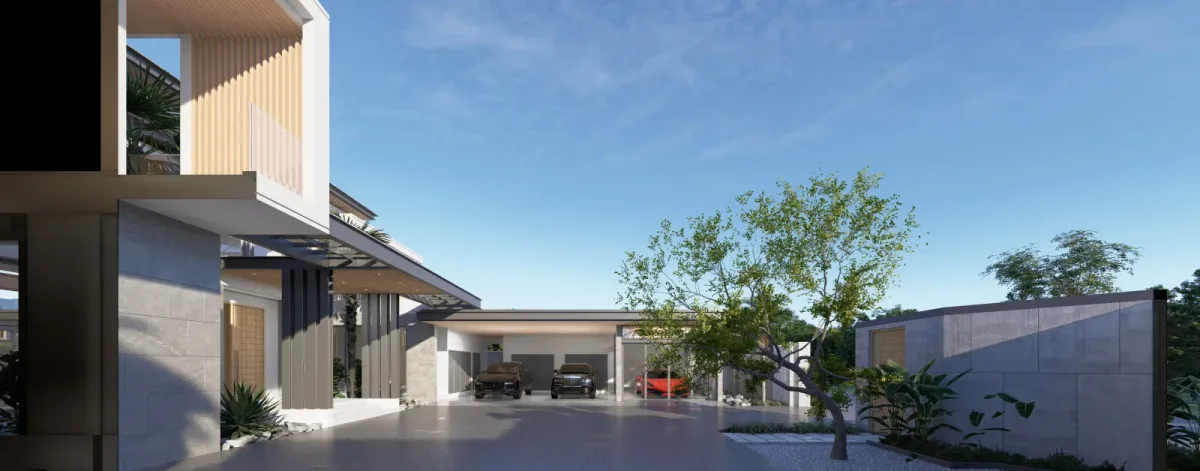
Can foreigners legally buy property in Thailand? Yes, most international buyers use freehold condo ownership (within the 49% foreign quota) or a registered 30-year leasehold on villas. You cannot own land in your personal name. This legal guide walks through ownership structures, due diligence, taxes, and what happens at the Land Department on transfer day.
Foreigners can legally own property in Thailand, but the rules differ significantly from what buyers in the UK, US, or Europe are used to. For step-by-step help, see our Condominium Act 49% quota guide and Chanote title deed checklist.
Cluster hub: Phuket Property Legal & Taxes Master Guide 2026.
The short answer: As a foreigner, you can own a condominium unit freehold (in your name, outright) or hold property via a registered long-term lease (leasehold). You cannot own land directly. Everything else, Thai companies, nominee structures, spouse arrangements, carries legal risk and requires expert advice before proceeding.
What Thai Law Actually Says: The Legal Framework
| Law | Year | What It Controls |
|---|---|---|
| Condominium Act (B.E. 2522) | 1979 | Foreign freehold ownership of condo units, up to 49% of a building |
| Land Code (B.E. 2497) | 1954 | Prohibits direct land ownership by foreigners; allows long-term leases |
| Civil and Commercial Code | Ongoing | Governs contracts, leases, inheritance, and legal disputes |
A common myth: “The King owns all the land and can take it back.” This hasn’t been true since 1932, Thailand became a constitutional monarchy and private land ownership was legalized in 1954. Since 1979, foreigners have been able to own condo units outright.
The key point: these laws are stable and well-established. Thailand has been selling condos to foreigners for over 45 years under the same framework.
3 Legal Ownership Structures for Foreigners
The 49% Rule: In any registered condominium building, foreigners may collectively own no more than 49% of the total sellable floor area. The remaining 51% must be Thai-owned. This is called the foreign quota.
Requirements to qualify for freehold:
- Funds must be transferred from overseas in foreign currency (USD, EUR, GBP, etc.)
- Your bank in Thailand issues a Foreign Exchange Transaction Form (FETF), this is the single most important document in the purchase process
- Without a valid FETF, you cannot register freehold ownership
Who this works for: Americans, Europeans, Australians, and UAE buyers purchasing a condo for investment or lifestyle. This is the route MORE Group recommends as the primary structure for most clients.
2. Leasehold (30 Years + Renewal Options)
You lease the land and own the building structure. The lease is registered at the Land Department for 30 years. Most developers include contractual renewal clauses extending to 60 or 90 years.
Critical point that many buyers miss: Renewal clauses in contracts are contractual promises from the developer, they are not a guaranteed legal right under Thai law. The Land Department only registers the initial 30-year term. The second and third 30-year periods depend on the developer’s continued willingness and the political/legal environment at the time of renewal.
What leasehold gives you:
- Right to live in and use the property
- Right to rent it out
- Right to sell the leasehold interest (subject to remaining term)
- Right to inherit (heirs receive the remaining leasehold term)
Leasehold registration fees: 1% of the total lease value (vs. 3.3% Specific Business Tax for freehold in certain cases; see fees section below).
Who this works for: Buyers who want a villa or house rather than a condo, and are comfortable with the 30-year + renewal structure. Also works for condo buildings where the foreign quota is already filled.
3. Thai Company Ownership (Requires Expert Legal Advice)
A Thai-registered company can own land and buildings. Foreigners can own up to 49% of shares; Thai shareholders hold the majority.
The legal risk: Nominee shareholder structures (where Thai shareholders have no real interest in the business) are illegal and have been actively investigated since 2024. If the structure is deemed a nominee arrangement, the property can be seized.
When it’s legitimate: If you have a genuine business operation in Thailand and the property serves a real business purpose, a properly structured Thai company can be a valid ownership vehicle. This requires a licensed Thai lawyer, not a shortcut.
Our recommendation: Don’t use a Thai company solely to own a holiday home or investment condo. The freehold or leasehold route is simpler, cheaper, and legally cleaner.
Step-by-Step Legal Purchase Process
Step 2: Engage an Independent Thai Lawyer
This is non-negotiable. Your lawyer must be independent from the developer and the agent. Cost: THB 30,000-80,000 for a standard purchase, depending on complexity.
Your lawyer will:
- Check the title deed at the Land Department
- Verify the foreign quota availability
- Review the Sale and Purchase Agreement (SPA) before you sign
- Conduct encumbrance searches
- Confirm the developer’s licenses and company status
Step 3: Pay the Reservation Deposit
Once you’ve identified a property, a reservation fee (typically THB 50,000-300,000, or $1,500-$8,000) holds the unit while due diligence proceeds. This is usually refundable if due diligence fails, but check the terms in writing before paying.
Step 4: Transfer Funds from Overseas (Critical for Freehold)
For freehold ownership, the purchase funds must be transferred from overseas in foreign currency. Your Thai bank will issue a Foreign Exchange Transaction Form (FETF), also called a TT3 form or bank transfer confirmation, for each transfer.
Keep every FETF. You’ll need them all at the Land Department on registration day. If you lose them or transfer in Thai Baht from a local account, you lose the right to freehold registration.
Common mistake: Buyers transfer THB from a local Thai account (opened as a tourist or expat). This does not qualify as foreign funds and will block freehold registration.
Step 5: Sign the Sale and Purchase Agreement (SPA)
The SPA is the primary legal contract. It must specify:
- Exact unit details (floor plan, number, building)
- Total price and payment schedule
- Completion date with penalty clauses for delays
- Transfer of title terms
- Defect liability period
For off-plan properties, the payment schedule typically runs: reservation → 10-30% on SPA → installments during construction → final 20-30% on key handover.
Step 6: Due Diligence (Your Lawyer’s Work)
Your lawyer will verify:
| Check | What to Look For |
|---|---|
| Title deed type | Chanote (Nor Sor 4 Jor) is the gold standard. Avoid Nor Sor 3 Gor or below |
| Foreign quota | Confirm space remains in the building’s 49% allocation |
| Encumbrances | No mortgages, liens, disputes, or court orders attached |
| Developer licenses | Building permit, EIA approval, company registration |
| Developer track record | Check completed projects, reviews, court records |
| Condominium registration | Confirm the building is registered under the Condominium Act |
In 2023, over 15% of property disputes in Thailand involved buyers who missed encumbrances (hidden debts or mortgages attached to the unit). This is exactly what due diligence prevents.
Step 7: Register at the Land Department
Both buyer and seller must attend in person (or send legal representatives with power of attorney). The transfer is registered in the Land Department’s system and a new title deed with your name is issued.
You pay the transfer-related fees on this day (see costs below).
Frequently Asked Questions
Not necessarily. Remote purchase with video viewings, digital signing, and notarised Power of Attorney is standard. Many buyers complete without visiting first, though a viewing trip is recommended when possible.
The Foreign Exchange Transaction Form proves funds entered Thailand in foreign currency, required for freehold condo registration and for repatriating sale proceeds.
Thai banks rarely lend to non-residents. Most foreign buyers pay cash or use developer instalment plans during construction.
Freehold condos are inheritable by foreign heirs. Leasehold passes the remaining term. Prepare a Thai will alongside your home-country will.
Yes with precautions: verify developer track record, delay penalties in SPA, and independent lawyer review before every milestone payment.
Freehold typically commands higher resale prices. Leasehold value depends on remaining term, a 28-year lease sells better than a 12-year lease.
Concerned about the legal process?
MORE Group provides full legal accompaniment on every transaction, from due diligence to Land Department registration.
Full Cost Breakdown: What You’ll Pay
At Registration (Government Fees)
| Fee | Rate | Who Pays | Notes |
|---|---|---|---|
| Transfer Fee | 2% of appraised value | Typically split 50/50 | Appraised value is usually lower than market price |
| Specific Business Tax (SBT) | 3.3% of appraised value | Seller | Only if seller owned under 5 years |
| Stamp Duty | 0.5% of appraised value | Seller | Only if SBT is not applicable |
| Withholding Tax | 1% (company) or progressive scale (individual) | Seller | Based on appraised value and ownership duration |
For buyers: In most transactions, you pay the transfer fee (1% of the appraised value if split with the developer). Many developers absorb their share as a sales incentive, always confirm in the SPA.
One-Time Developer Charges
| Item | Typical Cost | Notes |
|---|---|---|
| Sinking Fund | THB 600-1,000/sqm | Paid once at handover, for major building repairs |
| Water and electricity meters | THB 5,000-15,000 | Installation at handover |
| Furniture/fit-out package | Optional | THB 500k-2M+ depending on unit size |
Ongoing Annual Costs
| Item | Typical Cost |
|---|---|
| CAM fee (maintenance) | THB 40-90/sqm per month |
| Car parking | THB 250-500/month |
| Building insurance | Often included in CAM fee |
| Annual Land and Building Tax | Very low, 0.02-0.1% of appraised value for residential |
Total one-time purchase costs (beyond property price): Budget approximately 3-5% of the purchase price for all fees, legal costs, and registration charges combined.
Title Deeds Explained: What Type Is Safe?
| Title Type | Thai Name | What It Means | Safe to Buy? |
|---|---|---|---|
| Full title deed | Chanote (Nor Sor 4 Jor) | GPS-surveyed, full ownership rights, registerable at Land Department | ✓ Yes, always prefer this |
| Certificate of use | Nor Sor 3 Gor | Confirmed right of use, can be upgraded to Chanote | Acceptable with caution |
| Possessory right | Nor Sor 3 | Unconfirmed boundaries, cannot register encumbrances | ✗ Avoid for investment |
| Occupation certificate | Sor Kor 1 | No title, right to occupy only | ✗ Never buy on this |
For condominiums: The building registers the land under a single Chanote. Individual units are registered under the building’s title. This is automatically the highest level, it’s one of the reasons condos are the cleanest option for foreigners.
5 Legal Mistakes Foreigners Make (and How to Avoid Them)
Mistake 2: Assuming Lease Renewal Is Automatic
A 30+30+30 year clause in a contract is a promise from the developer, not a statutory right. If the company changes ownership or goes bankrupt, renewal isn’t guaranteed. For long-term leasehold, choose developers with strong track records and legal structures that support renewal (usufruct rights registered alongside the lease offer extra protection).
Mistake 3: Using Nominee Thai Shareholders to Own Land
This is illegal. Post-2024, enforcement has increased. If you set up a Thai company with nominal Thai shareholders who have no real business interest, your property can be seized. It’s not worth the risk.
Mistake 4: Skipping Due Diligence to Save Money
Lawyer fees for due diligence: THB 30,000-60,000. The cost of buying a unit with a hidden encumbrance or invalid title: potentially the entire purchase price. This is not optional.
Mistake 5: Signing the Reservation Before Checking the Foreign Quota
A surprisingly common error. Buyers fall in love with a unit, pay the reservation, and then discover the foreign quota for that building is full. Always ask for the quota letter from the building’s juristic office before committing any money.
How MORE Group Handles the Legal Process
- Pre-purchase: We check foreign quota availability before you visit
- Due diligence: We work with certified Thai lawyers who conduct full title and developer checks
- SPA review: We flag any unusual or unfavorable terms before you sign
- Registration: We attend the Land Department with you (or handle via power of attorney)
- Post-purchase: We connect you with property management and rental setup
We work with over 800 properties across Phuket and have completed transactions for buyers from the US, UK, Germany, France, Netherlands, UAE, Australia, and more. Commission: 0%, we’re paid by developers directly.
Real Transactions: What Buyers Actually Paid
| Client | Property | Price | Transfer Fees Paid | Legal Costs |
|---|---|---|---|---|
| Jonathan (UK) | Sea view apartment | $280,000 | ~$2,800 (split) | ~$1,200 |
| Mary (US) | 3-bed villa (leasehold) | $349,000 | 1% lease tax | ~$1,500 |
| David (Germany) | Villa, Phuket | $519,000 | ~$5,200 (split) | ~$2,000 |
| Sarah (Australia) | Penthouse, sea view | $649,000 | ~$6,500 (split) | ~$2,500 |
All transactions completed through the Land Department. All clients received full legal support.
Market Data: Legal Safety in Context
- 5-6% annual price appreciation on the secondary market (based on Land Department transaction records)
- 8-10% gross rental yield on Phuket condos (higher in peak areas like Bang Tao and Kamala)
- 35-50% price growth typical during construction on pre-sale projects
- Average payback period: 5-6 years at current rental yields
The legal framework that enables these returns, the Condominium Act and Land Code, has been stable for over 45 years. Thailand processed over $14 billion USD in foreign real estate transactions in 2024, making it one of Southeast Asia’s most active foreign investment markets.
Buyer scenarios: who this is for
Common legal timeline (freehold condo): reservation (1-3 days) → SPA signing (1-2 weeks) → staged payments if off-plan → FET on each inbound tranche over threshold → final inspection → Land Department transfer (1 day with lawyer). Total elapsed time typically 4-8 weeks for completed stock and 12-36 months for off-plan until keys.
Documents your lawyer should review before you sign: developer company registration, condominium juristic person registration, foreign quota certificate, draft Chanote/unit title, building permit/EIA where applicable, reservation agreement refund terms, and SPA penalty clauses for delay. Skipping any of these to “secure the unit” is how buyers lose leverage when the project slips.
Tax and fee planning: budget transfer fee (~2%), stamp duty or specific business tax (depending on seller status), withholding tax lines, and annual property tax. See Phuket property taxes complete guide for a line-by-line breakdown, legal ownership means nothing if you cannot afford the carrying costs.
Legal due diligence checklist for foreign buyers
- Ownership route confirmed: freehold quota available or leasehold structure documented in English and Thai.
- Title grade verified: Chanote (NS4j) for land under the project; unit title matches seller name.
- Developer standing: company registration, completed projects, and escrow/payment schedule for off-plan.
- Contract review: reservation refund terms, delay penalties, specification list, and handover standards.
- Inbound funds: FET-eligible transfers planned for each tranche; proof of funds ready for developer compliance.
- Building rules: rental permission, pet policy, and renovation limits from juristic person minutes.
- Exit plan: resale restrictions, guaranteed buyback claims validated (treat guaranteed returns as marketing until in SPA).
This checklist takes one to two lawyer sessions but prevents the expensive failures: buying outside foreign quota, discovering NS3 master title, or missing FET on transfer week. Pair it with our due diligence step-by-step guide when you are comparing two projects.
Scenario, UK cash buyer, Bang Tao 1BR: confirm foreign quota certificate, wire GBP via specialist FX, obtain FET from Thai bank, lawyer attends Land Department transfer, appoint rental manager before flight home. Elapsed legal work: typically three to four weeks after final payment.
Scenario, Australian off-plan buyer: staged AUD transfers aligned with construction milestones, each tranche FET-documented, SPA penalties for delay over six months, snagging list at handover. Legal work spans construction period with two critical peaks, SPA signing and key handover.
Scenario, US buyer, leasehold villa: Chanote land verified, the 30-year term registered and the two renewal options drafted and reviewed, building ownership clause clear, inheritance terms in a Thai will. Legal complexity is higher than condo freehold, budget higher lawyer fees and never use nominee shareholders without independent counsel.
Frequently Asked Questions
Related Guides:
- Freehold vs. Leasehold in Thailand: What Foreign Buyers Need to Know
- Property Taxes in Thailand for Foreign Owners
- Complete Guide to Buying Property in Phuket as a Foreigner
- How to Invest in Thai Real Estate as a Foreigner
- Off-Plan Condo Buying in Phuket: Full Guide
Written by MORE Group Editorial Team. MORE Group is a licensed real estate agency based in Phuket, Thailand, specializing in international buyer transactions since 2019. All information reflects current Thai law as of March 2026. This guide is for informational purposes, consult a licensed Thai lawyer for advice specific to your situation..
Questions about this guide? Ask us on WhatsApp. The guide's title is already in the message, so you only need to write your question.
Ask on WhatsApp
Maksim Shchegolev
Founder, MORE Group
Founder of MORE Group. Four years in investment banking before moving to Phuket, where he has worked in the local property market since 2018. Oversees developer relationships and every engagement above $300K.
About MORE Group →Check Your Phuket Purchase Route Before Reservation
Send your budget and buyer status. We will flag ownership, FET and payment steps to verify.
