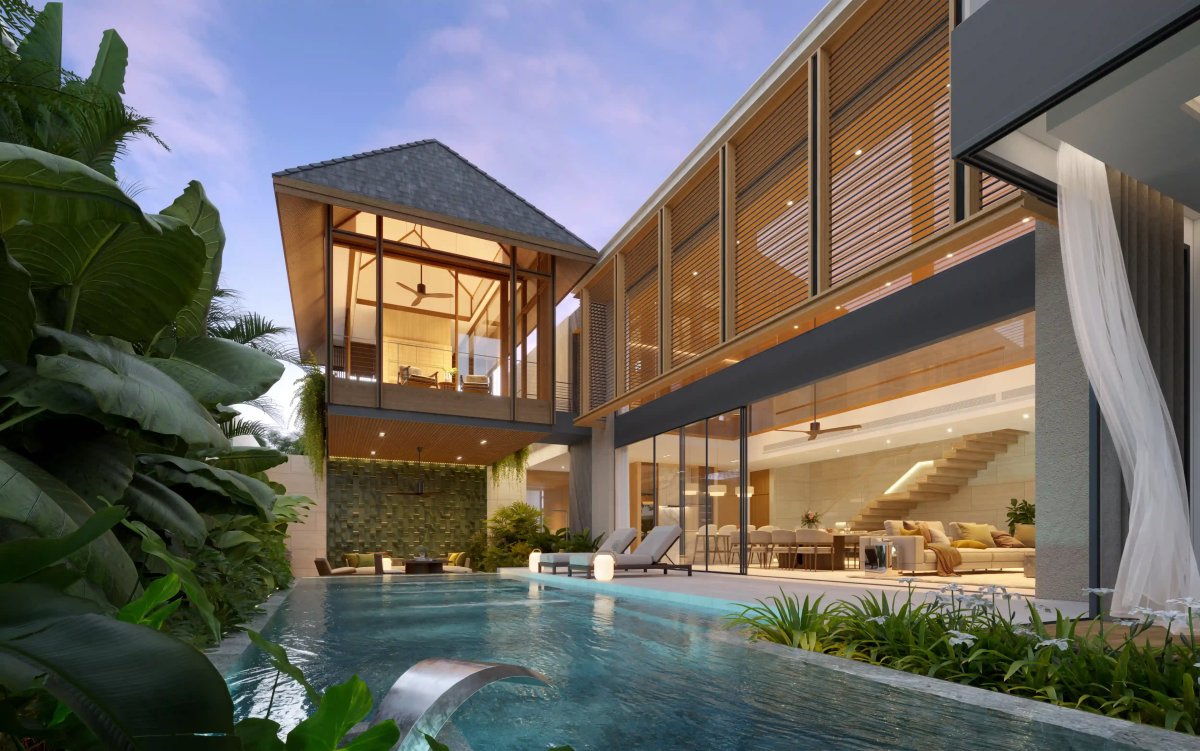
Which Thai Property Market Has the Best Liquidity for Foreign Buyers?
Phuket has Thailand’s most liquid resale market for foreign buyers, with an established international buyer pool, active resale platforms, and average sale times of 6-12 months for well-priced units. Bangkok condos in the Sukhumvit corridor are also liquid, but primarily for Thai buyers, with a narrower foreign buyer pool. Koh Samui and Pattaya have lower liquidity due to smaller international markets and, in Pattaya’s case, significant oversupply in mass-market segments.


What Drives Liquidity in Thai Property?
1. Size of the buyer pool More potential buyers means faster sales and better price negotiating power. Phuket’s international buyer pool includes European, Russian, American, Australian, and Asian buyers simultaneously active in the market. This depth is what makes Phuket different from every other Thai resort market.
2. Resale platform infrastructure Phuket has the most developed resale ecosystem in Thai resort property: international agents with global marketing reach (including overseas offices), dedicated resale listing platforms, and property managers who actively connect sellers with their own buyer enquiries. Bangkok has comparable infrastructure but directed primarily at the Thai domestic market.
3. Rental demand as value anchor A property with documented rental income is easier to sell, the buyer can value it as a yield-producing asset with a calculable return. Phuket’s well-established rental management infrastructure creates this documentation trail. Properties with 3-5 years of rental performance data sell faster and at better prices than undocumented equivalents.
4. Unit type and specifications Not all units are equal for liquidity. In Phuket, 1-bedroom units of 45-65 sqm in managed resort condos with pool access are the most liquid category, they have the largest buyer pool (both investors and lifestyle buyers) and the clearest rental yield profile. Unusual layouts, oversized units, ground floor units without views, and units in buildings with known management issues are significantly harder to resell.
Phuket Resale Market Analysis
What Sells Quickly in Phuket
| Unit Type | Avg Sale Time | Price vs Comparable New Build |
|---|---|---|
| 1-bed, managed resort, Bang Tao | 4-8 months | 85-100% of new build |
| 1-bed, beachfront complex | 5-10 months | 90-105% of new build |
| Studio, managed resort, prime zone | 6-10 months | 80-95% of new build |
| 2-bed, branded residence | 6-12 months | 90-110% of new build |
| Villa, leasehold, prime zone | 10-18 months | 75-95% of new build |
| Large unit (above 100 sqm) | 12-24 months | 70-90% of new build |
| Non-managed building, mid-market | 12-24 months | 70-85% of new build |
The data confirms: managed resort condos in prime zones with documented rental performance are Phuket’s most liquid category. Non-managed buildings, oversized units, and mass-market product without rental infrastructure are significantly harder to sell.
The Foreign Buyer Pool Advantage
Phuket’s international buyer base is its core liquidity advantage. When a European owner wants to sell, the likely buyer is also European, or Russian, or Australian, the same demographics that are consistently active in Phuket’s market. This isn’t true of Bangkok (where foreign sellers must wait for the narrower foreign buyer window or sell to Thai buyers at a discount) or Pattaya (where oversupply depresses demand).
Phuket’s international buyer volume continues to grow. According to market data, foreign buyer enquiry volumes in 2025 exceeded pre-pandemic peaks, driven by post-COVID lifestyle reassessment, digital nomad demand, and ongoing geopolitical drivers pushing capital out of Eastern Europe and China.
Bangkok Resale vs Phuket
For foreign buyers who bought a Sukhumvit unit in a mixed building, the resale pool includes:
- Thai professional buyers (the dominant segment)
- Foreign buyers with Thai work permits or long-term visas
- International investors specifically seeking Bangkok (smaller pool than Phuket)
In practice, Bangkok is liquid for well-priced units in the right zones (Phrom Phong, Thong Lo, Asok), 6-10 month average sale times are achievable. The difference from Phuket is that the Bangkok foreign buyer pool is narrower, so premium pricing has less support.
Factors That Kill Liquidity in Thai Property
Oversupply: Central Pattaya and some Bangkok outer zones have delivered more units than demand absorbs. In a buyer’s market, sellers wait longer and accept deeper discounts.
No rental track record: Properties that have never been rented can’t be valued as yield assets. This narrows the buyer pool to lifestyle buyers only.
Building management problems: Buildings with unresolved juristic disputes, sinking fund deficits, or physical deterioration are nearly impossible to sell at reasonable prices.
Non-standard title: Leasehold properties near expiry, structures on Chanote land without proper building permits, or units in buildings with disputed foreign quota status all dramatically reduce resale options.
Micro-location problems: Being second row from the beach in a market where buyers want first row, or being far from road access, or being adjacent to a noise source, creates structural liquidity discounts.
How to Buy for Maximum Liquidity
| Principle | Specific Action |
|---|---|
| Buy in the deepest international market | Prioritise Phuket prime zones over smaller markets |
| Choose managed resort condos | Rental management creates documentation for future buyers |
| Select 1-bed units in the 45-65 sqm range | Widest buyer pool at the most accessible price point |
| Verify foreign quota availability | Units in quota-exhausted buildings are limited to Thai buyers |
| Check developer track record | Completed projects resell; undelivered projects don’t |
| Inspect building management quality | Request sinking fund statement and juristic meeting minutes |
| Buy at market price, not above | Overpaying at entry guarantees a liquidity discount at exit |
Frequently Asked Questions
Phuket prime zones (Bang Tao, Laguna, Kamala) have the fastest documented resale times for foreign property owners, average 6-12 months for well-priced managed resort condos. Bangkok Sukhumvit is comparable but with a less deep foreign buyer pool. Pattaya premium zones (Wongamat) average 10-18 months. Chiang Mai, Hua Hin, and Koh Samui have the slowest resale markets for foreign sellers, average 18-36 months.
Phuket's liquidity advantage stems from its scale: 12.5 million international visitors annually (versus 2-3 million for Koh Samui, 11 million domestic-heavy for Pattaya), a deep established international buyer pool from multiple source countries, and professional property management infrastructure that creates documented rental income histories. This combination means a foreign seller has a large, active, international buyer pool to market to, which is simply not available in smaller Thai resort markets.
Yes, but price is the primary lever. A well-priced unit in a prime managed resort zone can sell in 3-6 months if priced at or below market. Accepting a 5-10% discount versus peak valuation significantly accelerates sale timelines. The worst position is overpricing and waiting, Phuket buyers are well-researched and won't overpay when comparable units are available at market rates. Working with an agent who has an active buyer database provides the fastest access to the buyer pool.
Bangkok condos in prime Sukhumvit zones are reasonably liquid but with an important caveat: the primary buyer pool is Thai domestic. This means foreign-owned units priced above Thai buyer price thresholds can take longer to sell. In practice, well-priced 1-bedroom units in Phrom Phong, Thong Lo, or Asok sell in 6-10 months to a mix of Thai and foreign buyers. Bangkok's advantage is higher transaction volume overall; the limitation is the narrower foreign buyer pool compared to Phuket.
Key liquidity killers in Phuket: large unit sizes (above 100 sqm target a narrower buyer pool), buildings without professional rental management (no yield documentation), non-prime zones without beach or resort access, leasehold title on condo-type properties, buildings with sinking fund deficits or juristic disputes, and units priced above the comparable market (buyers have options and won't overpay). The most liquid Phuket unit is a 45-65 sqm one-bedroom in a managed resort building in a prime zone with 3+ years of rental records.
Yes, according to Phuket Land Department transaction data, resale condo transactions have increased annually in 2022-2025, with the recovery of international tourism and foreign buyer activity driving volume. The international buyer pool has diversified: European buyer recovery is strong, US and Australian buyer volumes are growing, and Asian buyers (particularly from Singapore, Hong Kong, and India) are an increasing resale market presence. This expanding and diversifying buyer pool is the structural foundation of Phuket's liquidity trajectory.
Read Also:

Maksim Shchegolev
Founder, MORE Group
Founder of MORE Group. Four years in investment banking before moving to Phuket, where he has worked in the local property market since 2018. Oversees developer relationships and every engagement above $300K.
About MORE Group →Get a Focused Phuket Property Shortlist
Share budget, area and goal. We will reply with suitable live projects, not a generic catalogue.
