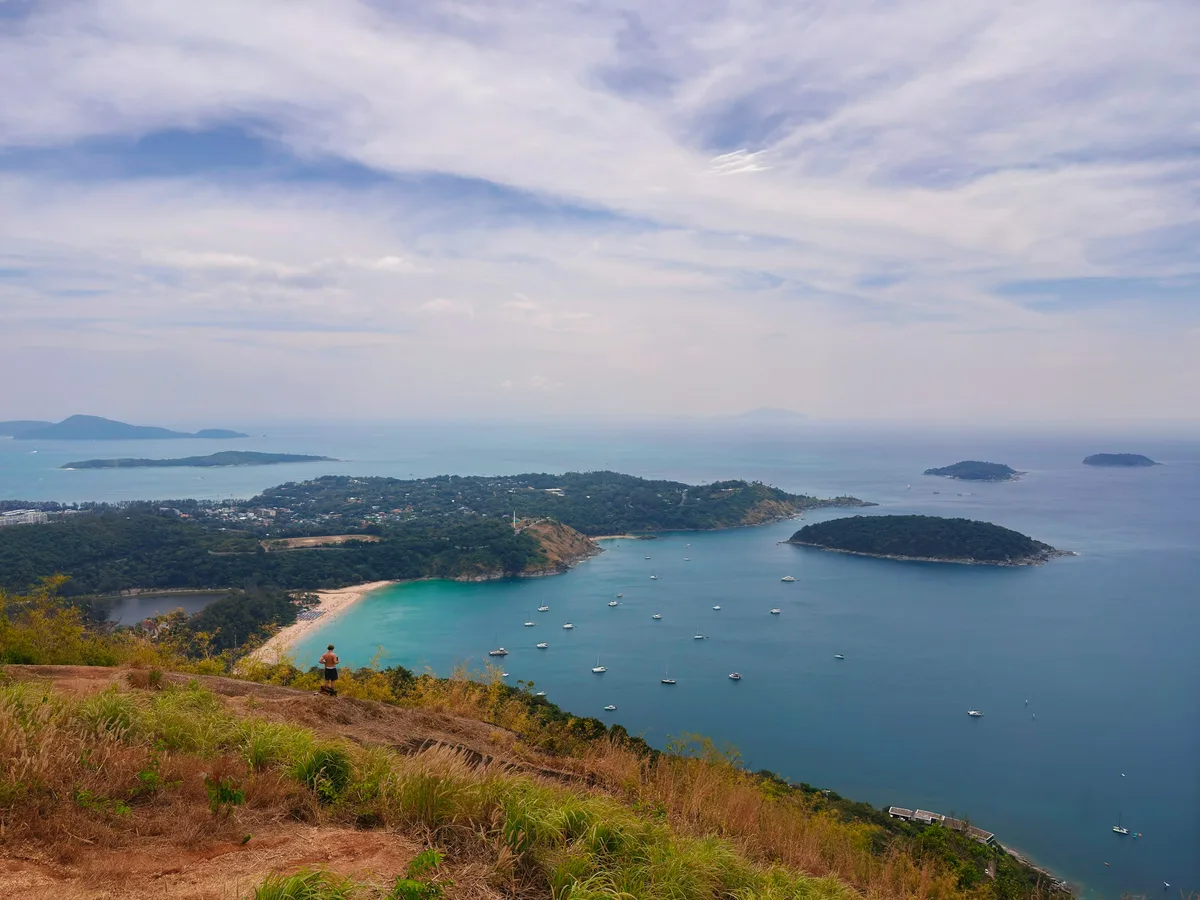
Most of the people who buy in Phuket want to see the island before they sign, and they are right to. Photos and renders show a building at its best moment. A visit shows the walk to the sand, the noise at five in the afternoon, the state of the lifts and how the area feels on a weekday. The difficulty is time: a buyer from Toronto or Denver usually has a week or two on the island, and the projects on a shortlist can be an hour apart.
This guide shows how to make one or two days of viewings count: what to prepare before the flight, how to plan the route, what to check at each site, what to carry in case you decide to reserve, and what to do in the weeks after you fly home. If you would rather buy without travelling, our guide to buying Phuket property without visiting covers that route, and the remote buying guide explains the power of attorney and payment steps.
Why a viewing trip works better with a fixed shortlist
The airport sits in the far north of the island and most of the condominium stock lies along the west and south coasts, linked by roads that climb over the headlands between the bays. In our project and area guides, the drive from the airport to Bang Tao is 25 to 35 minutes and to Karon 45 to 60 minutes, with the Chalong circle a common bottleneck on the way north. A day spent driving between unrelated addresses ends with two viewings and a sense of having seen nothing.
A short trip therefore depends on work done at home. The useful sequence looks like this:
- Narrow the island to one or two areas that fit your use: a winter base with letting in the other months, a retirement home near hospitals, or a pure rental unit.
- Shortlist three to five buildings in those areas from current price lists, not from last year’s listings.
- Collect the documents in advance so the visit is spent on what only a visit can show.
- Group the viewings by coast, one day for the north and west, one for the south.
Once the shortlist is fixed, a viewing day becomes a comparison of real candidates rather than a tour.
What to send us before you fly
Two to three weeks before the trip is a comfortable lead time. It lets us confirm which units are still free, ask developers for current price lists and agree viewing times with sales offices and building managers. The table shows what helps most and why.
| What to send | Why it matters |
|---|---|
| Your travel dates and where you will stay | We build the route around your base and your arrival day |
| Budget, in dollars or baht, and whether it includes furniture and transfer costs | A $150,000 budget and a $200,000 budget lead to different areas and layouts |
| How you will use the apartment | Winter use plus letting, full-time living and pure investment need different buildings |
| Bedrooms, size and must-haves | Pets, a sea view, a lift, a pool, distance to the beach |
| Freehold or leasehold | Freehold depends on the building’s foreign quota and on money arriving from abroad |
| When the money will be available | A house sale at home, savings, or staged payments over construction |
| Projects you already like | We add them to the comparison and check them the same way |
In return we prepare a shortlist for your dates: each project with its current developer price list and its date, the units still free by floor and side, floor plans, the payment schedule, the monthly common fee where it is published, and the building’s rules on short stays where they exist. For projects under construction we add the latest site photos and the developer’s stated completion date.
Four questions are worth settling in writing before the trip, because the answers can remove a project from the list without a visit:
- Foreign quota. For freehold, whether the 49% foreign quota, counted on the building’s floor area and not on the number of units, still covers the unit you like. See our guide to the foreign quota in Thai condominiums.
- Payment schedule. The size and date of each instalment, and whether the booking deposit counts towards the first one.
- Monthly costs. The common area fee per square metre and the sinking fund rate, or a written note that the developer has not set them yet.
- Short-stay rules. Whether the building’s registered rules allow lets of under 30 days. Our guide to Airbnb in Phuket explains the Hotel Act line.
Send us your trip dates
Tell us when you land, your budget and how you will use the apartment. We prepare a shortlist with current price lists and free units, and our team can meet you on site.
When to come: season, weather and visas
The weather. The dry season runs from November to April and the monsoon from May to October. Monsoon rain usually arrives as afternoon showers rather than all-day grey, so viewings still work in the wet months if they are booked for the morning. A visit in high season shows buildings and beaches at their busiest; a visit in May or June shows how a building looks when it is not full, how quickly management responds and how quiet the area becomes. Buyers who plan to let the apartment in the months they are away learn a lot from seeing the low season once.
The visa. According to our visa guide, since 15 September 2026, visa-free entry for tourism is 30 days, with one 30-day extension at an immigration office for about 1,900 THB; the 60-day scheme that ran from July 2024 has ended. That is enough for a viewing trip and, if the timing fits, for signing a reservation. Buying property does not give a visa. If you want a longer stay later, our guide to Phuket visa options for property owners compares the retirement visa, the DTV and Thailand Privilege.
The length of the trip. Two viewing days inside a stay of a week or more is the most comfortable plan. It leaves a free day between the viewings and any decision, and time for a second visit to the one or two buildings that make the final cut.
A two-day route that keeps driving short
The island splits naturally into two viewing days. The exact order depends on your shortlist and on where you sleep, but the grouping below keeps most drives between sites short.
| Day | Areas | Typical projects to compare | What this part of the island is like |
|---|---|---|---|
| Day 1 | North and west: Bang Tao, Layan, Surin, Kamala, and Nai Yang if it is on your list | Resort-style condominiums and buildings in larger masterplans | Closer to the airport, golf and beach clubs, higher prices per square metre |
| Day 2 | South: Kata, Karon, Rawai, Nai Harn, and Chalong for long-let units | Smaller buildings near the beaches and in residential streets | Longer from the airport, established long-stay communities, more entry-level stock |
A realistic day has three viewings, each with time to walk around the area, and one quiet hour to write notes before the details blur. Five viewings in a day are possible when the buildings sit close together, for example in Kata and Karon, where The Title KUARTZ in Karon and FIZZ in Kata are a few minutes apart by car.
Arrival day is best left free. After a long-haul flight, judgement about a view or a layout is not at its best, and the first impression of a building is worth more after a night’s sleep.
What to check at each site
A viewing answers questions that no brochure can. Use the same list at every building so the comparison afterwards is fair.
The view from your floor, not from the show unit
Sales galleries and show units are often on the best floor. Ask to stand at the level and on the side of the unit you would buy. For a building that is not finished, the view is still a projection: KUARTZ, for example, states that sea views start from the 6th floor of its 7-storey buildings, so only the top two floors face the sea. Look at what stands between the plot and the water, and ask whether the land in front is already built on or could be.
The walk to the beach, timed yourself
Distances in listings vary with the method. For the same KUARTZ plot, one agency measures 345 m to Karon Beach and the developer’s press release says 400 m. Walk the route at the time of day you would use it, note whether it crosses a main road, and look at the pavement. A beach that is close on a map can be a ten-minute walk along a busy road.
Noise at the right hours
Visit or come back between 3 pm and 7 pm, when traffic, construction and pool life are at their peak, and stand on the balcony side of the unit. Three sources matter most:
- Main roads, especially on the coast roads in Karon, Kata and Patong.
- Nightlife, in parts of Patong and on some streets near the beaches.
- Aircraft. Approach paths cross parts of Nai Yang and the north near the airport. Our Nai Yang property guide suggests standing on the actual plot for an hour rather than judging from the show unit.
The construction stage
For a building under construction, see the site and compare it with what the developer says. A cleared plot, foundations and a finished structure are very different stages of the same promise. KUARTZ was a clear site when it was photographed on 28 September 2026, with construction planned to start in Q2 2027 and completion in Q1 2029. Ask for the building permit and environmental approval status, and for the dates of the developer’s last completed projects so you can see whether they were delivered on time.
For a completed building, the stage question becomes a condition question: lifts, corridors, the pool plant, damp marks on ceilings, and how the common areas are kept.
The building’s money and rules (completed buildings)
In a resale building, the juristic person (the owners’ body that runs the building) holds the facts that decide the cost of ownership:
- the current common area fee per square metre and its recent increases;
- the sinking fund balance, not only the one-off contribution;
- the minutes of the last annual general meeting, which show planned works and special levies;
- the registered rules on short stays and pets.
Our guide to the cost of owning a Phuket condo explains how these numbers turn into an annual budget.
Daily life around the building
If you will spend the winter here, look at what you will use every week: a supermarket, a pharmacy, a clinic, a place to eat, and the drive to a hospital. In our retirement guide, Chalong is the most practical base for medical access, with Bangkok Hospital Phuket and other hospitals 10 to 20 minutes away; see buying property in Thailand for retirement. Families add the school run, which in Phuket decides more about an area than the beach.
A one-page checklist for each site
| Check | What a good answer looks like |
|---|---|
| View | Seen from the right floor and side; nothing planned in front |
| Beach | Walked and timed, with a safe pavement |
| Noise | Checked between 3 pm and 7 pm, road and aircraft noted |
| Stage | Matches the developer’s timeline; permits named |
| Monthly costs | Common fee and sinking fund in writing, or a dated note that they are not set |
| Rules | Short stays and pets confirmed in the registered rules |
| Quota | For freehold, a written confirmation for your unit |
| Daily life | Shop, pharmacy and clinic within a short drive |
If it rains on a viewing day
Rain affects photos more than decisions. A shower is actually a useful test: it shows drainage around the building, whether corridors and lobbies stay dry, and how the road to the beach copes. Keep the outdoor parts of the list (the walk to the beach, the view) for a dry hour, and use the wet hour for the documents, the floor plans and the questions to the sales office.
What to bring in case you decide to reserve
A viewing trip does not oblige you to buy, and many buyers fly home, compare and decide a week later. If a unit is clearly right, though, being ready to reserve on the spot saves a second round of paperwork from home.
Your passport. The reservation agreement is made out in your name, and freehold is registered in the same name later.
A way to pay the reservation deposit. A reservation agreement typically holds a specific unit at an agreed price for 7 to 14 days against a deposit of roughly 50,000 to 200,000 THB, according to our reservation agreement guide. Some launches set their own amount: one agency describes a 100,000 THB booking for KUARTZ. Pay only into the developer’s company account, never into a personal one.
Questions about the deposit. Before you pay, ask three things and get the answers in the agreement:
- Is the deposit part of the price, or on top of it?
- Under what conditions is it refunded? Some developers offer a cooling-off window of 48 to 72 hours, which Thai law does not require.
- When must the sale and purchase agreement be signed, and when is the first instalment due? It usually follows 30 to 60 days after reservation.
A plan for the rest of the money. For freehold, the price must arrive in Thailand from abroad in foreign currency, so that the receiving bank issues the foreign exchange transaction record the Land Department asks for. Paying the main instalments from home by international transfer, in your own name, keeps that record clean; see our proof of funds guide.
After the trip: the next four weeks
The visit is the midpoint of the purchase, not the end. A good sequence after you fly home:
- Write the comparison while it is fresh. Score each building on the checklist above, add the price per square metre and the total cost of buying, and note what you did not like.
- Ask for what is still missing. Quota confirmation, the final payment schedule, the fee schedule, the furniture list if a package is included.
- Appoint a lawyer. An independent Thai property lawyer reviews the reservation and sale and purchase agreements, checks the title or the permits and confirms the quota.
- Sign at a distance. The sale and purchase agreement can be signed by courier or through a power of attorney, so you do not need a second flight to complete.
- Schedule the payments. Line up each instalment with the date the money will be available at home. If the funds will come from selling your house, our guide to buying in Phuket while you sell your home shows how to read a payment schedule against a sale.
For a building under construction, the next visit is usually the handover inspection, before the final payment and the title registration at the Land Department.
Viewing trip or buying without visiting?
Both routes are lawful and both end in the same registration. The table sets out what each gives you.
| Viewing trip | Buying without visiting | |
|---|---|---|
| What you see | View, walk to the beach, noise, the building and the area in person | Video calls, recorded walk-throughs, photos and documents |
| Time | One or two viewing days plus travel | No travel; the decision takes longer on paper |
| Best for | First-time buyers, winter-use buyers, anyone choosing between areas | Repeat buyers, buyers who know the area, investors buying a specific unit |
| Paperwork | Reservation on site, the rest from home | All by courier, e-signature and power of attorney |
Our guide to buying Phuket property without visiting covers the second route in detail.
Pros and cons of a short trip
Pros:
- You judge the view, the noise and the walk to the beach yourself instead of trusting a listing.
- Comparing three to five buildings in the same two days makes the differences obvious.
- A reservation can be signed on the spot if one unit is clearly right.
- You meet the sales office and the building manager, which tells you how questions will be answered later.
Cons:
- Travel time and cost, and a long flight before the first viewing.
- One visit shows one season; a January trip does not show the monsoon.
- A packed day can push a decision faster than it should go, which is why a free day after the viewings helps.
- For a building under construction, the visit shows a site, not the finished apartment.
Buyer scenarios: who a short viewing trip suits
The winter-use buyer. You plan to spend the cold months in Phuket and let the apartment for the rest of the year. A trip lets you check what matters for both uses: the walk to the beach and the shops you will use, and the building rules that decide whether letting works. Our guide to where to buy for two months a year compares areas for this pattern.
The budget buyer. Under $150,000 the margin for error is small and the difference between two similar studios is in details you see on site. Read our catalogue-based guide to the best Phuket condos under $150,000 before you fly.
The buyer with money arriving later. If you are waiting for a house sale or another source of funds, a trip still makes sense: you can reserve the unit and align the schedule with the money.
Frequently Asked Questions
Three is a comfortable number when each viewing includes a walk around the area and a look at the floor you would buy. Four or five are possible when the buildings sit close together, for example in Kata and Karon. Group the visits by coast: one day for the north and west, one for the south, because the airport to Karon drive alone is 45 to 60 minutes.
Your travel dates and where you will stay, your budget and what it includes, how you will use the apartment, the bedrooms and must-haves, freehold or leasehold, and when the money will be available. Two to three weeks ahead gives time to confirm free units, collect current price lists and book viewing times.
Not for most Western passports. Since 15 September 2026, visa-free entry for tourism is 30 days, with one 30-day extension at an immigration office for about 1,900 THB. That is enough for viewings and a reservation. Owning property does not give a visa; longer stays need a separate route such as the retirement visa or the DTV.
Each shows something different. High season, roughly November to April, shows buildings and beaches at their busiest. May to October is the monsoon, usually with afternoon showers, and shows how a building and its management look when it is not full. If you plan to let the apartment while you are away, seeing the low season once is especially useful.
Yes. A reservation agreement typically holds a unit for 7 to 14 days against a deposit of roughly 50,000 to 200,000 THB. Bring your passport, pay only into the developer's company account, and check in the agreement whether the deposit counts towards the price and when it is refunded. The sale and purchase agreement usually follows 30 to 60 days later and can be signed from home.
Our team can meet you at the projects on your shortlist, arrange the viewing times with developers and building managers and help you compare the buildings afterwards. Send your dates through the form on this page and we prepare the shortlist before you land.
Read Also:
Questions about this guide? Ask us on WhatsApp. The guide's title is already in the message, so you only need to write your question.
Ask on WhatsApp
Maksim Shchegolev
Founder, MORE Group
Founder of MORE Group. Four years in investment banking before moving to Phuket, where he has worked in the local property market since 2018. Oversees developer relationships and every engagement above $300K.
About MORE Group →Get a Focused Phuket Property Shortlist
Share budget, area and goal. We will reply with suitable live projects, not a generic catalogue.
